Crafting the Right H1 for Search and AI Discoverability
Write H1s that boost visibility across search engines and AI platforms. Improve GEO performance with prompt-aligned headlines
When someone lands on your content—or when an AI engine scans it—the very first thing they notice is your H1 heading. It’s more than just a headline; it tells both people and machines what your content is really about.
Now that Scalenut has evolved into a GEO platform, optimizing your H1 is a key part of making sure your content shows up across search engines, AI chatbots, and answer engines like Perplexity or Gemini.
What is an H1 Heading?
The H1 (Heading 1) tag is the main headline of your page.
It’s typically the largest and most prominent text users see first, and it's also the first thing search engines scan to understand what your content is about.
Every article should have exactly one H1 that represents the page’s main focus.
Why is the H1 Heading critical for GEO success?
A well-optimized H1 helps your content get discovered and referenced across AI systems and search engines alike. Here’s why it matters in a GEO context:
Boosts AI & Search Engine Relevance - AI models use your H1 to infer the topic and context of your page. A clear, keyword-rich headline increases the likelihood of being featured in AI summaries and rich results.
Drives Topical Consistency - Your H1 sets the tone for the rest of your content. When it aligns with the overall structure and keywords, it strengthens topical authority and improves GEO Content Score.
Improves User Understanding & Engagement - Readers decide in seconds whether your content is worth their time. A strong H1 makes that decision easier—while also helping AI systems rank and recommend your content more accurately.
How to Fix Your H1 Using Scalenut’s GEO AI Editor?
Scalenut’s GEO-aware Editor highlights issues with your H1—such as missing tags, keyword gaps, or vague headlines—and provides actionable fixes in the Optimize Section.
Real-Time Example from Scalenut
For example, in this case:
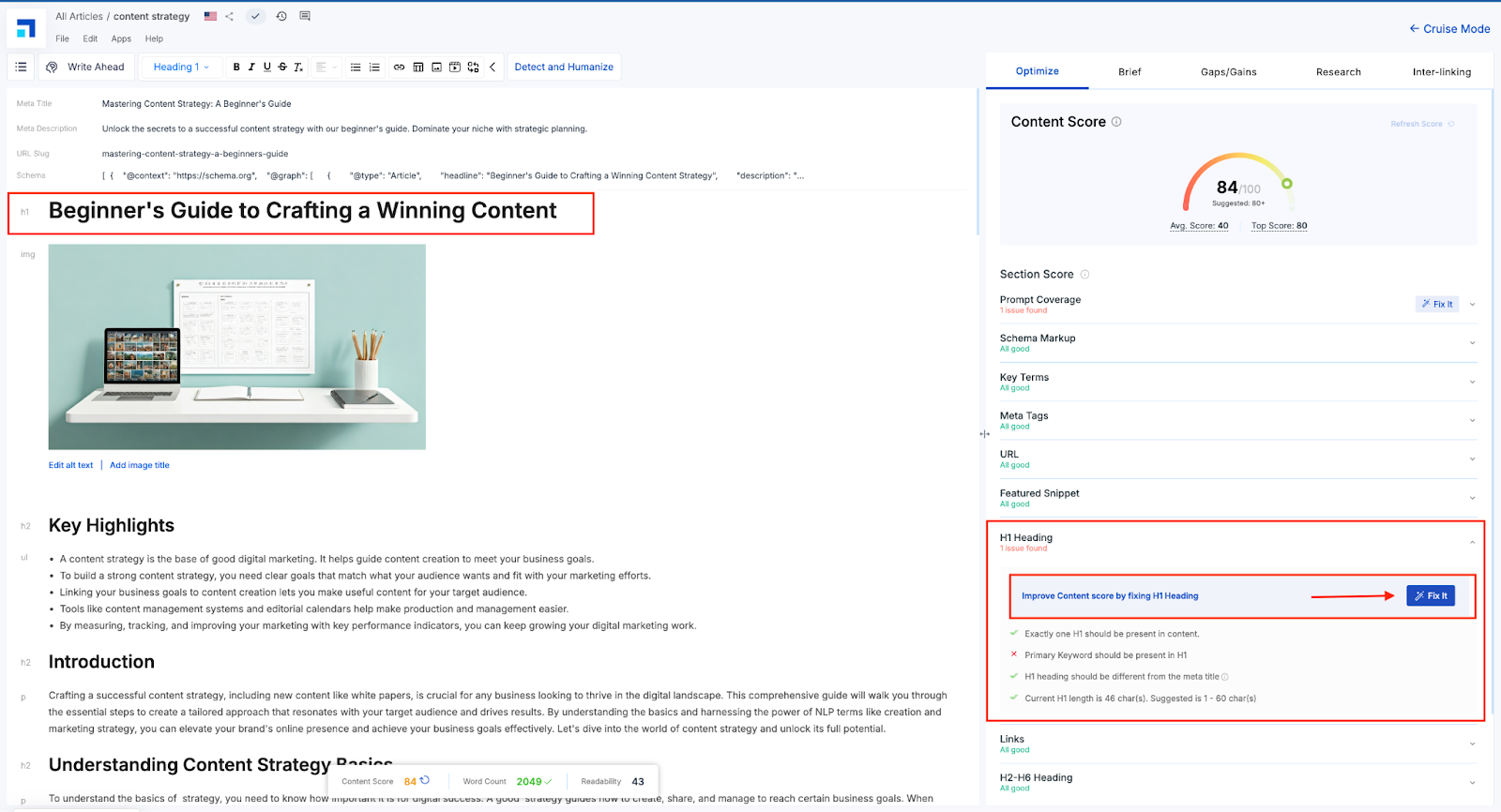
The H1 is “Beginner’s Guide to Crafting a Winning Content”. However, the primary keyword “content strategy” is missing.
Scalenut flags this and offers an easy fix—just click the “Fix It” button under the H1 Heading section.
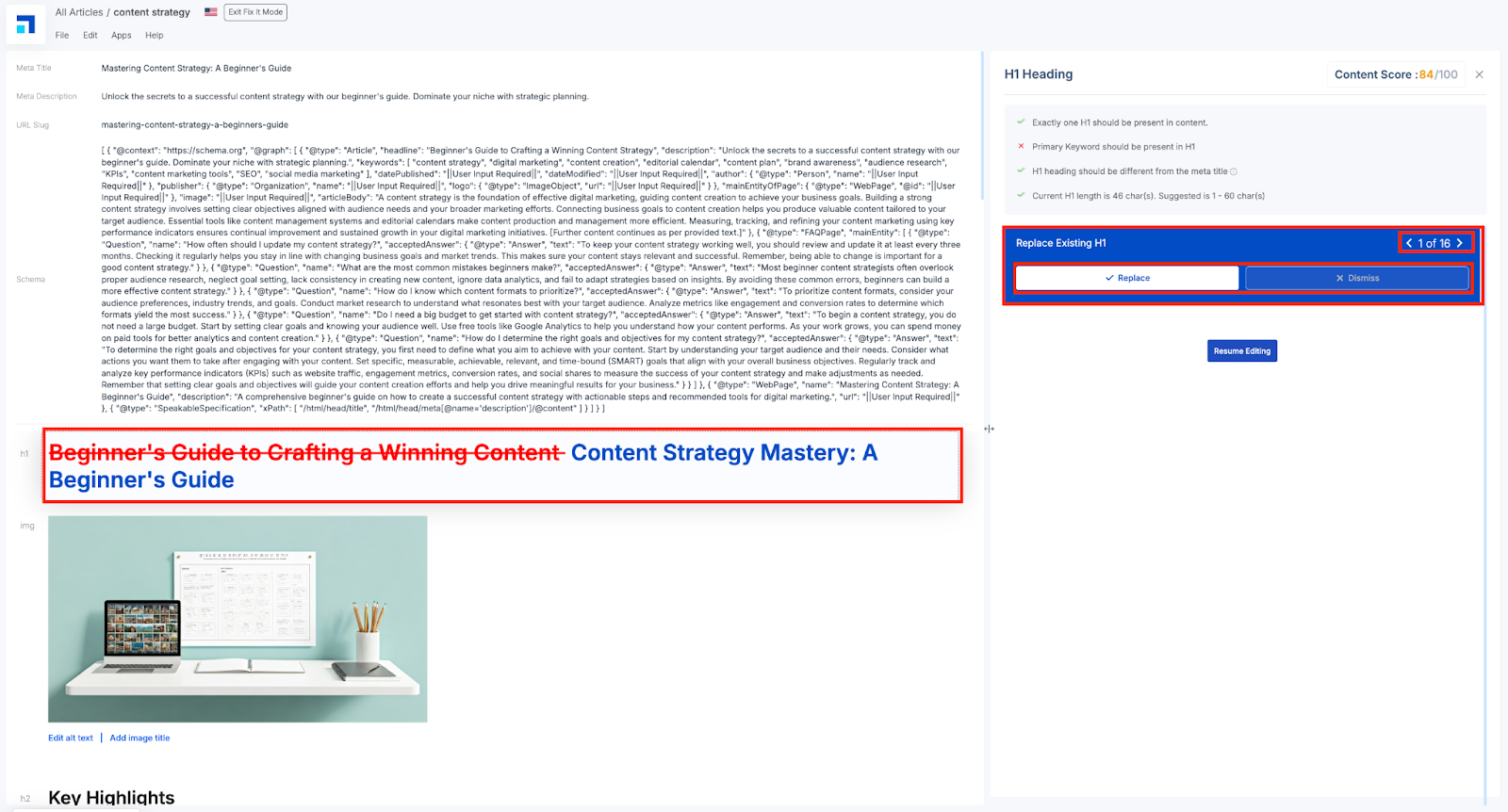
On the redirected Fix It screen, you can see it being struck off by our tool. The suggested H1 Heading is in blue. If you agree to the suggestion, click ‘Replace,’ and the tool will change it. But if you don’t, click ‘Dismiss’ and move on to the next suggestion.
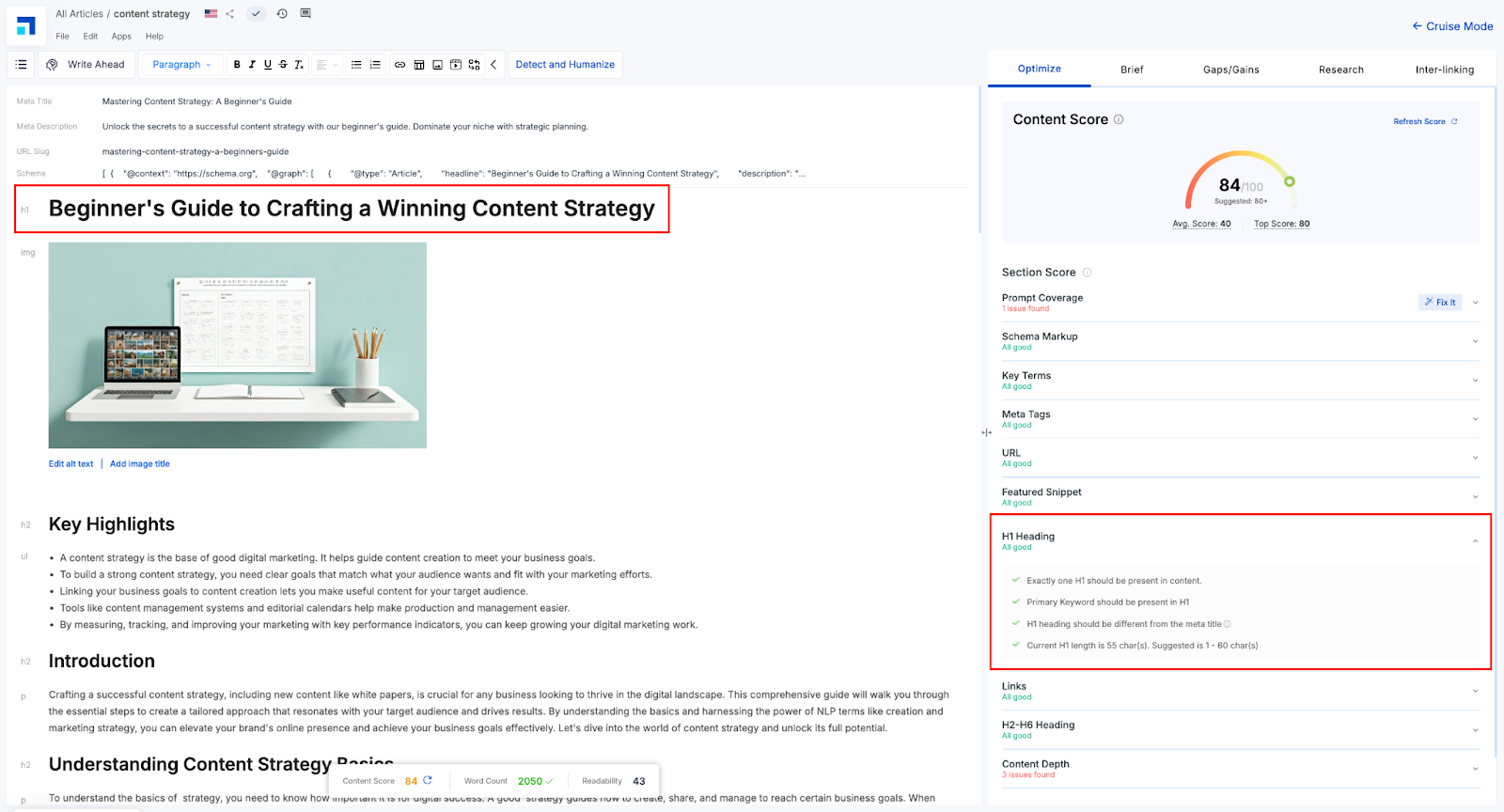
Choose the H1 from the suggested options that best suit you and click ‘Replace’, or manually create an H1 of your choice. In either case, once you have ensured the H1 meets the standard criteria, you’d see it fixed in the right panel.
Fix: “Beginner’s Guide to Crafting a Winning Content Strategy” This includes the keyword and improves your content’s alignment with SEO and GEO standards.
Want to try enhancing your H1 now and see how small changes can lead to big visibility wins? Head over to the Scalenut editor!