Master Contextual Relevance and unleash the Power of Setting the Right Context.
In today’s digital-first world, where content competes for visibility across search engines and AI-driven platforms, blogs remain a powerful medium for sharing ideas, building authority, and connecting with a wide audience.
But in a space saturated with information, what truly sets apart a high-performing blog?
It’s not just the topic—it’s the context.
When you set the right context, you help both readers and discovery engines understand the purpose, relevance, and depth of your content. Context is what allows your blog to be found, understood, and valued—across both traditional SERPs and modern generative platforms.
What is Context?
In content creation, context refers to the background, framing, and intent that shape how your topic is presented and perceived. It gives structure to your message and makes the content more relatable and relevant.
For readers, it builds clarity and trust. For AI systems and search engines, it helps determine where, when, and why your content should appear.
In a GEO framework, setting the right context is essential. It ensures your blog is not only informative, but also aligned with user intent, search behavior, and platform expectations—maximizing your discoverability.
STEP 1
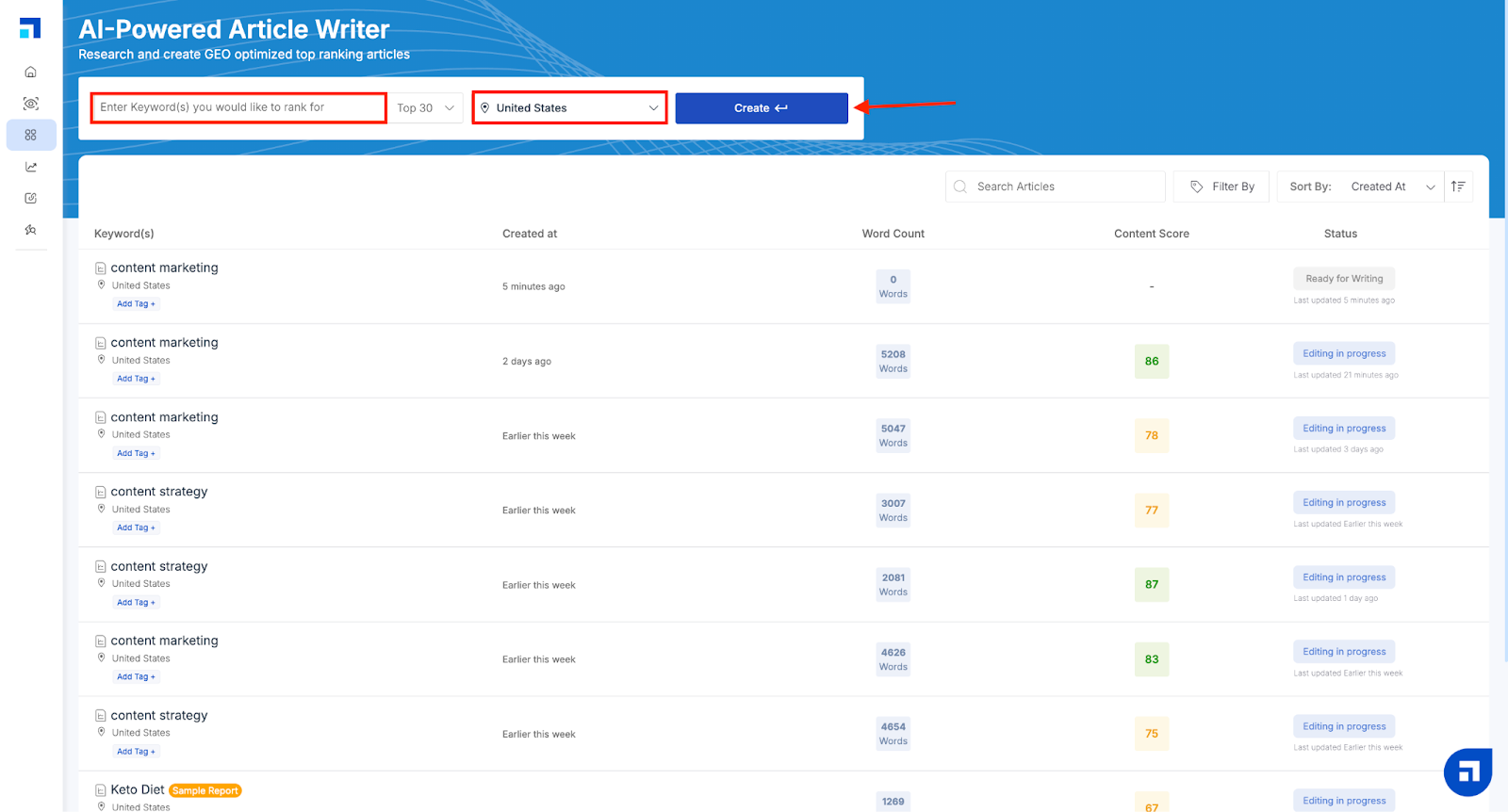
Log in to your Scalenut account and click on the ‘Article Writer’ option under GEO Core.
STEP 2
On the redirected screen, in the keywords field, enter your primary keyword along with any relevant secondary keywords. Next, select your target location and click the “Create” button to proceed.
STEP 3
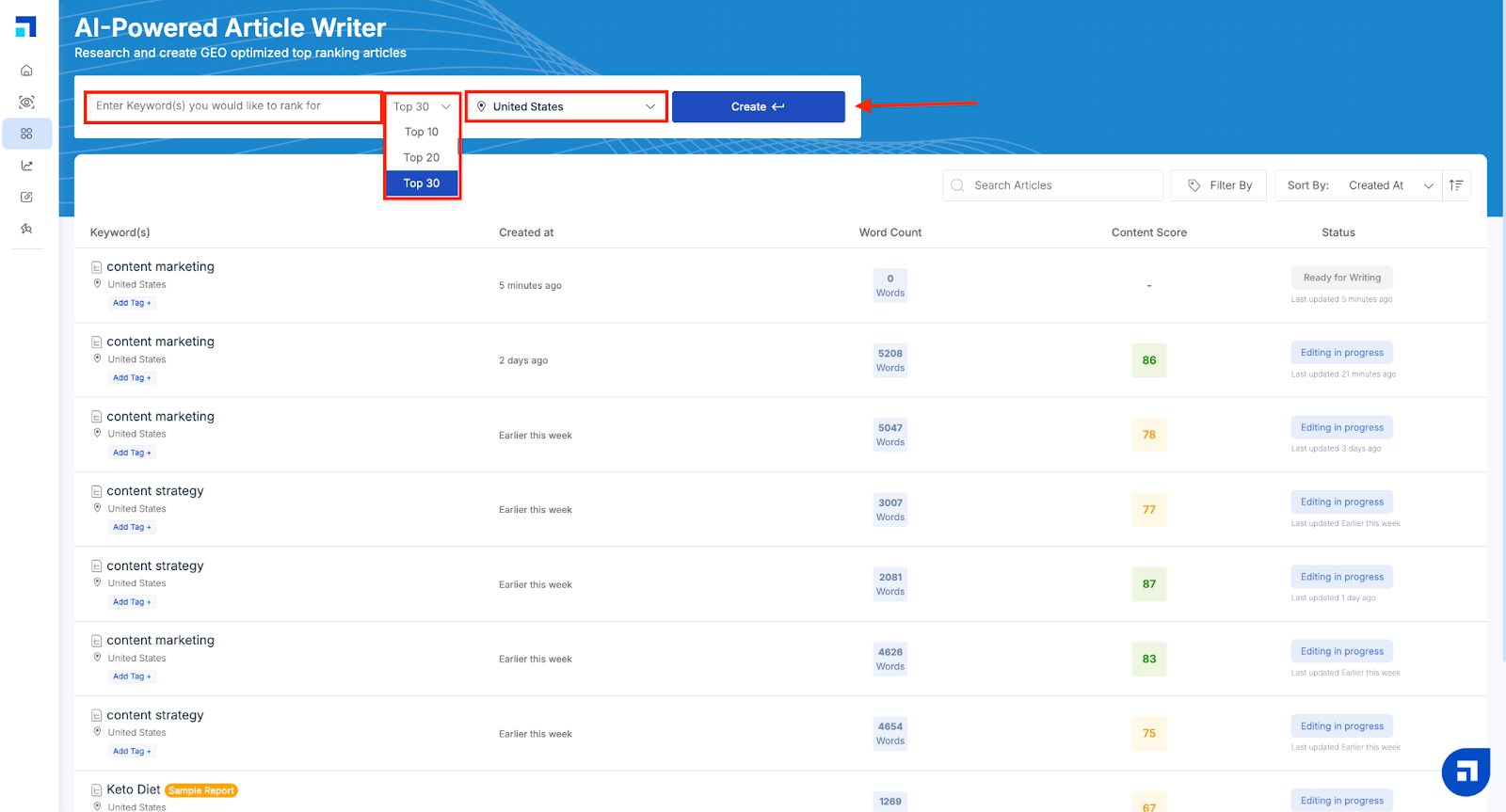
To tailor your competition benchmarking to align with your content and marketing goals. Choose to analyze the top 10, 20, or 30 ranking pages, allowing you to customize your competitive research based on your specific objectives and target audience. If not, stick to the default TOP 30 and click ‘Create’.
STEP 4
Context Section: Laying the Foundation for GEO-Aligned Content
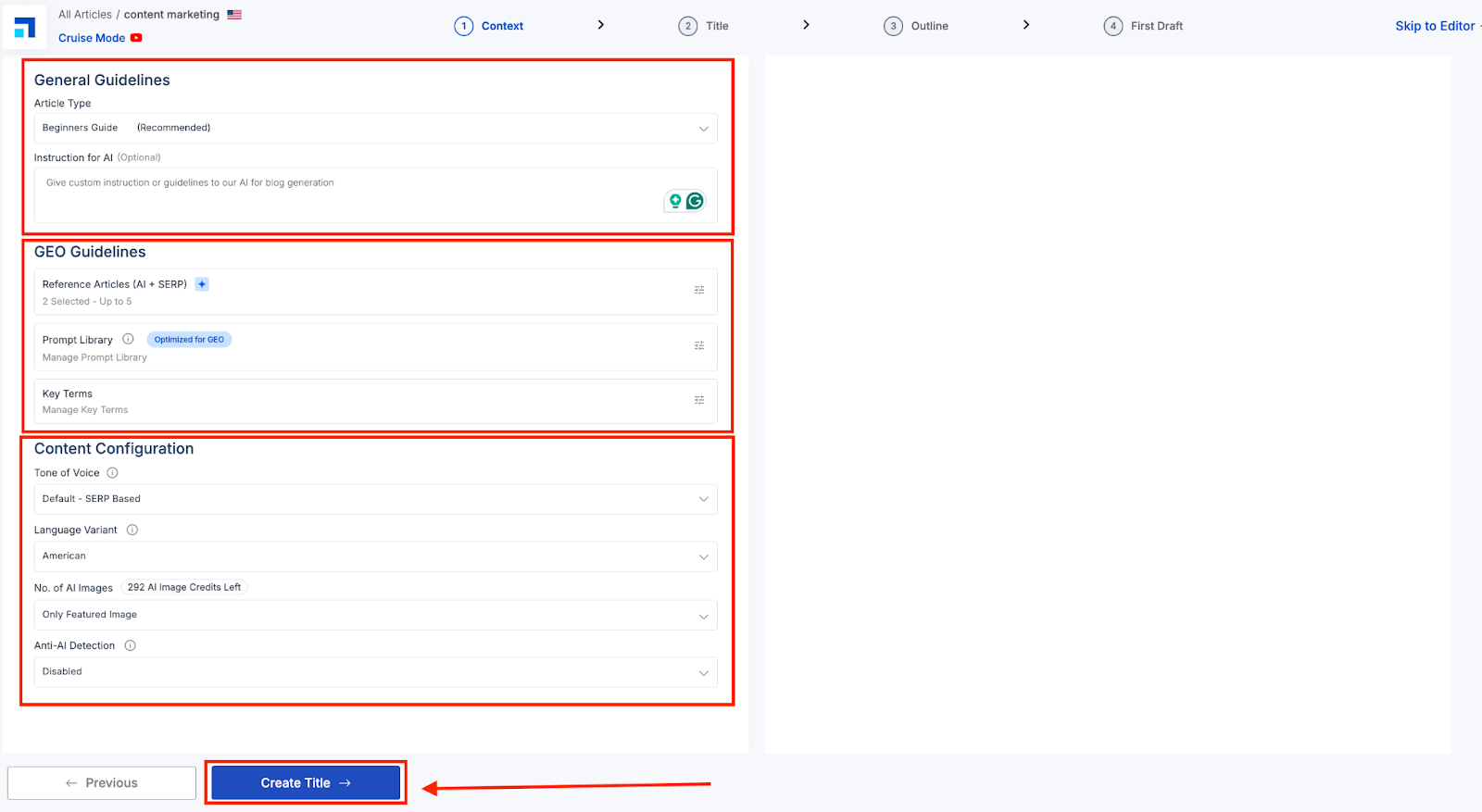
The Context stage is where you define the strategic direction of your article. It sets the tone for how the AI will structure and generate your content—ensuring it’s aligned with both your objectives and the expectations of search engines and AI discovery systems.
This section is essential for building high-performing, purpose-driven content that stands out in a GEO landscape.
General Guidelines
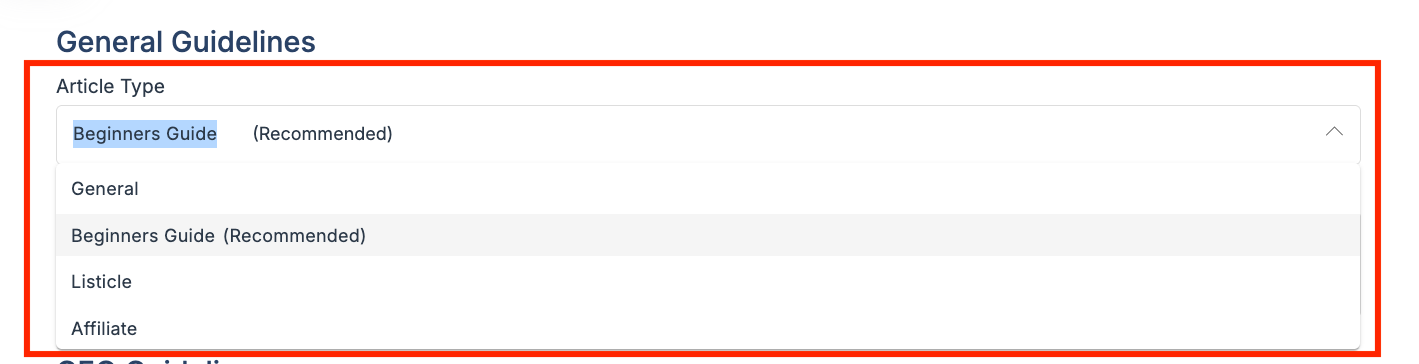
Article Type: Under Article Type, you can choose the format that best suits your blog's intent. Available options include: General, Beginner’s Guide (Recommended), Listicle, Service Page, Affiliate. Pick the most relevant type to help the AI generate content that aligns with your goals.
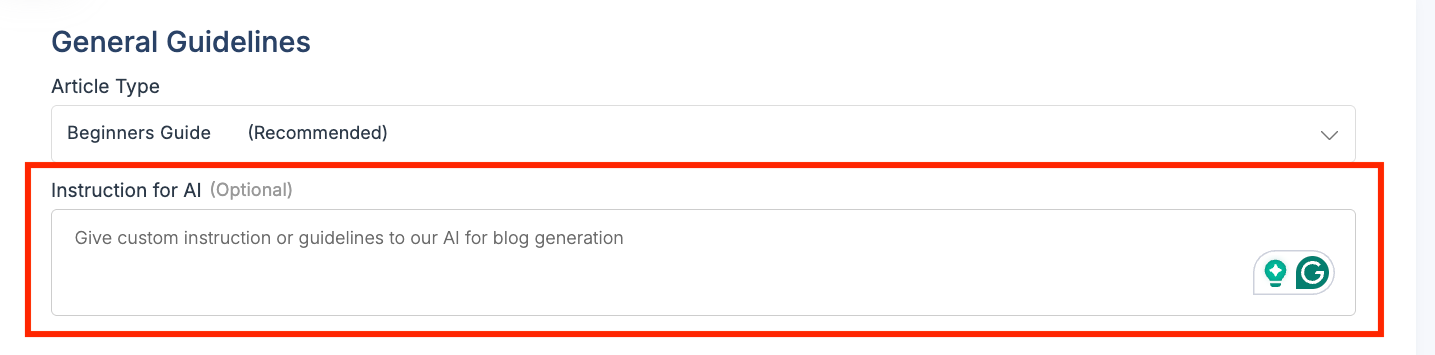
Instruction for AI (Optional): Add any specific writing guidelines or custom instructions for the AI. This can include preferred style, points to include, or brand-specific language.
GEO Guidelines
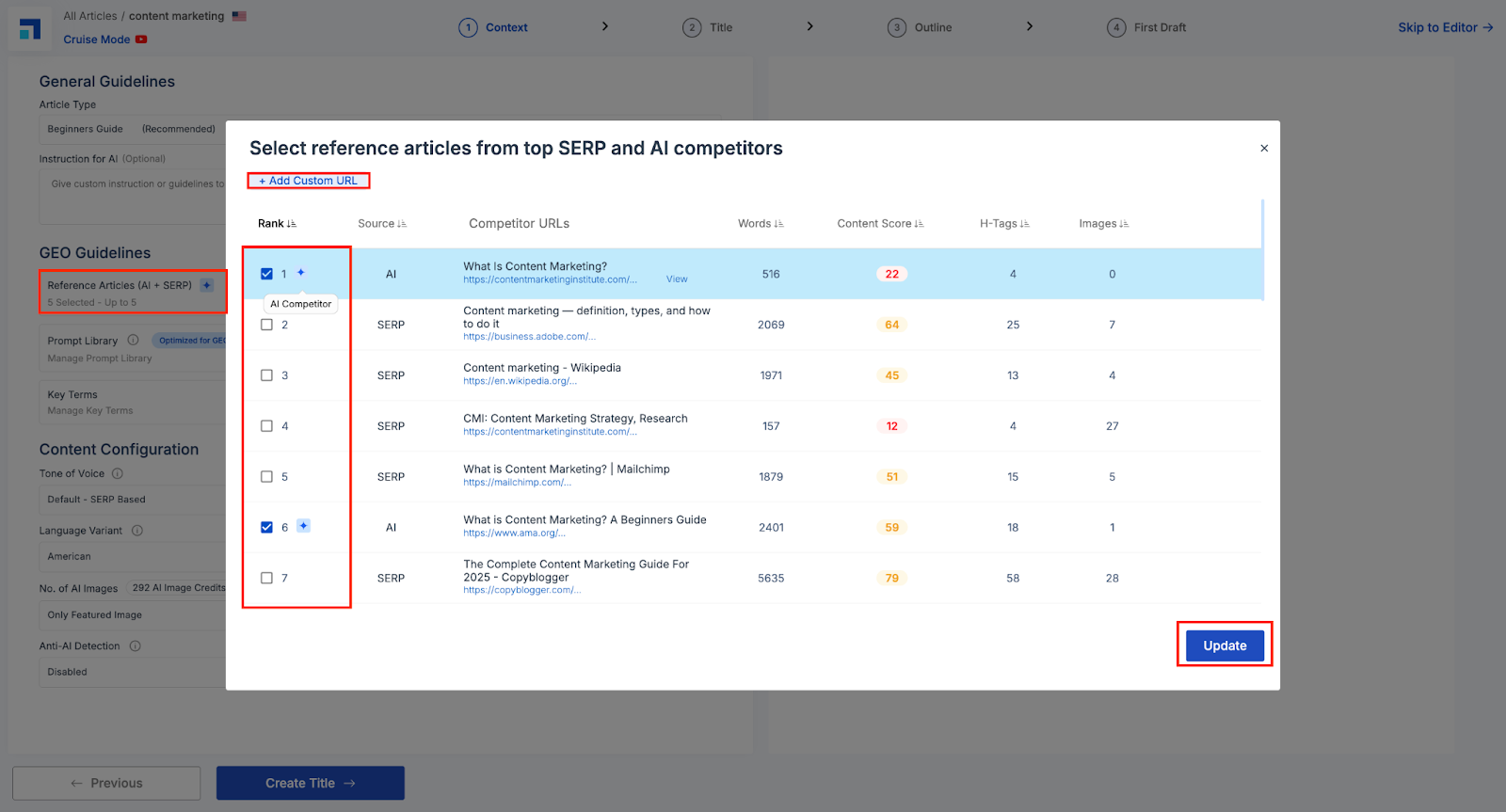
Reference Articles (AI + SERP): Select up to five high-ranking reference articles. These help the AI understand what’s working on search engines and structure your content accordingly. You can choose from suggested links or click “Add Custom URL” to input your own. Once selected, hit “Update” to save and move forward.
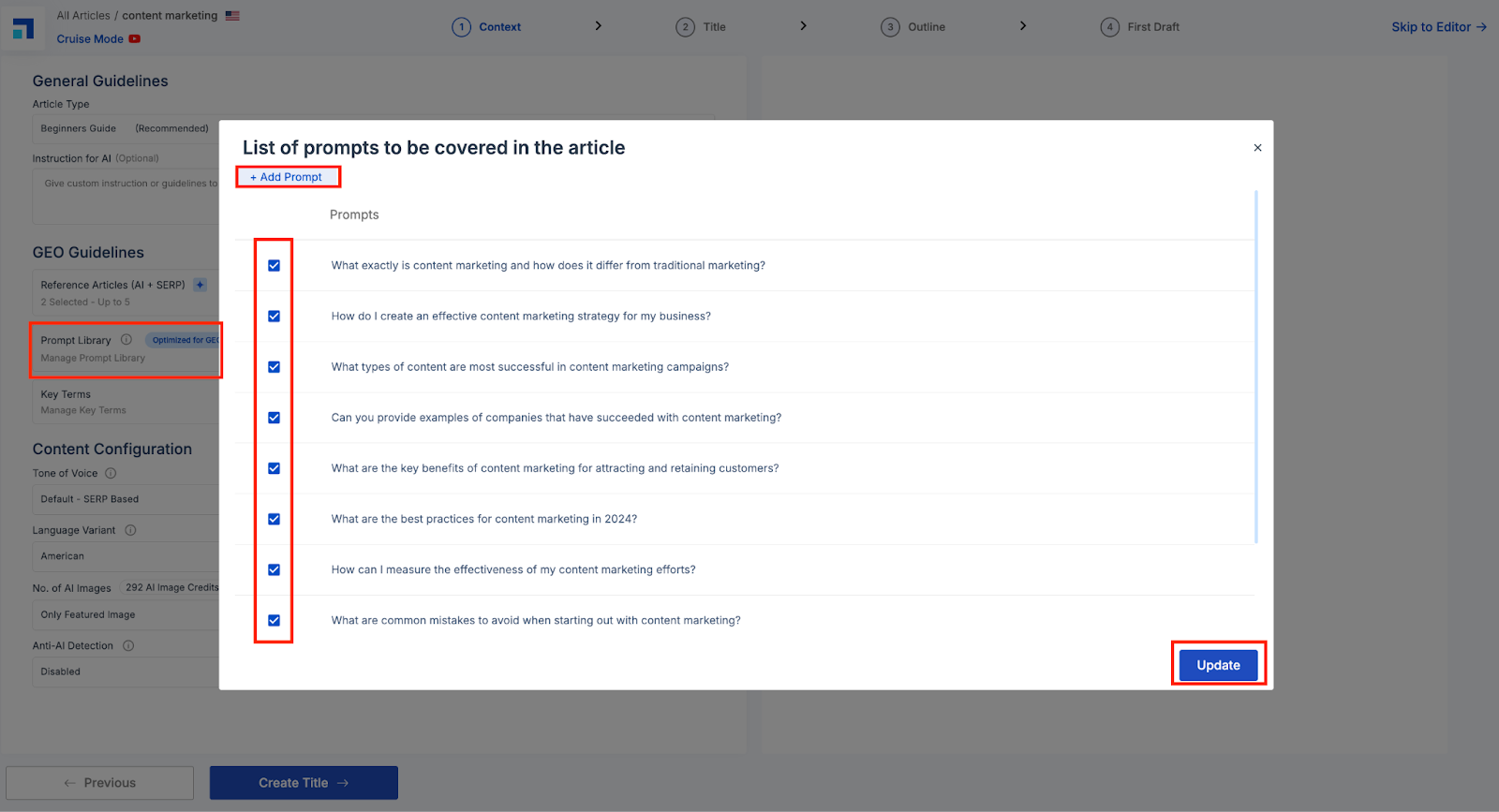
Prompt Library: The Prompt Library helps you craft more relevant content by pulling key user questions from two sources:
Top Ranking URLs: Analyzes top search results to show what’s already working. AI-Generated Insights: Suggests fresh, trend-based prompts aligned with user intent.
To use it, click "Manage Prompt Library". A pop-up will appear with suggested prompts. Simply check or uncheck the ones you want, then click "Update" to apply them to your content brief.
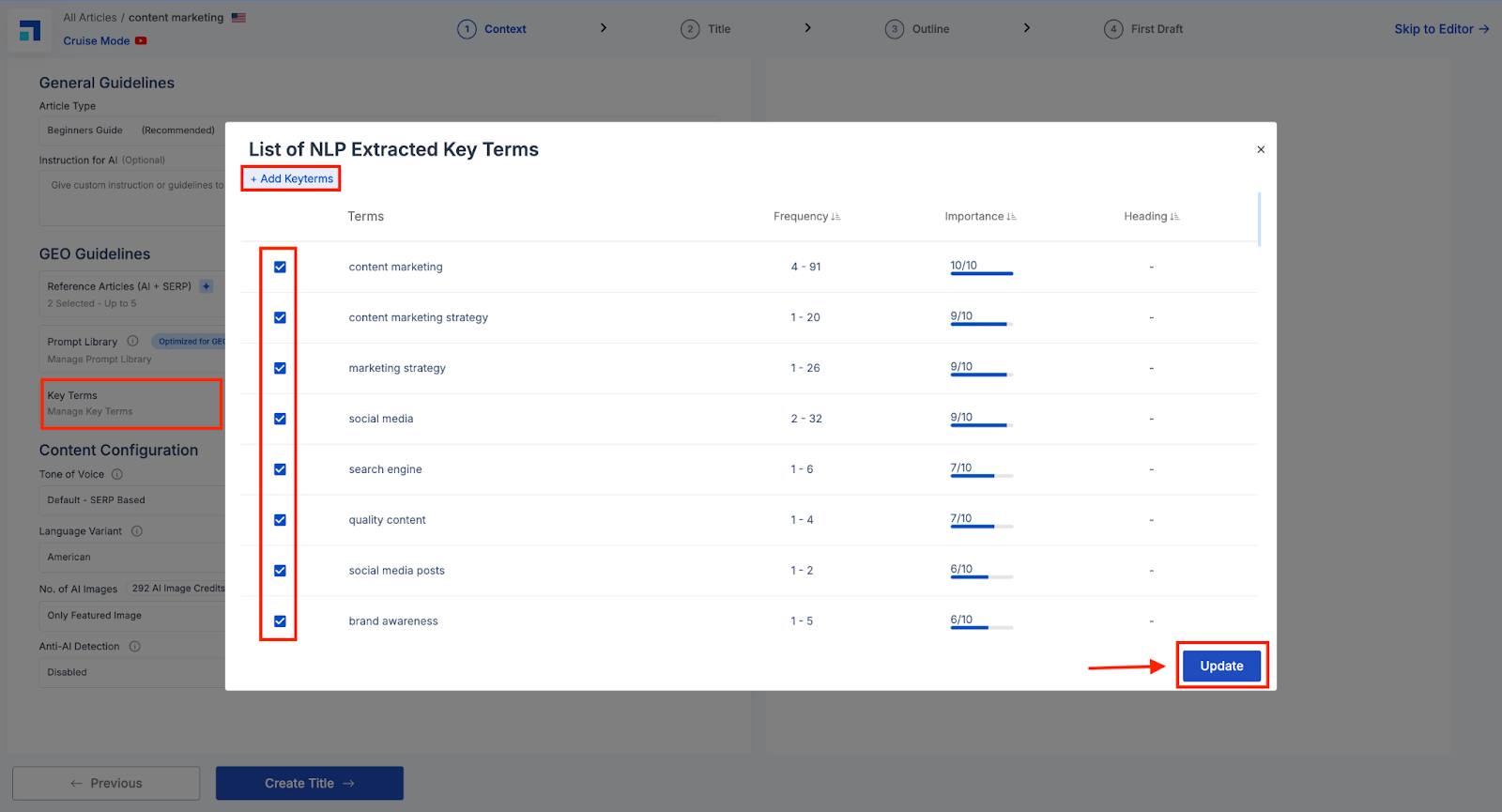
Key Terms : The Key Terms feature helps you create content that’s both SEO-rich and aligned with real user intent — a critical part of the GEO approach. These terms are extracted using Natural Language Processing (NLP) from top-ranking content across your selected keywords.
Here’s how it works:
Click on “Manage Key Terms” from the Context section. You’ll see a list of recommended terms, each with: Frequency Range: How often it appears in high-performing content. Importance Score: How critical the term is to your topic.
Use the checkboxes to select or deselect terms based on your strategy.
Want to add your own? Click “ Add Keyterms” to include custom keywords that matter to your audience or brand. When you’re done, hit “Update” to save your selections.
Guiding the AI with high-value terms ensures your content is topically rich, well-aligned with search patterns, and structured for better outcomes, not just rankings.
Content Configuration
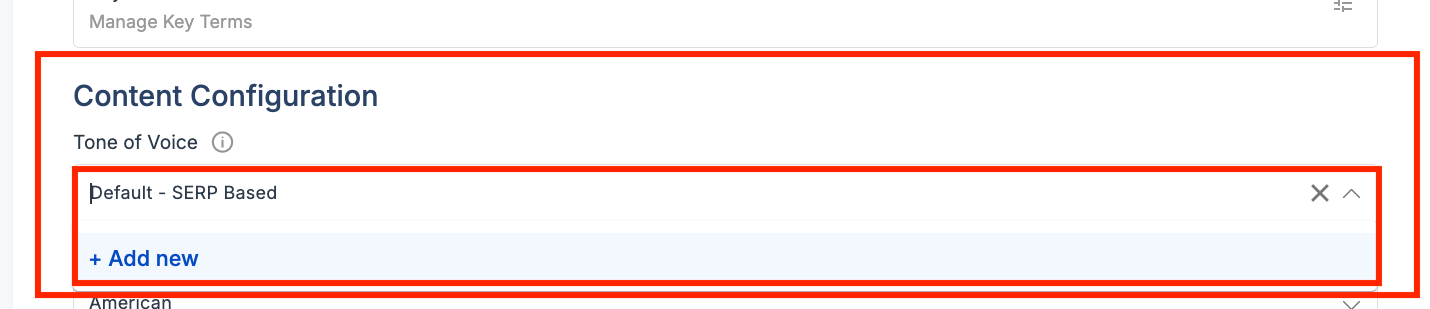
Tone of Voice: Set the desired writing style. “Default – SERP Based” uses the tone most commonly found in top-ranking articles, or add new. [Want to know how? Read here.]
Language Variant: Select the version of English (e.g., American, British) you want your content written in.
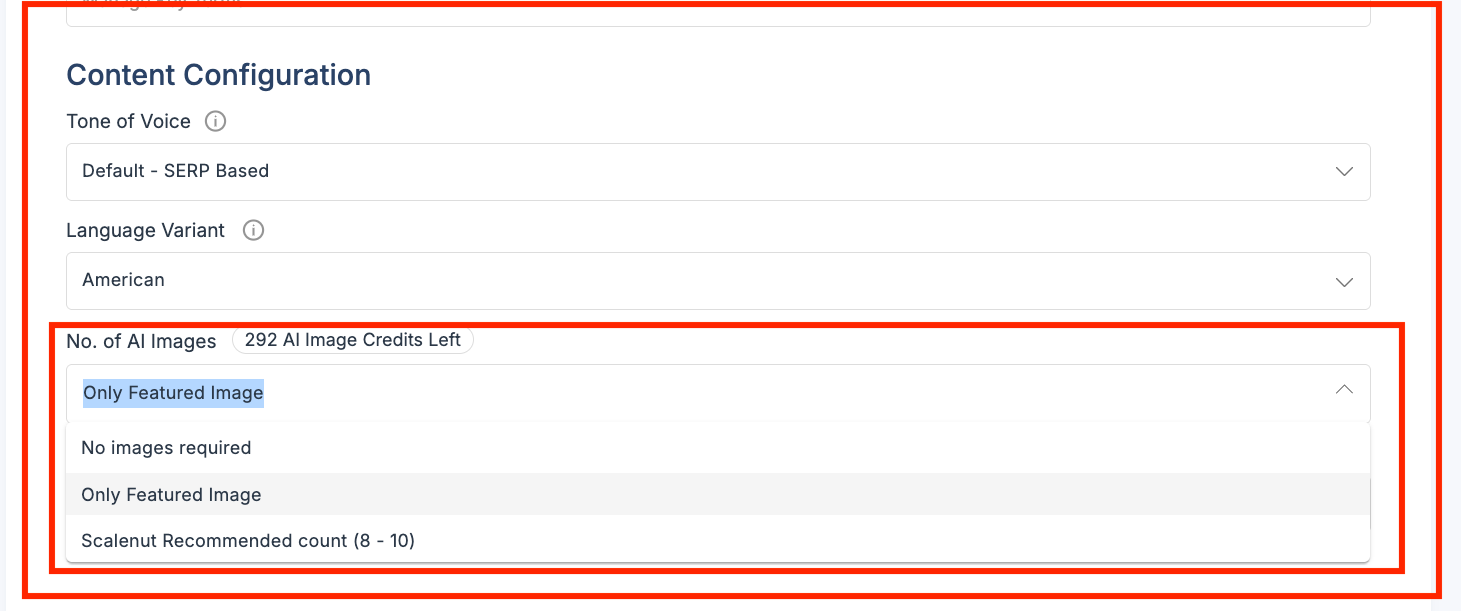
Number of AI Images: Decide how many AI-generated images you want—choose from featured-only or more or none, depending on your credits.
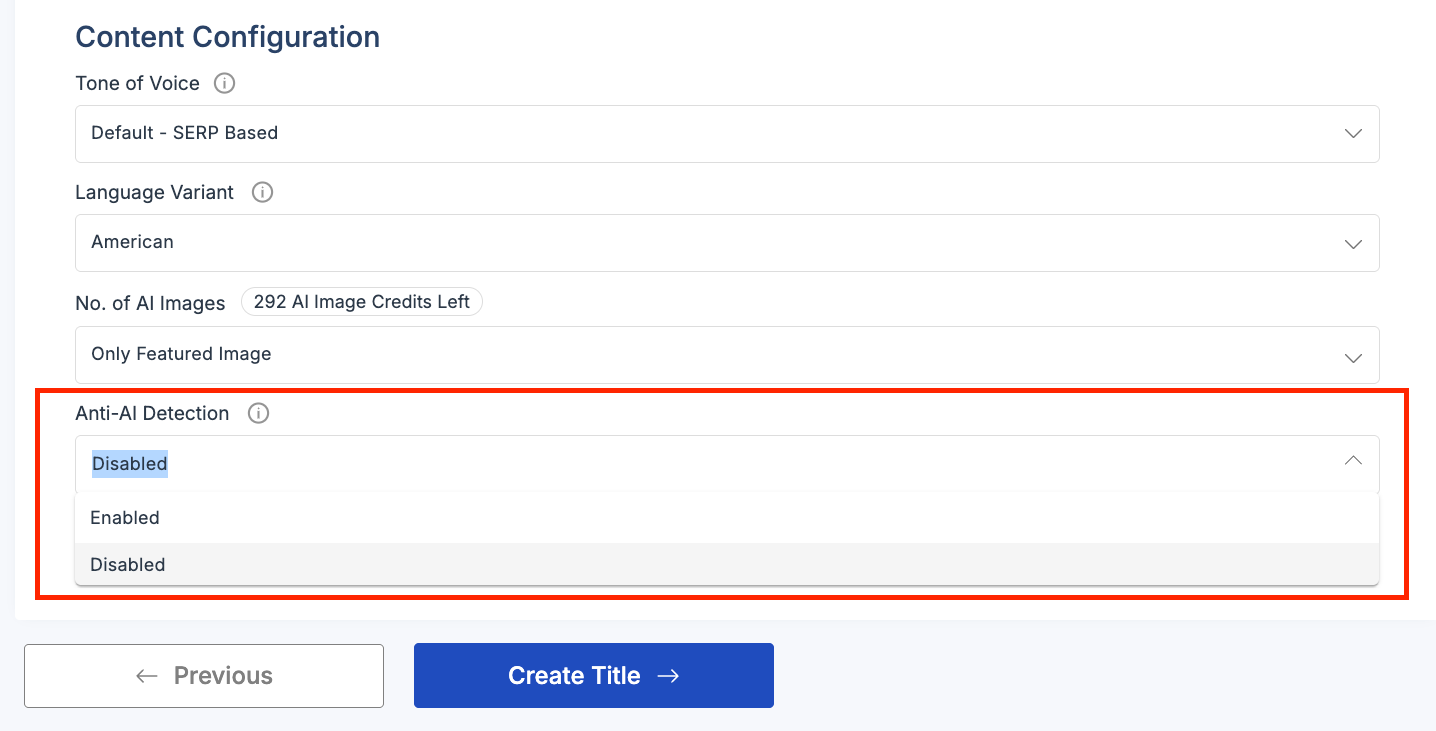
Anti-AI Detection: When enabled, this ensures that the content is written in a more human-like tone to reduce AI-detection flags.
Once you've configured all the inputs, click on “Create Title” to move forward. This structured setup ensures the AI is equipped with the right context to produce high-quality, GEO-aligned content—right from the very first draft.
How to Set the Right Context for Your Blog?
In GEO, setting the right context isn't just a good writing habit—it’s a strategic necessity.
With content being evaluated not just by human readers, but also by AI-powered discovery systems, providing a clear, relevant, and intent-aligned context helps your blog stand out and get discovered.
Setting the right context ensures your content resonates with the right audience, aligns with search intent, and increases your visibility across platforms like Google, ChatGPT, and other AI-driven tools.
If you’ve ever found it difficult to frame your blog effectively, here are key strategies to help you create context-rich content that performs:
1. Define Your Target Audience
Start with clarity on who you’re writing for. Understanding your readers’ interests, pain points, and knowledge level allows you to set a context that feels relevant and personalized. GEO-friendly content is audience-first—so always write with user intent in mind.
2. Do Smart, Structured Research
Go beyond surface-level information. Use data, credible sources, and competitor analysis to build a knowledge-backed foundation. This not only strengthens your context but also boosts your topical authority—a key ranking factor for both traditional search and generative engines.
3. Start with a Strong Hook
Your opening paragraph sets the tone for relevance. Begin with a compelling question, stat, or relatable insight that directly connects with the user’s search intent. This helps both users and algorithms quickly understand why your content matters.
4. Provide Essential Background
Give your readers the information they need to fully understand the topic. Whether it’s definitions, recent trends, or historical context, filling these knowledge gaps helps establish trust—and keeps both readers and AI models engaged with your content.
5. Keep Language Clear and Purposeful
Avoid jargon-heavy or overly complex language that might confuse readers or reduce accessibility. Use clean, concise, and intent-focused language that resonates with a wide range of users—and is easy for AI systems to parse and recommend.
Context Powers Discoverability
Context is not optional—it’s what makes your blog both useful and discoverable. It frames the narrative for your audience and signals relevance to search engines and AI platforms.
When you ground your blog in meaningful, well-researched context, you not only enhance user understanding but also position your content to be surfaced more often in generative search results.