
9 Clearscope Alternatives Compared by Workflow, Cost, & Fit

Clearscope alternatives at a glance
- Scalenut: Better than Clearscope for end-to-end SEO and GEO execution, turning content and AI visibility gaps into planning, creation, optimization, audits, internal links, and published pages.
- Surfer SEO: Better than Clearscope for automation-heavy optimization, with real-time scoring, one-click content improvements, internal linking, and broader AI visibility tracking on higher plans.
- Frase: Better than Clearscope for lean teams that want research, briefs, AI drafting, SEO and GEO scoring, site audits, AI visibility monitoring, and CMS publishing in one workflow.
- MarketMuse: Better than Clearscope for site-level content strategy, using Topic Authority, Personalized Difficulty, and inventory analysis to prioritize what to create, update, or protect.
- Rankability: Better than Clearscope for agencies managing multiple clients, with dedicated workspaces, unlimited users, bulk creation, approval workflows, recurring content routines, publishing, and API access.
- Content Harmony: Better than Clearscope when briefing is the bottleneck, combining search intent, competitor outlines, topic modeling, questions, and visual research into writer-ready briefs.
- Dashword: Better than Clearscope for teams wanting a simpler briefing and scoring workflow, with unlimited content scoring and API and MCP access included across plans.
- NEURONwriter: Better than Clearscope for budget-conscious users who need SERP and NLP optimization, AI writing, content planning, and AI visibility monitoring from $23 per month.
- Semrush: Better than Clearscope when content optimization must connect with keyword research, technical audits, rank tracking, backlink analysis, competitor intelligence, and AI visibility.
Clearscope starts at $129/month, while the alternatives in this guide range from a free plan to broader SEO and GEO platforms. Price alone, however, is a poor way to choose. A lower-cost optimizer may replace the editor but leave gaps in planning, auditing, publishing, or AI visibility. A larger platform may solve more problems but add complexity your team never uses.
We compared 9 tools by workflow coverage, optimization depth, AI tracking, limits, and best-fit user so the shortlist reflects actual needs, not the longest feature list.
How did we evaluate the best Clearscope alternatives?
We evaluated each platform against Clearscope’s current capabilities, including topic research, content optimization, AI-assisted drafting, content inventory, and AI prompt and citation tracking. The Clearscope competitors were assessed using the following criteria:
- Content optimization: Quality of SERP analysis, topic and entity recommendations, intent guidance, content scoring, and refresh support.
- Workflow coverage: Support for research, briefs, creation, optimization, auditing, internal linking, and publishing.
- AI visibility: Ability to track prompts, brand mentions, citations, competitors, sentiment, and share of voice. AI writing or AI-focused content scores alone were not counted as visibility tracking.
- Content strategy: Site-level inventories, topic clusters, content gaps, competitor insights, and prioritization features for deciding what to create or update.
- Ease of execution: How easily teams can move from an identified content or visibility gap to a completed optimization.
- Collaboration and integrations: Support for multiple users, shared briefs, approval workflows, Google Docs, WordPress, CMS platforms, APIs, and reporting.
- Pricing and limits: Starting price, annual billing requirements, content credits, prompt limits, user allowances, add-on costs, and trial access.
- Best-fit user: Whether the platform is better suited to individual writers, content teams, agencies, or businesses managing broader SEO and GEO programs.
Current product pages, pricing pages, help documentation, and publicly available feature information were used for the comparison. Each tool was ranked by how well it solves a specific requirement, not by the number of features it offers.
What are the best Clearscope alternatives in 2026?
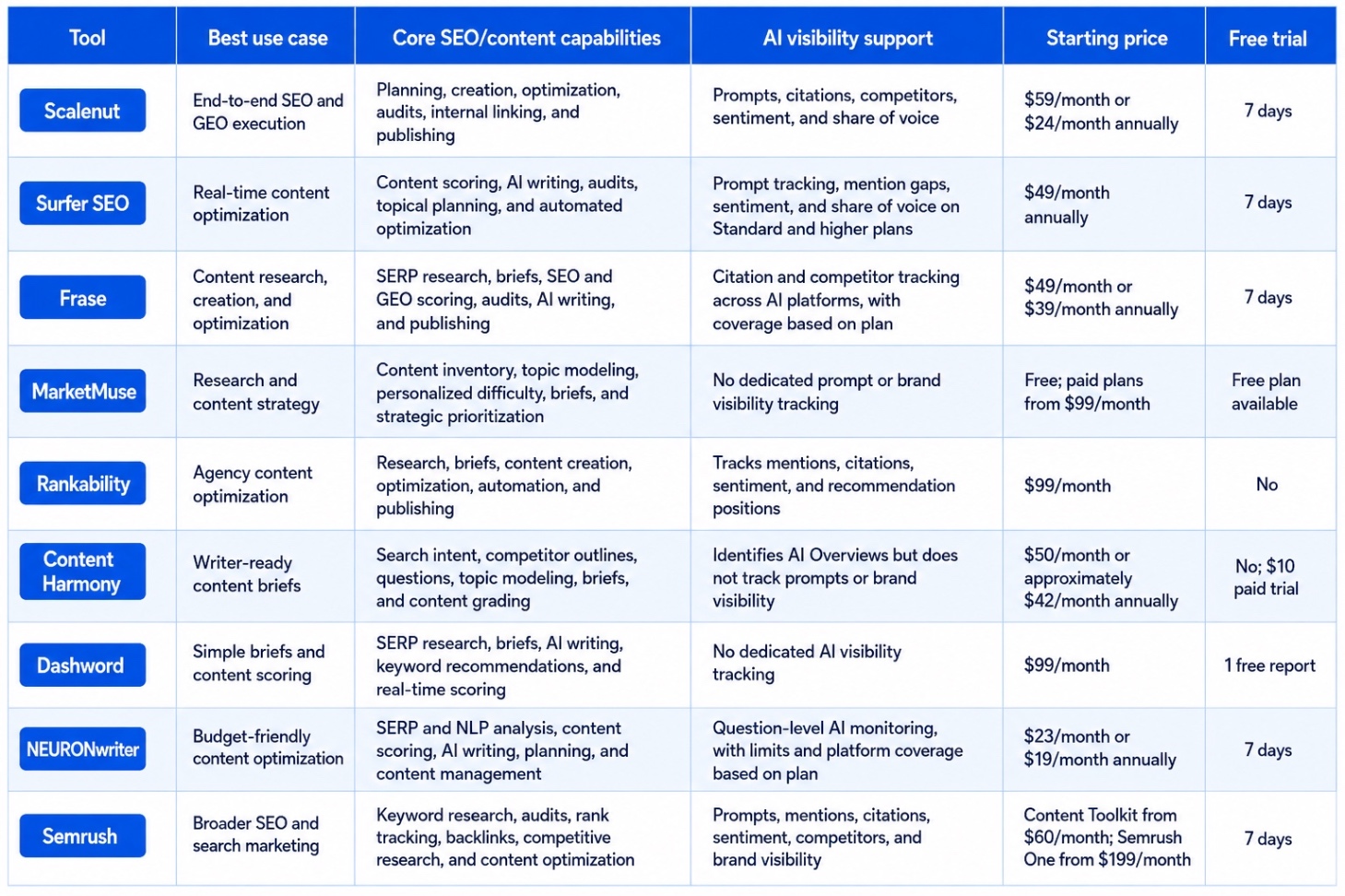
The best Clearscope alternatives are Scalenut, Surfer SEO, Frase, MarketMuse, Rankability, Content Harmony, Dashword, NEURONwriter, and Semrush. They serve different needs across SEO and GEO execution, content optimization, strategy, briefing, affordability, and broader search marketing.
Here is how each tool compares with Clearscope in capabilities, pricing, strengths, limitations, and ideal use case.
1. Scalenut - Best for end-to-end SEO and GEO execution
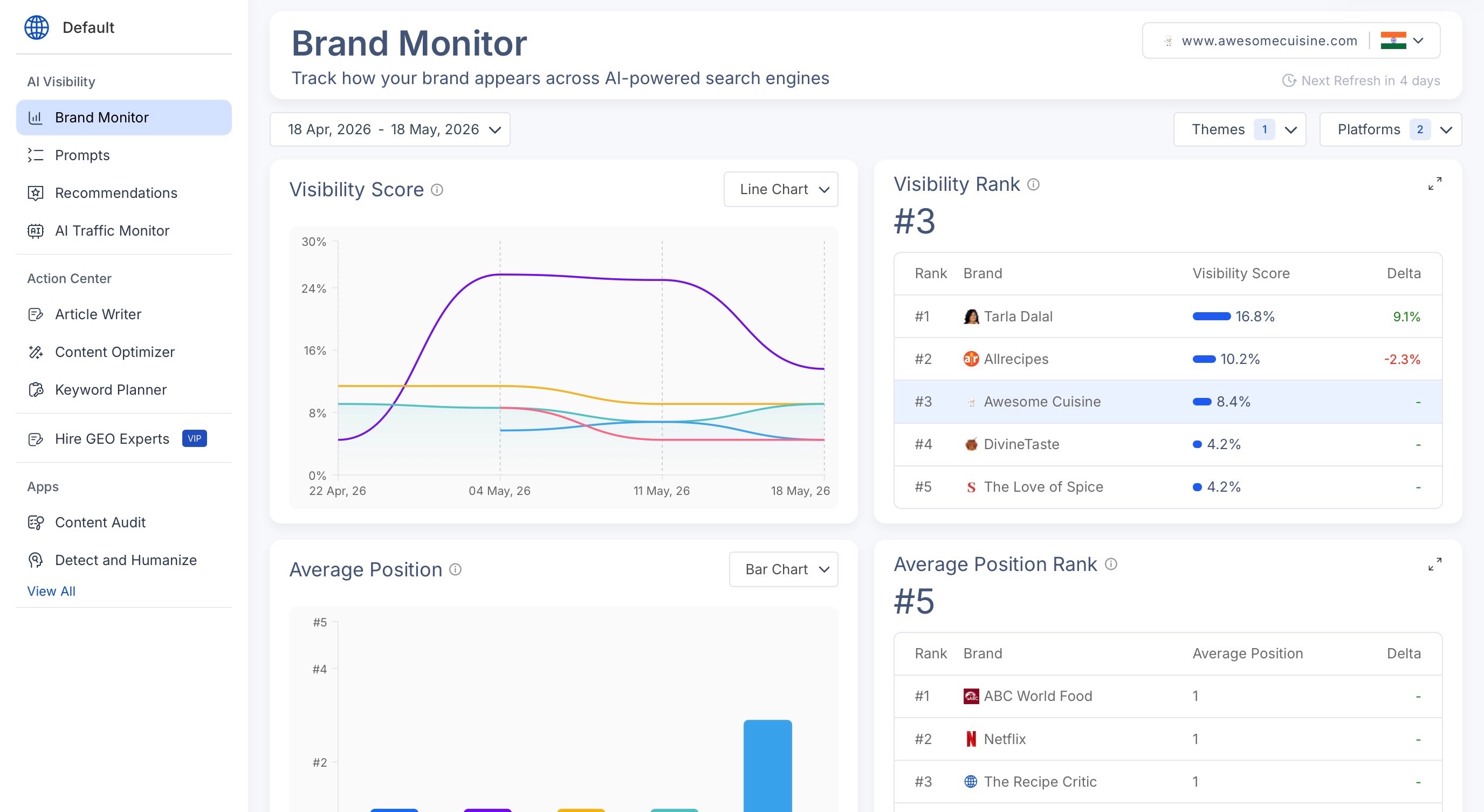
Scalenut is an SEO and GEO platform that connects keyword planning, content creation, optimization, auditing, internal linking, publishing, and AI visibility in one workflow. It suits teams that want to manage content performance across traditional search and AI-generated answers without relying on separate tools at every stage.
Why choose Scalenut over Clearscope?
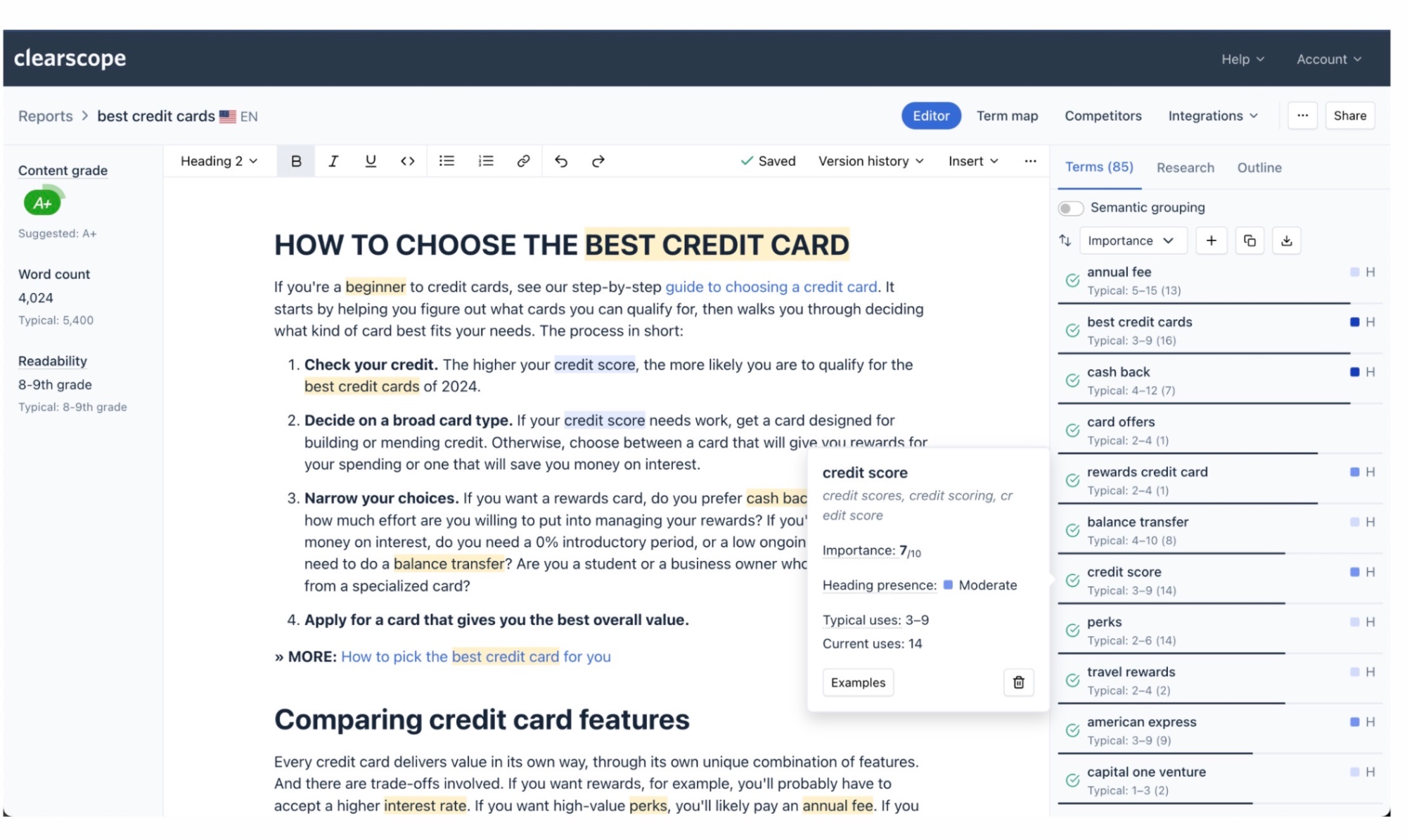
Clearscope supports topic research, content grading, AI-assisted drafting, content monitoring, and AI visibility tracking. Scalenut is a stronger alternative when you want to connect these insights with a broader set of execution tools.
For example, Scalenut can identify prompts where competitors have stronger visibility, uncover content and citation gaps, and recommend relevant articles or backlink opportunities. Teams can then create or optimize content, improve on-page elements and internal links, and publish directly to WordPress or Shopify within the same platform.
Key features
- AI Visibility: Tracks Visibility Score, Share of Voice, average position, competitors, prompts, citations, sentiment, query fan-out, and complete AI responses across supported platforms.
- Keyword Planner and Article Writer: Builds topic clusters and turns keyword, SERP, and AI prompt research into structured, GEO-focused articles.
- Content Optimizer and Content Audit: Helps optimize new and existing content while surfacing topic gaps, declining pages, cannibalization, and other improvement opportunities.
- OnPage Pro and Link Manager: Identifies on-page issues, finds internal linking opportunities, and helps improve site structure.
- Publishing and execution: Supports WordPress and Shopify publishing, content recommendations, Social UpReach, and a marketplace for finding backlink opportunities.
Pricing
- Starter: $59/month or currently $24/month with annual billing
- Plus: $89/month or currently $36/month with annual billing
- Professional: $199/month or currently $80/month with annual billing
- VIP Service: Custom pricing
- Free trial: 7 days
Where Scalenut stands out
- Connects AI visibility and competitor gaps directly with content creation, optimization, auditing, and publishing.
- Covers both SEO execution and GEO monitoring, making it useful for teams managing the complete content lifecycle.
Want the complete product breakdown? Read our Scalenut review for SEO and GEO to see how its planning, optimization, visibility, and publishing workflows fit together.
2. Surfer SEO - Best for real-time content optimization
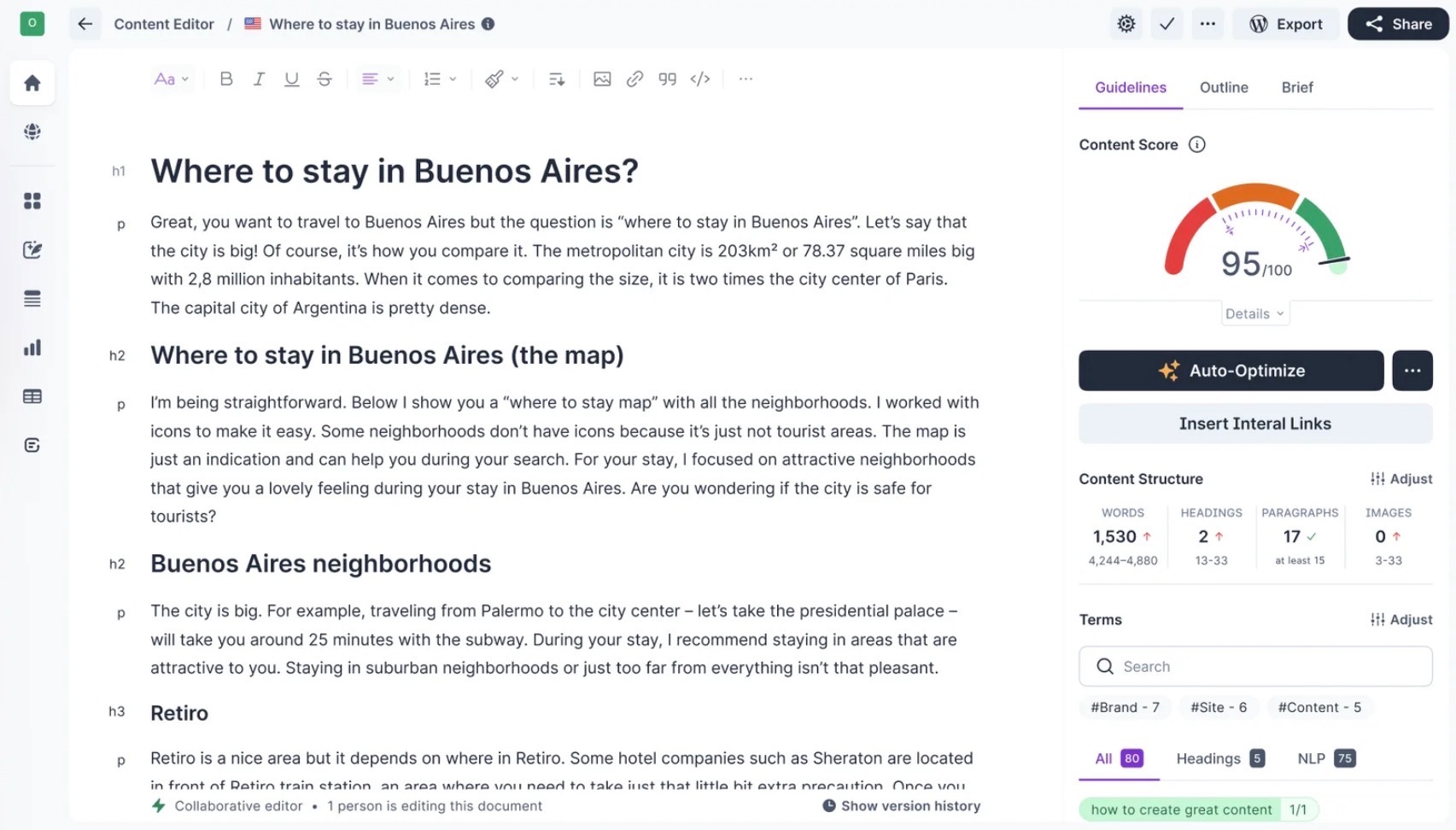
Surfer SEO is a content optimization platform built around real-time, data-led writing guidance. Its Content Editor analyzes competing search results and scores drafts across traditional SEO and AI search factors. Surfer also includes AI-assisted writing, content auditing, internal linking, topical planning, and AI visibility tracking.
Why choose Surfer SEO over Clearscope?
The Surfer SEO vs Clearscope decision largely depends on how much guidance and automation you want inside the optimization workflow. Clearscope offers a cleaner editorial experience with content grades and topic recommendations. Surfer provides a more detailed editor with separate SEO and AI Search scores, customizable competitors, content-structure guidance, and one-click optimization.
Surfer also connects Google Search Console data with Content Audit to identify pages that need attention. Users can move those pages into Content Editor, apply optimization recommendations, add internal links, and continue monitoring their search performance. Its AI Tracker similarly connects citation opportunities with Content Editor for direct optimization.
Key features
- Content Editor: Provides real-time recommendations for relevant terms, entities, facts, structure, readability, and upfront intent alignment.
- Content Audit: Combines Google Search Console data with SERP analysis to identify pages that may require re-optimization.
- AI Tracker: Monitors AI visibility, citations, sources, sentiment, mention gaps, competitors, and Share of Voice across supported AI platforms.
- Surfer AI and Surfy: Supports AI-assisted article generation, outlining, rewriting, and in-editor content improvements.
- Auto-Optimize and Internal Linking: Applies optimization suggestions and finds contextual internal-link opportunities after connecting Google Search Console.
Pricing
- Discovery: $49/month, billed annually
- Standard: $99/month, billed annually
- Pro: $182/month, billed annually
- Peace of Mind: $299/month, billed annually
- Enterprise: Starts at $999/month
Where Surfer SEO stands out
- Provides granular, real-time optimization guidance for both traditional search and AI search.
- Connects content auditing and AI visibility insights directly with its Content Editor and optimization tools.
Still weighing the editing experience? Compare Scalenut vs Surfer SEO across content optimization, AI visibility, workflow coverage, and pricing.
3. Frase - Best for SERP research and content briefs
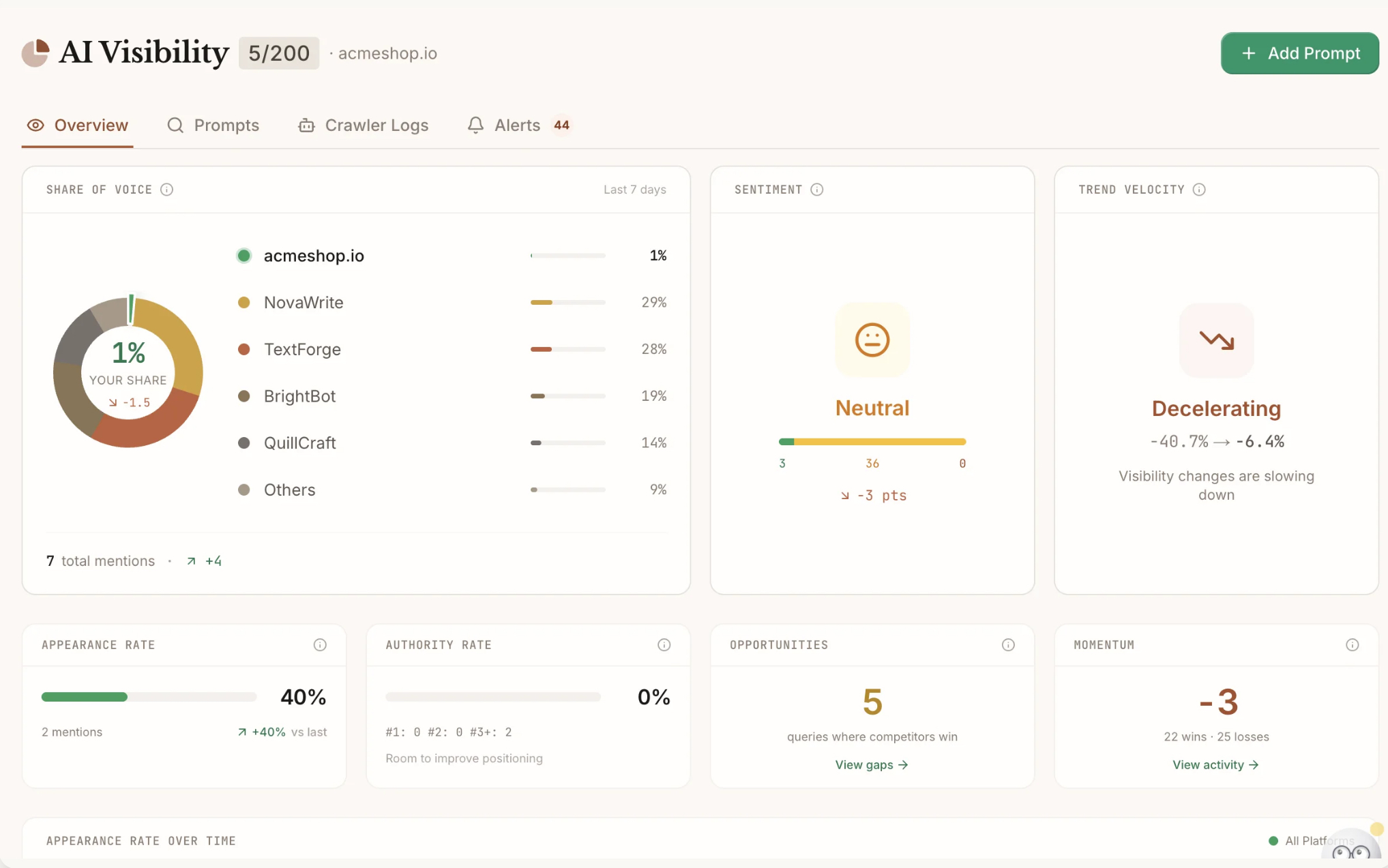
Frase is an SEO and GEO content platform that combines SERP research, brief creation, AI-assisted writing, content optimization, site auditing, publishing, and AI visibility monitoring. Its research workflow analyzes top-ranking pages to surface relevant topics, entities, questions, and competitor structures before turning those insights into an outline or draft.
Why choose Frase over Clearscope?
The Frase vs Clearscope decision depends largely on the workflow surrounding content optimization. Clearscope provides straightforward topic recommendations, content grading, AI drafting, and content monitoring. Frase is a stronger fit when detailed SERP research and brief creation need to connect directly with writing, optimization, publishing, and post-publication monitoring.
Frase also scores content separately for SEO and GEO, identifies specific changes that could make a page easier for AI engines to cite, and monitors whether brands appear in AI-generated answers. Content Guard watches selected pages for ranking decline and prepares recommended updates for approval.
Key features
- SERP research and content briefs: Analyzes competing pages and surfaces headings, topics, entities, questions, and content gaps for brief and outline creation.
- SEO and GEO optimization: Provides separate scores and recommendations for improving traditional search relevance and AI citation readiness.
- Frase Agent: Researches topics, creates briefs, drafts in a defined brand voice, optimizes content, and prepares approved pages for publishing.
- AI Visibility: Tracks mentions, citations, competitors, Share of Voice, response text, and visibility changes across supported AI platforms.
- Site Audit and Content Guard: Audits existing pages and monitors selected content for ranking decline before proposing updates.
Pricing
- Starter: $49/month or $39/month billed annually
- Professional: $129/month or $103/month billed annually
- Scale: $299/month or $239/month billed annually
- Free trial: 7 days, with no credit card required
Where Frase stands out
- Turns live SERP research into detailed briefs, optimized drafts, and publish-ready content within one workflow.
- Places SEO scoring, GEO scoring, AI visibility, and content-decay monitoring within the same platform.
Need a direct workflow comparison? See how Scalenut compares with Frase across research, automation, GEO capabilities, and cost.
4. MarketMuse - Best for content strategy and topical authority
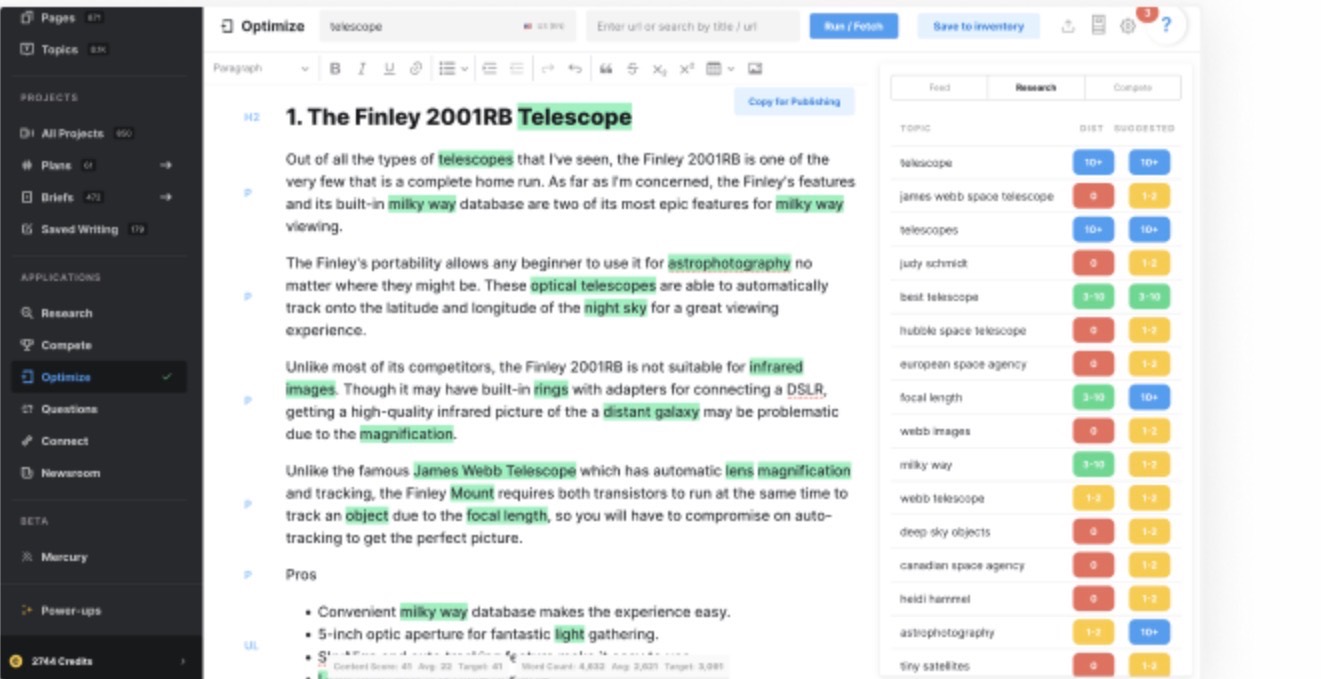
MarketMuse is a content planning and optimization platform for teams managing substantial content libraries. It analyzes existing pages and topic coverage to identify content gaps, optimization opportunities, and areas where a website has a realistic competitive advantage. Its primary strength is helping teams decide what to create or update before individual pages enter production.
Why choose MarketMuse over Clearscope?
The MarketMuse vs Clearscope decision largely comes down to portfolio-level strategy versus a more streamlined page-level workflow. Clearscope supports topic research, content creation, optimization, monitoring, and AI visibility tracking.
MarketMuse goes deeper into sitewide content planning. Its Inventory evaluates published pages and tracked topics, while metrics such as Topic Authority, Personalized Difficulty, and Competitive Advantage help teams prioritize attainable opportunities. This makes it better suited to organizations planning content clusters, managing extensive libraries, or deciding where new and updated content can have the greatest impact.
Key features
- Content Inventory: Maintains an updated record of published pages, topics, and page-topic relationships while surfacing gaps and optimization opportunities.
- Topic modeling: Maps related concepts and evaluates how comprehensively individual pages and the wider website cover a subject.
- Personalized Difficulty: Estimates how difficult a topic may be for a specific website based on its existing coverage and performance.
- Content planning: Recommends pages to create or update and organizes opportunities into content groups and clusters.
- Research, Heatmaps, and Content Briefs: Analyzes competitive topic coverage and produces briefs for new articles or existing-page optimization.
Pricing
- Free: Available with 1 user and 10 queries per month
- Optimize: Contact MarketMuse for pricing
- Research: Contact MarketMuse for pricing
- Strategy: Contact MarketMuse for pricing
Where MarketMuse stands out
- Prioritizes content opportunities using the website’s existing authority and competitive position.
- Provides inventory, planning, and cluster-level insights for teams managing large content portfolios.
Considering portfolio-level planning? Read our MarketMuse review for a closer look at topical authority, content inventory, and strategic prioritization.
5. Rankability - Best for agency content optimization workflows
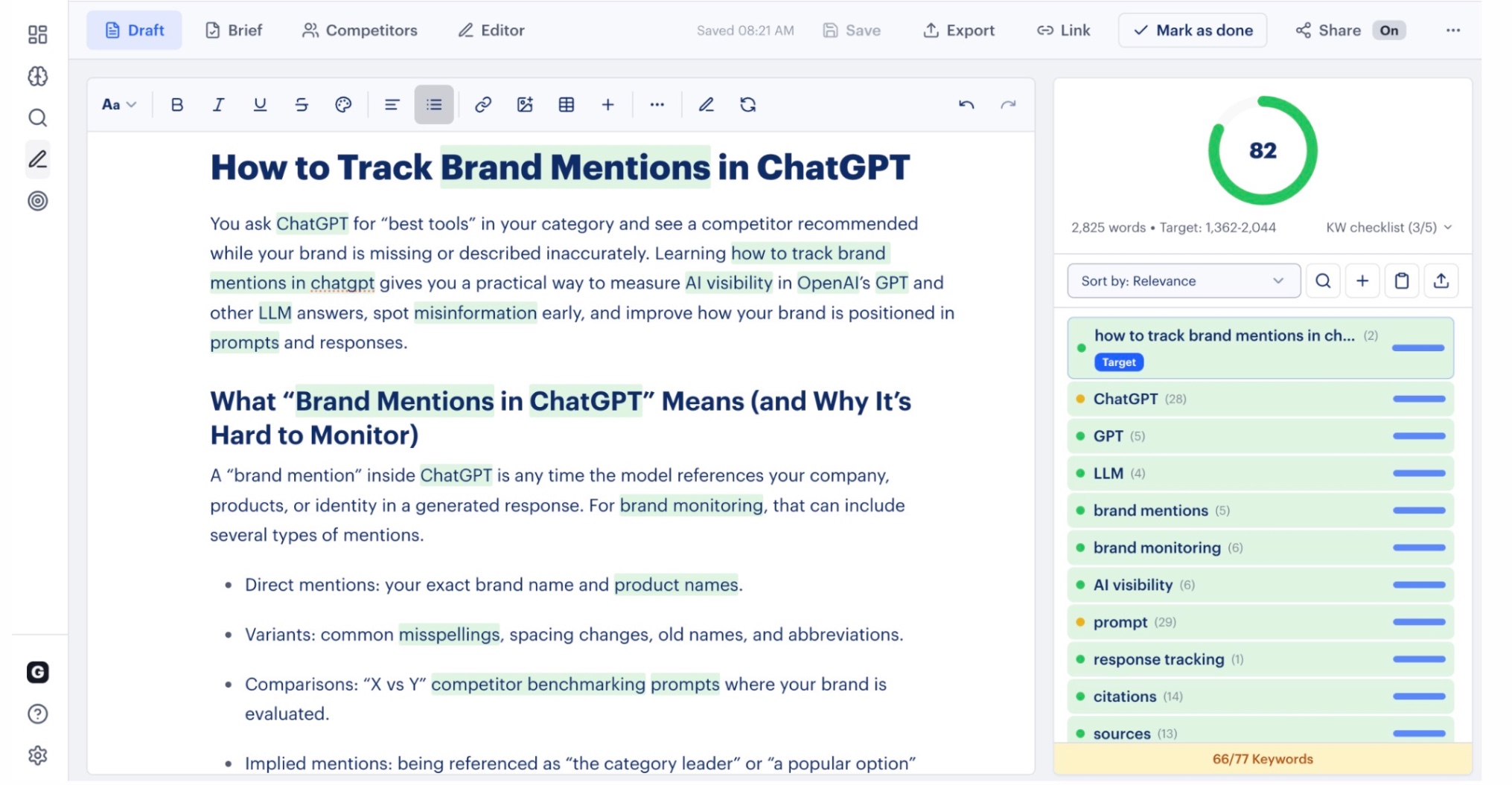
Rankability is a content creation and optimization platform designed for agencies managing multiple client brands. It combines keyword and content research, brief creation, knowledge-base-grounded drafting, optimization, bulk production, publishing, and recurring content routines in one workflow.
Why choose Rankability over Clearscope?
Rankability is a stronger fit when agencies need repeatable content production across multiple clients. Its research considers Google results and sources surfaced by supported AI platforms, allowing briefs to reflect what ranks in search and what appears in AI-generated answers.
Teams can ground drafts in each client’s Knowledge Base and brand voice, add proprietary insights through a dedicated uniqueness step, and refresh published pages through Optimize mode. Rankability also includes review and approval workflows, direct publishing, recurring content Routines, and unlimited users on every plan.
Key features
- Researcher: Supports keyword research, clustering, prioritization, and content research across Google and supported AI platforms.
- Copywriter: Creates briefs, metadata, and drafts using search competitors, AI-cited sources, and client-specific Knowledge Bases.
- Optimize mode: Imports existing pages and recommends what to add, remove, or rewrite using current search and AI research.
- Routines: Creates content on a recurring schedule and saves it as a draft in WordPress or Webflow for review.
- Agency workflow: Includes bulk creation, approval workflows, publishing, exports, API and MCP access, and unlimited users.
Pricing
- Core: $99/month, billed annually
- Scale: $299/month, billed annually
- Agency: $799/month, billed annually
- Enterprise: Custom pricing
Where Rankability stands out
- Grounds content in client-specific information while incorporating both search and AI-citation research.
- Supports multi-client production through brand workspaces, bulk creation, approvals, publishing, and scheduled Routines.
Managing multiple client workflows? Explore the best AI tools for SEO and AEO for agency research, optimization, visibility, and reporting.
6. Content Harmony - Best for detailed content briefs
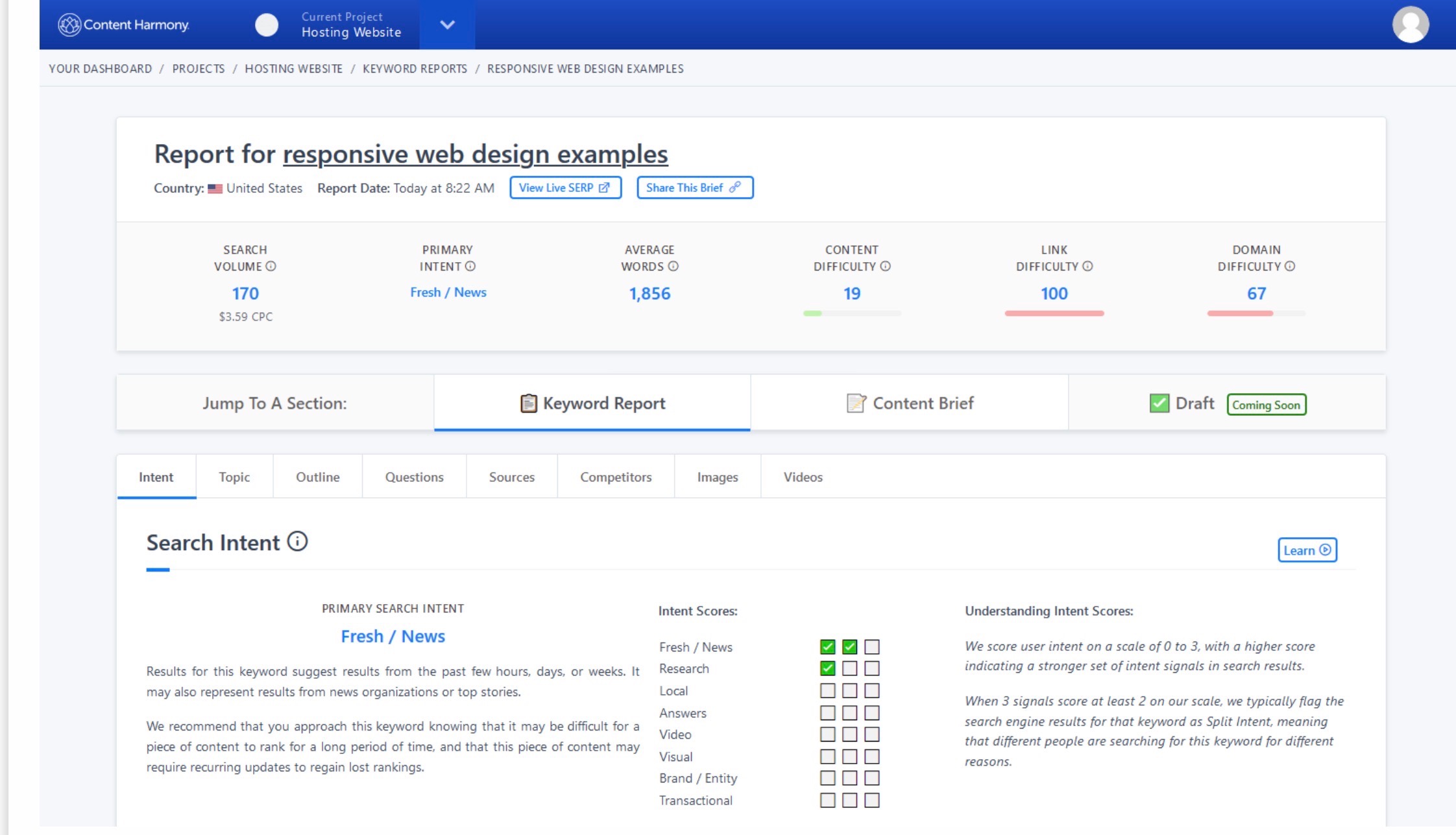
Content Harmony is a research and content-briefing platform designed for content strategists, agencies, and editorial teams. Its workflow moves from a live keyword report to a customizable content brief and then to content grading. It is especially useful for teams that want writers to receive detailed, consistent instructions before drafting begins.
Why choose Content Harmony over Clearscope?
Content Harmony is a better fit when research and writer handoffs are the main bottlenecks. Clearscope combines topic research, drafting, optimization, content monitoring, and AI visibility. Content Harmony concentrates more narrowly on building detailed briefs from current search results.
Its keyword reports bring together search intent, topic analysis, competitor outlines, questions, authoritative sources, and visual requirements. Strategists can select the most relevant findings and turn them into briefs using custom templates. This gives writers clearer direction on the audience, intent, structure, required topics, and supporting resources before they start writing.
Key features
- Keyword Reports: Analyze search intent, related topics, ranking competitors, questions, authoritative sources, images, and videos.
- Competitor Outline Analysis: Displays the heading structures of page-one competitors and lets strategists select relevant sections for a brief.
- Custom content briefs: Supports reusable templates that teams can adapt to different content types, clients, and editorial requirements.
- Content Grader: Uses Content Harmony’s topic model to evaluate coverage and identify important phrases that are missing or underused.
- Collaboration and integrations: Includes unlimited users and projects, shareable workflows, a Google Docs add-on, and API access.
Pricing
- Standard 5: $50/month or approximately $42/month billed annually
- Standard 12: $99/month or approximately $89/month billed annually
- Standard 25: $199/month or approximately $179/month billed annually
- Standard 50: $299/month or approximately $269/month billed annually
- Higher-volume plans: Start at $599/month
- Enterprise: Starts at $1,000/month
- Trial: $10 for 10 Content Workflow credits with no automatic billing
Where Content Harmony stands out
- Combines search intent, competitor structures, questions, sources, and visual requirements in one research workflow.
- Creates standardized, customizable briefs that improve handoffs between strategists, editors, and writers.
Want stronger writer handoffs? Use these content brief templates and examples to build clearer, more consistent briefs.
7. Dashword - Best for straightforward content optimization
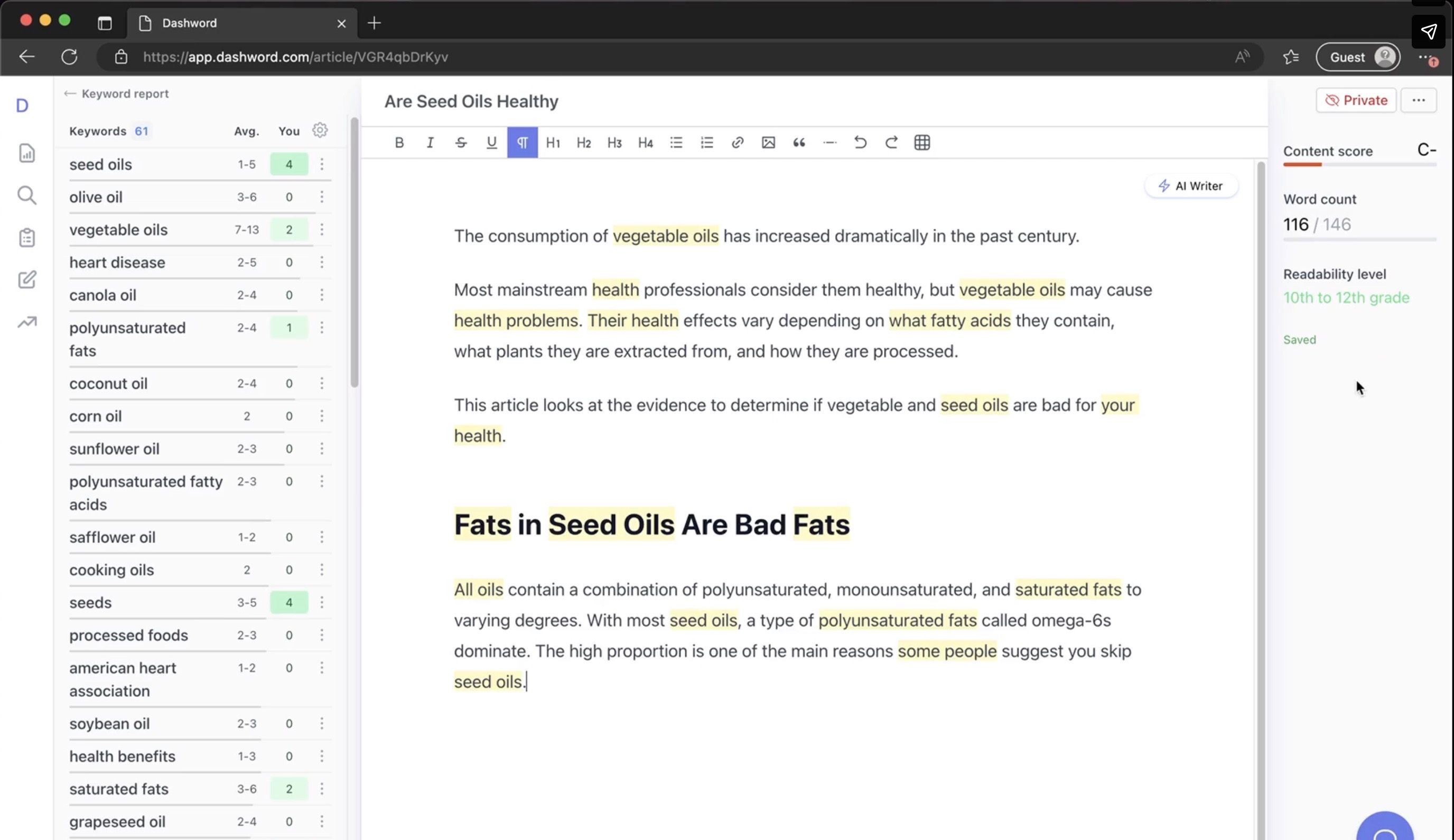
Dashword is a content research and optimization platform centered on keyword reports, briefs, real-time scoring, and post-publication monitoring. It analyzes pages ranking for a target keyphrase, surfaces relevant topics and questions, and gives writers a clear content score as they draft.
Why choose Dashword over Clearscope?
Dashword is a practical alternative for teams that want a simpler workflow for researching, briefing, optimizing, and monitoring content. Clearscope provides broader capabilities across topic exploration, AI drafting, content inventory, and AI visibility tracking.
Dashword keeps the process focused on producing and maintaining search-focused content. Teams can review competitor outlines, build and share briefs, optimize drafts in its editor or Google Docs, and monitor published pages for content scores, keyword rankings, organic traffic, and traffic trends. Its weekly report updates help teams identify pages that may need refreshing.
Key features
- Content reports: Analyze competing pages and surface relevant topics, frequently asked questions, and competitor outlines.
- Content Brief Builder: Lets teams select, organize, edit, and share research-backed instructions with writers.
- Content scoring: Evaluates drafts in real time, with unlimited scoring included across paid plans.
- Content monitoring: Tracks content scores, keyword rankings, weekly organic traffic, and traffic trends for published pages.
- AI and workflow access: Includes an AI Writer, Google Docs add-on, API access, and an MCP server for connecting supported AI agents.
Pricing
- Startup: $99/month for 30 content reports, 5 seats, and 100,000 AI-written words
- Business: Starts at $349/month for 100 content reports and 10 seats
- Annual billing: 20% discount
- Free access: The first content report is free with no credit card required
Where Dashword stands out
- Keeps competitor research, brief creation, scoring, and content monitoring in a relatively focused workflow.
- Includes unlimited content scoring and API and MCP access on every plan.
Need a wider benchmark before narrowing your shortlist? Compare the best SEO tools by use case across planning, optimization, audits, reporting, and AI visibility.
8. NEURONwriter - Best for budget-friendly content optimization
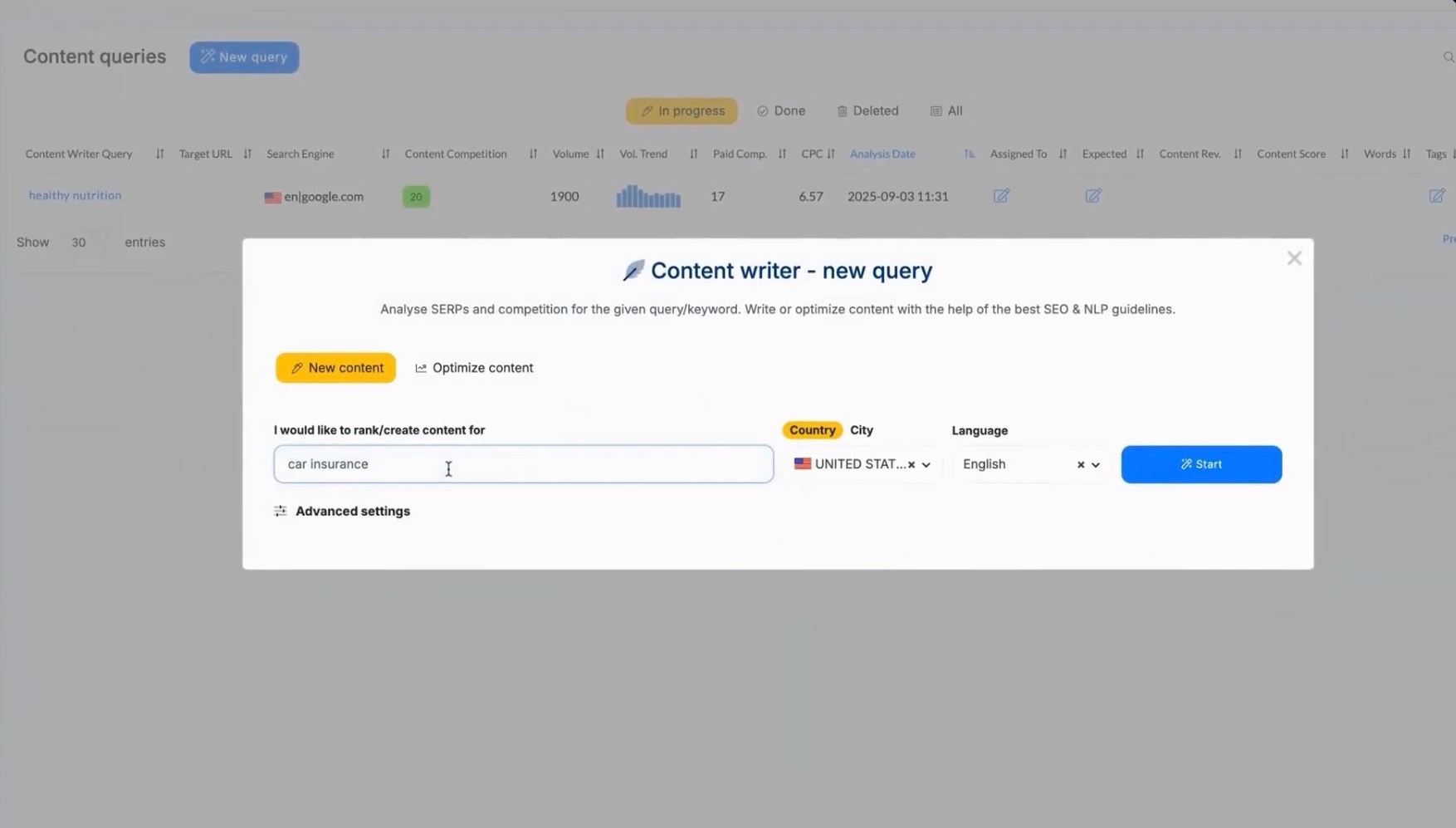
NEURONwriter combines SERP analysis, semantic content recommendations, AI writing, content planning, and basic AI visibility monitoring at a comparatively accessible starting price. It is suitable for freelancers, small agencies, and growing content teams that need practical optimization features without investing in a premium platform.
Why choose NEURONwriter over Clearscope?
Choose NEURONwriter if affordability and flexible usage limits are your priorities. Its Content Writer analyzes top-ranking pages and recommends relevant terms, entities, questions, and structural improvements. You can then use its AI templates or Content Designer to create and refine the content within the same workflow.
Clearscope provides a more streamlined editorial experience alongside content inventory and AI visibility capabilities. NEURONwriter is the more budget-conscious alternative for users who primarily need SERP-based optimization, AI-assisted creation, and smaller-scale AI visibility tracking.
Key features
- Content Writer: Evaluates competing pages and provides an optimization score, recommended terms, questions, and content structure guidance.
- Content Designer: Generates complete articles from a topic using SERP data and customizable AI templates. One-click article generation is available on Gold and higher plans.
- Content planning: Organizes content ideas, planned pages, and optimization tasks within separate projects and folders.
- AI Visibility: Tracks brand mentions, citations, sentiment, and share of voice across platforms such as ChatGPT, Perplexity, Google AI Overviews, and AI Mode.
- Integrations and collaboration: Higher plans support Google Search Console, WordPress, Shopify, team collaboration, plagiarism checks, and API access.
Pricing
- Bronze: $23/month or $19/month with annual billing
- Silver: $45/month or $37/month with annual billing
- Gold: $69/month or $57/month with annual billing
- Platinum: $93/month or $77/month with annual billing
- Diamond: $117/month or $97/month with annual billing
- Free trial: 7 days with no credit card required
Where NEURONwriter stands out
- Provides SERP and NLP-based optimization at a lower starting price than many Clearscope competitors.
- Combines content planning, optimization, AI writing, and entry-level AI visibility monitoring in one platform.
Keeping the budget below the premium tier? Compare the best AEO tools under $100 per month for content optimization and AI visibility.
9. Semrush - Best for broader SEO and search marketing
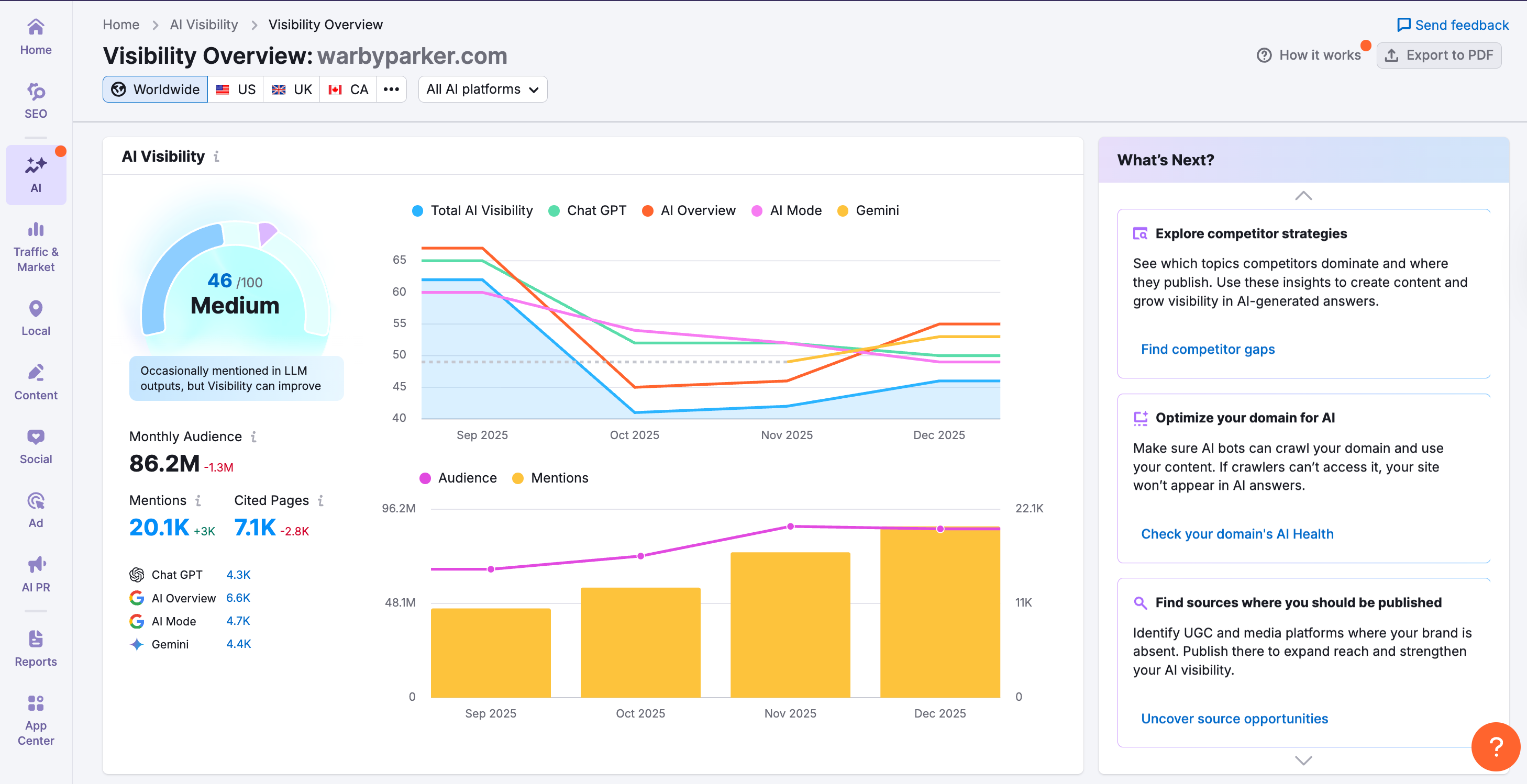
Semrush is a broader search marketing platform covering keyword research, competitive analysis, rank tracking, backlinks, technical SEO, content optimization, and AI visibility. It is best suited to teams that want to connect content decisions with performance data from across their SEO program.
Why choose Semrush over Clearscope?
Choose Semrush when content optimization is only one part of your search strategy. Clearscope focuses more closely on content creation, optimization, inventory management, and AI visibility. Semrush extends beyond the content workflow with technical audits, backlink analysis, position tracking, market research, and detailed competitor intelligence.
Semrush One combines its core SEO capabilities with AI search monitoring. Its modular product structure also lets teams purchase the Content Toolkit or AI Visibility Toolkit separately, depending on the functionality they need.
Key features
- Keyword and competitor research: Finds keyword opportunities and analyzes competitors’ rankings, content, backlinks, and search visibility.
- Technical SEO and tracking: Includes Site Audit, Position Tracking, backlink analysis, and other tools for diagnosing and measuring organic performance.
- Content Toolkit: Provides content ideas, SEO briefs, AI-assisted article creation, rewriting, optimization, and publishing integrations.
- AI Visibility Toolkit: Measures brand visibility, mentions, citations, sentiment, and competitor performance across leading AI search platforms.
- Prompt research and tracking: Identifies relevant prompts and monitors how frequently a brand or its competitors appear in generated answers.
Pricing
- SEO Toolkit: $139/month or $117.33/month with annual billing
- Content Toolkit: $60/month with a 7-day free trial
- AI Visibility Toolkit: $99/month per domain, billed annually
- Semrush One Starter: $199/month or $165.17/month with annual billing
- Semrush One Pro+: $299/month or $248.17/month with annual billing
- Semrush One Advanced: $549/month or $455.67/month with annual billing
Where Semrush stands out
- Connects content optimization and AI visibility with technical SEO, rankings, backlinks, and competitor research.
- Helps larger teams consolidate multiple SEO and search marketing workflows within one ecosystem.
Need the full tradeoff before investing in a broader suite? Read our Semrush review covering SEO depth, AI visibility, pricing, and workflow fit.
How should you choose the right Clearscope alternative?
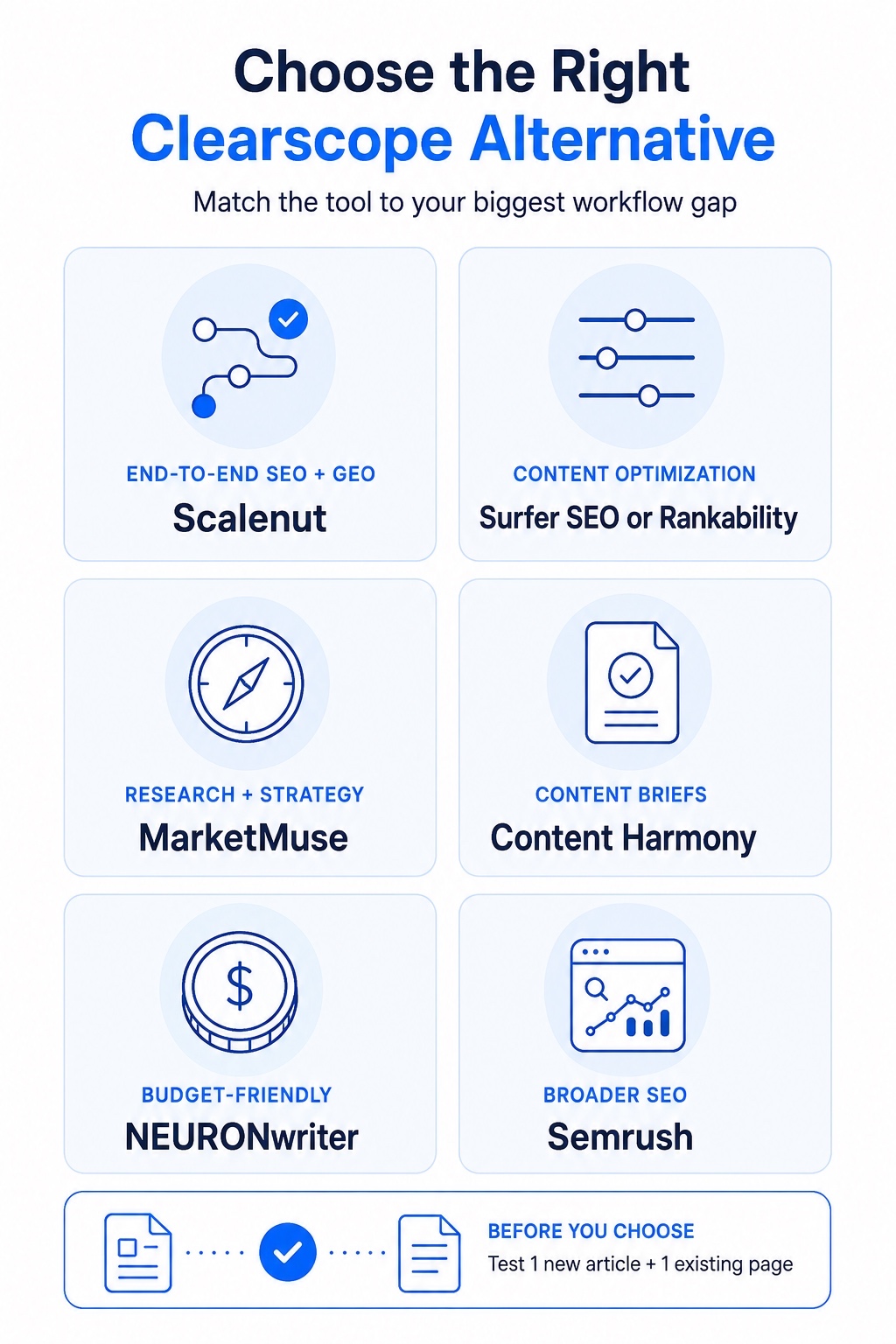
The right alternative to Clearscope depends on the specific gap you need to solve. Before comparing feature lists, determine whether you need a focused content optimizer or a platform that also handles strategy, creation, publishing, and AI visibility.
Use the following shortlist to narrow your options:
- Choose Scalenut for end-to-end SEO and GEO execution. It is the strongest fit if you want to plan, create, optimize, audit, internally link, and publish content while tracking prompts, citations, sentiment, competitors, and share of voice. If you are evaluating tools like Clearscope but for AI visibility, prioritize whether the platform lets you act on the gaps it identifies instead of only reporting them.
- Choose Surfer SEO or Rankability for focused content optimization. Surfer SEO provides real-time recommendations for terms, structure, intent alignment, and content scoring. Rankability is particularly useful for agencies that need competitor-driven briefs, NLP recommendations, optimization scoring, and repeatable client workflows.
- Choose MarketMuse for research and content strategy. Its site-level content inventory, Topic Authority, and Personalized Difficulty metrics help teams decide what to create or update based on their existing authority. It is better suited to strategic prioritization than one-off draft optimization.
- Choose Content Harmony for writer-ready content briefs. It brings search intent, competitor outlines, questions, topic analysis, and visual research into a customizable brief that can be shared with writers or clients.
- Choose NEURONwriter for budget-friendly optimization. It offers SERP analysis, NLP recommendations, content scoring, AI writing, planning, and limited AI visibility monitoring at a lower starting price. Check the content-analysis and AI-monitoring limits before selecting a plan.
- Choose Semrush for broader SEO and search marketing. It is better suited to teams that also need keyword research, technical audits, rank tracking, backlink analysis, competitive research, and AI visibility monitoring.
Before committing to any platform, test it with one new article and one existing page. Compare the quality of its recommendations, editing time saved, usage limits, collaboration options, and ability to support the rest of your workflow. The best alternative to Clearscope is the one that removes your current bottleneck without adding features your team will not use.
Still narrowing your shortlist? Use this guide to choose a generative AI optimization tool based on visibility coverage, optimization depth, execution, and cost.
Conclusion
Choosing among Clearscope alternatives starts with identifying the bottleneck you need to remove, whether it is limited execution, AI visibility, strategic planning, content briefing, automation, or cost. The right platform should solve that gap without complicating the rest of your workflow.
Shortlist two options and test each with one new article and one declining page. Compare recommendation quality, time saved, usage limits, collaboration, publishing support, and how easily your team can act on the insights before making a final decision.
Book a free strategy call with Scalenut.
Frequently asked questions
What is Clearscope, and what does it do?
Clearscope is a content optimization and AI search visibility platform. It analyzes competing pages, recommends relevant topics, grades drafts, tracks selected pages and prompts, and helps teams monitor how their brand appears across Google, ChatGPT, and Gemini.
What are the main Clearscope AEO features and benefits?
Clearscope’s AEO capabilities include prompt tracking, brand visibility monitoring, citation-source analysis, query fan-out awareness, and search intent-driven recommendations. These features help teams measure AI mentions, identify source gaps, and connect visibility findings with practical content improvements.
How does Clearscope pricing compare with its alternatives?
Clearscope pricing starts at $129 per month for Essentials and $399 per month for Business, while Enterprise uses custom pricing. NEURONwriter, Scalenut, Frase, and Surfer SEO have lower entry prices, but their allowances and feature coverage differ.
Surfer SEO vs Clearscope: Which is better for content optimization?
Surfer SEO is generally better for teams prioritizing real-time optimization, one-click content improvements, and internal linking. Clearscope is better suited to teams that value simpler grading, editorial usability, and integrated monitoring across content and selected AI prompts.
MarketMuse vs Clearscope: Which is better for content strategy?
MarketMuse is stronger for site-wide strategy because its content inventory, Topic Authority, and Personalized Difficulty help prioritize opportunities across a domain. Clearscope is easier to adopt when the priority is optimizing individual drafts within a straightforward editorial workflow.
Frase vs Clearscope: Which platform offers the broader workflow?
Frase is better for lean teams wanting research, briefs, AI drafting, optimization, site audits, AI visibility, and CMS publishing in one workflow. Clearscope may suit teams that prioritize clean content grading, editorial adoption, and a more focused optimization experience.
What should you look for in a Clearscope review?
A useful Clearscope review should assess recommendation quality, editor usability, AI visibility coverage, integrations, report limits, collaboration, and total monthly cost. Test the platform with both a new draft and an existing page before deciding whether it fits your workflow.
Which tools like Clearscope but for AI visibility are worth considering?
Scalenut, Surfer SEO, Frase, Rankability, NEURONwriter, and Semrush combine content or SEO capabilities with some level of AI visibility monitoring. Scalenut is the strongest fit when teams need to move directly from prompt and citation gaps to content execution.


.svg)


.webp)