



SE Ranking Reviews: Is It Worth Paying For In 2026?
Key Highlights
- SE Ranking is an all-in-one SEO platform that combines rank tracking, keyword ideas, audits, backlinks, content tools, reporting, and local SEO in one dashboard, helping improve your visibility in search results.
- Its AI visibility toolkit supports monitoring across ChatGPT, Gemini, Perplexity, Google AI Overviews, and Google AI Mode, with SE Visible for consolidated tracking.
- Keyword and rank tracking are strong for multi-location, multi-engine monitoring, while keyword research tools help prioritize target keywords by volume, difficulty, trends, and intent.
- Backlink tools cover analysis, monitoring, and competitor gap discovery, making it easier to protect link equity and spot outreach opportunities.
- Content features support SERP-based optimization through a Content Editor and SERP Checker, though they may feel less prescriptive for AI-focused execution.
- Plans scale by usage, and a 14-day free trial helps validate fit before committing; add-ons expand agency workflows, AI search tracking, and API access.
- Scalenut is positioned as a stronger SE Ranking alternative for teams that want a more focused GEO plus SEO workflow, with tighter alignment between AI visibility signals and content execution.
Most SEO tools promise clarity, but the day-to-day reality can feel messy. Rankings move without warning, competitors publish faster than teams can respond, and now AI-generated answers are changing what “visibility” even means. It is easy to end up paying for multiple platforms and still feel unsure about what to prioritize next.
That is why SE Ranking caught my attention. It brings a lot of essential SEO work into one place, and it has added AI visibility tracking that helps monitor how brands show up across newer search experiences. But the real question is whether an all-in-one suite is the right move, or if a more execution-focused platform would deliver clearer next steps for what to create, update, and improve.
In this SE Ranking review, we will break down the platform’s core features, summarize what real users say about it, and walk through its plans and pricing. I will also cover who it is best for, where it falls short, and how it stacks up against other popular SEO tools in 2026.
What is SE Ranking?
SE Ranking is a full-suite SEO platform that brings the core workflows into one place, including keyword research, rank tracking, site audits, backlink analysis, content optimization, local SEO, and reporting. It is designed for consistent, repeatable SEO execution, and it also includes newer AI visibility tracking to help teams monitor how brands show up across emerging search experiences.
It works especially well for small to mid-sized businesses, in-house teams, and agencies that want one reliable platform with accurate data instead of a patchwork tool stack. The real decision comes down to focus: is broad SEO coverage the main goal, or is the priority a more execution-driven approach that turns AI visibility insights into a clear plan for what to improve next?
What Are The Best SE Ranking Features For Modern SEO And AI Search?
SE Ranking packs a lot into one platform. In this section, we will break down its core modules by category, highlighting what each feature is designed to do and where it delivers the most practical value.
1. AI Visibility (GEO)
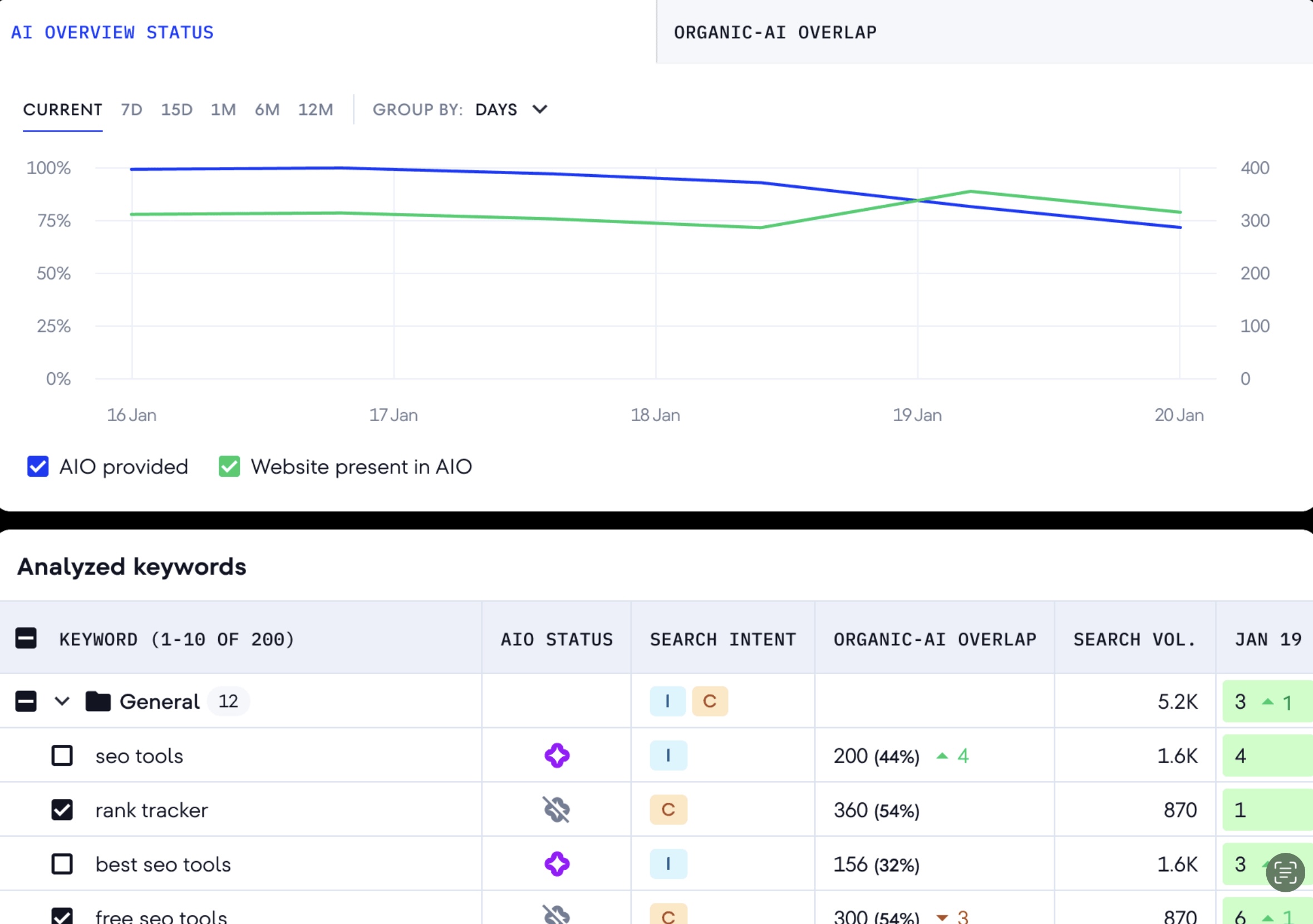
If you are actively thinking about visibility inside AI-generated answers, SE Ranking has built a dedicated layer for monitoring how your brand appears across major AI surfaces, alongside classic SEO tracking, which includes insights from Google Search Console.
AI Search Toolkit (Suite)
This is the umbrella set of AI visibility modules that helps you track how AI systems present your brand, then compare that performance against competitors.
- Brings multiple AI visibility tools into one workflow.
- Helps benchmark visibility trends over time.
- Useful for competitive comparisons across AI answer engines.
AI Visibility Tracker
This is where SE Ranking gets practical for GEO-style monitoring by focusing on mentions, links, and competitor share.
- Tracks brand mentions and links inside AI answers.
- Highlights competitor comparisons and relative visibility.
- Shows visibility trends so I can spot improvements or drops.
AI Overviews Tracker
This module is built around Google AI Overviews visibility, with a strong focus on comparing how classic rankings and AI results differ.
- Monitors presence in AI Overviews for target queries.
- Lets me compare traditional rankings vs AI overview inclusion.
- Helps identify keywords where AI results reshape visibility.
AI Mode Tracker
This module gives a dedicated lens into how your brand appears in AI-driven results.
- Tracks brand presence inside Google AI Mode results.
- Useful for understanding how AI Mode differs from standard SERPs.
- Helps connect query themes with AI Mode visibility outcomes.
ChatGPT Tracker
This is helpful when you want to understand whether ChatGPT mentions your brand and how the mention shows up relative to competitors.
- Tracks brand mentions in ChatGPT answers.
- Captures how the brand is described and whether links appear.
- Compares competitor presence across the same prompt set.
Gemini Tracker
This tracker focuses on Gemini visibility and is useful when you want consistent monitoring across prompts and topics.
- Monitors brand mentions in Gemini answers.
- Surfaces mentions, links, and visibility patterns by query theme.
- Helps compare performance across tracked topics.
Perplexity Tracker
Perplexity is citation-forward, so this tracker is most useful when you want to see how consistently your site shows up as a referenced source.
- Tracks brand mentions and linked citations in Perplexity results.
- Highlights trends and competitive comparisons over time.
- Helps me identify where authority and source selection may be lacking.
SE Visible (AI Visibility Dashboard)
SE Visible is the consolidated view that makes multi-engine monitoring easier, especially if you operate across multiple markets.
- Central dashboard across ChatGPT, Gemini, Perplexity, AI Overviews, and AI Mode.
- Multi-country coverage to compare how engines present your brand by region.
- Helpful for leadership-style reporting and quick visibility snapshots.
2. Keywords
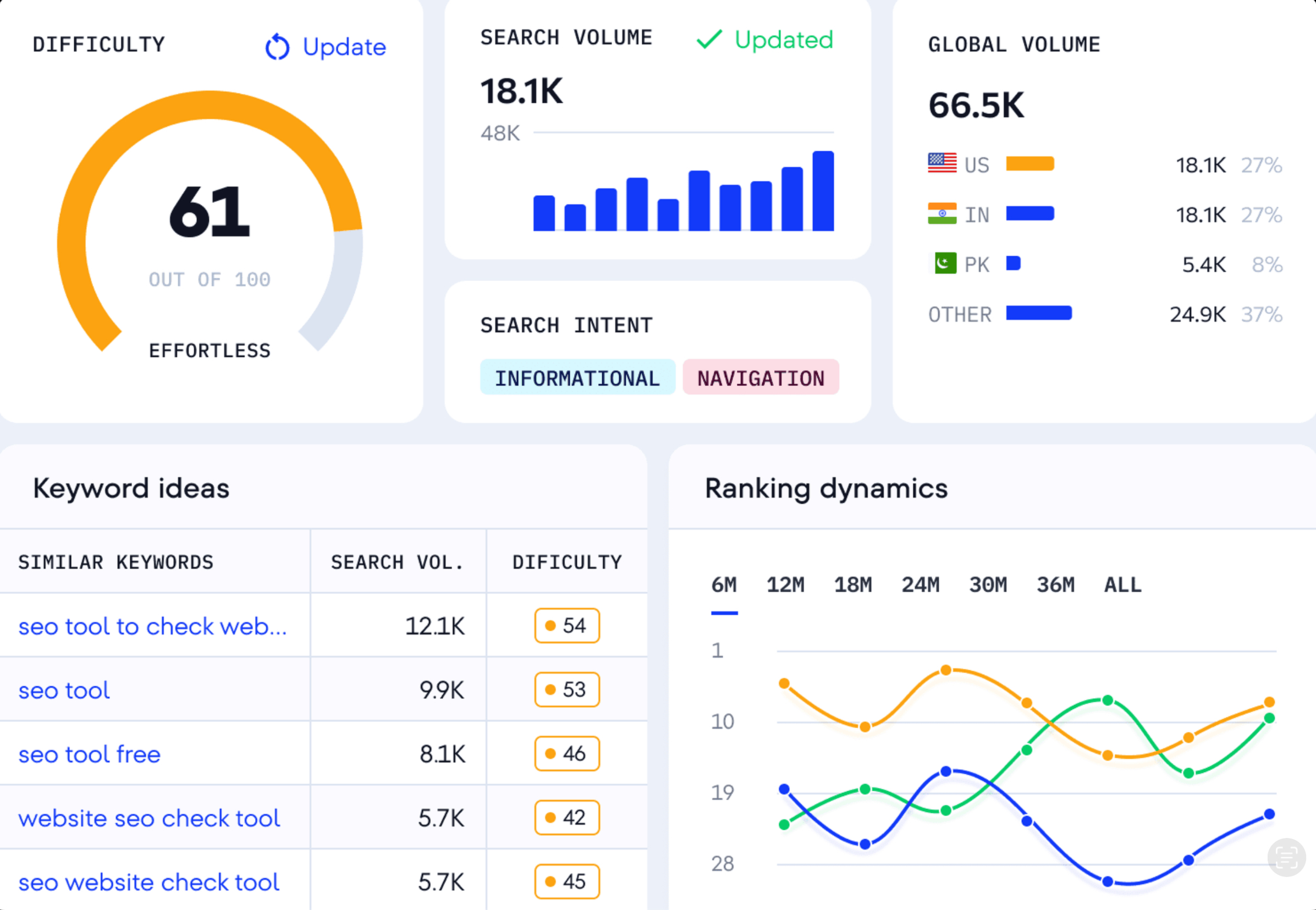
This is one of SE Ranking’s strongest areas because it blends practical rank tracking with research tools that support planning and prioritization.
Keyword Rank Tracker
This is the daily driver for tracking performance across engines, devices, and locations, which is essential for measurable SEO progress.
- Daily rank tracking across Google and other supported engines.
- Device and location flexibility for local and national tracking.
- Tracks deeper result sets, including top 100 visibility monitoring.
Keyword Research (Keyword Tool)
This helps move keyword planning from guesswork to prioritization by grounding decisions in measurable demand and competitiveness.
- Keyword discovery for SEO and PPC planning.
- Metrics like search volume, difficulty, and trends.
- Intent signals to help shape content type and funnel alignment.
3. Backlinks
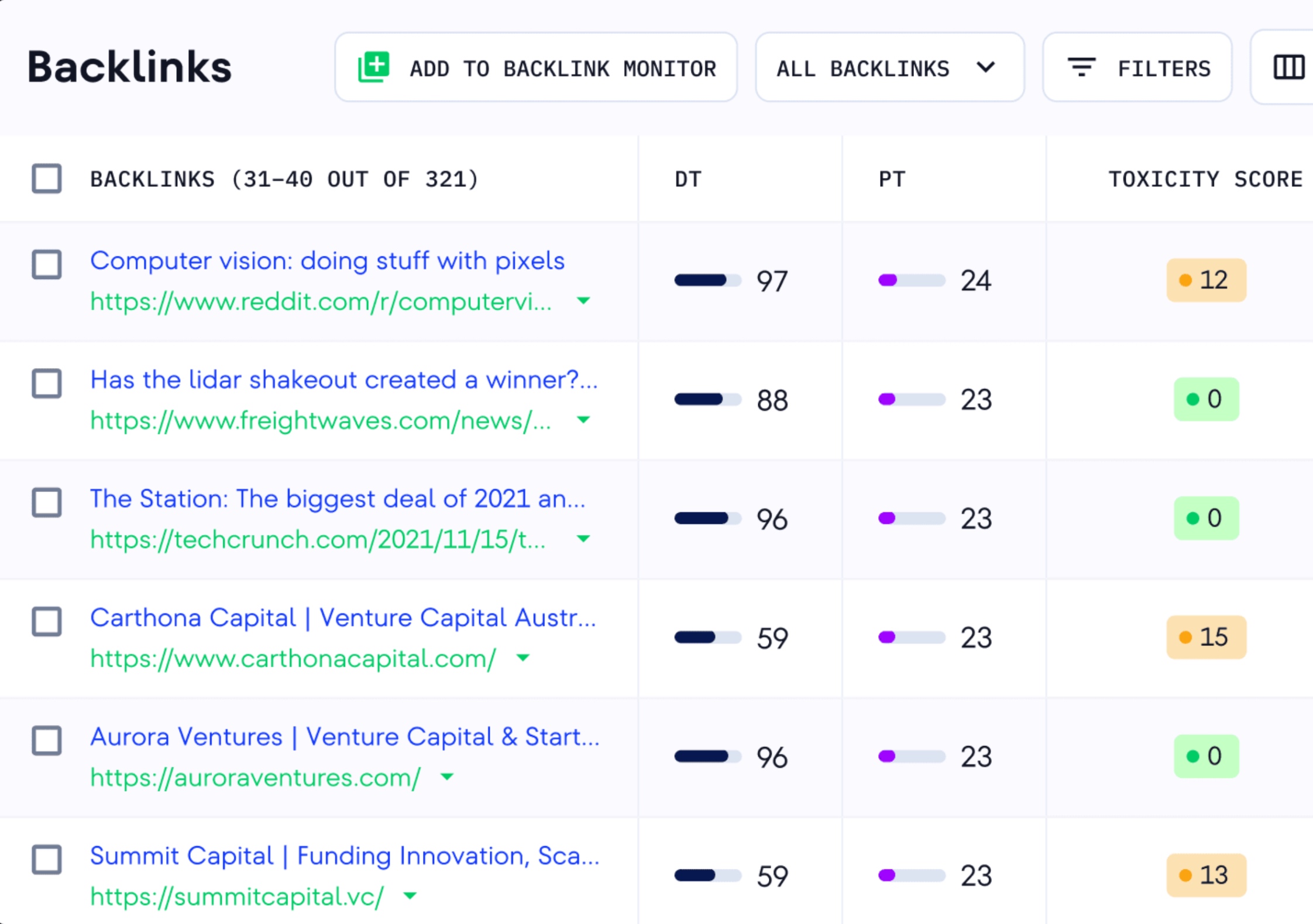
SE Ranking’s backlink set covers the basics well, especially for monitoring, cleanup, and competitive gap discovery.
Backlink Checker
This is the starting point for understanding backlink profile quality and movement over time.
- Tracks lost and gained backlinks and referring domains.
- Includes quality indicators such as Domain Trust and Page Trust.
- Useful for competitor backlink benchmarking.
Backlink Monitor
This is built for ongoing monitoring when you care about retention and link stability.
- Monitors a chosen set of important backlinks.
- Alerts for lost links, changes, or index drops.
- Reduces manual re-checking and reactive audits.
Backlink Gap Analyzer
This is the quickest way to turn competitor backlink research into a link acquisition shortlist.
- Identifies link opportunities competitors have that I do not.
- Helps prioritize outreach targets by relevance.
- Supports link gap strategy at a page or domain level.
4. Competitors
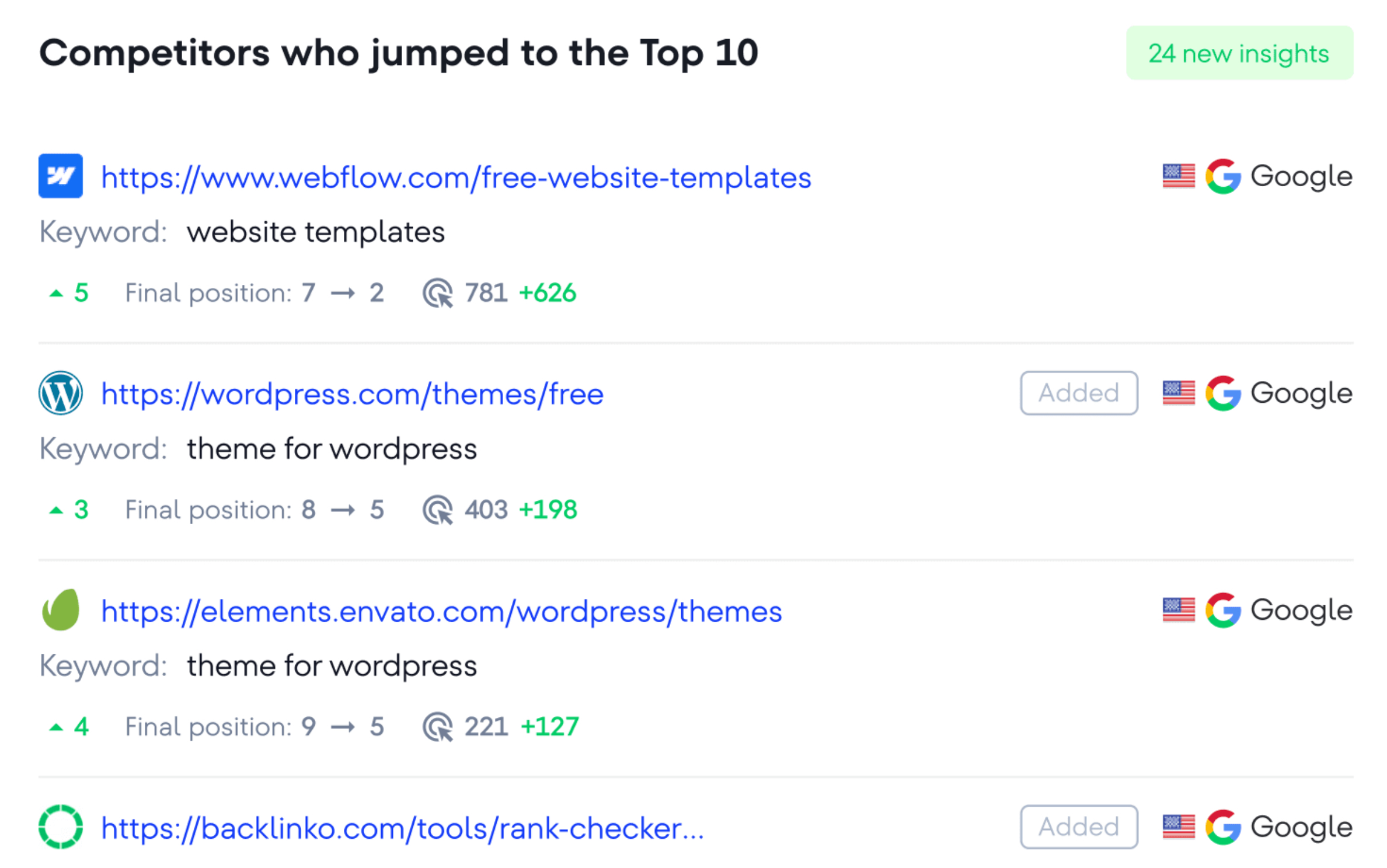
Competitive research is where SE Ranking helps me pressure-test my strategy against the market, not just my own site performance.
Website Competitor Analysis
This module is designed to help me understand who is actually winning on the SERP and what they are doing differently.
- Identifies organic and paid competitors by visibility overlap.
- Highlights keyword overlap and competitive distribution.
- Helps spot shifts in competitor momentum and strategy.
5. Website
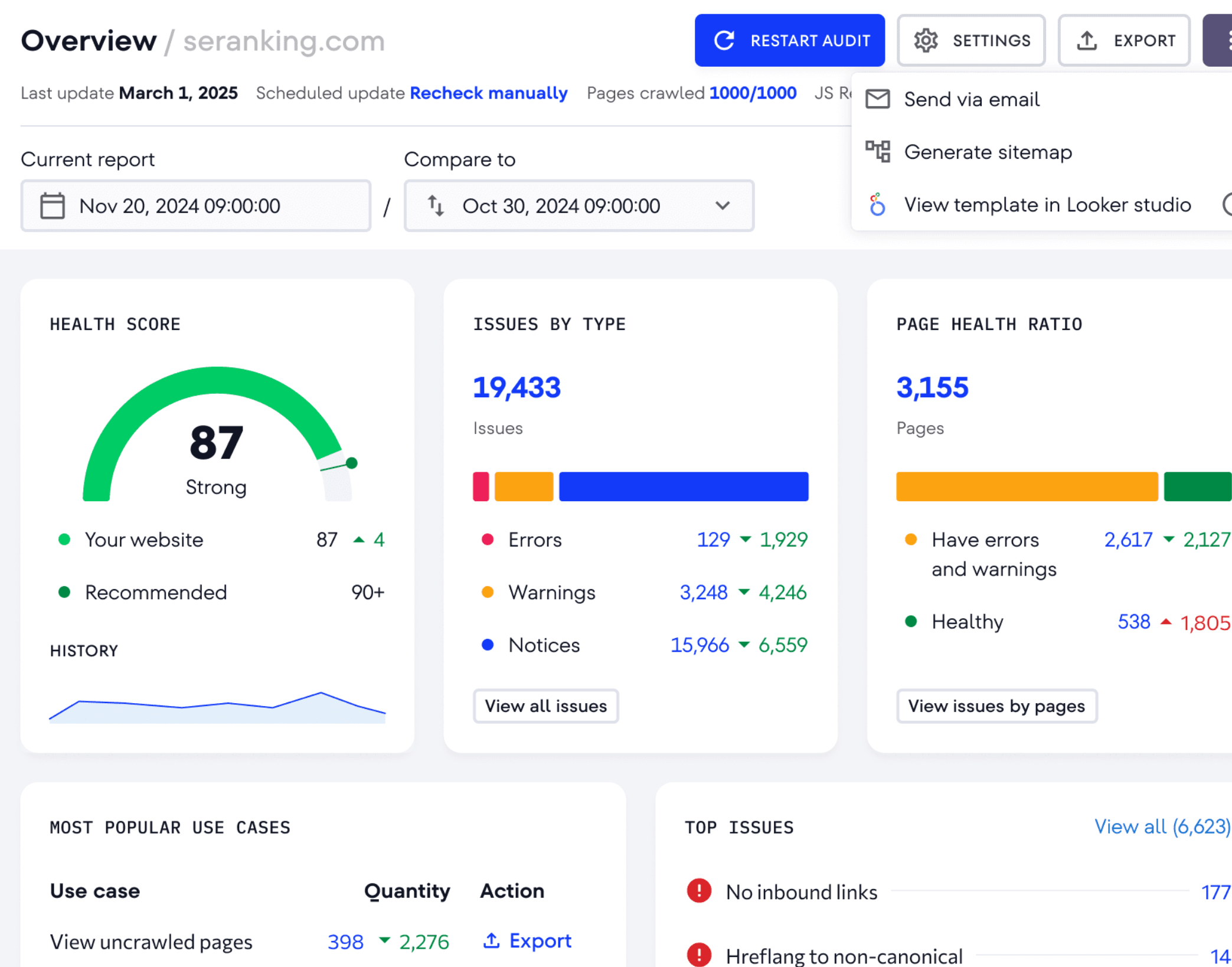
This category is best when I want to diagnose technical blockers, validate on-page fundamentals, and monitor important changes over time.
Website Audit
A broad technical audit suite that flags SEO issues and helps prioritize fixes through comprehensive SEO audits.
- Large set of technical SEO checks across the site.
- Visual reporting and the ability to compare audits over time.
- Useful for recurring monitoring, not just one-time audits.
On-Page SEO Checker
This is a page-level improvement engine that supports actionable optimization.
- Page-specific recommendations for ranking improvements.
- On-page and UX signal checks tied to SEO outcomes.
- Helps prioritize quick wins at the URL level.
Page Changes Monitoring
This is particularly useful when I care about change detection on high-value pages or competitors.
- Alerts for content, meta tags, links, and indexability changes.
- Can monitor competitor pages to catch strategy shifts.
- Helpful for protecting rankings and diagnosing sudden movement.
6. Content Marketing
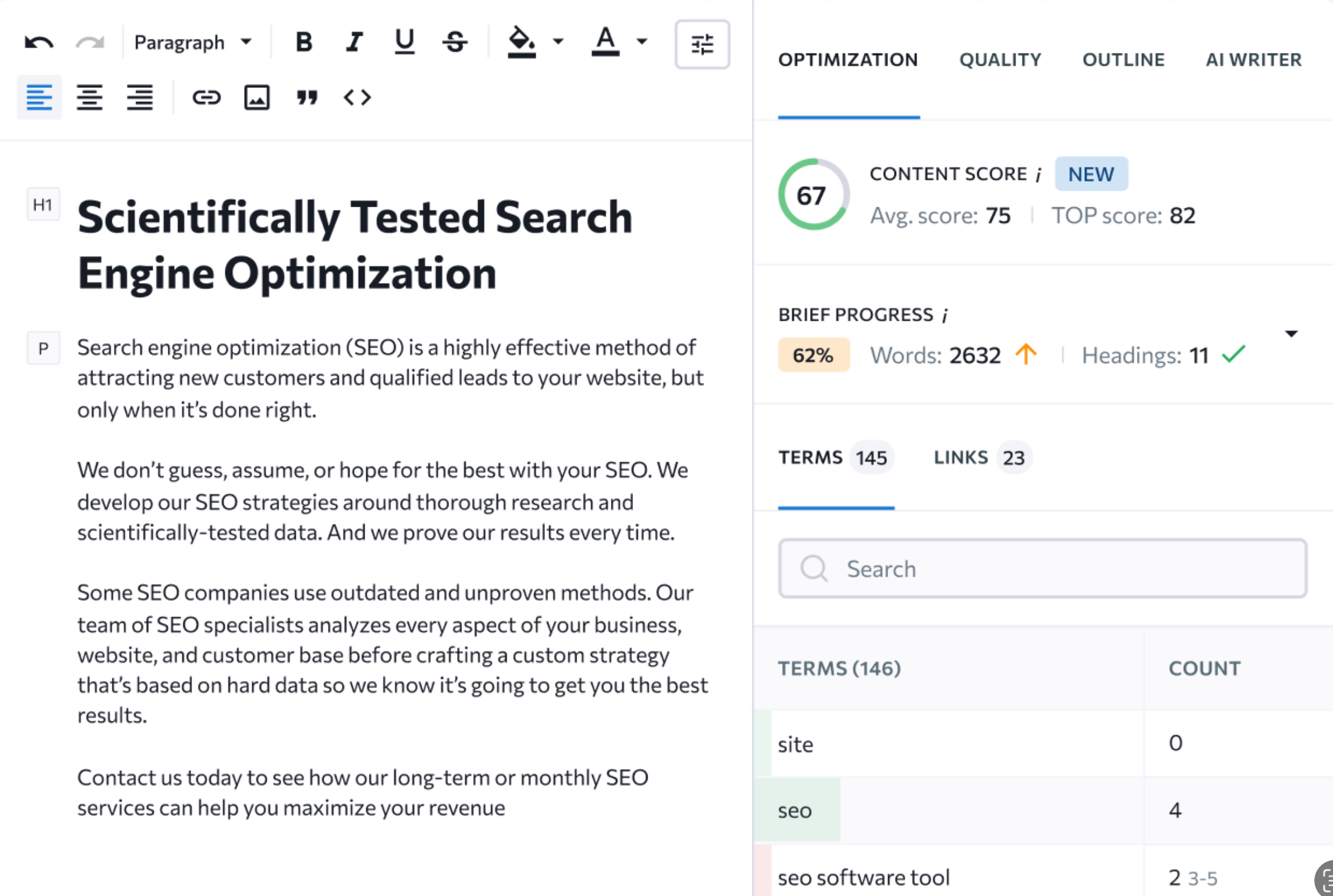
SE Ranking’s content features focus on optimizing what you publish, with SERP-informed guidance rather than generic writing output. These tools are valuable if your workflow is primarily SEO-led. But if your focus is on insights for a faster execution, these tools may not be very compelling.
Content Editor
This is the module I use when I want optimization guidance while planning or refreshing content.
- Content recommendations and brief building based on SERP features.
- Content scoring, readability checks, and coverage guidance.
- Google Docs integration for collaboration and editing.
SERP Checker
This tool helps me understand what is working on page one, then reverse-engineer patterns using historical data.
- Analyzes top-ranking pages for a target query.
- Highlights page-level factors that influence results.
- Useful for validating content structure and competitive difficulty.
Want more options for scaling content efficiently? Check out this guide on the 14 best AI writing assistants to help you scale your content marketing.
7. Working With Clients
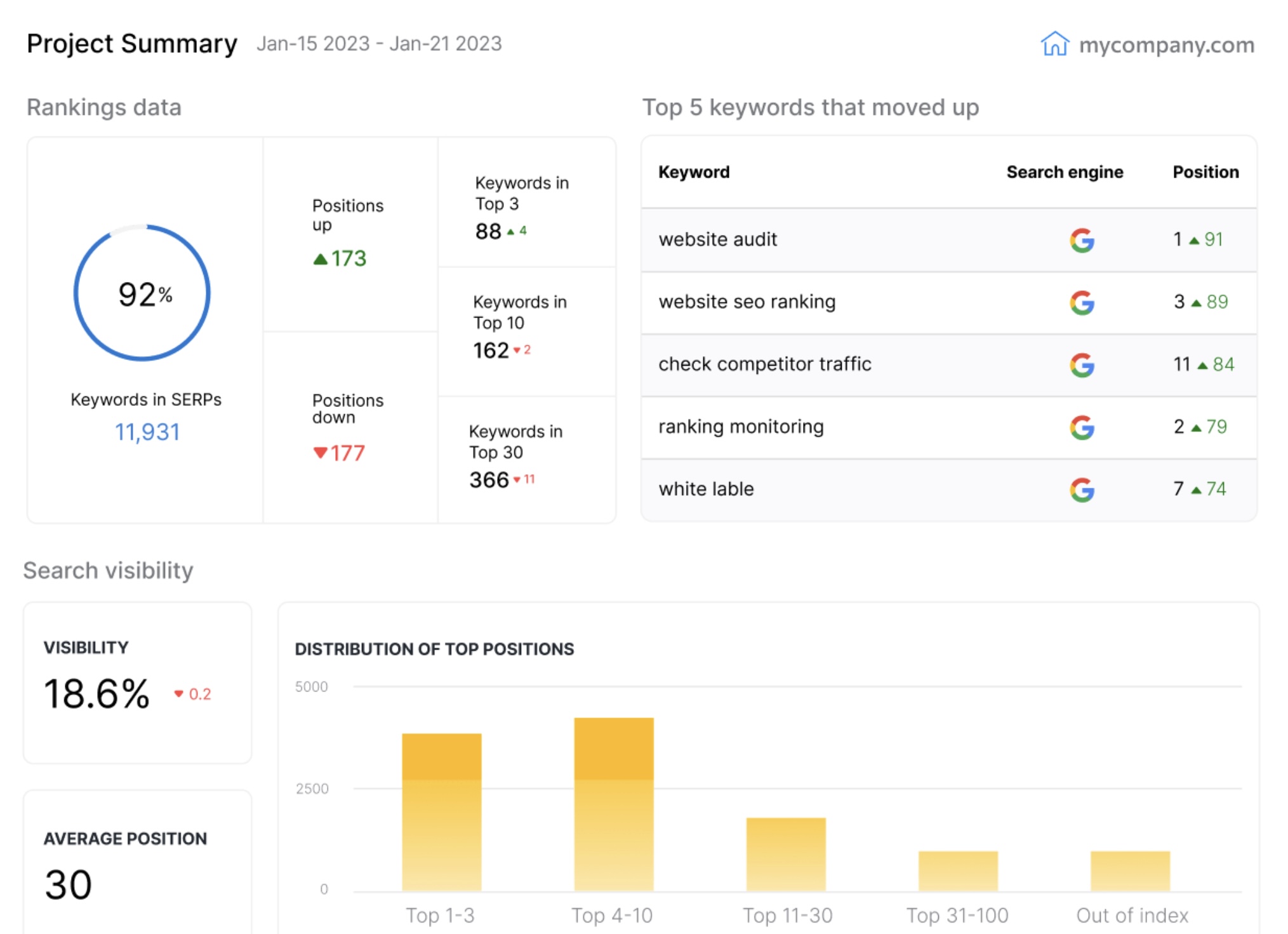
This is where SE Ranking feels agency-friendly, especially for packaging results into consistent reporting.
Report Builder (SEO Report Generator)
Built to create client-ready reporting without starting from scratch every time.
- Customizable report templates and layouts.
- Combines rankings, audits, and performance metrics into one report.
- Useful for recurring monthly and quarterly reporting.
Agency Pack
If you run client SEO, this add-on is designed to support scale and branding.
- White-labeling for reports and client-facing materials.
- Unlimited white-label reports.
- Lead generation features for agency acquisition.
8. Local Marketing
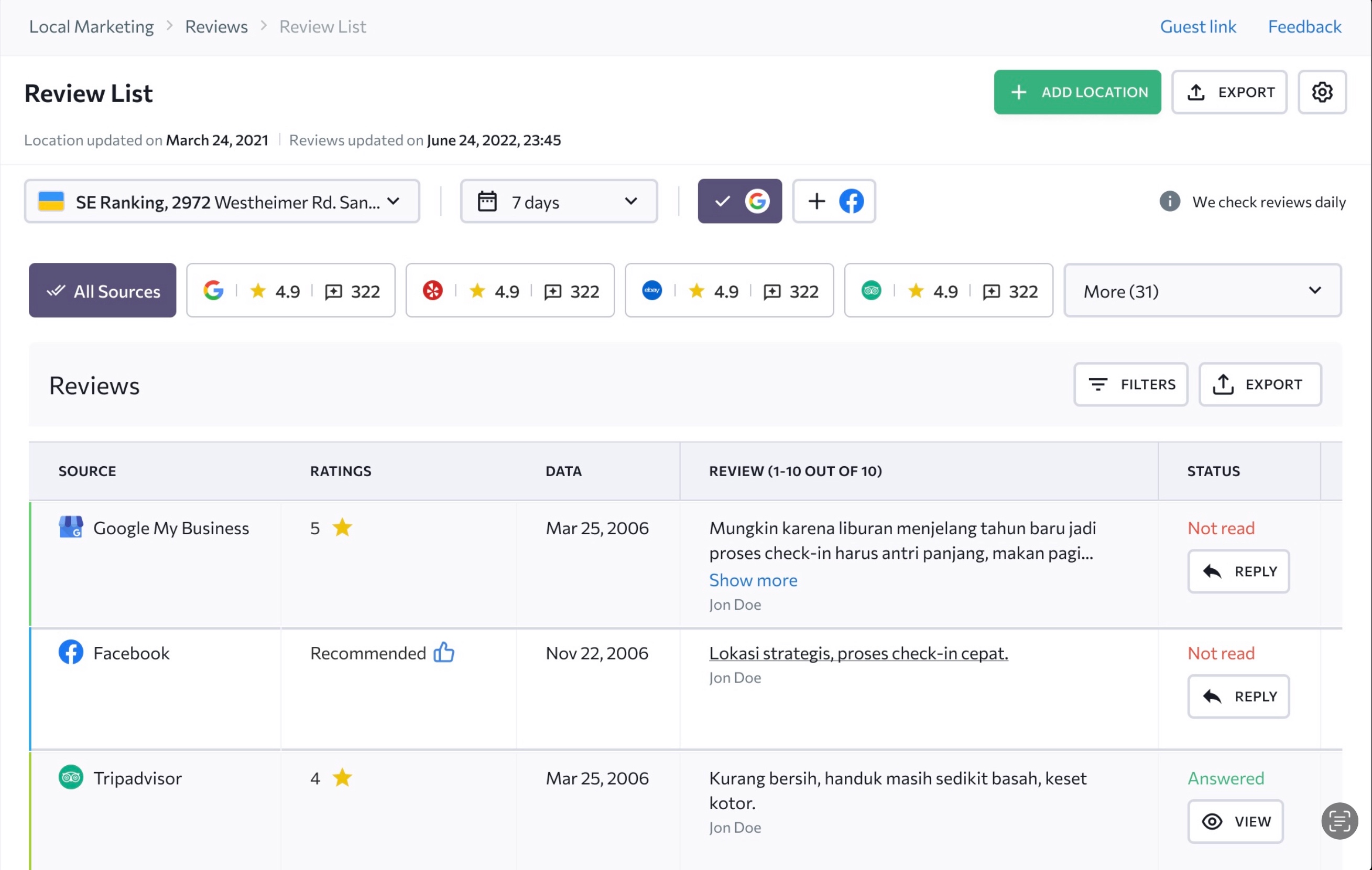
This category is strongest for teams that manage locations, reviews, and local visibility as an ongoing operational function.
Local Content Marketing Tool
This is the local SEO control center for monitoring local presence and Google Business Profile workflows.
- Location-based tracking and local visibility monitoring.
- Review monitoring and local presence signals.
- Google Business Profile support, including post planning.
- Multi-location management and local rank tracking by area.
9. Additional Tools
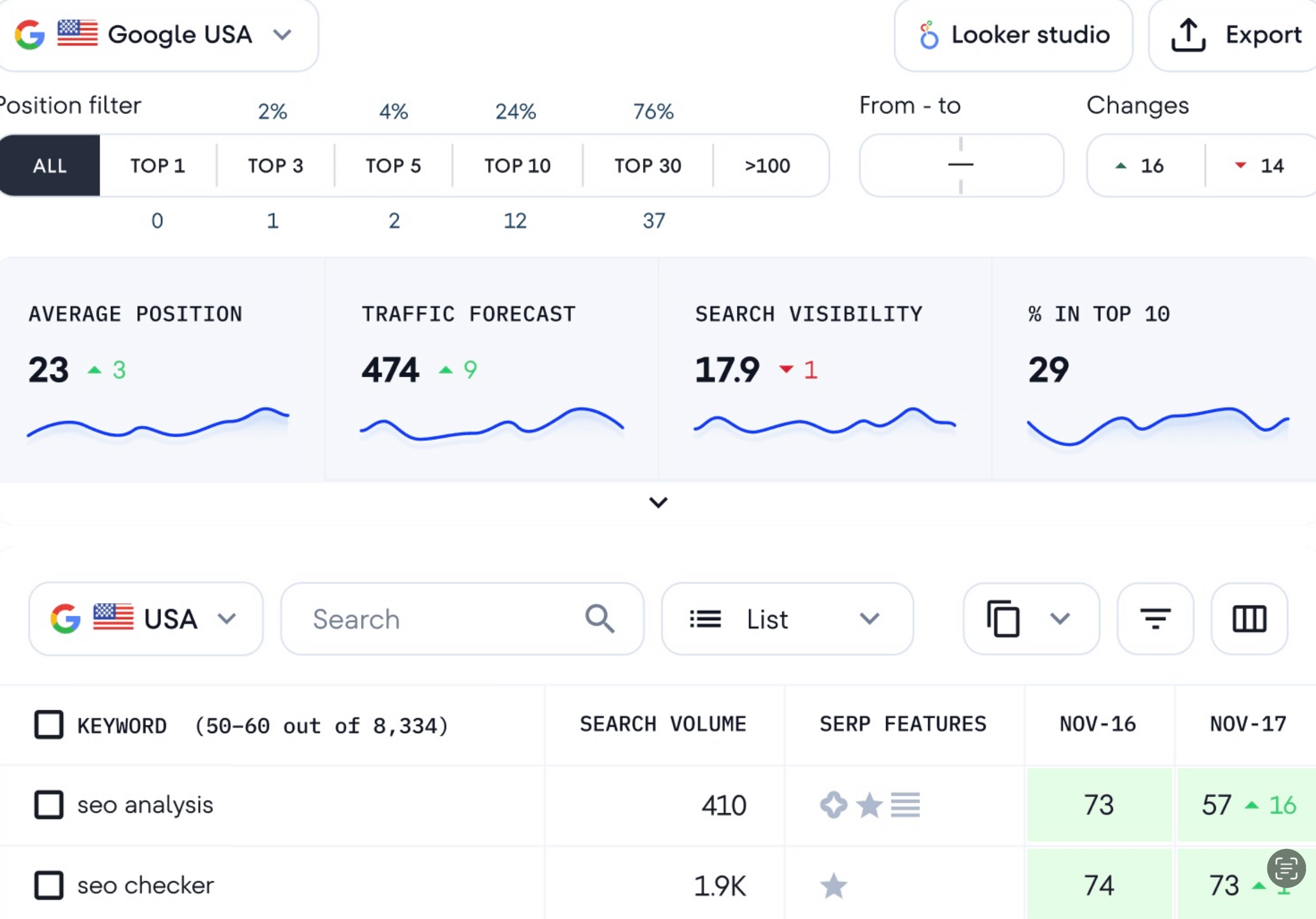
These tools fill workflow gaps that can save real time when you are managing SEO as a system, not a one-off project.
SEO Task Manager (SEO Project Management)
This helps keep execution consistent across teams and campaigns.
- Task assignment, deadlines, and progress tracking.
- Prebuilt SEO task plans to standardize work.
- Useful for agencies and in-house teams with multiple stakeholders.
Keyword Grouper (Keyword Grouping Tool)
This is ideal when I want clean keyword clusters for site architecture or campaign planning.
- Groups keywords at scale into practical clusters.
- Supports PPC structure and SEO topical planning.
- Helps reduce cannibalization by clarifying search intent groupings.
Local Rank Tracker
A focused solution for validating local visibility trends.
- Tracks rankings at local levels where location matters.
- Useful for multi-location businesses and service-area SEO.
- Supports local reporting and progress tracking.
YouTube Rank Tracker
This is useful if YouTube is part of the organic discovery strategy.
- Tracks keyword performance on YouTube as a search engine.
- Helps measure visibility beyond Google SERP analysis.
- Useful for content teams investing in video SEO.
Domain Trust Checker
A quick credibility snapshot that supports backlink evaluation and competitor checks.
- Shows domain trust scoring and backlink health indicators.
- Summarizes new and lost referring domains.
- Helpful for quick due diligence during research.
Broken Link Checker
This helps with technical cleanup and link hygiene, which can protect both UX and SEO.
- Identifies dead links and broken link issues.
- Supports content cleanup and technical maintenance.
- Useful for protecting crawl efficiency and site quality.
Social Media Analytics (SMM)
This is more of a supporting module, useful if you want light social reporting inside the same platform.
- Tracks performance across major social platforms.
- Includes engagement and post-level reporting.
- Helps monitor competitors or influencers at a glance.
Traffic Analysis (Website Traffic Checker)
This provides directional intelligence for benchmarking, especially during competitor research.
- Estimates competitor organic traffic and paid traffic by country.
- Identifies top keywords and best-performing pages.
- Useful for market sizing and competitive positioning.
SE Ranking Review: What Do Real Users Say About The Platform?
“Overall, it’s a great tool. If I had to pick something, I’d say some features take a bit of time to explore fully because there are many options, and certain advanced workflows could be a little more streamlined. But it keeps improving and the support/resources make it easy to get results.” says François H. on G2
Users consistently highlight its comprehensive toolkit and ease of use, especially for managing everyday SEO tasks like keyword research, rank tracking, and reporting without feeling overly complicated.
At the same time, feedback suggests a few tradeoffs. Some users mention platform limitations or “limited features” depending on what they expect from an all-in-one suite, and pricing comes up occasionally as a concern. A smaller set of reviewers also note a learning curve and say the interface could feel more streamlined in certain areas.
SE Ranking Pricing And Plans: Is There A Free Plan Or Trial?
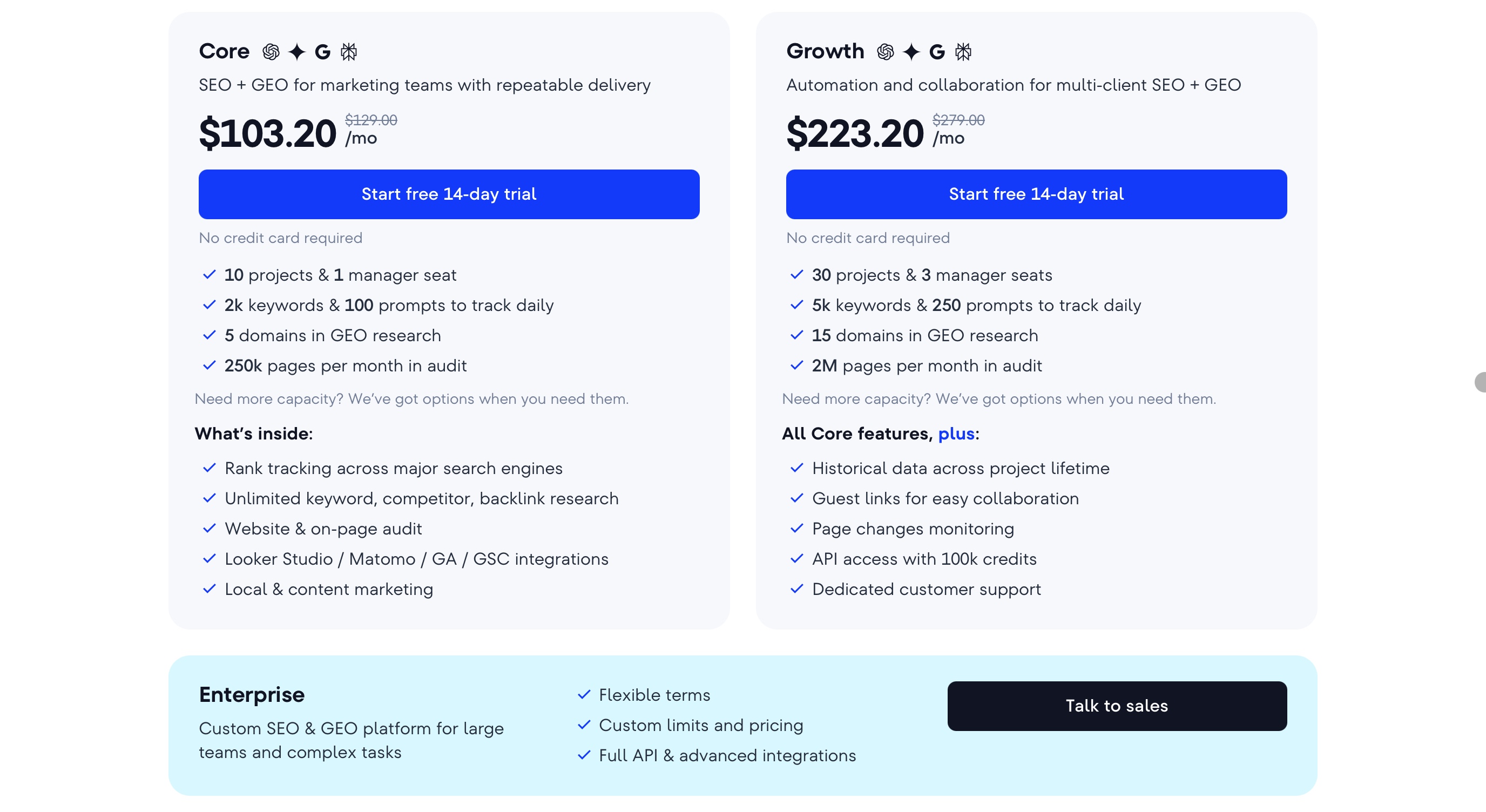
SE Ranking’s pricing plans are structured around tiered business plan options that scale based on how many projects, keywords, and tracked prompts a team needs, making it easier to match spend to workload. While they do not offer a free plan, they do provide a 14-day free trial, which helps to test the core platform features and see if the workflows fit before committing.
SE Ranking also offers add-ons like Agency Pack for white-label client reporting, AI Search for deeper AI visibility tracking, and an API add-on for automated reporting and bulk SEO data access.
Who Is SE Ranking Best For?
Who Will Get The Most Value?
- Small to mid-sized businesses that need a reliable all-in-one SEO platform.
- In-house marketing teams managing ongoing SEO with clear reporting needs.
- Agencies handling multiple client projects and recurring deliverables.
- SEO generalists who want rank tracking, audits, backlinks, and content tools in one place.
- Teams running local SEO across one or more locations.
- Marketers who want AI visibility monitoring as a helpful add-on to traditional SEO workflows.
Where Doesn’t It Not Work Well?
- Teams looking for a GEO-first platform where AI visibility insights directly drive a built-in execution roadmap.
- Advanced enterprise SEO teams that need deep customization, complex workflows, or highly granular data at scale.
- Specialists who want best-in-class depth in one area only, such as technical crawling, link intelligence, or content strategy.
- Marketers who prefer a lightweight tool that only does rank tracking without broader platform complexity.
- Teams expecting plug-and-play AI visibility gains without strengthening core SEO fundamentals first.
What Are The Pros And Cons Of SE Ranking?
What Makes SE Ranking Different From Other AI SEO Tools?
- SE Ranking SEO tool combines classic SEO workflows and AI visibility tracking in one platform, instead of treating AI monitoring as a separate add-on tool.
- It supports multiple AI surfaces, including ChatGPT, Gemini, Perplexity, Google AI Overviews, and Google AI Mode, which helps compare visibility across engines.
- It provides an AI visibility dashboard view through SE Visible, making it easier to track brand presence trends and keyword rankings over time.
- It remains execution-friendly for core SEO, with rank tracking, site audits, backlinks, content optimization, and reporting living in the same ecosystem.
- It is positioned as an all-in-one toolkit, which can simplify tool stacks and reduce switching costs for teams managing multiple SEO tasks.
Where Does SE Ranking Fall Short?
- The AI visibility layer is strong for monitoring and benchmarking, but it does not always translate into a clear, prescriptive action plan for what to change next.
- Some modules can feel more “good coverage” than deep specialization, especially for teams used to dedicated best-in-class tools.
- The interface can feel busy once multiple toolsets are in use, which can slow down faster workflows for experienced practitioners.
- Certain workflows still require manual interpretation, particularly when turning competitive insights into a prioritized content roadmap.
- Pricing concerns show up in user feedback at times, especially when teams want advanced capabilities across many modules at once.
Why Scalenut Is The Better Choice For AI Visibility?
SE Ranking’s AI visibility features are genuinely useful for monitoring mentions, links, and trends across AI engines, but in my experience they stop a bit short of telling me exactly what to do next. When the goal is to improve GEO outcomes, I prefer Scalenut because it feels more execution-led, with prompts and citation signals that translate more directly into a content roadmap and optimization steps inside the same workflow.
SE Ranking still wins on breadth as an all-in-one SEO suite, and that matters if the priority is covering rankings, SEO audits, backlinks, and reporting in one platform. But when I care most about winning visibility inside AI answers, Scalenut’s tighter focus makes the path from “visibility gap” to “what to update or publish next” feel faster, clearer, and easier to achieve organic search results.
What Are The Core GEO And SEO Features Of Scalenut?
Scalenut blends AI visibility intelligence with hands-on SEO execution, which makes it feel less like a collection of disconnected tools and more like a workflow-driven GEO and SEO platform. Instead of only showing where a brand appears in AI answers, it also supports the planning and optimization steps needed to improve that visibility over time.
How Does Scalenut Support GEO And AI Visibility?
Scalenut’s GEO feature set is built around tracking how brands show up inside AI-generated answers and then turning those signals into practical next steps. It focuses on visibility across platforms like ChatGPT, Gemini, and Perplexity, while keeping the insights tied to content decisions and competitive context.
AI Brand Visibility And Monitoring
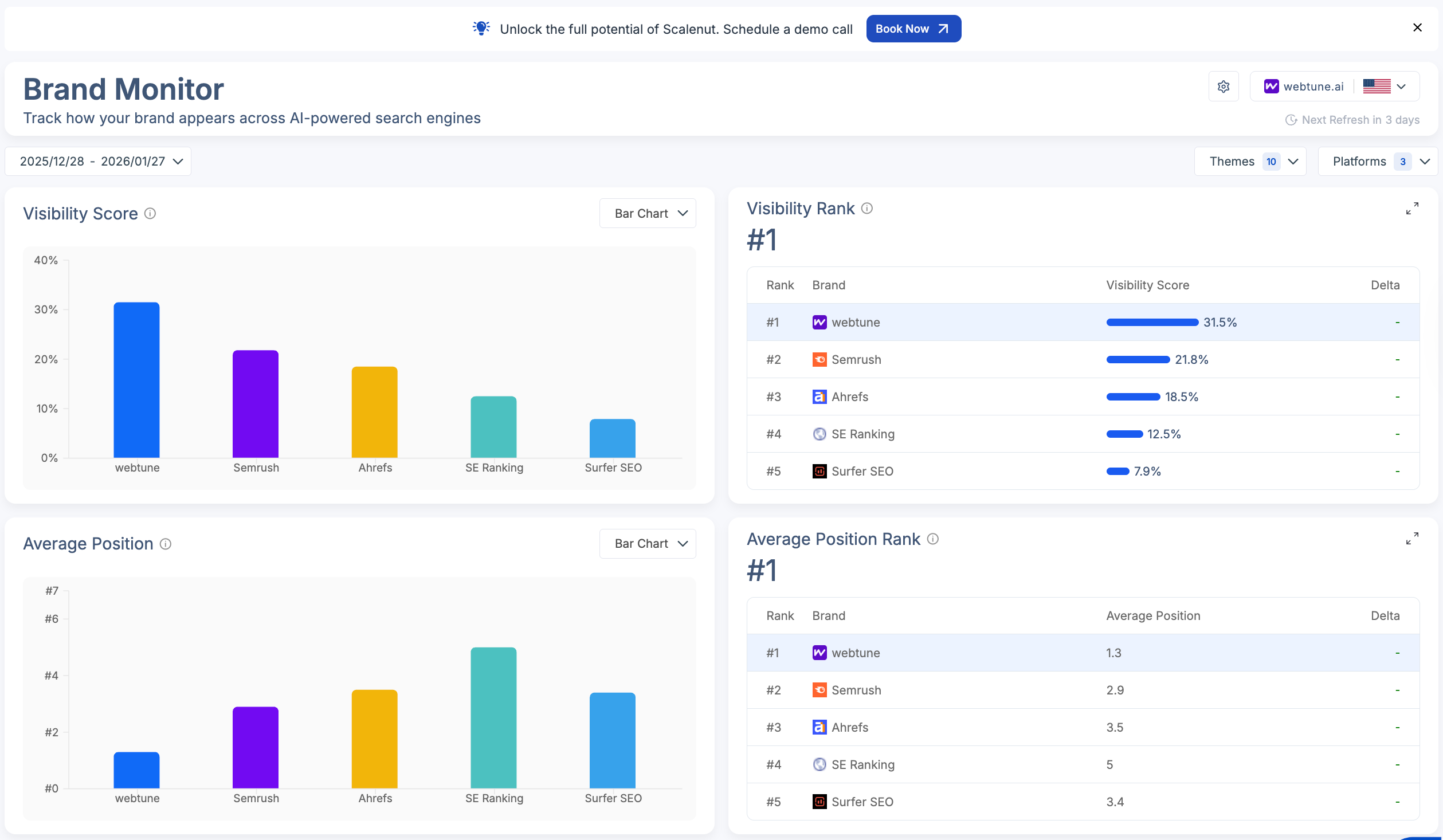
This layer focuses on how often the brand appears in AI answers, how prominent those mentions are, and how performance compares across competitors and platforms.
- Visibility score that benchmarks brand mention frequency against competitors.
- Average position that reflects how prominently the brand appears in AI answers.
- Share of voice that measures overall space captured in AI-generated responses.
- Visibility heatmap that shows differences across AI platforms.
- Brand visibility rank that summarizes performance across key prompt themes.
Prompt-Level Insights And AI Search Intelligence
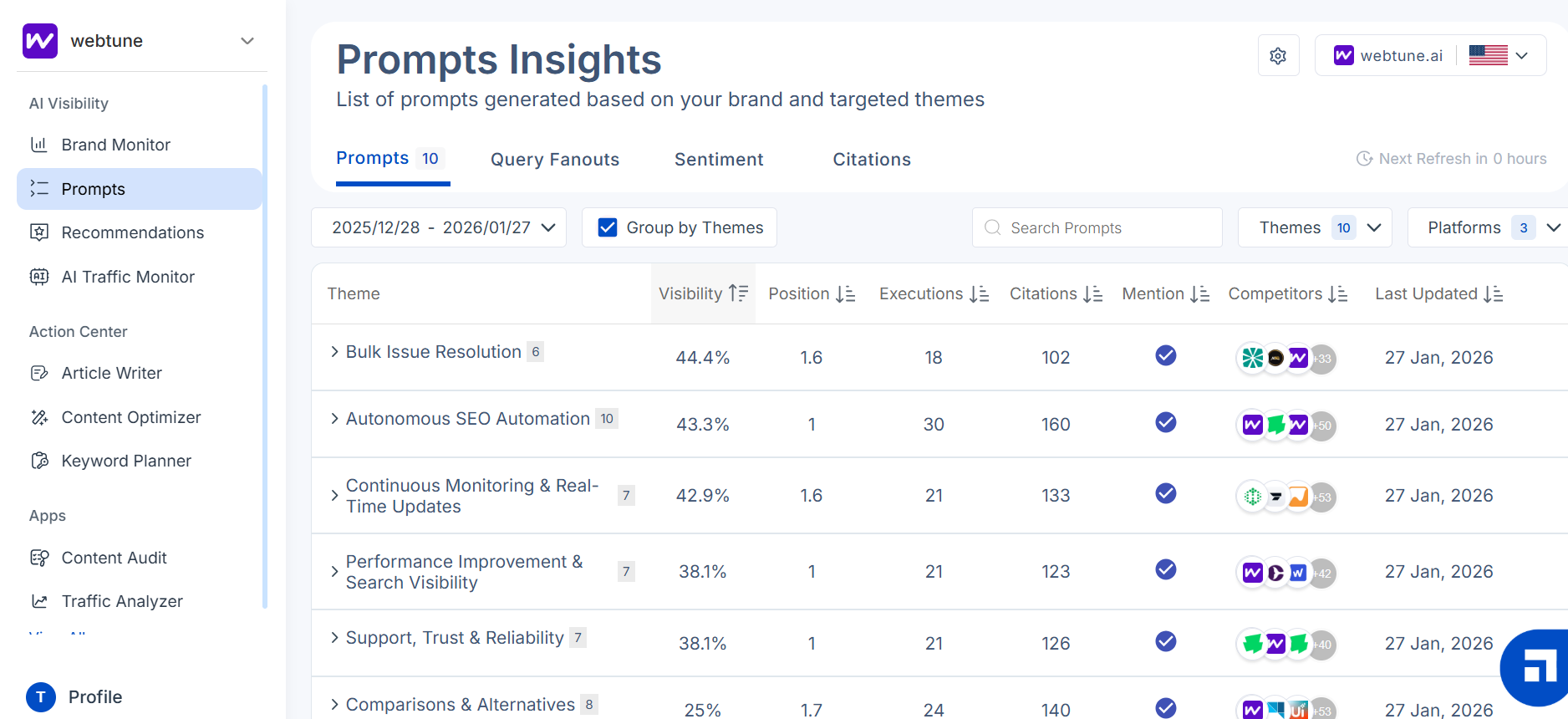
This feature set goes deeper than general visibility by analyzing performance at the prompt level, including citations and competitive overlap.
- Prompt tracking to see where the brand appears and how it ranks per prompt.
- Citation tracking to identify sources influencing AI-generated answers.
- Competitor visibility insights showing which brands appear alongside yours.
- Query fanouts that reveal how one question expands into related AI queries.
- Sentiment analysis to classify mentions as positive, neutral, or negative.
Actionable GEO Recommendations
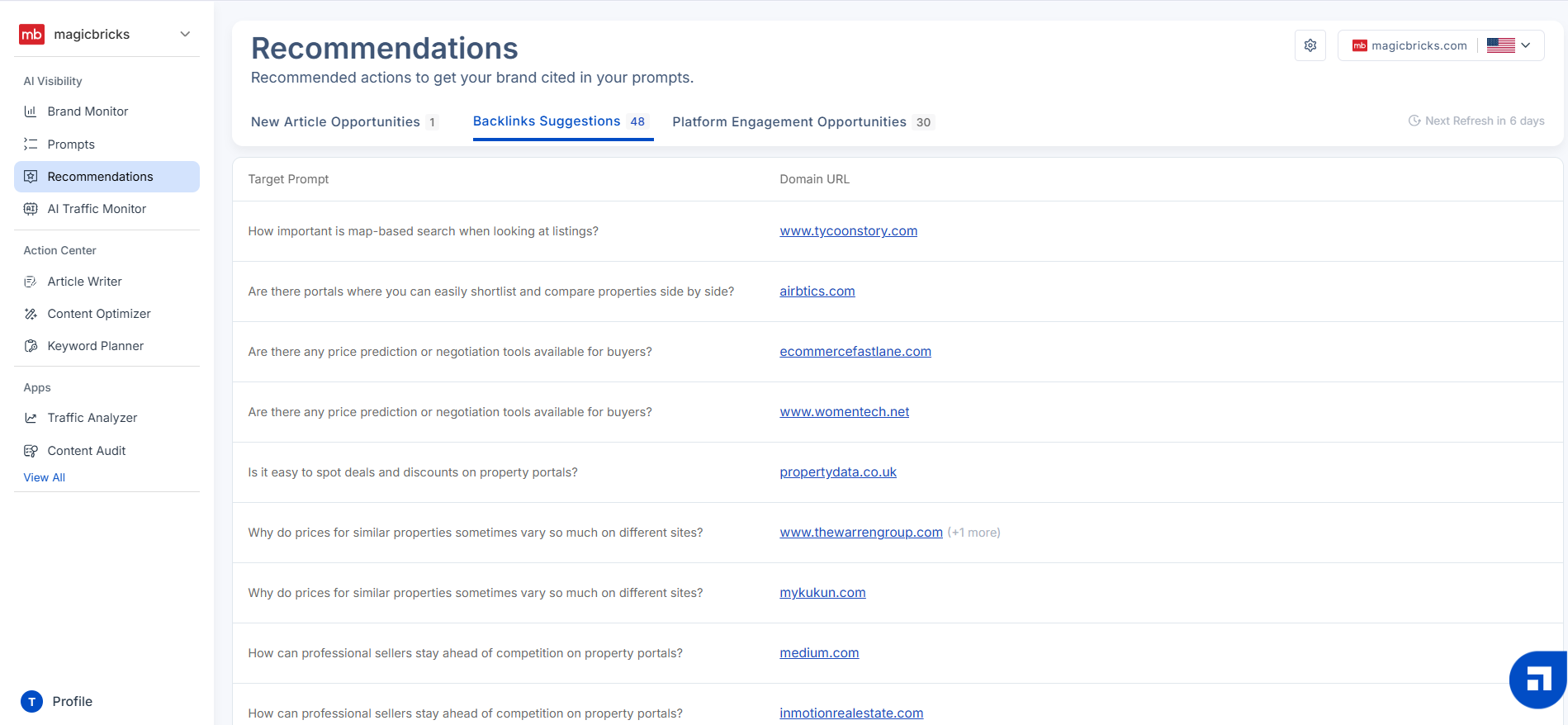
This is where Scalenut becomes more execution-focused, using visibility signals to guide content and authority-building priorities.
- New article ideas aligned to AI-driven, high-intent questions.
- Backlink suggestions to strengthen authority and improve AI visibility.
- Platform engagement opportunities that highlight relevant discussions and forums.
- Clear execution paths that translate insights into concrete next actions.
AI Traffic Monitoring And LLM Interaction Tracking
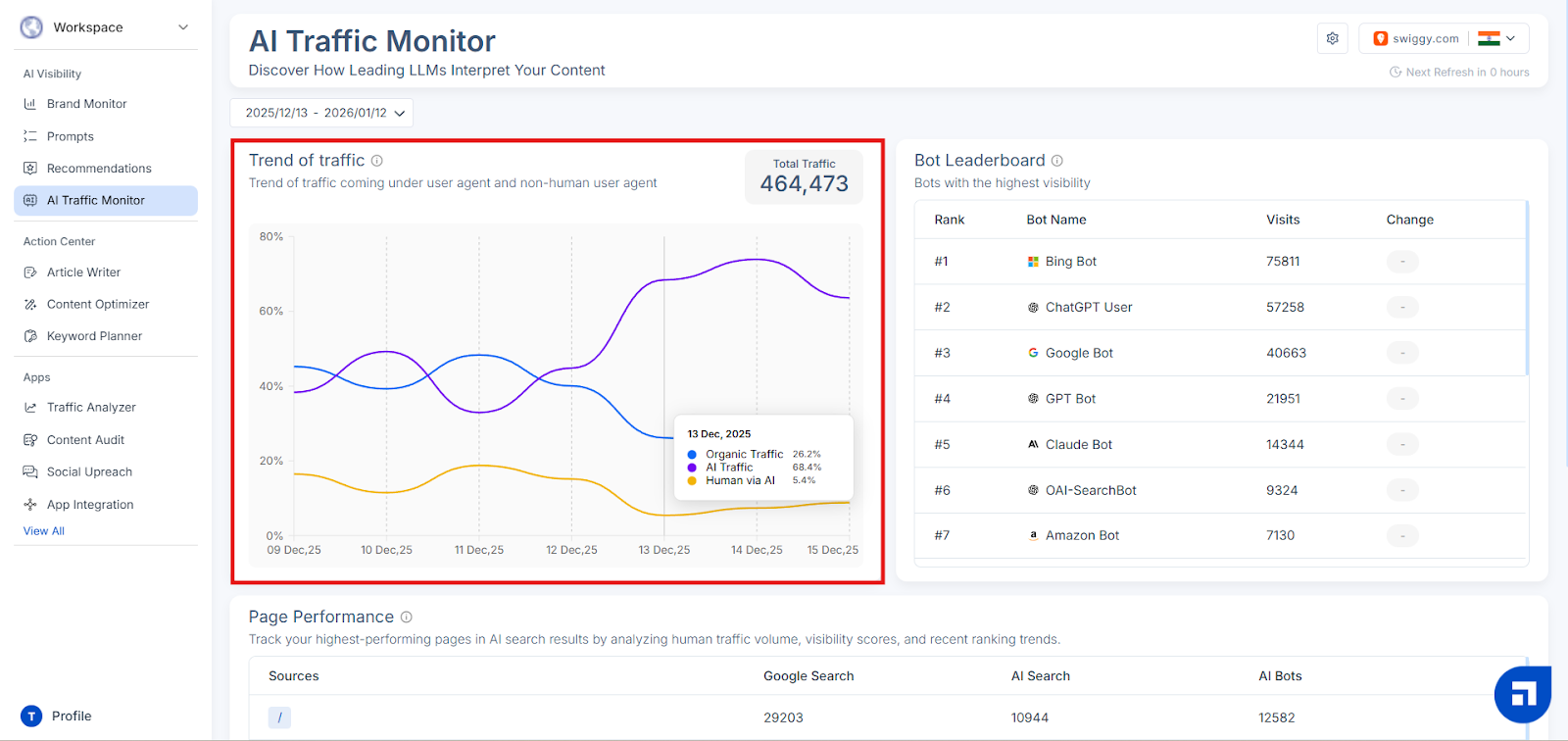
This layer focuses on how AI systems interact with the site, helping teams spot emerging patterns beyond traditional clicks.
- AI bot tracking for visits from tools like ChatGPT and Gemini.
- Cloudflare integration for stronger AI traffic visibility.
- Top sources showing which AI agents access the site most often.
- Top pages highlighting which content AI models reference frequently.
- AI visit trends tracking shifts in AI-driven traffic over time.
Curious how this plays out in real workflows? Read our Scalenut review to see how its GEO and SEO toolkit helps brands improve visibility across AI-driven search.
How Does Scalenut Support SEO And Content Execution?
Scalenut does not stop at GEO tracking. It also includes an SEO and content execution toolkit that helps teams plan, produce, optimize, and refresh content with a workflow that stays focused on outcomes, not just outputs.
The platform is built to support everything from initial topic selection to improving on-page performance after publishing.
Content Creation And Optimization
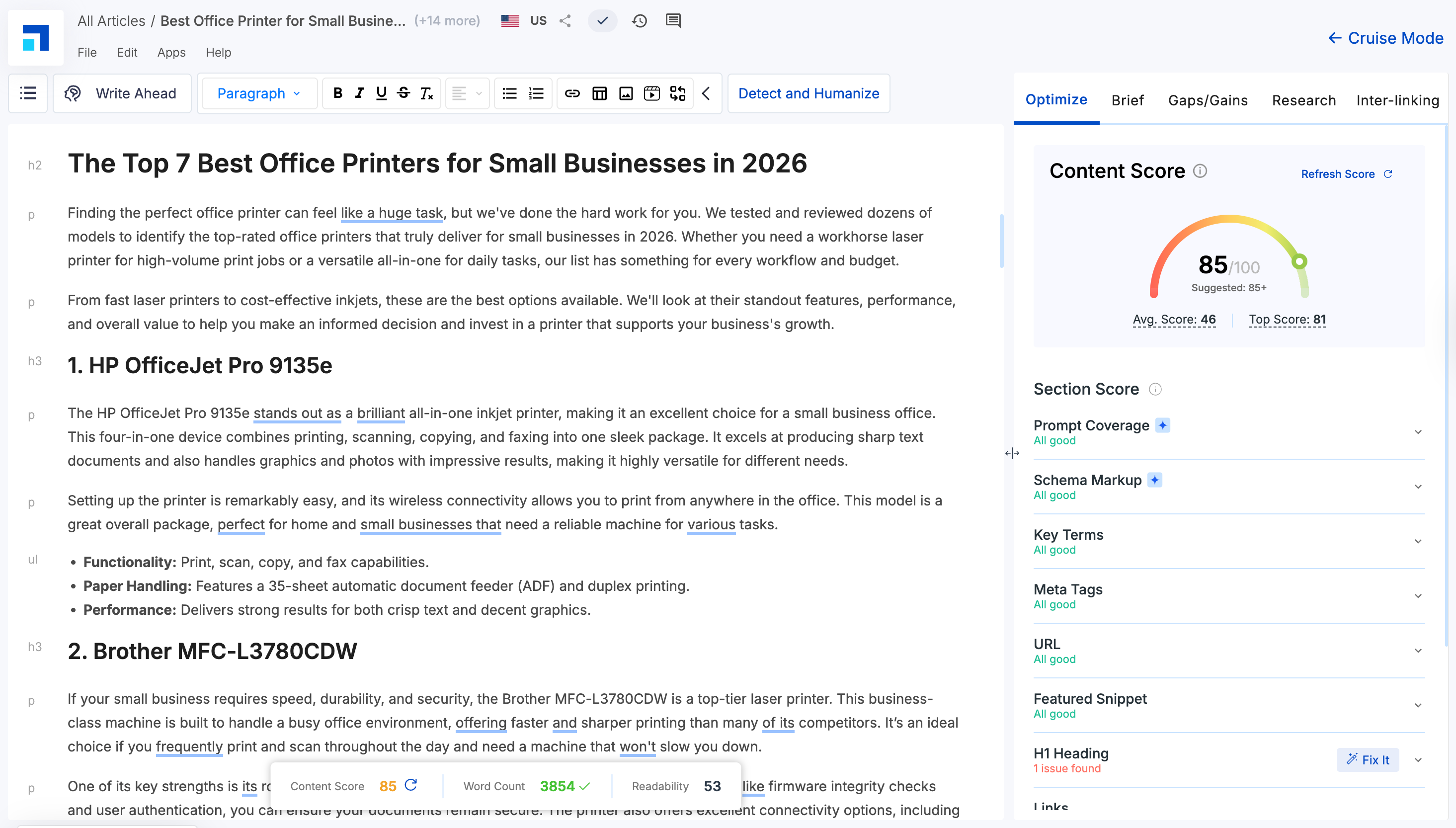
Scalenut’s creation and optimization tools are designed to speed up production while keeping content aligned with search intent and AI-driven discovery signals.
- Cruise Mode for AI-assisted outlines and drafts informed by SERP and GEO insights.
- Content Optimizer that highlights specific improvements to strengthen performance.
- AI Humanizer that refines AI-written text to sound more natural and reader-friendly.
- Content scoring that evaluates intent alignment, topical depth, structure, and keyword usage.
SEO Research And Planning
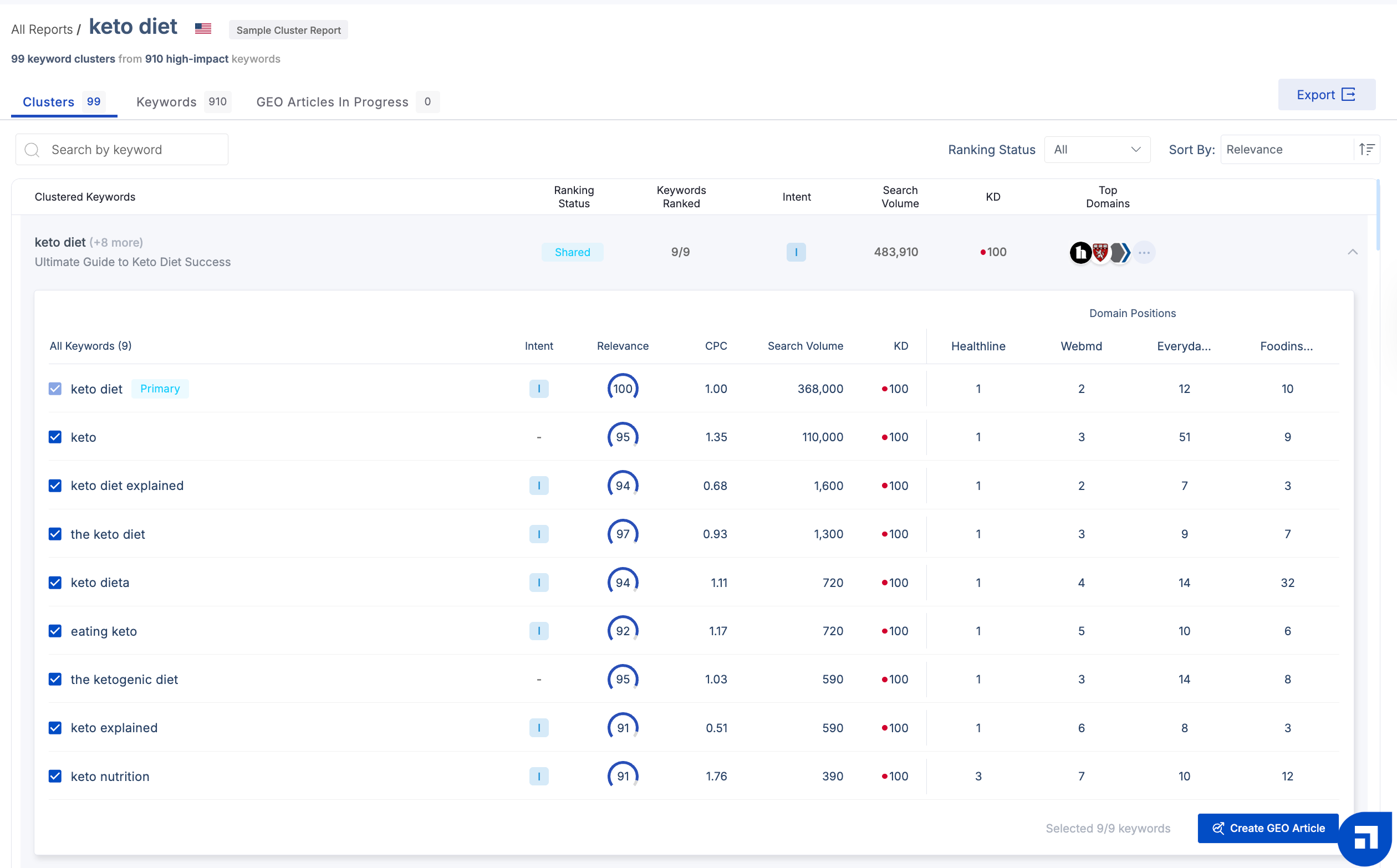
The research toolkit helps shape content strategy by organizing keywords, analyzing competitors, and spotting opportunities worth prioritizing.
- Keyword Planner that clusters keywords based on search intent.
- Competitor coverage analysis that shows how rivals structure and cover the same topics.
- Traffic Analyzer that highlights top-performing pages and quick-win opportunities.
- Content Audit that flags pages needing updates, refreshes, or optimization.
Technical SEO And Linking
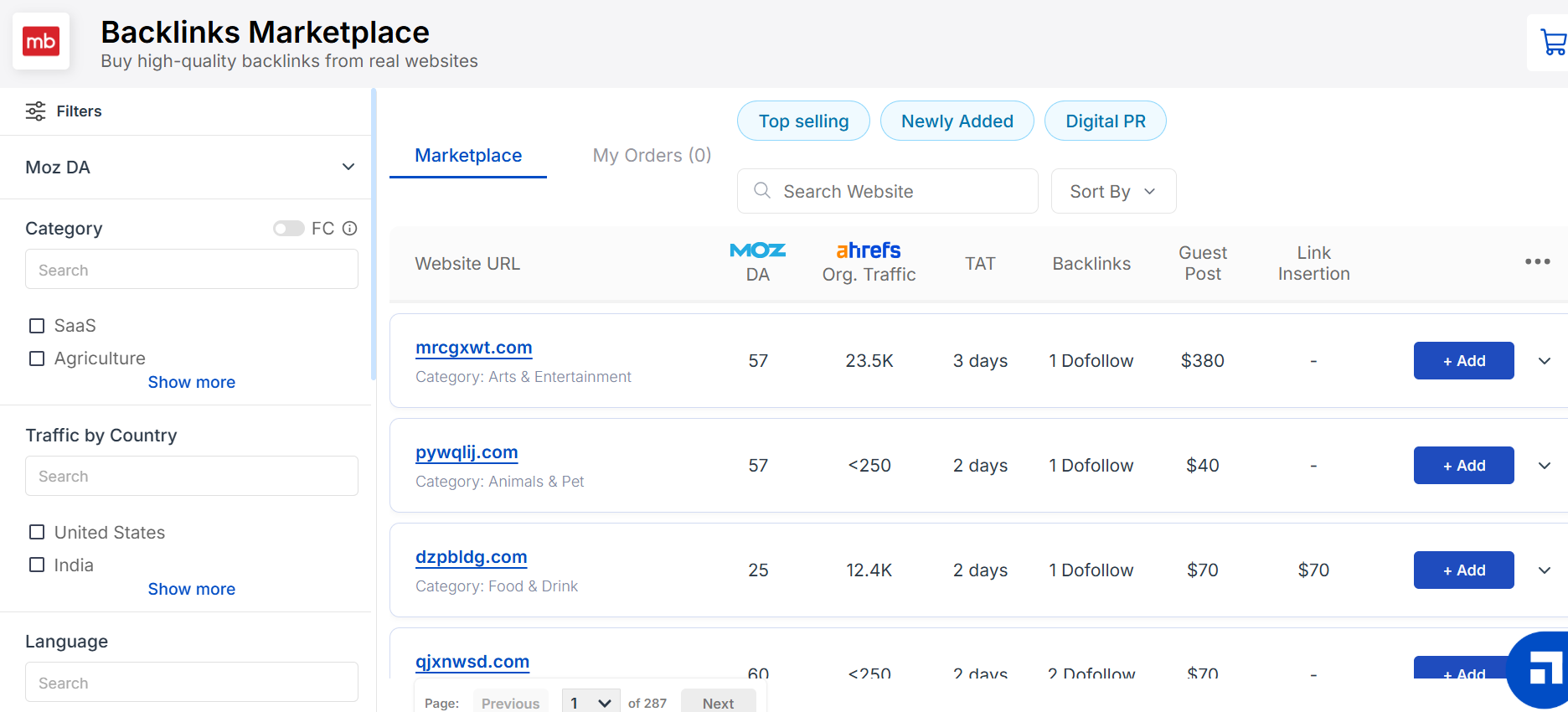
These tools support on-page improvements and site architecture, with a focus on internal linking and page-level optimization.
- Link Manager for planning, organizing, and strengthening internal linking structures.
- On-Page Pro for evaluating meta titles and descriptions against top-ranking pages.
- Backlinks Marketplace for discovering and purchasing backlink opportunities to build authority.
Why I Prefer Scalenut Over SE Ranking?
”What I like best about Scalenut is how it combines AI writing with built-in SEO tools. The Cruise Mode makes it really easy to go from keyword research to a full article in one smooth process. It saves me time and helps me create content that actually ranks.”, says Jerry F, Director, Small Business
If I had to choose one platform for my current workflow, I would pick Scalenut because it feels built around how content teams actually operate when AI visibility becomes a priority. Instead of treating AI as a separate reporting layer, it keeps the work anchored in content decisions, which makes it easier to move from “What is happening?” to “What should be improved next?” without overthinking the process.
I also prefer how Scalenut supports ongoing iteration. It encourages a more intentional way of refining pages, aligning topics to the questions that matter, and improving the likelihood of being surfaced in AI-driven answers over time. For my use, that tighter alignment between visibility signals and content execution is more valuable than having a broader toolkit that covers every SEO category.
Ready to test Scalenut for your workflow? Schedule a demo and see how it helps scale content with SEO and GEO-driven guidance.
Frequently Asked Questions
SE Ranking vs Ahrefs: Which is the best in 2026?
Ahrefs is usually the stronger choice for teams that prioritize deep backlink intelligence and competitor research depth. SE Ranking is better for teams that want an all-in-one SEO platform that covers tracking, audits, reporting, and more. For GEO-focused execution, Scalenut is often the better fit.
SE Ranking vs Semrush: Which is best for AI visibility?
Semrush One is more aggressively positioned around AI search plus GEO, while SE Ranking’s AI tools focus on tracking visibility across multiple AI surfaces. To compare Semrush and SE Ranking, Scalenut is often the stronger pick when the goal is turning AI visibility signals into execution.
SE Ranking vs Moz: Which is best for smaller teams?
SE Ranking is typically the better fit for smaller teams that want a broader all-in-one platform covering rank tracking, site auditing, backlinks, content tools, and reporting, making it a popular choice among SEO professionals. Moz can feel simpler for fundamentals, but it may require more add-ons or extra tools as needs expand.
SE Ranking vs Screaming Frog: Which is a better GEO tool in 2026?
SE Ranking is the better GEO tool because it includes AI visibility tracking across major AI platforms and Google AI surfaces. Screaming Frog is primarily a technical crawling tool for diagnostics, and also functions as a site audit tool, so it supports SEO health checks rather than AI visibility monitoring.
Semrush pricing vs SE Ranking pricing: Which is more affordable for small businesses?
Based on the pricing shown, SE Ranking’s Core plan is $103.20 per month, while Semrush One Starter is $165.17 per, month billed annually. That makes SE Ranking more affordable at entry level, especially considering its comprehensive SEO toolkit. Scalenut starts at $30 per month, which can be cheaper depending on needs.
Can SE Ranking handle all the routine SEO tasks a small agency needs?
Yes. SE Ranking covers the day-to-day workflow most small agencies need, including rank tracking, audits, backlinks, reporting, and local SEO for ongoing digital marketing delivery. It also includes a link-building toolset and reliable customer support, while Scalenut fits better when GEO execution becomes the priority.
How accurate is the SE Ranking?
SE Ranking is generally dependable for day-to-day decision-making, especially for rank tracking trends across devices and locations. The most practical approach is to treat it as directional keyword data rather than absolute truth. Pairing it with traffic analytics and a keyword overview helps validate movement, while Scalenut tracks AI visibility patterns.
Does SE Ranking offer features that Semrush doesn’t have?
SE Ranking can offer more convenience in specific workflows, such as built-in page change monitoring and local marketing tasks that smaller teams use regularly. It also supports practical competitive checks like keyword gap discovery and quick keyword suggestions. Scalenut is the stronger option when the focus is GEO-led content execution.
How do SE Ranking and Semrush compare in terms of user interface and ease of use?
SE Ranking tends to feel cleaner for everyday workflows, which can improve user experience for smaller teams that want faster navigation and fewer clicks. Semrush is powerful, but heavier. For content optimization, Scalenut often feels more guided, including tooling that functions like an SEO writing assistant in a GEO workflow.
Is SE Ranking a good alternative to Semrush for marketers?
For many marketers, SE Ranking is a solid Semrush alternative when broad SEO coverage is needed at a lower entry cost. It supports planning with keyword difficulty indicators and workflow-friendly reporting. For teams prioritizing GEO and AI discovery performance, Scalenut is often the better fit, especially when expanding into related keyword strategies.


.svg)


.webp)
.jpg)
.jpg)
%20(1).jpg)