.jpg)
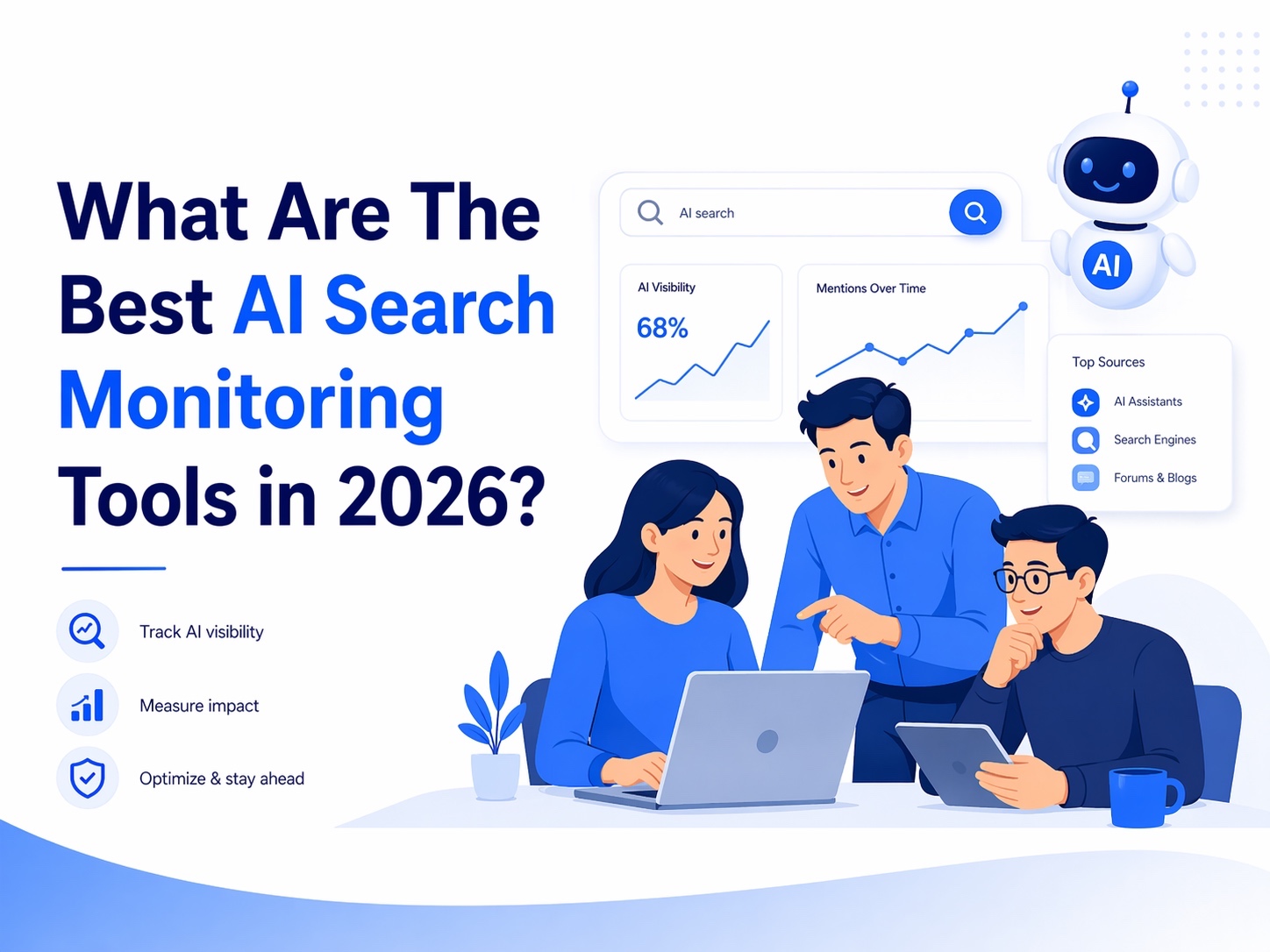
What Are The Best AI Search Monitoring Tools Right Now?
Key Highlights
- AI search monitoring helps teams track their brand’s visibility across platforms like ChatGPT, Perplexity, Google AI Overviews, Gemini, and Claude.
- The best AI visibility monitoring tools go beyond mentions by tracking citations, prompt performance, competitor visibility, sentiment, and share of voice.
- Scalenut is a strong option among the best AI visibility tracking tools, especially if you want a search optimization platform that combines AI visibility tracking with content and SEO execution.
- Tools like Peec AI, Otterly AI, and KIME are better suited for focused monitoring, competitive benchmarking, or lower-cost entry points.
- Semrush and Ahrefs are useful if your team already works inside an existing SEO platform and wants AI visibility insights added to that workflow.
- The key features to compare include AI engine coverage, prompt-level tracking, citation insights, sentiment analysis, competitor benchmarking, and reporting.
- Follow best practices like tracking varied buyer prompts, reviewing cited sources, and checking whether the tool provides actionable recommendations.
- The right tool should help your team understand where you stand, why competitors are winning, and what to improve next.
9 Best AI Search Monitoring Tools: Quick Glance
Here is a quick scan of the list before we get into a detailed breakdown.
- Scalenut: Best choice among the leading AI visibility optimization tools, especially for teams that want AI visibility tracking, competitor benchmarking, content gaps, and execution in one workflow.
- Peec AI: Best for focused AI visibility tracking across multiple AI engines, with strong competitor monitoring and flexible model coverage.
- Quattr: Best for enterprise SEO teams that want AI citations and brand mentions connected to GA4, Google Search Console, and SEO execution workflows.
- Scrunch AI: Best for brand and PR teams that want to monitor how AI engines understand, describe, and represent their brand.
- KIME: Best for cross-platform AI visibility benchmarking across tools like ChatGPT, Perplexity, Google AI Overviews, Gemini, Claude, and DeepSeek.
- Otterly AI: Best for smaller teams that want a lower-cost way to track brand mentions, citations, prompts, and competitor visibility across AI search.
- Erlin: Best for growth teams that want AI visibility monitoring plus recommended actions based on gaps, sentiment, and opportunities.
- Semrush AI Visibility Toolkit: Best for teams already using Semrush that want AI visibility, cited pages, competitive benchmarking, and SEO reporting in one ecosystem.
- Ahrefs Brand Radar: Best for existing Ahrefs users who want to track AI mentions, citations, impressions, and AI share of voice alongside SEO data.
What Are The Best AI Search Monitoring Tools Available Right Now?
The best AI search monitoring tools help you see where your brand appears across AI answers, which competitors are showing up more often, which sources are being cited, and what actions can improve visibility. For BOFU buyers, the real value is not just tracking mentions, but choosing a tool that fits your workflow, budget, and growth priorities.
Below, we’ll break down the top tools by what they monitor, where they stand out, who they are best for, and what to consider before choosing one.
1. Scalenut
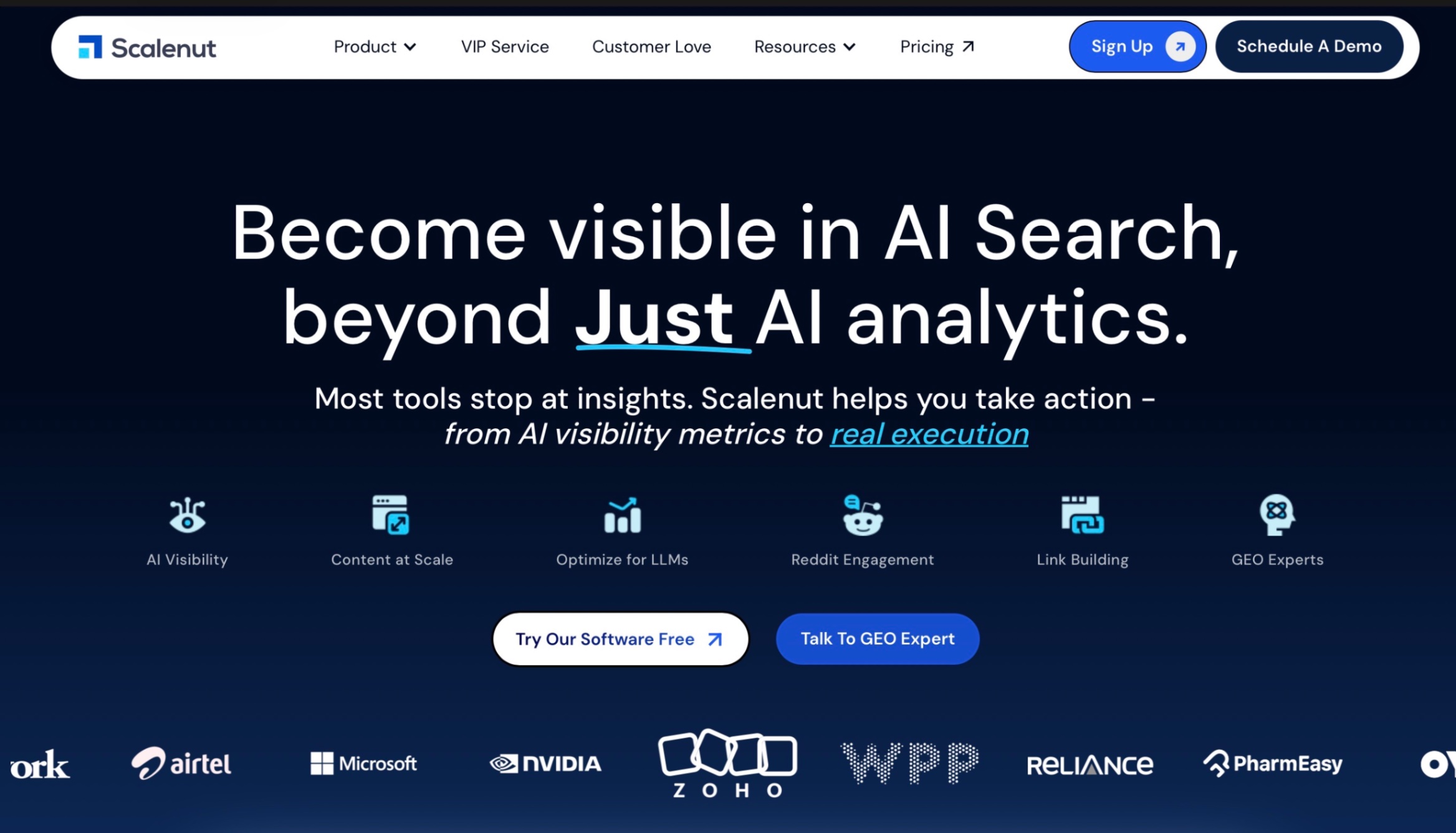
Scalenut is built for teams that want AI visibility tracking and content execution in one workflow. It helps you see where your brand appears in AI search, where competitors are winning, and what to improve next.
Best For: Scalenut is best for SEO, content, and growth teams that want to monitor AI visibility and act on the insights without switching between multiple tools.
What Does Scalenut Help You Monitor?
1. Brand Visibility Across AI Engines
Scalenut helps teams track how often their brand appears across AI-generated answers on platforms like ChatGPT, Google AI Overviews, Perplexity, and other supported AI engines. It helps you see where your brand shows up, where it is missing, and how visible you are compared to competitors.
2. Visibility Score And Share Of Voice
Scalenut uses metrics like Visibility Score and Share of Voice to quantify AI visibility. Visibility Score shows how often your brand appears compared to competitors. Share of Voice shows how much of the AI answer space your brand owns across selected prompts and topics.
3. Average Position And Brand Visibility Rank
Scalenut helps you understand where your brand appears inside AI answers, not just whether it appears. This matters because a top mention carries more weight than a buried mention below multiple competitors.
4. Prompt-Level Visibility
Scalenut tracks visibility by prompt, so teams can see which questions trigger brand mentions and where competitors appear instead. This is useful for BOFU prompts like “best tools for,” “alternatives to,” “compare,” and “for [industry]” searches.
5. Citation Tracking And Source Influence
Scalenut shows which sources AI engines cite in their answers. This helps teams understand whether AI systems are relying on their own pages, third-party websites, competitor content, reviews, or other authority signals.
6. Competitor Visibility Insights
Scalenut helps benchmark competitors across AI engines, prompts, and topics. Teams can see which competitors appear more often, which prompts they win, and where their own brand is losing share of voice.
7. Sentiment And Brand Perception
Scalenut helps track whether AI-generated mentions are positive, neutral, or negative. This is useful because visibility alone is not enough. Teams also need to know whether AI engines describe the brand accurately and favorably.
8. Recommendations For Content, Authority, And Community Engagement
Scalenut turns visibility gaps into practical next steps across content, backlink strategies, and community engagement. This helps teams move from “we are missing in AI answers” to “here is what we should fix next.”
9. AI Traffic And AI Bot Signals
Scalenut helps teams monitor AI traffic signals, AI bot activity, top AI sources, referenced pages, and AI-driven traffic trends. This connects AI visibility with how AI systems and AI search experiences interact with your site.
10. SEO And Content Execution Performance
Scalenut also supports SEO execution through tools like Cruise Mode, Content Optimizer, Keyword Planner, Content Audit, Link Manager, OnPage Pro, and backlink support. This makes it useful for teams that want to plan, create, optimize, refresh, and strengthen content from the same platform.
Why Scalenut Stands Out?
- Monitoring Plus Execution: Tracks AI visibility and helps teams act on the findings through SEO and content workflows.
- GEO And SEO In One Platform: Combines AI search visibility with keyword planning, content optimization, audits, internal linking, and on-page improvements.
- Competitive Visibility Layer: Shows where competitors are winning across prompts, topics, and AI engines.
- Execution-Ready Recommendations: Turns visibility gaps into content, authority, and engagement actions.
- Useful Across Strategy And Production: Helps teams move from analysis to briefs, updates, optimization, and publishing support.
Which Teams Are The Best Fit For Scalenut?
- SEO Teams: Best for teams that want AI visibility insights connected to keyword planning, audits, and optimization.
- Content Teams: Useful for teams turning AI visibility gaps into briefs, outlines, updates, and new pages.
- Growth Teams: Strong fit for teams tracking brand visibility, competitors, and AI-driven discovery opportunities.
- Agencies: Helpful for showing clients where they stand in AI search and what actions can improve visibility.
- SaaS And B2B Teams: Especially useful for targeting category, comparison, alternative, and high-intent buying prompts.
What Are The Limitations Or Considerations With Scalenut?
- Best Value Comes From The Full Workflow: Scalenut is strongest when teams use both AI visibility tracking and SEO execution tools together.
How Much Does Scalenut Cost?
- Starter starts at $59/month
- Plus starts at $89/month
- Professional starts at $199/month
- VIP Service pricing is custom
How Is Scalenut Rated By Users?
G2 Rating: 4.7/5
2. Peec AI
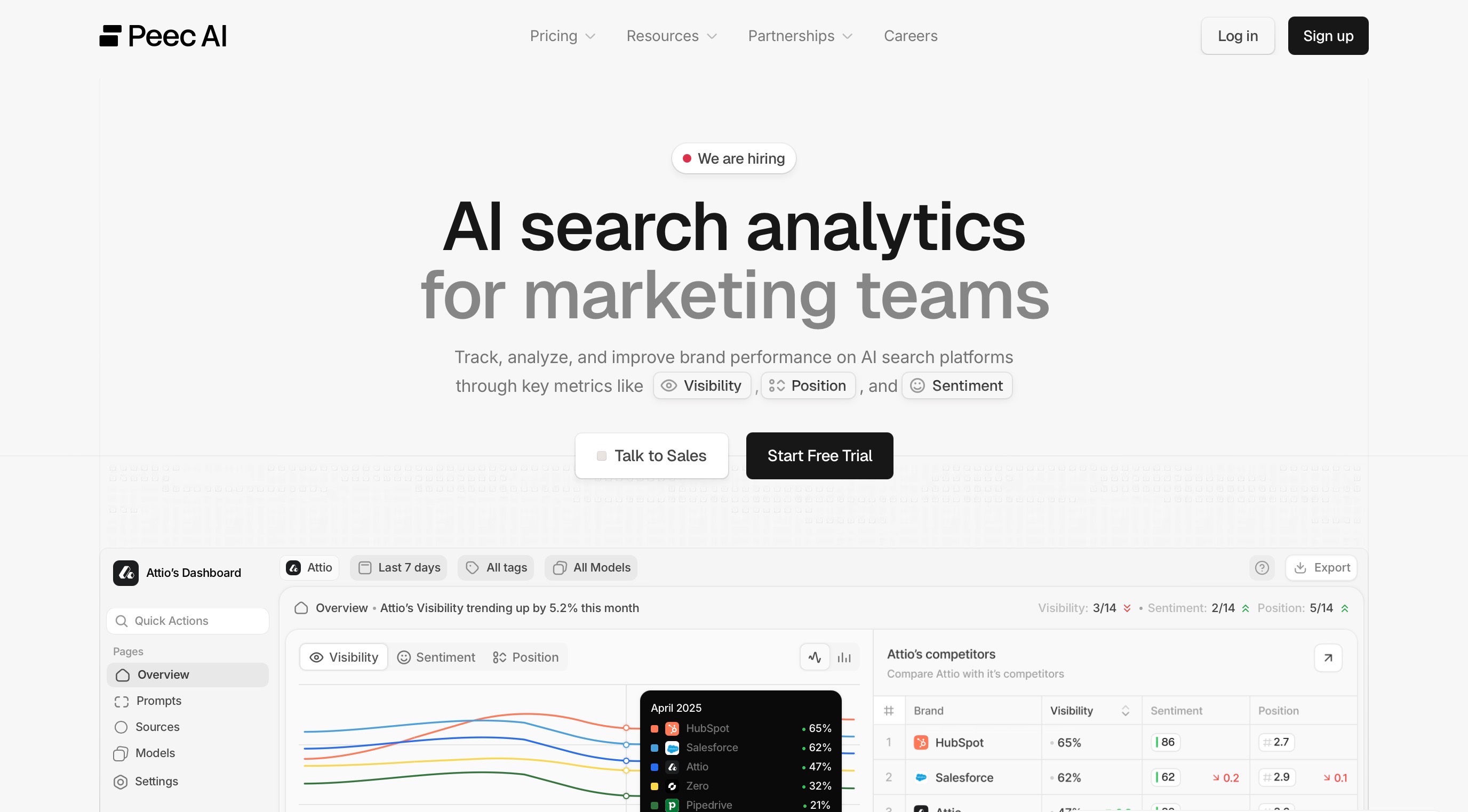
Peec AI is a focused AI visibility platform for teams that want clean monitoring across major AI engines without turning the workflow into a heavy SEO suite.
Best For: Peec AI is best for marketing and growth teams that mainly want to track where their brand appears in AI answers, how competitors show up, and which prompts or citations need attention.
What Does Peec AI Help You Monitor?
- AI Visibility: Tracks how your brand performs across AI search platforms like ChatGPT, Perplexity, and Gemini.
- Competitor Presence: Helps benchmark your brand against competitors in AI-generated answers.
- Prompt Performance: Lets teams set up prompts and monitor how visibility changes across those queries.
- Citations: Helps identify which sources are being cited so teams can adjust their content strategy.
Why Peec AI Stands Out?
- Focused Dashboard: Useful if you want AI visibility tracking without a crowded platform full of unrelated SEO features.
- Marketing-Team Friendly: Built around practical questions like “Are we showing up?”, “Who is beating us?”, and “Which sources are getting cited?”
- Regular Visibility Tracking: Works well for teams that want to monitor AI search performance consistently.
- Clear Citation Insight: Helps teams understand which content and sources are influencing AI-generated answers.
Which Teams Are The Best Fit For Peec AI?
- Growth Teams: Best for teams that want focused AI visibility tracking without a heavy SEO suite.
- Content Teams: Useful for teams that already have a content workflow and mainly need better AI search data.
- Marketing Teams: A good fit for teams that care about competitor benchmarking, prompt visibility, and citation tracking.
- Agencies: Helpful for teams that need a clean way to monitor AI visibility across clients.
What Are The Limitations Or Considerations With Peec AI?
- Not A Full SEO Suite: Peec AI is stronger for AI visibility tracking than broader SEO, technical auditing, or content production workflows.
- Execution Still Needs A Process: The platform can show visibility gaps, but your team still needs a workflow to update, create, and optimize content.
- Model Coverage May Depend On Plan: If you need broader model coverage beyond the default engines, check the plan details before buying.
- Best For Monitoring-First Teams: If you want AI visibility insights connected directly to content execution, a more execution-led platform may be a better fit.
How Much Does Peec AI Cost?
- Starter starts at $95/month
- Pro starts at $245/month
- Advanced starts at $495/month
- Enterprise pricing is custom
How Is Peec AI Rated By Users?
G2 Rating: 5/5
3. Quattr
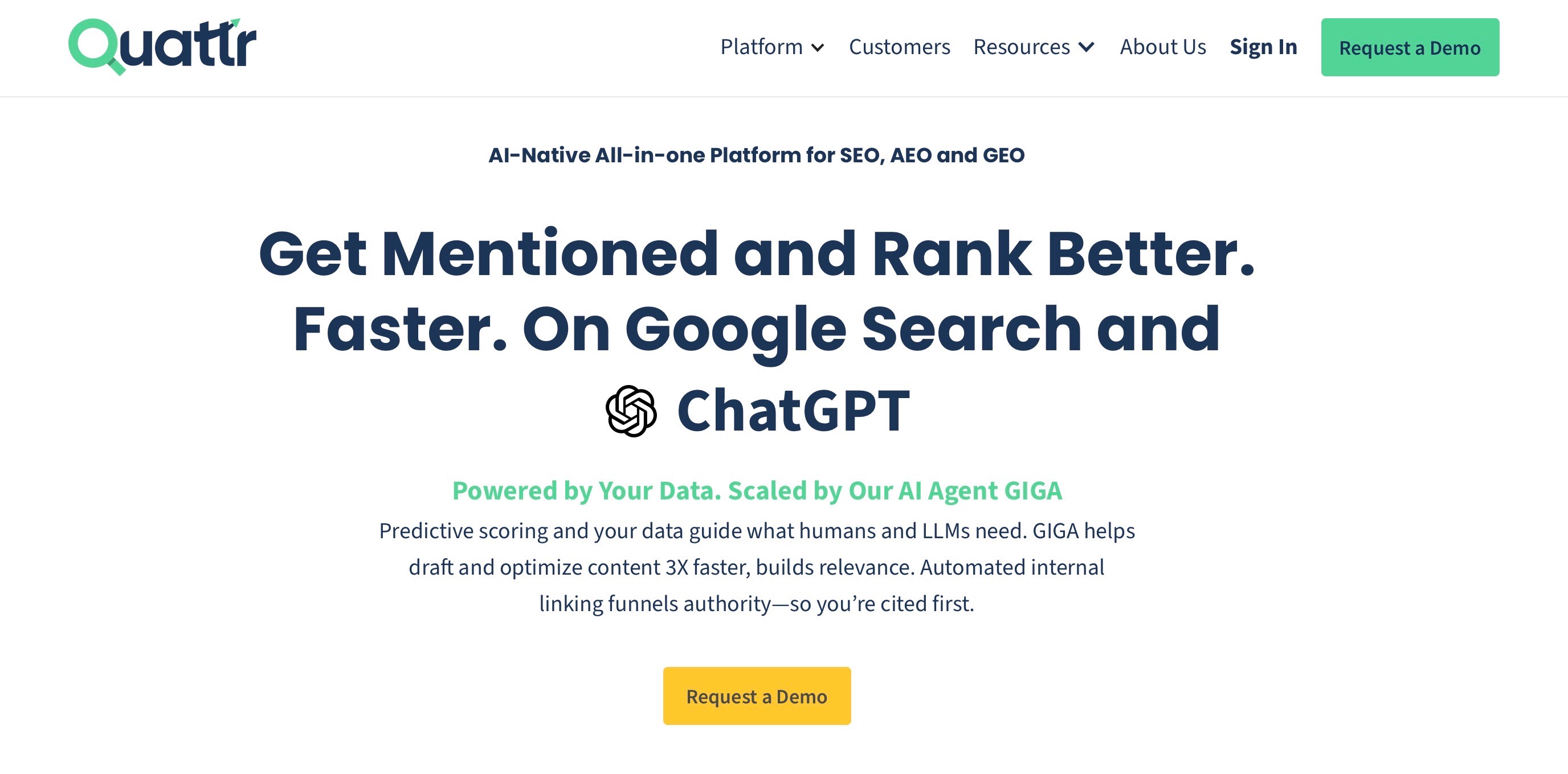
Quattr is built for teams that want AI visibility monitoring tied closely to SEO, GEO, technical optimization, and content execution.
Best For: Quattr is best for enterprise SEO and growth teams that want AI visibility data connected to a larger optimization workflow.
What Does Quattr Help You Monitor?
- AI Answer Visibility: Tracks how your brand and content appear across major AI answer engines, including Google AI Overviews, ChatGPT, Claude, and Perplexity.
- User-Facing AI Responses: Captures responses from consumer-facing AI experiences instead of relying only on API-style simulations.
- Prompt Gaps: Helps identify prompts where your brand appears and where competitors are getting cited instead.
- AI Citations And Brand Mentions: Tracks prompts, mentions, and citations across generative search experiences.
Why Quattr Stands Out?
- SEO Plus GEO Workflow: Useful for teams that do not want AI visibility sitting separately from SEO operations.
- Execution-Led Positioning: Focuses on moving from tracking to action through visibility tracking, content governance, data consolidation, and deployment workflows.
- Enterprise Fit: Better suited for larger teams that need governance, prioritization, and cross-functional SEO execution.
- First-Party Data Connection: Connects AI citations and brand mentions with GA4 and Google Search Console data, which helps teams tie AI visibility to traffic and business impact.
Which Teams Are The Best Fit For Quattr?
- Enterprise SEO Teams: Best for teams that want AI visibility tied directly to SEO execution.
- Larger Marketing Teams: Useful for teams that need content governance, prioritization, and cross-functional workflows.
- Growth Teams: A good fit for teams that want to connect AI visibility with GA4 and Search Console data.
- SEO-Led Organizations: Strong for teams that need a structured SEO, GEO, and content operations workflow.
What Are The Limitations Or Considerations With Quattr?
- May Be More Than Small Teams Need: Quattr is better suited for larger teams with mature SEO workflows, not teams looking for a lightweight tracker.
- Requires Workflow Adoption: Teams may get more value when they actively use its SEO, GEO, governance, and reporting workflows together.
- Less Ideal For Simple Monitoring: If you only need basic AI mention tracking, Quattr may feel heavier than necessary.
- Best For SEO-Led Organizations: It is strongest when AI visibility is part of a broader SEO and growth strategy, not a standalone reporting task.
How Much Does Quattr Cost?
Contact their team for pricing options
How Is Quattr Rated By Users?
G2 Rating: 4.9/5
4. Scrunch AI
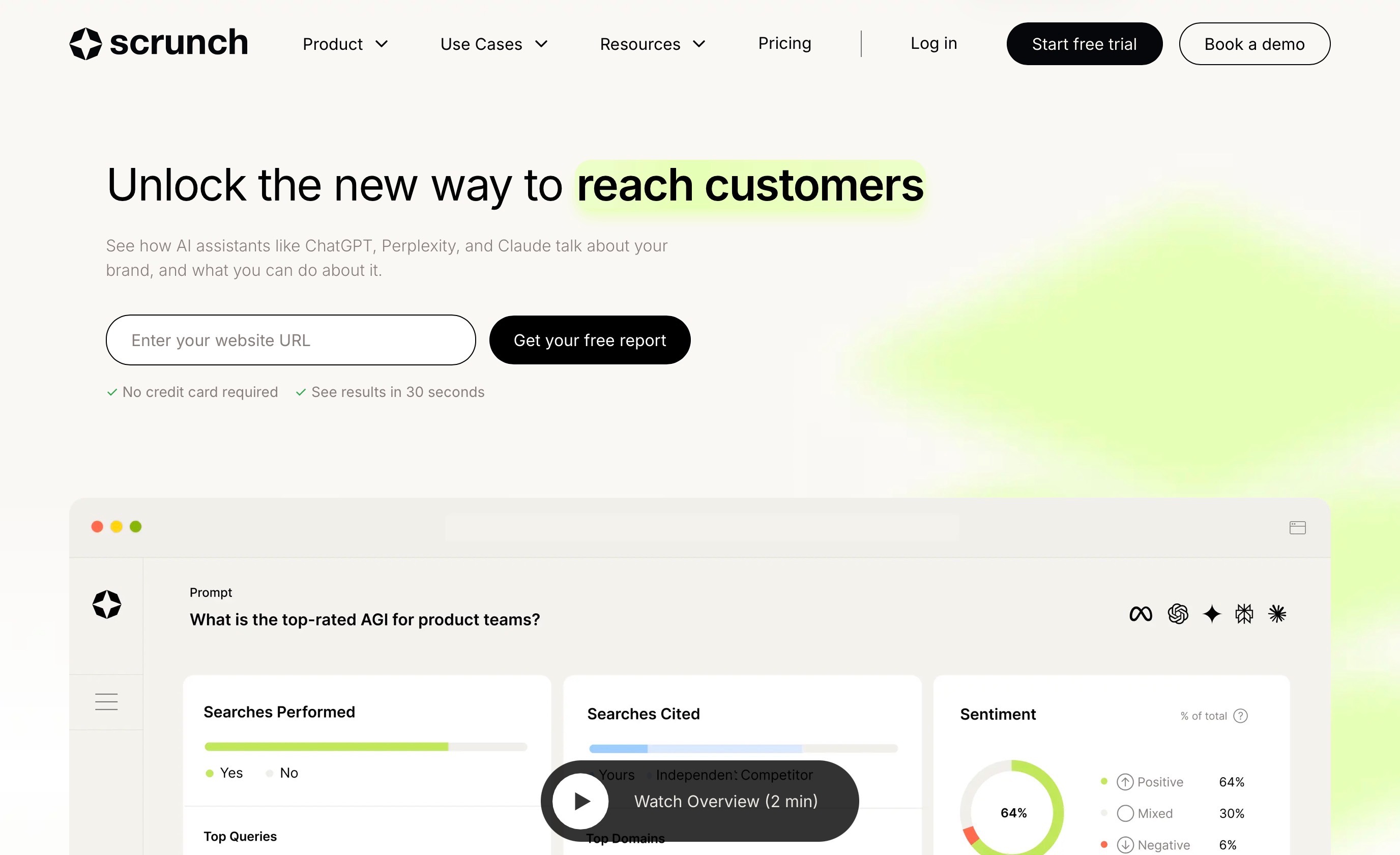
Scrunch AI is built for teams that care about how AI engines understand, describe, and recommend their brand across AI search experiences.
Best For: Scrunch AI is best for brand, PR, communications, and enterprise teams that want stronger control over brand accuracy, reputation, and narrative in AI-generated answers. Scrunch positions itself as an AI customer experience platform that helps brands monitor AI search presence, analyze website visibility, and deliver structured content to AI agents through its Agent Experience Platform.
What Does Scrunch AI Help You Monitor?
- Brand Presence: Tracks how your brand appears in AI platform responses across prompts, topics, personas, funnel stages, countries, and more.
- Citations And Mentions: Shows brand mentions, citations, position, sentiment, and competitor presence across major AI platforms.
- Share Of Voice: Helps compare brand visibility against competitors across prompts, topics, regions, and audience segments.
- AI Bot And Referral Traffic: Tracks how AI bots crawl your site, which pages they access, and how AI referral traffic changes over time.
Why Scrunch AI Stands Out?
- Brand Narrative Focus: Scrunch is useful for teams that care not just about appearing in AI answers, but about being represented accurately.
- Agent Experience Platform: Its AXP product creates lightweight, machine-readable versions of pages so AI agents can parse and cite content more easily.
- Enterprise Readiness: Scrunch supports SOC 2 Type II compliance, role-based access control, multi-brand deployment, and Data API access.
- Monitoring Plus Optimization: The platform combines monitoring, auditing, optimization, and AI-ready content delivery instead of stopping at visibility reports.
Which Teams Are The Best Fit For Scrunch AI?
- Brand Teams: Best for teams that want to improve how AI engines describe and position their brand.
- PR And Communications Teams: Useful for teams that need to monitor reputation, sentiment, and narrative consistency.
- Enterprise Teams: A good fit for organizations that need governance, security, multi-brand support, and scalable reporting.
- AI Experience Teams: Strong for teams thinking beyond AI search visibility and into how AI agents access, crawl, and interpret their website.
What Are The Limitations Or Considerations With Scrunch AI?
- May Be More Brand-Focused Than Content-Production-Focused: Scrunch is strong for brand monitoring, AI agent access, and optimization, but teams that mainly want content creation workflows should check how it fits their process.
- Best For Mature Teams: Its enterprise and AI agent features may be more than what a small team needs for basic mention tracking.
- Technical Setup May Matter: Teams using AXP or AI bot diagnostics may need support from SEO, web, or engineering teams.
- Not Just A Lightweight Tracker: If your only goal is basic AI mention monitoring, Scrunch may feel broader than necessary.
How Much Does Scrunch AI Cost?
- Lite starts at $129/month
- Standard starts at $249/month
- Advanced starts at $449/month
- Enterprise pricing is custom
How Is Scrunch AI Rated By Users?
G2 Rating: 4.6/5
5. KIME
KIME is a cross-platform AI visibility tool for teams that want to compare brand performance across AI models, prompts, markets, and competitors.
Best For: KIME is best for teams that want AI visibility benchmarking, competitor tracking, and clear performance comparisons across AI search surfaces. Its platform focuses on tracking brand visibility, prompts, competitors, sources, share of voice, sentiment, and optimization actions.
What Does KIME Help You Monitor?
- AI Visibility: Tracks how your brand performs across selected prompts, countries, models, and categories.
- Competitor Presence: Lets teams compare their brand against competitors across visibility, placement, sentiment, and share of voice.
- Citation Sources: Shows which sources AI models pull from when mentioning your brand.
- Visibility Trends: Tracks changes in AI visibility over time so teams can spot movement, drops, or anomalies.
Why KIME Stands Out?
- Strong Benchmarking Angle: KIME is useful for teams that want to compare AI visibility across multiple models and markets instead of checking one engine in isolation.
- Competitor-Focused Tracking: Its dashboard highlights competitor analysis, share of voice, visibility ranking, and industry ranking.
- Action Center: KIME includes an action-focused layer designed to give optimization recommendations, not just visibility data.
- Multi-Market View: The platform supports prompt, country, model, and category tracking, which is helpful for brands operating across regions or product lines.
Which Teams Are The Best Fit For KIME?
- Agencies: Best for teams that need to benchmark multiple brands or clients across AI search.
- CMO Teams: Useful for leaders who want a clear view of AI share of voice and competitive visibility.
- Competitive SEO Teams: A good fit for teams tracking where competitors are winning prompts, mentions, and citations.
- Multi-Market Brands: Strong for companies that need to understand AI visibility across different models, markets, or product categories.
What Are The Limitations Or Considerations With KIME?
- Benchmarking Comes First: KIME is strongest for visibility analysis, competitor tracking, and performance benchmarking, so teams should confirm whether its execution workflows match their content process.
- May Need A Separate Content Workflow: If your team needs full content planning, writing, and optimization in the same platform, check how far KIME’s action recommendations go.
- Best For Teams Tracking Multiple Variables: KIME is most useful when you care about prompts, models, countries, categories, competitors, and sources together.
- Results Depend On Prompt Strategy: To get meaningful insights, your team still needs a strong prompt set that reflects real buyer questions, comparison queries, and category searches.
How Much Does KIME Cost?
- Core starts at €149/mo
- Standard starts at €399/mo
- Enterprise pricing is custom
How Is KIME Rated By Users?
G2 Rating: 5/5
6. Otterly AI
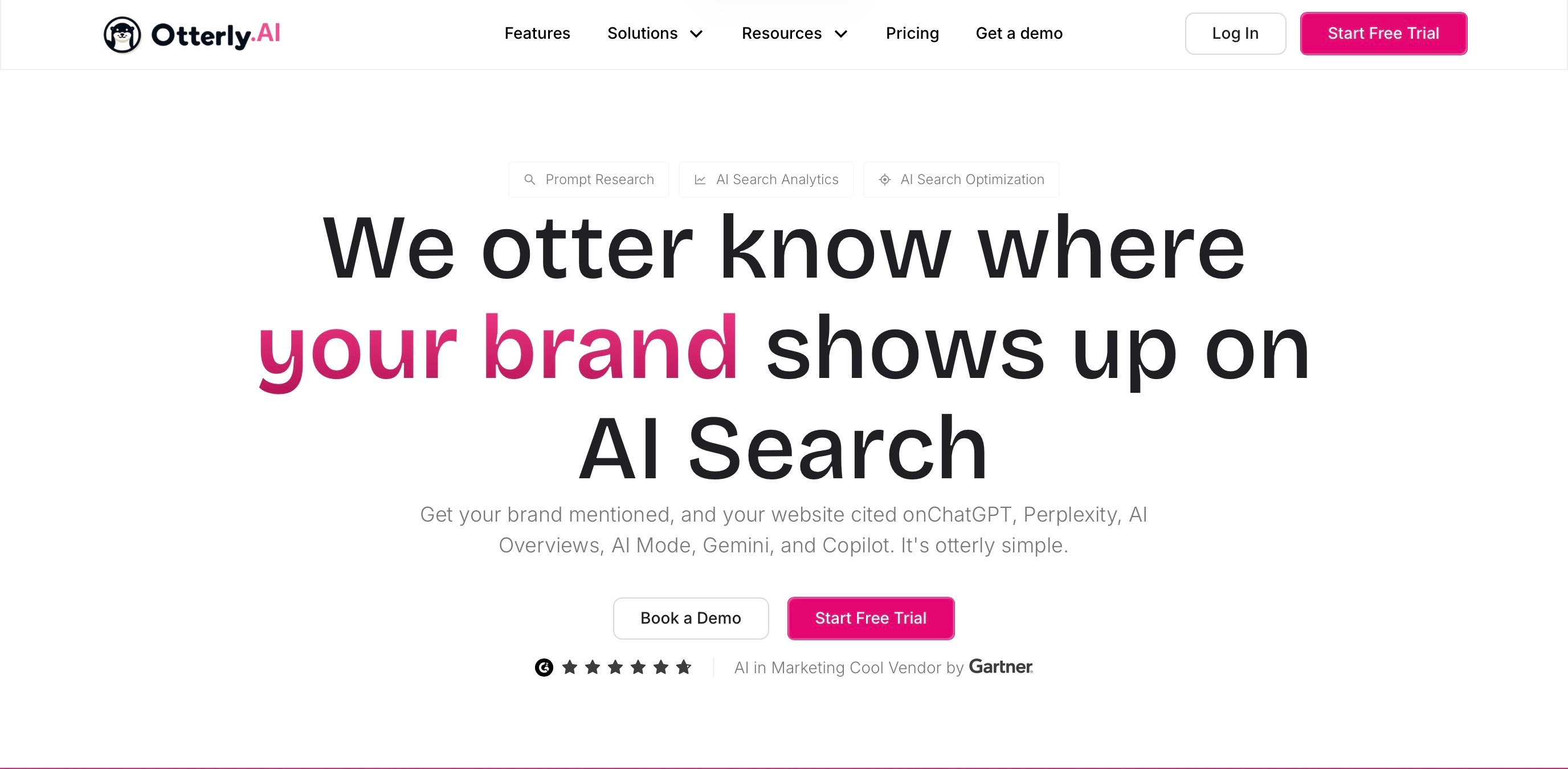
Otterly AI is a practical AI search monitoring tool for smaller teams that want to start tracking brand visibility without jumping into a heavy enterprise platform.
Best For: Otterly AI is best for solo marketers, small teams, SMEs, and agencies that want a lower-cost way to monitor AI mentions, citations, prompts, and competitor visibility.
What Does Otterly AI Help You Monitor?
- Brand Mentions: Tracks when your brand appears in AI-generated answers across platforms like ChatGPT, Perplexity, Google AI Overviews, and AI Mode.
- Website Citations: Shows when your domain or pages are cited in AI answers, helping teams understand where their content is influencing responses.
- Prompt Performance: Lets teams define prompts that mirror real user queries and monitor how brands get cited across those prompts.
- Competitor Visibility: Compares your brand visibility against competitors and shows where your brand is winning or losing ground.
Why Otterly AI Stands Out?
- Lower Entry Price: Otterly AI has a lower starting price than many enterprise-focused AI visibility platforms, making it easier for small teams to test AI search monitoring.
- Daily Tracking: Its paid plans support regular tracking, which helps teams monitor visibility changes across AI search platforms.
- Useful GEO Features: It includes features like brand visibility tracking, domain ranking, citation analysis, GEO audits, prompt research, and reporting.
- Agency-Friendly Options: It offers agency-oriented features such as workspace management and prospect audit workflows.
Which Teams Are The Best Fit For Otterly AI?
- Solo Marketers: Best for marketers who want a simple way to start tracking AI search visibility.
- Small Teams: Useful for teams that need prompt, citation, and brand visibility tracking without an enterprise price point.
- SMEs: A good fit for businesses that want regular AI search tracking but do not need a complex SEO operations suite.
- Agencies: Helpful for agencies that want to test or package AI search visibility tracking for clients.
What Are The Limitations Or Considerations With Otterly AI?
- Prompt Limits Matter: Lower-tier plans may limit the number of prompts you can track, so larger teams may need a higher plan.
- Some Engines May Cost Extra: Coverage for certain AI engines may depend on plan level or add-ons, so check this before buying.
- Not A Full Content Execution Platform: Otterly AI is strong for monitoring, GEO audits, and reporting, but teams may still need a separate workflow for content creation and optimization.
- Best For Starting Or Scaling Monitoring: It is a better fit for accessible AI visibility tracking than for full SEO and content operations.
How Much Does Otterly AI Cost?
- Lite starts at $25/month
- Standard starts at $160/month
- Premium starts at $422/month
- Enterprise pricing is custom
How Is Otterly AI Rated By Users?
G2 Rating: 4.8/5
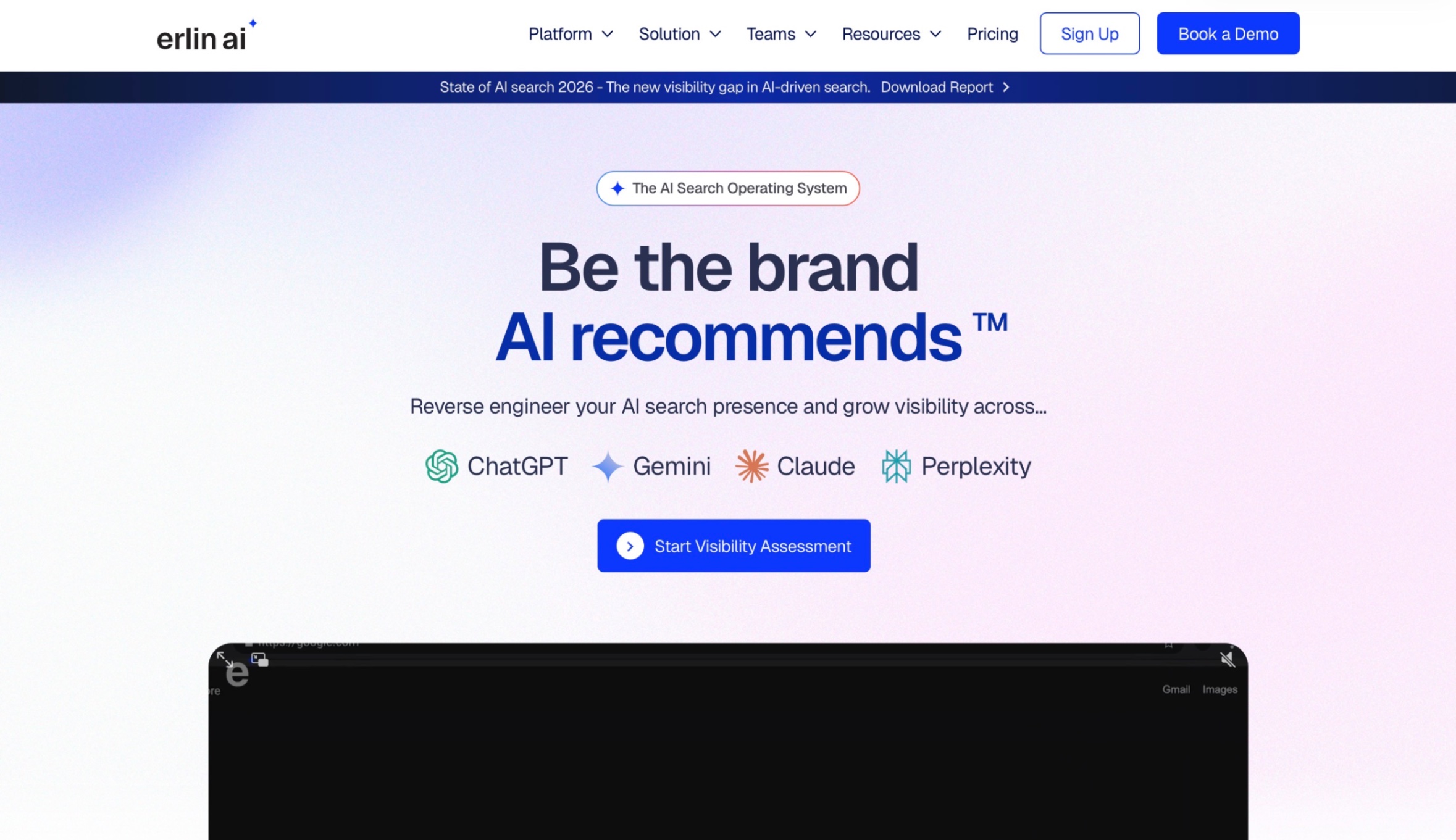
7. Erlin
Erlin is built for teams that want AI visibility insights, gap discovery, and a clearer path from monitoring to optimization.
Best For: Erlin is best for content, SEO, marketing, GTM, and agency teams that want to track AI visibility and identify what to improve next. It brings AI search, SEO, and analytics data together, with visibility, sentiment, share of voice, prompt performance, competitor comparison, and citation tracking as core use cases.
What Does Erlin Help You Monitor?
- AI Visibility And Sentiment: Tracks brand visibility, sentiment, and share of voice across AI search results.
- Prompt And Keyword Performance: Combines prompt and keyword performance so teams can compare AI search visibility with broader search behavior.
- Competitor Visibility: Lets teams compare visibility against competitors and see where they are being outranked or out-cited.
- Citations From Key Sources: Tracks citations from sources like Reddit and YouTube, which can matter when community and video content influence AI answers.
Why Erlin Stands Out?
- Gap Discovery: Erlin surfaces gaps in content, entities, and coverage, helping teams understand why they may not be showing up.
- Action Center: Its action-focused workflow turns opportunities into team tasks, briefs, outlines, workflows, and content updates.
- Search And Analytics Connection: It connects AI search visibility with SEO, Google Analytics, and Google Search Console data.
- Optimization-Focused Workflow: Erlin is useful for teams that want to move from visibility insights to practical next steps.
Which Teams Are The Best Fit For Erlin?
- Content Teams: Best for teams that want to turn AI visibility gaps into briefs, outlines, and content updates.
- SEO Teams: Useful for teams that want AI search data connected with SEO, analytics, and Google Search Console.
- Marketing And GTM Teams: A good fit for teams that care about visibility, sentiment, share of voice, and competitor movement.
- Agencies: Helpful for agencies that want to offer AI visibility insights, prompt tracking, and action plans to clients.
What Are The Limitations Or Considerations With Erlin?
- More Than A Basic Tracker: Erlin is built around signals, opportunities, and workflows, so it may be more than what a team needs for simple mention tracking.
- Best Value Requires Workflow Adoption: Teams will get more value if they use the insights, opportunities, and action workflows together.
- Execution Still Needs Review: Erlin can support briefs, outlines, drafts, and updates, but human review is still important for accuracy, tone, and brand fit.
- Prompt Strategy Still Matters: Like any AI visibility platform, Erlin’s insights depend on tracking the right prompts, competitors, and category questions.
How Much Does Erlin Cost?
- Starter starts at $47/month
- Standard starts at $197/month
- Pro starts at $347/month
- Enterprise pricing is custom
How Is Erlin Rated By Users?
No user ratings yet on G2.
8. Semrush AI Visibility Toolkit
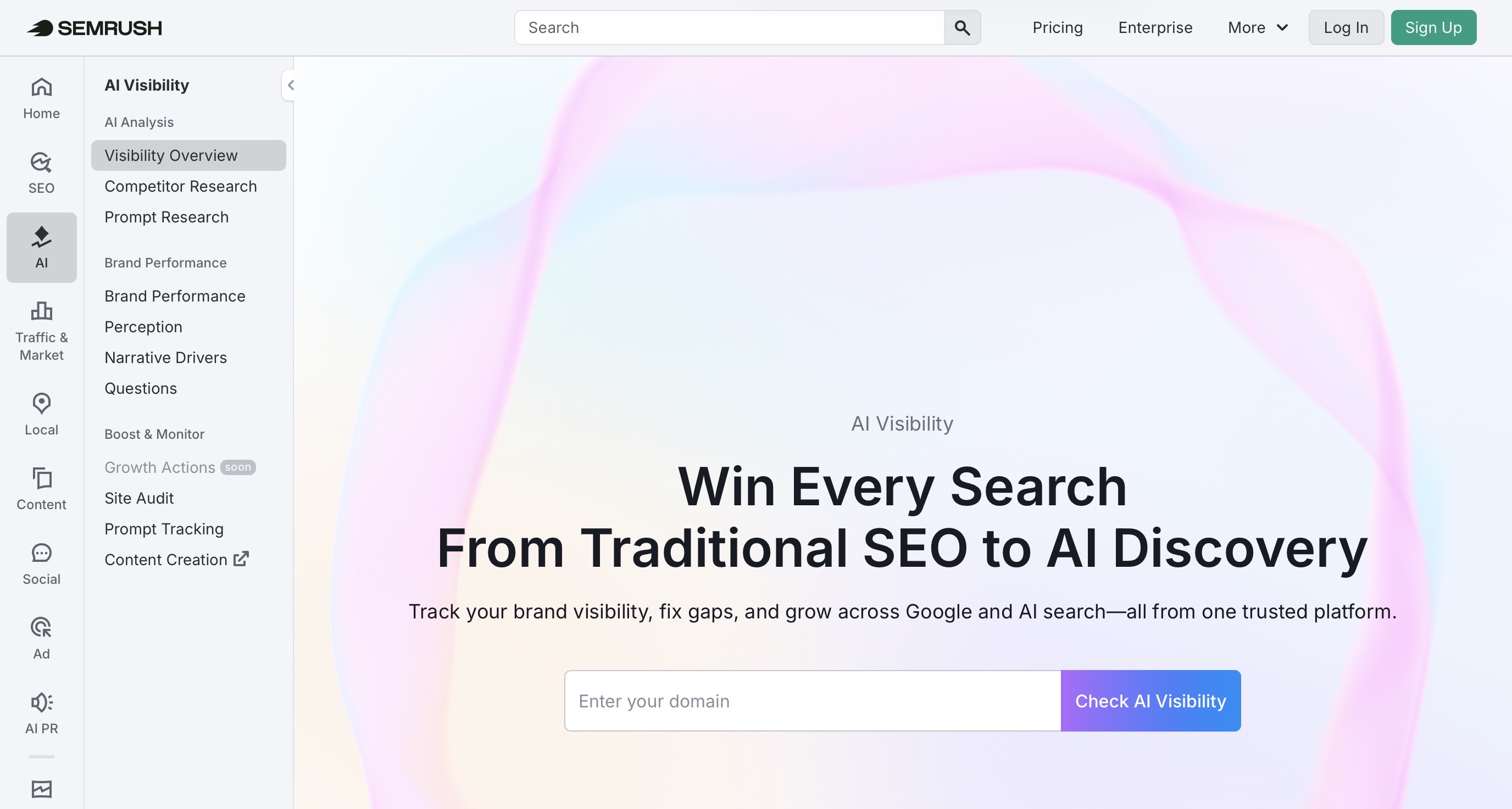
Semrush AI Visibility Toolkit is built for teams that already use Semrush and want AI search insights inside a familiar SEO workflow.
Best For: Semrush AI Visibility Toolkit is best for existing Semrush users who want to track how their brand appears across AI platforms, compare visibility against competitors, and connect AI search performance with broader SEO reporting.
What Does Semrush AI Visibility Toolkit Help You Monitor?
- AI Visibility Baseline: Shows how visible a brand is across AI search platforms and LLMs.
- Competitor Positioning: Helps compare your brand against competitors in AI-generated answers.
- Cited Pages: Identifies which pages get cited most often in AI responses.
- Visibility Gaps: Highlights topics, sources, and narrative themes where competitors show up but your brand does not.
Why Semrush AI Visibility Toolkit Stands Out?
- Built Into Semrush: Strong fit for teams already using Semrush for SEO, content, keyword research, or competitor analysis.
- Competitive Benchmarking: Useful for comparing AI visibility against competitors, not just checking brand mentions.
- SEO And AI Visibility Together: Helps teams connect traditional SEO work with newer AI visibility signals.
- Free Checker Available: Semrush also offers a free AI visibility checker, which can be useful for a quick first audit before investing in the full toolkit.
Which Teams Are The Best Fit For Semrush AI Visibility Toolkit?
- Existing Semrush Users: Best for teams that already use Semrush and want AI visibility added to their SEO stack.
- SEO Teams: Useful for teams that want AI visibility insights alongside keyword, content, and competitor data.
- Agencies: A good fit for teams running AI visibility audits or competitive reports for clients.
- Growth Teams: Helpful for teams that want to understand where AI visibility gaps overlap with SEO opportunities.
What Are The Limitations Or Considerations With Semrush AI Visibility Toolkit?
- Best Inside The Semrush Ecosystem: It makes the most sense if your team already uses or plans to use Semrush.
- May Not Be The Lightest Option: Smaller teams that only need simple AI mention tracking may find a focused tracker easier to start with.
- Feature Access May Depend On Plan: Some AI visibility features may be tied to specific Semrush products or plan access, so confirm availability before buying.
- Execution Still Needs Team Follow-Through: The toolkit can surface gaps and opportunities, but your team still needs a process to refresh pages, build content, and improve citations.
How Much Does Semrush AI Visibility Toolkit Cost?
- Pro starts at $117/month
- Guru starts at $208/month
- Business starts at $416/month
- Enterprise pricing is custom
How Is Semrush AI Visibility Toolkit Rated By Users?
No ratings yet on G2.
9. Ahrefs Brand Radar
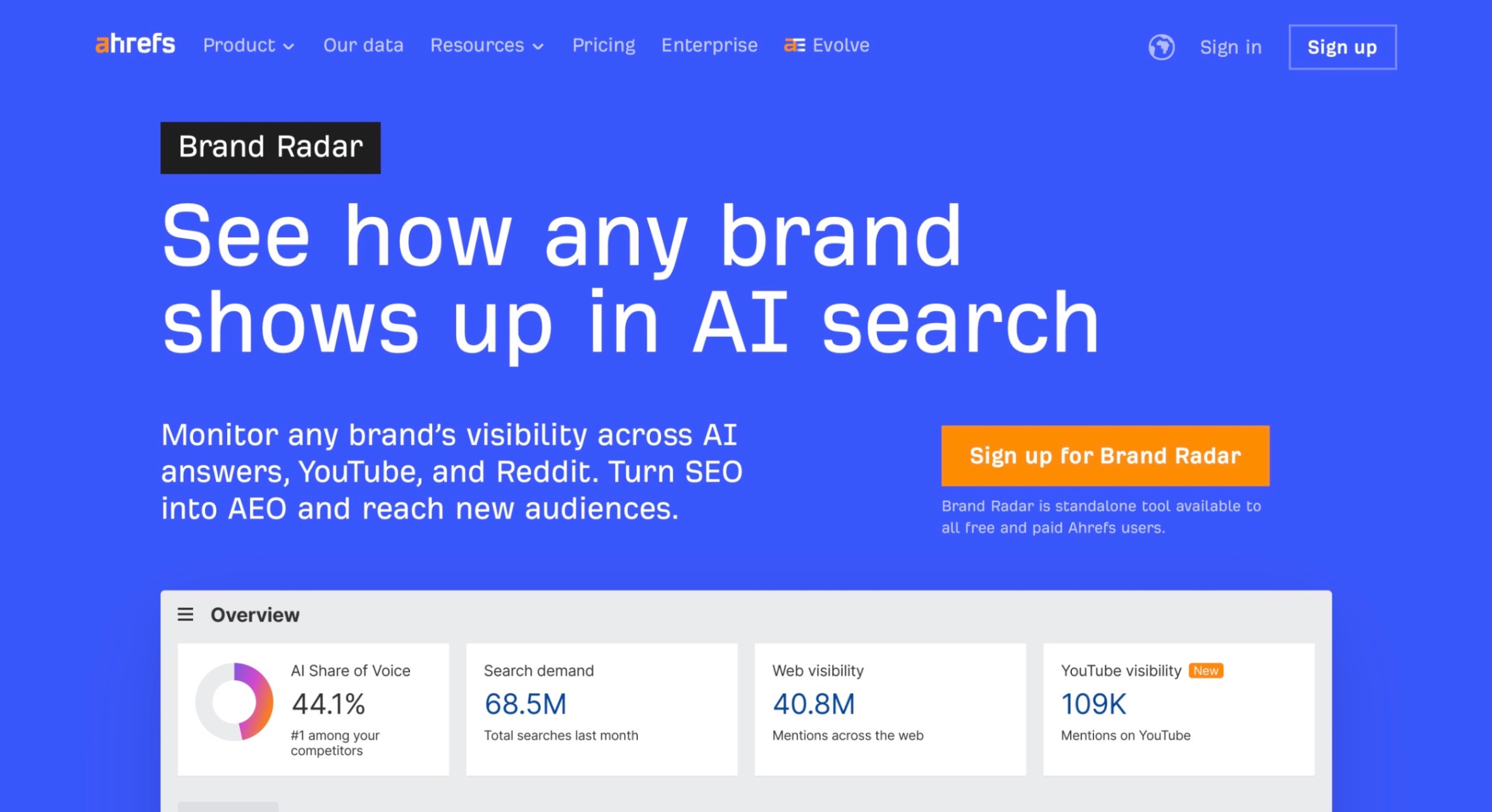
Ahrefs Brand Radar is a strong fit for SEO teams that want AI visibility, AI share of voice, competitor benchmarking, and cited-page insights inside Ahrefs.
Best For: Ahrefs Brand Radar is best for SEO and content teams that already rely on Ahrefs and want to understand how their brand appears across AI search. It helps benchmark AI share of voice, identify top cited pages and domains, and find opportunities to get mentioned in AI-generated answers.
What Does Ahrefs Brand Radar Help You Monitor?
- AI Share Of Voice: Shows what percentage of AI responses mention your brand compared with competitors.
- Mentions And Citations: Tracks brand mentions and citations across AI search results.
- Top Cited Pages And Domains: Helps identify which pages and websites are influencing AI answers.
- Competitor Visibility: Lets teams compare their AI visibility against competing brands.
Why Ahrefs Brand Radar Stands Out?
- AI Visibility Inside Ahrefs: Strong choice for teams already using Ahrefs for SEO, backlinks, keywords, and competitor research.
- Large Prompt Dataset: Ahrefs uses a large search-backed prompt dataset, making it useful for broad AI visibility analysis.
- Clear AI Visibility Metrics: Metrics like mentions, citations, impressions, and AI share of voice make reporting easier for SEO teams.
- Competitor Benchmarking: Useful for tracking whether your AI share of voice is rising or falling against competitors over time.
Which Teams Are The Best Fit For Ahrefs Brand Radar?
- Existing Ahrefs Users: Best for teams that want AI visibility insights inside a platform they already use.
- SEO Teams: Useful for teams that want to connect AI mentions, citations, and share of voice with broader SEO data.
- Content Teams: A good fit for teams that want to see which pages and sources influence AI-generated answers.
- Competitive Research Teams: Helpful for teams that need to benchmark brand visibility against competitors across AI search.
What Are The Limitations Or Considerations With Ahrefs Brand Radar?
- Best For Ahrefs-Centered Workflows: It is most valuable if your SEO team already works inside Ahrefs.
- Not A Full Content Execution Platform: Brand Radar is strong for AI visibility and competitive insights, but teams may still need a separate workflow for content planning, writing, and optimization.
- Prompt Data Is Modeled At Scale: Its large prompt dataset is useful for broad visibility analysis, but teams should still validate important BOFU prompts manually.
- May Be More SEO-Led Than Brand-Led: Brand and PR teams focused mainly on narrative accuracy or reputation may need features beyond SEO-style visibility metrics.
How Much Does Ahrefs Brand Radar Cost?
- Lite starts at $129/month
- Standard starts at $249/month
- Advanced starts at $449/month
- Enterprise pricing is custom
How Is Ahrefs Brand Radar Rated By Users?
G2 Rating: 4.5/5
Want to turn AI search insights into better answers? Check out our guide on the 9 best platforms for optimizing content for AEO.
Which AI Search Monitoring Tool Should You Choose?

The best AI search monitoring platforms depend on what your team needs after the data shows up. Some tools are better for tracking. Others are stronger for execution, SEO workflows, brand accuracy, or budget-friendly monitoring.
Here is the simplest way to choose the best AI search optimization tools:
1. Choose Scalenut If You Want Monitoring Plus Execution
Choose Scalenut if your team wants to track AI visibility, find gaps, and improve content from the same workflow.
It is a strong fit for SEO and content teams that do not want another dashboard that only reports problems. Scalenut helps teams understand where the brand appears, where competitors are winning, and what content needs to be updated, created, or prioritized next.
2. Choose Peec AI If You Want A Focused AI Visibility Tracker
Choose Peec AI if your main goal is clear AI visibility tracking across major AI search platforms.
It works well for teams that already have a content workflow and mainly need to monitor brand mentions, citations, competitor visibility, and prompt performance in one focused dashboard.
3. Choose Quattr If You Want SEO And GEO In One Enterprise Workflow
Choose Quattr if your team wants AI visibility data connected to broader SEO, technical optimization, and content operations.
It is best suited for larger SEO teams that need AI search monitoring to sit inside an enterprise-level workflow for prioritization, content updates, and technical improvements.
4. Choose Scrunch AI If Brand Accuracy Is Your Main Concern
Choose Scrunch AI if you care most about how AI engines understand and describe your brand.
It is a good fit for PR, brand, communications, and enterprise teams that need to monitor accuracy, reputation, and narrative control across AI-generated answers.
5. Choose Otterly AI If You Want A Lower-Cost Starting Point
Choose Otterly AI if you want to start tracking AI mentions, citations, and rankings without investing in a heavier platform.
It is a practical option for startups, smaller teams, and agencies that want a more accessible way to test AI search monitoring before scaling.
6. Choose Semrush Or Ahrefs If You Already Use Their SEO Ecosystems
Choose Semrush or Ahrefs if your team already uses one of these platforms and wants AI visibility insights inside a familiar SEO workflow.
They are useful for teams that want to connect AI visibility with existing SEO data, competitor research, content performance, and reporting.
The simplest rule: choose a focused tracker if you only need visibility data. Choose a platform like Scalenut if you want to turn AI search insights into content updates, stronger citations, and better discoverability.
Want to see what other marketers are testing? Check out this Reddit thread on AI search visibility tools, citation tracking, and AI search optimization.
How Should You Evaluate AI Search Monitoring Tools Before Buying?
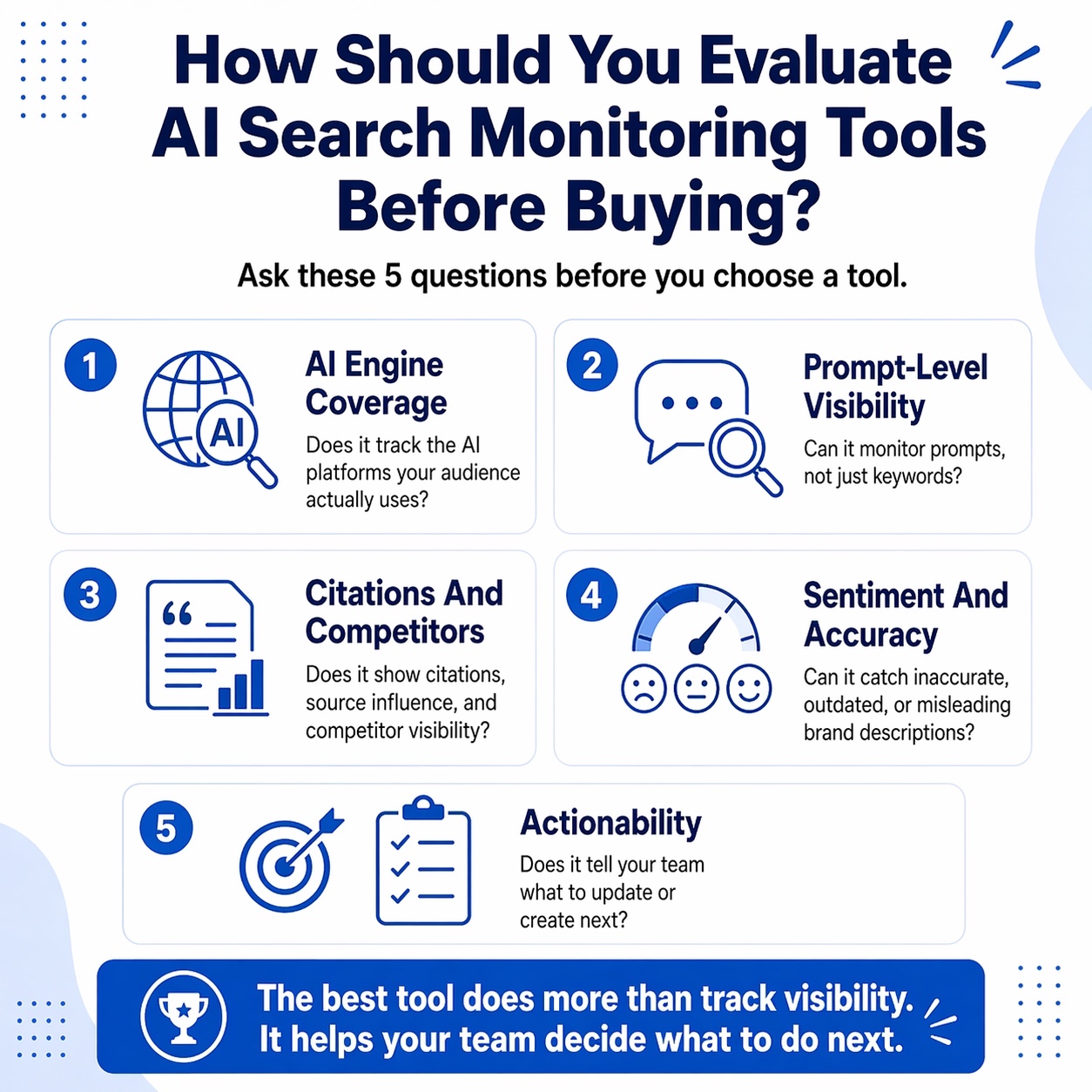
Before you choose the best AI search performance monitoring tools, focus on whether it can help your team measure visibility, understand competitors, and act on the insights. The strongest AI search monitoring tools usually track prompts, citations, sentiment, competitor analysis, and share of voice across AI answers.
Here are the 5 most important questions to ask when choosing the best AI search tracking tools.
1. Does It Track The AI Engines Your Audience Actually Uses?
The tool should monitor the platforms your buyers rely on, such as ChatGPT, Perplexity, Google AI Overviews, Gemini, Claude, Copilot, or Google AI Mode.
Do not choose based on the longest platform list alone. Choose based on where your audience actually searches and compares solutions.
2. Can It Monitor Prompt-Level Visibility, Not Just Keywords?
AI search is driven by prompts, not just keywords. The tool should show how your brand appears across buying questions, comparison prompts, category searches, and problem-aware queries.
This helps you understand how buyers see your brand during real decision-making moments.
3. Does It Show Citations, Source Influence, And Competitors?
A strong tool should show whether your brand is mentioned, whether your website is cited, which sources influence AI answers, and how competitors appear for the same prompts.
This gives you a clearer view of why competitors may be winning visibility and where your brand has gaps.
4. Does It Track Sentiment And Accuracy?
The tool should help you see whether AI engines describe your brand correctly. Look for visibility into outdated claims, incorrect positioning, misleading comparisons, or unfavorable descriptions.
This matters because AI answers can shape buyer perception before prospects ever visit your site.
5. Does It Recommend What To Update Or Create Next?
This is the most important buying question. A good tool should not only show where your brand is missing. It should help your team decide which pages to refresh, which content gaps to close, and which prompts to prioritize.
The simplest test while choosing an AI visibility checking tool is this: can the tool show where your brand stands, why competitors are winning, and what your team should do next?
Want to track how AI engines describe your brand, not just whether they mention it? Explore our guide on the best GEO tools for sentiment analysis in 2026.
What Common Mistakes Should You Avoid When Choosing An AI Search Monitoring Tool?
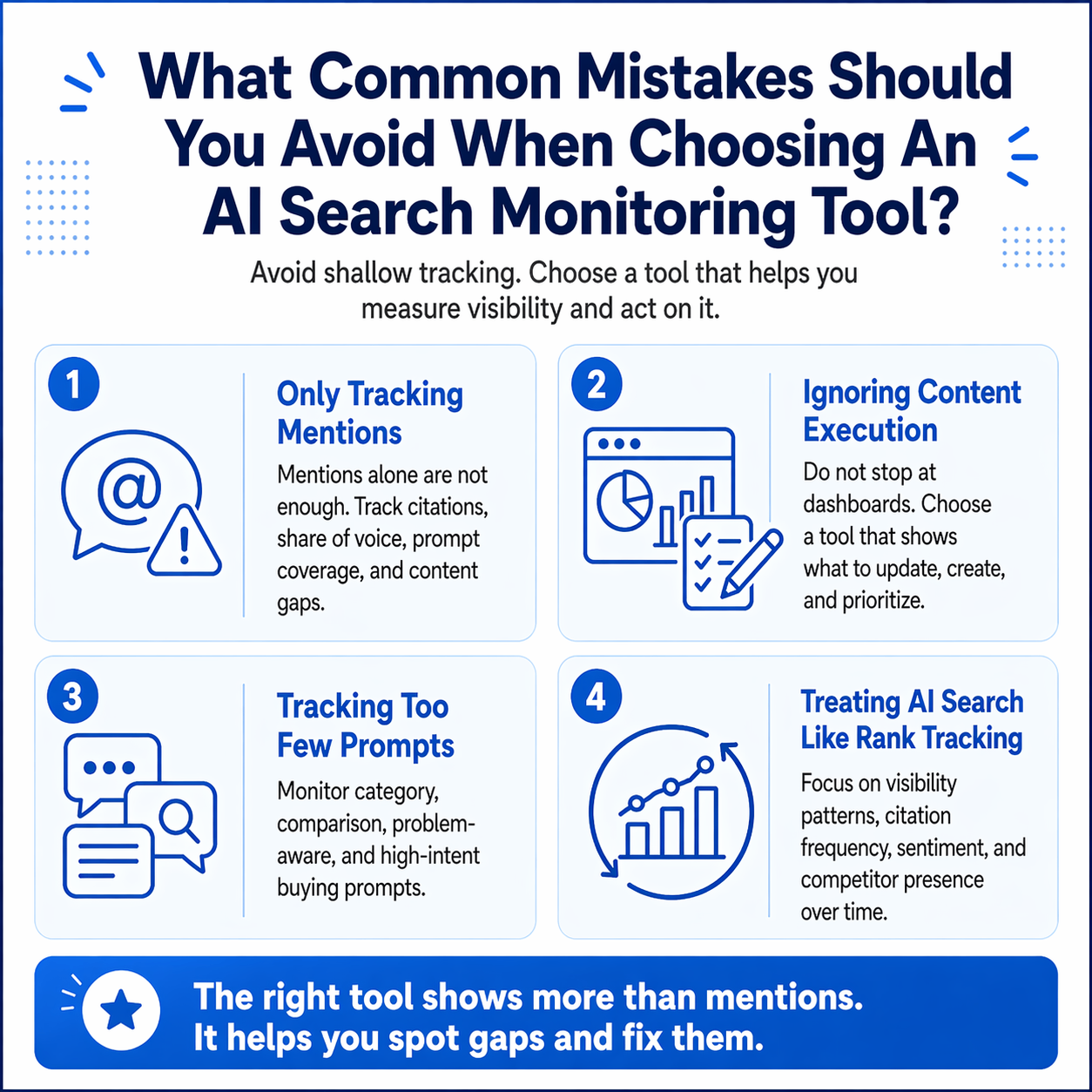
Choosing the best AI visibility tools is not just about finding a platform that shows brand mentions. The real goal is to understand where your brand appears, why competitors are getting cited, and what your team should fix next.
Here are the common mistakes to avoid before you choose an AI visibility analysis tool.
1. Choosing A Tool That Only Tracks Mentions
Brand mentions are useful, but they do not give you the full picture. A tool may show that your brand appeared in an AI answer, but that does not explain whether your website was cited, how often competitors appeared, or which sources shaped the response.
For growth teams, citations, share of voice, prompt coverage, and content gaps matter more than mentions alone. Look for a tool that helps you understand both visibility and influence, not just whether your name showed up once.
2. Ignoring Content Execution
A dashboard can tell you that your brand is missing from AI answers, but that insight is not very useful if your team still has to figure out the next step manually.
The better choice is a tool that connects monitoring with execution. It should help you identify which pages need updates, which new content assets are needed, and which competitor-owned prompts are worth targeting first. The biggest gap in many AI visibility tools is not tracking. It is turning visibility data into clear action.
3. Tracking Too Few Prompts
AI visibility depends heavily on prompt variety. If you only track a small set of obvious prompts, you may miss how buyers actually discover, compare, and evaluate brands through AI search.
Your prompt set should include the different types of prompts like category prompts, comparison prompts, problem-aware prompts, alternative prompts, and high-intent buying prompts. This gives you a more accurate view of how often your brand appears across the real paths buyers take before choosing a solution.
4. Treating AI Search Like Traditional Rank Tracking
AI search does not work like a fixed ranking page. Answers can change across engines, prompts, locations, sources, and repeated runs. So, measuring one “position” is usually less useful than tracking visibility patterns over time.
Instead of looking for a stable rank, focus on citation frequency, share of voice, sentiment, source influence, and competitive presence. That gives your team a better view of whether your brand is becoming more discoverable in AI-generated answers.
The best AI search monitoring tool should help you avoid shallow tracking and make better decisions: what to measure, what to improve, and where your competitors are already winning.
Want to improve how your brand shows up in AI answers? Explore our guide on the best LLM optimization tools for AI visibility.
Conclusion
The best tools for tracking brand visibility in AI search platforms depend on what you need most: simple monitoring, deeper competitive analysis, sentiment analysis, or a full generative engine optimization workflow. If your goal is to move beyond dashboards, choose a tool that can track citations, reveal visibility gaps, and turn AI search data into actionable insights your SEO and content teams can actually use.
As a next step, shortlist two or three tools from this list based on your current workflow. If you already rely on SEO tools, check whether AI visibility fits into that stack. If you need content generation, optimization, and AI search monitoring in one place, prioritize platforms that help you improve content for both traditional search engine visibility and AI-generated answers.
Frequently Asked Questions
Which AI-powered visibility tracking tools are most accurate in 2026?
The most accurate tools are the ones that track real prompts, citations, competitors, sentiment, and AI share of voice over time. Scalenut stands as one of the top AI visibility tools for optimization because it combines AI visibility tracking with SEO and content execution, not just reporting.
How do AI search monitoring tools help track brand visibility online?
AI search monitoring tools show whether your brand appears in answers from platforms like ChatGPT, Perplexity, Google AI Overviews, and Gemini. They also track citations, prompt performance, sentiment, competitor mentions, and visibility trends, helping teams see where they stand.
What should I look for when choosing an AI visibility tracking tool?
Look for AI engine coverage, prompt-level tracking, citation monitoring, competitor benchmarking, sentiment analysis, and clear recommendations. A good tool should not only show where your brand appears, but also help your team decide what to improve next.
Are there any free or affordable AI search monitoring tools recommended for marketers?
Yes. Otterly AI is an affordable option for smaller teams, while Semrush offers a free AI visibility checker for quick checks. Scalenut is also worth considering if you want AI visibility tracking connected with SEO and content execution.
How do AI search monitoring tools differ from traditional search analytics tools?
Traditional search analytics tools focus on rankings, clicks, impressions, and traffic from a search engine. AI search monitoring tools track whether your brand appears inside AI-generated answers, which sources are cited, how competitors show up, and how sentiment changes.
How often should I use AI search monitoring tools to check my brand’s visibility?
For active SEO and GEO programs, check AI visibility weekly at minimum. If your market is competitive or you are updating content often, daily tracking is better because AI answers, citations, competitors, and prompt results can shift frequently.
How to monitor AI search results?
Start by choosing prompts your buyers actually ask, including category, comparison, alternative, and problem-aware queries. Then track mentions, citations, sentiment, share of voice, and competitors across AI engines. Tools like Scalenut help connect those insights with content actions.
Which are the best LLM optimization tools for AI visibility?
The best LLM optimization tools for AI visibility include Scalenut, Peec AI, Profound, Scrunch AI, Otterly AI, Semrush AI Visibility Toolkit, Ahrefs Brand Radar, and Quattr. Scalenut is especially useful for teams that want AI visibility tracking, content optimization, and SEO execution in one workflow.


.svg)


.webp)