Quick summary: 7 best AI visibility optimization tools
- Scalenut: Identifies prompt, citation, competitor, and content gaps, then helps optimize existing or new content through its GEO AI Editor, Content Optimizer, and Auto Optimizer.
- Writesonic: Finds content, citation, and technical visibility gaps and turns them into prioritized optimization actions through its AI Visibility Action Center.
- Profound: Uses citation and crawler data to generate AEO content recommendations, optimize pages, and support content creation and publishing through Agents.
- Scrunch AI: Tests how individual pages could influence AI answers and uses AXP to serve AI-optimized versions of approved website content to retrieval agents.
- Surfer: Finds underperforming cited pages and connects them directly to Content Editor for AI-focused content, internal linking, readability, and entity optimization.
- AirOps: Combines citation, search, and content-performance data to identify pages needing attention, then uses AI workflows to refresh and optimize them at scale.
- Semrush: Identifies prompt, competitor, citation, and content gaps, then connects those insights with its Content Toolkit and SEO tools to optimize content for AI search.
Most AI visibility tools can tell you where your brand appears. Far fewer help you improve that visibility. If your goal is to move from tracking mentions to fixing the content, citation, and technical gaps behind them, you need an optimization-focused platform.
The best AI tools for enhancing visibility with optimization in 2026 include Scalenut, Writesonic, Profound, Scrunch AI, Surfer, AirOps, and Semrush. In this guide, we compare how each tool turns AI visibility data into action, along with its key features, pros and cons, pricing, and current user ratings.
How we evaluated the best AI visibility optimization tools
We evaluated each platform using the same set of criteria based on current product documentation, feature pages, pricing information, and available third-party user reviews. The focus was on whether each tool goes beyond visibility monitoring to help brands identify and act on optimization opportunities.
Our evaluation criteria included:
- AI visibility and prompt tracking
- Citation, source, and competitor gap analysis
- Actionable optimization recommendations
- Content optimization and creation capabilities
- Technical AI accessibility and crawler insights
- Off-site citation and visibility opportunities
- Ability to execute recommended optimizations
- AI platform coverage
- Measurement of optimization results
Pricing and scalability
Not sure which signals deserve the most weight? Explore the AI visibility tracking success metrics that actually matter.
What are AI visibility optimization tools?
AI visibility optimization tools are platforms that help brands improve how often and how prominently they appear in AI-generated answers. Unlike monitoring-only tools, they identify content, citation, competitor, and technical gaps and provide recommendations or workflows to address them.
How do AI visibility optimization tools improve AI search visibility?
These tools analyze where your brand appears, which competitors are being mentioned, what sources AI platforms cite, and which prompts or topics you are missing. This reveals the specific gaps limiting your visibility.
They then help teams act on those insights by optimizing existing content, creating missing content, improving AI crawler accessibility, strengthening citation opportunities, and measuring whether those changes increase mentions and citations over time.
7 best AI visibility optimization tools in 2026
The best AI visibility optimization tools in 2026 are Scalenut, Writesonic, Profound, Scrunch AI, Surfer, AirOps, and Semrush. Scalenut stands out for end-to-end visibility tracking and optimization, while the others offer strengths across content optimization, enterprise AEO, technical optimization, and scalable execution.
Below, we compare each tool's key AI visibility optimization features, pros and cons, pricing, and actual user ratings.
1. Scalenut - Best for end-to-end AI visibility optimization and execution

Scalenut combines AI visibility monitoring with built-in GEO optimization and execution. It helps teams identify prompt, citation, competitor, and content gaps, then create, optimize, audit, and publish content to improve visibility across AI search platforms.
Key AI visibility optimization features of Scalenut
- AI Visibility: Tracks visibility score, rank, share of voice, mentions, citations, and competitors across AI platforms.
- Prompt and citation insights: Shows which prompts mention your brand, the complete AI responses, and the sources being cited.
- Query Fanout: Reveals related sub-queries AI engines use when generating responses.
- GEO AI Editor: Optimizes content using GEO scoring, prompt coverage, NLP terms, and structural recommendations.
- Auto-Optimizer: Automatically applies relevant content and on-page improvements.
- Content optimization: Refreshes existing pages based on GEO, SEO, and competitive gaps.
- Content Audit: Identifies underperforming pages, topic gaps, and optimization opportunities.
- Internal linking: Finds and adds relevant internal links to strengthen content authority and context.
- GEO content creation: Creates new content around identified topics, prompts, and visibility opportunities.
- AI bot traffic insights: Tracks how AI crawlers interact with website pages.
Pros and cons
Pros
- Combines AI visibility tracking with direct optimization and execution.
- Covers content, citations, prompts, competitors, and AI crawler activity.
- Supports both new content creation and existing-content optimization.
- Combines SEO and GEO workflows in one platform.
Cons
- Starter and Plus plans have relatively low prompt-tracking limits.
- Perplexity tracking starts with the Professional plan.
- Broader AI platform coverage is available on higher/custom plans.
Pricing
- Starter: $24/month, billed annually
- Plus: $36/month, billed annually
- Professional: $80/month, billed annually
- VIP Service: Custom pricing
- Free trial: 7 days
Actual user ratings
- G2: 4.7/5 from 316 reviews
Want to explore the platform in more depth? Read our complete Scalenut review for its GEO, SEO, visibility, and optimization capabilities.
2. Writesonic - Best for AI visibility optimization with content execution
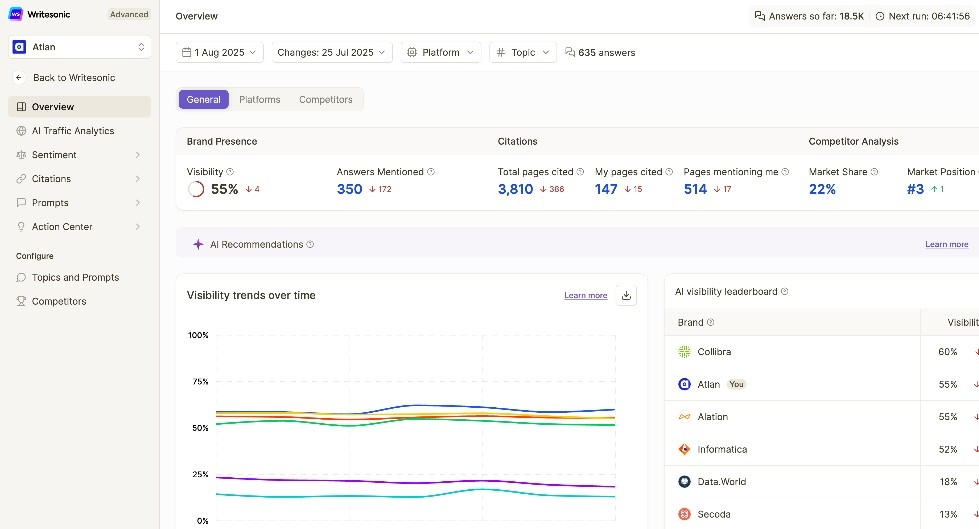
Writesonic combines AI visibility tracking with optimization workflows. It identifies content, citation, and technical gaps, then helps teams create or refresh content to improve visibility across AI search platforms.
Key AI visibility optimization features of Writesonic
- AI Visibility Action Center: Prioritizes content, citation, and technical optimization opportunities.
- GEO Content Score: Scores pages and highlights issues that may reduce AI citation potential.
- Content optimization: Identifies outdated information, weak structure, missing FAQs, schema gaps, and other content issues.
- Citation opportunities: Finds third-party sources that cite competitors but not your brand.
- Technical AI checks: Flags blocked AI crawlers, robots.txt restrictions, broken pages, redirects, and access issues.
- Content gap discovery: Finds topics where competitors earn AI visibility but your site lacks relevant coverage.
- Content creation and refresh: Helps create new pages or optimize existing content based on identified gaps.
- Performance tracking: Measures AI visibility and citation changes after optimization.
Pros and cons
Pros
- Combines AI visibility monitoring with optimization.
- Covers content, citation, and technical visibility gaps.
- Provides page-level optimization recommendations.
- Connects competitor citation gaps with actionable opportunities.
Cons
- Advanced optimization capabilities are concentrated in higher plans.
- AI platform coverage varies by plan.
- AI-generated content still requires human review.
Pricing
- Starter: $79/month, billed annually
- Basic: $199/month, billed annually
- Growth: $399/month, billed annually
- Enterprise: Custom pricing
- Free trial: Available
Actual user ratings
- G2: 4.7/5 from 2,117 reviews
Considering Writesonic for your workflow? See its AI visibility, content optimization, pricing, and limitations in our full Writesonic review.
3. Profound - Best for enterprise AI visibility optimization
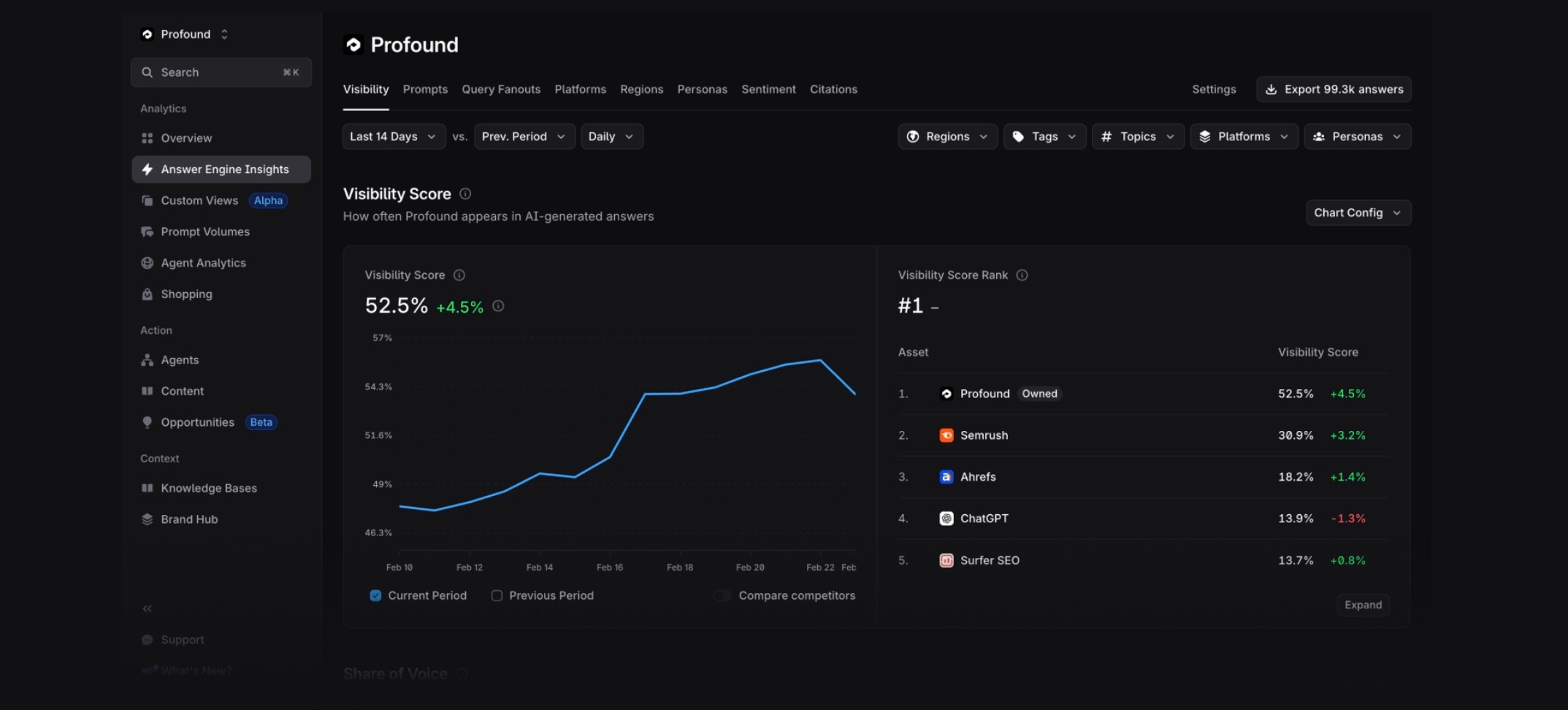
Profound is an enterprise-focused AEO platform that connects AI visibility data with content optimization and automated execution. Its Agents can identify visibility gaps, recommend page-level improvements, create optimized content, and publish approved updates through CMS workflows.
Key AI visibility optimization features of Profound
- Content Optimization: Analyzes pages against AI citation data and recommends changes to improve citation potential.
- AEO Content Scorecard: Scores content and identifies structural, topical, and technical gaps.
- Profound Agents: Automates workflows from visibility analysis and content gaps to optimization and publishing.
- Citation benchmarking: Compares pages against sources already being cited by answer engines.
- Prompt Volumes: Identifies high-demand AI queries that can guide content optimization and creation.
- Agent Analytics: Shows how AI crawlers interact with your site to uncover crawlability and content-access issues.
- CMS integration: Allows optimized content to move from recommendations to publishing within automated workflows.
Pros and cons
Pros
- Connects AI visibility insights directly with content optimization.
- Supports automated content refresh and creation workflows.
- Uses real citation and competitor data to guide optimization.
- Strong fit for large teams managing AEO at scale.
Cons
- Broader AI engine coverage requires higher-tier plans.
- Advanced capabilities can be expensive for smaller teams.
- Starter plan tracks only ChatGPT.
Pricing
- Starter: $99/month, billed annually
- Growth: $399/month, billed annually
- Enterprise: Custom pricing
- Free trial: Available on Growth
Actual user ratings
- G2: 4.5/5 from 959 reviews
Need a closer look at its enterprise capabilities? Explore Profound’s features, pricing, strengths, and limitations in our Profound AI review.
4. Scrunch AI - Best for technical AI visibility optimization
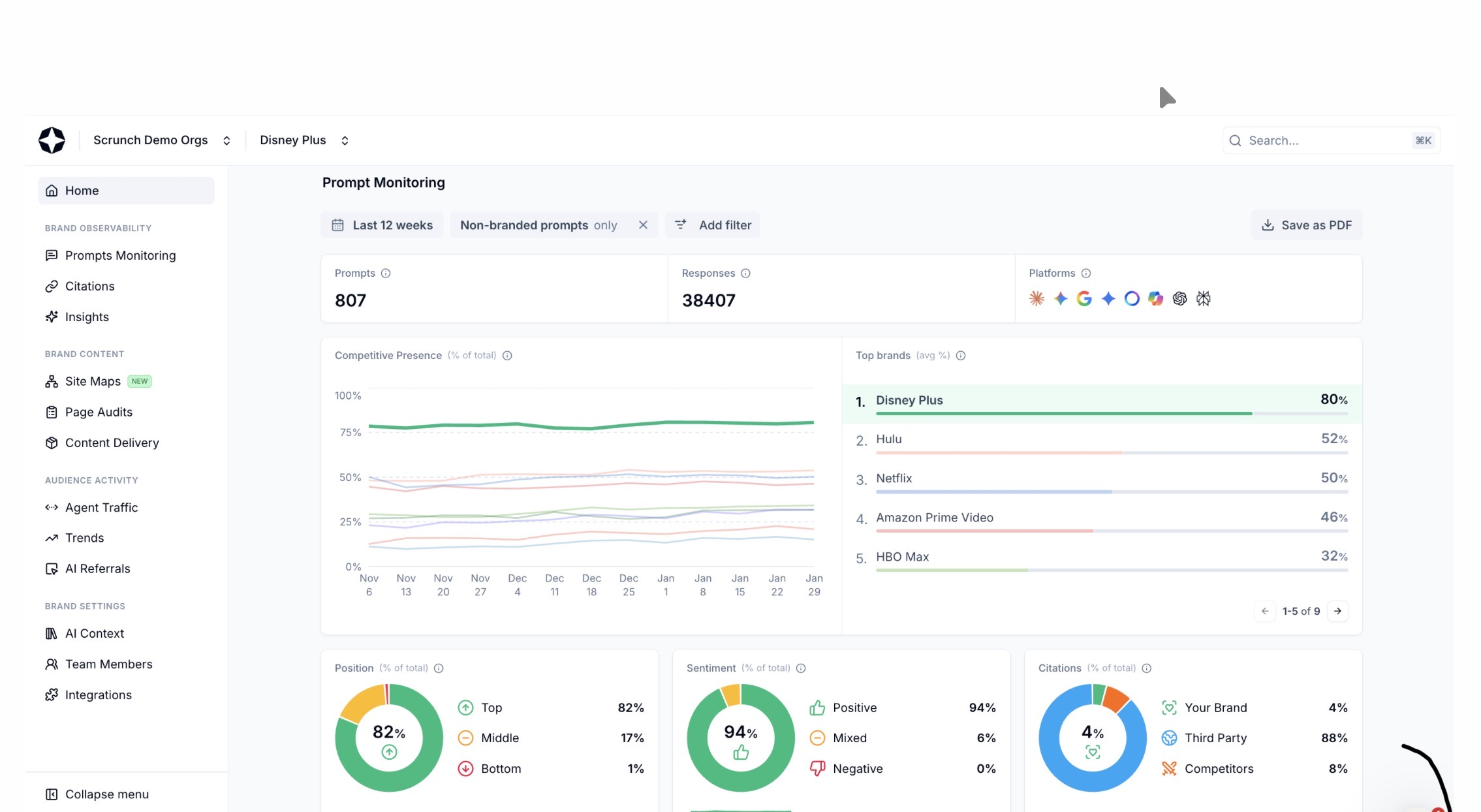
Scrunch AI helps brands optimize how their website content is understood and retrieved by AI platforms. Its Optimizer provides page-level recommendations, while its Agent Experience Platform (AXP) can deliver optimized versions of approved content directly to AI agents.
Key AI visibility optimization features of Scrunch AI
- Optimizer: Provides page-level recommendations to improve content for targeted prompts and AI visibility.
- Site Diagnostics: Identifies content and technical issues that may limit AI discoverability.
- Content optimization: Recommends improvements such as clearer summaries, FAQs, image descriptions, and content restructuring.
- AXP: Serves optimized, structured versions of website content directly to AI agents.
- Technical optimization: Simplifies HTML and removes unnecessary JavaScript and technical clutter for AI agents.
- Prompt-based optimization: Optimizes pages around relevant tracked prompts, intent, and target personas.
- Performance measurement: Tracks how optimized pages affect AI visibility over time.
Pros and cons
Pros
- Combines content and technical AI optimization.
- Provides actionable page-level recommendations.
- Can directly serve AI-optimized content to AI agents through AXP.
- Useful for large or technically complex websites.
Cons
- AXP is a separate product from its Monitoring & Insights platform.
- Advanced content delivery is geared more toward enterprise teams.
- Higher starting price than several competing tools.
Pricing
- Core: $250/month
- Enterprise: Custom pricing
- Free trial: 7 days
Actual user ratings
- G2: 4.6/5 from 73 reviews
Thinking about Scrunch AI? Explore its visibility tracking, citations, technical insights, AXP, and limitations in our complete Scrunch AI review.
5. Surfer - Best for optimizing content for AI citations
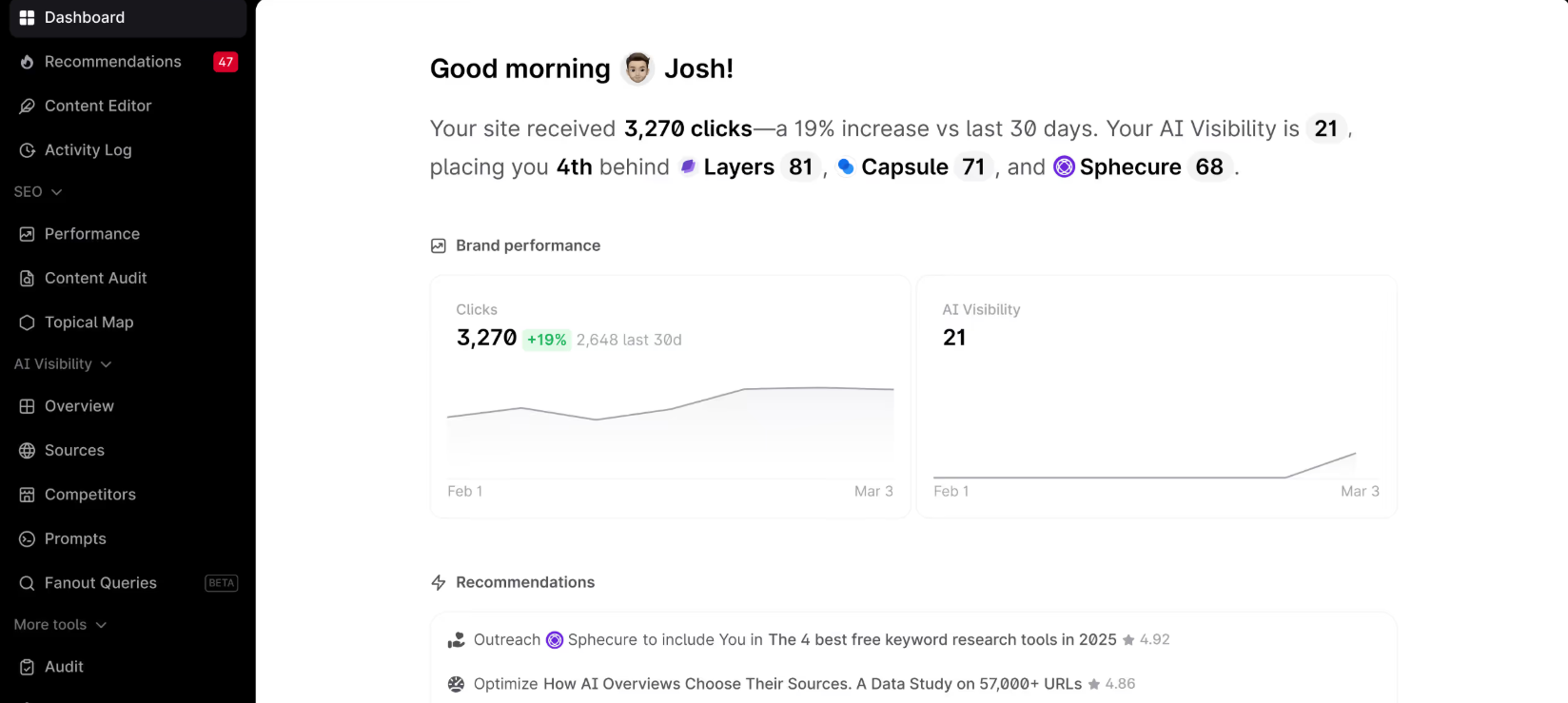
Surfer connects AI visibility tracking with page-level content optimization. Teams can identify underperforming pages in AI answers and move directly into Content Editor to improve their citation potential.
Key AI visibility optimization features of Surfer
- AI Tracker: Tracks brand visibility, citations, competitors, mention gaps, and share of voice across AI search.
- AI Tracker-to-Content Editor workflow: Turns underperforming cited pages directly into optimization projects.
- AI Search Score: Evaluates how well a page is optimized for AI-powered search.
- Auto-Optimize: Improves existing content using relevant terms and optimization opportunities.
- Coverage Booster: Adds missing facts and topic coverage that can improve AI citation potential.
- Internal linking: Recommends and inserts relevant internal links to strengthen page authority and context.
- Content Audit: Identifies underperforming pages and prioritizes content refresh opportunities.
Pros and cons
Pros
- Connects AI visibility data directly with content optimization.
- Provides page-level AI search optimization guidance.
- Strong for refreshing existing content already earning some AI citations.
- Combines AI visibility and traditional SEO optimization.
Cons
- Primarily focused on optimizing owned website content.
- AI visibility tracking limits vary significantly by plan.
- Less focused on off-site citation acquisition than some GEO platforms.
Pricing
- Discovery: $49/month, billed annually
- Standard: $99/month, billed annually
- Pro: $182/month, billed annually
- Peace of Mind: $299/month, billed annually
- Enterprise: Starts at $999/month
- Free trial: 7 days
Actual user ratings
- G2: 4.8/5 from 545 reviews
Want to put Surfer’s optimization capabilities into context? See how Scalenut and Surfer SEO compare across AI visibility, SEO, and content optimization.
6. AirOps - Best for scalable AI visibility optimization workflows
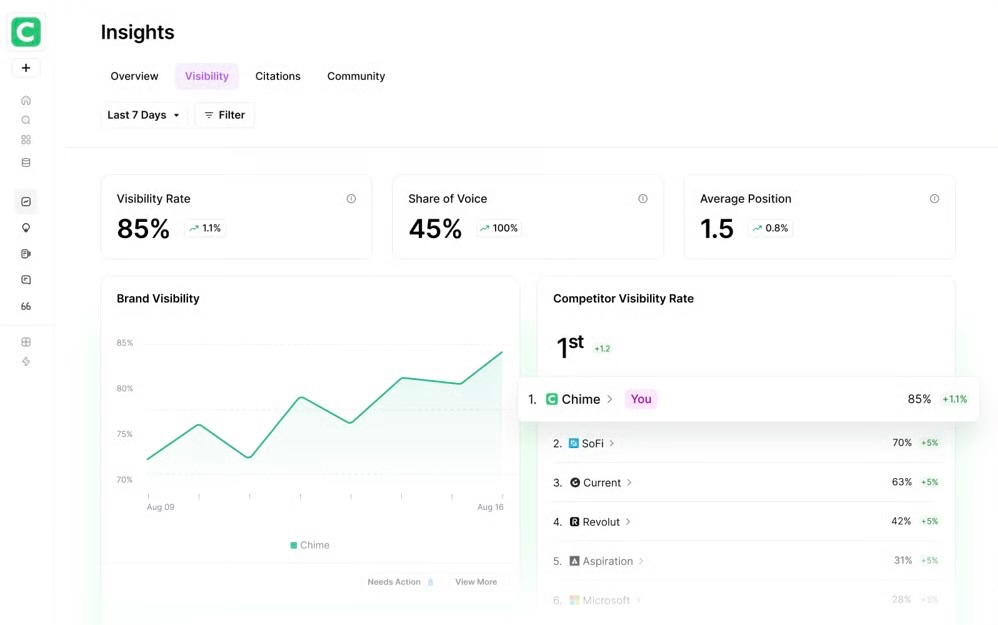
AirOps connects AI visibility insights with content execution at scale. It identifies citation and content opportunities, then uses Quill and automated workflows to create, refresh, optimize, and publish content aimed at improving AI search visibility.
Key AI visibility optimization features of AirOps
- Opportunities: Identifies content creation, refresh, outreach, and community opportunities from AI visibility data.
- Quill: Turns visibility gaps into executable content and optimization workflows.
- Page360: Combines AI citations, prompts, SEO performance, and content freshness to prioritize pages for optimization.
- Content refresh: Updates existing pages based on AI visibility, competitive, and search performance signals.
- Content gap optimization: Finds topics where competitors appear in AI answers but your brand lacks relevant content.
- Off-site optimization: Identifies frequently cited third-party domains that may offer citation opportunities.
- CMS publishing: Connects optimization workflows with CMS integrations for faster execution.
- Performance measurement: Tracks whether content changes improve AI mentions and citations.
Pros and cons
Pros
- Connects AI visibility insights directly with execution.
- Strong for large-scale content refresh and optimization.
- Covers both on-site and off-site visibility opportunities.
- Supports automated workflows with human approval.
Cons
- More complex than simpler AI visibility tools.
- Pro pricing is not publicly disclosed.
- Best suited to teams running larger content programs.
Pricing
- Insights: $0/month
- Solo: Pricing available at signup
- Pro: Pricing available at signup
- Enterprise: Custom pricing
- Free trial: 14 days
Actual user ratings
- G2: 4.7/5 from 131 reviews
Considering AirOps for scalable optimization? Explore Page360, AI workflows, content automation, pricing, and team fit in our AirOps review.
7. Semrush - Best for combining AI visibility optimization with SEO
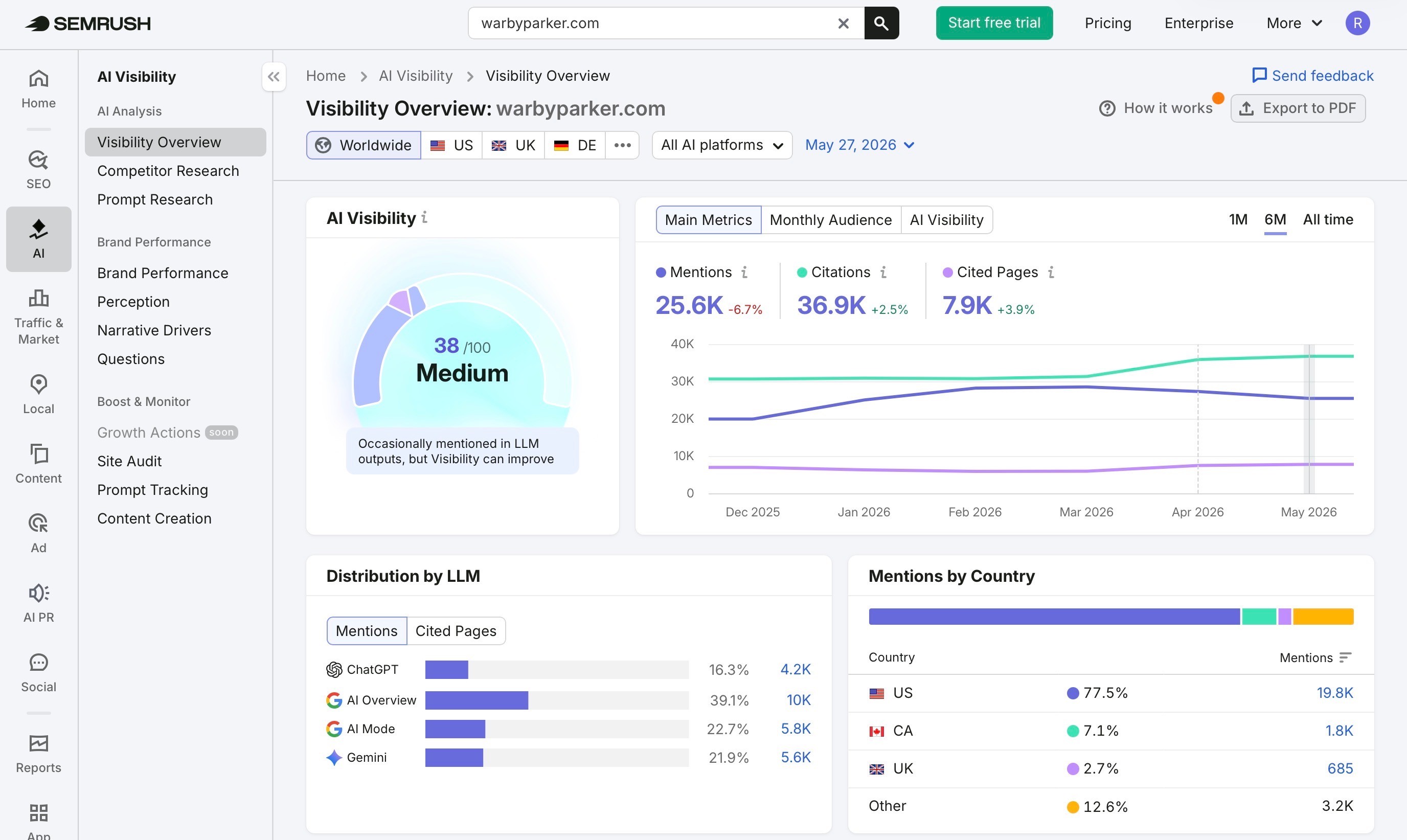
Semrush combines AI visibility intelligence with its established SEO and content optimization tools. Its AI Visibility Toolkit finds prompt, citation, competitor, and technical gaps, while its Content Toolkit helps optimize content for factors associated with higher AI citation potential.
Key AI visibility optimization features of Semrush
- AI Visibility Toolkit: Tracks brand mentions, citations, share of voice, sentiment, and competitors across AI platforms.
- Prompt Research: Finds relevant AI prompts and topics where your brand has visibility opportunities.
- Citation analysis: Shows which websites and pages AI platforms cite for topics relevant to your brand.
- Competitor gap analysis: Identifies prompts and AI answers where competitors appear but your brand does not.
- AI-ready Site Audit: Detects technical issues that may affect how AI systems access and understand your website.
- AI search content optimization: Provides recommendations around content structure, clarity, and entity signals.
- Content Optimizer: Helps improve existing pages using SEO and AI-focused recommendations.
- SEO integration: Connects AI visibility insights with keyword research, site auditing, competitor analysis, and traditional search performance.
Pros and cons
Pros
- Combines AI visibility optimization with a mature SEO toolkit.
- Covers content, competitor, citation, and technical opportunities.
- Provides AI-specific content optimization recommendations.
- Useful for teams managing SEO and AI search together.
Cons
- AI visibility and AI content optimization are split across separate Semrush toolkits.
- Full optimization workflows may require more than one subscription.
- More expensive than standalone AI visibility tools for teams needing multiple toolkits.
Pricing
- Semrush One Starter: $165.17/month, billed annually
- Semrush One Pro+: $248.17/month, billed annually
- Semrush One Advanced: $455.67/month, billed annually
- Content Toolkit: $60/month, billed annually
- Free trial: Available
Actual user ratings
- G2: 4.4/5 from 4,021 reviews
Already considering the Semrush ecosystem? Read our complete Semrush review to see where it fits for SEO, AI visibility, and content execution.
How do you choose the best AI visibility optimization tool?
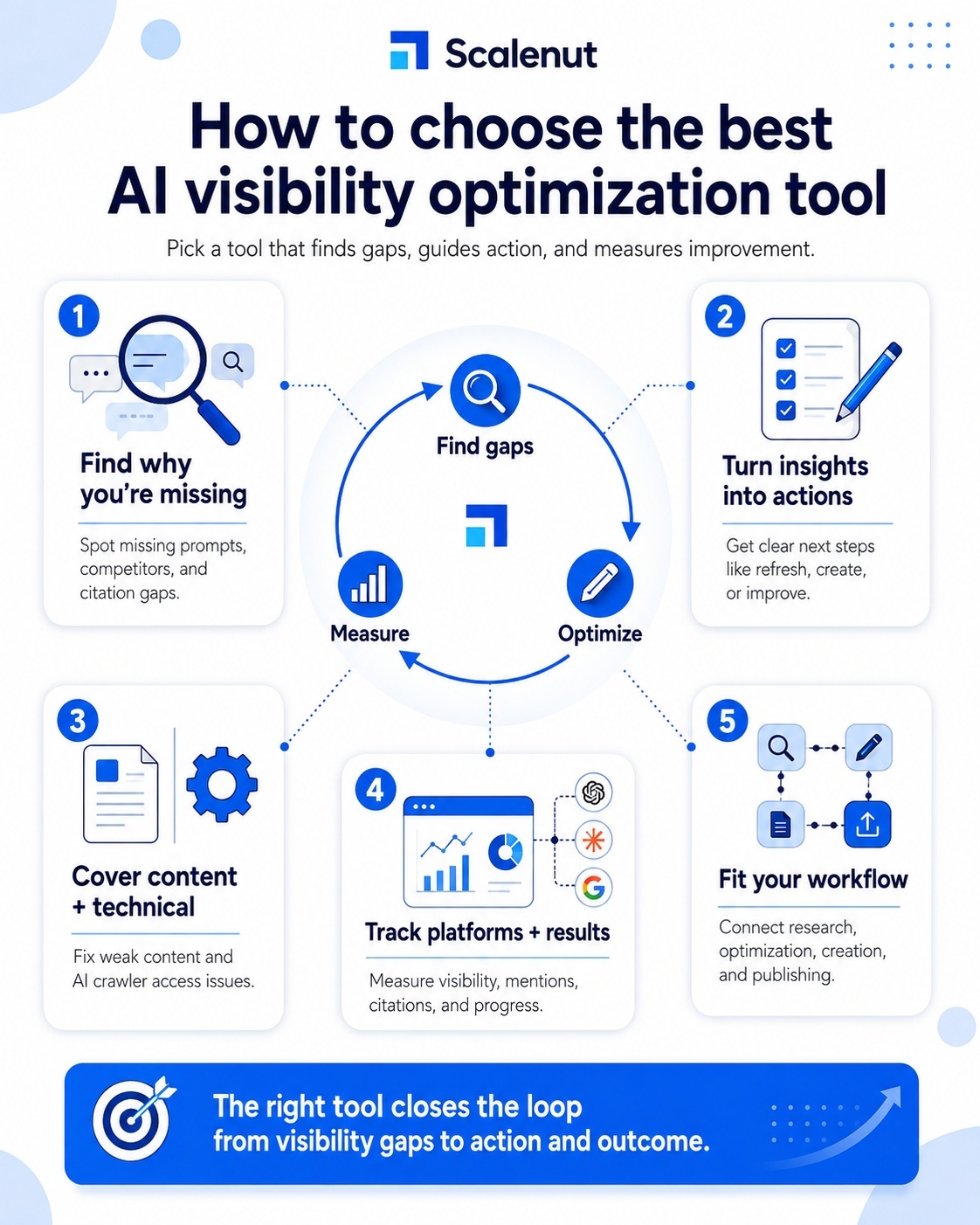
The best AI visibility optimization tool should do more than show where your brand appears. It should explain where visibility gaps exist, help you act on them, and measure whether those changes improve your presence in AI-generated answers.
Here are five factors to consider when comparing AI visibility optimization tools.
1. Does it identify why your brand is missing?
Look for a tool that reveals missing prompts, competitor advantages, citation gaps, and topics where other brands appear but yours does not. This gives you clear optimization opportunities instead of just another visibility score.
2. Can it turn visibility insights into optimization actions?
The tool should translate its findings into specific actions, such as refreshing an existing page, creating missing content, improving page structure, or pursuing a citation opportunity. Prioritized recommendations are more useful than raw monitoring data.
3. Does it cover both content and technical optimization?
Choose a platform that can identify weaknesses in existing content as well as technical issues that may prevent AI crawlers from accessing or understanding your pages. This helps address both what AI systems find and how easily they can retrieve it.
4. Can it track the platforms that matter and measure improvement?
Check which AI platforms the tool covers and how frequently its data refreshes. It should also let you compare visibility, mentions, citations, or share of voice before and after optimization so you can see whether your actions are working.
5. Does it fit your existing SEO and content workflow?
Consider how easily the tool connects visibility insights with your existing research, optimization, content creation, and publishing process. A platform that reduces handoffs between separate tools can make ongoing AI visibility optimization easier to scale.
The right tool should create a clear loop from finding visibility gaps to optimizing them and measuring the outcome, rather than leaving your team with insights they still have to translate into action.
No tool can guarantee citations, but you can strengthen your chances. Learn how to improve AI citations across search and answer engines.
Conclusion
Choosing among the best AI search tools should start with one question: can the platform help you act on visibility gaps, not just report them? Audit where your brand appears in Google AI, other AI search engines, and traditional search results, then identify missing citations, competitor advantages, and weak content. From there, use those insights to prioritize content generation, refresh existing pages, and strengthen your generative engine optimization strategy.
Start with a focused set of high-value prompts, establish your current LLM visibility, optimize the pages most likely to influence large language models, and measure how mentions and citations change over time. For enterprise brands, the right platform should make this cycle repeatable across teams, topics, and products instead of turning AI visibility into another dashboard that gets checked but rarely acted on.
Frequently asked questions
What is an AI visibility optimization tool?
An AI visibility optimization tool does more than track brand mentions. It identifies gaps across AI-generated answers, citations, prompts, competitors, or content, then provides actionable insights or execution features that help improve how a brand is represented and discovered.
What should I look for in an AI visibility optimization tool?
The best AI visibility tools should combine multi-platform tracking, prompt-level analysis, citation and source intelligence, competitor benchmarking, historical trends, and optimization guidance. The best tools also connect those findings to content, technical, or authority improvements instead of stopping at reporting.
How are AI visibility optimization tools different from traditional SEO tools?
Traditional SEO tools primarily measure rankings, keywords, backlinks, and organic search performance. AI visibility optimization platforms focus on mentions, citations, answer positioning, source influence, and prompt-level visibility across generative platforms, while complementing the broader search strategy rather than replacing it.
Who should use AI visibility optimization tools?
SEO teams can use these platforms to find citation gaps, underperforming prompts, competitor advantages, and pages that need improvement. Marketing teams can use the same data to understand brand representation, messaging, and visibility across AI-driven discovery journeys.
Are AI visibility optimization tools useful for small businesses?
Yes. Small businesses can benefit when AI platforms influence how customers research products, services, or local providers. The key is choosing affordable software that tracks the platforms and prompts that matter to their digital marketing goals rather than paying for unnecessary enterprise capabilities.
Can AI visibility optimization tools guarantee higher visibility?
No. AI answers can vary by model, prompt, location, and time, so no platform can guarantee mentions or citations. Optimization tools are most useful for identifying repeatable visibility gaps, prioritizing improvements, and measuring whether those changes improve performance over time.
How should you measure AI visibility optimization results?
Measure progress using a combination of brand mentions, citation frequency, share of voice, answer position, competitor visibility, and the pages most often referenced. Pair these with traffic analytics and conversions where available to understand whether improved AI visibility is creating business impact.
Can AI visibility tools help improve product visibility?
Yes, if the tool helps identify the prompts, sources, competitors, and content gaps affecting how products appear in AI-generated recommendations. The strongest platforms can then guide or execute content improvements that make product information clearer, more complete, and easier for AI systems to retrieve.


.svg)


.webp)