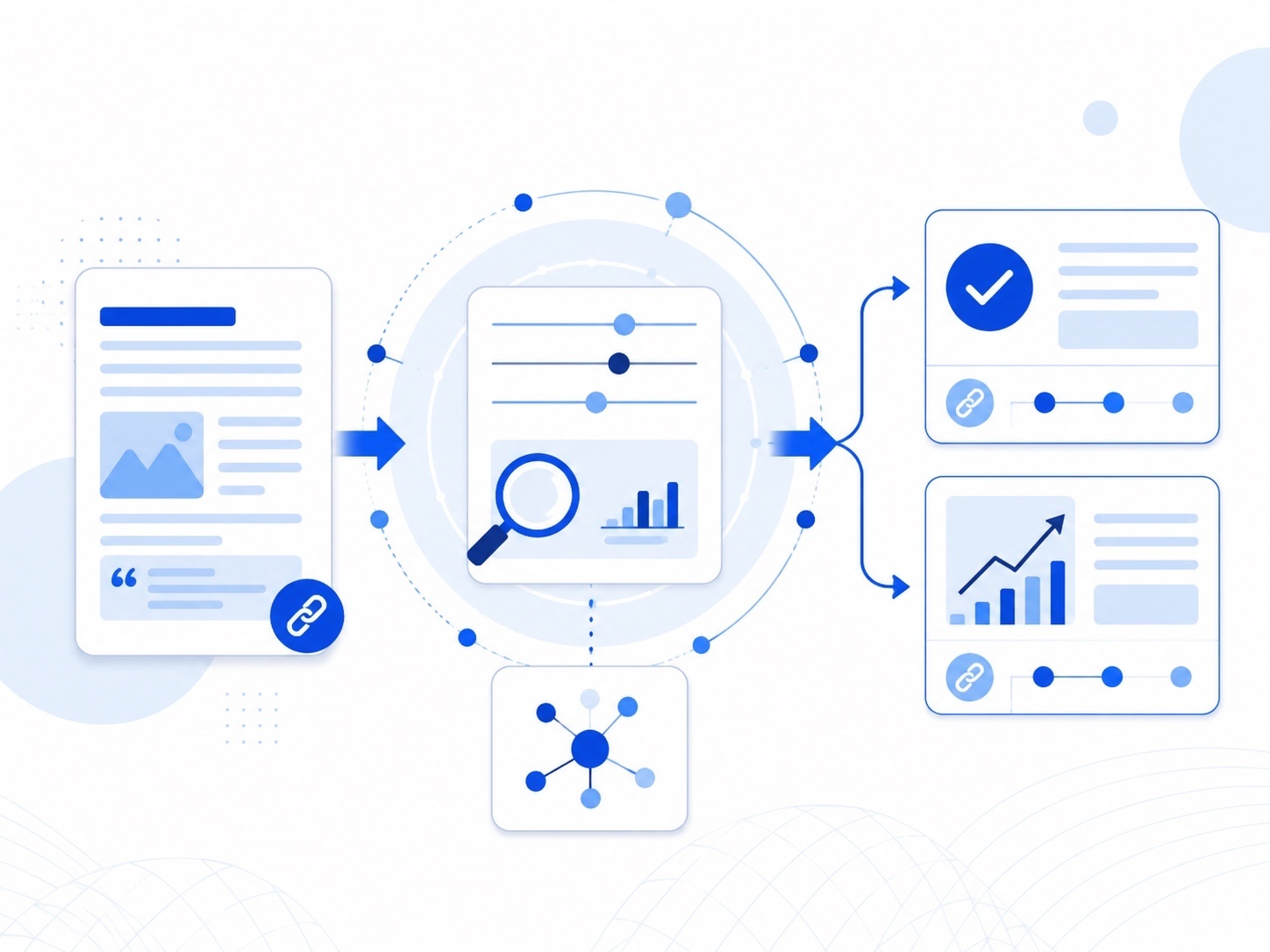
AI visibility tracking does not improve AI visibility. It only tells you where the problem is. The real value comes from turning missing prompts, weak citations, and competitor advantages into better pages, stronger evidence, and consistent publishing.
That distinction drives this comparison of Scalenut, Writesonic, Semrush, Profound, AirOps, Surfer SEO, and Ahrefs. We examine how each platform moves from measurement to content action across ChatGPT and Gemini, where its workflow stops, and which teams will gain practical value from it. The best choice is not the biggest dashboard. It is the tool that helps you fix what the dashboard reveals.
Quick answer: What are the best tools for optimizing content visibility on ChatGPT and Gemini?
The best platforms for optimizing content for ChatGPT citations should do more than track visibility. They should identify content gaps and help teams improve the pages AI engines can cite.
- Scalenut: Connects prompt and citation gaps with content creation, GEO scoring, optimization, refreshes, internal linking, and publishing in one workflow.
- Profound: Reveals which prompts, citations, competitors, and brand narratives affect visibility, helping enterprises prioritize content opportunities across markets.
- AirOps: Combines page-level AI and SEO signals with automated workflows for refreshing and publishing large content libraries.
- Surfer SEO: Moves underperforming cited pages from AI Tracker into Content Editor for targeted page-level improvements.
- Semrush and Ahrefs: Combine AI mention and citation data with keyword, backlink, and competitor intelligence to guide broader optimization decisions.
- Writesonic: Converts visibility, citation, and competitor gaps into AI-assisted content, technical improvements, and off-page actions.
Why should businesses optimize content to appear in ChatGPT and Gemini answers?
ChatGPT and Gemini answer research, comparison, and recommendation questions using information from the web. This means content now competes not only for rankings, but also for inclusion in AI-generated answers.
- Reach users during research: Visibility places your brand in conversations where users are comparing solutions, evaluating products, or exploring unfamiliar topics.
- Earn citations and referral traffic: Both platforms can link to supporting web sources, creating additional opportunities for qualified users to discover your website.
- Shape brand perception: Clear and authoritative content increases the likelihood that AI platforms describe your products, expertise, and differentiators accurately.
- Extend existing SEO value: Helpful, crawlable, and well-structured pages can support visibility across traditional search and AI-powered discovery without requiring separate content for every platform.
These outcomes provide the business case for learning how to optimize content for ChatGPT and Gemini instead of treating AI visibility as another vanity metric.
Want more of your pages referenced inside AI-generated answers? Learn how to improve AI citations across search and answer engines.
How did we evaluate the 7 best ChatGPT and Gemini optimization tools?
We evaluated every platform against the same criteria using current product documentation, pricing pages, and published methodology details. To identify the best ChatGPT optimization tools for businesses, we looked beyond feature counts and assessed whether each platform could turn visibility data into practical action.
Here are the 8 criteria used in our evaluation:
- ChatGPT and Gemini coverage: We checked which platforms each tool monitors and whether that coverage is available on standard or higher-priced plans.
- Prompt and citation depth: We assessed custom prompt tracking, mention history, source URLs, cited pages, citation frequency, and competitor comparisons.
- Data collection methodology: We reviewed whether tools capture consumer-facing responses, use APIs, model visibility from prompt databases, and disclose their refresh frequency.
- Competitor and sentiment analysis: We examined share of voice, brand positioning, sentiment, answer accuracy, and competitor benchmarking.
- Recommendation quality: We prioritized tools that convert identified gaps into specific content, citation, technical, or authority-building actions.
- Content execution: We evaluated content creation, optimization, refreshes, internal linking, workflow automation, human review, and CMS publishing support.
- Reporting and integrations: We considered data exports, scheduled reports, team access, and integrations with analytics, CDN, and publishing platforms.
- Usable-plan value: We compared the lowest plan providing meaningful engine coverage, prompt capacity, tracking, and optimization features instead of relying on advertised starting prices.
The strongest tools combined transparent measurement, actionable recommendations, practical execution, and pricing aligned with the features teams would actually use.
Need a more structured way to assess your shortlist? Use these criteria for choosing a generative AI optimization tool.
What are the 7 best tools for optimizing content visibility on ChatGPT and Gemini in 2026?
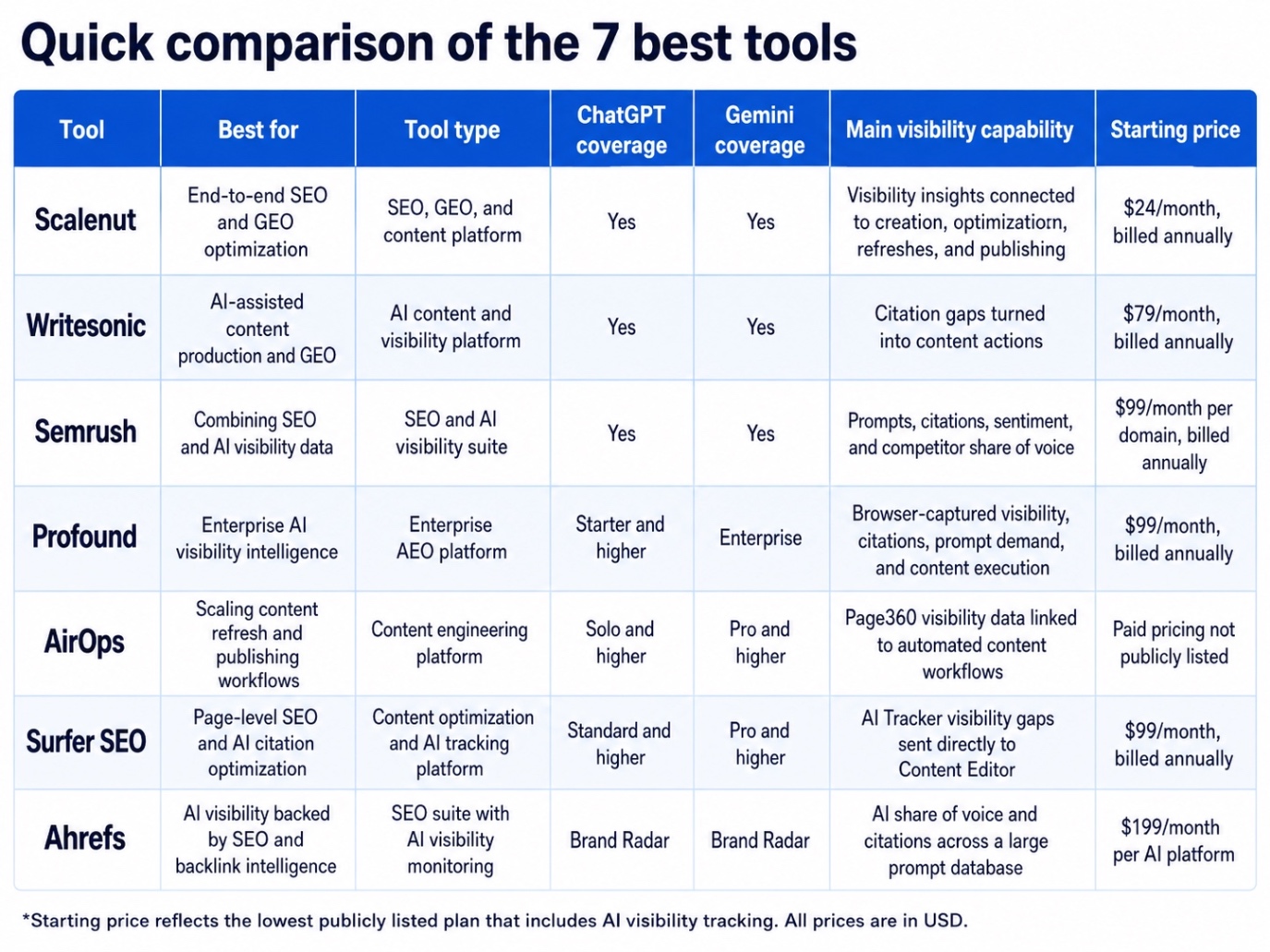
The 7 best tools are Scalenut, Writesonic, Semrush, Profound, AirOps, Surfer SEO, and Ahrefs. Scalenut is the strongest end-to-end option for connecting AI visibility insights with content creation, optimization, refreshes, and publishing.
Below, we compare each tool’s best use case, platform coverage, key capabilities, limitations, pricing, and ideal users.
1. Scalenut: Best for end-to-end SEO and GEO content optimization
G2 rating: 4.7/5
Best for: SEO and content teams that want to connect AI visibility monitoring with content planning, optimization, publishing, and performance tracking.
Tool type: End-to-end SEO and GEO platform.
ChatGPT and Gemini coverage: Scalenut’s Content Optimizer aligns content with trending prompts across ChatGPT, Gemini, and other AI platforms. Its AI Visibility suite tracks brand presence, prompts, citations, sources, sentiment, competitors, and visibility trends. The Cloudflare-connected AI Traffic Monitor also detects visits from AI bots, including ChatGPT and Gemini.
Key capabilities
- Tracks brand mentions, prompt coverage, citations, sentiment, share of voice, and competitor positioning.
- Finds prompt gaps, missing topics, citation opportunities, and competitor advantages.
- Creates GEO-ready articles and optimizes existing content using prompt coverage, schema, readability, and GEO scoring.
- Supports content audits, topic clustering, internal linking, On-Page Pro, and auto-optimization.
- Monitors AI bot activity, AI-referred traffic, crawl trends, and page-level performance.
- Supports direct publishing to WordPress and Shopify on eligible plans.
How it helps improve content visibility
Scalenut connects visibility insights with execution. Teams can identify prompts where competitors are being mentioned or cited, understand which sources influence those answers, and turn those gaps into new articles or targeted content updates.
The platform also helps strengthen AI crawlability, answer coverage, topical depth, internal linking, and content structure. Teams can then monitor visibility and traffic changes to understand whether their GEO improvements are producing results.
Where it falls short
- Visibility data refreshes weekly by default.
- Prompt allowances depend on the selected plan.
- AI Visibility data cannot currently be exported as CSV or PDF.
Pricing
- Starter: $59/month with monthly billing or $24/month with annual billing
- Plus: $89/month with monthly billing or $36/month with annual billing
- Professional: $199/month with monthly billing or $80/month with annual billing
- VIP Service: Custom pricing
Who should use it?
Scalenut is ideal for content teams, SEO professionals, agencies, and growing businesses that want to manage AI visibility, content creation, optimization, linking, publishing, and measurement within one connected workflow.
Want to see how its visibility, auditing, optimization, and publishing capabilities connect? Read our complete Scalenut GEO and SEO review.
2. Writesonic: Best for AI visibility tracking and content execution
G2 rating: 4.7/5
Best for: Marketing and content teams that want to track AI visibility, identify content and citation gaps, and create or optimize content within the same platform.
Tool type: SEO, GEO, AI visibility, and content creation platform.
ChatGPT and Gemini coverage: Starter, Basic, and Growth plans track prompts and brand visibility across ChatGPT, Gemini, and Google AI Overviews. Enterprise expands coverage to 10 AI platforms. AI Traffic Analytics also monitors visits from ChatGPT and Gemini crawlers.
Key capabilities
- Tracks AI visibility, citation share, brand mentions, prompts, competitors, and platform-level performance.
- Identifies prompts where competitors appear but your brand is missing.
- Analyzes cited sources, brand sentiment, content gaps, and off-site mention opportunities.
- Uses the Action Center to prioritize technical, content, and external citation improvements by impact and effort.
- Includes an AI Article Writer, Content Optimizer, site audits, and content refresh workflows.
- Tracks AI crawler visits and human traffic generated through AI citations.
How it helps improve content visibility
Writesonic connects visibility tracking with content execution. Teams can identify high-value prompts where their brand has weak visibility, examine the competitors and sources appearing in those answers, and create or refresh content around the uncovered gaps.
Its Action Center also recommends technical fixes, content improvements, and external mention opportunities. Teams can monitor subsequent changes through visibility trends, citation share, and AI traffic analytics.
Where it falls short
- Full 10-platform tracking is limited to Enterprise.
- Sentiment analysis is available from the Growth plan.
- Full Action Center access requires Enterprise.
- Lower plans limit prompts, projects, articles, and site audits.
Pricing
- Starter: $99/month with monthly billing or $79/month with annual billing
- Basic: $249/month with monthly billing or $199/month with annual billing
- Growth: $499/month with monthly billing or $399/month with annual billing
- Enterprise: Custom pricing
Who should use it?
Writesonic is suited to content-led brands and marketing teams that want AI visibility monitoring, content production, optimization, site auditing, and AI traffic measurement in one workflow.
Need the complete picture before subscribing? See how its Action Center, content tools, limitations, and pricing perform in our Writesonic review.
3. Semrush: Best for combining traditional SEO and AI visibility data
G2 rating: 4.5/5
Best for: SEO and marketing teams that want to manage Google rankings and AI search visibility within the same established platform.
Tool type: SEO and AI visibility intelligence platform.
ChatGPT and Gemini coverage: Semrush tracks brand visibility across ChatGPT, Gemini, Google AI Mode, Google AI Overviews, Perplexity, and other supported AI platforms. Custom prompts can be monitored daily to compare visibility and citations across individual engines.
Key capabilities
- Tracks AI mentions, citations, visibility scores, audience reach, and top-cited pages.
- Measures share of voice, sentiment, brand narratives, and competitor positioning.
- Finds prompts and topics using volume, difficulty, and user-intent data.
- Identifies prompts where competitors are cited but your brand is missing.
- Audits technical issues that could prevent AI crawlers from accessing content.
- Connects AI visibility data with keyword research, backlink analysis, position tracking, competitor research, and content optimization.
How it helps improve content visibility
Semrush helps teams identify the prompts, topics, and cited sources influencing ChatGPT and Gemini answers. Prompt Research highlights relevant opportunities, while Competitor Research shows where competing brands receive more mentions or citations.
Teams can use these findings alongside Semrush’s SEO data to strengthen topic coverage, improve existing pages, address technical crawlability issues, and pursue relevant citation opportunities. Daily Prompt Tracking then shows whether those changes improve visibility over time.
Where it falls short
- The standalone AI Visibility Toolkit includes only 25 tracked prompts and 1 Brand Performance domain.
- Additional domains and user licenses cost extra.
- Content optimization is available from the Semrush One Pro+ plan.
- Its extensive feature set may require more setup than a focused AI visibility tracker.
Pricing
- AI Visibility Toolkit: $99/month per domain
- Semrush One Starter: $199/month with monthly billing or $165.17/month with annual billing
- Semrush One Pro+: $299/month with monthly billing or $248.17/month with annual billing
- Semrush One Advanced: $549/month with monthly billing or $455.67/month with annual billing
Who should use it?
Semrush is suited to SEO teams, agencies, and established businesses that want AI visibility measurement supported by extensive search, competitor, backlink, technical, and content data.
Before paying for another toolkit, see whether the Semrush AI Visibility Toolkit is worth the $99 price.
4. Profound: Best for enterprise AI visibility intelligence and execution
G2 rating: 4.6/5
Best for: Enterprise brands and agencies that need detailed AI visibility measurement, competitive intelligence, and content execution in one platform.
Tool type: Answer engine optimization and AI visibility platform.
ChatGPT and Gemini coverage: Profound tracks responses from the consumer-facing versions of ChatGPT and Gemini rather than relying solely on API outputs. It supports daily prompt tracking and analysis across multiple regions, languages, topics, and audience personas.
Key capabilities:
- Tracks brand mentions, visibility scores, share of voice, sentiment, rankings, and citations
- Identifies the domains and pages influencing AI-generated answers
- Uses Prompt Volumes to reveal real-world prompts, demand patterns, and query fan-outs
- Monitors AI crawler activity, referral traffic, and conversions through Agent Analytics
- Detects inaccurate brand claims with FactCheck
- Uses Profound Agents to create, optimize, and publish content targeting visibility gaps
How it helps improve content visibility: Profound shows which prompts mention competitors but exclude your brand, which sources ChatGPT and Gemini rely on, and where inaccurate information originates. Content teams can use these findings to select topics, strengthen existing pages, create citation-focused content, and measure whether visibility improves after publication.
Its browser-captured response data is particularly useful for evaluating what users actually see across AI platforms. Competitive benchmarking also helps teams prioritize content opportunities based on citation gaps and share of voice.
Where it falls short: The Starter plan tracks ChatGPT only, while Gemini and broader answer-engine coverage require a tailored Enterprise plan. Prompt Volumes searches, API access, Projects, SSO, and advanced multi-region configurations are also reserved for Enterprise customers.
Pricing:
- Starter: $99/month, billed annually
- Growth: $399/month, billed annually
- Enterprise: Custom pricing
Who should use it? Profound suits enterprise SEO, content, brand, and communications teams running a structured AEO program. It is also a strong option for agencies managing multiple brands, markets, or competitive sets. Smaller teams requiring only lightweight ChatGPT and Gemini monitoring may find its advanced capabilities and enterprise pricing unnecessary.
Need to assess its enterprise capabilities beyond the feature list? Read our Profound AI review covering data depth, prompt limits, pricing, and user feedback.
5. AirOps: Best for scaling content refresh and AI search workflows
G2 rating: 4.7/5
Best for: Content and SEO teams that need to identify AI visibility gaps and execute content updates across large page libraries.
Tool type: AI search visibility and content workflow automation platform.
ChatGPT and Gemini coverage: AirOps tracks brand mentions, citations, citation rates, and competitor visibility across ChatGPT and Gemini. It also covers Claude, Perplexity, Google AI Overviews, and Google AI Mode. Multi-engine tracking, including Gemini, is available on the Pro plan, while Solo provides ChatGPT Insights only.
Key capabilities:
- Combines AI citation data, GSC performance, GA4 engagement, and content freshness in Page360
- Tracks prompts, cited pages, mention rates, citation share, sentiment, and competitors
- Surfaces onsite and third-party content opportunities
- Reveals the query fan-outs AI platforms generate from an initial prompt
- Runs content creation and refresh processes through Workflows and Grids
- Uses Brand Kits and Knowledge Bases to govern content output
- Publishes content directly to supported CMS platforms
- Measures how content updates affect AI citations and organic performance
How it helps improve content visibility: AirOps helps teams find pages that perform well in traditional search but receive few ChatGPT or Gemini citations. Those gaps can be converted into refresh, restructuring, or new-content workflows.
Grids allow teams to run the same research, optimization, and quality-control process across hundreds of URLs. After publishing, AirOps tracks changes in citation rate, mention rate, traffic, and engagement, helping teams determine which updates improve AI visibility.
Where it falls short: AirOps requires more configuration than a conventional content editor. Teams need to build workflows, define review stages, connect data sources, and monitor task consumption. Gemini and other multi-engine insights are unavailable on Solo, and AirOps does not publicly display base prices for its current Solo and Pro plans.
Pricing:
- Insights: Starts at $0/month
- Solo: Pricing not publicly listed
- Pro: Pricing not publicly listed
- Enterprise: Custom pricing
Who should use it? AirOps is suitable for enterprise content teams, SEO departments, and agencies managing large-scale content refresh or programmatic SEO projects. It is less practical for individual writers or small teams that need straightforward page-level optimization without workflow setup.
Planning to scale content operations? Review AirOps’ workflow strengths, setup demands, pricing, and best-fit use cases.
6. Surfer SEO: Best for on-page SEO and AI citation optimization
G2 rating: 4.8/5
Best for: Content teams that want to monitor AI visibility and optimize individual pages for both traditional search rankings and AI citations.
Tool type: Content optimization and AI search visibility platform.
ChatGPT and Gemini coverage: Surfer’s AI Tracker monitors brand mentions, citations, sources, sentiment, and share of voice across ChatGPT and Gemini. It also covers Perplexity, Google AI Overviews, and Google AI Mode. Standard tracks ChatGPT weekly, while Pro and higher plans cover all supported platforms with daily refreshes.
Key capabilities:
- Tracks visibility, mention gaps, citations, sentiment, and competitor share of voice
- Captures responses from consumer-facing AI interfaces instead of relying only on APIs
- Connects underperforming cited pages directly to Content Editor
- Provides real-time SEO and AI Search optimization guidelines
- Uses Content Score to assess entity coverage, intent alignment, introductions, and factual depth
- Offers 1-click content optimization and internal-link recommendations
- Identifies topic opportunities through Topical Map and fan-out query insights
- Detects ranking drops and content refresh opportunities through Content Audit
How it helps improve content visibility: Surfer shows which prompts mention competitors, which sources ChatGPT and Gemini cite, and which owned pages already appear but fail to secure prominent placement. Teams can open those pages directly in Content Editor and improve topic coverage, structure, factual clarity, introductions, and internal links.
This connection between AI Tracker and Content Editor makes Surfer particularly useful for turning visibility data into page-level changes without exporting findings into another optimization tool.
Where it falls short: Discovery does not include AI visibility tracking, while Standard tracks only ChatGPT. Gemini and the complete 5-platform coverage require Pro, Peace of Mind, Enterprise, or the standalone AI Search Analytics plan. Surfer also focuses primarily on content and on-page optimization, so teams may still need separate tools for backlink analysis and technical SEO.
Pricing:
- Discovery: $49/month, billed annually
- Standard: $99/month, billed annually
- Pro: $182/month, billed annually
- Peace of Mind: $299/month, billed annually
- Enterprise: Starts at $999/month
- AI Search Analytics: $158/month, billed annually
Who should use it? Surfer suits SEO professionals, content teams, and agencies that optimize articles individually and want AI visibility data connected directly to an established content editor.
Considering Surfer for both on-page SEO and GEO? See whether Surfer SEO is enough for modern content optimization.
7. Ahrefs: Best for combining AI visibility with SEO intelligence
G2 rating: 4.5/5
Best for: SEO teams that want to analyze AI visibility alongside keyword, backlink, content, technical SEO, and competitor data.
Tool type: SEO platform with AI visibility monitoring and content optimization capabilities.
ChatGPT and Gemini coverage: Ahrefs Brand Radar monitors mentions, citations, impressions, and AI share of voice across ChatGPT and Gemini. It also covers Google AI Overviews, AI Mode, Perplexity, Copilot, and Grok. Custom prompts can be tracked daily, weekly, or monthly across selected platforms and locations.
Key capabilities:
- Searches a database of more than 477 million monthly prompts
- Compares brand mentions, citations, impressions, and share of voice against competitors
- Identifies the pages and domains most frequently cited in AI-generated answers
- Supports unlimited projects and domain analysis
- Tracks custom prompts by platform, location, frequency, and topic tag
- Connects AI visibility with search demand, web mentions, YouTube, TikTok, and Reddit data
- Exports Brand Radar data through CSV, API, MCP, and Looker Studio
- Uses AI Content Helper to identify search intent, fan-out queries, and topical coverage gaps
How it helps improve content visibility: Brand Radar reveals which prompts mention competitors but exclude your brand, which third-party domains influence AI answers, and which competitor pages earn citations. Teams can use this data to prioritize content updates, digital PR, link acquisition, and new topic coverage.
AI Content Helper can then compare a draft or existing page against relevant competitors, identify missing subtopics, and improve coverage for both organic search and AI retrieval.
Where it falls short: Ahrefs’ large ChatGPT and Gemini indexes refresh monthly, although custom prompts can be checked more frequently. Brand Radar is also priced separately from the core Ahrefs toolkit. It identifies content and citation opportunities but does not provide the automated, end-to-end content creation and CMS publishing workflow available in dedicated GEO platforms.
Pricing:
- Single AI platform: $199/month
- All AI platforms: $699/month
- Custom Prompts Basic: $50/month
- Custom Prompts Growth: $100/month
- Custom Prompts Scale: $250/month
Who should use it? Ahrefs is best suited to established SEO teams and agencies already using its keyword, backlink, content, and competitive research data. It is less economical for small teams that only need ChatGPT and Gemini visibility monitoring.
Need to choose between research depth and connected execution? Compare Ahrefs and Scalenut for AI visibility and SEO.
How do you choose the best tools for optimizing content visibility on ChatGPT and Gemini?
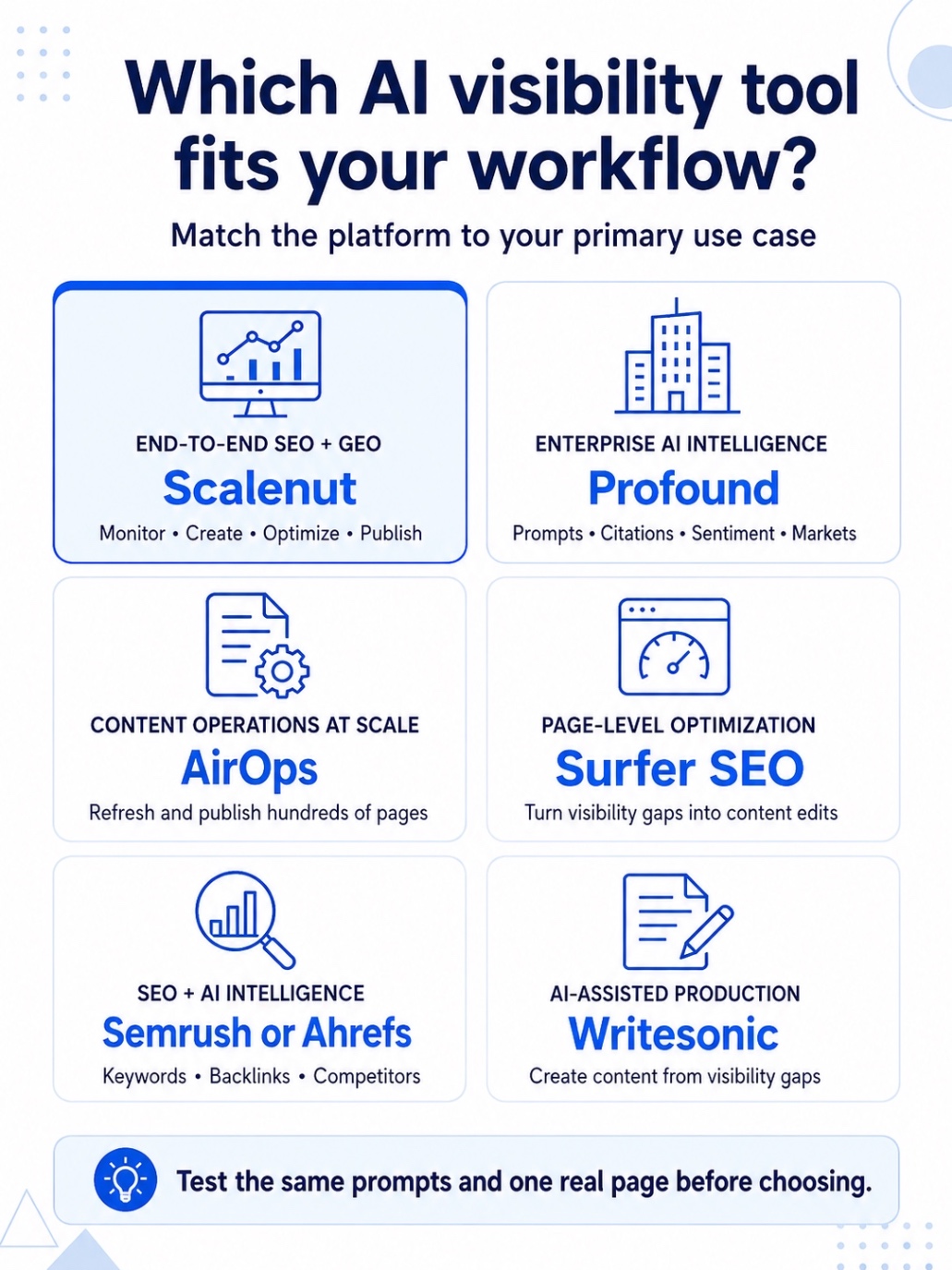
When comparing the best tools for optimizing content for ChatGPT and AI search, focus on the workflow stage that needs the most support: visibility analysis, content optimization, production, or large-scale publishing. Match the platform to that priority before comparing secondary features.
Here are the best-fit tools for 6 common use cases:
- Managing SEO and GEO in one workflow: Scalenut is best for teams that want visibility monitoring and content execution together. It connects prompt, citation, competitor, and visibility insights with content planning, creation, optimization, refreshes, internal linking, and publishing.
- Analyzing enterprise AI visibility across markets: Profound is best for enterprises requiring deeper answer-engine intelligence. It provides browser-captured responses, prompt-demand data, citation and sentiment analysis, competitor benchmarking, crawler analytics, and monitoring across 150+ regions.
- Refreshing and publishing hundreds of pages: AirOps is best for large-scale content operations. Page360 combines AI citations, Google Search Console performance, GA4 engagement, and content freshness, while its workflows help teams refresh, review, and publish pages in bulk.
- Optimizing individual pages before publishing: Surfer SEO is best for writers and SEO teams that rely on an established content editor. Its Content Editor provides SERP-based recommendations, while AI Tracker sends underperforming cited pages directly into the optimization workflow.
- Combining AI visibility with broader SEO intelligence: Semrush suits teams wanting prompt, citation, keyword, competitor, and technical SEO data in one suite. Ahrefs is better for teams prioritizing backlink intelligence and search-backed AI visibility analysis through Brand Radar.
- Producing AI-assisted content quickly: Writesonic is best for teams prioritizing content generation alongside AI visibility monitoring. It identifies mention, citation, sentiment, and competitor gaps, then supports content creation, technical improvements, and citation-focused actions.
For teams evaluating tools to optimize for ChatGPT answers, test the same prompts and one real content workflow across shortlisted platforms before comparing insight quality, execution speed, and total cost.
Still narrowing your shortlist? Follow this AI brand visibility tool evaluation guide to compare coverage, evidence, recommendations, and total cost.
What workflow should you use to optimize content visibility on ChatGPT and Gemini?
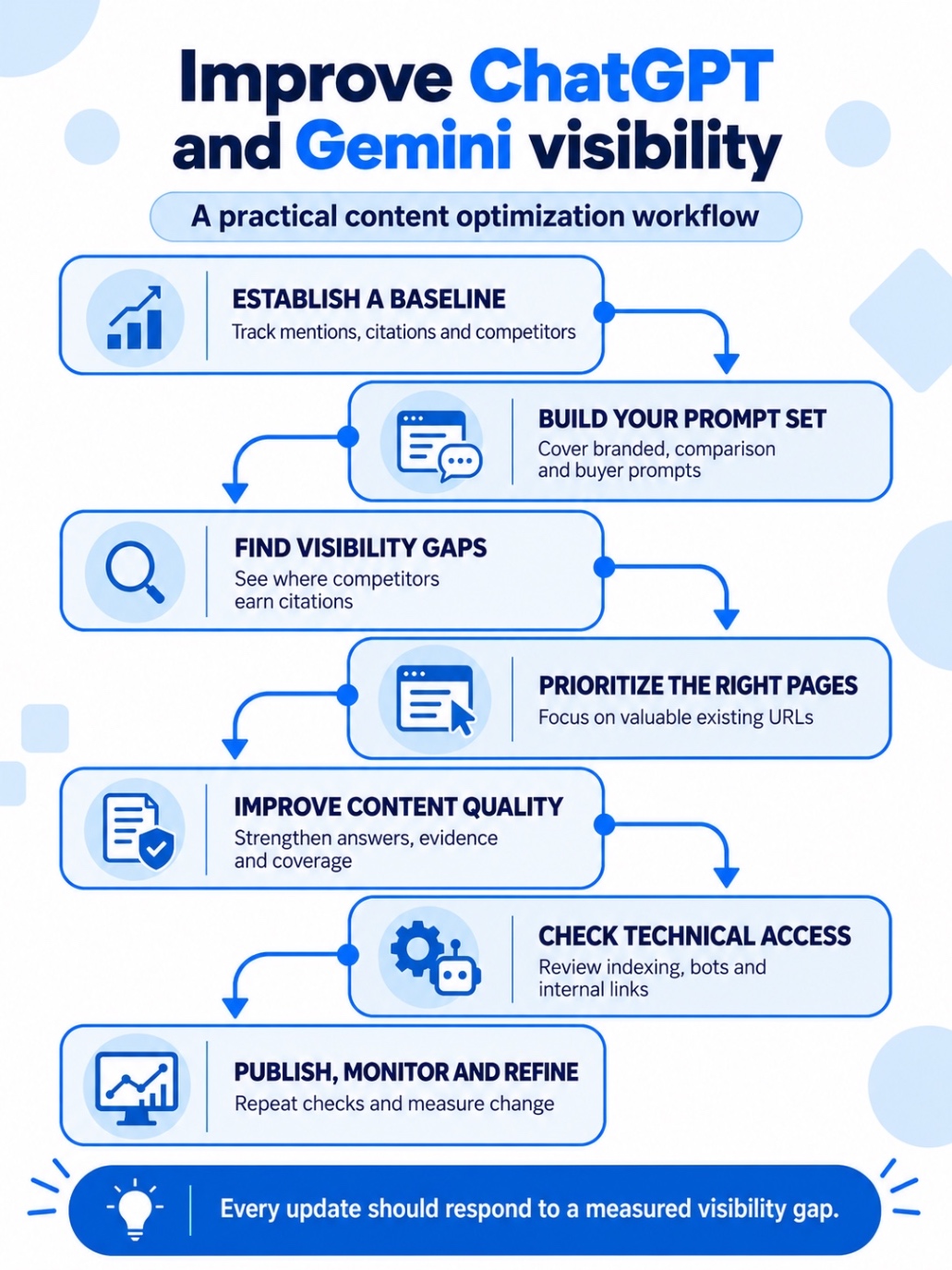
Improving AI visibility requires a repeatable workflow that connects what ChatGPT and Gemini currently show with specific content changes. One prompt check or isolated refresh cannot establish whether visibility has improved.
Use this workflow to move from measurement to optimization:
- Establish your visibility baseline: Use one of the best tools for monitoring ChatGPT mentions to record your mention rate, citation rate, share of voice, sentiment, cited URLs, and competitor visibility across both platforms.
- Build a representative prompt set: Include branded, non-branded, problem-based, comparison, category, alternative, and purchase-intent prompts. Segment them by audience, funnel stage, product, and market so the dataset reflects how prospective customers research.
- Identify citation and competitor gaps: Find prompts where competitors appear but your brand does not. Examine the pages and third-party domains being cited to distinguish on-site content gaps from broader authority or brand-mention gaps.
- Prioritize the strongest page opportunities: Map valuable prompts to existing URLs. Start with commercially relevant pages that already rank, receive citations, or require only targeted improvements rather than creating new content for every missing prompt.
- Improve content quality and coverage: Add direct answers, current evidence, named sources, original examples, clear headings, and missing subtopics. Strengthen entity clarity and factual accuracy while keeping the page useful for readers instead of rewriting it solely for AI systems.
- Check technical accessibility: Confirm that important content is available in text, pages are indexable, internal links support discovery, and structured data matches visible content. Ensure robots.txt or CDN settings do not unintentionally block Googlebot or OAI-SearchBot.
- Publish, monitor, and refine: Record what changed and when. Recheck the same prompts across multiple runs, compare results with the original baseline, monitor cited pages and referral traffic, and retain changes that improve both AI visibility and user value.
The goal is a closed optimization loop where every content change responds to a measured visibility gap and every result informs the next update.
Ready to put the process into practice? Follow this AI search optimization checklist for earning more citations.
Conclusion
Start by shortlisting 2 or 3 tools that match your workflow, then test them using the same prompts, domain, location, and time frame. Establish a visibility baseline, select one high-value page with a clear citation gap, improve its evidence, structure, topical coverage, and crawlability, then measure the results across multiple runs.
For teams seeking one connected workflow, Scalenut brings AI visibility monitoring, content planning, creation, optimization, refreshes, internal linking, and publishing together. To uncover your strongest opportunities and build a focused execution plan, book a free strategy call with Scalenut.
Frequently asked questions
What are the best tools for optimizing content visibility on ChatGPT and Gemini?
Scalenut is the strongest end-to-end option because it connects AI visibility insights with content creation, optimization, refreshes, and publishing. Profound suits enterprise analysis, AirOps supports scaled workflows, Surfer enables page-level optimization, while Semrush, Ahrefs, and Writesonic serve broader needs.
How do GEO tools optimize content for ChatGPT and Gemini?
GEO tools optimize content by tracking prompts, mentions, citations, competitors, and sentiment across AI platforms. They reveal missing topics and trusted sources, then recommend clearer answers, stronger evidence, improved structure, technical fixes, or new content targeting uncovered visibility gaps.
What is the difference between AI visibility monitoring and content optimization?
AI visibility monitoring shows where a brand appears, which prompts trigger mentions, and what sources receive citations. Content optimization uses those findings to improve existing pages or create new assets. Some platforms only report performance, while others connect measurement directly to execution.
Which are the best tools to track brand mentions for AEO and ChatGPT?
Scalenut, Profound, Semrush, Ahrefs Brand Radar, Writesonic, AirOps, and Surfer AI Tracker can monitor ChatGPT brand visibility. Compare their prompt limits, update frequency, citation data, competitor tracking, sentiment analysis, regional coverage, and access to original AI responses before choosing.
Can the same content be optimized for both ChatGPT and Gemini?
Yes. Both platforms benefit from clear, helpful, well-supported, and technically accessible content. However, their retrieval systems, source preferences, personalization, and responses differ. Optimize one authoritative page for the user’s intent, then monitor ChatGPT and Gemini separately instead of creating duplicate versions.
How do you measure whether content optimization improves AI visibility?
Measure improvement using mention rate, citation rate, share of voice, cited URLs, sentiment, answer position, and competitor visibility across a fixed prompt set. Compare repeated runs before and after publishing, then connect referral visits and conversions where analytics data is available.
How frequently should you monitor and refresh content for AI search?
Monitor priority prompts weekly or daily when launches, reputation issues, or fast-moving topics require closer attention. Review broader trends monthly and refresh high-value pages when citations decline, facts change, competitors gain visibility, or the content no longer fully answers current buyer questions.
Can optimization tools guarantee citations in ChatGPT and Gemini?
No. These tools can identify gaps, improve accessibility, and guide stronger content, but they cannot control how ChatGPT or Gemini selects sources. Results vary by prompt wording, model updates, location, personalization, retrieval timing, and changes in the competing source landscape.
How much do ChatGPT and Gemini content optimization tools cost?
Pricing varies by platform, engine coverage, prompt volume, and workflow depth. Among the tools reviewed, annual starting prices range from $24 monthly for Scalenut to $199 monthly per AI platform for Ahrefs, while AirOps uses non-public pricing for advanced capabilities.


.svg)


.webp)