.jpg)
Which Is the Best Ecommerce SEO Company to Hire in 2026?
Key Highlights
- The best ecommerce SEO company depends on your ecommerce platform, catalog size, budget, and growth stage, not just agency reputation.
- Strong agencies connect SEO work to revenue, conversions, and actual business outcomes instead of stopping at rankings.
- The strongest partners improve search engine visibility across both Google and emerging AI-driven discovery channels.
- Case studies should match your store type, revenue range, and goals, not just show generic search engine results.
- Reporting should be tied to sales impact, with transparent communication around what is working, what is not, and what changes next.
- Red flags include guaranteed rankings, proposals without audits, vanity metrics, and weak technical depth.
- The right agency should bring real SEO expertise, understand your store’s user journey, and help you attract more qualified potential customers.
You hired an SEO agency. They sent reports full of keyword rankings and traffic charts. But your revenue from organic search stayed flat, your best product pages stayed buried, and every time you asked why, you got a deck about algorithm updates instead of a straight answer.
That experience is exactly what sends ecommerce founders back to Google searching for a better option. The problem is that most "best ecommerce SEO company" lists are either written by the agencies ranking themselves first, recycled without any real evaluation, or built around whoever paid for the spot. They don't help you make a confident decision for your store, your platform, or your growth stage.
This list does. It covers 8 best SEO ecommerce platform with documented results for online stores, what genuinely sets each one apart, who they are the right fit for, and where they fall short. By the end, you will have a clear shortlist and the right questions to ask before signing anything.
Which Is the Best Ecommerce SEO Company in 2026?
The company that really stands out in 2026 is SEO Surge By Scalenut, and the reason being that most agencies are still running a Google-only playbook while your customers are increasingly finding products through AI-generated answers on ChatGPT, Perplexity, and Google AI Overviews. SEO Surge is built for both, combining traditional SEO with Generative Engine Optimization (GEO) in one managed workflow, with Scalenut's own platform driving the tracking and insights behind every decision, making it the best ecommerce SEO agency.
That said, the best ecommerce SEO company for your store depends on your platform, catalog size, budget, and growth stage. A Shopify DTC brand doing $2M a year needs a very different partner than an enterprise retailer managing 50,000 SKUs on Magento. The 8 companies below cover that full range, with an honest breakdown of who each one is actually built for.
What Are the Top Ecommerce SEO Companies to Consider in 2026?
Here is a quick look at the 8 best ecommerce SEO services covered in this list and what makes each one worth considering:
- SEO Surge by Scalenut: A fully managed SEO and GEO service that grows your visibility across Google Search and AI platforms like ChatGPT, Perplexity, and Google AI Overviews through one connected workflow.
- OuterBox: An ecommerce-focused agency founded in 2004 with a team of 250+ specialists and a track record across Shopify, BigCommerce, and Magento.
- WebFX: A large-scale digital marketing agency with a proprietary tech stack that connects SEO performance directly to revenue reporting.
- Coalition Technologies: A Los Angeles-based agency that integrates SEO into the development process, built for stores that need technical rebuilds or platform migrations.
- Inflow: A Denver-based agency that ties every SEO deliverable back to conversion metrics, built for brands that want organic traffic to actually move revenue.
- Searchbloom: An agency that manages SEO and PPC as one unified acquisition strategy rather than two separate channels.
- HigherVisibility: Known for its proprietary InSite Dashboard that gives clients real-time visibility into campaign performance integrated with Google Analytics.
- Seer Interactive: Founded in 2002 by industry thought leader Wil Reynolds, known for combining big data analysis with a deep understanding of customer behavior.
Which Ecommerce SEO Companies Are Worth Your Budget in 2026?
Spending money on SEO without knowing whether an agency actually understands ecommerce is one of the most expensive mistakes an online store can make. The companies below have been evaluated on ecommerce specialization, proven results, platform expertise, and readiness for AI-driven search, not just reputation or company size.
Here is an honest breakdown of each one.
1. SEO Surge by Scalenut
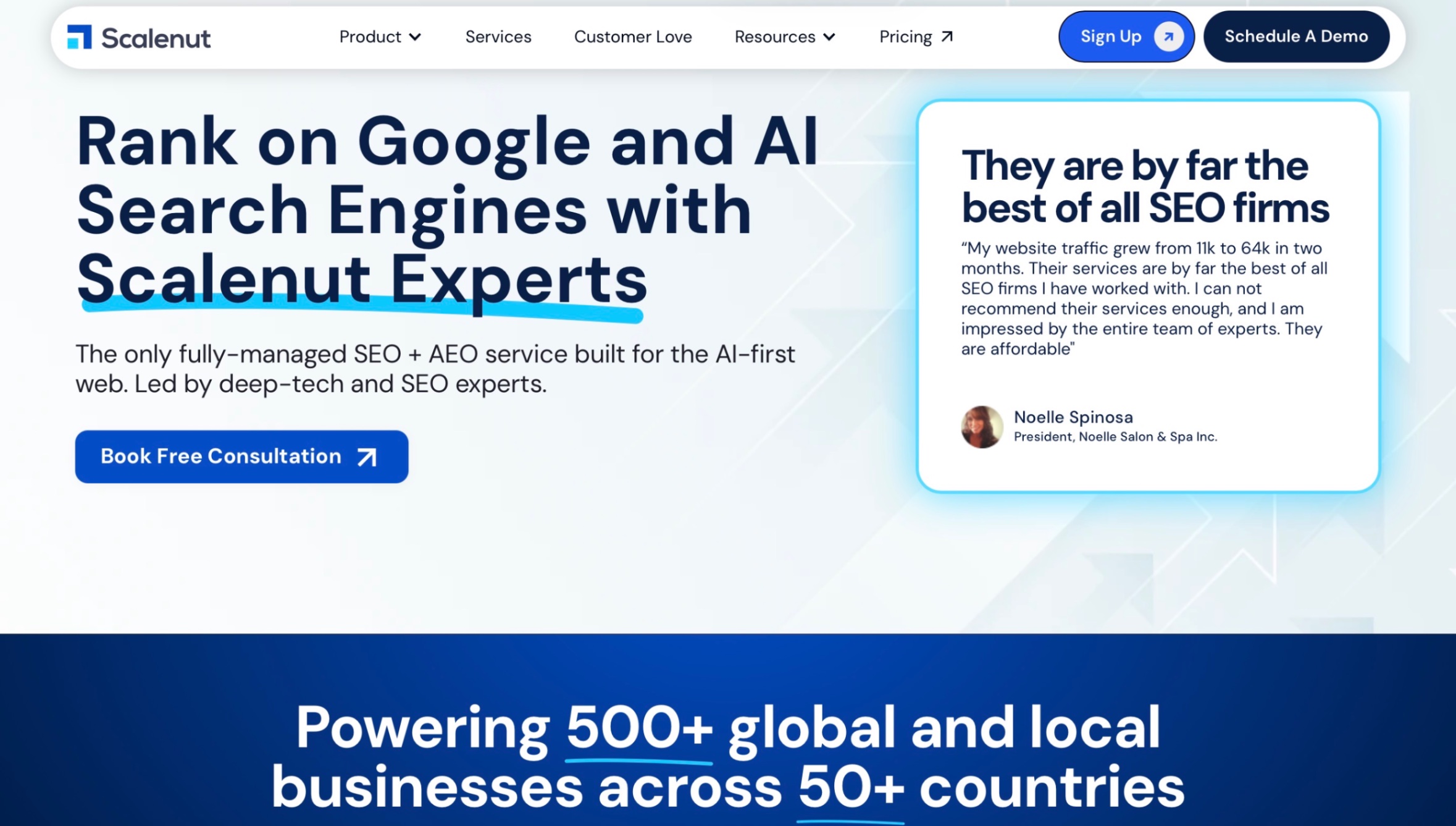
A fully managed SEO and GEO service built for ecommerce brands that want visibility across both Google Search and AI-driven platforms, without juggling multiple vendors to get there
Best For: B2B and B2C ecommerce brands that want one team handling strategy, content, technical SEO, and AI search visibility in a single connected workflow.
What Makes SEO Surge by Scalenut Stand Out for Ecommerce SEO?
SEO Surge does not just build a strategy and hand it off. The team executes it end to end, backed by Scalenut's own platform for tracking prompt performance, citation patterns across LLMs, and content opportunities.
That means decisions are driven by real visibility data, not third-party tool guesswork. And unlike most agencies that stop at Google, SEO Surge is built for where search actually lives in 2026, covering Google AI Overviews, ChatGPT, Perplexity, Gemini, Claude, and Grok.
What Does SEO Surge by Scalenut Do for Ecommerce Brands?
- SEO and GEO content strategy tailored to your niche and growth goals
- Topic ideation and monthly content planning
- Content creation, on-page optimization, and publishing
- Technical site audit and crawlability support for both Google and AI crawlers
- Backlink building and citation building in relevant directories
- Reddit activations for organic brand visibility
- GMB optimization for local visibility where applicable
- Monthly tracking of impressions, clicks, rankings, and AI visibility
- Brand monitoring across ChatGPT, Perplexity, Gemini, Claude, and Grok
From Strategy to Rankings: What Does the SEO Surge Workflow Look Like?
- SEO and GEO Audit: The team evaluates where your store currently stands across Google and AI platforms, benchmarks your domain against competitors, identifies content gaps, and maps out the highest-impact opportunities before any work begins.
- Content Strategy and Topic Ideation: SEO Surge builds a content strategy covering what to create, how much, and in what order. Each month, the team identifies the top topics to target based on traffic potential, search demand, business relevance, and AI visibility opportunities.
- Content Creation and Optimization: Approved topics go into production. Writers create SEO and GEO-optimized content using Scalenut's platform, which checks for NLP optimization, topical coverage, and on-page signals before anything goes live.
- Publishing and Off-Page Support: Content is published and supported with backlink building, directory citations, and Reddit activations to build authority and improve discoverability across both search engines and AI platforms.
- Tracking and Iteration: At the end of every month, the team tracks impressions, clicks, and average position for all content produced. They also monitor your domain's AI visibility through Scalenut's brand monitor, checking whether your brand is being cited in AI-generated answers for relevant prompts. If it is not showing up, the strategy gets adjusted until it does.
Is SEO Surge by Scalenut Good for Small Ecommerce Businesses?
Yes. SEO Surge is more accessible than most large agency retainers and scales based on scope, so smaller stores are not paying for volume they do not need. It works best for businesses committed to ongoing growth rather than one-off projects.
What Do SEO Surge by Scalenut Clients Say?
"My website traffic grew from 11K to 64K in two months. Their services are by far the best of all SEO firms I have worked with. I cannot recommend them enough, and I am impressed by the entire team of experts.", says Noelle Spinosa, President, Noelle Salon and Spa Inc.
What Are the Potential Limitations of SEO Surge by Scalenut?
SEO Surge is a fully managed service. If you are looking for a one-time audit, a standalone technical fix, or a self-serve platform, this is not the right fit. Pricing is also custom based on scope, so brands with very tight or fixed budgets will want to have that conversation upfront.
How Much Does SEO Surge by Scalenut Cost?
Pricing is custom based on the scope of work and your specific market. The best starting point is a free 30-minute strategy session where the team reviews your current visibility across Google and AI platforms and outlines a growth plan for your store.
Your competitors are already showing up in AI-generated answers. Book a free strategy session today and find out exactly where your store stands, and what it will take to close the gap.
2. OuterBox
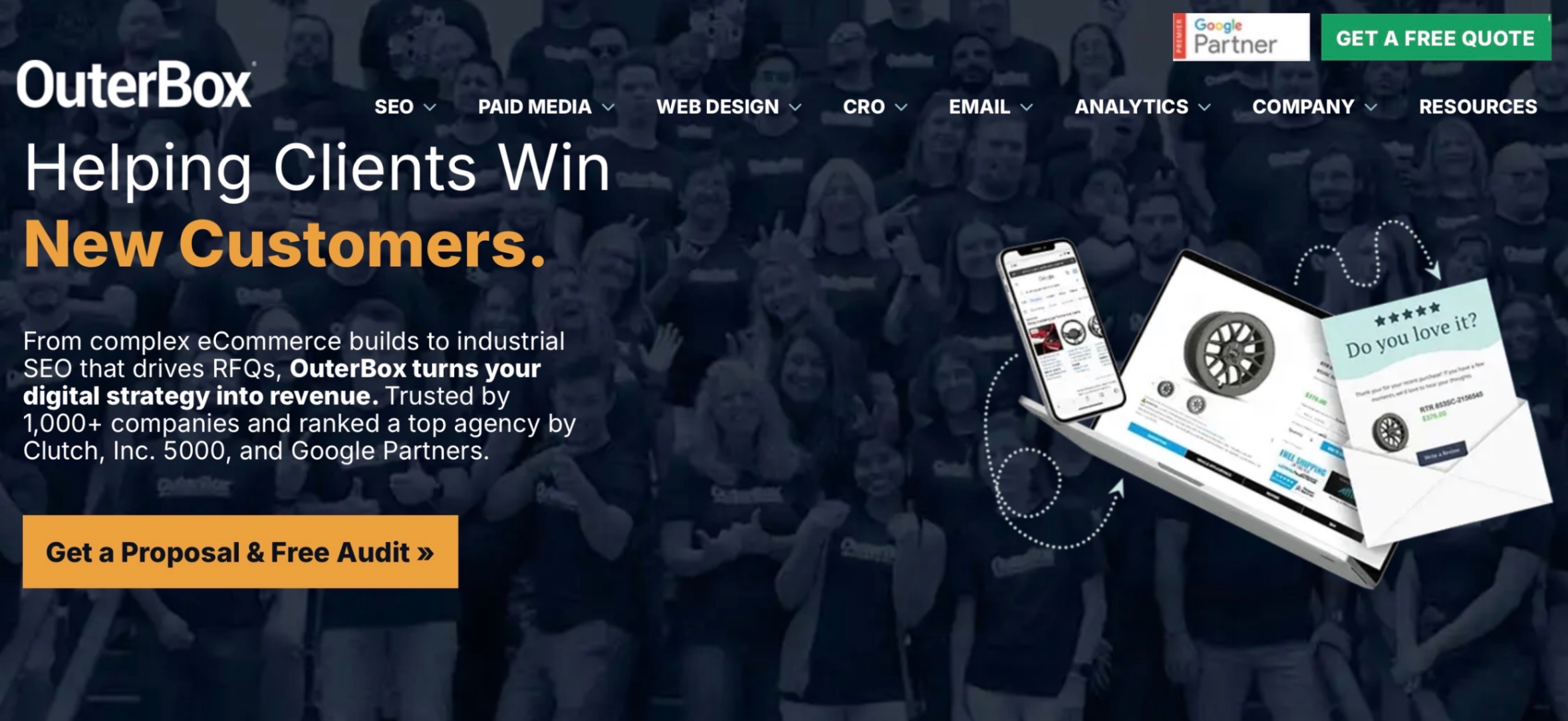
An ecommerce-first SEO agency with over two decades of experience, built for brands that have outgrown generalist agencies
Best For: Mid-to-enterprise ecommerce brands on Shopify, BigCommerce, or Magento that need a high-volume, technically deep SEO partner.
What Makes OuterBox Stand Out for Ecommerce SEO?
OuterBox has been working exclusively in ecommerce SEO since 2004, which means they are not applying a generic SEO playbook to online stores. They understand the technical complexity that comes with large product catalogs, faceted navigation, crawl budget management, and platform-specific architecture in a way that most agencies simply do not. With a team of 250+ in-house specialists and over 1,200 clients served, they bring both the depth and the capacity to handle ecommerce accounts that would overwhelm a smaller agency.
What Does OuterBox Do for Ecommerce Brands?
- Ecommerce SEO across Shopify, BigCommerce, Magento, and custom headless setups
- Technical SEO including crawl budget management, site architecture, and structured data
- Content strategy and creation for product and category pages
- Conversion rate optimization alongside organic growth
- AI SEO and generative engine optimization
- Analytics and performance reporting
Is OuterBox a Good Fit for Enterprise Ecommerce Stores?
OuterBox is particularly well suited for mid-to-enterprise brands with large catalogs and complex technical requirements. Their team size and ecommerce specialization means they can handle the scale and platform-specific challenges that come with bigger stores.
Is OuterBox a Good Option for Smaller Ecommerce Brands?
It depends on budget. OuterBox is an enterprise-leaning agency and their pricing reflects that. Smaller DTC brands may find the cost harder to justify, or may feel less prioritized relative to larger accounts on their roster.
What Are the Potential Limitations of OuterBox?
Their focus is squarely on ecommerce, which is a strength, but brands looking for broader digital marketing support beyond SEO and CRO may need to bring in additional partners. Pricing is also on the higher end, which may put them out of reach for stores at an earlier growth stage.
3. WebFX
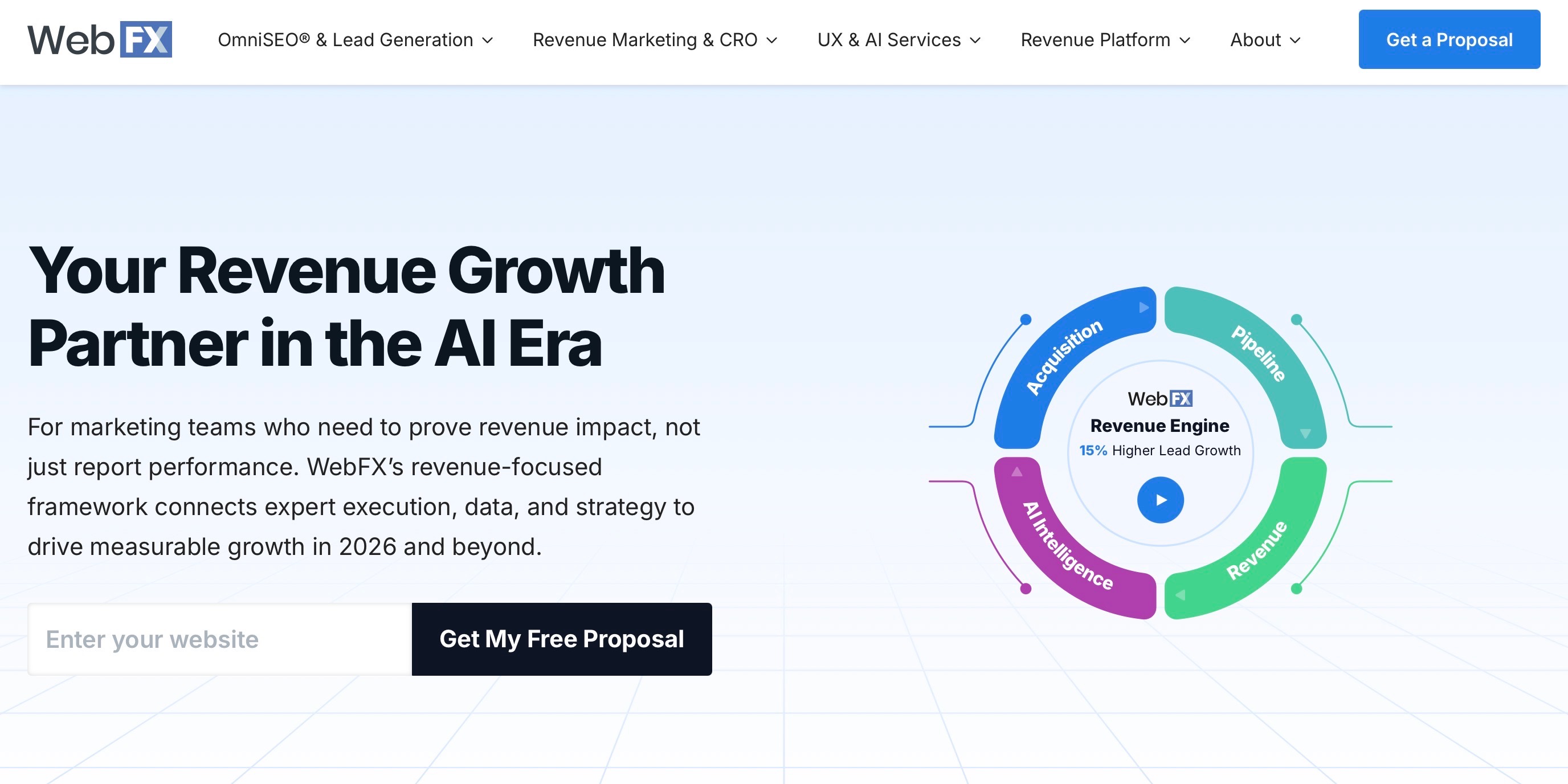
A full-service digital marketing agency that connects ecommerce SEO directly to revenue outcomes, backed by a proprietary tech stack built for attribution clarity
Best For: Large ecommerce brands that need SEO integrated with paid media, content, and analytics under one roof, and need to prove organic ROI to leadership, not just their marketing team.
What Makes WebFX Stand Out for Ecommerce SEO?
WebFX has been in the game since 1995, and what separates them from most agencies their size is their technology. Their proprietary platform, RevenueCloudFX, connects SEO performance directly to revenue data, so you are not left trying to manually draw a line between organic rankings and actual sales. For ecommerce brands where leadership wants to see real business impact and not just traffic charts, that matters. They have also developed OmniSEO, their approach to visibility across both traditional search and AI-driven platforms including Google AI Overviews tracking and LLM-powered search, which keeps their strategy relevant as search behavior continues to shift in 2026.
What Does WebFX Do for Ecommerce Brands?
- Full ecommerce SEO including on-page, off-page, and technical optimization
- AI and LLM search visibility through their OmniSEO approach
- Content strategy and creation for product and category pages
- Marketplace SEO support for Amazon, Walmart, and Target
- Conversion rate optimization
- PPC and paid social management
- Revenue tracking and attribution through RevenueCloudFX
Is WebFX a Good Fit for Ecommerce Brands That Also Run Paid Ads?
Yes. WebFX is one of the stronger options for brands running SEO and paid media simultaneously. Because both channels are managed under one roof and tied to the same revenue tracking platform, there is less of the disconnect that typically happens when SEO and PPC are handled by separate vendors.
Is WebFX Good for Smaller Ecommerce Businesses?
It depends. WebFX serves clients across a wide range of sizes, but their pricing starts at around $3,000 per month for entry-level engagements. For smaller stores with limited budgets, the cost can add up quickly, especially when layering additional services. Some smaller business owners also note that cost is a pressure point when working with WebFX.
What Are the Potential Limitations of WebFX?
WebFX is a large agency, and with that comes the risk of feeling like a smaller account in a very large roster. Most engagements also come with an initial term of 6 to 12 months, which means less flexibility for brands not ready to commit to a longer relationship. Brands with very niche or specialized ecommerce needs may also find that a more focused ecommerce-only agency gives them deeper expertise.
4. Coalition Technologies
A full-service SEO and web development agency that builds ecommerce stores with SEO baked into the foundation, not added on as an afterthought
Best For: Ecommerce brands dealing with legacy technical debt, platform migrations, or stores that were built without SEO architecture in mind from the start.
What Makes Coalition Technologies Stand Out for Ecommerce SEO?
Founded in 2009 and headquartered in Los Angeles, Coalition Technologies sits at the intersection of SEO and web development in a way most agencies do not. They are a certified Shopify Plus Partner and BigCommerce Certified Partner, which means their technical team is not just advising on SEO fixes but actually implementing them at the code level. With a team of 300+ and over 800 client case studies, they have the depth to handle complex ecommerce builds and the track record to back it up. They also offer month-to-month contracts, which is a genuine differentiator in an industry where 12-month lock-ins are the norm.
What Does Coalition Technologies Do for Ecommerce Brands?
- Ecommerce SEO across Shopify, BigCommerce, WooCommerce, WordPress, and custom platforms
- Technical SEO audits and implementation
- Web design and development with SEO built into the architecture
- AI SEO and GEO for visibility across ChatGPT and generative search platforms
- PPC management including Google Ads and Microsoft Ads
- Conversion rate optimization
- Email and social media marketing
Is Coalition Technologies a Good Option for Ecommerce Brands Doing a Platform Migration?
Yes, and this is one of their clearest strengths. Their technical team has handled Shopify migrations specifically, resolving complex product data and indexation issues that typically cause ranking drops during transitions. If you are moving platforms and cannot afford a traffic hit, their development-first approach is a meaningful advantage over agencies that only handle the SEO side of a migration.
Is Coalition Technologies Good for Small Ecommerce Businesses?
Yes. Unlike some of the larger agencies on this list, Coalition Technologies works with businesses across a wide range of sizes, from startups to enterprise brands like Microsoft and Roku. Their month-to-month contract model also reduces the risk for smaller brands that are not ready to commit to a long-term engagement.
What Are the Potential Limitations of Coalition Technologies?
Some reviews note inconsistent results across certain projects, and the breadth of services they offer means you are working with a generalist team rather than an ecommerce-only specialist. Brands with very large catalogs and highly complex technical requirements may find more focused ecommerce SEO agencies better suited to their needs.
Want to grow your brand visibility across AI platforms? Discover the best GEO services for AI visibility growth in our detailed guide on what are the best GEO services for AI visibility growth?
5. Inflow
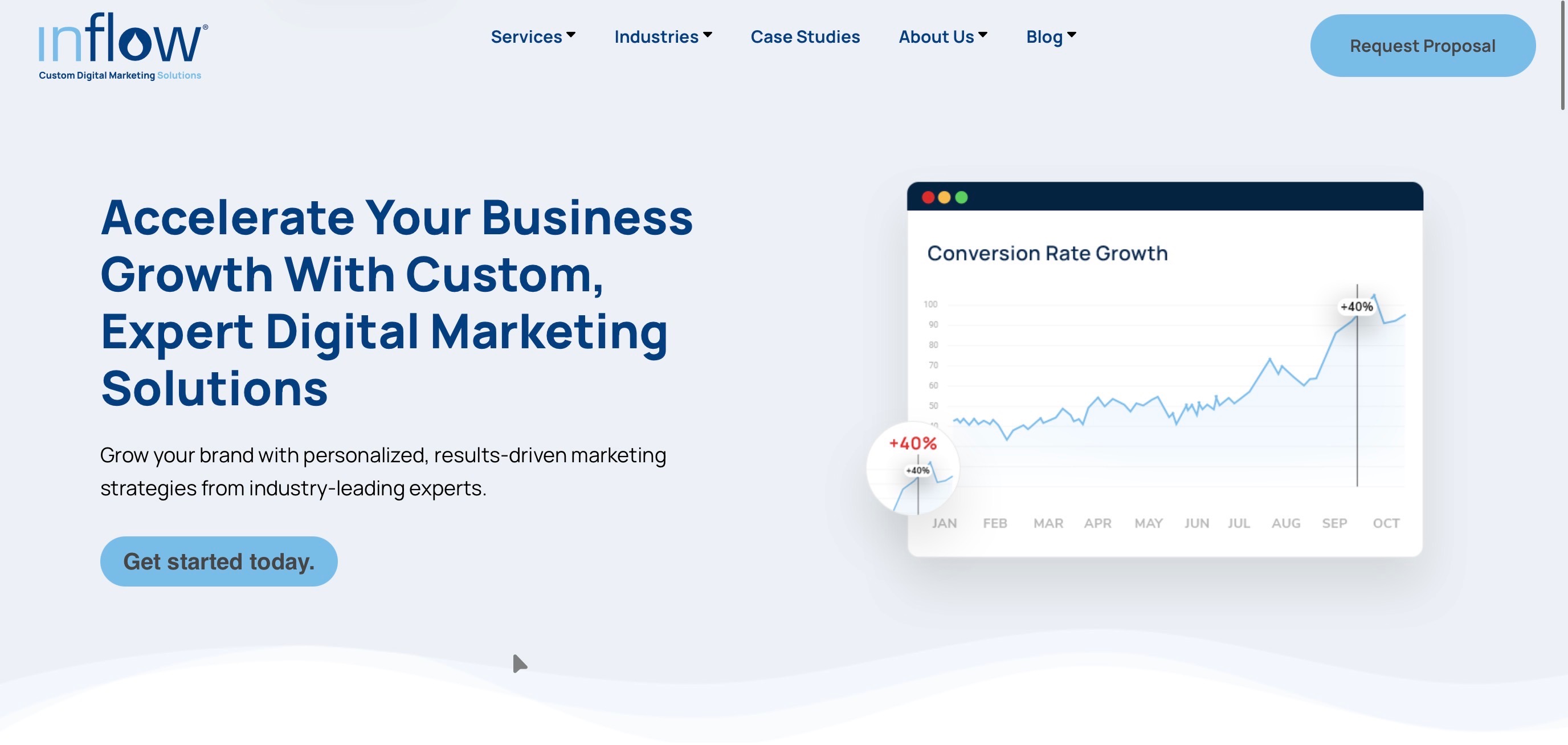
An ecommerce-focused digital marketing agency that connects SEO directly to conversion outcomes, built for brands that are tired of traffic gains that never show up in revenue
Best For: Mid-market to enterprise ecommerce brands that want SEO and CRO integrated in one engagement, and need a partner that ties every deliverable to actual business results rather than ranking reports.
What Makes Inflow Stand Out for Ecommerce SEO?
Inflow has been working exclusively with ecommerce and retail brands for over 16 years, and one structural decision sets them apart from most agencies: they do not have account managers. Clients work directly with senior specialists who have spent decades in ecommerce SEO, PPC, and CRO. That means the person on your weekly call is the same person doing the strategic work, not a coordinator relaying messages between you and the actual team. With a 97% client retention rate and a 5/5 average rating on Clutch, that structure clearly resonates with clients who have been burned by the bait-and-switch model at other agencies.
What Does Inflow Do for Ecommerce Brands?
- Ecommerce SEO across Shopify, BigCommerce, WooCommerce, Magento, and other major platforms
- Technical SEO including crawl management, site architecture, and structured data
- Content strategy and on-page optimization
- Conversion rate optimization integrated alongside SEO
- PPC and paid social advertising
- Analytics setup and performance reporting
Does Inflow Integrate SEO With Conversion Rate Optimization?
Yes, and this is one of their clearest differentiators. Most agencies treat SEO and CRO as separate workstreams. Inflow builds them together, which directly addresses one of the most common frustrations in ecommerce: organic traffic going up while revenue stays flat. By diagnosing and fixing conversion bottlenecks at the same time as improving rankings, they make sure increased visibility actually translates to sales.
Is Inflow a Good Fit for Smaller Ecommerce Stores?
Inflow works with brands across different sizes, but their pricing and engagement model is better suited for mid-market brands that have meaningful SEO budgets and are serious about long-term growth. Very early-stage or bootstrapped stores may find the investment hard to justify relative to their current revenue.
What Are the Potential Limitations of Inflow?
Inflow's methodical, test-and-iterate approach is a strength, but it also means they move deliberately rather than aggressively. Brands expecting fast, high-volume content output may find the pace slower than anticipated. They also do not currently emphasize GEO or AI search visibility as a core service offering, which is worth considering if AI-driven discovery is a priority for your store in 2026.
6. Searchbloom
A performance-driven SEO and PPC agency that treats organic and paid search as one unified acquisition strategy, built for ecommerce brands that cannot afford for both channels to work against each other
Best For: Mid-market ecommerce brands running SEO and PPC simultaneously who want both channels managed under one roof with honest, numbers-first reporting.
What Makes Searchbloom Stand Out for Ecommerce SEO?
Searchbloom is a Utah-based agency built on a simple idea: earn client trust through results, not long-term contracts. Their 98% client retention rate suggests that approach works. For ecommerce, they stand out through their A.R.T. framework, which brings together Authority, Relevance, and Technology into one connected strategy. They also do not treat SEO and PPC as separate efforts, which helps prevent keyword cannibalization that can quietly hurt ecommerce margins.
What Does Searchbloom Do for Ecommerce Brands?
- Ecommerce SEO using the A.R.T. methodology
- Technical SEO including crawl efficiency, faceted navigation, and site architecture
- National and local SEO
- PPC management including Google Ads and Microsoft Ads
- Conversion rate optimization
- AI and LLM-ready SEO strategies as part of their 2026 service offering
Does Searchbloom Integrate SEO and PPC for Ecommerce Stores?
Yes, and this is one of their most cited strengths. Their A.R.T. framework integrates both channels into a unified acquisition strategy, allocating budget between organic and paid based on where each is most efficient for a given keyword cluster. For ecommerce brands spending on both channels, this prevents wasted overlap and gives leadership a much cleaner picture of blended customer acquisition cost.
What Kind of Results Has Searchbloom Delivered for Ecommerce Clients?
One notable case study involves an outdoor and survival gear ecommerce brand that was struggling to break into the top ten results for highly competitive keywords. Searchbloom implemented their A.R.T. strategy, and the client achieved the number one ranking for terms including "survival gear," "survival tools," and "survival equipment," which translated into a 32% increase in organic revenue.
What Are the Potential Limitations of Searchbloom?
Searchbloom's team size is smaller than some of the larger agencies on this list, which can mean capacity constraints for very large enterprise accounts with complex, multi-market requirements. Their pricing also reflects the senior-level talent and integrated model they offer, so brands with limited budgets may find the investment harder to justify at earlier growth stages.
7. HigherVisibility
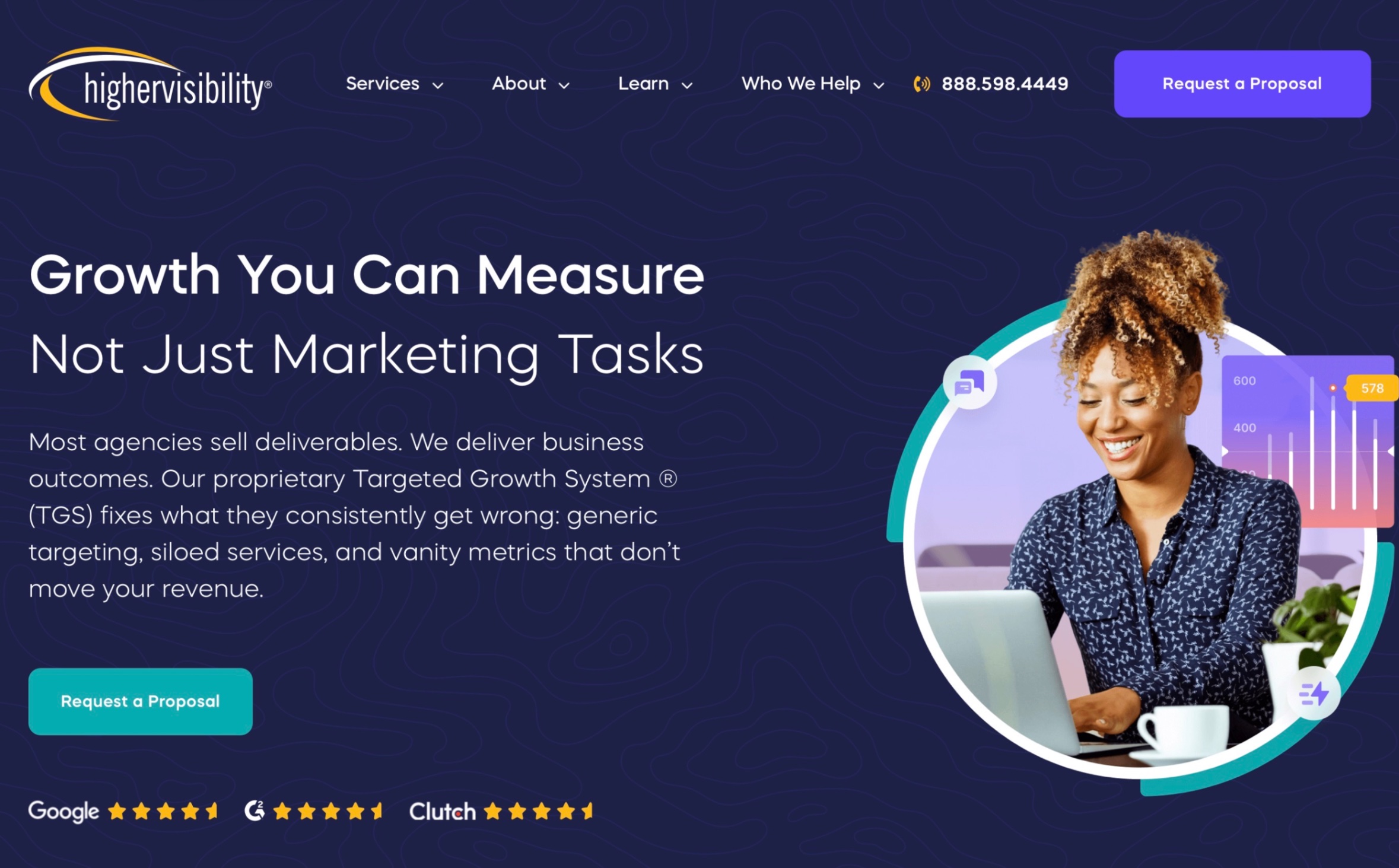
A Memphis-based digital marketing agency that has won SEO Agency of the Year four times, built for ecommerce brands that want strategy connected directly to revenue, not just rankings
Best For: SMB to mid-market ecommerce brands across Shopify, Magento, BigCommerce, and WooCommerce that want transparent, performance-focused SEO with real-time campaign visibility.
What Makes HigherVisibility Stand Out for Ecommerce SEO?
What makes it stand out is its proprietary Targeted Growth System, which ties SEO, PPC, paid social, CRO, and web design to real business outcomes rather than vanity metrics. For ecommerce brands, that means strategies built to drive product sales, not just better-looking rankings reports. Their InSite Dashboard also gives clients real-time visibility into performance through direct Google Analytics integration, helping solve a common agency pain point: not knowing what is happening between monthly calls.
What Does HigherVisibility Do for Ecommerce Brands?
- Ecommerce SEO across Shopify, Magento, BigCommerce, WooCommerce, and other major platforms
- Technical SEO audits and on-page optimization
- Content marketing and link building
- Local SEO and franchise SEO
- PPC and paid search management
- CRO and web design
- Real-time performance reporting through the InSite Dashboard
Is HigherVisibility a Good Fit for Ecommerce Brands That Have Been Let Down by Previous Agencies?
Yes, and this comes up repeatedly in their client reviews. Several clients note that they worked with multiple SEO agencies before HigherVisibility without seeing meaningful progress. One notable example is Evolve Bank and Trust, whose organic leads more than doubled within twelve months of switching to HigherVisibility after years of stagnant results with other partners. Their 90%+ client retention rate also suggests that once brands make the switch, they tend to stay.
Is HigherVisibility Good for Small Ecommerce Businesses?
Yes. Unlike some of the larger enterprise-focused agencies on this list, HigherVisibility explicitly works with SMBs and has built their Targeted Growth System to scale across different business sizes. Their pricing is custom and based on scope, and they offer a free technical audit as a starting point before any commitment is required.
What Are the Potential Limitations of HigherVisibility?
HigherVisibility serves a broad range of industries beyond ecommerce, including legal, automotive, home services, and financial services. For brands that want a partner whose entire focus is ecommerce SEO, that breadth could be a consideration. Their GEO and AI search visibility offering is also described as more measured and experimental compared to agencies that have made it a core part of their service model.
8. Seer Interactive
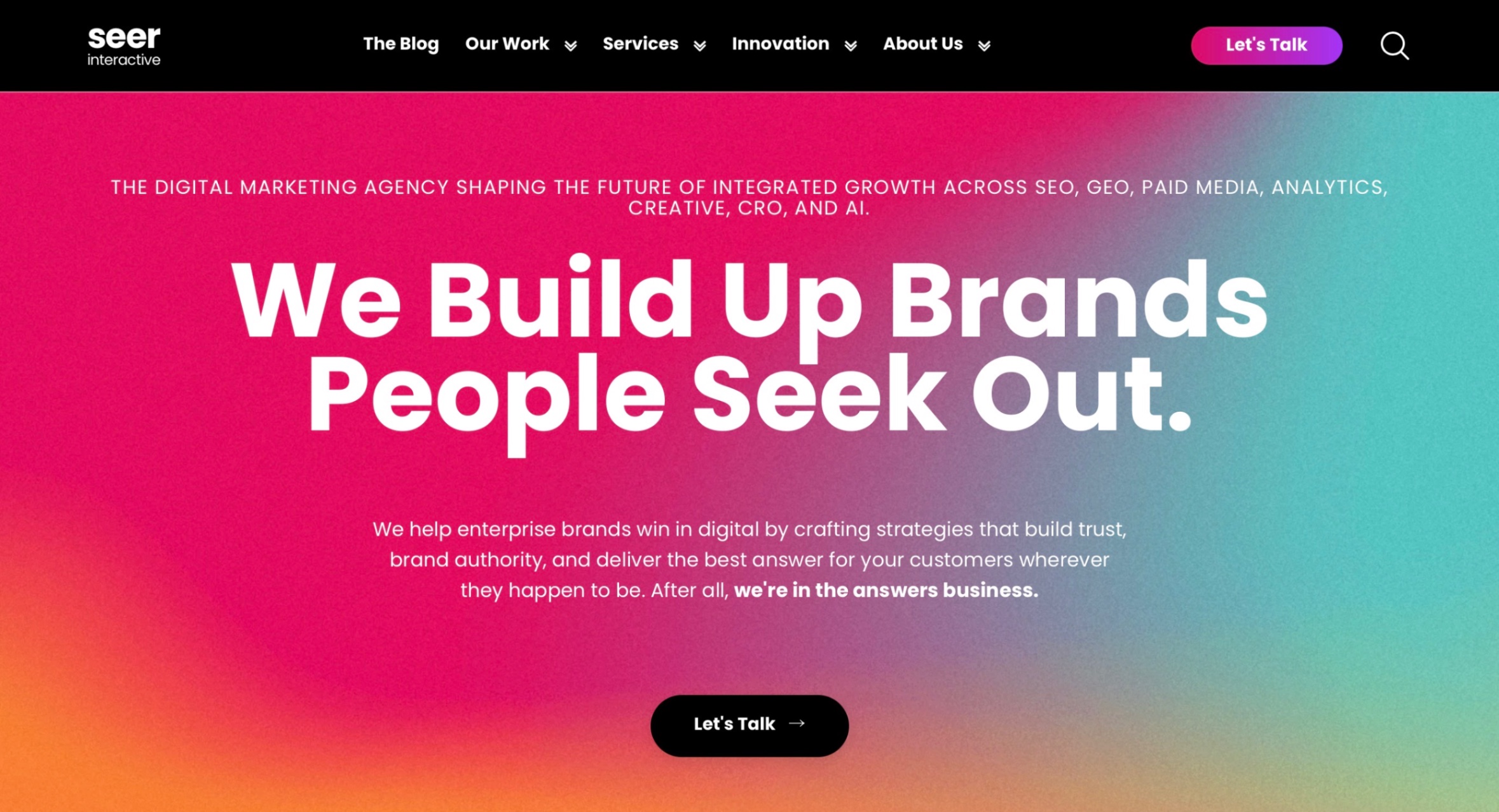
A B-Corp certified digital marketing agency that leads with data and research before strategy, built for enterprise ecommerce brands that want to understand why search is performing the way it is, not just what to do about it
Best For: Analytically sophisticated enterprise ecommerce brands that want a research-first, data-led SEO partner and have the internal bandwidth to act on deep strategic insights.
What Makes Seer Interactive Stand Out for Ecommerce SEO?
Seer Interactive stands out for its technology and cross-channel visibility. Its platforms, SeerSignals and Supernova, combine real-time SERP, paid, and organic data in one place, which is especially useful for ecommerce brands with complex journeys and sizable ad spend. It is also a certified B-Corp. On AI search, Seer is more transparent than most agencies. Instead of making broad GEO claims, it shares testing, client results, and even cases where AI Overviews reduced traffic. Its data also shows AI referrals converting at higher rates than Google organic, which is shaping its 2026 strategy.
What Does Seer Interactive Do for Ecommerce Brands?
- Enterprise SEO including technical SEO, content strategy, and off-site optimization
- GEO and AI search visibility strategy
- Paid search and paid social advertising
- Analytics and data strategy including custom data platform builds
- CRO and creative services
- Audience intelligence and big data analysis through SeerSignals
Is Seer Interactive a Good Fit for Enterprise Ecommerce Brands?
Yes. Seer's primary strength is enterprise-level work, and their client roster of 400+ brands across B2B and B2C reflects that. Their approach works best when the client team is engaged, analytically capable, and has the internal resources to implement recommendations. They function as a true strategic partner rather than a fully managed execution service.
Is Seer Interactive Good for Smaller Ecommerce Stores?
Not typically. Seer's model is built around enterprise complexity, deep data infrastructure, and senior-level strategy. Smaller ecommerce brands with limited internal teams and smaller budgets are unlikely to get the full value from their approach and would be better served by a more execution-focused agency.
What Are the Potential Limitations of Seer Interactive?
Seer is not a fully managed execution agency in the traditional sense. Their strength is research, strategy, and insight, which means brands that need high-volume content production or a hands-off managed service may find the model less suitable. Their enterprise focus also means smaller ecommerce brands may not be the right fit for their team structure and pricing.
What Should You Look for in an Ecommerce SEO Company Before Signing a Contract?
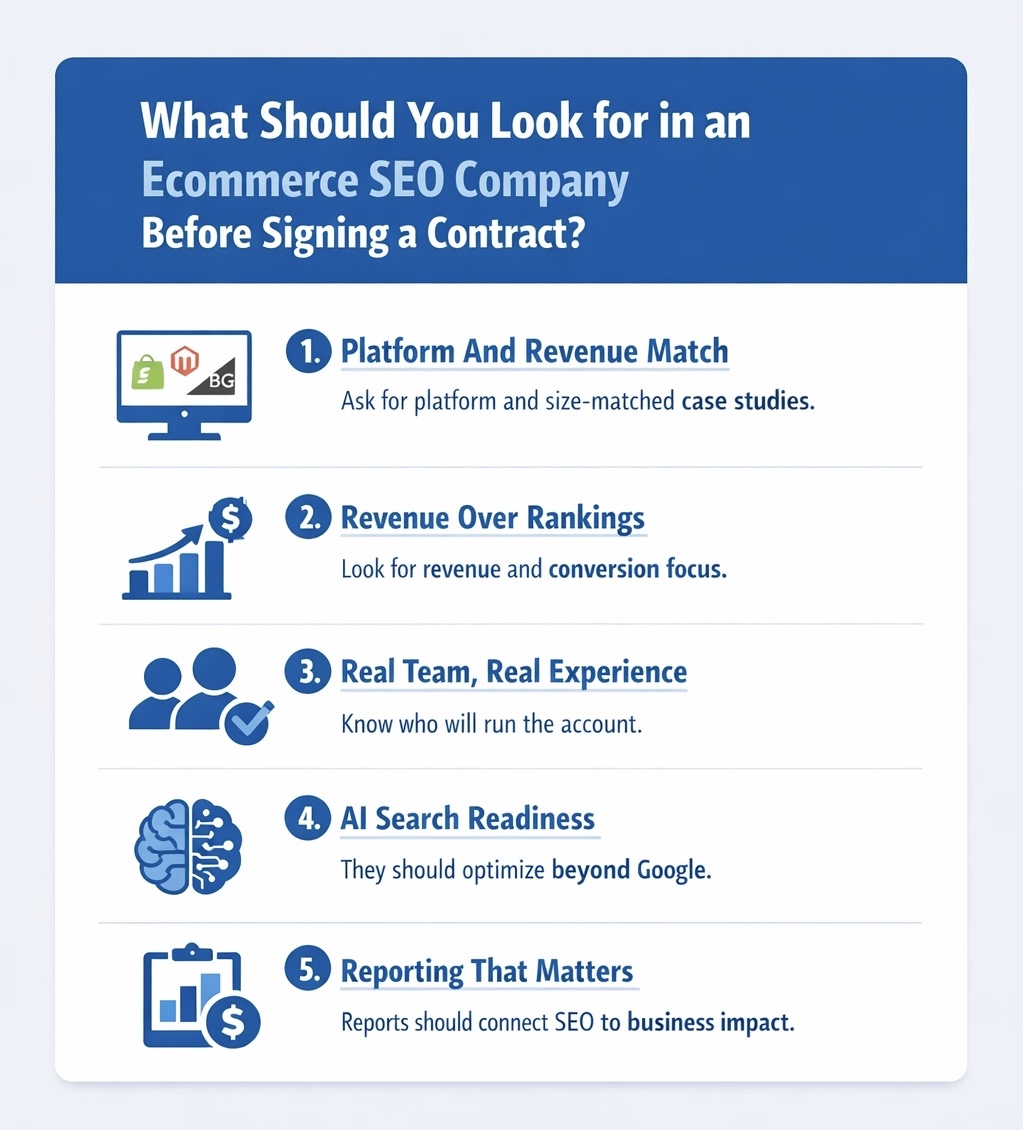
Choosing the best ecommerce platforms for SEO and speed is not really about picking the biggest name or the most polished pitch. It is about avoiding the wrong partner before you lock yourself into months of wasted budget, slow execution, and reports that never explain why sales did not move.
Here are the five questions worth asking before you sign anything.
1. Do They Have Case Studies From Stores on My Platform, in My Revenue Range?
This should be non-negotiable. Ecommerce SEO is not one-size-fits-all, and platform differences matter more than most agencies admit. Shopify, Magento, BigCommerce, and WooCommerce all come with different technical constraints, SEO patterns, and catalog structures. Revenue range matters too. A $50M store dealing with indexation, crawl budget, and tens of thousands of SKUs has very different problems than a $1M brand with a focused catalog. If an agency cannot show results from businesses that look like yours, you are being asked to trust theory instead of proof.
2. Do They Measure Success in Revenue and Conversions, or Rankings and Traffic?
Rankings matter, but they are not the end goal. Revenue is. Traffic is only useful if it turns into product views, add-to-carts, purchases, or qualified pipeline. Any agency that leads with page one promises without tying that work to conversion strategy is solving the wrong problem. You do not need prettier reports. You need a partner that understands how SEO contributes to sales.
3. Who Will Actually Work on My Account Day to Day, and What Is Their Experience Level?
This is where a lot of agency relationships go sideways. Senior people sell the engagement, then the real work gets handed to junior coordinators with limited ecommerce experience. Ask directly who your day-to-day contact will be, what their background is, and how involved senior strategists stay after onboarding. A smart question here can save you months of frustration later.
4. How Do They Handle AI Search Visibility in 2026?
If their answer starts and ends with Google, it is incomplete. Product discovery no longer happens only through traditional search results. It also happens through AI Overviews, ChatGPT, Perplexity, and other LLM-driven experiences. Agencies that are not thinking about citations, prompt visibility, and AI discovery are leaving part of your organic growth opportunity untouched.
5. What Does Reporting Look Like, and Does It Connect to Business Outcomes Leadership Cares About?
A monthly PDF full of keyword movement is not enough. Ask to see a real sample report before signing. Look for conversion tracking, revenue attribution, landing page performance, and clarity around what changed, what worked, and what did not. The best agencies report in a way your leadership team can actually use, not just tolerate.
The right ecommerce SEO company should make your decision easier, not harder. If an agency cannot answer these five questions clearly, that is your answer.
Looking to improve visibility in AI search? Find out which agencies lead in ChatGPT and Google AI Overviews in our guide on what is the best agency to optimize for ChatGPT and Google AI Overviews?
What Are the Red Flags to Avoid When Hiring an Ecommerce SEO Agency?
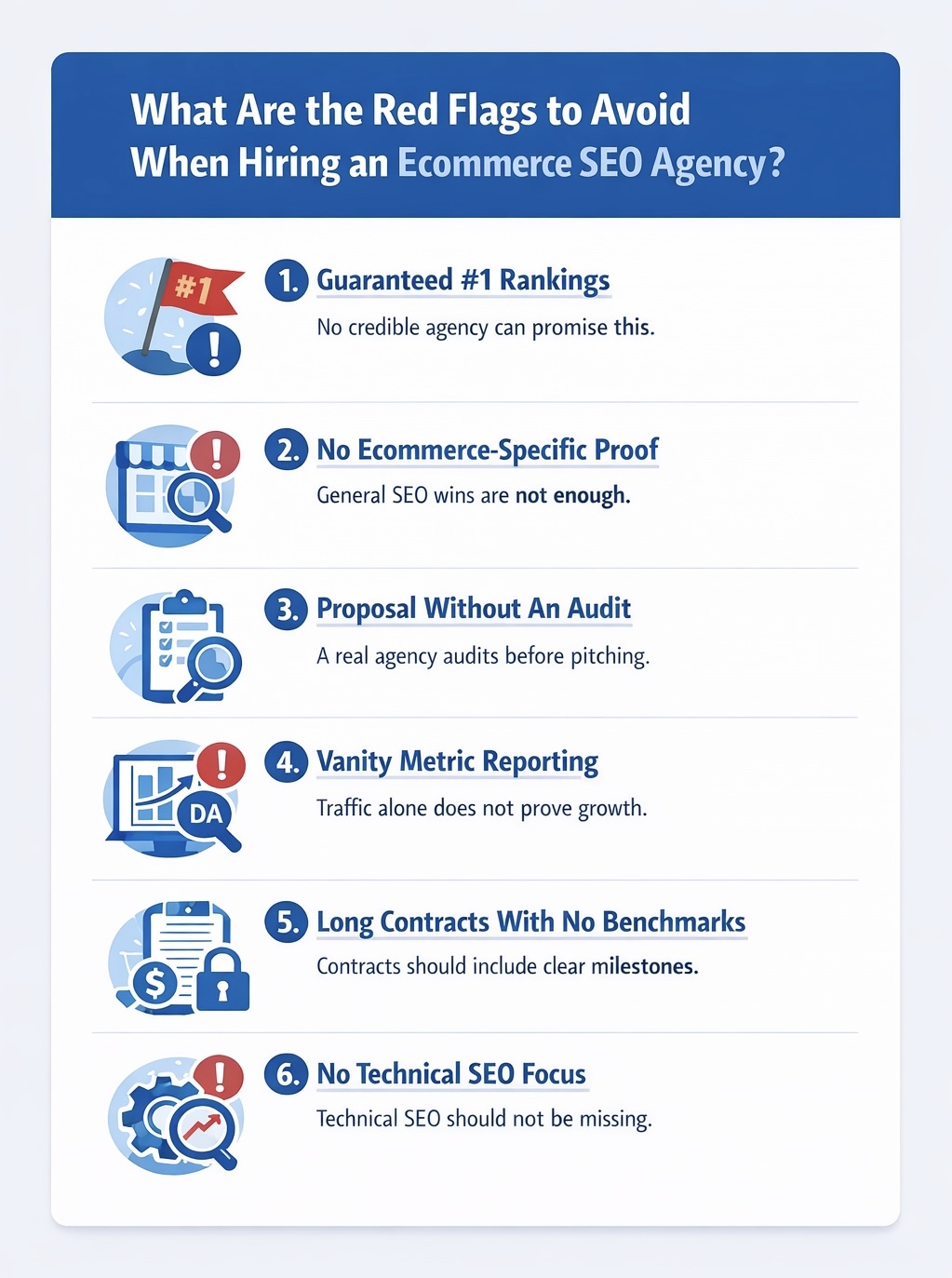
A polished sales pitch does not tell you much about whether an agency can actually grow an ecommerce store. In fact, some of the clearest warning signs show up before the work even begins, in the promises they make, the proof they avoid, and the way they define success.
Here are the biggest red flags to watch for before you sign a contract.
1. Are They Guaranteeing #1 Rankings?
This is one of the oldest red flags in SEO, and it is still one of the easiest ways to spot an unreliable agency. No legitimate team can guarantee a specific ranking position because search results are influenced by competition, site condition, search intent, and constant algorithm changes. Promises like “#1 on Google” are usually either misleading or built on tactics that create risk later.
2. Do They Have No Ecommerce-Specific Case Studies?
Strong SEO results in other industries do not automatically translate to ecommerce. Online stores have different challenges, including faceted navigation, product page duplication, crawl efficiency, structured data, and conversion flow. If an agency’s portfolio is filled with local businesses, service brands, or B2B SaaS companies, they may be learning ecommerce at your expense.
3. Are They Sending a Proposal Without Doing an Audit?
A real ecommerce SEO agency should want to understand your platform, technical baseline, content gaps, competitive landscape, and catalog structure before recommending scope. If they send a full proposal immediately, they are probably selling a standard package rather than solving your actual problems.
4. Does Their Reporting Focus on Vanity Metrics?
Impressions, keyword counts, and domain authority can all move without improving the part of SEO your business actually cares about. If sample reports do not connect performance to revenue, conversions, landing page impact, or business outcomes, the agency is likely optimizing for what looks good in a deck instead of what drives growth.
5. Are They Pushing Lock-In Contracts With No Performance Benchmarks?
Longer contracts are common in SEO, but that does not mean they should be vague. A contract with no milestones, no defined priorities, and no measurable benchmarks protects the agency far more than it protects you.
6. Do They Barely Mention Technical SEO?
If the pitch is only about content and backlinks, something important is missing. For ecommerce stores, technical SEO is often where the biggest gains start. Crawl budget, indexation, site speed, internal linking, and structured data can all directly affect how product and category pages perform.
The safest agency choice is usually the one that is the most specific, the most transparent, and the least interested in making easy promises.
Is local SEO your primary focus? See which agencies actually deliver results in our guide on which is the best local SEO company for real growth?
Conclusion
The best rated SEO agency for ecommerce should do more than improve rankings. They should support your business goals, strengthen user experience, and help your ecommerce website compete in a crowded digital landscape. A strong service provider will align search engine optimization with your target audience, apply best practices, and improve online visibility, user engagement, and online sales through focused digital marketing services.
The next step is to set clear goals, shortlist a few SEO experts, and ask how their plan will drive measurable results. The right partner should show how their work can create a significant increase in growth, not just activity.
Frequently Asked Questions
How do I compare different ecommerce SEO service providers effectively?
Compare agencies based on ecommerce-specific case studies, platform expertise, and how they connect SEO work to revenue. Review sample reports, ask about technical SEO capabilities, and evaluate how clearly they communicate strategy and results.
What are the main benefits of hiring a specialized ecommerce SEO company?
A specialized ecommerce SEO company improves visibility, attracts high-intent traffic, and increases conversions. It also enhances user experience and supports long-term growth without heavy reliance on paid ads.
How much does ecommerce SEO cost?
Ecommerce SEO typically costs between $2,000 and $10,000+ per month depending on competition, catalog size, and scope. Larger or more complex stores require higher budgets due to technical work and content scale.
How long does ecommerce SEO take to show results?
Most ecommerce stores see initial improvements within 3 to 6 months, with stronger results building over 6 to 12 months. SEO works as a long-term strategy where consistent effort drives compounding growth.
What is the difference between ecommerce SEO and regular SEO?
Ecommerce SEO focuses on product pages, category structure, and conversion optimization, while regular SEO often focuses more on informational content. It also involves deeper technical work like crawl management and structured data.
Is it worth hiring an ecommerce SEO company?
Yes, if you want sustainable growth. Ecommerce SEO attracts potential customers actively searching for your products, reduces reliance on paid ads, and builds long-term visibility and revenue.
Which is the best ecommerce SEO company for Shopify stores?
The best choice depends on your goals, but SEO Surge by Scalenut is a strong option for Shopify brands looking to combine traditional SEO with AI-driven visibility in a single workflow.
Can an ecommerce SEO agency also help with AI search visibility?
Yes. Modern agencies optimize for platforms like ChatGPT and Google AI Overviews by focusing on structured content, citations, and prompt-level visibility beyond traditional search.
How do I verify the track record of an ecommerce SEO provider?
Ask for platform-specific case studies, client references, and performance reports tied to revenue and conversions. Also check third-party reviews and ensure their past results align with your business model.


.svg)


.webp)