Key Highlights
- Semrush is an all-in-one SEO and marketing platform built for keyword research, competitor intelligence, technical audits, rank tracking, backlinks, and reporting.
- Semrush One combines SEO capabilities with AI visibility tracking, helping teams monitor how brands show up across AI-driven discovery experiences.
- The platform is strongest for agencies and in-house teams managing multiple sites, markets, and ongoing performance reporting.
- Semrush’s depth comes with a learning curve, and its pricing can feel premium for smaller teams with simpler workflows.
- For smaller teams, Scalenut is a better alternative to Semrush, and stands out as a GEO-first platform that connects AI visibility insights directly to content planning, optimization, and internal linking.
- For solopreneurs and lean teams, Scalenut can deliver faster execution and clearer content-led ROI compared to an enterprise-style SEO suite.
- Pricing comparisons typically favor Scalenut for content production and GEO workflows, while Semrush suits broader SEO operations and research depth.
Semrush often shows up when SEO starts feeling chaotic. Rankings fluctuate, competitors publish nonstop, reporting expectations keep rising, and I still need to decide what to write next and what to fix first. If I pick the wrong tool, I lose weeks in dashboards instead of shipping work that moves traffic.
The pressure is higher now because visibility is no longer limited to traditional search results. Alongside Google rankings, brands are competing for mentions inside AI-generated answers, and that changes what “winning SEO” looks like. Data helps, but only if it turns into clear priorities and fast execution.
In this review, let’s break down what Semrush is, its core capabilities, and the real pros and tradeoffs you’ll see in day-to-day use, and how to choose the right approach if your priorities lean more toward execution than infrastructure.
What Is Semrush?
Semrush is a comprehensive SEO and digital marketing platform built to help businesses improve search visibility and competitive performance. It brings together keyword research, competitor analysis, technical site audits, rank tracking, backlink insights, and AI visibility monitoring within a single ecosystem.
For teams managing structured SEO campaigns across multiple sites or markets, it provides the data depth and reporting capabilities needed to make informed decisions. As search continues to evolve toward AI-driven discovery and content velocity, different teams may prioritize different strengths.
While Semrush offers broad research power and monitoring infrastructure, some organizations may seek a more execution-focused approach depending on their workflow, team size, and growth goals. To understand whether Semrush aligns with your workflow, let’s take a closer look at its core capabilities and how they function in practice.
What Are The Core Features Of Semrush?
Semrush is a toolkit-based platform designed to support SEO, competitive research, content workflows, market insights, and AI visibility tracking. Semrush One bundles the SEO Toolkit and AI Visibility Toolkit, while other toolkits can be added based on your marketing goals.
Here is a clear look at Semrush’s main capabilities, organized by function, so you can match the platform to your specific SEO and AI visibility goals.
1. SEO Toolkit Core Capabilities
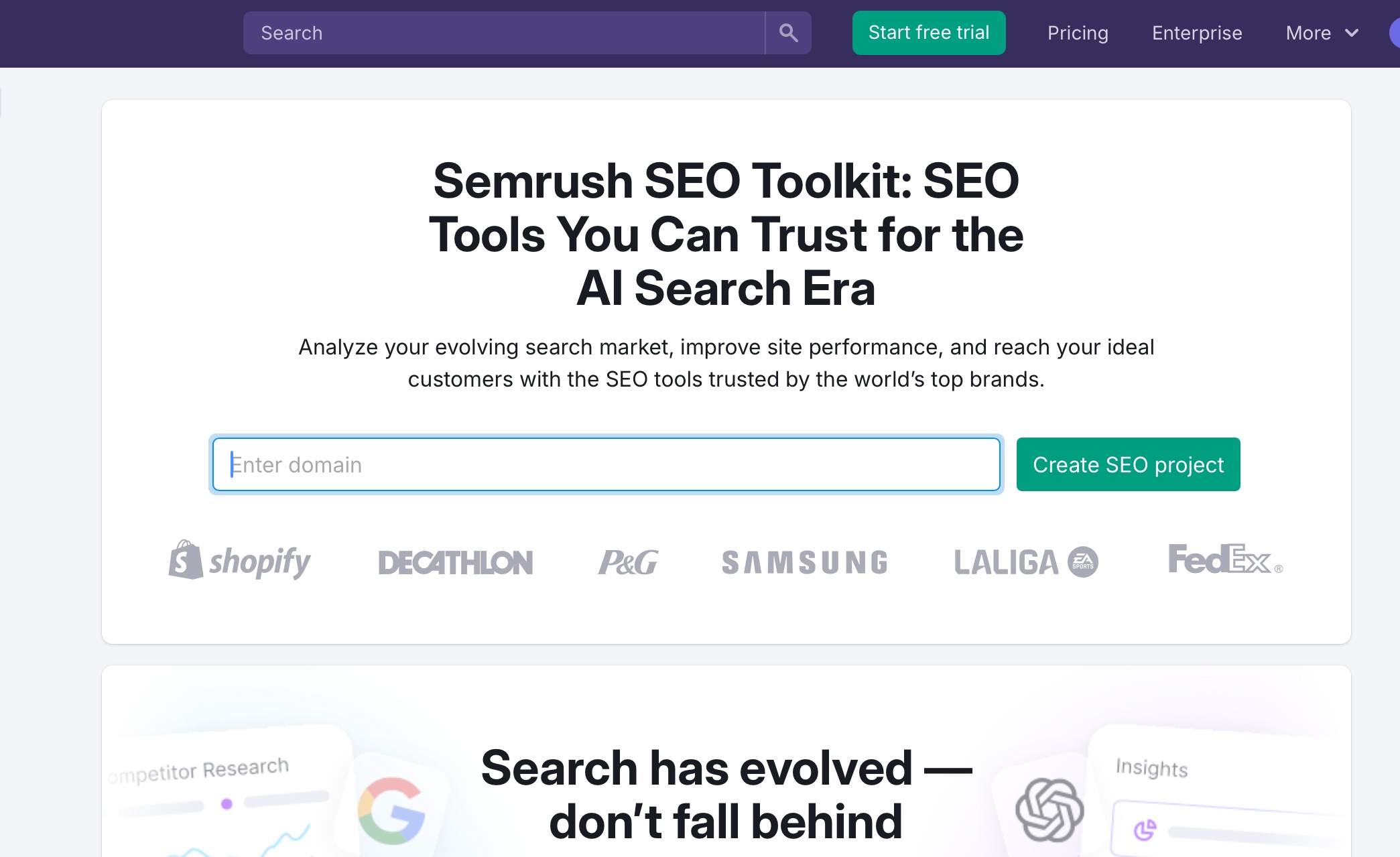
Semrush’s SEO Toolkit covers the core building blocks teams rely on for planning, fixing, and tracking SEO performance. Let’s look at the key features of this toolkit.
Keyword And Topic Research
Keyword research in Semrush is built to help teams choose topics with clear demand and realistic ranking potential.
- Discover and expand keyword opportunities for content planning and growth.
- Evaluate keyword difficulty and SERP intent signals to prioritize realistic targets.
- Build topic clusters to improve topical authority and coverage depth.
Competitive SEO Analysis
Competitive analysis helps you spot what is working in your niche, then translate it into a clearer content and ranking roadmap.
- Benchmark your domain against competitors to understand positioning and share of visibility.
- Identify keyword and content gaps where competitors are winning and you are under-covered.
- Analyze top competitor pages to understand the content formats and angles that perform.
Technical SEO And Site Health
Technical auditing helps teams reduce hidden issues that block crawling, indexing, and consistent performance.
- Audit your site for crawlability, indexability, and common technical issues that hurt rankings.
- Prioritize fixes using issue severity and impact signals, so teams can act faster.
- Monitor recurring site health changes as new pages and updates roll out.
Rank Tracking And SERP Visibility
Rank tracking is most useful when it ties daily movement to actionable decisions, not just static reporting.
- Track keyword rankings across devices and locations for accurate performance monitoring.
- Monitor SERP feature opportunities to capture visibility beyond standard organic results.
- Set up alerts to catch meaningful ranking shifts and competitor movement early.
Link Building And Backlink Management
Backlink workflows are designed to help teams improve authority, protect link quality, and close gaps versus competitors.
- Analyze your backlink profile to understand authority strength and backlink quality.
- Compare backlinks against competitors to identify link gaps and acquisition opportunities.
- Review link risk signals to support cleanup and reputation protection decisions.
Want to strengthen authority and earn better links? Check out our guide on why backlinks still matter more than ever in 2026.
2. AI Visibility Toolkit And GEO Support
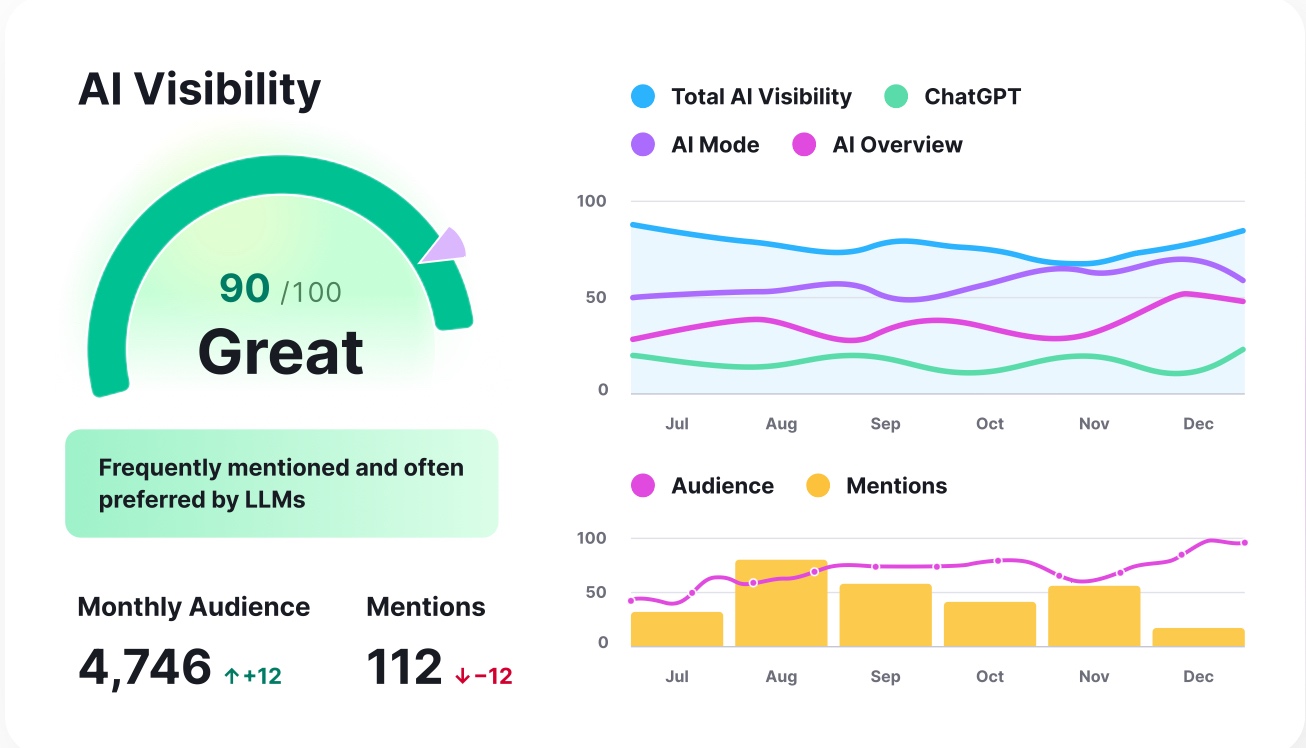
Semrush’s AI visibility layer is built to measure how often your brand appears in AI answers and what might be influencing that presence. Below we’ll look at its core features in detail.
AI Visibility Across Major AI Surfaces
AI visibility tracking helps teams understand where they show up in AI-driven answers, not just where they rank in Google.
- Track how your brand appears across AI-driven search and answer experiences.
- Compare visibility trends against competitors for the same prompt themes and topics.
- Identify which pages or sources are most often associated with your AI mentions.
Prompt Tracking And AI Search Monitoring
Prompt monitoring is helpful when it is treated like rank tracking for AI, with repeatable measurement over time.
- Track a defined prompt set with daily updates to measure AI visibility changes over time.
- Monitor when your brand is mentioned, omitted, or replaced by competitors in AI answers.
- Use prompt-level patterns to prioritize content updates and authority-building efforts.
AI Visibility Reporting And Competitive Benchmarking
AI visibility reporting helps teams quantify progress and spot gaps that traditional keyword tracking might miss.
- Use AI visibility scoring and reporting to quantify progress beyond traditional rankings.
- Surface visibility gaps that indicate missing content coverage or weak authority signals.
- Track changes in brand positioning and narrative as AI platforms evolve.
Curious how Scalenut compares to a specialized AI visibility competitor? Explore our Scalenut vs AthenaHQ guide for a side-by-side verdict.
3. Market And Traffic Intelligence
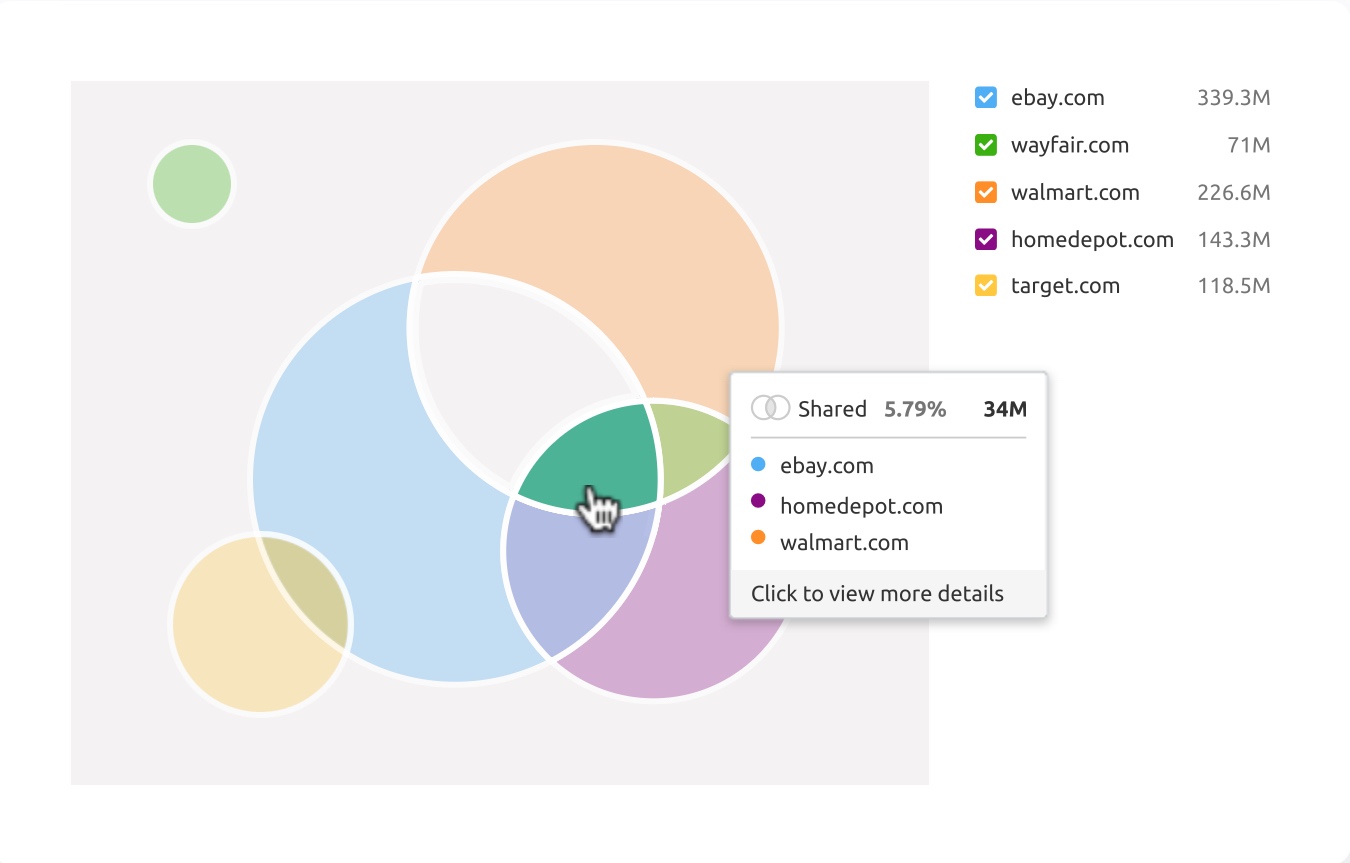
Market and traffic insights help confirm whether visibility is translating into outcomes, not just position changes. Semrush does this through competitor traffic analysis and channel benchmarking.
Market Analysis And Competitive Traffic Insights
Traffic benchmarking helps teams connect SEO priorities to broader channel performance and competitive movement.
- Benchmark estimated traffic and channel mix to understand how competitors grow.
- Identify market trends and audience behavior shifts that affect content and acquisition strategy.
- Compare performance across competitors to validate which opportunities are worth pursuing.
4. Reporting And Operational Workflow
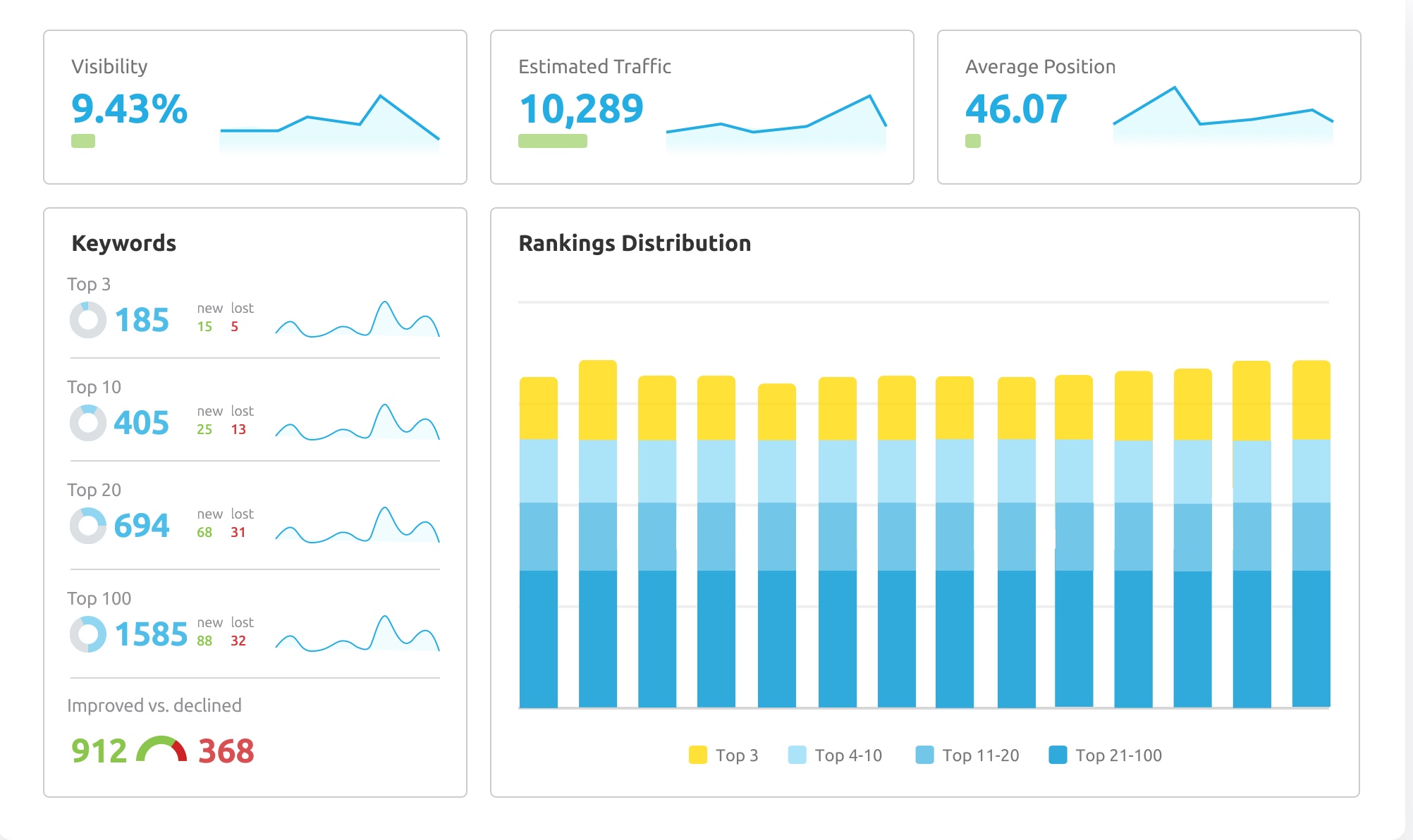
Semrush’s reporting workflows help teams package performance data into clear dashboards, recurring reports, and client-ready updates.
Dashboards And Stakeholder Reporting
Structured reporting helps agencies and teams prove value and communicate progress without manual rollups.
- Build reporting views for performance tracking across SEO and visibility metrics.
- Produce client-ready or leadership-ready reports that support clear decision-making.
- Automate recurring reporting workflows to reduce manual updates and status reporting.
5. Enterprise SEO Capabilities
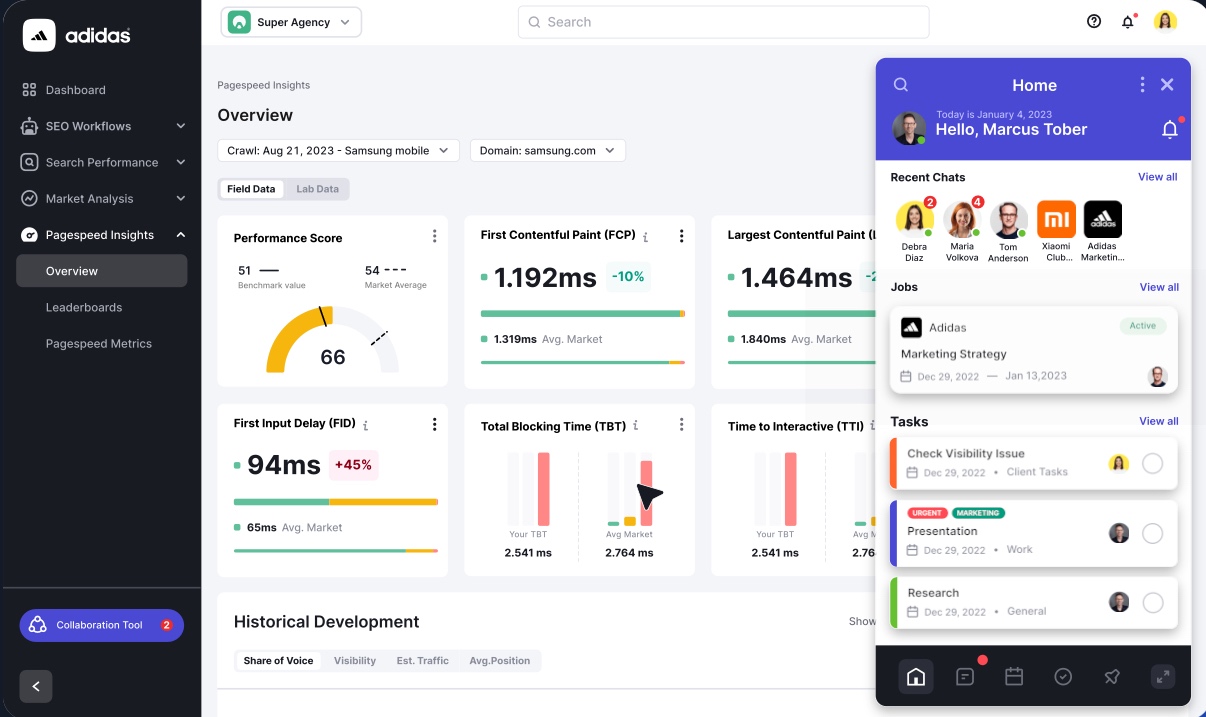
Semrush’s enterprise capabilities are designed for organizations that need standardized SEO workflows across multiple domains, regions, and team members.
Scalable Workflows For Larger Teams
Large-scale SEO coordination becomes easier when projects, reporting, and standards stay consistent across teams.
- Support multi-site and multi-team workflows with structured projects and reporting.
- Enable standardization across regions, brands, and stakeholders for consistent execution.
- Provide enterprise-level visibility into performance, priorities, and outcomes.
6. Additional Semrush Toolkits Beyond Semrush One
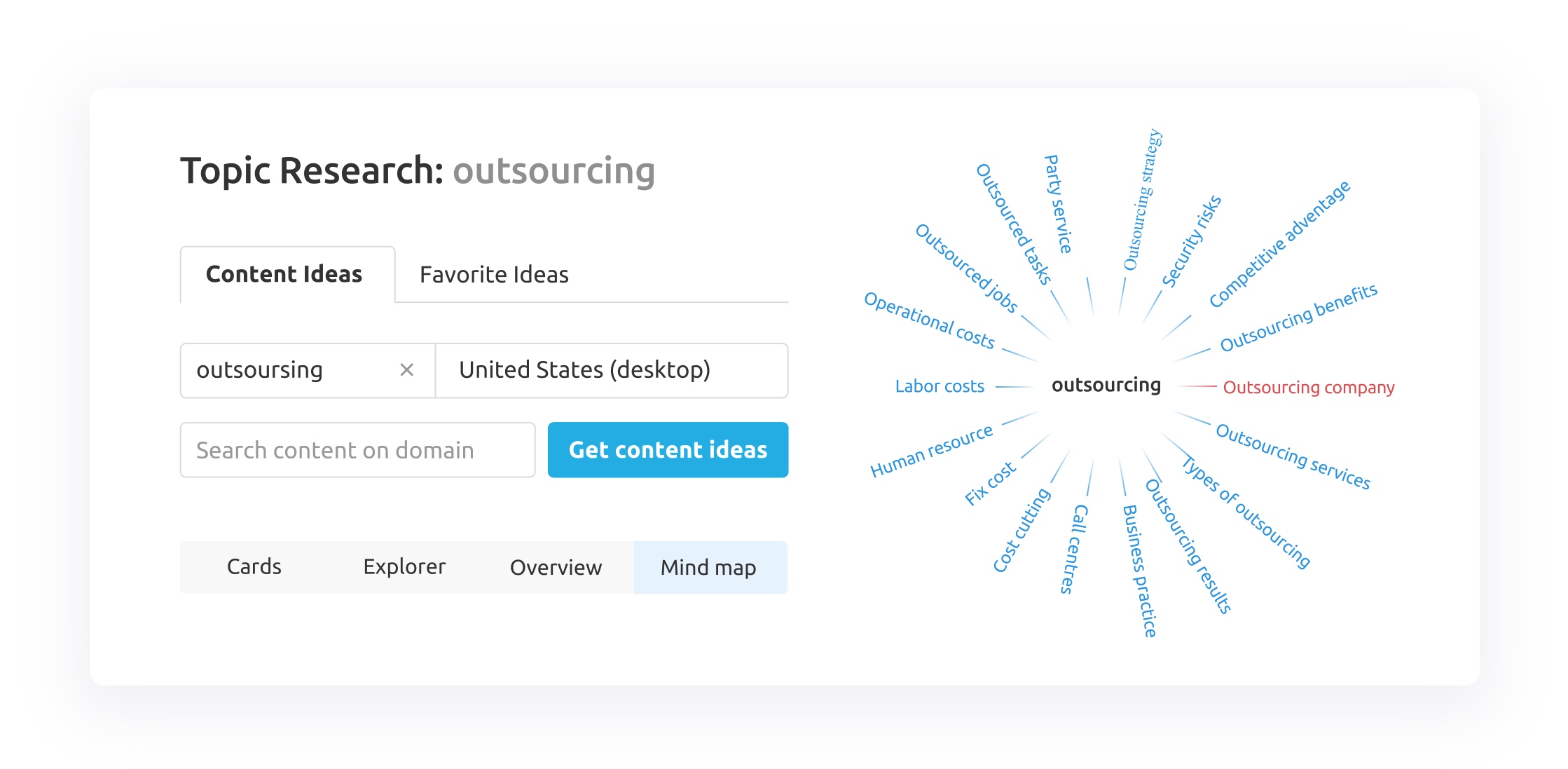
These add-on toolkits extend Semrush beyond core SEO and AI visibility into broader marketing execution.
Content Marketing Toolkit
Content workflows are strongest when research, optimization, and refresh priorities connect back to measurable performance.
- Support content planning, creation, and optimization workflows guided by SEO data.
- Improve on-page readiness with recommendations tied to search intent and SERP expectations.
- Identify content refresh opportunities to maintain rankings and visibility over time.
Local SEO Toolkit
Local visibility improves fastest when listings, reviews, and map rankings are managed as a single system.
- Manage local visibility signals across listings, maps, and reputation management with Semrush SEO tool.
- Track local performance across geographic areas to understand real-world discoverability.
- Monitor and respond to reviews as part of ongoing local trust-building.
Social Media Toolkit
Social workflows work better when planning, publishing, and analysis live inside one repeatable process.
- Plan and schedule content across social channels with a unified calendar workflow.
- Track performance metrics to understand which posts and topics drive engagement.
- Maintain consistent publishing operations without switching between multiple tools.
Advertising Toolkit
Paid strategy becomes more efficient when keyword demand and competitor behavior guide campaign structure.
- Research paid search strategy using competitive insights and keyword signals.
- Build and refine campaigns with structured planning and optimization workflows.
- Validate paid opportunities alongside organic priorities to improve overall ROI.
AI PR Toolkit
PR initiatives are easier to scale when outreach, coverage, and authority impact are tracked in one place.
- Support PR workflows aimed at earning credible coverage and brand mentions.
- Track outreach and coverage outcomes to connect PR activity with visibility.
- Strengthen authority signals that can influence both search and AI discovery.
App Center And Extensibility
Platform extensibility is useful when teams want to add capabilities without rebuilding their stack from scratch.
- Extend Semrush capabilities through additional apps under one platform.
- Customize your stack based on your team’s workflows and marketing priorities.
- Reduce tool sprawl by centralizing add-ons within the same environment.
What Are Real Users Saying?
“What I dislike most is the high cost and the steep learning curve. The interface can be overwhelming for beginners, and a lot of essential features—such as historical data or AI writing—are locked behind expensive add-ons or higher-tier plans. On top of that, the traffic estimates for smaller websites can sometimes be inaccurate, which makes it harder to rely on the data with confidence.” says Andrea C on G2
Many users consistently highlight Semrush’s comprehensive SEO insights, especially for keyword research, Semrush competitor analysis, and overall optimization workflows. The platform is frequently praised for consolidating multiple SEO functions into one interface, which helps streamline research, tracking, and reporting without switching between tools.
At the same time, recurring feedback centers around pricing concerns and learning curve challenges. While users appreciate the depth of features, smaller businesses and solo operators often mention that the cost can feel high, and new users may need time to fully understand and leverage the platform’s extensive capabilities.
What Are The Different Semrush Pricing Plans And What Features Do They Include?
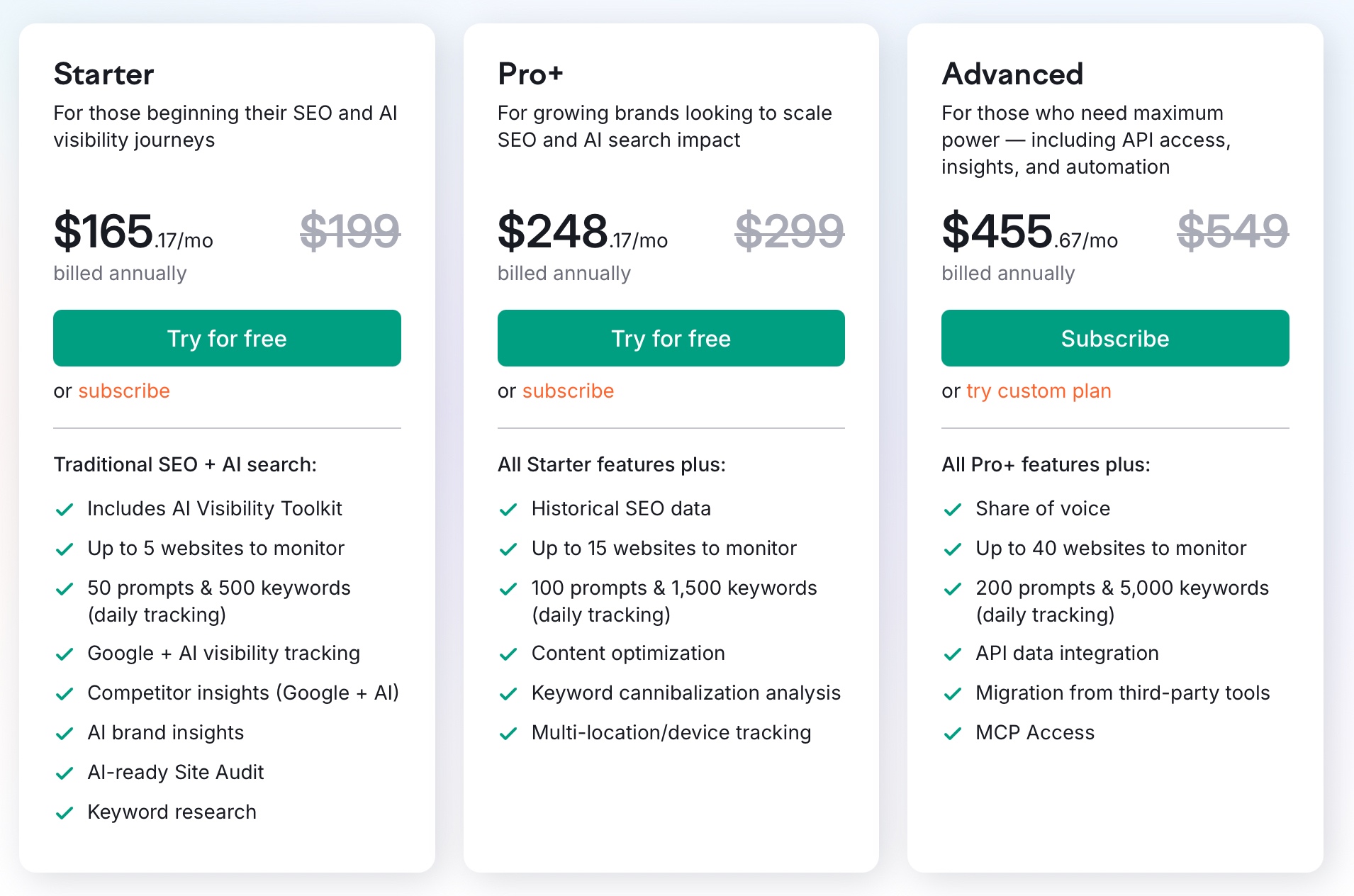
Semrush is positioned at a premium price point, which can feel steep for solo creators, startups, or smaller teams that do not need its full research and reporting depth. While the platform delivers significant value for serious SEO operations, the monthly Semrush cost may be a barrier for businesses with tighter budgets.
Although Semrush does not provide a free plan, it does offer a 7-day free trial, which allows you to test its core capabilities before committing.
What Are The Pros And Cons Of Semrush?
Where Does Semrush Deliver The Most Value?
- All-in-one SEO and marketing that combines Semrush keyword research, competitive analysis, technical audits, and reporting in one environment.
- Strong competitive intelligence that helps you understand exactly what drives traffic and rankings for competitors.
- Deep keyword database with filtering options that support advanced research and topic planning.
- Robust technical SEO auditing that prioritizes issues and supports long-term site health.
- Daily rank tracking across devices and locations for accurate performance monitoring.
- Integrated AI visibility tracking that measures brand presence across major AI search experiences.
- Scalable reporting and dashboards that support agencies and multi-site teams.
- Enterprise-ready workflows that allow structured collaboration and campaign management.
Where Does Semrush Fall Short?
- Can feel complex and overwhelming for beginners or small teams due to the number of tools and modules.
- Higher pricing compared to content-focused platforms, especially if you only need AI visibility and content optimization.
- Content creation workflows are more modular and less streamlined compared to GEO-first content engines.
- AI visibility features are layered onto the SEO stack rather than being the primary workflow driver.
- May be more than necessary for solo creators who primarily want fast content production and optimization.
- Requires time to fully leverage competitive and reporting features effectively.
Is Semrush The Right Platform For Your Workflow?
Who Will Get The Most Out Of Semrush?
- In-house SEO teams managing keyword research, technical audits, competitive tracking, and reporting in one system.
- Agencies handling multiple client websites that need structured reporting and benchmarking workflows.
- Brands that rely heavily on competitor intelligence to guide content and acquisition strategy.
- Marketing teams balancing SEO, paid search, and local visibility within one ecosystem.
- Organizations with dedicated SEO analysts who actively interpret data and act on insights.
- Businesses scaling across multiple markets or locations that require daily rank tracking and structured monitoring.
When Is Semrush Not The Right Fit?
- Solo creators focused primarily on content velocity rather than deep research and monitoring.
- Lean teams without dedicated SEO bandwidth to interpret complex data sets.
- Businesses prioritizing GEO-first content execution over traditional SEO infrastructure.
- Teams seeking a simpler, content-centered platform instead of a broad marketing suite.
- Startups looking for a lower-cost entry point without enterprise reporting and technical depth.
- Content teams wanting a direct create-to-optimize workflow without navigating multiple tool modules.
Why Scalenut Is A Smarter Semrush Alternative For Smaller Teams?
For smaller teams and solopreneurs, the biggest constraint is usually execution capacity, not access to large volumes of data. Scalenut is designed around a focused create-to-optimize workflow, where topic planning, content generation, optimization, and internal linking sit within one streamlined system.
Instead of navigating multiple modules, lean operators can move from brief to publish-ready content faster and with fewer handoffs. Cost and operational simplicity also play a major role. While Semrush delivers broad research depth and enterprise-grade monitoring, many small businesses and solo founders do not require that full SEO infrastructure.
As a Semrush alternative, Scalenut centers on GEO-driven content production and AI visibility execution, which can translate into quicker ROI for teams prioritizing content velocity and practical outcomes over expansive competitive intelligence.
Want a deeper look at Scalenut’s capabilities and real-world fit? Read our Scalenut Review to see if this GEO and SEO tool can boost visibility.
What Are Scalenut’s Core GEO And SEO Capabilities?
Scalenut combines AI visibility tracking with hands-on SEO execution inside one focused platform. Rather than stopping at surface-level content generation, it connects AI discovery insights directly to optimization steps, so teams know exactly what to improve next and why it matters.
How Does Scalenut Improve GEO And AI Visibility?
Scalenut’s GEO layer centers on measuring how a brand appears inside AI-generated answers across platforms like ChatGPT, Gemini, and Perplexity, then translating that visibility into practical actions.
AI Visibility Metrics And Brand Signals
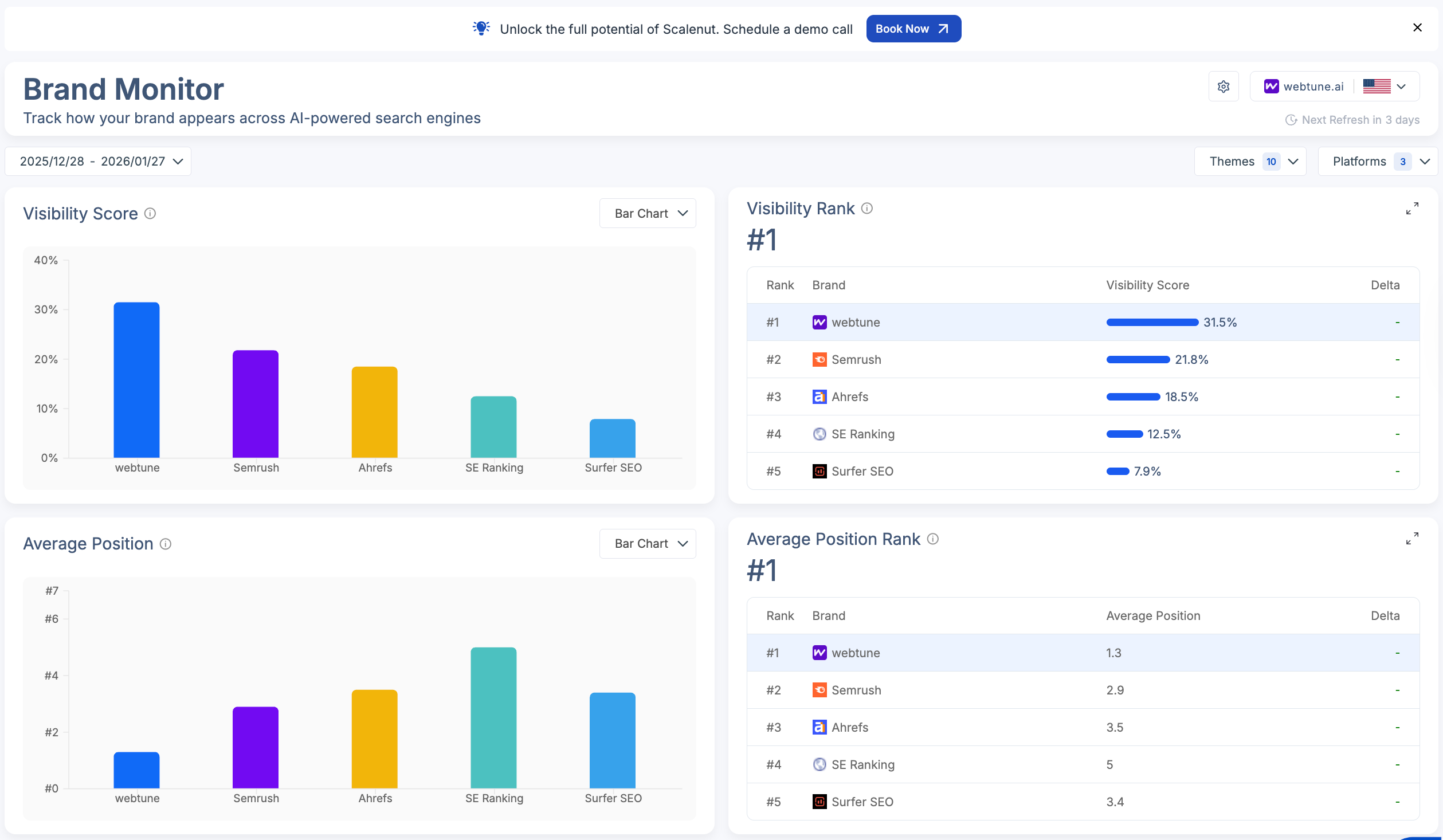
These visibility metrics help you quantify presence in AI answers, then benchmark that presence against competitors and platforms.
- Visibility Score provides a quick benchmark of how often your brand appears compared to competitors.
- Average Position indicates how prominently your brand is placed within AI-generated responses.
- Share Of Voice measures how much of the AI answer space your brand captures relative to others.
- Visibility Heatmap breaks down performance by platform to highlight strengths and gaps.
- Brand Visibility Rank consolidates multiple visibility signals into one benchmark across prompts and themes.
Prompt-Level Insights And Competitive Context
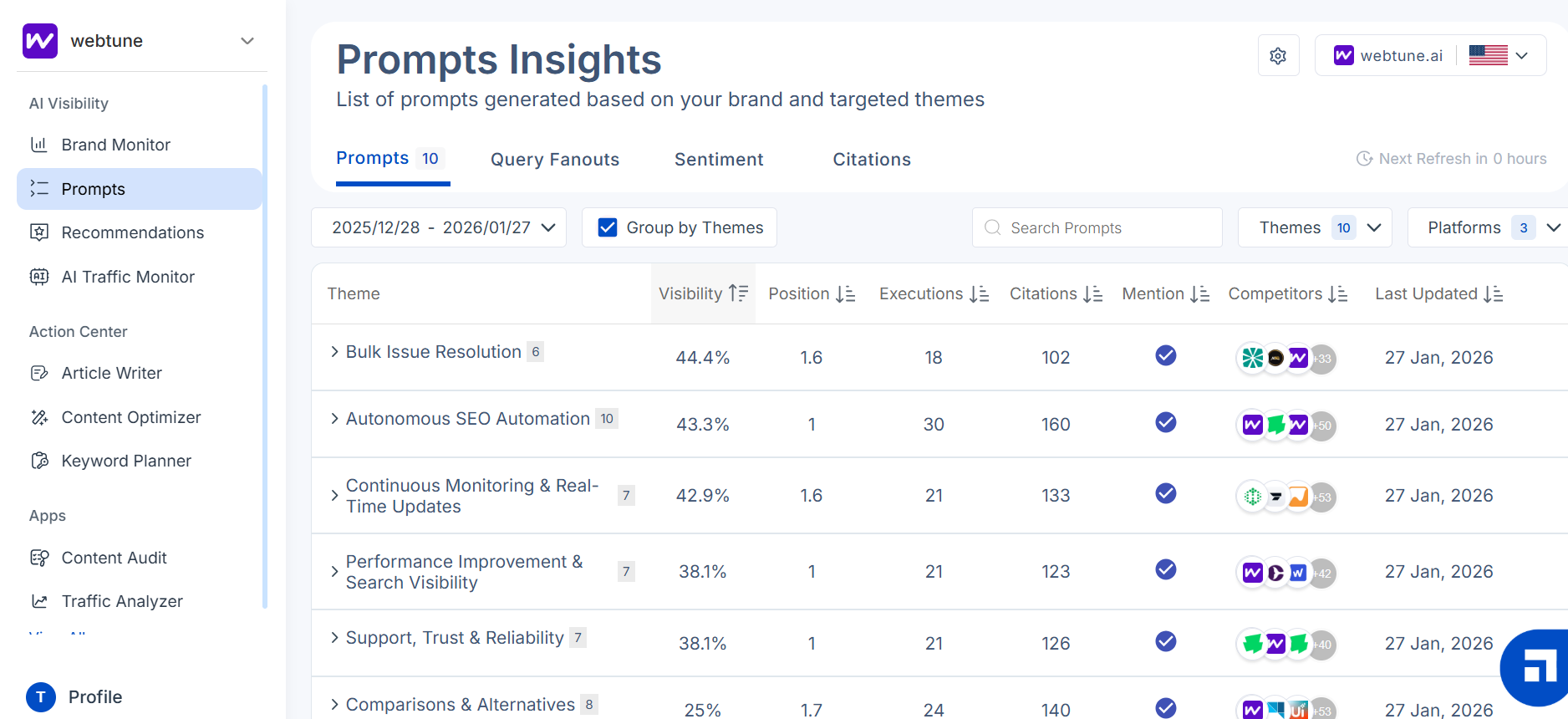
Prompt-level insights show which questions trigger brand mentions, what sources support them, and where competitors appear instead.
- Prompt Tracking identifies the exact queries where your brand is mentioned and how it ranks within responses.
- Citation Tracking reveals which sources AI systems rely on when generating answers.
- Competitor Visibility Insights show which brands frequently appear alongside or instead of yours.
- Query Fanouts map how one question expands into related follow-up queries within AI experiences.
- Sentiment Analysis categorizes mentions by tone, helping teams separate positive visibility from neutral or negative exposure.
GEO Recommendations That Drive Action
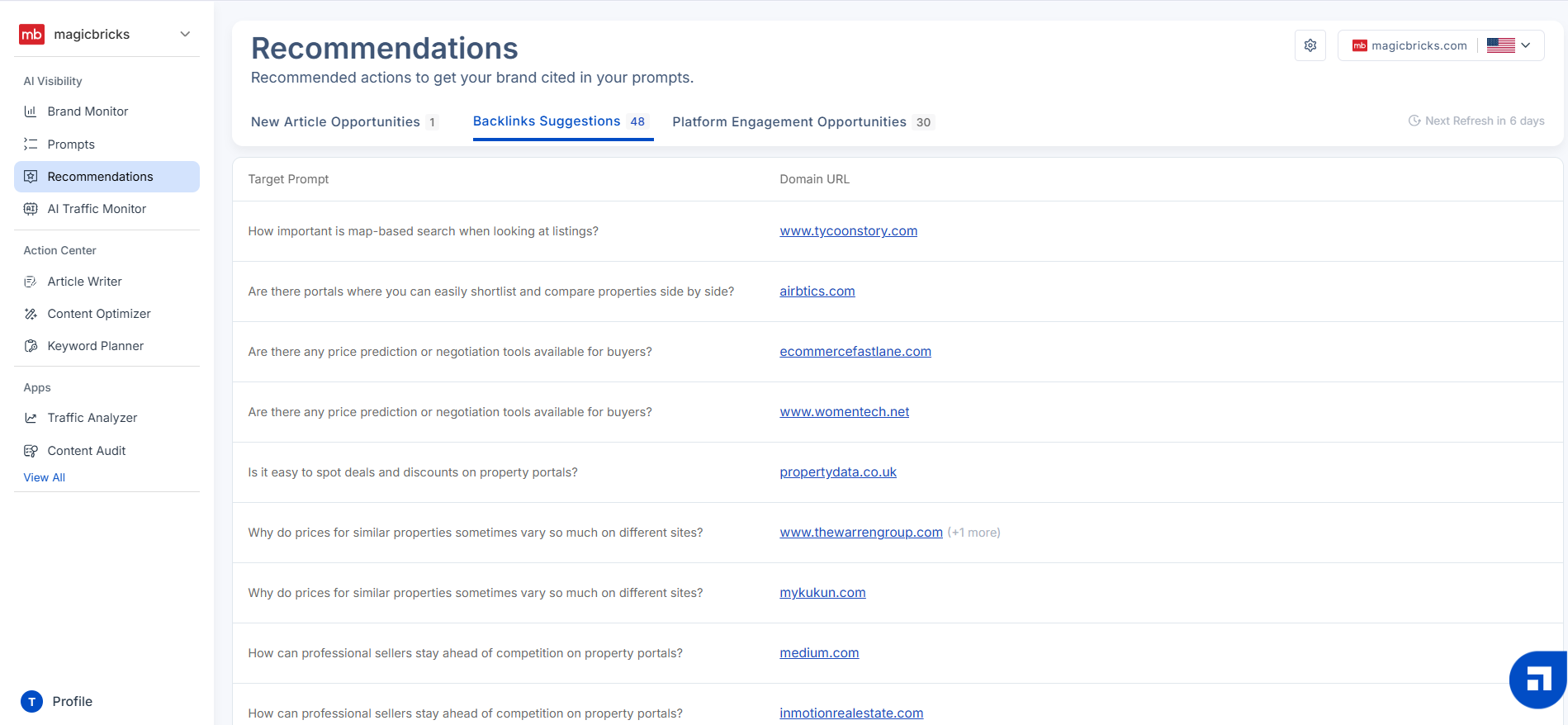
These recommendations convert visibility insights into content, authority, and engagement tasks you can execute immediately.
- AI-Led Content Ideas convert AI-driven questions into strategic content opportunities.
- Authority And Backlink Suggestions highlight credibility improvements that may strengthen AI visibility.
- Platform Engagement Opportunities surface communities and threads where brand presence can grow.
- Action Paths outline structured next steps so insights move beyond dashboards and into execution.
New to GEO and not sure where to start? Learn the basics with our beginner-friendly guide to mastering GEO SEO strategies in 2026.
AI Traffic And LLM Interaction Signals
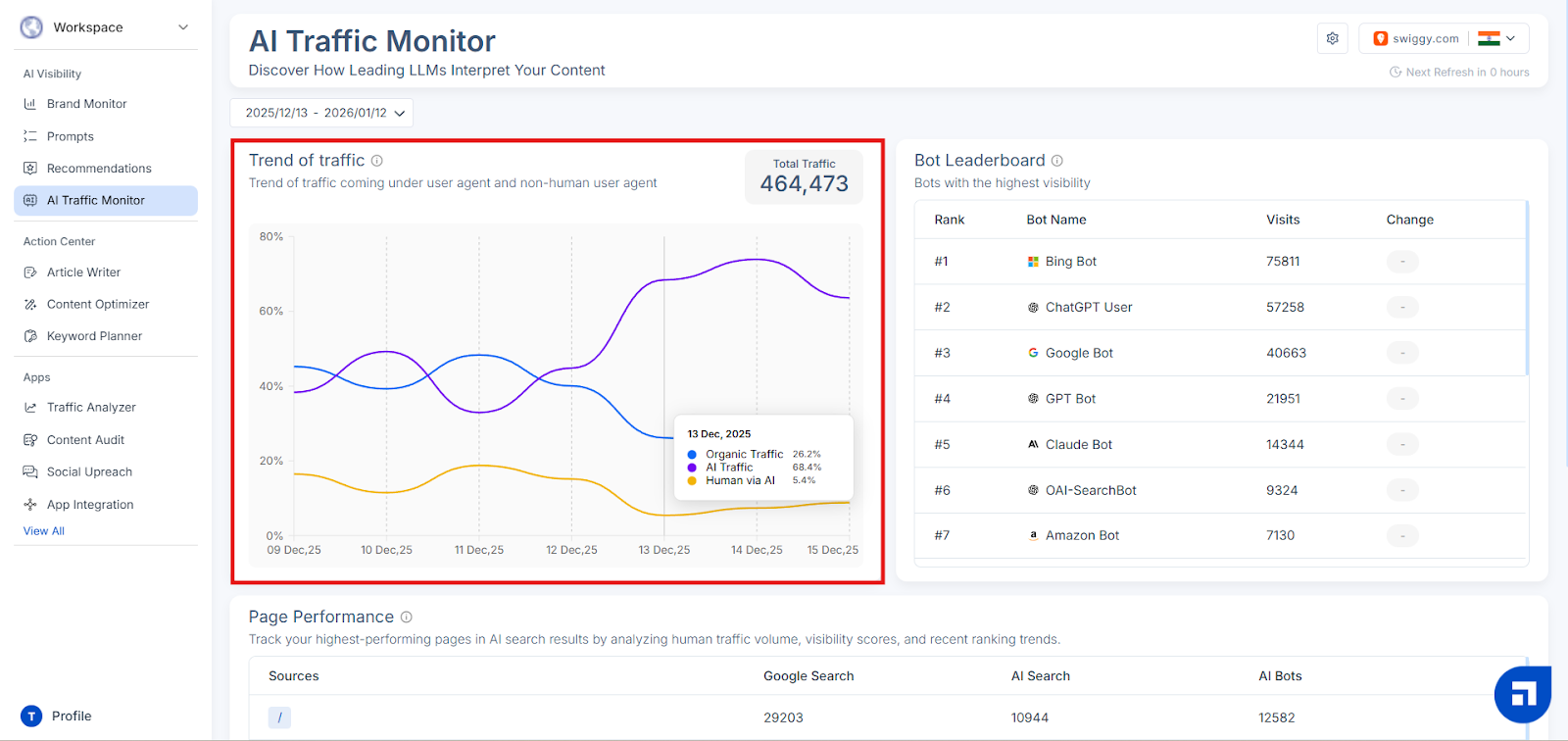
Traffic signals help you see whether AI systems are discovering, referencing, and interacting with your site more often over time.
- AI Bot Tracking identifies visits attributed to AI assistants and AI search systems.
- Cloudflare Integration enhances tracking depth for sites operating on Cloudflare.
- Top AI Sources reveal which AI agents most frequently interact with your content.
- Most Referenced Pages highlight which pages AI systems appear to rely on most often.
- AI Traffic Trends help teams monitor whether AI-driven searches and visits are increasing, stabilizing, or declining.
How Does Scalenut Support SEO And Content Execution?
In addition to GEO tracking, Scalenut includes a structured SEO workflow that supports planning, drafting, optimizing, and scaling content with clear guidance at each stage.
Content Creation And Optimization
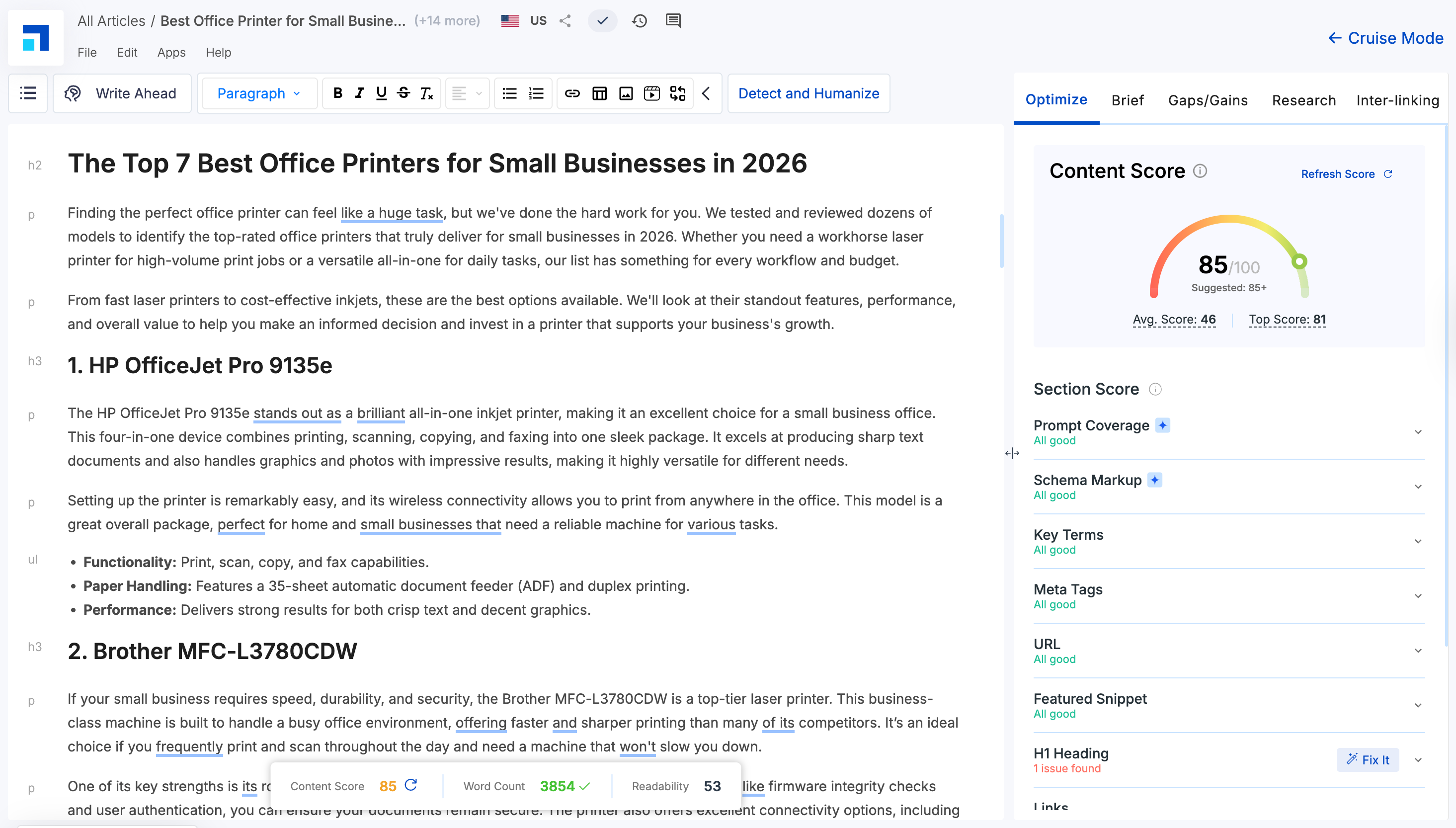
These tools focus on moving faster from topic to draft to optimization, while keeping content aligned with SEO and readability standards.
- Cruise Mode guides outlining and drafting using SERP-informed structure, with GEO insights layered in.
- Content Optimizer identifies on-page improvements to strengthen performance signals.
- AI Humanizer refines AI-generated text to improve readability and natural flow.
- Content Scoring evaluates intent alignment, depth, structure, and keyword usage.
SEO Research And Content Planning
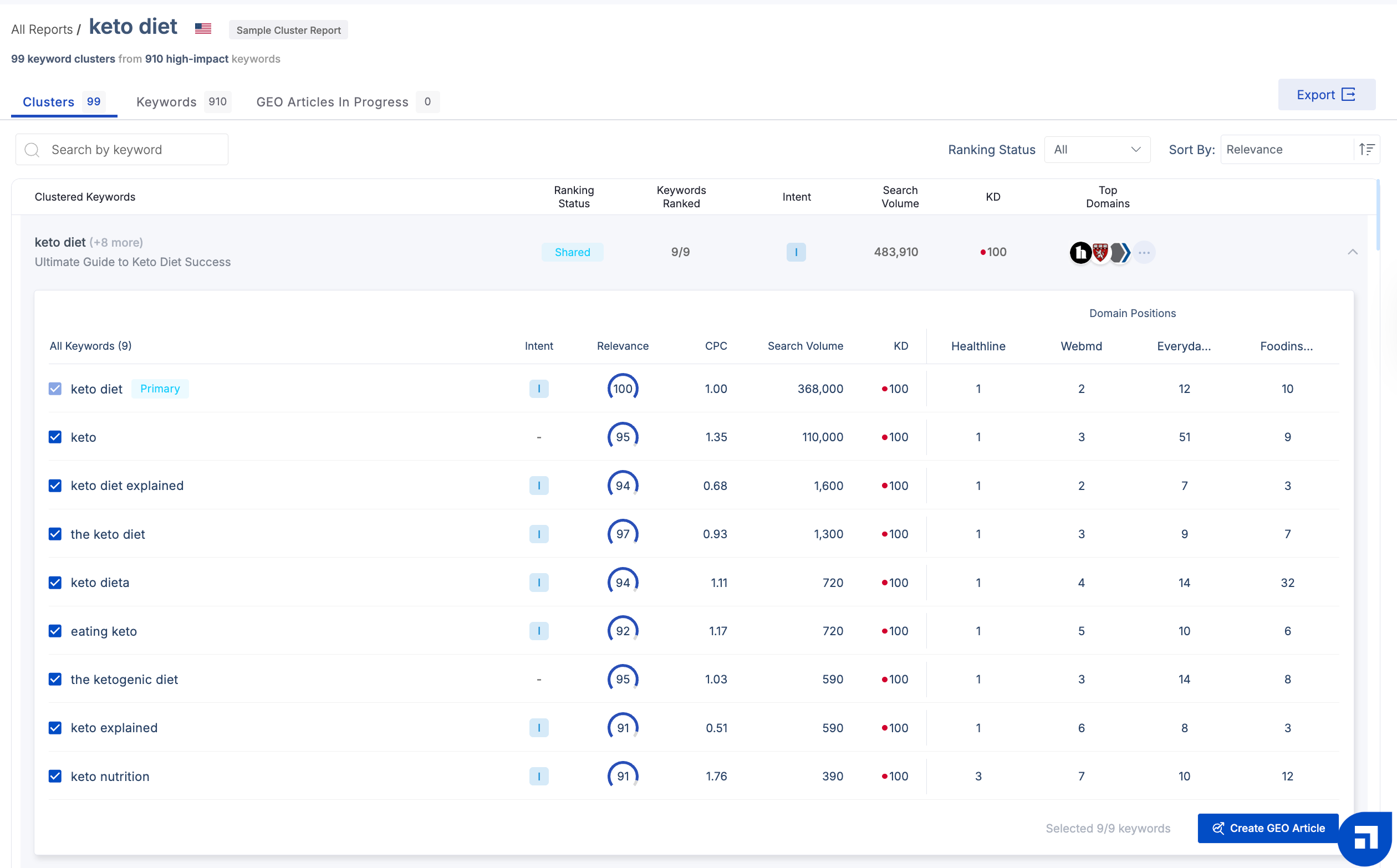
Planning tools help teams build clusters, prioritize opportunities, and refresh older pages with a more systematic content roadmap.
- Keyword Planner groups keywords into intent-based clusters for organized content strategy.
- Competitor Coverage Analysis shows how competing pages structure and approach the same topic.
- Traffic Analyzer highlights high-performing pages and potential quick-win opportunities.
- Content Audit flags pages that may need updating, consolidation, or deeper optimization.
Technical And Linking Support
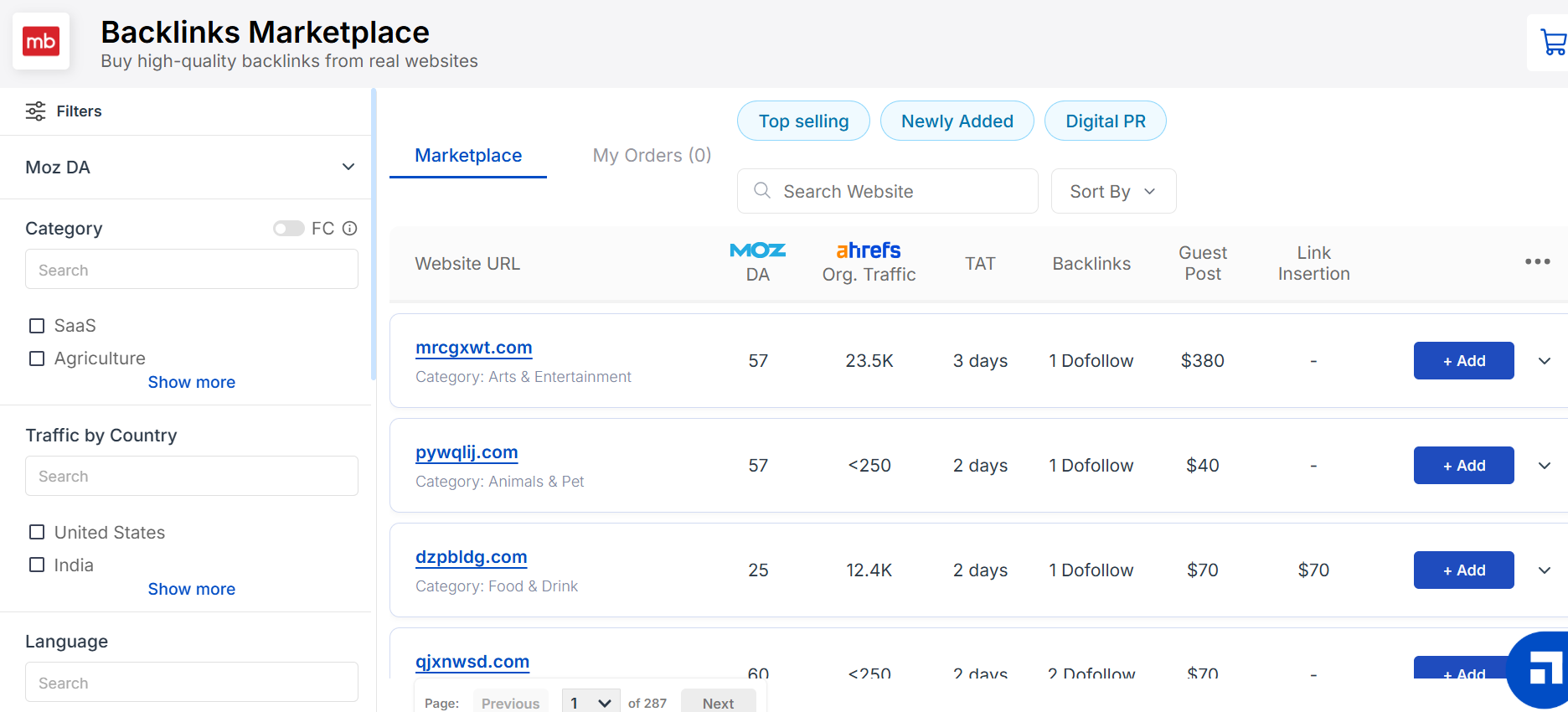
Site structure tools support stronger internal linking and on-page packaging, which helps both crawlers and readers navigate content better.
- Link Manager supports internal linking workflows to strengthen site architecture.
- On-Page Pro benchmarks titles and descriptions against current SERP patterns.
- Backlinks Marketplace offers access to backlink acquisition opportunities through a marketplace model.
Why Scalenut Is The Better Fit For AI-Driven SEO Growth?
If my primary goal is to grow through content and improve visibility inside AI-generated answers, I would choose Scalenut for its tighter execution loop. The platform connects AI visibility insights directly to content planning, optimization, and internal linking, which makes it easier to move from data to action without navigating multiple tool layers. For teams focused on scaling topical authority and improving GEO performance, that clarity can accelerate results.
“I like that Scalenut is extremely user-friendly and affordable. It's a scalable way of generating customized content that's searchable and discoverable by Google and AI engines. I appreciate that it actually works, giving me the ability to drive organic traffic to my website without solely relying on a website team.” says Clayton S. on G2
I would also choose Scalenut when efficiency matters more than infrastructure. While Semrush excels as a broad SEO operating system, Scalenut concentrates on what directly drives modern discovery, content quality, structured coverage, and AI visibility signals. For workflows centered on publishing, refreshing, and strengthening content consistently, Scalenut aligns more naturally with day-to-day execution priorities.
Ready to see how Scalenut can improve your AI visibility and content performance? Book a demo today!
Frequently Asked Questions
Can you upgrade or downgrade your Semrush plan easily?
Yes. Semrush lets you change tiers based on your base plan and current usage, so you can scale up during busy months and scale down when needs stabilize. I recommend reviewing tracked projects and limits first to avoid interruptions tied to your specific needs.
Is Semrush worth the cost?
Semrush can be worth it when your core SEO workflow depends on deep research, auditing, and reporting across multiple sites. If your priority is faster content execution and AI visibility actions, Scalenut may deliver better ROI for lean SEO efforts.
What is your review of Semrush?
My review is that Semrush is a powerful, data-rich platform with strong competitive research and reporting depth. It is especially effective for teams improving SEO performance over time, but it requires consistent use to fully benefit from its breadth.
Moz vs Semrush vs Ahrefs: which is better for GEO?
For GEO, I look for visibility measurement across AI answers plus content actions that improve presence. Semrush is strong on research and monitoring, while Ahrefs and Moz lean more traditional. Scalenut stands out by connecting GEO execution to content workflow.
Are there cheaper alternatives to Semrush that offer similar features?
Yes, there are cheaper Semrush competitors, but “similar” depends on what you value most. If you mainly want content marketing tools and AI visibility execution, Scalenut is often a more budget-friendly option than an all-in-one suite.
Ahrefs vs SpyFu vs Semrush: which is best for AI visibility?
Semrush is the most direct choice here because it offers AI visibility tracking alongside standard SEO workflows. Ahrefs and SpyFu are stronger for link and PPC intelligence. If you want a GEO-first content path, Scalenut can be a practical complement.
SE Ranking vs Semrush: which is better?
SE Ranking can be a simpler fit for smaller teams focused on rank tracking and basics, while Semrush is stronger for Semrush SEO competitor analysis and broader workflows. If you need integrated content production plus optimization, Scalenut can be more execution-focused.
How does Semrush's pricing compare with similar competitor analysis tools?
Semrush typically sits at a premium tier due to breadth, with advanced features and data access across multiple modules. Some tools cost less but offer narrower scope. If you need enterprise-level support, Semrush also offers custom pricing for larger requirements.
Are there any free trials or demo versions available for Semrush?
Semrush commonly offers a limited trial period, which is useful for validating workflows before you commit. Use the trial period to test reporting, audits, and workflows tied to organic search. If you want content-centric testing, Scalenut also offers trials.
What are the different Semrush pricing plans and what features do they include?
Plans differ by limits and access, including the semrush pro plan for growing teams and a higher business plan for larger scale. Each tier adjusts keyword tracking, project capacity, reporting depth, and access to core SEO features and tools that support stronger search results and online presence.


.svg)


.webp)