
.jpg)
Writesonic Review: Is It Worth It For SEO And GEO In 2026?

Key Highlights
- Writesonic combines SEO execution with GEO tracking, helping teams connect AI visibility insights to content and optimization tasks.
- Its multi-platform AI visibility features focus on prompts, citations, sentiment, and share of voice, not only traditional rankings.
- The Action Center adds structure by turning visibility gaps into prioritized fixes, though it can feel heavy for lean publishing workflows.
- Prompt Explorer supports AI-native topic research by surfacing real prompts and demand signals to guide content planning.
- AI Article Writer and related workflows help content teams produce structured drafts faster, but strong editorial control is still essential.
- Server-side AI Traffic Analytics can improve attribution for AI-driven visits, but setup may require technical support.
- Writesonic pricing is tiered with free trials on all plans and a 7-day full refund, yet there is no free plan.
- Scalenut can be the stronger choice when you want easier entry into AI visibility tracking and a more execution-first workflow.
AI visibility has become the new blind spot in content marketing. It is frustrating to publish a well-optimized page, see it rank, and still watch competitors get cited in ChatGPT, Google AI Overviews, and Perplexity while your brand barely shows up.
That gap is exactly why platforms like Writesonic are getting attention. Writesonic positions itself as an AI-powered SEO and GEO platform that combines content production with AI visibility tracking, aiming to show where your brand appears in AI answers and what you can do to improve it.
In this Writesonic review, I will cover what the platform includes, how its core features support SEO and AI visibility, what real users say, and how pricing, trials, and refunds work. I will also explain who it fits best, where it can fall short in day-to-day workflows, and what would be the best Writesonic alternative for execution-focused AI visibility.
What Is Writesonic?
Writesonic is an AI-powered platform that combines content creation with SEO and GEO capabilities, aiming to help teams produce optimized content while tracking how their brand appears in AI-generated answers. It is positioned as a unified workspace that connects research, writing, optimization, and visibility monitoring in one place.
In practice, it can help streamline content production, support on-page improvements, and surface AI visibility signals like prompts, citations, and brand mentions across answer engines. The real consideration is whether a single platform with layered workflows matches the way your team operates, or whether a more focused setup would deliver faster wins with less overhead.
What Are Writesonic’s Best Features For SEO Teams?
Writesonic brings GEO visibility tracking and SEO execution into one platform, so you can move from “how visible are we in AI answers?” to “what should I optimize next?” without stitching together multiple tools.
Let’s look at the core Writesonic features that shape both SEO and GEO strategies.
AI Search Visibility Tracking (GEO)
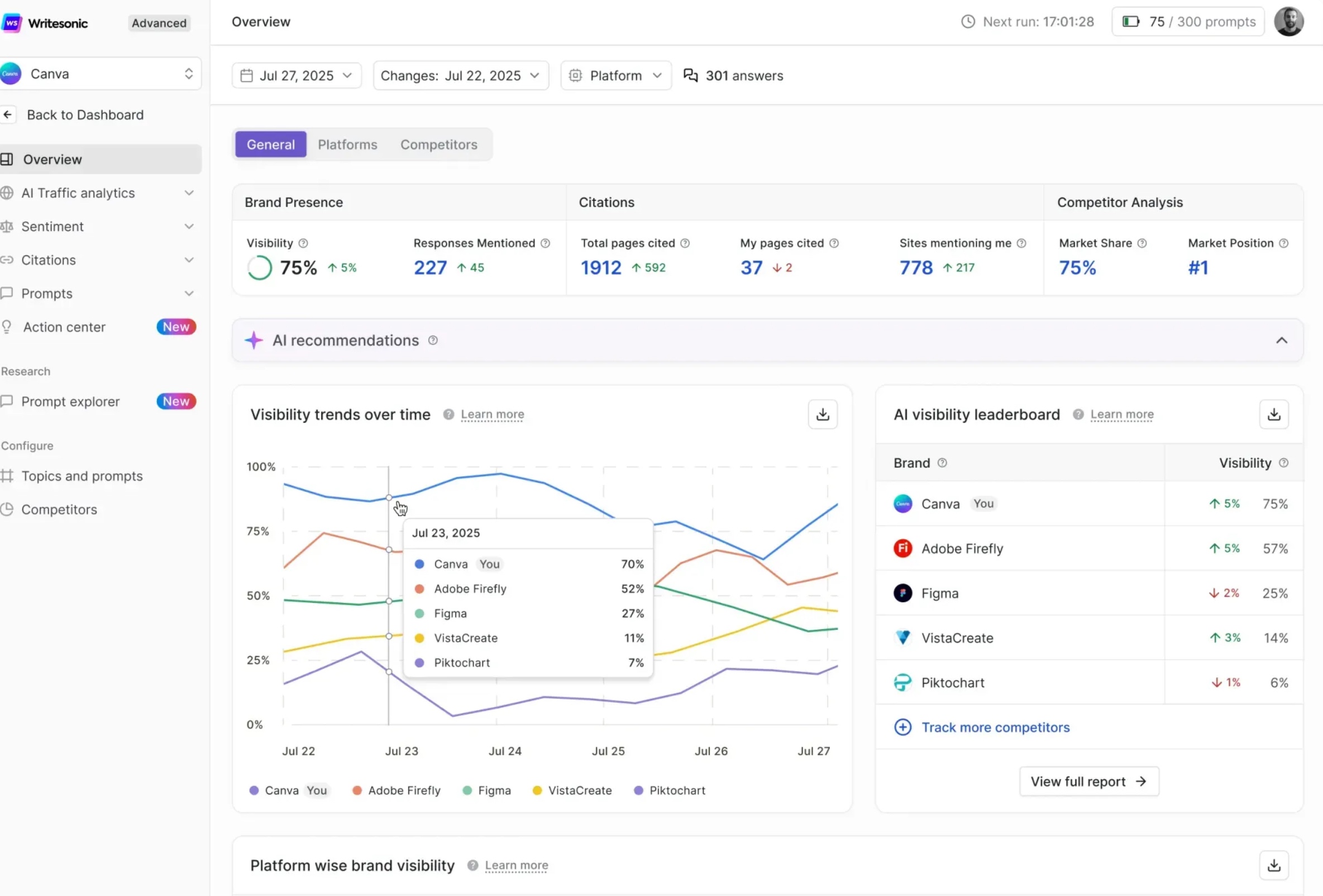
This is Writesonic’s core value for AI visibility because it focuses on where and how your brand shows up inside AI-generated answers, not just classic rankings.
Multi-Platform AI Visibility Monitoring
It is useful when you need a consolidated view of AI presence, but it is less essential if you are not actively measuring AI citations and share of voice yet.
- Tracks brand visibility across AI platforms that Writesonic lists, including ChatGPT, Gemini, Perplexity, and Google AI Overviews.
- Surfaces visibility signals like citations, sentiment, share of voice, and mentions, which matter more than raw impressions when the goal is attribution and trust.
- Helps benchmark visibility against competitors, which is valuable for category-level monitoring, even if you are not doing daily prompt tuning.
AI Visibility Actions (Optimization Workflows)
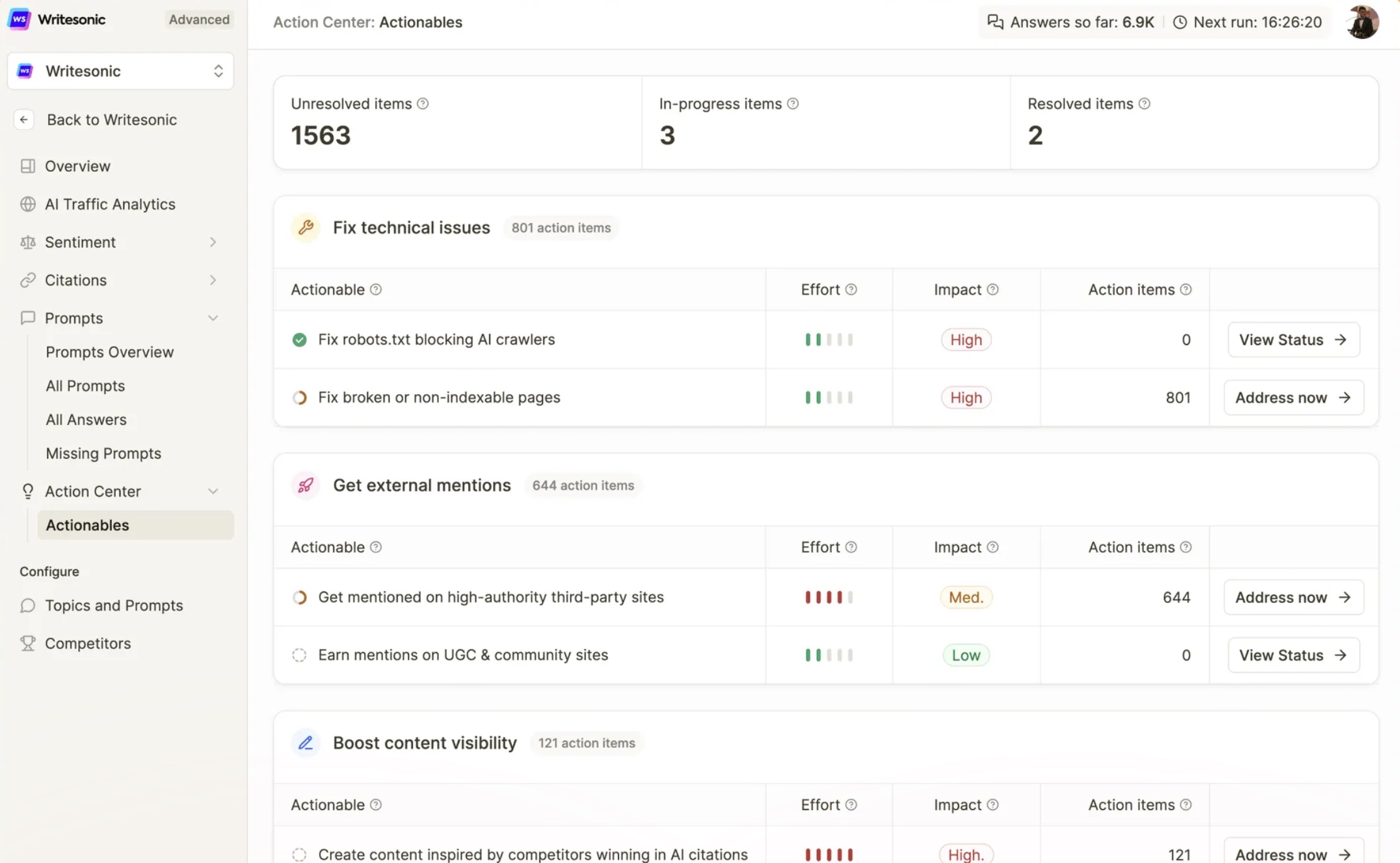
Writesonic does not stop at reporting. It tries to push you into execution through a structured action layer, which is helpful if you want more direction on what to fix next.
Action Center That Turns Gaps Into Fixes
This is great for teams that like a prioritized queue. If you are a solo marketer, it can sometimes feel like another backlog unless the actions map cleanly to your weekly publishing rhythm.
- Organizes actionables into buckets like technical issues, external mentions, and content visibility, so tasks are not mixed into one long list.
- Prioritizes items using an effort vs impact framing, which can speed up decision-making for content and SEO teams.
- Guides execution with step-based workflows, which is useful when you want repeatability, but can be less appealing if you prefer lighter, more flexible execution.
Prompt Explorer And AI Search Volume
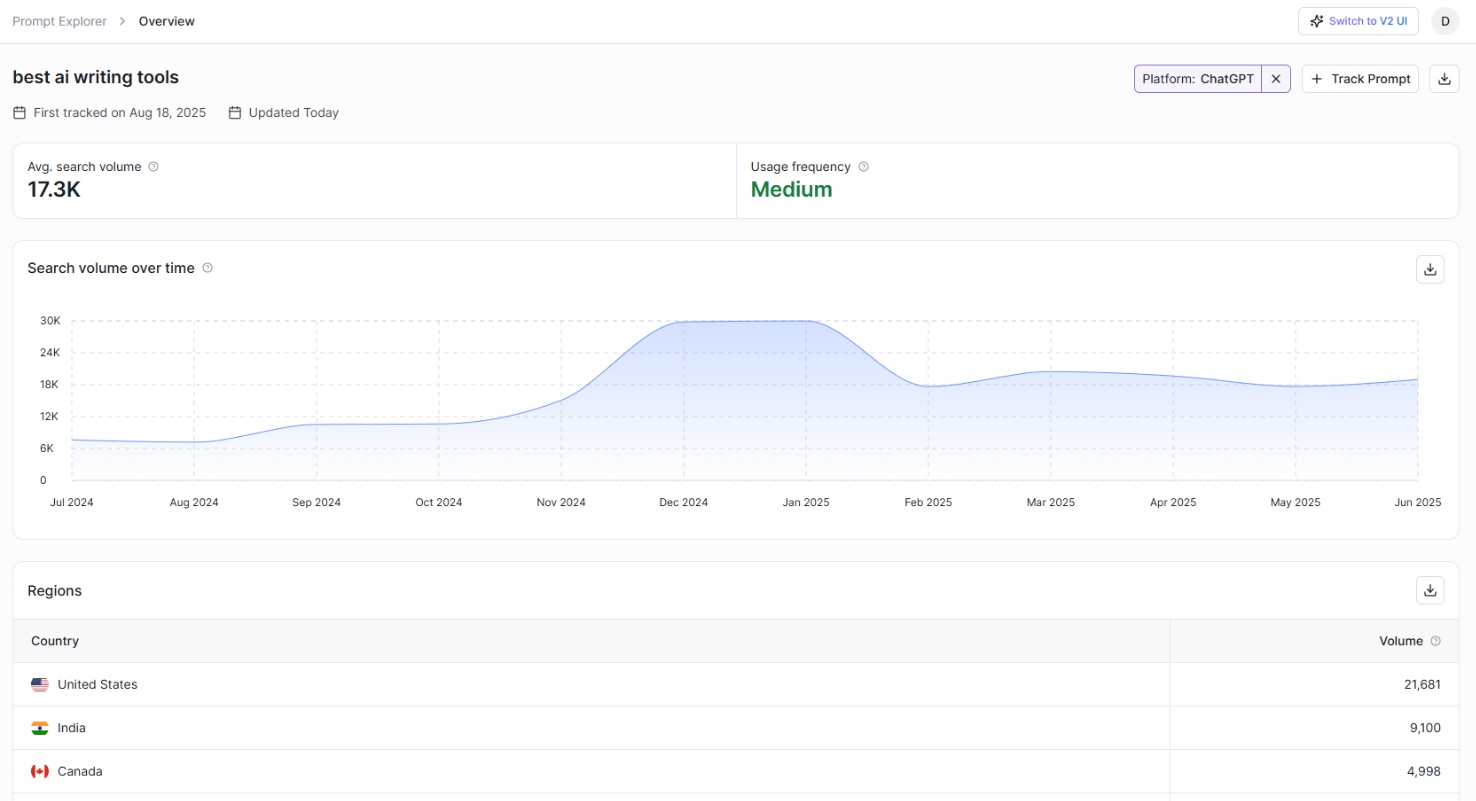
This is one of Writesonic’s most practical GEO features because it brings AI discovery closer to how people actually ask questions in answer engines.
Prompt-Led Topic Prioritization
This makes Writesonic GEO planning feel more actionable by turning real AI prompts into a clear list of content opportunities.
- Shows real prompts people ask across AI platforms, which helps plan content around question patterns instead of keyword lists alone.
- Includes an AI Search Volume style metric to prioritize prompts similar to how keyword volume supports SEO planning.
- Adds trend and location-style signals so you can spot prompts that are growing before they become saturated.
SEO Research, Audits, And Fixes
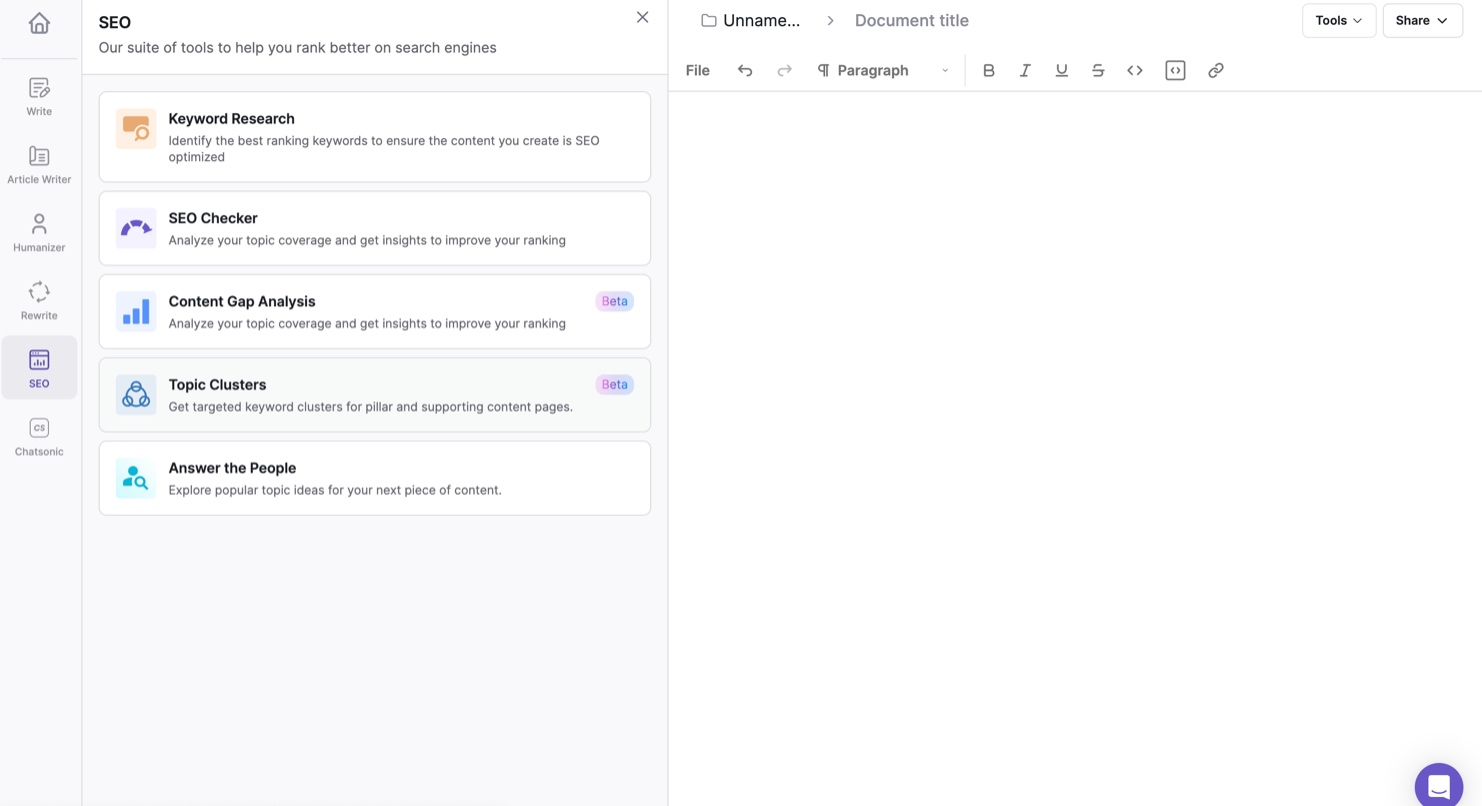
Writesonic SEO layer is positioned as a built-in workflow that complements GEO, which matters because AI visibility still depends heavily on strong technical and on-page foundations.
Built-In SEO Data And AI-Assisted Fixes
This is useful if you want consolidation, but teams already anchored in enterprise SEO stacks may find overlap.
- References built-in research inputs such as Keyword Planner and mentions Ahrefs data in product messaging.
- Includes site audits and AI-assisted recommendations intended to streamline fixes.
- Connects SEO execution to AI visibility goals, which helps keep GEO work tied to outcomes instead of becoming a separate reporting activity.
- Writesonic AI Humanizer helps convert AI generated text into natural and engaging human-like content.
Content Engine (AI Article Writer 6 And Content Refresh)
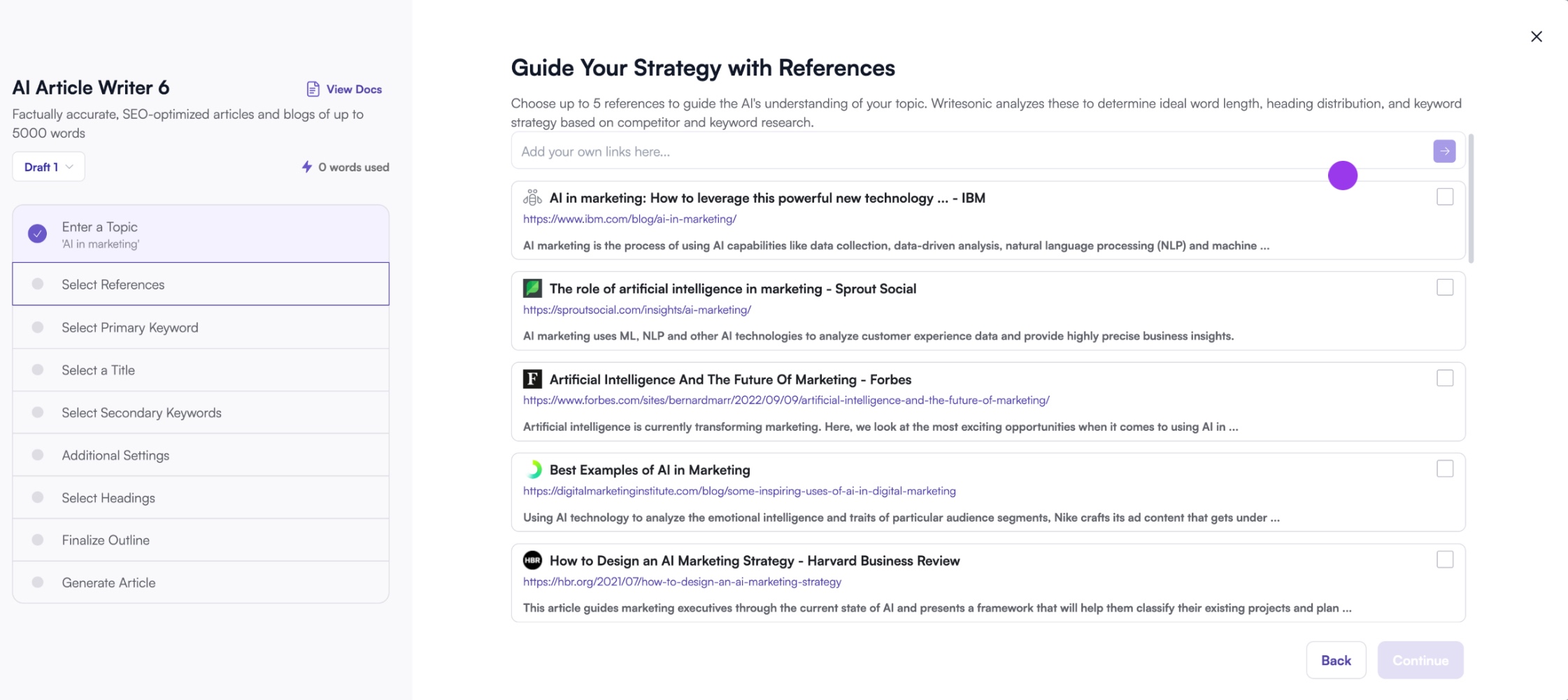
This is where Writesonic becomes very creator-friendly. It is built for producing publishable drafts fast, especially when you need consistent structure and on-page coverage.
AI Article Writer 6 (Long-Form Workflow)
This is a strong fit for content marketers and teams shipping at scale, as long as you maintain clear editorial standards.
- Tone customization to align with brand voice.
- Internal linking support to reinforce topical clusters and content architecture.
- Citations via links or footnotes, which is a meaningful credibility lever for both SEO and AI answers.
- Built-in FAQs and CTA blocks to support conversion-ready publishing.
- AI cover image generation included in the workflow for faster turnaround.
AI Traffic Analytics (Server-Side)
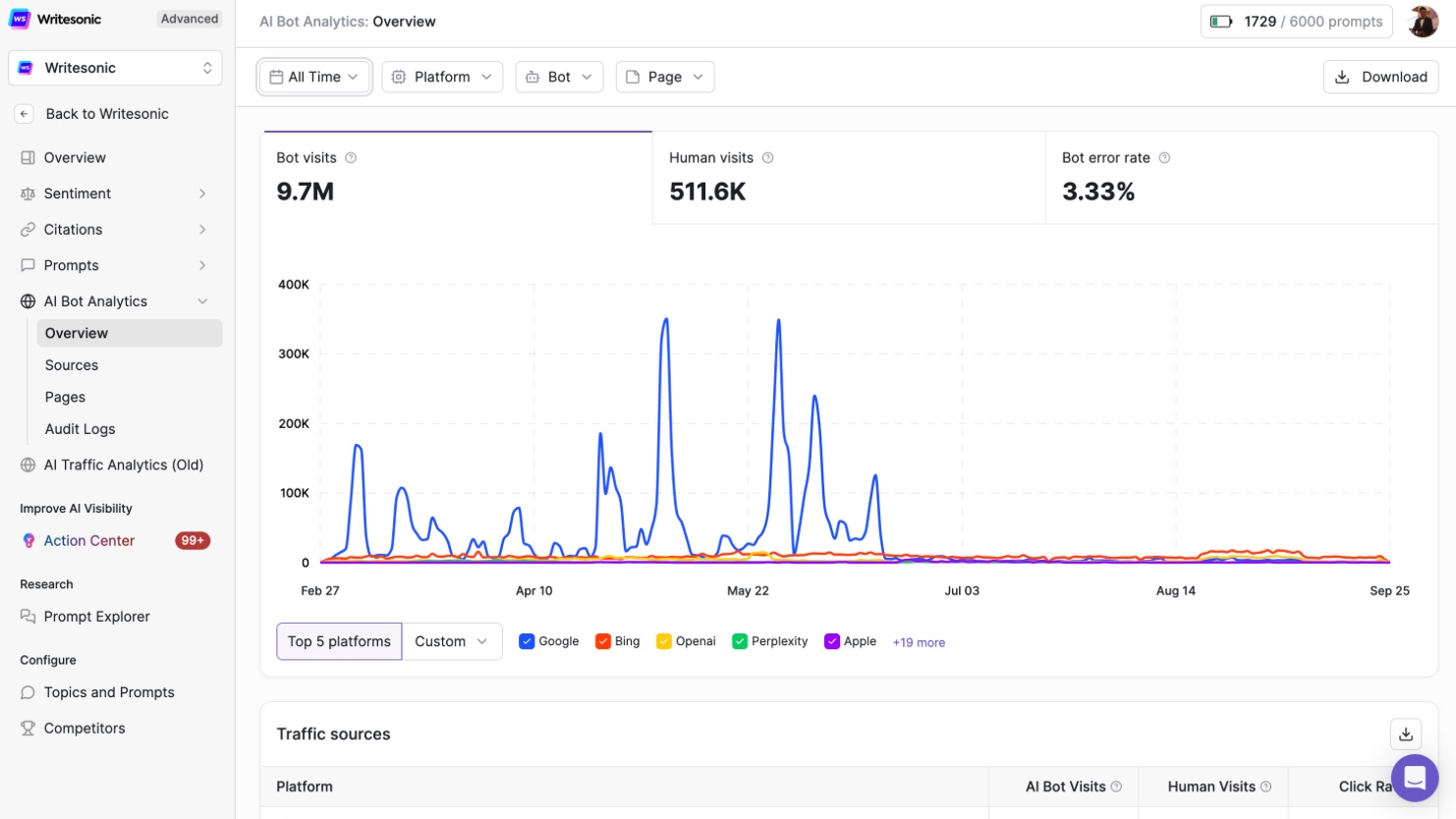
Writesonic’s analytics approach is different from typical marketing dashboards because it emphasizes server-side tracking and AI crawler visibility.
AI Bot And Citation-Driven Traffic Tracking
This is powerful when you have technical support available for your digital marketing efforts. It can be less ideal for teams that need plug-and-play analytics with minimal setup.
- Uses a server-side approach that analyzes raw traffic from infrastructure logs instead of relying on browser scripts.
- Tracks AI crawler activity and page-level engagement patterns tied to AI platforms.
- Supports platform breakdowns and trend reporting, which helps connect AI visibility activity to site performance signals.
Chatsonic (AI Marketing Agent)
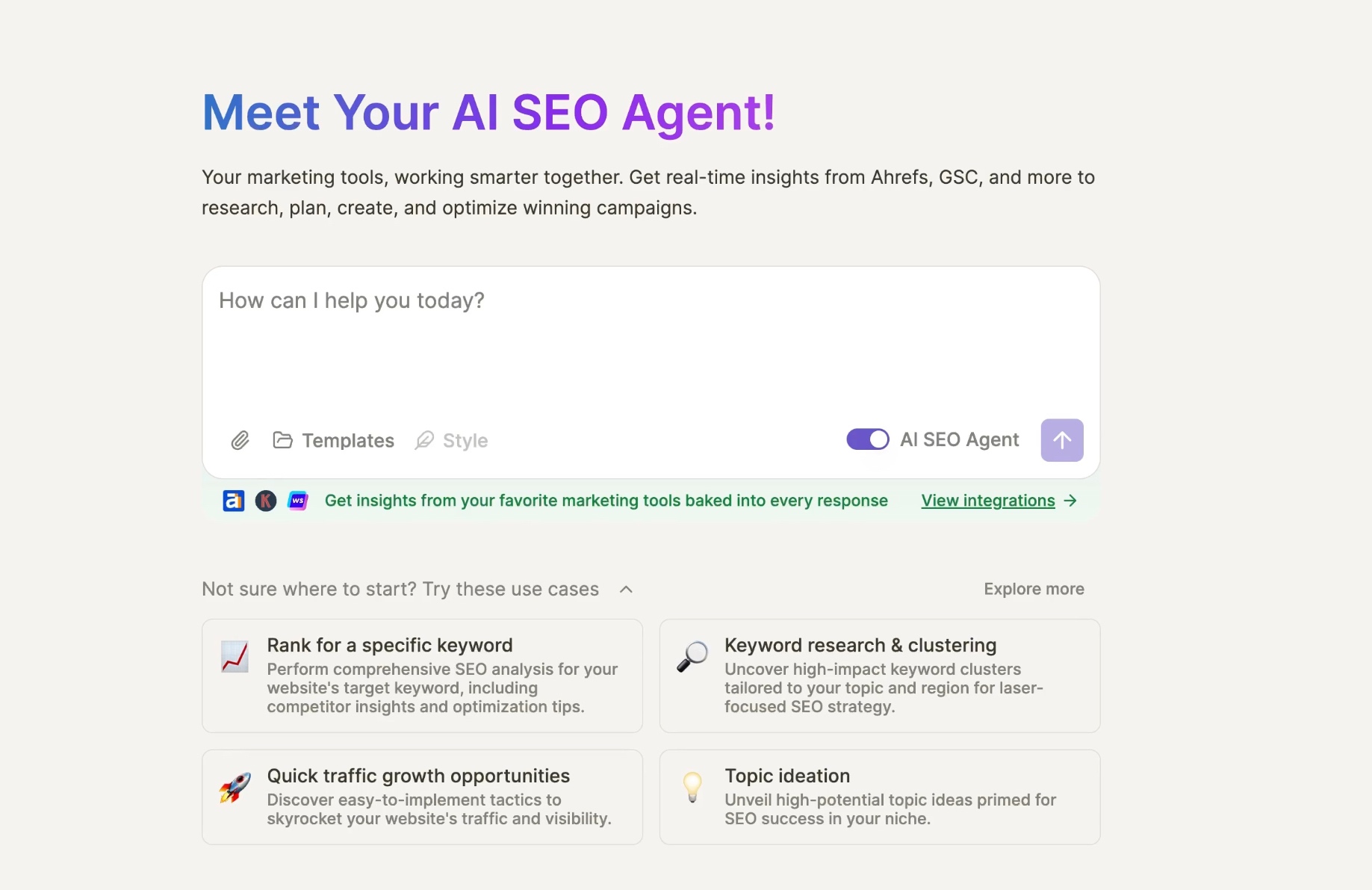
Chatsonic is Writesonic’s assistant layer for research, writing, editing, and marketing tasks. It is most valuable if you like working inside a conversational interface and want fewer tabs open.
Research And Workflow Support
This can reduce context switching for creators, although dashboard-first teams may rely on it less.
- Positioned for research, writing, and optimization inside a single assistant workflow.
- References integrations with sources like Google Search Console and publishing workflows (availability varies by plan).
What Are Real Users Saying About Writesonic?
“While overall quality is strong, a few outputs sometimes feel repetitive or generic. I often need to refine sections to add brand voice or specificity. The SEO assistant works but isn’t as robust as some dedicated SEO writing tools; could benefit from deeper keyword integration and real-time optimization suggestions.”, says Aman S., Performance Marketing Head.
Writesonic scores 4.7 out of 5 on G2, and the feedback trends are fairly consistent. Users most often highlight ease of use and fast content generation, with many saying it helps them overcome writer’s block and produce solid drafts across formats, especially when time is tight.
At the same time, the most common drawbacks are tied to cost and output quality control. “Expensive” and “high costs” come up often, and some users mention content issues and inaccuracy, with occasional notes that drafts can feel generic or repetitive and need extra editing to add a more personalized, brand-aligned finish.
How Much Does Writesonic Cost, And Does It Have A Free Plan?
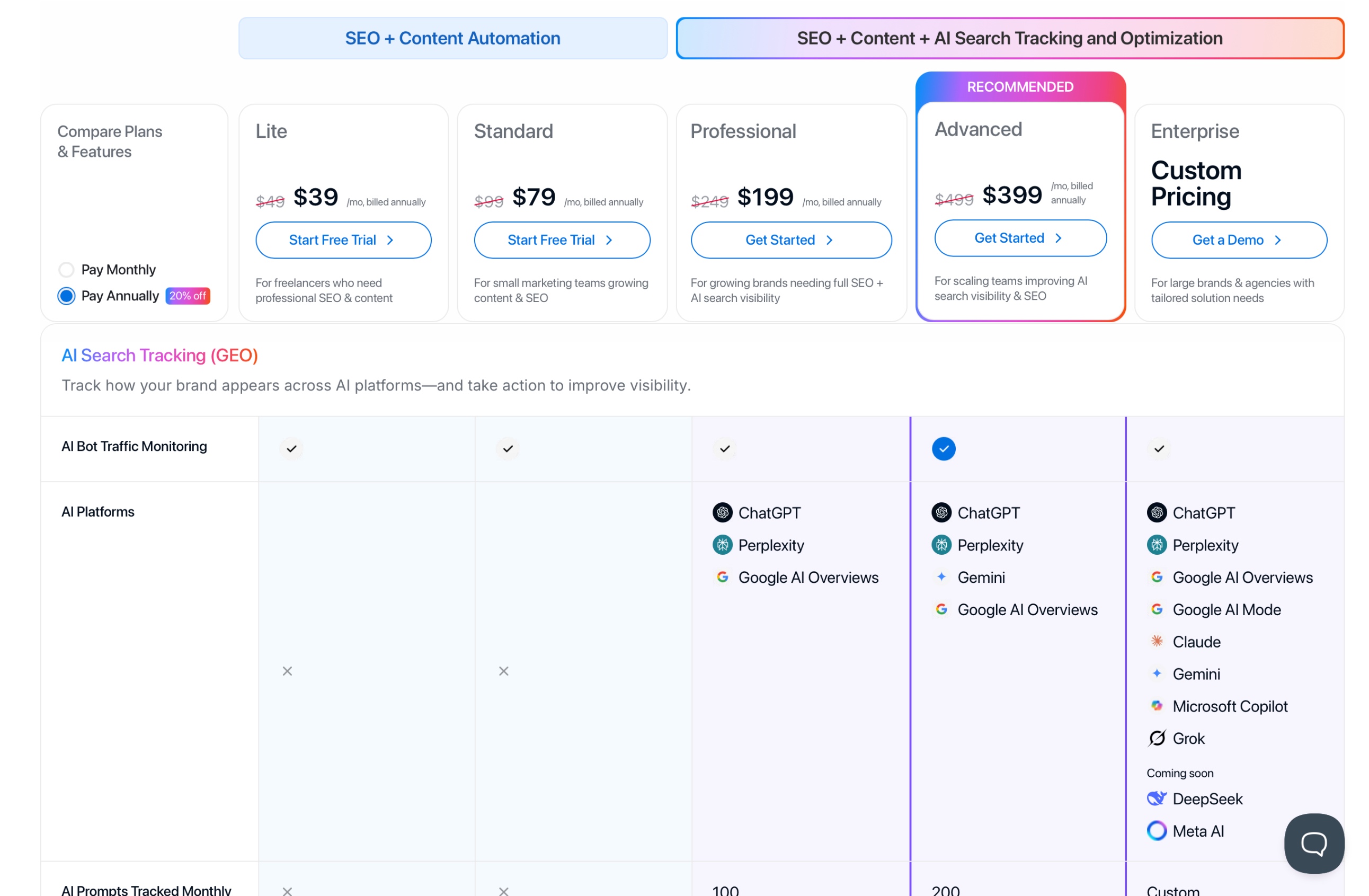
Writesonic is a paid platform with tiered pricing plans that scales from Lite and Standard for freelancers and small teams to Professional and Advanced for brands that want full SEO plus AI search tracking and effective content creation. In the annual view shown, plans start around $39/month and go up to $399/month, with Enterprise offered as custom pricing.
Writesonic offers a free trial on every plan, which makes it easier for small businesses to test the workflow before committing. They also offer a 7-day, no-questions-asked full refund, which reduces the risk if you decide it is not the right fit after trying it in real workflows.
What Are The Pros And Cons Of Writesonic?
Writesonic blends GEO tracking with SEO execution, so you can improve AI visibility without slowing down content production. That said, it can feel like more platform than you need if you want a lightweight tool or a simpler workflow.
What Sets Writesonic Apart From Other AI SEO Platforms?
- It combines GEO visibility tracking with SEO and content workflows in one place, so insights can translate into action faster.
- It includes an Action Center that helps prioritize fixes by effort and impact, which supports repeatable execution.
- Prompt Explorer introduces prompt-led topic planning, which aligns well with how AI answers are triggered.
- AI Article Writer supports structured long-form production with internal linking, citations, FAQs, and CTA blocks built in.
- AI Traffic Analytics uses a server-side approach that can reveal AI crawler activity and AI-driven traffic patterns missed by typical analytics.
- It supports automation through integrations like Zapier, which can help teams operationalize workflows.
What Limitations Should You Know Before Choosing Writesonic?
- The platform can feel heavy if you mainly want an AI writer, since the GEO and action layers add workflow overhead.
- Server-side analytics may require technical support, which can be a blocker for small teams that need a plug-and-play setup.
- Output still needs a strong editorial review, since drafts can be generic or repetitive without a clear brand direction.
- Full GEO value can depend on higher-tier access and usage limits, which may be a bigger pricing commitment than some teams want upfront.
- If you already use a mature SEO stack, parts of the audit and research layer may overlap rather than replace existing tools.
Why Is Scalenut A Better Alternative To Writesonic?
Scalenut is often the better alternative because it makes AI visibility easier to start and easier to maintain. AI search visibility tracking is available across Scalenut plans, which lowers the barrier to begin monitoring prompts and visibility without needing to jump straight into a higher-priced tier, especially for smaller sites or early-stage GEO programs.
It also leans more execution-first in areas that can influence AI citations quickly. Social UpReach gives Reddit SEO a dedicated workflow for monitoring and engagement, and the Backlinks Marketplace provides a direct path to off-page authority building instead of only recommending it. Overall, Scalenut’s plan, create, optimize, and track flow can feel simpler to run week to week than a heavier insights and task-queue approach.
Want to see Scalenut’s GEO and SEO stack in action? Read this Scalenut review to learn how it improves visibility across search and AI-generated answers.
What Are Scalenut’s Most Important GEO And SEO Features?
Scalenut combines AI visibility tracking (GEO) with hands-on SEO execution and advanced SEO tools in a single platform. Instead of stopping at content generation, it helps teams understand how their brand appears inside AI answers and then points them toward the next actions that can improve visibility and performance.
How Does Scalenut Strengthen GEO And AI Visibility?
Scalenut’s GEO layer is designed to monitor brand presence across AI-generated responses on platforms such as ChatGPT and Perplexity, then turn those signals into insights that teams can use to guide their SEO content and authority decisions.
AI Visibility Tracking And Brand Monitoring
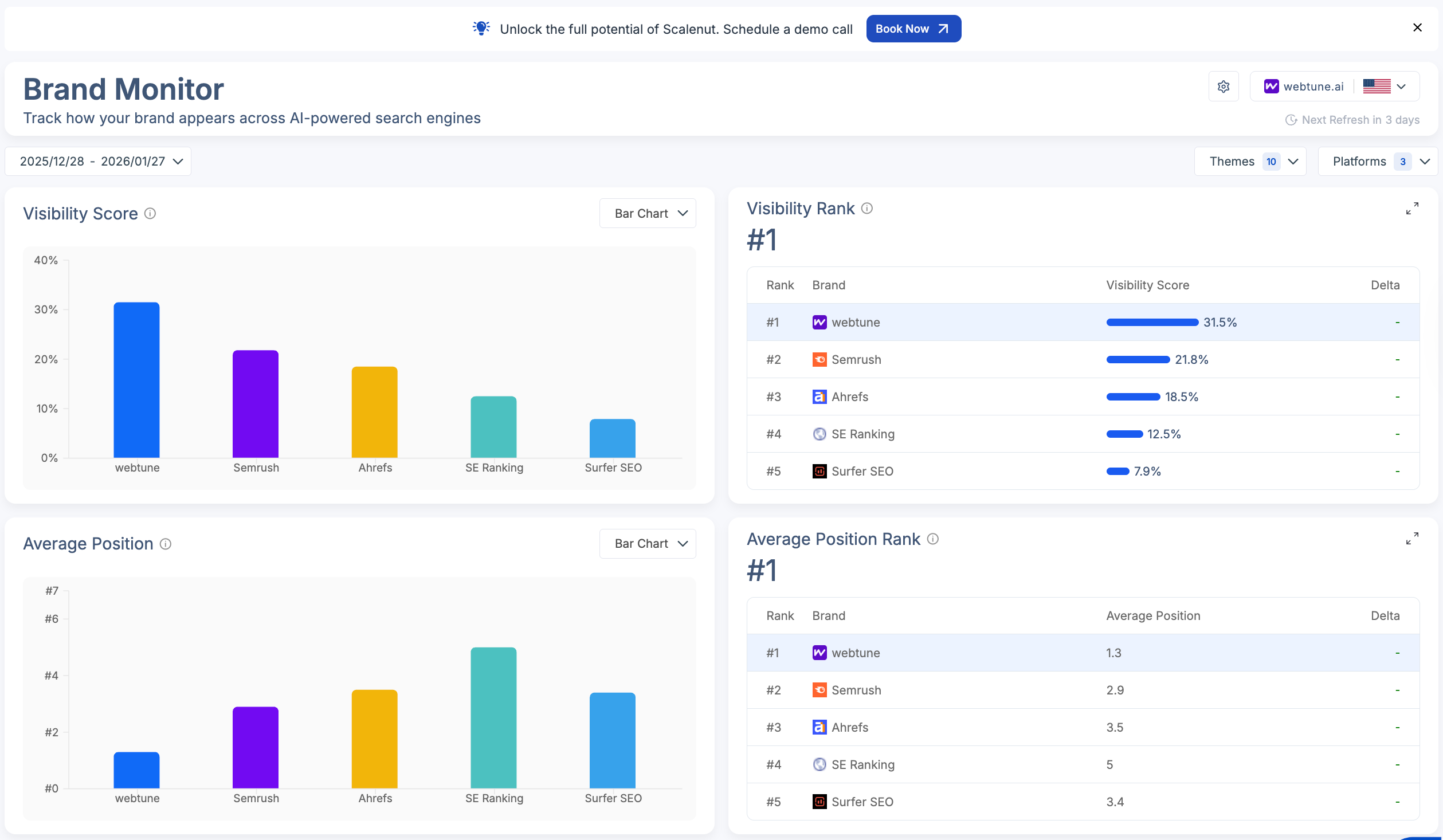
Brand-level reporting helps quantify how often a brand appears in AI answers and how that presence stacks up against competitors across platforms.
- Visibility Score summarizes how frequently the brand appears compared to competitors.
- Average Position indicates whether mentions show up near the top of AI answers or farther down.
- Share Of Voice measures how much of the response space the brand captures versus others.
- Visibility Heatmap breaks performance out by platform to highlight strong and weak channels.
- Brand Visibility Rank combines key signals into a single benchmark across prompts and topics.
Prompt-Level Intelligence And Competitive Insights
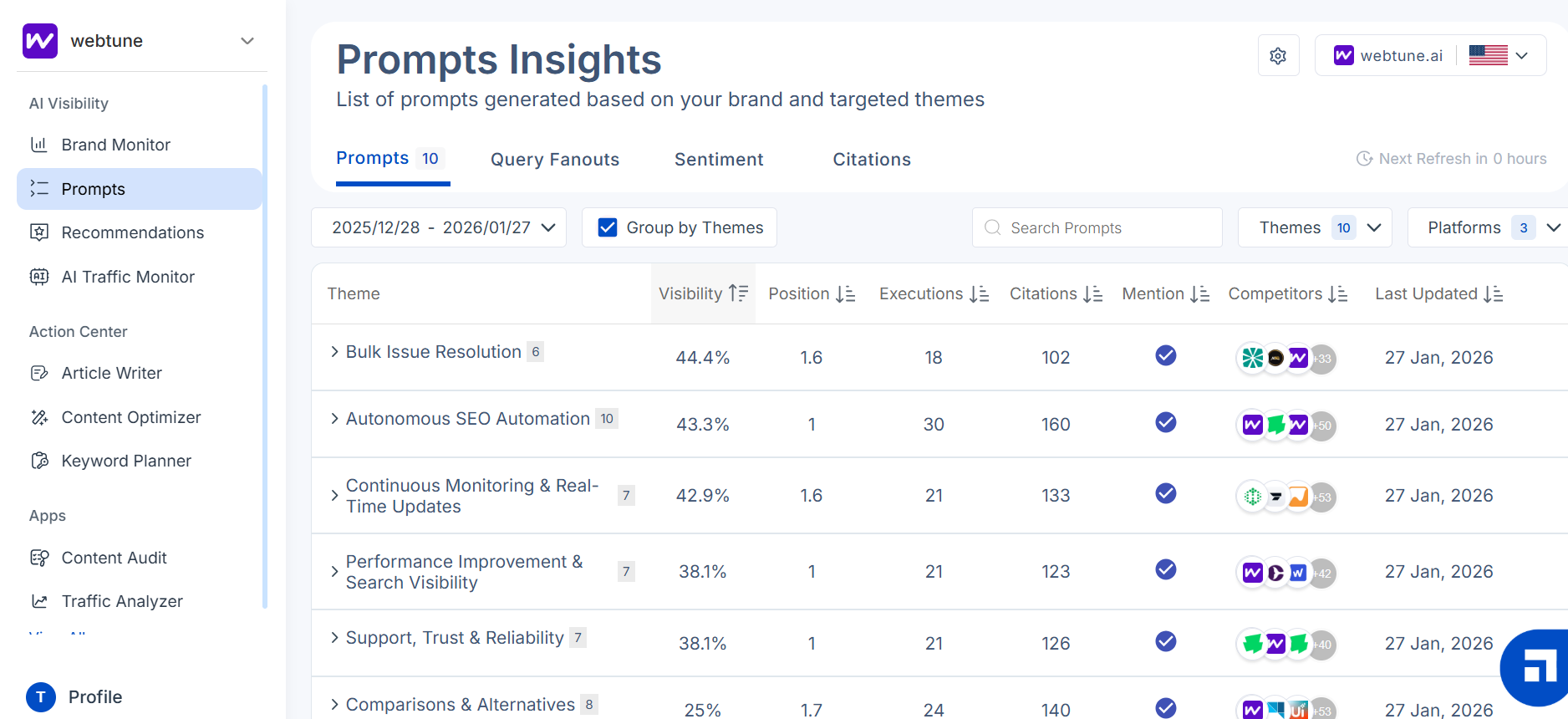
Prompt-led reporting shows where visibility is actually being won or lost by revealing which prompts trigger mentions and which sources AI systems lean on.
- Prompt Tracking surfaces the prompts where the brand appears, along with relative placement.
- Citation Tracking highlights the sources referenced to justify AI-generated answers.
- Competitor Visibility Insights shows brands frequently mentioned alongside yours.
- Query Fanouts maps how one question expands into related follow-up queries in AI experiences.
- Sentiment Analysis tags mentions by tone to separate positive exposure from neutral or negative.
GEO Recommendations That Lead To Execution
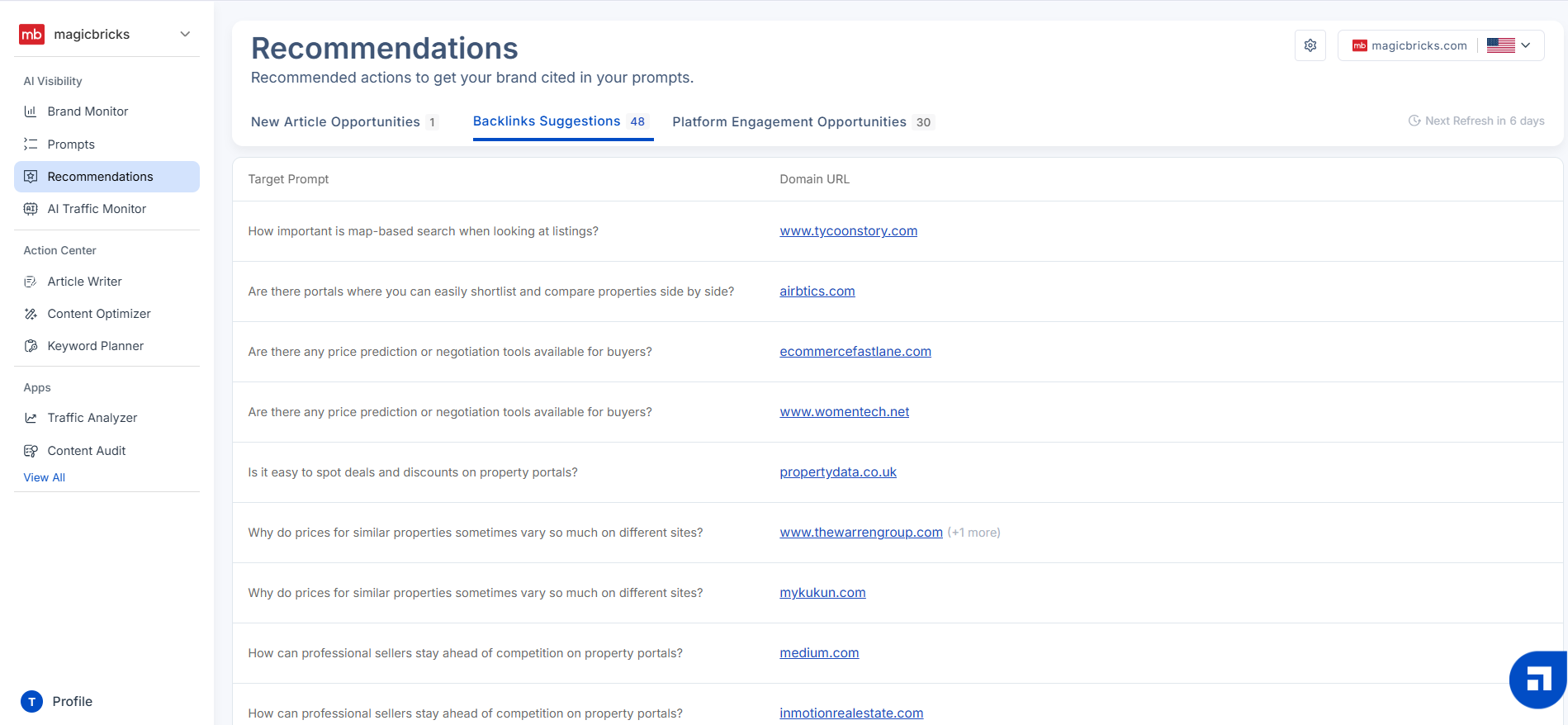
Recommendations aim to translate visibility gaps into practical next steps for marketing teams, making it easier to prioritize the work that can move outcomes.
- AI-Led Content Ideas turns AI-driven questions into content opportunities worth targeting.
- Authority And Backlink Suggestions point to credibility signals that can influence visibility.
- Platform Engagement Opportunities flags relevant communities and threads where presence can be built.
- Action Paths outlines clear next steps so insights lead to execution.
AI Traffic Visibility And LLM Interaction Signals
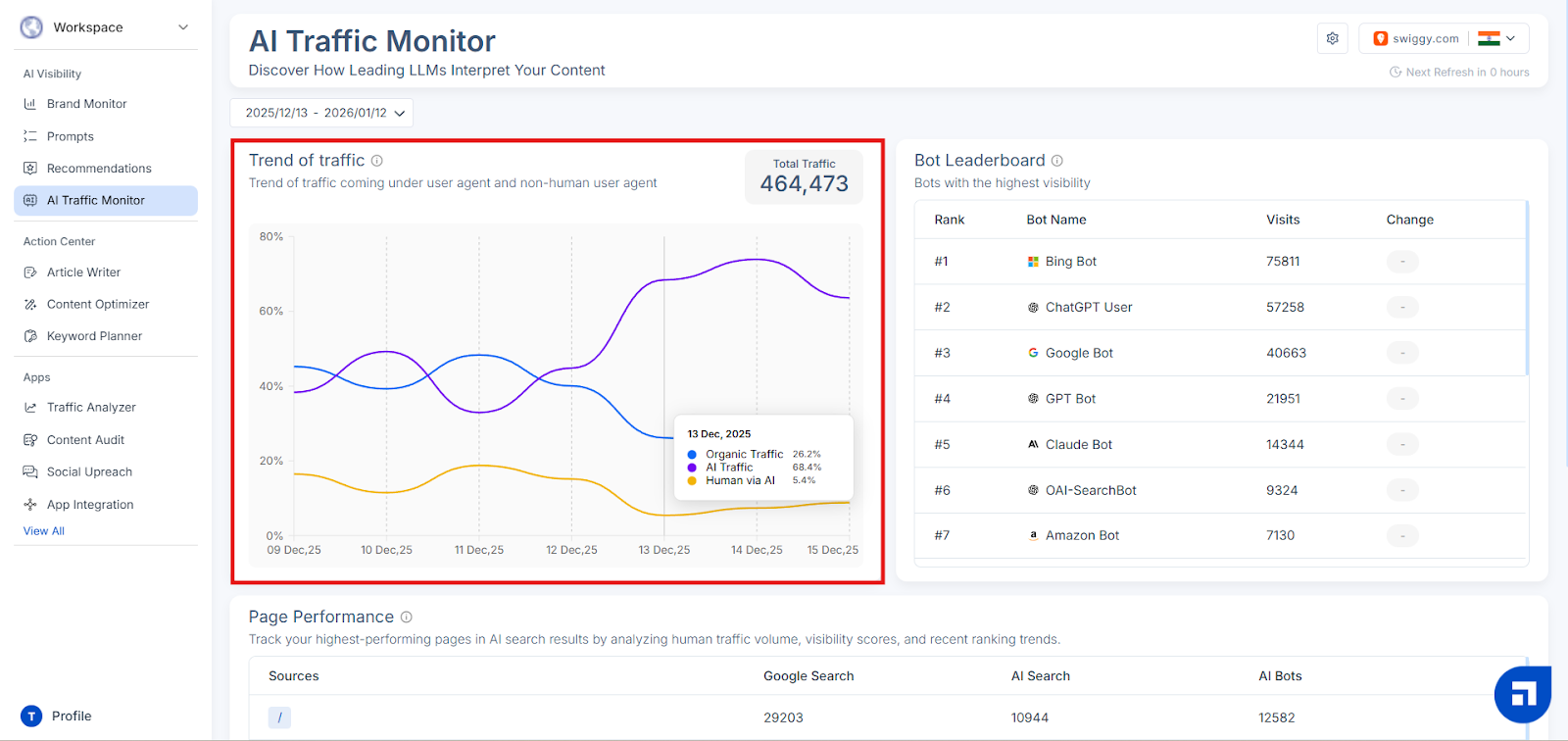
Traffic and interaction signals help connect AI visibility to real site outcomes by showing how AI agents interact with content and which pages they appear to rely on.
- AI Bot Tracking identifies visits attributed to AI assistants and AI search experiences.
- Cloudflare Integration adds deeper tracking for sites running on Cloudflare.
- Top AI Sources shows which AI agents interact with the site most often.
- Most Referenced Pages highlights pages AI systems seem to pull from frequently.
- AI Traffic Trends tracks whether AI-driven visits are rising, flattening, or dropping.
Want to track what is shifting in AI-driven discovery this year? Explore our roundup of top AI monitoring tools that can sharpen your workflow in 2026.
How Does Scalenut Support SEO And Content Execution?
Beyond GEO monitoring, Scalenut includes a full SEO workflow for planning, creating, optimizing, and scaling content with structured guidance across the content lifecycle.
Content Production And Optimization
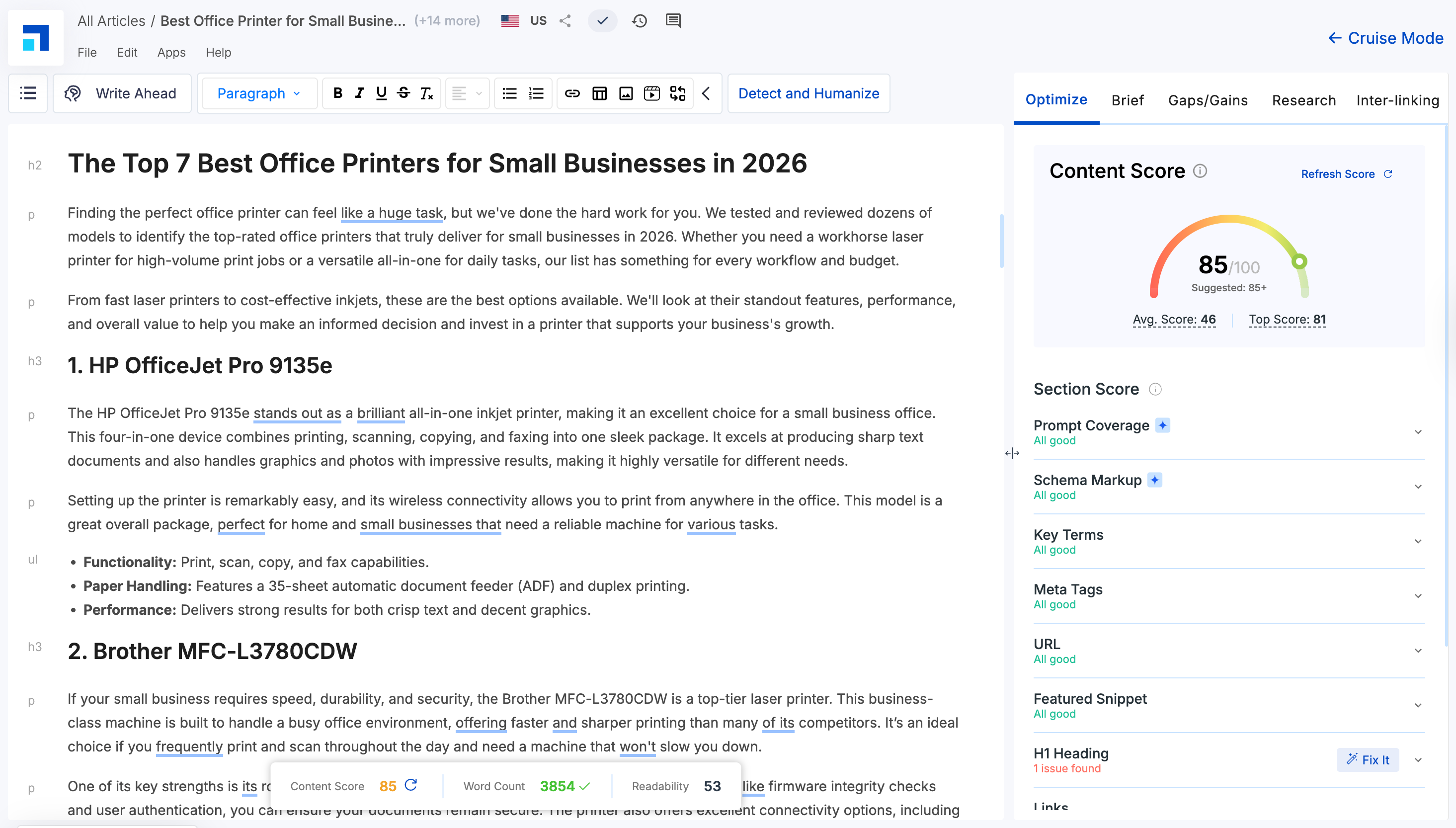
These tools keep execution moving by translating SERP signals into drafts and then guiding on-page improvements for stronger intent match and performance.
- Cruise Mode supports outlining and drafting using SERP-informed guidance, with GEO signals layered in where relevant.
- Content Optimizer highlights what to adjust on-page to strengthen performance signals.
- AI Humanizer refines AI-written sections so the output reads more natural and user-friendly.
- Content Scoring evaluates SEO quality factors such as intent alignment, coverage depth, structure, and keyword usage.
SEO Research And Planning Tools
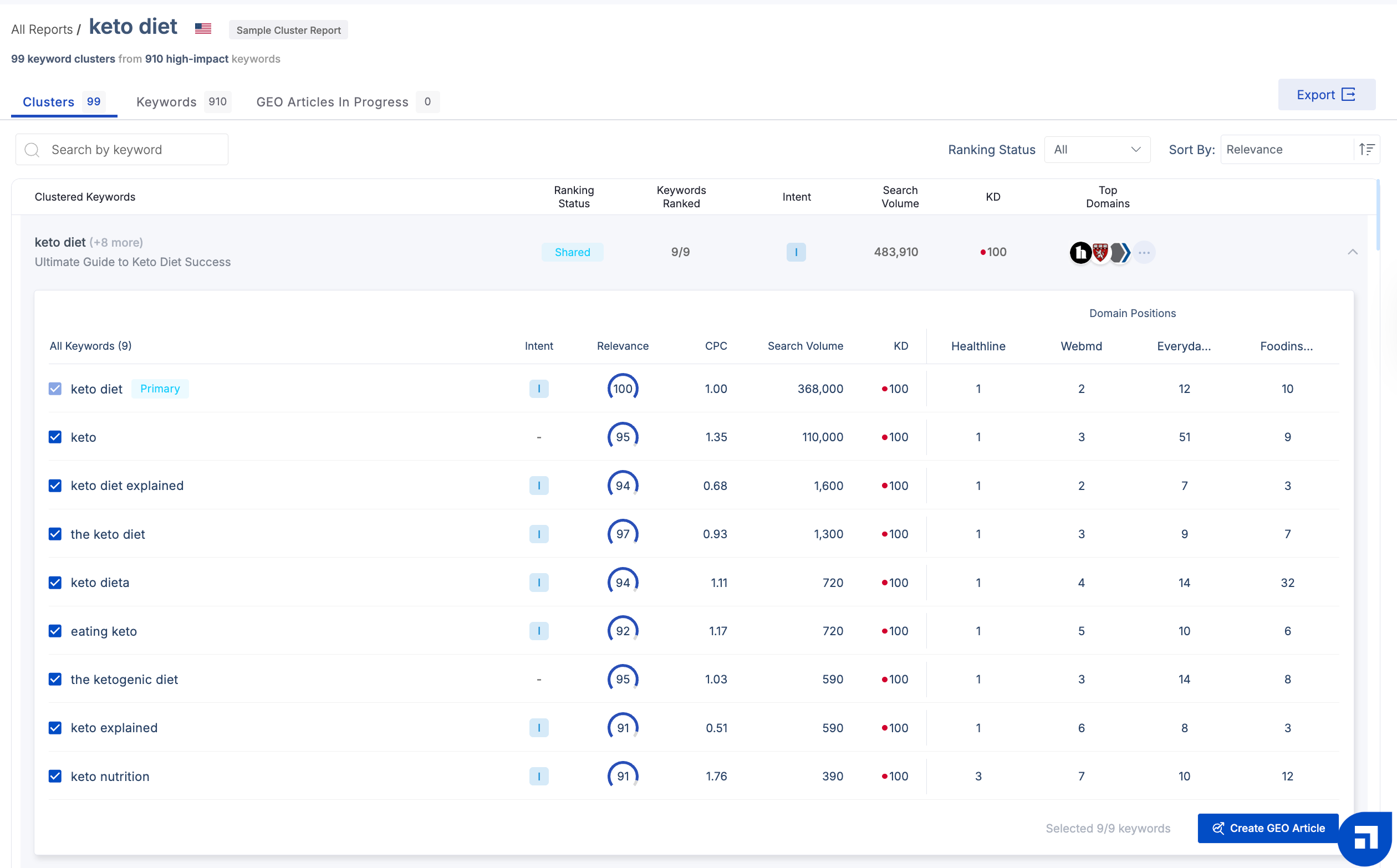
Research and planning features help teams choose targets, cluster topics by intent, and prioritize updates based on performance opportunities, including options for an enterprise plan.
- Keyword Planner clusters keywords by intent for cleaner content planning.
- Competitor Coverage Analysis shows how competing pages structure and cover the same topics.
- Traffic Analyzer surfaces strong performers and quick-win opportunities.
- Content Audit flags pages that may need refreshes, consolidation, or deeper optimization.
Technical SEO And Linking Support
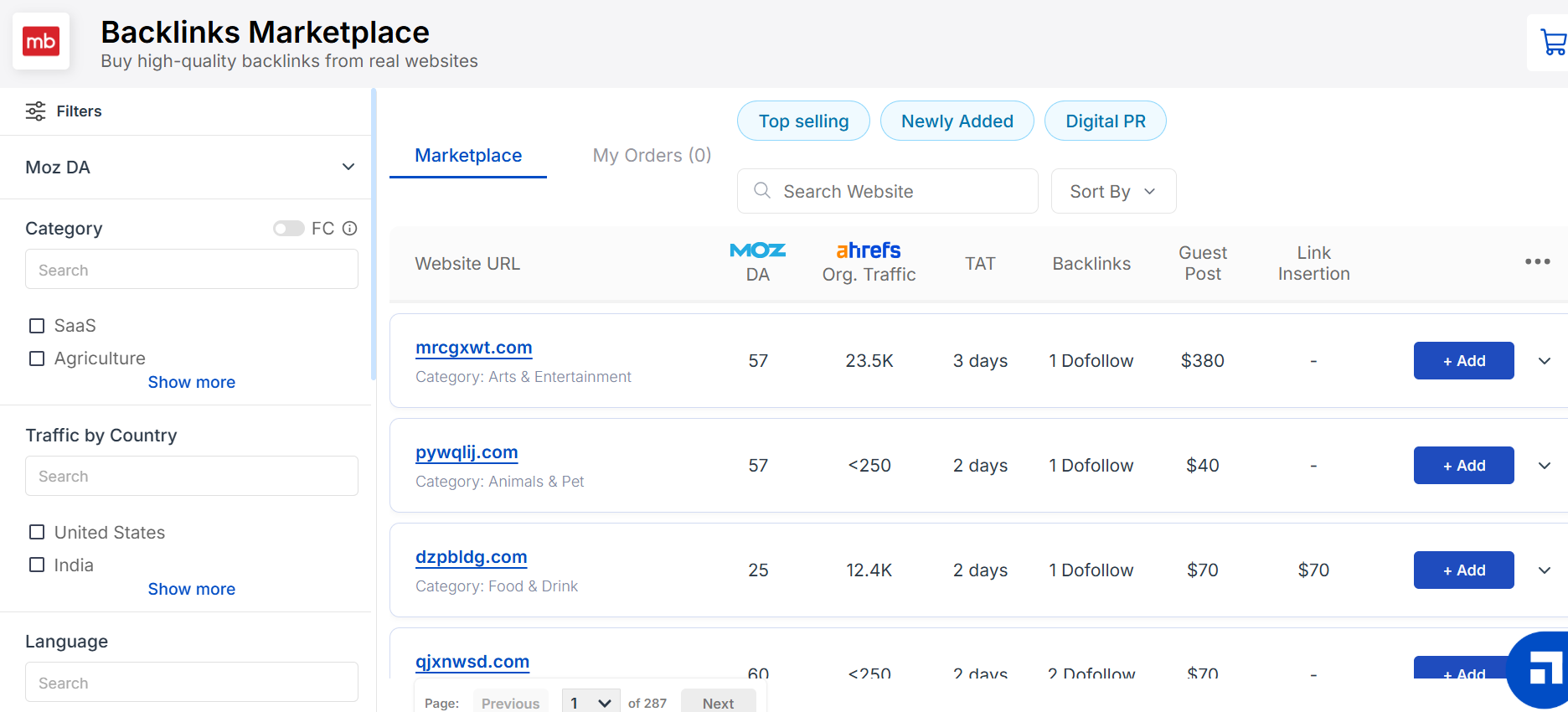
Technical and linking support strengthens internal structure and reinforces on-page fundamentals that influence both rankings and AI citation potential.
- Link Manager supports internal linking workflows to improve site structure.
- On-Page Pro benchmarks titles and meta descriptions against what is working on the SERP.
- Backlinks Marketplace provides a path to discover and secure backlink opportunities through a marketplace model.
Why I Would Choose Scalenut Over Writesonic?
When the goal is improving AI visibility without slowing down execution, Scalenut fits better because it is easier to operationalize week to week. The workflow is built around planning, creating, optimizing, and tracking in a tight loop, so the platform feels less like “insights plus tasks” and more like a system that supports consistent publishing and iterative improvements.
I would also choose Scalenut when AI visibility needs to extend beyond on-page work. Its approach makes it easier to build authority signals alongside content, especially when brand discovery is happening across communities and third-party sources that influence AI answers. For teams that want a practical path from visibility insights to measurable execution, Scalenut tends to deliver a cleaner, more repeatable workflow.
Schedule a Scalenut demo to explore its GEO and SEO workflows and see how they support AI visibility.
Frequently Asked Questions
Is Writesonic legit?
Writesonic is a legitimate writing platform, but fit depends on expectations and process. Check billing terms, test responsiveness of customer support, and run a small pilot to evaluate real user experience. The biggest variable is whether the workflow consistently supports strong content quality.
Writesonic vs Jasper for enterprise marketing teams: Which one scales better?
For enterprise teams, scale usually depends on governance and maintaining brand consistency across high-volume marketing content. Both tools offer different features, but Jasper AI is often evaluated for structured team controls, while Writesonic AI tends to emphasize faster execution.
Writesonic vs ChatGPT: Which one is better for content and SEO?
If you are comparing ChatGPT vs Writesonic, the better one depends on your primary goal. ChatGPT is flexible for ideation and iteration, while Writesonic is more workflow-driven. Both rely on large language models, but Writesonic packages templates and dashboards typical of AI writing tools for specific use cases.
Best Writesonic alternatives: Which tools are worth switching to?
If you are looking for alternatives to Writesonic, switching is worth it when you need stronger AI visibility and execution alignment. Scalenut is a strong alternative for generative engine optimization, especially if you want visibility insights tied to action. Choose based on your content strategy and whether improvements show up in search results.
Writesonic vs Jasper for SEO content: Which platform wins for SEO workflows?
The winner depends on how well it supports planning and publishing. If keyword research and structured SEO optimization are central, compare which platform best fits your process. Writesonic can be efficient for production, while Jasper may appeal to established content creators.
Writesonic vs Rytr: Which tool gives you better value?
Rytr can be a good starting point for simple drafting, while Writesonic usually offers broader workflows and deeper tooling. Value depends on your budget and tolerance for the learning curve. Writesonic 2026 features also includes more key capabilities and a stronger writing assistant feel.
How easy is it to use Writesonic for beginners?
Writesonic can be beginner-friendly if you follow its guided templates, but results improve as you learn the workflow. A consistent AI writing assistant experience still requires editing and clear inputs. Expect a short ramp to match your writing style and content creation process.
Does Writesonic offer any free trial or demo to test its features?
Writesonic offers a free trial on its plans, which is the best way to validate fit using your real workflow. Since it runs on artificial intelligence, testing matters. It also has a 7-day refund policy if you request it within seven days of cancellation.
Can Writesonic generate different types of content like social posts, emails, and website copy?
Yes. Writesonic can produce multiple formats, including social media posts, emails, and landing page drafts, which speeds production across channels. Still, treat generated content as a first draft, then refine for accuracy, tone, and approvals before publishing.
How accurate and reliable is Writesonic for generating blog posts or articles?
Writesonic can help a blog writer draft quickly, but reliability depends on your inputs and editing. Verify facts and sources, then optimize for your search engine goals and publish only after improving structure and originality for quality content. Scalenut can complement citation-focused workflows.
Copy AI vs writesonic: Which One Is Better For Marketing Workflows?
Copy.ai is often a stronger fit for fast, templated marketing production, while Writesonic tends to offer a broader workflow that connects writing with SEO and AI visibility tasks. The better pick depends on whether your priority is speed for campaigns or deeper SEO-driven execution.


.svg)


.webp)