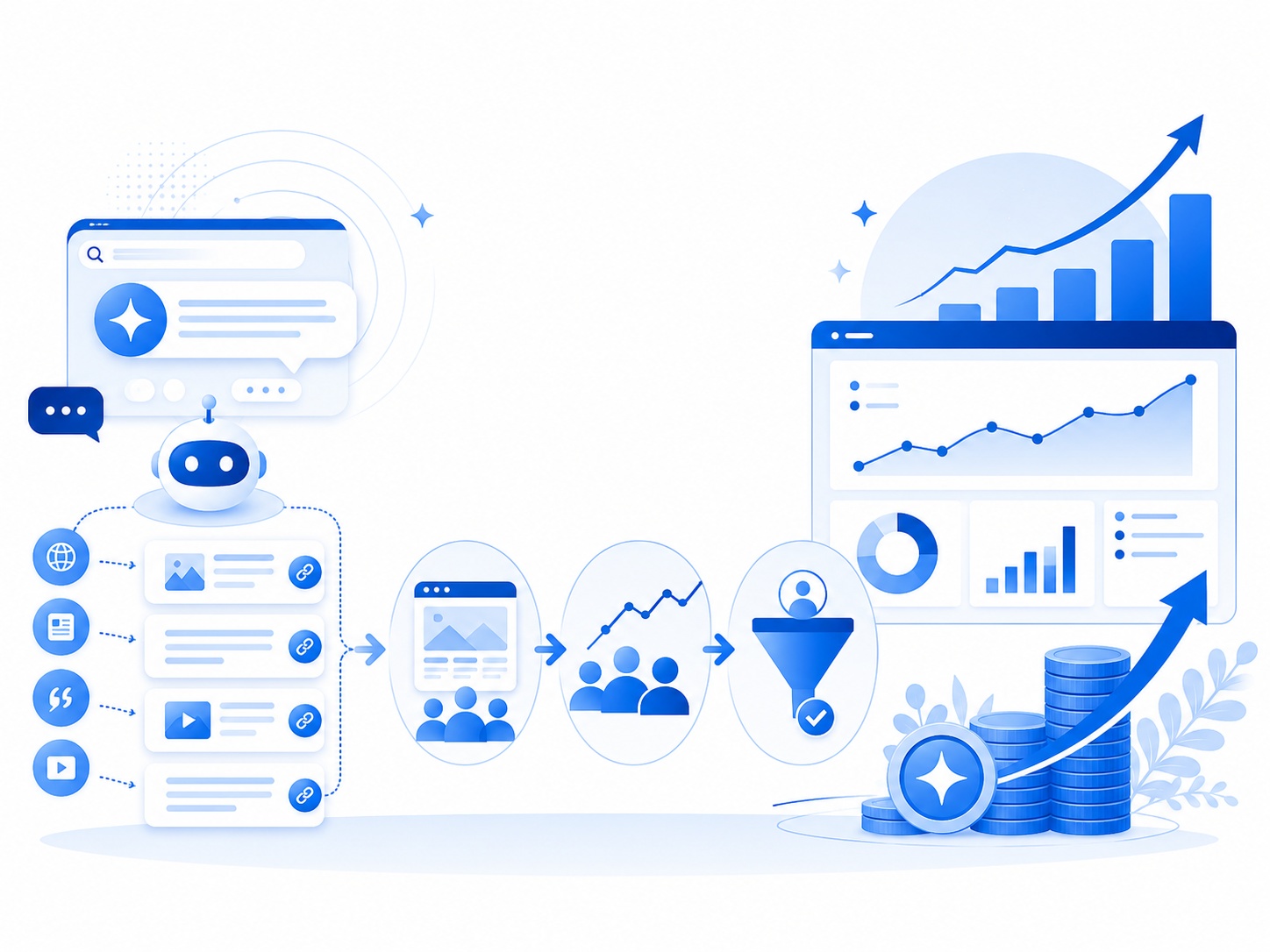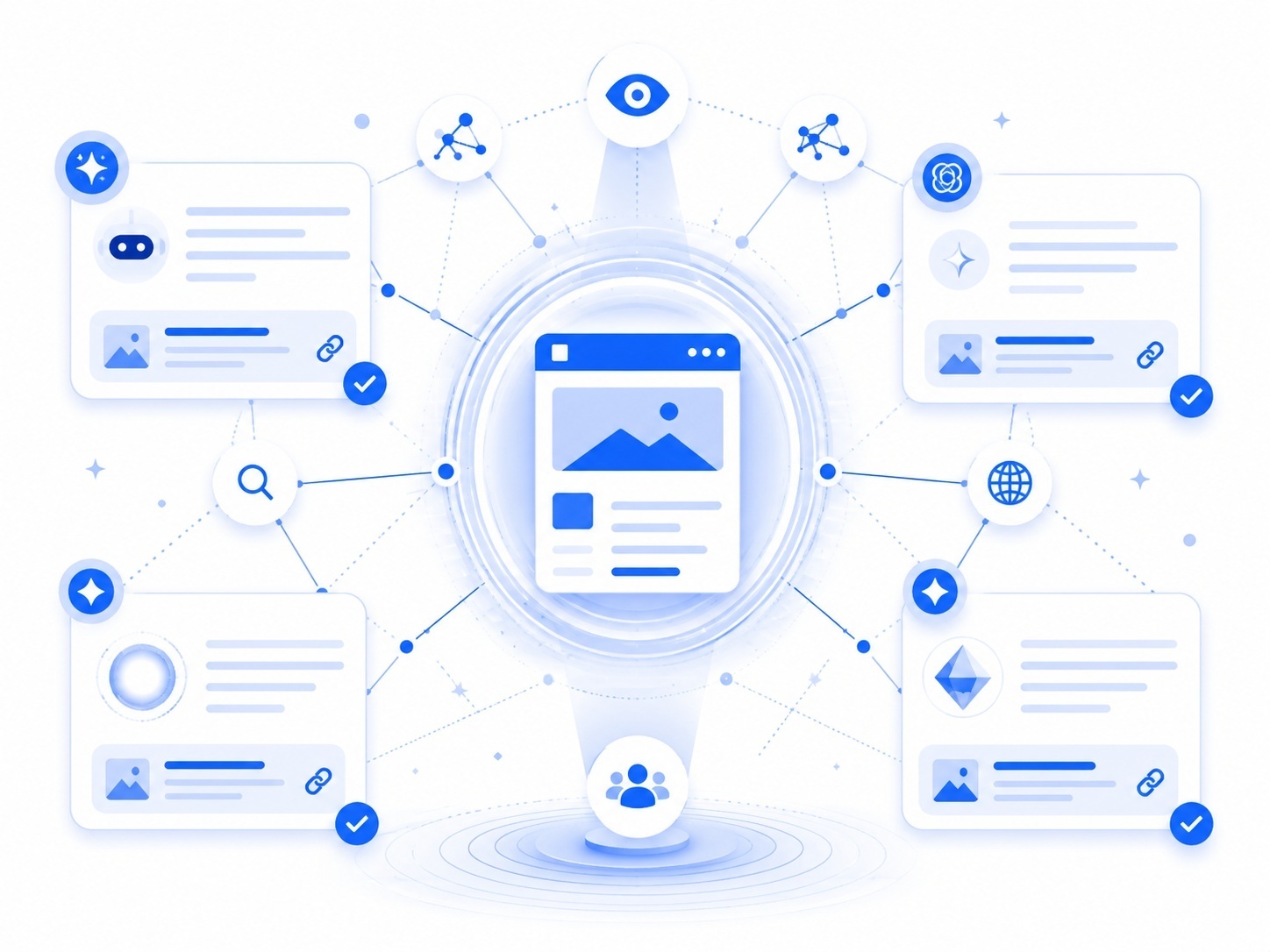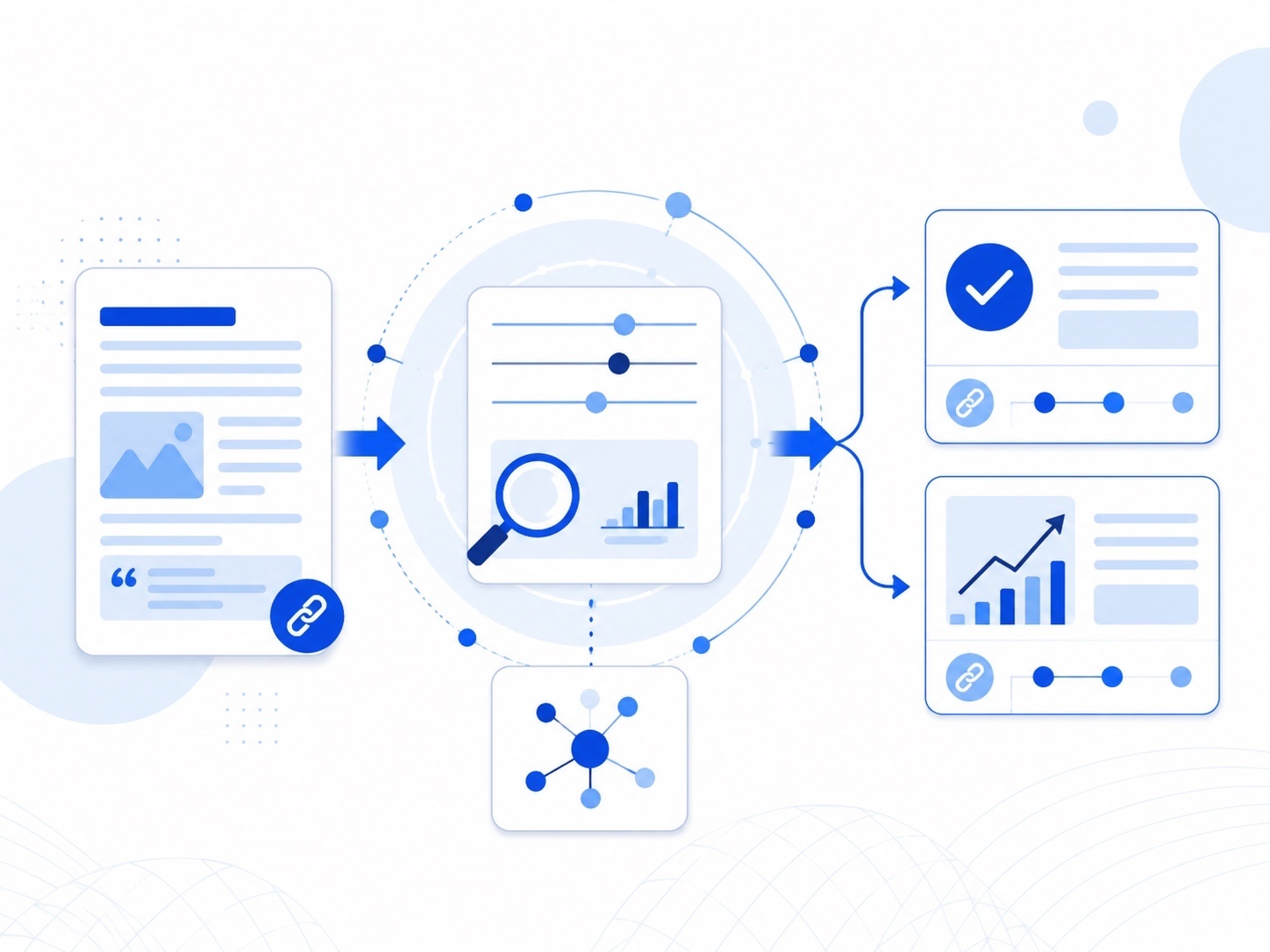

Which Profound AI Competitor Tools Are Best For GEO in 2026?

10 Best Profound AI Alternatives In 2026: Quick Summary
- Scalenut: Best for SEO and content teams that want AI visibility tracking, GEO insights, content creation, optimization, audits, and execution in one workflow.
- OtterlyAI: Best for teams that want simple AI search monitoring, prompt tracking, citation insights, and regional visibility data without enterprise complexity.
- Scrunch AI: Best for brands that need deeper AI visibility diagnostics, citation tracking, competitor benchmarking, and AI crawler insights.
- Peec AI: Best for teams that want clean prompt-level tracking, sentiment analysis, competitor visibility, and AI search recommendations.
- AthenaHQ: Best for agencies and growth teams that want AI visibility tracking with action-focused recommendations and client-ready reporting.
- Writesonic GEO Suite: Best for SEO teams that want AI visibility insights connected with content creation, audits, and optimization workflows.
- Ahrefs Brand Radar: Best for teams already using Ahrefs that want AI visibility data, brand monitoring, search demand insights, and competitor tracking in one SEO ecosystem.
- Nightwatch LLM Tracker: Best for SEO teams that want traditional rank tracking and AI visibility monitoring inside the same platform.
- LLMrefs: Best for smaller teams that want affordable keyword-based AI visibility tracking, citation insights, and competitor comparisons.
- Rankscale AI: Best for agencies and competitive SEO teams that need flexible AI visibility tracking, citation analysis, and competitor benchmarking across multiple AI engines.
Profound AI is one of the first tools teams look at when they want to track AI search visibility. It helps you see how your brand shows up across AI answer engines, which sources are being cited, and how competitors are appearing in tools like ChatGPT, Perplexity, Gemini, and Google AI Overviews.
But Profound is not always the best fit for every team. It can feel too expensive, too analytics-heavy, or too focused on visibility data without enough help on what to fix next. For many SEO and content teams, the real need is not just tracking. It is turning those insights into better content, stronger citations, and improved AI visibility.
To make the decision easier, I compared the Profound AI alternatives that seem most relevant for SEO, content, and AI visibility teams in 2026.. Below, I will compare the best Profound AI competitors by AI visibility tracking, citation insights, content workflows, pricing, and overall usefulness.
Why Do People Look For A Profound AI Alternative?
Profound AI is powerful, but it may not be the right fit for every team. Most teams do not look for an alternative because Profound lacks depth. They look because it can feel expensive, complex, or too analytics-heavy when they need something easier to act on.
Here are the main reasons teams compare Profound competitors.
1. The Pricing Is Too High For Smaller Teams
Profound AI starts at $99/month, but more useful features sit on higher plans. The Growth plan costs $399/month, while Enterprise comes with custom pricing.
That may work for larger teams, but for startups, small SEO teams, or agencies testing AI visibility, the cost can feel high before ROI is clear.
2. The Platform Can Feel Overwhelming At First
Profound gives you a lot of visibility data across prompts, citations, competitors, and AI search metrics. That depth is useful, but it can also take time to understand.
For teams that want quick tracking and simple next steps, the learning curve may feel heavy.
3. The Recommendations Could Be More Actionable
Profound shows where your brand appears, which competitors are winning, and which sources AI engines cite. But some teams may still want clearer guidance on what to update and how to prioritize fixes.
That is where tools with stronger content planning, optimization, or execution workflows can feel more useful.
4. Reporting And Exports May Feel Restrictive
Agencies and in-house teams need fast, flexible reporting. If dashboards, exports, or client-ready views take too much manual work, the workflow slows down.
Profound is strong on insights, but teams that need simpler reporting may want a more flexible option.
5. It May Be More Than Some Teams Need
Profound is built for serious AI visibility analysis, which makes sense for enterprise SEO teams and larger brands.
But if your team only needs prompt tracking, citation insights, or basic brand visibility monitoring, Profound may feel like more tool than you actually need.
Overall, Profound is a strong platform, but fit matters more than feature depth. If you need something simpler, more affordable, or easier to act on, comparing alternatives makes sense.
Looking for a budget friendly GEO stack? Explore our list of the 11 best GEO tools under $100/month to find your best option in 2026.
How I Evaluated These Profound AI Alternatives?
- AI Visibility Tracking: I looked at how well each tool tracks brand mentions, share of voice, sentiment, and visibility across AI search platforms.
- Platform Coverage: The tool had to support important AI engines like ChatGPT, Perplexity, Gemini, Claude, Copilot, Google AI Overviews, or AI Mode.
- Prompt And Citation Insights: Stronger tools showed which prompts triggered brand mentions and which sources AI engines cited in their answers.
- Competitor Benchmarking: I checked whether each platform compared brands across prompts, citations, visibility, sentiment, and positioning.
- Content Execution: Tools with content planning, optimization, audits, or clear recommendations scored higher because insights alone are not always enough.
- Reporting And Exports: Clean dashboards, export options, client reporting, and team-friendly workflows were important for agency and in-house use.
- Pricing And Scalability: I compared starting prices, plan limits, add-ons, prompt volume, seats, and how costs scale as usage grows.
- Ease Of Use: A strong alternative should be easy to set up, understand, and use consistently without needing a large analytics team.
- Best-Fit Use Case: I did not treat every tool as a direct Profound replacement. Each one was evaluated based on where it fits best, whether that is agencies, SEO teams, enterprises, startups, or content-led teams.
What Are The Best Alternatives To Profound AI For GEO in 2026?
The best Profound AI alternatives are not all built for the same kind of team. Some are stronger for AI visibility tracking, some are better for citation analysis, and a few are more useful when you want to turn GEO insights into actual content execution.
Here are the top Profound AI competitor tools worth considering in 2026, and where each one fits best.
1. Scalenut [G2 Rating: 4.7/5]
Scalenut is a strong Profound AI alternative if you want AI visibility tracking and content execution in one place. It helps you track brand visibility in AI answers, then plan, create, optimize, audit, and improve content from the same workflow.
What Are Scalenut’s Key Features?
- AI Visibility: Tracks how your brand appears across AI answer engines and helps you understand mentions, citations, prompts, competitors, and share of voice.
- Brand Monitor: Shows Visibility Score, Share Of Voice, and brand visibility rank across tracked AI engines.
- Prompt Insights: Shows which natural language prompts include or exclude your brand, along with query fanout and sentiment.
- Citations And Sources: Identifies the domains and URLs that influence your brand’s presence in AI-generated answers.
- AI Traffic Monitor: Tracks how AI bots interact with your website and helps separate human traffic from AI bot visits.
- GEO Action Center: Helps teams move from insights to execution through content planning, optimization, audits, and recommendations.
- Cruise Mode: Helps create SEO and GEO-ready long-form content faster.
- GEO AI Editor: Helps optimize content with prompt coverage, content scoring, key terms, and structure recommendations.
- Keyword Planner: Builds intent-led keyword clusters for topical authority and AI-first discoverability.
- Traffic Analyzer: Uses Google Search Console data to analyze traffic, rankings, impressions, page shifts, and keyword opportunities.
- Content Audit: Finds pages that need refreshing, consolidation, or deeper optimization.
- Internal Linking: Suggests contextual internal links to improve site structure and content authority.
- Social UpReach: Tracks and supports engagement with relevant Reddit-based brand conversations.
- Backlinks Marketplace: Helps discover backlink opportunities from relevant authority sources.
What Are The Pros Of Scalenut?
- Execution-First Workflow: Helps teams turn AI visibility insights into content actions.
- SEO And GEO Together: Combines AI visibility tracking, keyword planning, content creation, optimization, audits, and monitoring.
- Useful AI Visibility Data: Shows brand visibility, prompts, citations, competitors, sentiment, and query fanout.
- Strong Content Workflow: Cruise Mode, GEO AI Editor, Keyword Planner, and Content Audit make it useful for content teams.
- AI Traffic Insights: AI Traffic Monitor helps teams understand how AI bots interact with site content.
- Good For Growing Teams: Gives smaller and mid-sized teams a practical way to manage SEO and GEO without relying only on dashboards.
What Are The Cons Of Scalenut?
- Less Enterprise-Heavy Than Profound: Teams that only want deep analytics and advanced enterprise reporting may prefer a more data-first platform.
- Feature Depth Takes Time: Since Scalenut covers SEO, GEO, AI visibility, content, audits, and off-page workflows, new users may need time to explore everything.
- AI Content Still Needs Editing: Cruise Mode can speed up drafting, but human review is still needed for accuracy, tone, and originality.
- Advanced Usage Depends On Plan: Prompt limits, workspaces, audits, and supported AI engines vary by plan.
How Much Does Scalenut Cost?
- Starter: $59/month
- Plus: $89/month
- Professional: $199/month
- VIP Service: Custom pricing
What Is My Honest Take On Scalenut?
Scalenut makes the most sense if you want AI visibility insights connected to actual content work. It is not just for tracking. It helps with planning, writing, optimization, audits, and performance analysis, which makes it practical for day-to-day SEO and GEO execution.
Want a closer look at Scalenut? Read our full Scalenut review for a deeper breakdown of its features, pricing, pros, and cons.
2. OtterlyAI [G2 Rating: 4.8/5]

OtterlyAI is a good Profound AI alternative if you want simple AI visibility tracking without the enterprise complexity. It helps monitor brand mentions, citations, competitors, and prompt performance, but it is still more of a tracking tool than an execution platform.
What Are OtterlyAI’s Key Features?
- AI Prompt Research: Turns your website, brand, or keywords into AI-style search prompts.
- Daily AI Search Monitoring: Tracks selected prompts across supported AI search engines.
- Brand Reports: Shows mentions, citations, and visibility trends.
- Competitor Tracking: Compares your AI visibility with competing brands.
- Citation Tracking: Shows which URLs and domains AI engines cite.
- GEO Audit: Checks if your site is readable and accessible for AI engines.
- Multi-Country Support: Tracks visibility across 50+ countries.
- Reports And Exports: Helps teams share data with clients or stakeholders.
What Are The Pros Of OtterlyAI?
- Simple To Use: Easier to use compared to heavier enterprise tools.
- Strong Monitoring: Good for tracking brand mentions, citations, and competitors.
- Regional Tracking: Useful for monitoring AI visibility across different markets.
- Lower Entry Price: More affordable than many Profound AI alternatives.
- Agency-Friendly: A good fit for agencies and SEO teams that need clean monitoring data.
What Are The Cons Of OtterlyAI?
- Paid Add-Ons: Some important engines, like Google AI Mode and Gemini, are paid add-ons.
- Limited Enterprise Depth: It may not be deep enough for advanced enterprise analytics.
- Manual Follow-Through: You still need to interpret the data and turn it into SEO actions manually.
How Much Does OtterlyAI Cost?
- Lite: $29/month
- Standard: $160/month
- Premium: $422/month
- Enterprise: Custom pricing
What Is My Honest Take On OtterlyAI?
I like OtterlyAI for straightforward AI visibility monitoring. It is practical, easy to use, and affordable at the entry level. But if you want to turn insights into content planning, writing, optimization, and audits, Scalenut feels like the more execution-friendly alternative.
3. Scrunch AI [G2 Rating: 4.6/5]

Scrunch AI is a strong Profound AI alternative if you want deeper AI visibility, citation tracking, competitor insights, and AI crawler data. I like that it goes beyond basic mention tracking, but it still feels more like an analytics platform than a full execution workflow.
What Are Scrunch AI’s Key Features?
- AI Visibility Monitoring: Tracks how your brand appears across major AI platforms.
- Prompt Analytics: Shows prompt performance, citations, competitors, and visibility trends.
- Citation Analysis: Identifies which sources AI engines use in answers.
- Competitor Benchmarking: Compares visibility by topic, persona, and geography.
- AI Traffic Tracking: Shows how AI bots interact with your website.
- Page Audits: Flags crawlability and content issues that may affect AI visibility.
- Optimization Insights: Gives recommendations to improve citations and answer inclusion.
What Are The Pros Of Scrunch AI?
- Strong Visibility Data: Useful for tracking mentions, citations, and rankings.
- Good Competitor Insights: Helps compare your brand against competitors.
- AI Bot Tracking: Shows how AI crawlers access your site.
- Page-Level Audits: Helps spot technical and content gaps.
- Agency-Friendly: Reporting and benchmarking are useful for client work.
What Are The Cons Of Scrunch AI?
- Limited Execution: It does not fully support content planning, writing, and optimization.
- Higher Starting Price: It may feel expensive for smaller teams.
- Setup Effort: Prompts, competitors, and tracking need time to configure.
- Needs SEO Judgment: The insights still need manual interpretation.
- Less Content-Focused: Better for analysis than hands-on content execution.
How Much Does Scrunch AI Cost?
- Core: $250/month
- Enterprise: Custom pricing
- Free Trial: 7-day free trial
What Is My Honest Take On Scrunch AI?
Scrunch AI is a good fit for teams that care about AI visibility, citations, competitors, and crawler behavior. But if you want to turn insights into content planning, writing, optimization, and audits, Scalenut feels more practical for day-to-day execution.
Also, check out our in-depth review of Scrunch AI.
4. Peec AI [G2 Rating: 4.9/5]
Peec AI is a good Profound AI alternative if you want clean prompt-level tracking without too much complexity. It helps you monitor AI visibility, competitors, citations, sentiment, and brand positioning across AI search platforms.
I like Peec AI because it is focused and easy to understand. But I would still see it as more of a visibility and recommendation tool than a full content execution platform.
What Are Peec AI’s Key Features?
- Prompt Tracking: Tracks how your brand appears across AI search prompts.
- Visibility Score: Compares your share of voice with competitors.
- Sentiment Tracking: Shows whether AI responses frame your brand positively, negatively, or neutrally.
- Position Tracking: Shows how prominently your brand appears in AI answers.
- Citation Insights: Reveals which sources AI engines cite.
- Competitor Tracking: Compares your visibility against other brands.
- Actions: Gives recommendations to improve AI visibility.
What Are The Pros Of Peec AI?
- Easy To Use: Clean interface and quick setup.
- Strong Prompt Tracking: Useful for monitoring specific AI queries.
- Good Competitor Insights: Helps you see who is winning visibility.
- Citation Visibility: Shows which sources influence AI answers.
- Helpful Recommendations: Gives clearer next steps than basic trackers.
What Are The Cons Of Peec AI?
- Limited Execution: It does not fully support content planning, writing, or optimization.
- Higher Pricing: The cost may feel steep for smaller teams.
- Manual Follow-Through: You still need to act on the insights outside the tool.
- Limited Workflow Depth: Not ideal if you want one platform for SEO and content execution.
- Model Access Can Add Up: Tracking more AI models may increase the total cost.
How Much Does Peec AI Cost?
- Starter: $95/month
- Pro: $245/month
- Advanced: $495/month
What Is My Honest Take On Peec AI?
Peec AI is solid if your main goal is tracking prompts, competitors, citations, and AI visibility trends. But if you want to move from insights to content planning, writing, optimization, and audits, Scalenut is the more practical execution-first alternative.
5. AthenaHQ [G2 Rating: 4.9/5]
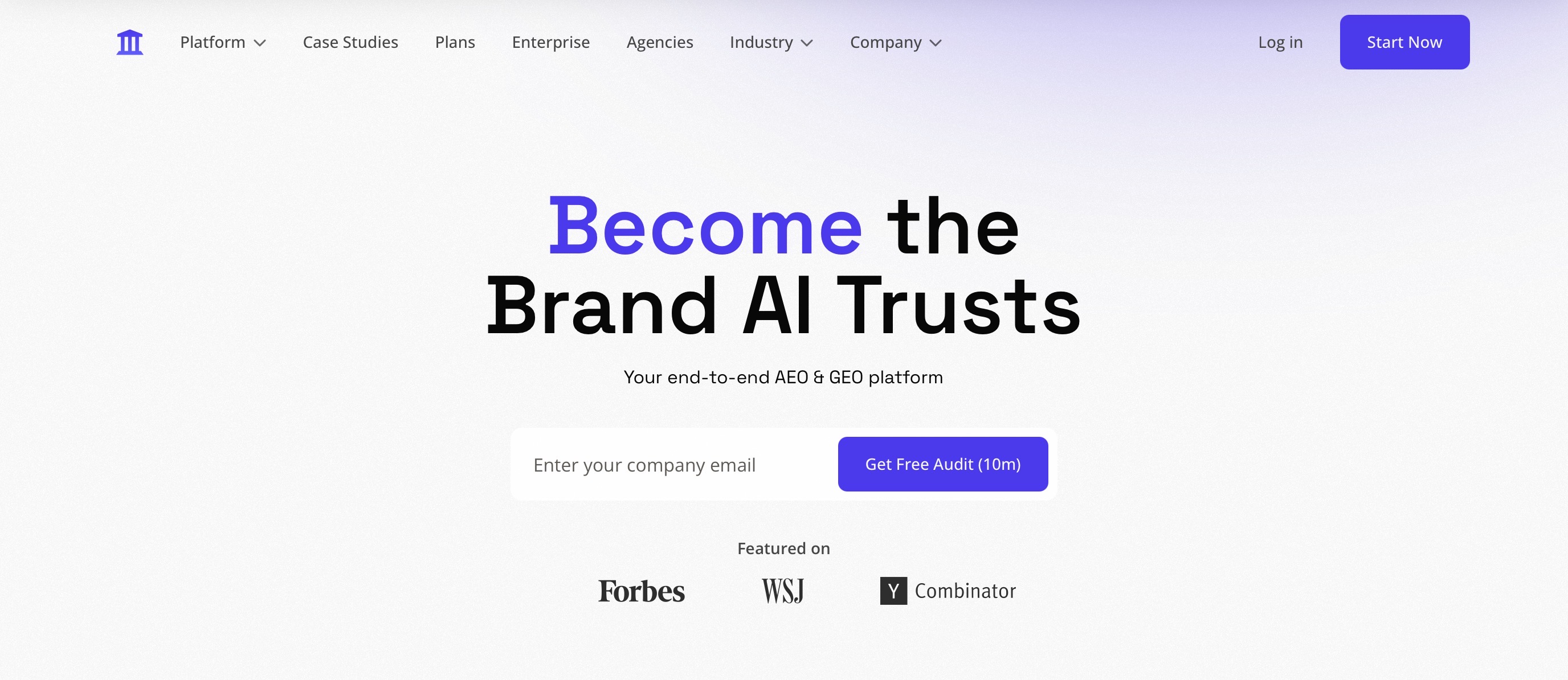
AthenaHQ is a solid Profound AI alternative if you want AI visibility tracking with more actionable recommendations. It helps you monitor prompts, competitors, citations, and content gaps across major AI search platforms.
I like that AthenaHQ tries to move beyond raw dashboards. But the pricing and credit-based usage can feel heavy if you are a small team or only starting with GEO.
What Are AthenaHQ’s Key Features?
- AI Visibility Monitoring: Tracks your brand across major AI search platforms.
- Prompt Tracking: Shows where your brand appears or gets missed.
- Competitor Benchmarking: Compares visibility, sentiment, and share of voice.
- Citation Intelligence: Shows which sources AI engines cite.
- Action Center: Gives recommendations to improve AI visibility.
- Content Optimization: Finds on-page and off-page GEO opportunities.
- AI Bot Analytics: Connects with GA4 and GSC for deeper tracking.
What Are The Pros Of AthenaHQ?
- Actionable Insights: Gives clearer next steps than basic trackers.
- Strong AI Coverage: Tracks major platforms like ChatGPT, Perplexity, Gemini, Claude, Copilot, Grok, and Google AI experiences.
- Good Citation Data: Helps you understand which sources influence AI answers.
- Useful Integrations: Supports tools like GA4, GSC, Shopify, Webflow, and Framer.
- Agency-Friendly: Helpful for client reporting and AI visibility pitches.
What Are The Cons Of AthenaHQ?
- Higher Starting Price: $295/month may feel expensive for smaller teams.
- Credit-Based Usage: Costs can rise as tracking scales.
- Setup Effort: Prompts, competitors, and reports need careful configuration.
- Enterprise-Locked Features: Some advanced features require a custom plan.
- Not Fully Content-Led: It gives recommendations, but it is not a complete content execution workflow.
How Much Does AthenaHQ Cost?
- Self-Serve: $295/month
- Enterprise: Custom pricing
What Is My Honest Take On AthenaHQ?
AthenaHQ is a strong option for teams that want AI visibility tracking, citation intelligence, and action-focused recommendations. But if you want a more content-first workflow with planning, writing, optimization, audits, and AI visibility tracking together, Scalenut feels more practical for daily execution.
Curious if AthenaHQ is worth the cost? Read our full AthenaHQ review for a closer look at its features, pricing, pros, and cons.
6. Writesonic GEO Suite [G2 Rating: 4.7/5]
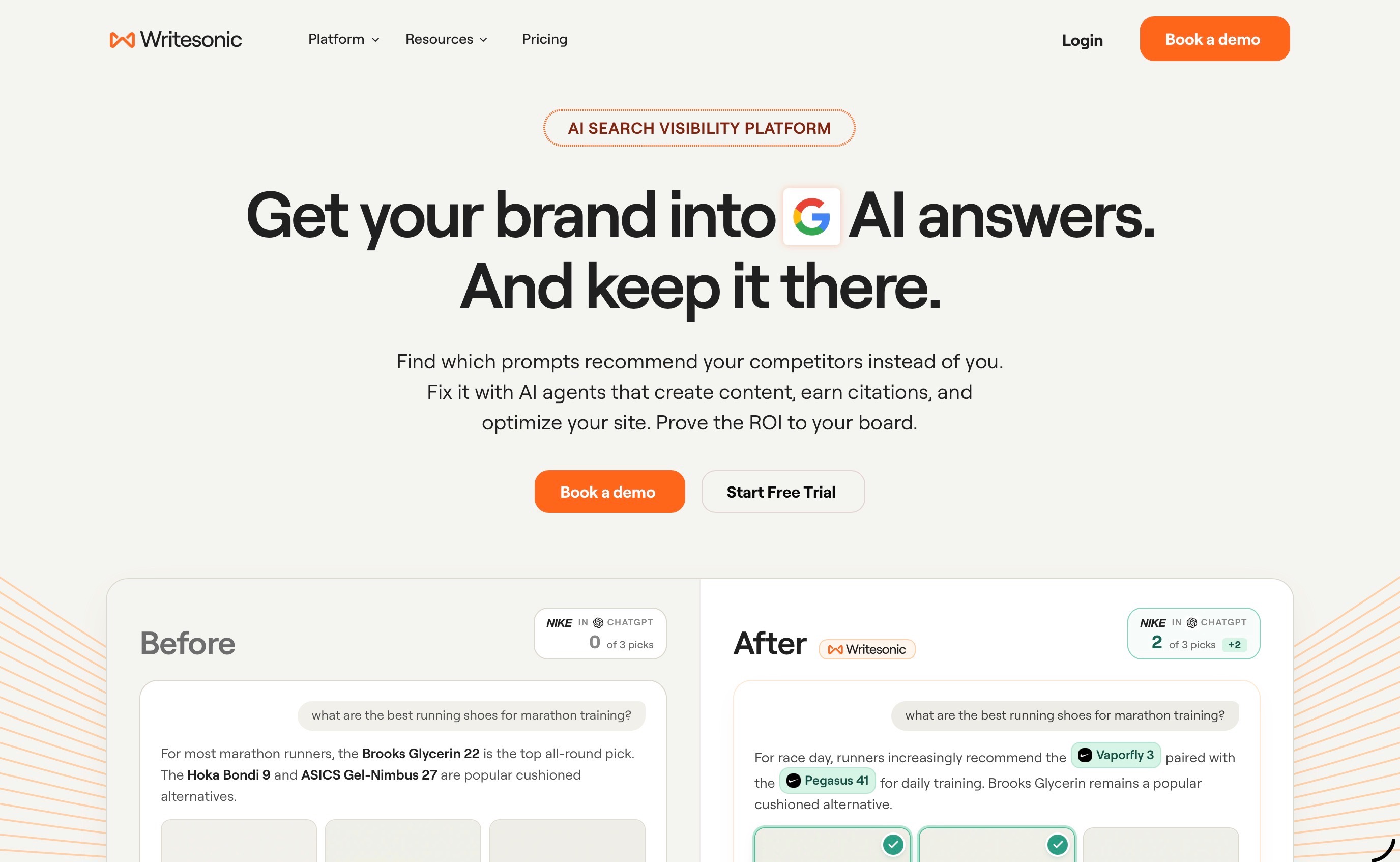
Writesonic GEO Suite is a good Profound AI alternative if you want AI visibility tracking tied to content creation. I like that it does not stop at showing visibility gaps. It also gives you tools to create, refresh, and optimize content.
That said, Writesonic can feel a little packed if you only want clean AI visibility analytics. It is stronger as an SEO, GEO, and content workflow than as a pure enterprise reporting tool.
What Are Writesonic GEO Suite’s Key Features?
- AI Visibility Tracking: Tracks how your brand appears across AI search platforms.
- Prompt Tracking: Monitors prompts, answers, citations, and visibility trends.
- AI Bot Analytics: Shows how AI crawlers interact with your website.
- Content Optimization: Helps improve underperforming pages.
- Site Audits: Finds SEO and GEO issues that may affect visibility.
- Action Center: Gives recommendations to improve AI search visibility.
- AI Article Writer: Helps create SEO and GEO-focused content.
What Are The Pros Of Writesonic GEO Suite?
- Content-Led Workflow: Combines AI visibility tracking with content creation.
- Useful AI Bot Data: Helps show whether AI crawlers are reaching your site.
- Good Optimization Tools: Useful for refreshing and improving pages.
- Strong For SEO Teams: Works well if content execution is part of your GEO strategy.
- Scalable Plans: Offers options for small teams, growing teams, and enterprises.
What Are The Cons Of Writesonic GEO Suite?
- Can Feel Feature-Heavy: The platform may feel busy if you only need tracking.
- Higher GEO Pricing: Broader GEO features sit on higher plans.
- Learning Curve: Teams may need time to understand the full workflow.
- Content Still Needs Editing: AI-generated content should be reviewed before publishing.
- Less Pure Analytics Depth: It may not replace enterprise-grade AI visibility reporting.
How Much Does Writesonic GEO Suite Cost?
- Starter: $79/month
- Basic: $199/month
- Growth: $399/month
- Enterprise: Custom pricing
What Is My Honest Take On Writesonic GEO Suite?
Writesonic GEO Suite is worth considering if you want AI visibility tracking and content execution in one place. It is not the cleanest option for teams that only want analytics, but it makes sense for SEO teams that want to move from insights to content updates faster.
7. Ahrefs Brand Radar [G2 Rating: 4.5/5]
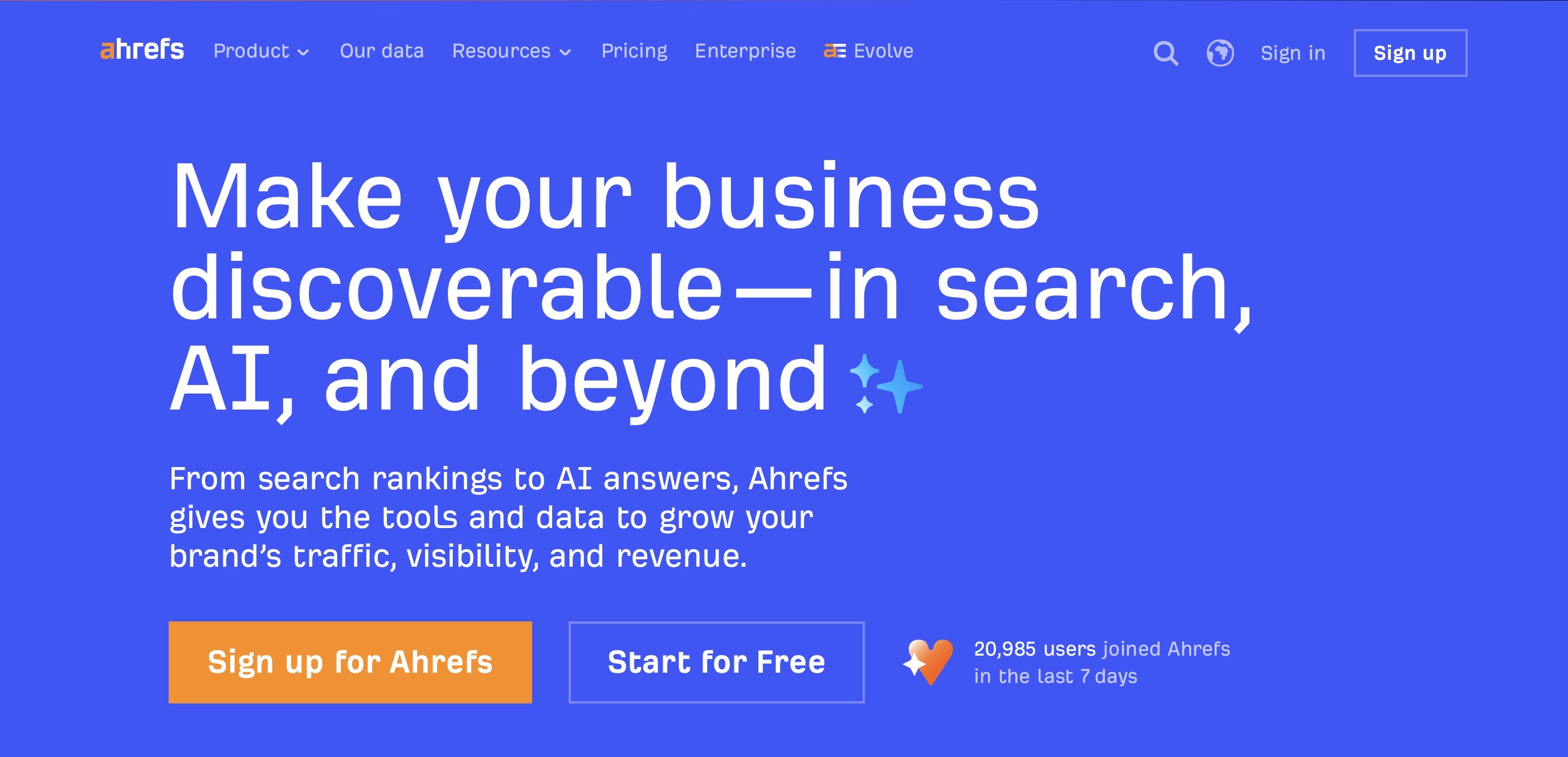
Ahrefs Brand Radar is a good Profound AI alternative if you already use Ahrefs and want AI visibility insights inside a familiar SEO platform. It helps track brand mentions, AI share of voice, cited pages, competitors, and visibility across AI search and other discovery channels.
I like the depth of Ahrefs’ data, especially because Brand Radar uses search-backed prompts instead of fully synthetic prompt sets. But I would still call it more of an insights tool than an execution platform.
What Are Ahrefs Brand Radar’s Key Features?
- AI Visibility Tracking: Tracks how your brand appears across AI search platforms.
- Search-Backed Prompts: Uses prompts modeled from real search behavior.
- Share Of Voice: Compares your visibility against competitors.
- Citation Tracking: Shows which pages and domains AI engines cite.
- Search Demand: Tracks branded and related search demand.
- Web Visibility: Finds brand mentions across the web.
- Reddit And Video Visibility: Tracks brand presence across Reddit, YouTube, and TikTok beta indexes.
What Are The Pros Of Ahrefs Brand Radar?
- Strong Data Foundation: Built on Ahrefs’ existing SEO and web data.
- Good Competitor Insights: Useful for AI share of voice and visibility gaps.
- Search-Backed Prompts: More grounded than random manual prompt testing.
- Broad Discovery View: Covers AI answers, web mentions, Reddit, YouTube, and TikTok.
- Familiar For SEOs: Easy to adopt if your team already uses Ahrefs.
What Are The Cons Of Ahrefs Brand Radar?
- Separate AI Pricing: AI platform indexes are sold separately from core Ahrefs plans.
- Insight-Heavy: It shows visibility gaps, but does not fully handle content execution.
- Can Get Expensive: Costs may rise if you need broader AI platform coverage.
- Learning Curve: Non-technical users may need time to understand the data.
- Still Evolving: Some social and video visibility indexes are still in beta.
How Much Does Ahrefs Cost?
- Starter: $29/month
- Lite: $129/month
- Standard: $249/month
- Advanced: $449/month
- Enterprise: $1,490/month
- Brand Radar AI Indexes: Sold separately
What Is My Honest Take On Ahrefs Brand Radar?
Ahrefs Brand Radar makes the most sense for SEO teams already working inside Ahrefs. It is strong for competitive visibility, citation analysis, and AI search research, but it is not the best fit if you want a hands-on content execution workflow.
Want to go beyond tracking? Explore the best LLM optimization tools for AI visibility and see which platforms can help you improve how AI engines find, cite, and recommend your brand.
8. LLMrefs
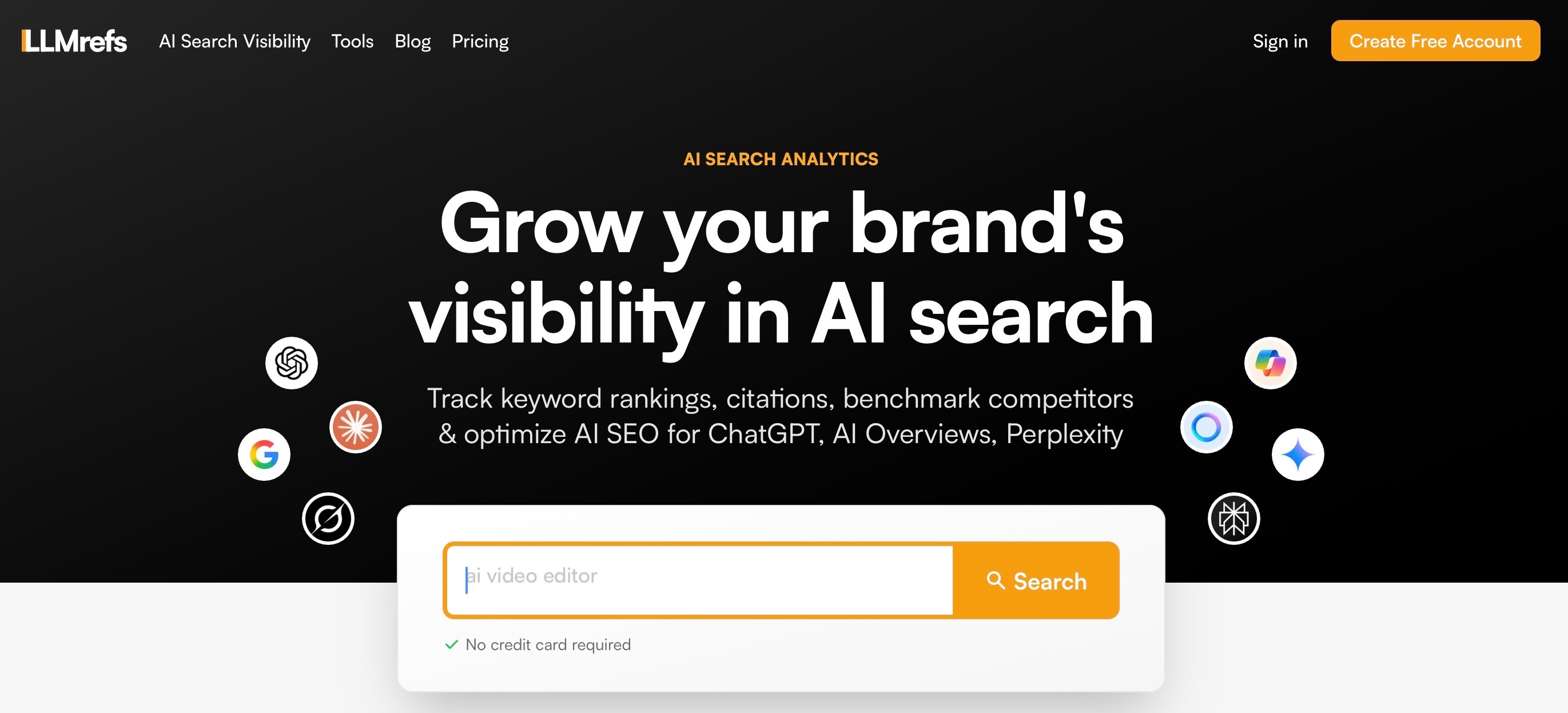
LLMrefs is a good Profound AI alternative if you want affordable AI search visibility tracking without a heavy setup. It is keyword-first, which makes it easier for SEO teams to understand, but also a little less flexible than prompt-first platforms.
I like that it keeps the workflow simple. You track keywords, review brand visibility, compare competitors, and check cited sources. But I would still treat it as a tracking and research tool, not a full GEO execution platform.
What Are LLMrefs’ Key Features?
- AI Search Monitoring: Tracks brand visibility across major AI search engines.
- Keyword Tracking: Uses SEO keywords to generate related AI search prompts.
- Citation Tracking: Shows which URLs and domains AI engines cite.
- Competitor Benchmarking: Compares share of voice and average position.
- Geo-Targeting: Supports tracking across 50+ countries and 20+ languages.
- Reports And Exports: Includes weekly reports, CSV exports, and API access.
- Built-In Utilities: Includes tools like an AI crawlability checker, Reddit threads finder, and LLMs.txt generator.
What Are The Pros Of LLMrefs?
- Affordable Entry Price: Lower starting cost than many AI visibility tools.
- Broad AI Coverage: Tracks major platforms like ChatGPT, AI Overviews, Gemini, Perplexity, Claude, and Grok.
- SEO-Friendly Setup: Keyword-based tracking feels familiar for SEO teams.
- Competitor Visibility: Useful for comparing share of voice and position.
- Unlimited Projects: Helpful for agencies managing multiple brands.
What Are The Cons Of LLMrefs?
- No G2 Rating Yet: Public review data is still limited.
- Keyword-First Approach: May miss some real prompt behavior.
- Limited Execution Depth: It does not fully support content planning, writing, or optimization.
- Weekly Updates: Every keyword is updated at least once per week, which may feel slow for teams that want daily tracking.
- Some Utility Tools May Be Lower Impact: Features like LLMs.txt can be useful to test, but I would not treat them as a major ranking lever.
How Much Does LLMrefs Cost?
- All In One: $79/month
- Free Trial: 7-day free trial
What Is My Honest Take On LLMrefs?
LLMrefs is a practical option if you want a simpler and more affordable way to track AI search visibility. I would consider it especially useful for SEO teams that want keyword-based tracking, citation insights, and competitor comparisons without enterprise pricing.
But if you need deeper diagnostics, advanced workflow automation, or hands-on content execution, LLMrefs may feel a bit light.
9. Nightwatch LLM Tracker [G2 Rating: 4.7/5]
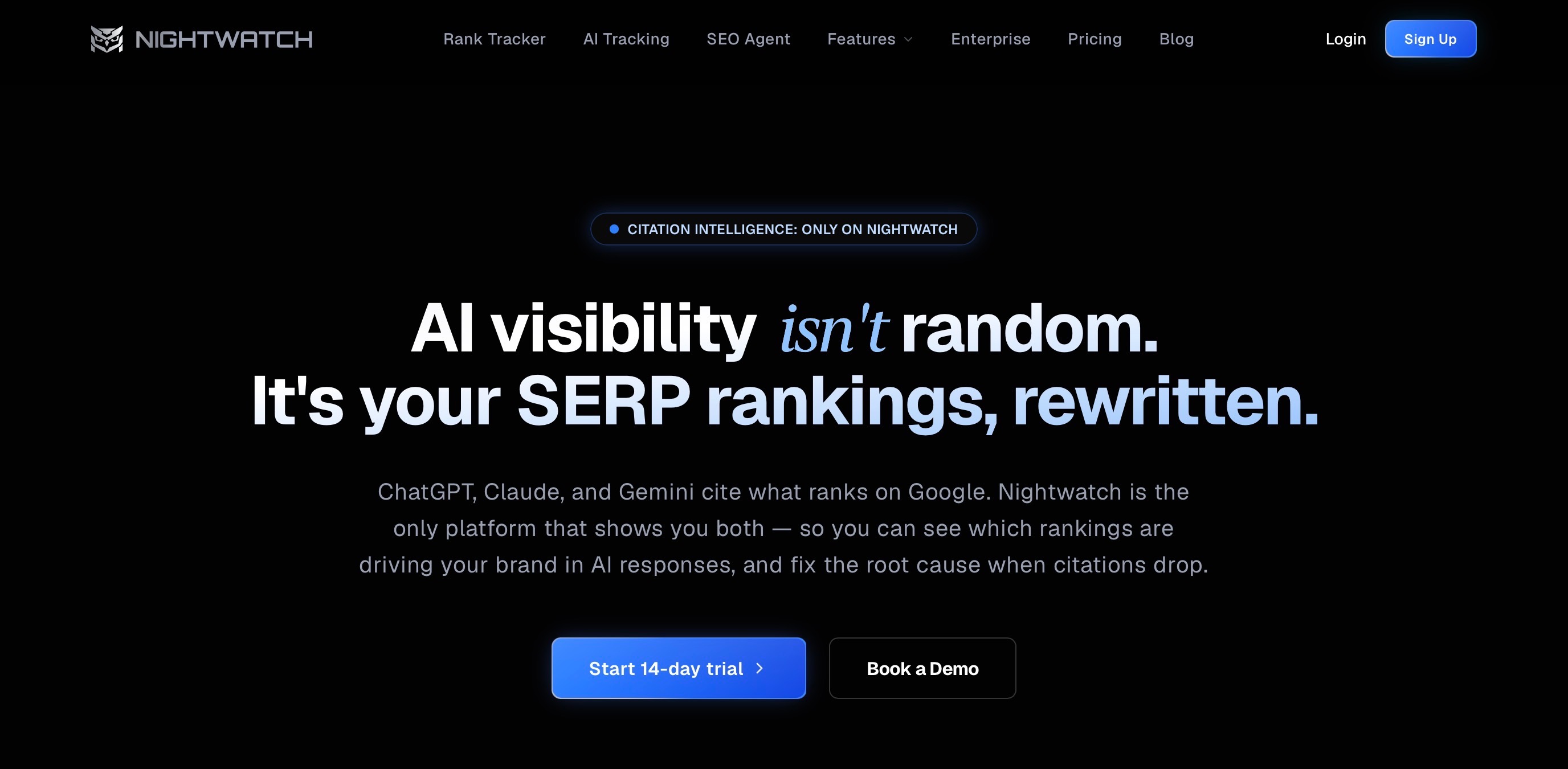
Nightwatch is a good Profound AI alternative if you want traditional rank tracking and AI visibility tracking in one place. I like that it connects SEO data with LLM tracking, so you can monitor keywords, competitors, AI mentions, citations, and sentiment from the same platform.
That said, Nightwatch still feels more like an SEO rank tracker with an AI visibility layer than a dedicated GEO execution platform.
What Are Nightwatch LLM Tracker’s Key Features?
- LLM Tracking: Tracks brand visibility across AI platforms.
- Prompt Research: Helps generate and monitor AI-style search prompts.
- Citation Analysis: Shows which domains AI engines cite.
- Sentiment Tracking: Analyzes how AI responses frame your brand.
- Share Of Voice: Compares your AI visibility against competitors.
- Local Rank Tracking: Tracks rankings across specific locations.
- SEO Integrations: Connects with Google Analytics, GSC, Looker Studio, and API workflows.
What Are The Pros Of Nightwatch LLM Tracker?
- SEO And AI Together: Combines rank tracking with AI visibility monitoring.
- Good Local Tracking: Strong fit for teams that care about location-based SEO.
- Useful Prompt Data: Helps track how brands appear across AI answers.
- Strong Reporting: Offers dashboards, white-label reports, and Looker Studio support.
- Self-Serve Setup: Offers a 14-day trial with no credit card required.
What Are The Cons Of Nightwatch LLM Tracker?
- Not AI-First: It feels more like an SEO tracker with AI features added on.
- Limited Execution: It does not fully support content planning, writing, or optimization.
- Prompt Limits: AI prompt limits depend on the plan.
- Learning Curve: The broader SEO feature set may take time to use well.
- Pricing Has Increased: It is no longer the low-cost $32/month option listed in some older articles.
How Much Does Nightwatch LLM Tracker Cost?
- Starter: €79/month
- Professional: €159/month
- Agency: €399/month
- Enterprise: Custom pricing
What Is My Honest Take On Nightwatch LLM Tracker?
Nightwatch is worth considering if your team already cares about keyword rankings, local SEO, and reporting, but now wants to layer AI visibility tracking on top. It is less ideal if you want a pure AI search optimization tool with deeper content execution workflows.
10. Rankscale AI
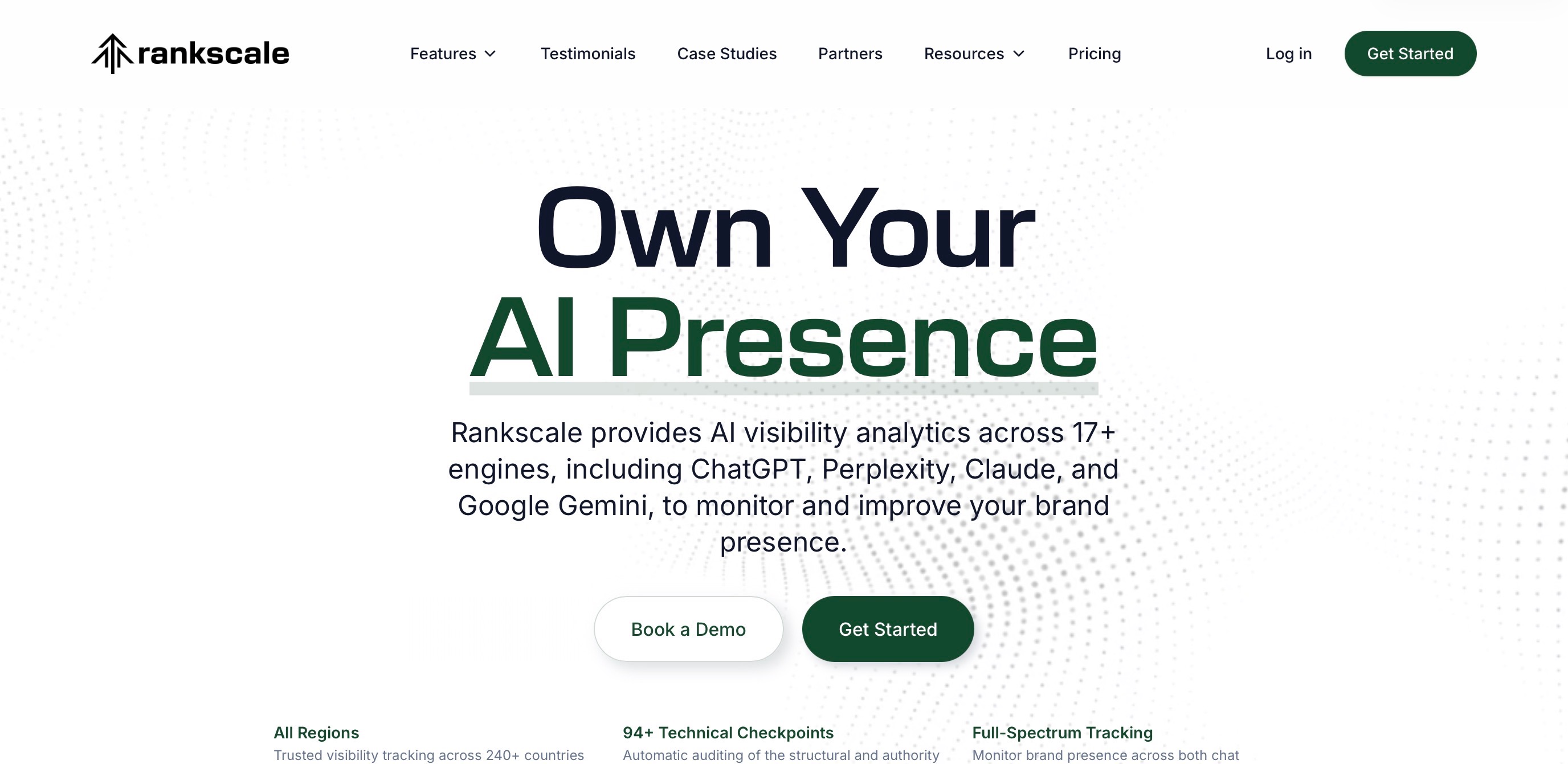
Rankscale AI is a good Profound AI alternative if competitor benchmarking is your main priority. It tracks how your brand appears across AI search engines, how often competitors show up, which sources are cited, and how sentiment changes across answers.
I like that Rankscale goes deeper than basic mention tracking. But I would still see it as more of an AI visibility analytics tool than a full content execution platform.
What Are Rankscale AI’s Key Features?
- AI Visibility Tracking: Monitors brand mentions across major AI engines.
- Competitor Benchmarking: Compares visibility, citations, and sentiment against competitors.
- Citation Analysis: Shows which sources AI engines rely on.
- Prompt Research: Helps identify prompts and search terms worth tracking.
- Sentiment Analysis: The sentiment analysis feature helps analyze how AI answers frame your brand.
- Source Box Analysis: Shows which sources appear alongside AI-generated answers.
- Custom Dashboards: Lets teams build saved dashboard views for reporting.
What Are The Pros Of Rankscale AI?
- Strong Competitor Tracking: Useful for comparing brand visibility across AI engines.
- Good Citation Data: Helps identify which sources influence AI answers.
- Flexible Monitoring: Supports hourly, daily, weekly, or monthly tracking.
- Broad AI Coverage: Includes ChatGPT, Gemini, Perplexity, Claude, DeepSeek, Mistral, Grok, and Copilot.
- Agency-Friendly: Offers dashboards, exports, and workspace features for client reporting.
What Are The Cons Of Rankscale AI?
- No Public G2 Rating: Review data is still limited.
- Credit-Based Pricing: Costs can increase as prompts, engines, and regions scale.
- Limited Execution: It does not fully support content planning, writing, or optimization.
- Setup Takes Thought: You need to choose prompts, competitors, engines, and regions carefully.
- Analytics-Heavy: Better for tracking and benchmarking than hands-on content improvement.
How Much Does Rankscale AI Cost?
- Essentials: $20/month
- Pro: $99/month
- Growth: $385/month
- Enterprise: $780/month
What Is My Honest Take On Rankscale AI?
Rankscale AI is worth considering if you want affordable AI visibility tracking with strong competitor and citation analysis. It is especially useful for agencies or teams that want flexible monitoring across multiple AI engines. But if your goal is to move from tracking to content execution, you may still need another tool in your workflow.
How Do You Choose The Right Profound AI Alternative For Your Team?
The right Profound AI alternative depends on what you need most: deeper tracking, better reporting, lower pricing, or faster content execution. I would not choose based on feature count alone. I would choose based on how easily your team can turn AI visibility data into action.
Here are the key factors to look at before choosing.
1. Check The AI Platforms It Tracks
Look at whether the tool tracks the platforms your audience actually uses, such as ChatGPT, Perplexity, Gemini, Google AI Overviews, Claude, Copilot, or Grok.
Also check if these platforms are included in the base plan or sold as add-ons.
2. Look At Prompt And Citation Depth
A good tool should show more than brand mentions. It should tell you which prompts trigger your brand, where competitors appear, which sources are cited, and how your brand is framed.
Prompt tracking, citation insights, sentiment, and share of voice are the metrics I would prioritize.
3. Decide If You Need Tracking Or Execution
Some tools are built mainly for monitoring. Others help with content planning, writing, optimization, audits, and updates.
If you already have a strong SEO workflow, tracking may be enough. If not, choose a tool that connects AI visibility insights with content execution.
4. Compare Pricing Against Actual Usage
Do not judge pricing by the starting plan alone. Check prompt limits, AI engine access, competitor analysis, seats, exports, reporting, and add-on costs.
A cheaper tool can get expensive fast if the important features sit on higher tiers.
5. Review Reporting And Collaboration Features
If you report to clients, leadership, or multiple stakeholders, reporting matters. Look for clean dashboards, export options, client-ready reports, and easy ways to share progress.
This can save a lot of manual work every month.
6. Match The Tool To Your Team Size
Enterprise teams may need advanced analytics, custom workflows, and deeper visibility intelligence. Smaller SEO and content teams may need something simpler, faster, and easier to act on.
The best Profound AI alternative is not always the most advanced one. It is the one that fits your budget, workflow, and ability to execute consistently.
Still unsure about Profound? Read our full Profound AI Review to know if it is really the best option for your team.
Conclusion
The best alternatives to Profound AI depends on what your team needs next: deeper visibility metrics, stronger AI search performance, or a clearer path from insights to execution. For marketing teams and large enterprises, the right AI visibility platform should help track your AI presence, improve your brand’s visibility, and connect generative engine optimization with a practical content strategy.
Start by shortlisting the profound alternatives that match your budget and workflow, then compare them by platform coverage, reporting depth, execution features, and how well they can improve overall search performance.
Profound AI Alternatives: Frequently Asked Questions
What are good alternatives for Profound generative engine optimization software?
Good alternatives for Profound generative engine optimization software include Scalenut, Scrunch AI, AthenaHQ, Peec AI, Writesonic GEO Suite, and Rankscale AI. Choose based on whether you need AI visibility tracking, citation insights, content execution, competitor benchmarking, or simpler pricing.
Which Profound alternatives are best for benchmarking brands vs competitors in LLMs?
For benchmarking brands vs competitors in LLMs, tools like Scrunch AI, AthenaHQ, Rankscale AI, Peec AI, and Ahrefs Brand Radar are strong options. They help compare visibility, citations, sentiment, share of voice, and how often competitors appear in AI-generated answers.
Which Profound alternatives offer region-based prompts and reporting?
OtterlyAI, LLMrefs, Nightwatch, AthenaHQ, and Rankscale AI are worth considering for region-based prompts and reporting. These tools can help teams monitor how AI visibility, citations, and brand mentions change across locations, languages, markets, or country-specific search behavior.
What makes a tool one of the best Profound AI competitor tools?
The best Profound AI competitor tools should do more than track brand mentions. Look for AI visibility tracking, prompt-level insights, citation data, competitor benchmarking, reporting, and clear recommendations that help your team improve visibility instead of just watching dashboards.
Why should teams consider Profound AI alternatives?
Teams usually look for Profound AI alternatives when they need simpler pricing, easier reporting, stronger content workflows, or more actionable recommendations. Profound is powerful, but smaller teams may want a tool that is easier to use and faster to act on.
What is the best Profound AI alternative for content teams?
Scalenut is a strong option for content teams because it connects AI visibility tracking with keyword planning, content creation, optimization, audits, and performance analysis. That makes it useful for teams that want to move from GEO insights to actual content execution.
Which Profound AI alternatives are best for AI visibility tracking?
Scrunch AI, Peec AI, AthenaHQ, OtterlyAI, LLMrefs, Rankscale AI, and Ahrefs Brand Radar are all useful for AI visibility tracking. The right choice depends on whether you need prompt tracking, citation insights, competitor benchmarking, regional tracking, or reporting depth.
Are there cheaper alternatives to Profound for GEO for smaller teams?
Yes. Tools like OtterlyAI, LLMrefs, Rankscale AI, and Scalenut can be more accessible for smaller teams, depending on the features needed. Compare prompt limits, AI engine coverage, add-ons, exports, and seats before choosing based on starting price alone.
Which Profound AI alternative is best for agencies?
AthenaHQ, Rankscale AI, OtterlyAI, Nightwatch, and Scalenut can work well for agencies. I would prioritize tools with client-ready reporting, competitor benchmarking, multi-brand workspaces, exports, and clear recommendations that make monthly reporting easier.
What features should I look for in a GEO tool?
A good GEO tool should include AI visibility tracking, prompt tracking, citation analysis, competitor benchmarking, sentiment insights, reporting, and recommendations. If content execution matters, also look for content briefs, optimization workflows, audits, and performance tracking.
Is Profound AI better for enterprise teams?
Profound AI can be a good fit for enterprise teams that need deep AI visibility intelligence, advanced reporting, and broader analytics. But smaller SEO, content, or agency teams may prefer alternatives that are simpler, more affordable, or more execution-focused.
Which are the top Profound competitors with ChatGPT tracking?
Most major Profound AI competitors now support ChatGPT visibility tracking, including Scalenut, Peec AI, Scrunch AI, AthenaHQ, OtterlyAI, LLMrefs, Rankscale AI, and Nightwatch. The bigger difference is how deeply each tool tracks prompts, citations, competitors, and action items.
How do I choose the right Profound AI alternative?
Start with your main goal. If you need deep analytics, choose a visibility-first platform. If you need execution, choose a tool with content planning, optimization, and audits. Then compare pricing, AI platform coverage, reporting, prompt limits, and team workflows.
Which are the best alternatives to Profound for enterprise GEO?
Scrunch AI, AthenaHQ, Ahrefs Brand Radar, Rankscale AI, and Nightwatch can work well for enterprise teams depending on the use case. Look for broad AI engine coverage, competitor benchmarking, reporting flexibility, integrations, user permissions, and scalable prompt tracking.
Where can I find user reviews of Profound AI alternative tools?
You can check user reviews on platforms like G2, Capterra, Product Hunt, and software comparison sites. Reviews are useful for spotting issues around ease of use, reporting, support, pricing, setup time, and whether the tool delivers practical value beyond dashboards.


.svg)


.webp)