
.jpg)
Which Best GEO Tools for Ecommerce Actually Drive Rankings?
Key Highlights
- The best GEO tools for ecommerce help brands track how they appear across AI platforms, not just in traditional search engines.
- Ecommerce teams need more than basic search results data because AI visibility now depends on prompts, citations, and product discovery patterns.
- A strong GEO strategy should show which brands, categories, and product pages are being surfaced in AI-generated answers.
- The tools in this guide vary by use case, from fully managed execution to lighter monitoring for mentions, citations, and competitor gaps.
- Platforms like AthenaHQ and Profound are more useful when generative engine optimization is tied closely to product discovery and revenue impact.
- Semrush, Ahrefs, and Frase are stronger fits for teams that want GEO insights connected to broader content marketing and optimization workflows.
- OtterlyAI and Peec AI are better for brands that want faster monitoring, while Scalenut is better for teams that want execution, structure, and best practices built into the workflow.
- The right tool depends on whether your team needs research depth, prompt tracking, or support optimizing for large language models across AI-driven search.
Most ecommerce teams can tell AI search is starting to shape product discovery, but they still do not have a clear way to measure it. You may see competitors show up in ChatGPT, Perplexity, or Google AI answers and still not know which prompts trigger those mentions, which pages are being cited, or whether your products are visible at all.
That is the gap many teams are running into now. Traditional SEO tools were not built to track prompt visibility, citations, answer coverage, or AI-driven product discovery. And most generic GEO tool roundups do not help much because they do not reflect what ecommerce brands actually need to evaluate.
This guide is meant to make that choice easier. We break down the best GEO tools for ecommerce based on what they do well, who they are best for, and how to choose the right one for your team.
What Are The Best GEO Tools For E-commerce Brands Right Now?
E-commerce brands do not just need a tool that tells them whether they showed up in an AI answer. They need one that helps them understand prompt visibility, citations, competitor gaps, product discovery trends, and what to do next.
Below, we’ll break down the best GEO tools for e-commerce based on what they actually do well, who they are best for, and where each one may fall short.
1. Scalenut
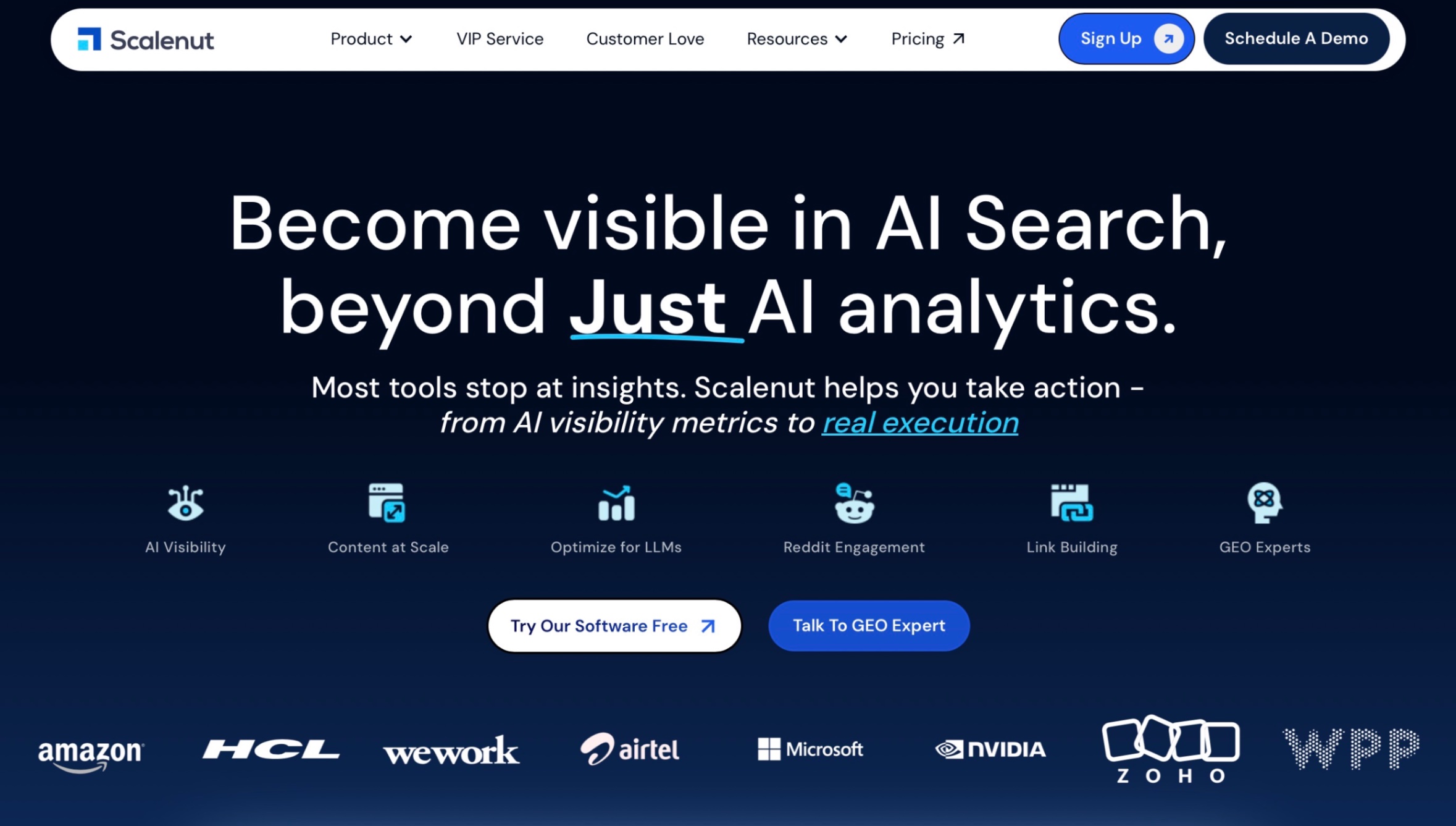
Scalenut is an SEO and GEO platform built for teams that want AI visibility tracking and SEO execution support in one place.
What makes it stand out is that it does not stop at monitoring brand presence in AI answers. It also turns those signals into content, authority, and optimization actions teams can actually use.
Best For: Ecommerce brands that want a tool combining AI visibility tracking, prompt-level insights, SEO research, content optimization, and execution support in one workflow.
What GEO Features Do E-commerce Businesses Get With Scalenut?
- Brand-level AI visibility tracking across platforms such as ChatGPT and Perplexity
- Visibility Score to measure how often your brand appears compared to competitors
- Average Position tracking to show how prominently your brand appears in AI answers
- Share of Voice reporting to compare your visibility against competing brands
- Visibility Heatmap to spot stronger and weaker platforms
- Brand Visibility Rank for a combined benchmark across prompts and topics
- Prompt Tracking to identify which queries trigger brand mentions
- Citation Tracking to show which sources AI systems reference in responses
- Competitor Visibility Insights to see which brands are mentioned alongside yours
- Query Fanouts to understand how one AI query expands into related follow-up questions
- Sentiment Analysis to separate positive, neutral, and negative brand mentions
What Other Features Do You Get With Scalenut?
- Cruise Mode for SERP-informed outlining and drafting
- Content Optimizer for improving on-page performance signals
- AI Humanizer to make AI-assisted content read more naturally
- Content Scoring for evaluating intent match, structure, depth, and keyword use
- Keyword Planner for clustering keywords by intent
- Competitor Coverage Analysis to compare how other pages cover the topic
- Traffic Analyzer to find stronger-performing pages and quick-win opportunities
- Content Audit to identify pages that need refreshing, consolidation, or deeper optimization
- Link Manager for internal linking workflows
- On-Page Pro for title and meta benchmarking
- Backlinks Marketplace for discovering backlink opportunities
Why Consider Scalenut?
- It combines GEO monitoring and SEO execution in one platform instead of splitting them across separate tools
- It helps teams move from AI visibility data to actual next steps faster
- It is useful for brands that want prompt insights, citation visibility, and content opportunities in the same workflow
- It supports both strategic planning and day-to-day content execution
- It is a stronger fit than a pure monitoring tool for teams that also want help improving performance after insights are surfaced
What Could Be The Potential Limitations Of Scalenut?
- Teams looking only for lightweight AI visibility monitoring may find Scalenut broader than they need
- Some of its biggest value comes when teams actively use both the GEO and SEO sides of the platform together
- Brands that want a fully done-for-you service would still need managed support beyond software alone
“They are by far the best of all SEO firms. My website traffic grew from 11k to 64k in two months. Their services are by far the best of all SEO firms I have worked with. I can not recommend their services enough, and I am impressed by the entire team of experts. They are affordable.” Noelle Spinosa, President, Noelle Salon & Spa Inc.
Schedule a free demo call today!
2. AthenaHQ
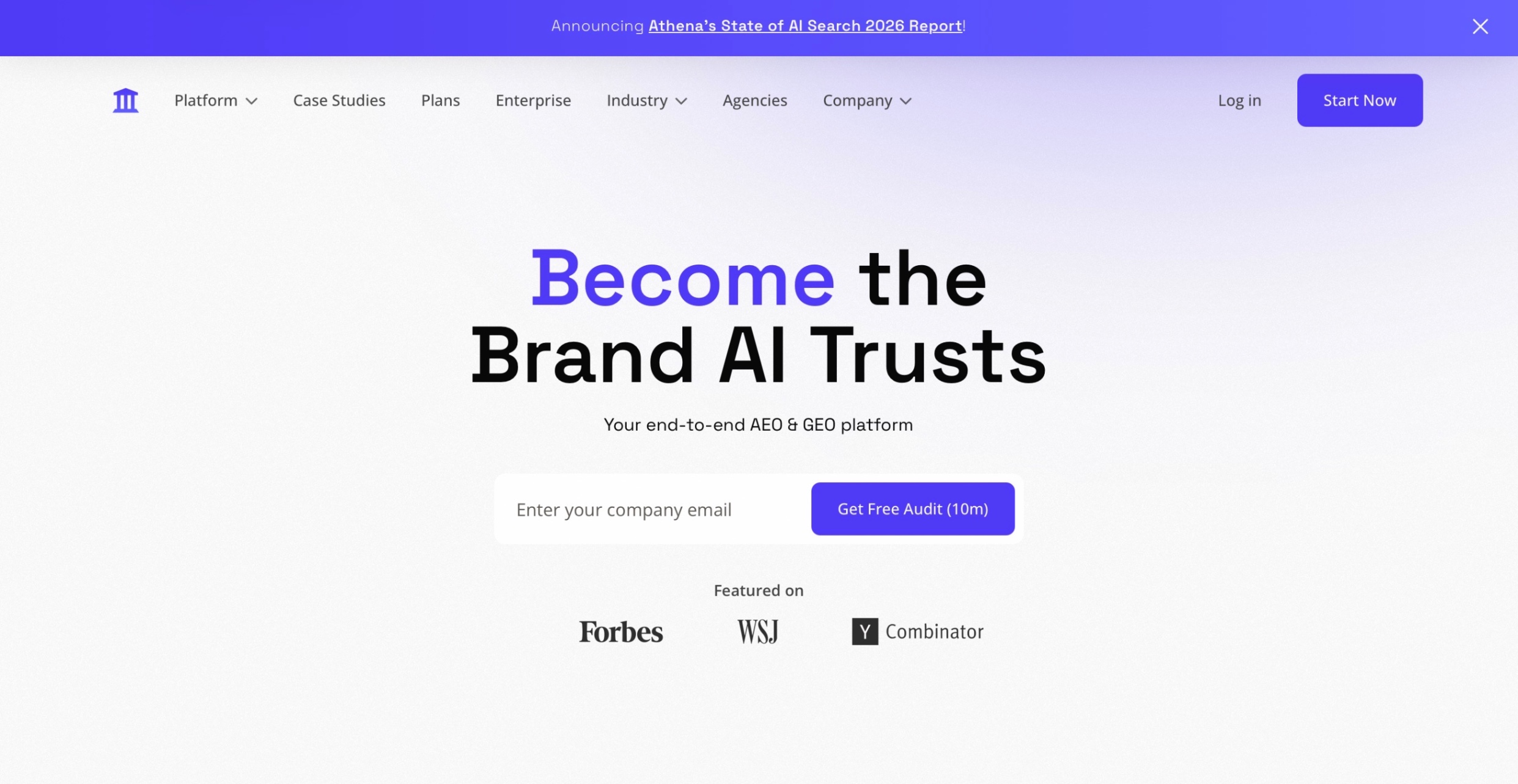
AthenaHQ is one of the more ecommerce-specific GEO platforms available right now.
It is built for brands that want to connect AI visibility to product discovery and business outcomes, not just mentions.
Best For: Ecommerce brands that need an AI visibility platform tied to product discovery and revenue, especially if they want to track which products AI recommends and how that connects to PDP sessions, conversions, and attributed revenue.
What GEO Features Do E-commerce Businesses Get With AthenaHQ?
- Product recommendation tracking across major AI platforms
- Product-level, category-level, and brand-level visibility monitoring
- Category share of voice tracking against competitors
- Citation tracking to see where and how brands appear in AI responses
- Competitor analysis for AI visibility and recommendation gaps
- AI-focused product description support designed to improve recommendation potential
- Purchase attribution features that connect AI visibility to downstream business results
- Shopify attribution support for ecommerce reporting workflows
What Other Features Do You Get With AthenaHQ?
- Prompt volume tracking to prioritize the prompts that matter most
- Cross-platform monitoring across tools like ChatGPT, Perplexity, Gemini, Claude, Copilot, and AI Overviews
- Live dashboards for visibility, citations, and competitive benchmarking
- Optimization support to help teams act on what the data shows
- Coverage for brands selling through their own site, Amazon, or multiple marketplaces
Why Consider AthenaHQ?
- It has a stronger ecommerce focus than many GEO platforms that stay at the brand-mention level
- It is useful for teams that want to understand product discovery, not just surface visibility
- The platform is better aligned with revenue-minded ecommerce teams because it emphasizes attribution and business impact
- It combines monitoring with optimization, which makes it more practical for teams that want action, not just reporting
What Could Be The Potential Limitations Of AthenaHQ?
- Its ecommerce positioning is closely tied to Shopify attribution, so brands on other stacks may need to confirm how deep the attribution layer goes for their setup
- It may feel more robust than necessary for teams that only want simple mention tracking
- Some of its strongest value comes from using the platform as part of a broader optimization workflow, not as a lightweight monitoring tool
3. Profound
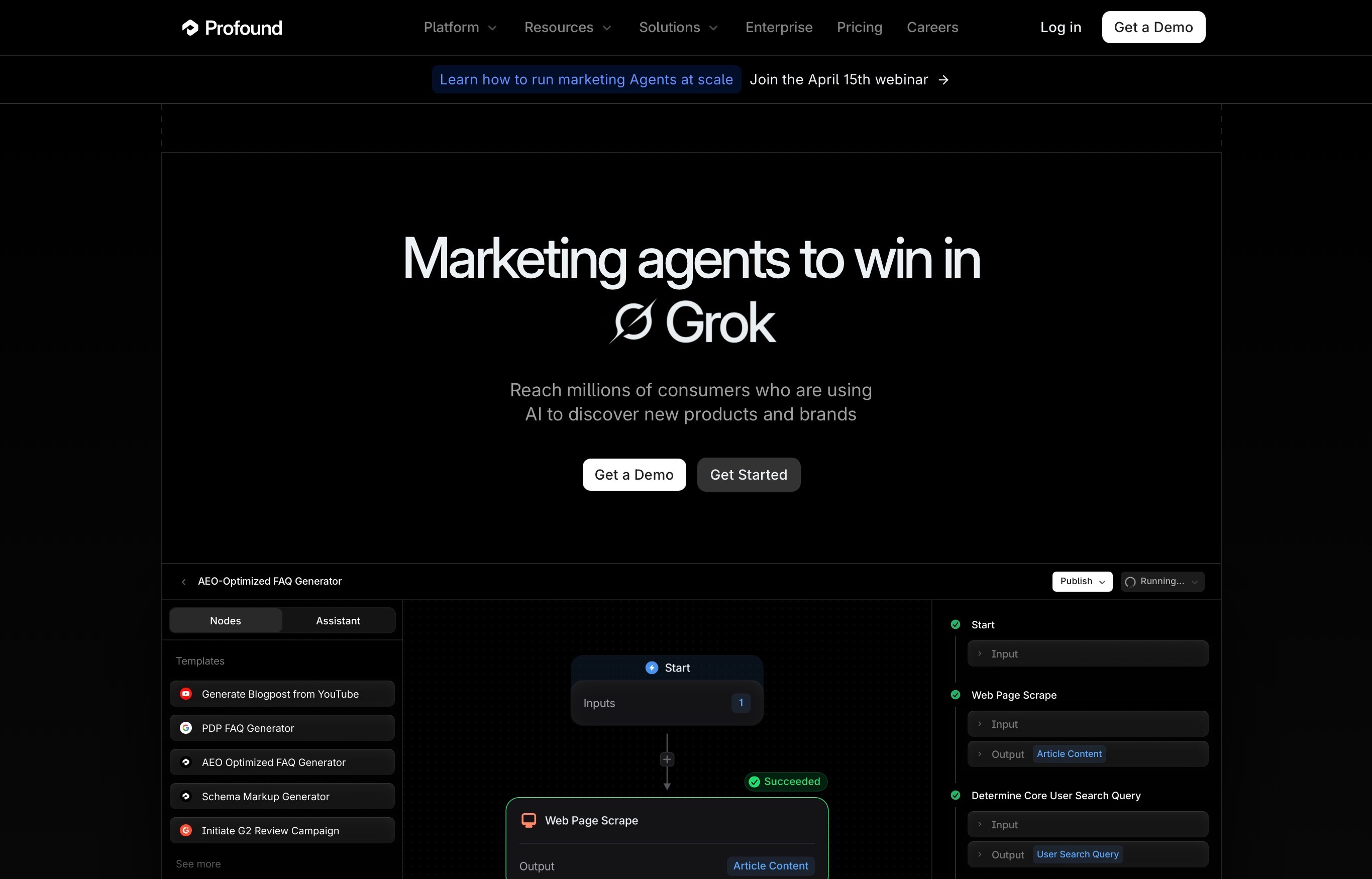
Profound is built for teams that want deeper visibility into how brands appear across answer engines.
For ecommerce brands, its strongest angle is ChatGPT Shopping visibility and product placement tracking.
Best For: Enterprise teams tracking AI search and ChatGPT Shopping visibility, especially those that want to monitor brand presence in AI answers alongside product placement in shopping-driven prompts.
What GEO Features Do E-commerce Businesses Get With Profound?
- Brand visibility tracking across major AI answer engines
- Prompt-level analysis to identify where brands and competitors appear
- ChatGPT Shopping visibility tracking for product placement inside shopping-triggered prompts
- Product analysis for specific items, including pricing, reviews, availability, and representation accuracy
- Competitive comparison across shopping-driven prompts
- Category-level visibility analysis for ecommerce brands
- Merchant-level visibility tracking to show which retailers or sellers are surfaced in ChatGPT Shopping
- Brand Relevant Prompts for monitoring citation presence across AI conversations
What Other Features Do You Get With Profound?
- Agent Analytics for tracking AI crawler activity and AI-driven referral behavior
- Prompt discovery features that help teams understand what users are asking answer engines
- Workflow and agent capabilities for optimization and content operations
- Infrastructure integrations for teams that want deeper technical visibility
- Enterprise features like SSO, premium support, and security-focused setup
Why Consider Profound?
- It is one of the strongest options for brands that specifically care about ChatGPT Shopping visibility
- It goes beyond generic AI mention tracking by showing product placement, merchant presence, and competitive movement
- It is well suited to larger organizations that need a broader platform with enterprise-grade support
- The platform is a strong fit for brands that want both answer-engine visibility and shopping-specific intelligence in one place
What Could Be The Potential Limitations Of Profound?
- It may be more advanced than what smaller teams need if they only want lightweight monitoring
- Its ecommerce differentiation is heavily tied to ChatGPT Shopping, so brands should confirm whether that aligns with their main use case
- Teams still need internal ownership to act on product feed, structured data, or merchant-level insights surfaced by the platform
4. Authoritas
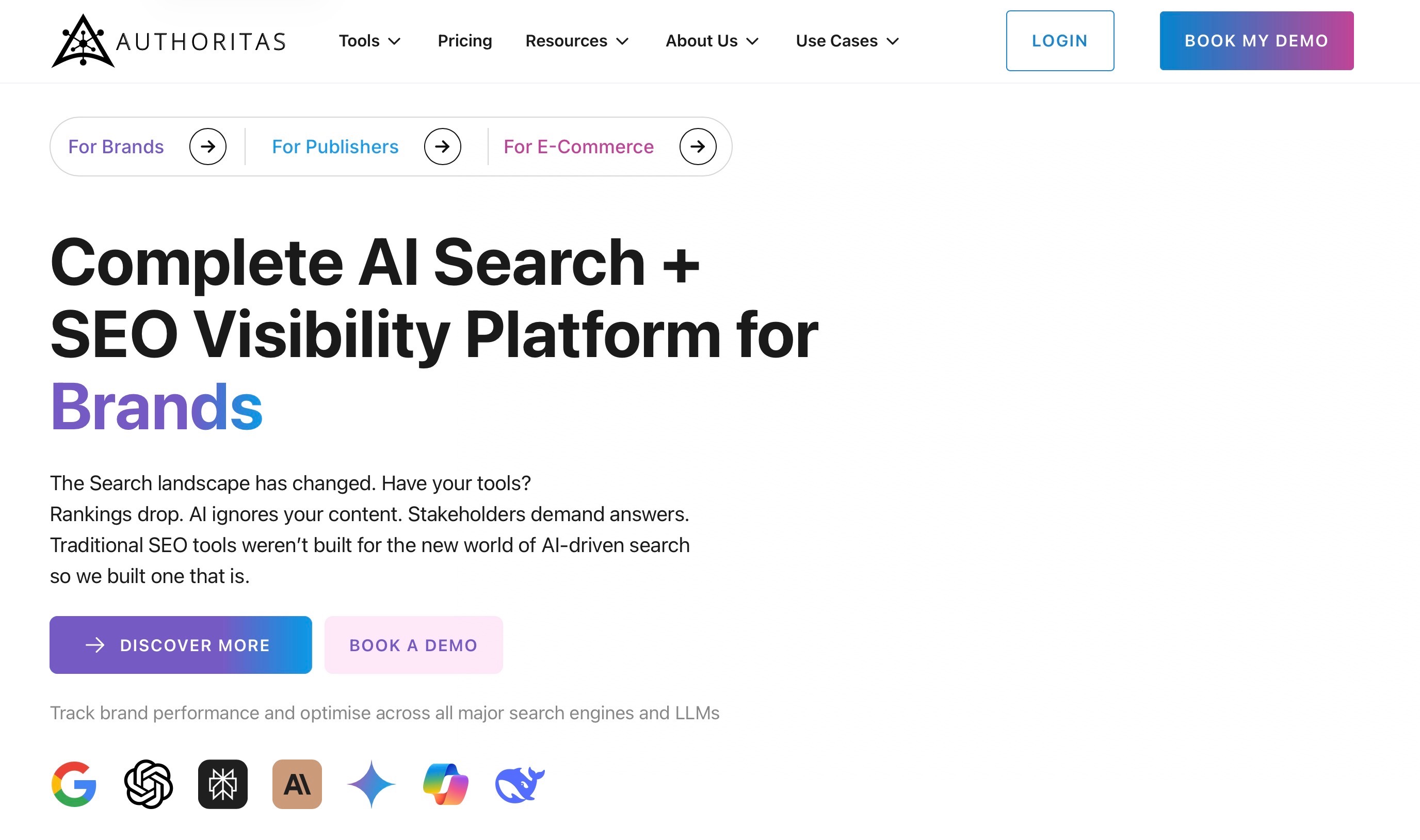
Authoritas is one of the more ecommerce-aware AI visibility platforms because it is built around how products, brands, and retailers show up in AI-driven shopping journeys.
Its positioning is especially relevant for brands that want to track product visibility, cited sources, persona-based prompts, and brand perception across AI search platforms.
Best For: Ecommerce brands that want product, persona, and citation visibility, especially if they need to understand how products are described, which retailers and sources are being cited, and how AI platforms shape brand perception.
What GEO Features Do E-commerce Businesses Get With Authoritas?
- Product performance visibility across AI search engines, including insight into how products are performing and how they are being described
- Citation visibility that shows which retailers and sources are being cited in AI-generated answers
- AI share of voice tracking across branded and unbranded product searches
- Persona-based question building through an AI-driven question builder that simulates how different customer personas search from awareness to decision
- The ability to generate buyer personas and build branded, unbranded, multilingual, and long-tail query sets
- Sentiment and brand perception tracking to understand whether your brand is being represented positively or negatively across AI platforms
- Monitoring for misinformation or outdated product claims that may affect how shoppers perceive the brand
- Visibility tracking across platforms like ChatGPT, Gemini, Perplexity, Claude, DeepSeek, Google AI Overviews, and Bing AI
What Other Features Do You Get With Authoritas?
- Research tools for uncovering the prompts and questions customers ask LLMs in your category
- Support for branded, unbranded, multilingual, and buyer-journey-based prompt sets
- Geographic and local AI search customization to track how AI answers vary by country, region, city, and language
- Source discovery features that help identify which sites AI engines trust and cite regularly
- Flexible tracking for ecommerce keywords and product keywords imported from your catalog
Why Consider Authoritas?
- It has a stronger ecommerce lens than many GEO platforms because it does not stop at brand mentions and instead looks at products, retailers, and product-search behavior
- The persona and question-building workflow makes it more useful for brands that want to understand how different shoppers phrase AI-led product research
- It is a good fit for teams that care about how AI is describing the brand, not just whether the brand is present
- The platform is especially relevant for ecommerce teams that want clearer visibility into cited retailers, trusted sources, and product discovery trends
What Could Be The Potential Limitations Of Authoritas?
- It may feel more involved for teams that only want simple mention tracking
- Teams looking for a broader all-in-one SEO platform may still need other tools alongside it
- Brands still need internal ownership to act on sentiment findings, misinformation issues, and citation gaps surfaced by the platform
5. Semrush AI Visibility Toolkit
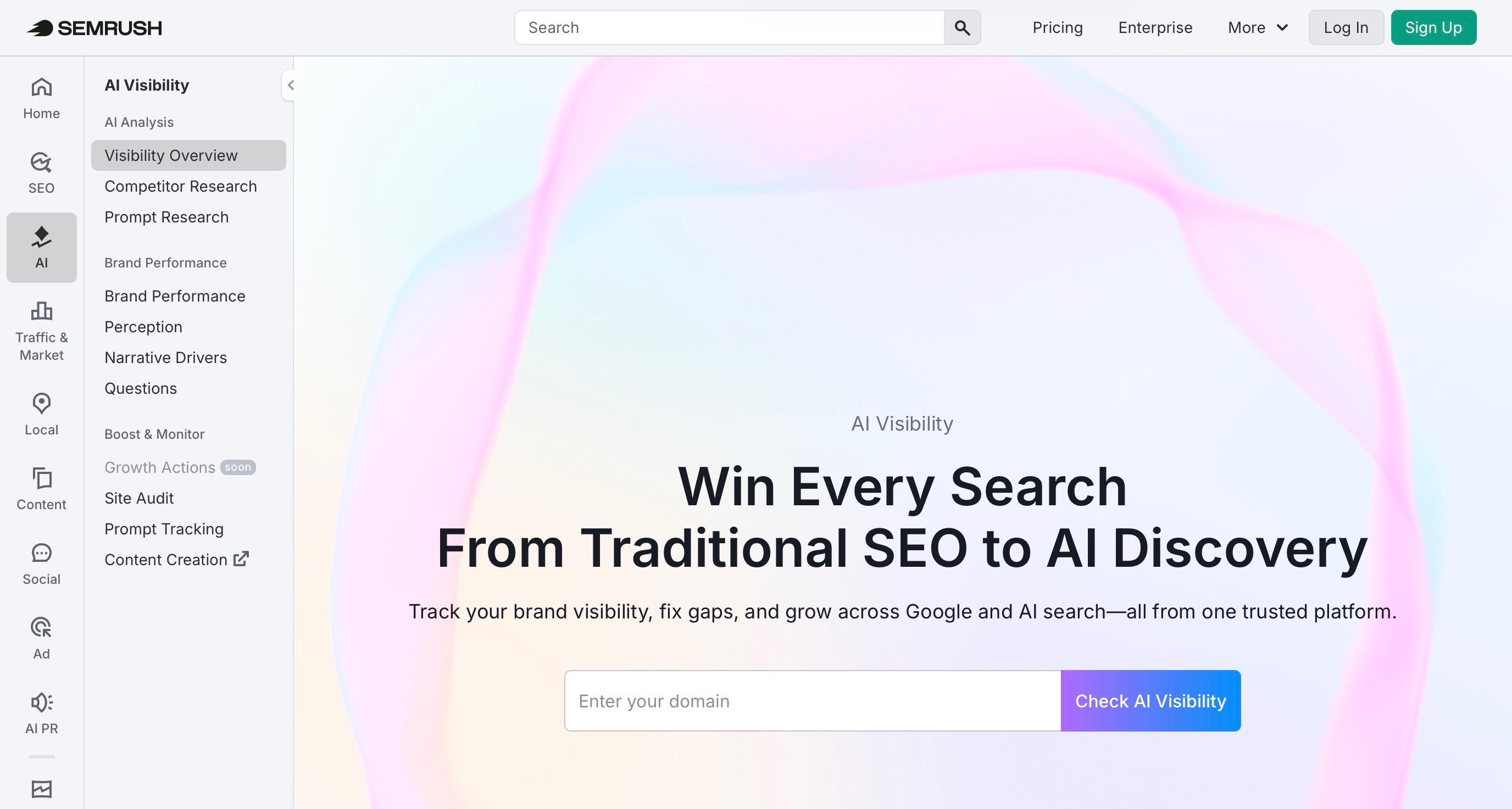
Semrush AI Visibility Toolkit is a strong fit for teams that want AI visibility data inside a broader SEO and search operations workflow.
Its strength is not just tracking mentions, but connecting visibility data to cited pages, prompt gaps, competitors, and actions SEO teams can actually take.
Best For: Teams that want AI visibility inside a broader SEO stack, especially if they want to track share of voice, cited pages, topical gaps, and prompt-level opportunities without moving outside their existing SEO workflow.
What GEO Features Do E-commerce Businesses Get With Semrush AI Visibility Toolkit?
- Visibility benchmarking across AI-generated answers so teams can see where their brand appears and where competitors are getting ahead
- AI share of voice tracking through its brand performance reporting
- Cited pages reporting that shows which URLs from your site AI systems are actually citing
- Topic and prompt gap analysis to identify where competitors are getting mentioned but your brand is absent
- Prompt research to discover relevant AI search topics, prompt volume, difficulty, and intent
- Prompt tracking to monitor how your visibility changes over time for the prompts that matter most
- Sentiment and brand perception analysis so teams can understand how favorably AI platforms talk about their brand
What Other Features Do You Get With Semrush AI Visibility Toolkit?
- Competitor research reports for comparing your AI visibility with multiple competitors and spotting strategic opportunities
- AI search site audit support for identifying technical issues that could block AI crawlers or reduce AI readiness
- Actionable recommendations tied to content, messaging, technical fixes, and brand narrative improvements
- Integration with broader Semrush workflows, including prompt tracking and related SEO analysis
- Reporting and onboarding resources for teams building repeatable AI visibility processes
Why Consider Semrush AI Visibility Toolkit?
- It is a strong choice for teams that do not want a standalone GEO workflow disconnected from the rest of SEO
- The toolkit makes it easier to move from visibility data to action by showing cited pages, topical gaps, sentiment, and prompt-level opportunities in one place
- It is especially useful for SEO teams that want AI visibility insights they can fold into content updates, technical fixes, and competitive analysis
- It fits naturally into an existing search stack rather than forcing a separate reporting layer
What Could Be The Potential Limitations Of Semrush AI Visibility Toolkit?
- Teams looking for a highly ecommerce-specific platform may find it broader and more SEO-generalist than tools built specifically around product discovery or retail attribution
- Some of its strongest value comes when used alongside the broader Semrush ecosystem, so teams that want only a narrow AI visibility tool may not get the full benefit
- It is strong for SEO-led teams, but not necessarily the most commerce-native option for brands that want deeper product-level visibility
6. OtterlyAI
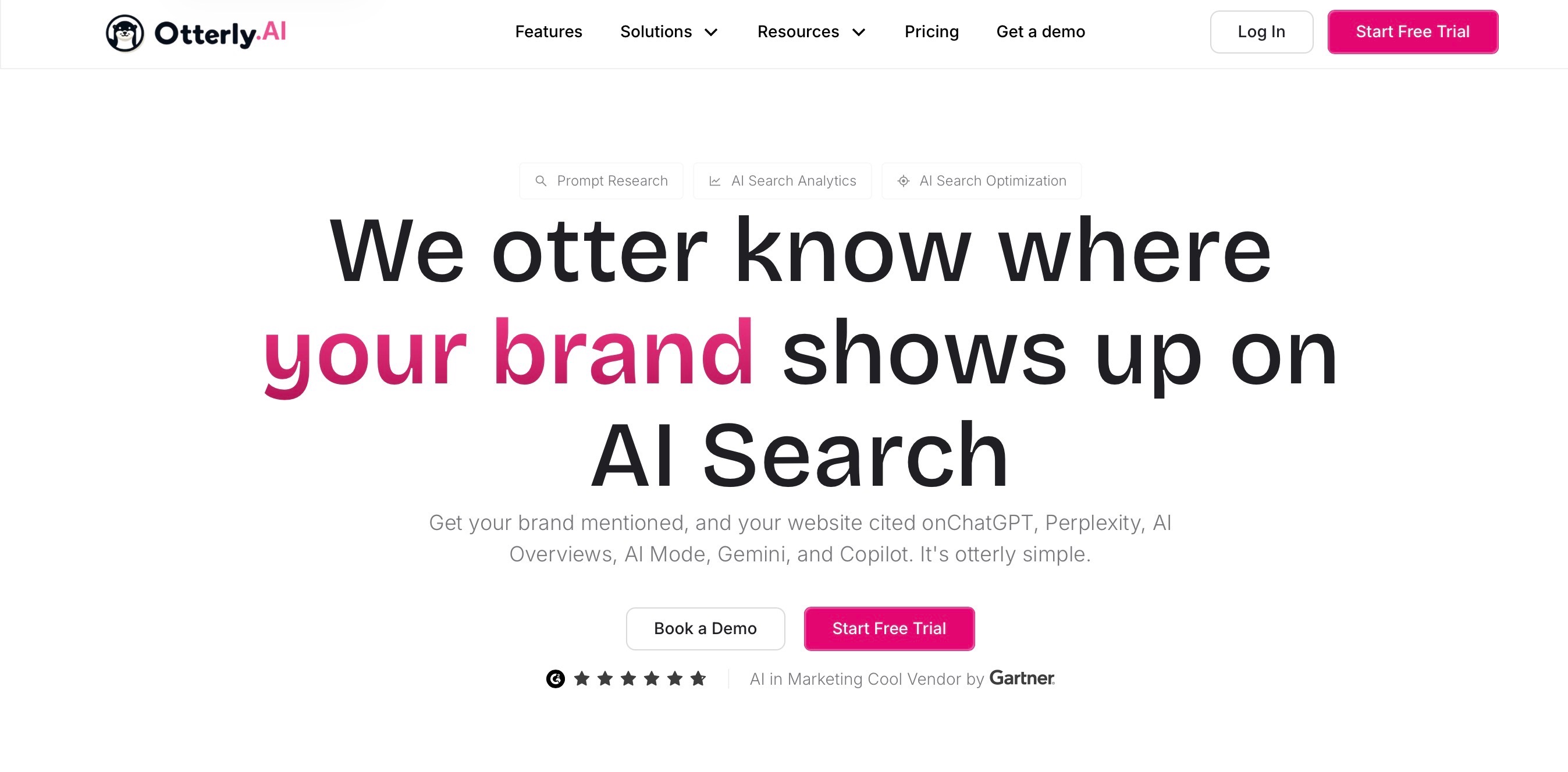
OtterlyAI is a practical fit for smaller teams that want to monitor brand mentions and citations across AI search platforms without using a more enterprise-heavy tool.
Its biggest advantage is that it combines prompt tracking, citation monitoring, competitor visibility, and affordable pricing in a simpler workflow.
Best For: Smaller teams that need affordable prompt and citation monitoring, especially if they want a simpler way to track brand mentions, citations, and competitor visibility across major AI search platforms.
What GEO Features Do E-commerce Businesses Get With OtterlyAI?
- Prompt library tracking built around real user-style search prompts
- Brand mention tracking across platforms like ChatGPT, Google AI Overviews, Perplexity, and Microsoft Copilot
- Website citation monitoring to track which brands and pages are being cited in AI-generated responses
- Competitor visibility tracking, including share of AI voice comparisons
- Historical tracking to see how mentions, citations, and visibility change over time
- Link citation analysis and domain ranking features on higher plans
What Other Features Do You Get With OtterlyAI?
- Daily tracking across all pricing tiers
- AI prompt research tools to help teams expand and refine the prompts they monitor
- Unlimited team members and unlimited brand reports
- GEO audits, recommendations, exports, multi-country support, and Looker Studio support on higher plans
- Workspace management for teams or agencies handling multiple brands
- Brand sentiment tracking
Why Consider OtterlyAI?
- It is one of the more accessible options for smaller teams because it starts at a lower price point than many alternatives
- The platform keeps the workflow simple by focusing on prompts, mentions, citations, and competitors
- It is a practical fit for teams that want prompt-based monitoring without needing a broader enterprise platform
- The mix of affordability, daily tracking, and citation visibility makes it a strong option for early-stage GEO programs
What Could Be The Potential Limitations Of OtterlyAI?
- Some platform coverage is positioned as an add-on rather than standard across all plans
- Teams that want deeper enterprise workflows or more advanced ecommerce-specific analysis may outgrow it over time
- Some higher-end capabilities sit on upper tiers, so the entry plan works best as a lean starting point
7. Peec AI
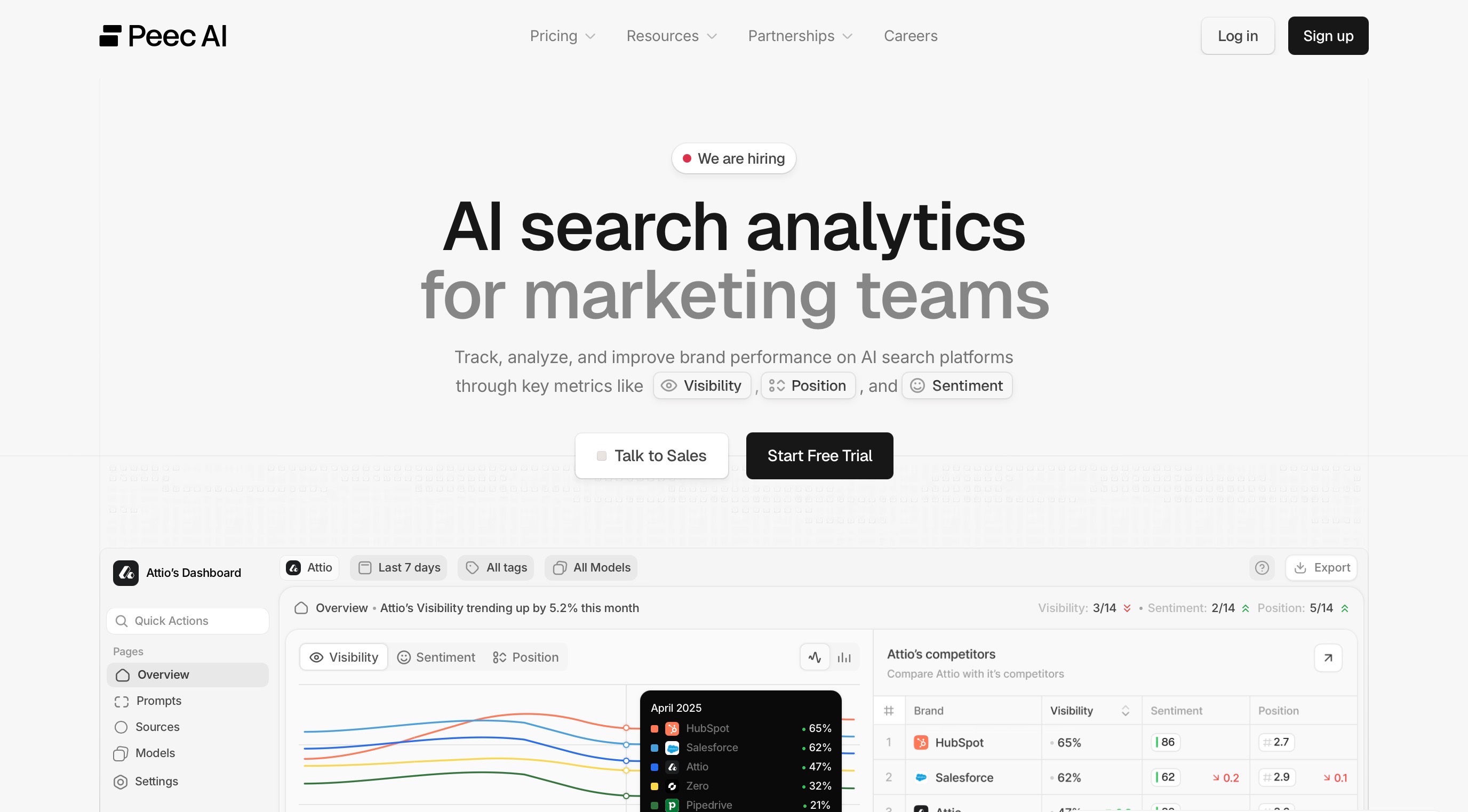
Peec AI is more specialized around custom prompt tracking than broad top-level AI visibility dashboards.
Its main strength is helping teams track the exact prompts they care about, refresh results daily, and spot where competitors or cited sources are outperforming them.
Best For: Teams focused on prompt tracking and competitor gap analysis, especially if they want daily updates, custom prompt control, source-level visibility, and unlimited users without added seat costs.
What GEO Features Do E-commerce Businesses Get With Peec AI?
- Custom prompt tracking for products, categories, and funnel-stage queries
- Daily prompt execution with a 24-hour refresh cadence
- Brand visibility tracking across tracked prompts
- Source visibility tracking that separates content used in answers from content explicitly cited
- URL-level and domain-level citation visibility, including citation frequency
- Competitor gap analysis to find prompts where competitors appear but your brand does not
- Source gap analysis to identify which third-party pages and sources competitors are getting cited from
What Other Features Do You Get With Peec AI?
- Prompt suggestions based on your brand and website
- Topic and tag systems for organizing prompts by persona, funnel stage, segment, or use case
- Filtering by model, country IP, and prompt tags for more segmented analysis
- Exports, a Looker Studio connector, and API access for reporting workflows
- Unlimited users across major plans
- Multi-country support plus GSC, GA, and Looker integrations on higher plans
Why Consider Peec AI?
- It is a strong choice for teams that care more about tracking their own strategic prompts than relying on a generic visibility index
- The daily refresh cadence is useful for teams that want more current visibility data
- Its competitor and source gap workflows make it easier to see where others are being mentioned or cited first
- Unlimited users make collaboration easier for lean teams and agencies
What Could Be The Potential Limitations Of Peec AI?
- It is more specialized around custom prompt tracking than broader SEO platform workflows, so some teams may still need other tools alongside it
- The pricing structure is tied to prompt allowances and model selection, so larger monitoring programs may need to scale carefully
- Its value depends heavily on having a thoughtful prompt strategy in place, which means teams still need to choose and organize prompts well
8. Ahrefs Brand Radar
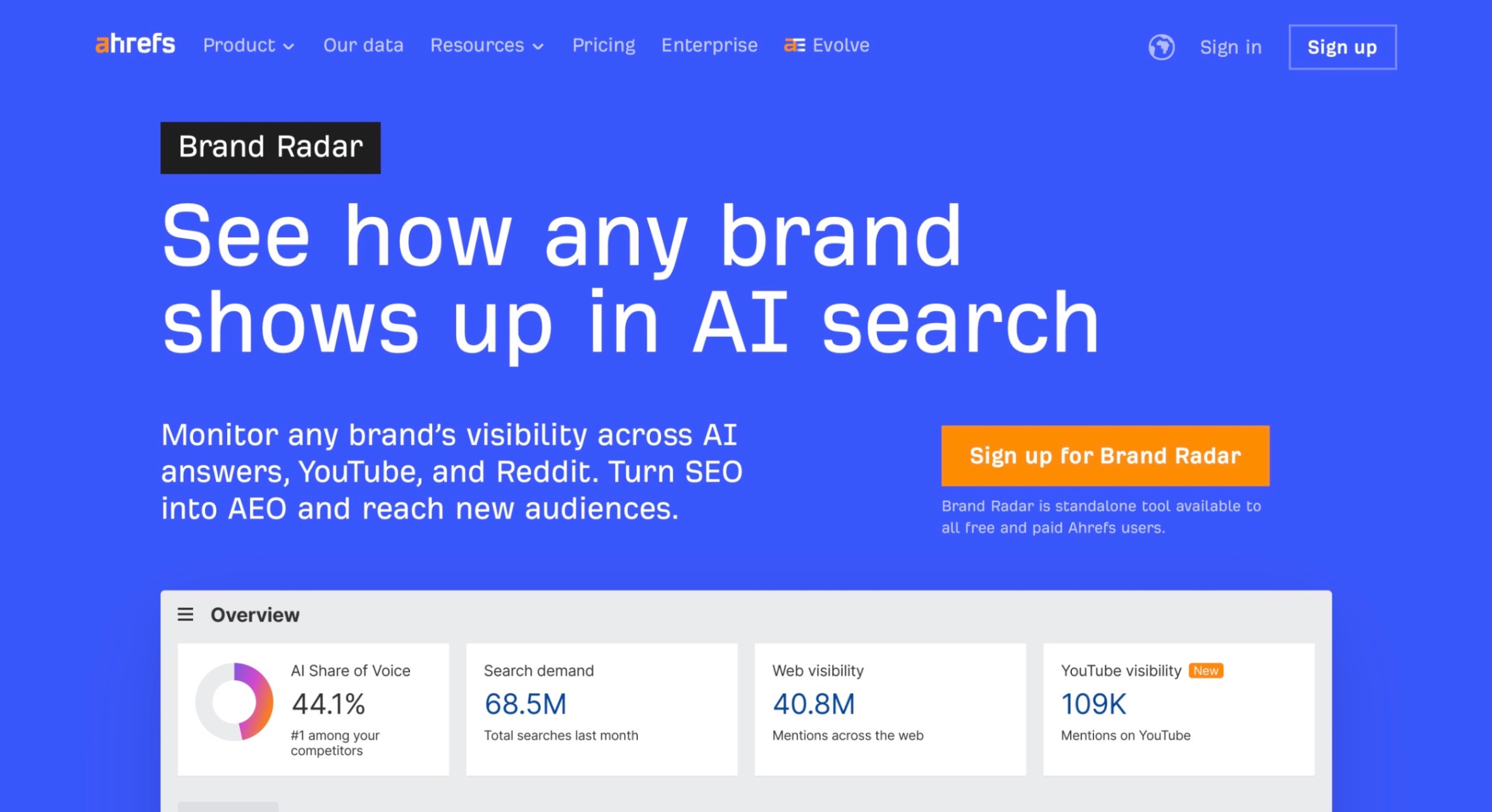
Ahrefs Brand Radar is built for teams that want scale, breadth, and research depth rather than a lightweight prompt tracker.
Its biggest differentiator is that it measures AI visibility across a very large pool of search-backed prompts modeled on real human search behavior.
Best For: Large-scale prompt coverage and AI share of voice research, especially for teams that want to benchmark competitors, analyze cited pages and cited domains, and work from a much larger search-backed prompt dataset.
What GEO Features Do E-commerce Businesses Get With Ahrefs Brand Radar?
- AI visibility tracking across major platforms including AI Overviews, AI Mode, ChatGPT, Perplexity, Gemini, and Copilot
- AI share of voice benchmarking against competitors
- Access to a very large search-backed prompt dataset based on real user search behavior
- Cited pages reporting to show which pages on your site get referenced most in AI search
- Cited domains reporting to show which third-party sites are most often cited around your brand or topic
- Visibility research for brands, products, regions, and authors without needing to build a prompt library from scratch
What Other Features Do You Get With Ahrefs Brand Radar?
- Search demand data to understand how often people search for your brand or related terms
- Web visibility data to track mentions of your brand across indexed web content
- Additional visibility layers for video visibility and SERP visibility
- Optional custom prompt tracking tiers if you want to monitor a specific prompt set alongside the larger dataset
- A research model built around real demand plus semantic coverage rather than guesswork alone
Why Consider Ahrefs Brand Radar?
- It is one of the strongest choices for brands that want scale because the dataset is built on a very large search-backed prompt universe
- The cited pages and cited domains reports are especially useful for understanding where AI systems are sourcing brand mentions and citations
- It is a strong fit for teams that care about benchmarking and research depth, not just surface-level mention counts
- It is well suited to marketers who already trust Ahrefs-style search data and want AI visibility measured against real demand signals
What Could Be The Potential Limitations Of Ahrefs Brand Radar?
- AI chatbot source data is not as fast-moving as tools built around daily prompt refreshes
- Some of the strongest functionality sits inside Ahrefs’ broader paid ecosystem, including add-ons and custom prompt tracking tiers
- It is better suited to research-heavy teams than to smaller teams that only want a simple monitoring dashboard
9. Frase
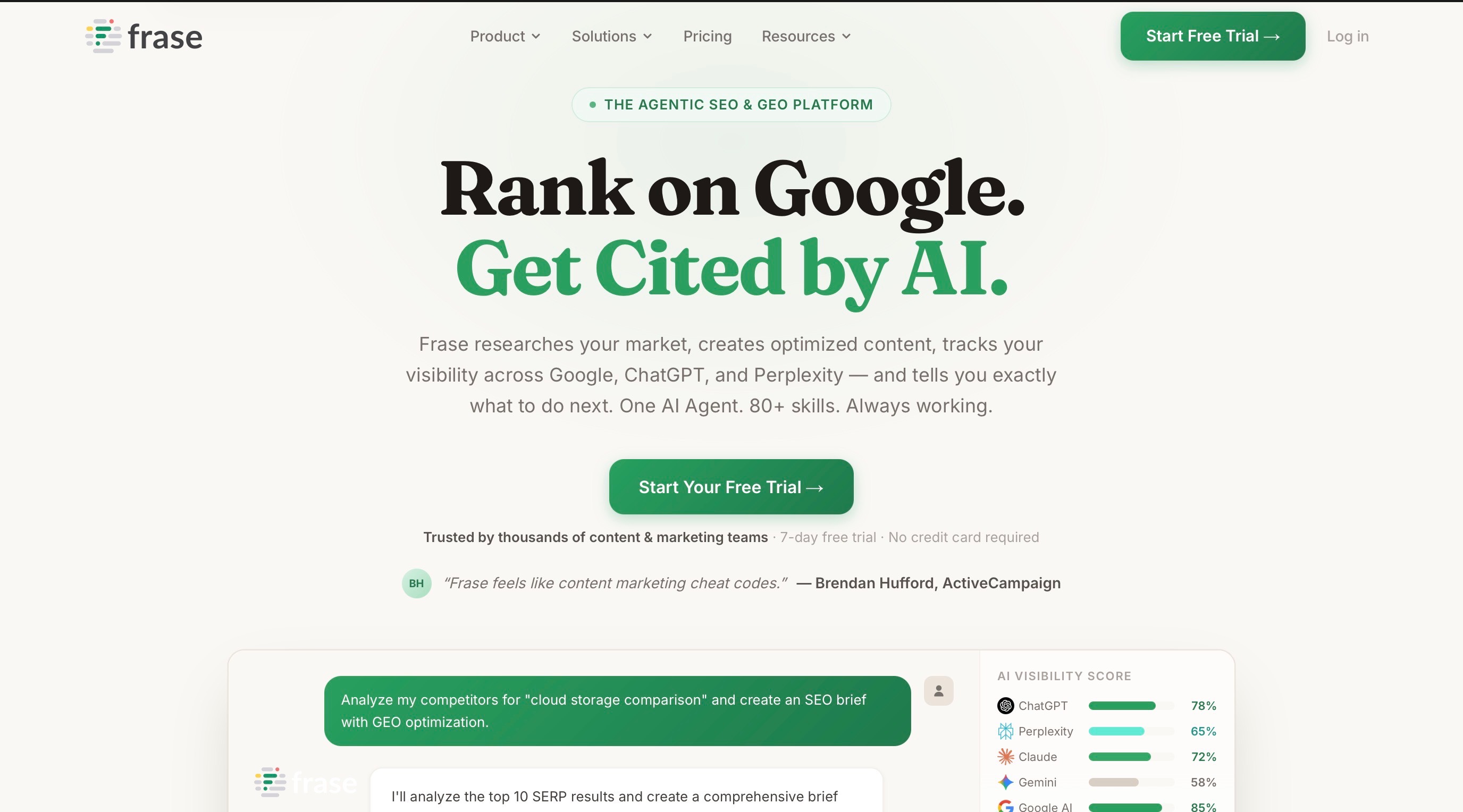
Frase is a strong fit for teams that want AI visibility tracking and content optimization in the same platform instead of splitting those tasks across separate tools.
Its core advantage is that it combines multi-platform tracking, prompt discovery, share of voice, sentiment analysis, and content optimization in one workflow.
Best For: Teams that want GEO monitoring plus content optimization in one workflow, especially if they want to move from prompt tracking and visibility gaps straight into content updates without switching tools.
What GEO Features Do E-commerce Businesses Get With Frase?
- Multi-platform tracking across major AI platforms
- Prompt discovery and tracking so teams can see which prompts mention their brand and uncover new opportunity queries
- Share of voice tracking against competitors
- Sentiment analysis to understand how AI platforms describe the brand
- Prompt-level drilldowns that show citation status, appearance rate, momentum, and actionable insights
- Competitive gap analysis to identify where competitors are winning visibility first
What Other Features Do You Get With Frase?
- Combined SEO and GEO optimization in one score and workflow
- Content optimization designed to improve both Google rankings and AI citations
- AI-generated or CSV-imported prompt setup for faster onboarding
- An AI agent built for research, writing, optimization, and tracking workflows
- Integrations with tools like Google Docs, WordPress, Webflow, and API-based workflows
- Content opportunity monitoring that surfaces declining pages and estimated impact
Why Consider Frase?
- It is a practical choice for teams that do not want a separate GEO tracker and content optimization platform
- The workflow is especially useful because it lets teams track, analyze, and optimize in one place
- It is a good fit for content-led SEO teams that want visibility insights tied directly to action
- Frase stands out for combining AI tracking with broader content operations instead of treating visibility as a standalone reporting layer
What Could Be The Potential Limitations Of Frase?
- Full platform coverage depends on the plan, with lower tiers covering fewer AI platforms
- AI visibility tracking is not always the default setup on every plan
- Teams that only want pure monitoring may get more value from Frase when they also plan to use its content and optimization workflow
Want a broader look at service-led options too? Read what are the best GEO services for AI visibility growth to compare the top providers for hands-on execution and long-term AI search growth.
Which GEO Tool Is Best For Your Ecommerce Brand?
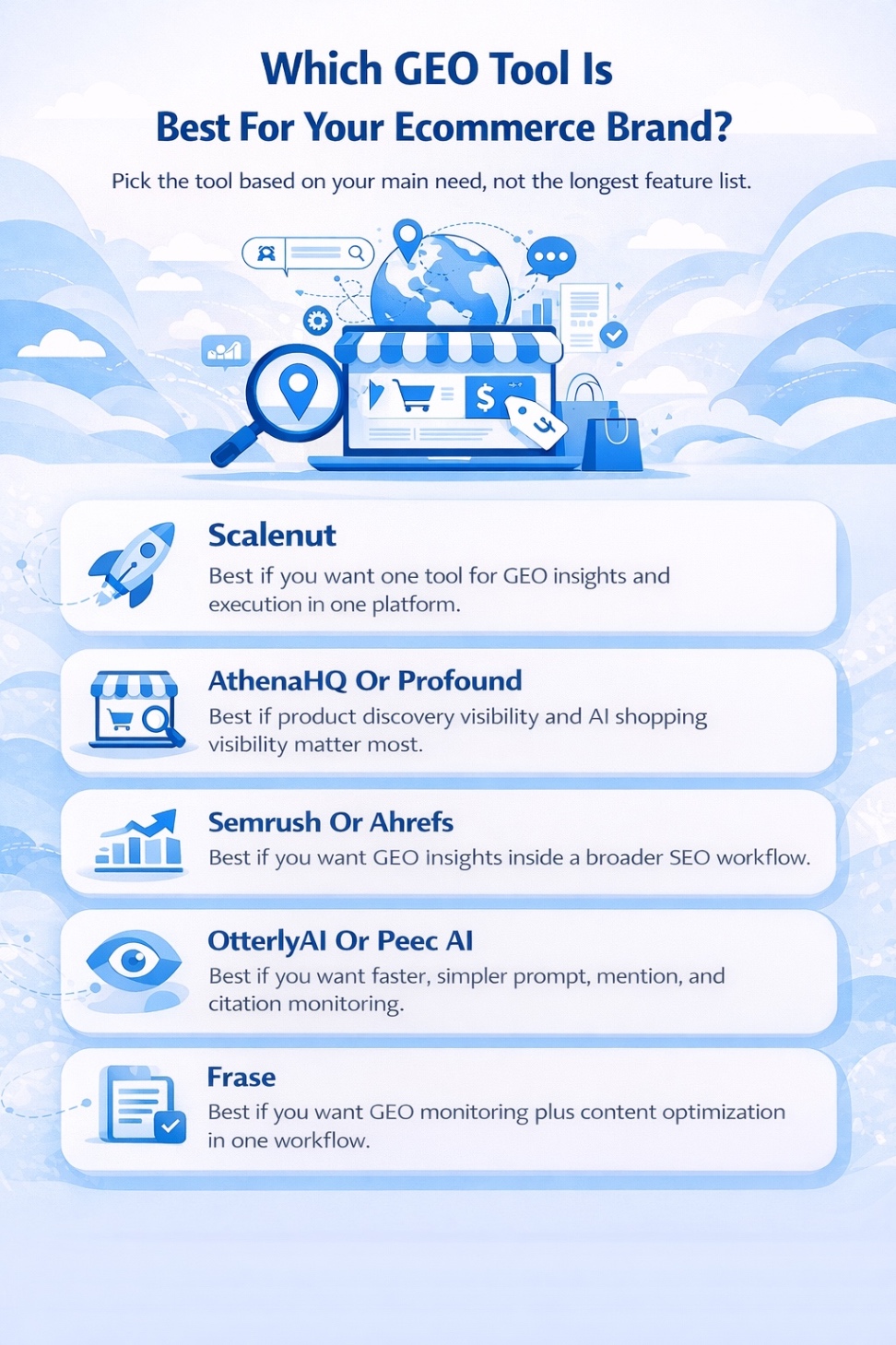
The right GEO tool depends on what your team actually needs most. Some ecommerce brands need execution, some need product visibility, and some just need a simpler way to track prompts, mentions, and citations.
Here are the best GEO tool choices based on your main priority.
1. Choose Scalenut If You Want One Tool For Insights And Execution
Choose Scalenut if you want more than visibility tracking. It is the best fit for brands that want GEO insights, SEO research, content optimization, and execution support in one workflow instead of juggling separate tools.
2. Choose AthenaHQ Or Profound If Product Discovery Visibility Is The Main Priority
Choose AthenaHQ or Profound if your main goal is to understand how your products show up in AI-driven shopping and discovery journeys. AthenaHQ is stronger for ecommerce teams focused on product visibility and revenue impact, while Profound is better for larger teams tracking AI answers and ChatGPT Shopping visibility.
3. Choose Semrush Or Ahrefs If You Already Live Inside A Broader SEO Stack
Choose Semrush or Ahrefs if you want GEO insights inside an existing SEO workflow. Semrush is a strong fit for action-oriented SEO teams, while Ahrefs is better for large-scale prompt coverage, benchmarking, and deeper visibility research.
4. Choose OtterlyAI Or Peec AI If You Want Faster, Simpler Monitoring
Choose OtterlyAI or Peec AI if you want a lighter monitoring setup. OtterlyAI is a better fit for smaller teams that want affordable mention and citation tracking, while Peec AI is stronger for custom prompt tracking and competitor gap analysis.
5. Choose Frase If Content Optimization Is Part Of The Buying Need
Choose Frase if you want GEO monitoring and content optimization in one workflow. It is the best fit for teams that want to move from visibility insights straight into content updates without using separate tools.
The best GEO tool is the one that matches your workflow, not just your feature wishlist.
Still deciding between managed execution and prompt-first monitoring? Read which tool wins: Scalenut vs Peec AI for GEO optimisation for a clearer side-by-side breakdown.
Conclusion
The best GEO tool for your ecommerce brand depends on what you need most right now: execution, product visibility, content optimization, or simpler prompt and citation tracking. The right choice is usually the one that fits your workflow, team size, and growth priorities, not just the one with the longest feature list.
A smart next step is to shortlist two or three tools based on your main goal, then compare them using a small set of important prompts, product categories, and competitor queries. That will quickly show you which platform gives you the clearest insights and the most useful next actions.
Frequently Asked Questions
How can ecommerce businesses use GEO recommendations to improve user experience?
Ecommerce businesses can use GEO recommendations to rewrite product and category content around real shopper prompts, strengthen product data, and close citation gaps. That makes AI answers more relevant and helps customers reach better fit products faster.
What are the best practices for integrating GEO recommendations in ecommerce?
Start with high intent categories, top product pages, and recurring shopping prompts. Then improve product schema, merchant feed accuracy, reviews, FAQs, and comparison copy, and monitor which URLs AI systems cite. That supports both Google shopping surfaces and AI answer engines.
What common mistakes should I avoid when integrating GEO recommendations into my ecommerce site?
Common mistakes include treating GEO as separate from SEO, optimizing only blog content, ignoring feed freshness, and failing to track citations or competitor gaps. Teams also lose ground when they update copy but not pricing, availability, reviews, and structured data.
How does generative engine optimization relate to GEO recommendations in ecommerce?
Generative engine optimization is the broader practice of earning mentions, citations, and recommendations in AI-generated answers. In ecommerce, GEO recommendations are the action layer, showing how to improve product content, structure, and authority so large language models can recommend your store more confidently.
What AI advancements are influencing GEO recommendation best practices in online shopping?
AI shopping changes are raising the bar for structured product data, richer comparison experiences, and conversational discovery. Google AI Overviews now appear in more shopping queries, while ChatGPT shopping supports more detailed comparison, refinement, and decision support during product research.
How do agencies help ecommerce businesses implement GEO solutions effectively?
Agencies help ecommerce businesses implement GEO more effectively by handling prompt research, page prioritization, structured data fixes, content updates, citation building, and reporting. That support is useful when internal teams understand the opportunity but lack the time, technical depth, or cross functional bandwidth to execute.
Which ecommerce platforms best support GEO recommendation integration?
Shopify usually leads for ease of implementation because of its product feed sync and newer AI commerce support. BigCommerce and Adobe Commerce are strong for API flexibility and customization, while WooCommerce works well when plugin control and developer extensibility matter most.


.svg)


.webp)