.jpg)
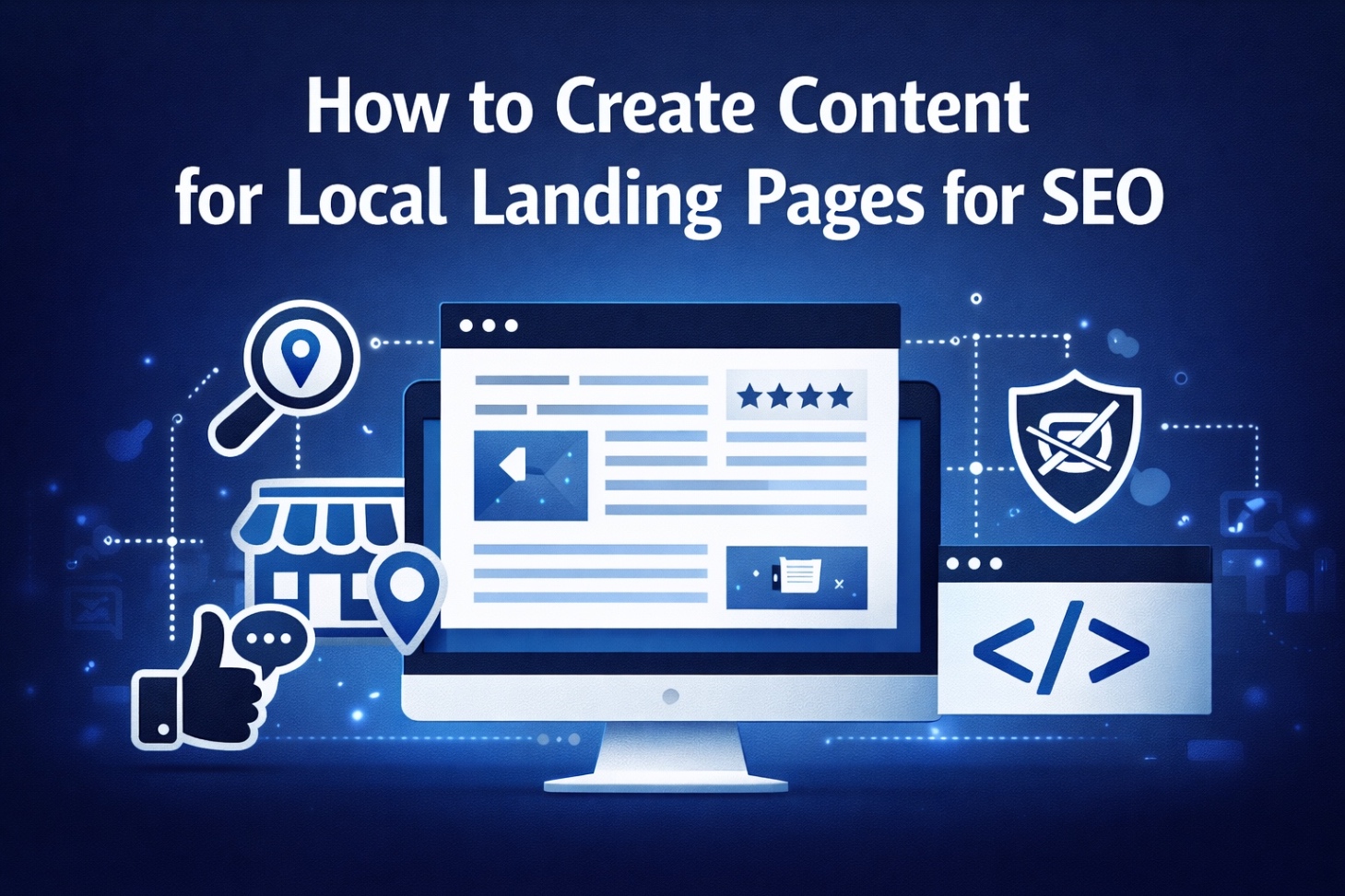
How to Create Content for Local Landing Pages for SEO Success?
Key Highlights
- Local landing pages are crucial for ranking in search results for location-specific queries from search engines.
- Effective pages require targeting local keywords and creating unique, relevant content for each geographic area to avoid duplicate content issues.
- Incorporating accurate business information, including an embedded Google Maps feature, is essential for user trust and visibility.
- Social proof, such as customer reviews and testimonials, strengthens credibility and encourages conversions.
- Optimizing on-page elements like titles, schema markup, and internal links is key to boosting SEO performance.
- Regularly measuring performance through analytics helps identify which locations need content improvements to drive better results.
Creating effective local content for landing pages is vital for boosting your presence in search engine results. These specialized pages are designed to connect with specific geographic markets, helping you attract and convert customers in your service areas. By crafting content that resonates with local audiences and is optimized for search, you can enhance visibility, improve customer engagement, and drive more targeted traffic. This guide will explore how to create local content that elevates your Google My Business strategy and achieves SEO success.
What Are Local SEO Landing Pages?
Local SEO landing pages are specialized web pages optimized for keywords relevant to your business's services within a specific geographic area. Also known as location pages, they are designed to target potential customers searching for businesses like yours in their immediate vicinity. For instance, a user might search for "plumber in Chicago" or "best pizza in New York City." The primary purpose of these pages is to rank prominently in local search results, driving highly targeted traffic to your website.
To be effective, each local landing page must feature unique, high-quality content that addresses the specific needs and interests of the local audience. This means going beyond generic service descriptions to include localized details. Essential elements include the business name, address, and phone number (NAP) for each physical location, unique selling points for that market, and relevant imagery that showcases your connection to the community.
Why Are Local Landing Pages Important For Local SEO?
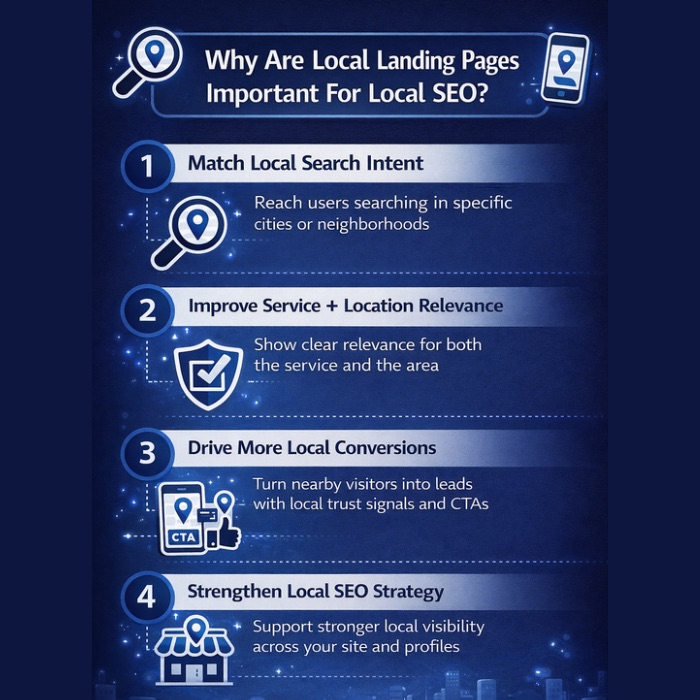
Local landing pages are essential for capturing local search traffic and converting nearby customers. Creating dedicated location-specific pages boosts your visibility for local searches and highlights your business’s local expertise. This not only makes you more relevant to search engines and users but also strengthens your Google Business Profile, supporting your overall local SEO strategy and attracting more qualified leads.
Let’s look at the importance of effective landing pages for local leads:
1. Helps Match Location-Specific Search Intent
Understanding and matching location-specific search intent is fundamental to local SEO success. When users perform local searches, they often have an immediate need. By creating content that directly addresses queries including a city name or neighborhood, you signal to search engines that your page is highly relevant.
To effectively target your audience, you should focus on keywords that combine your service with the location. For example, instead of just "plumbing services," target "emergency plumbing in Austin" or "best downtown cafe." These long-tail keywords attract users who are further along in their buying journey.
This level of specificity ensures your pages appear in the most relevant search engine results, connecting you with a target audience actively seeking your offerings. Answering the needs of local searchers with tailored content improves user experience and boosts your chances of ranking higher.
2. Improved Relevance For Service And Location Queries
Local landing pages allow you to create unique content that addresses both what a user is looking for and where they are looking for it. When someone uses Google Search for a service in their area, search engines prioritize results that offer the most relevant information for that specific location.
By having a dedicated page for each of your service areas, you can include details that wouldn't fit on a general service page. This might include information about local projects you've completed, regional challenges your services solve, or promotions exclusive to that area.
A well-structured page should feature the location in the H1, title tag, and URL. The body content should naturally weave in relevant keywords and local references, making it clear to both users and search engines that you are an authority in that community.
3. Supports Conversions From Nearby Customers
Localized content is a powerful tool for converting potential customers into loyal local customers. When a user lands on a page that speaks directly to their community, it creates a seamless user experience and builds immediate trust. Information like local store hours, directions, and a local phone number removes friction from the customer journey.
To optimize for conversions, make sure your page is easy to navigate and provides all the information a local visitor needs to make a decision. Featuring reviews from other local customers provides social proof and reinforces your credibility within the community.
Ultimately, a strong call-to-action (CTA) guides visitors toward the next step. Whether it’s "Call Us Now," "Get Directions," or "Request a Free Quote," a clear CTA encourages immediate engagement from nearby users who are ready to act.
4. Strengthens Your Overall Local Content Strategy
Local landing pages serve as the cornerstone of a broader local content strategy. These location pages act as hubs of information that can be supported by other content marketing efforts, such as blog posts about local events or social media campaigns targeting specific neighborhoods.
Essential elements to include are your business name, address, and phone number (NAP), local testimonials, and area-specific service descriptions. By creating a network of interconnected local content, you build a powerful web of relevance that search engines reward. Your main service pages can link out to individual location pages, creating a logical site structure.
This approach not only boosts your authority for local keywords but also provides a more organized and valuable experience for users. Each piece of local content you create, from landing pages to blog posts, reinforces your commitment to the community and strengthens your overall online presence.
How To Make Local SEO Landing Pages?
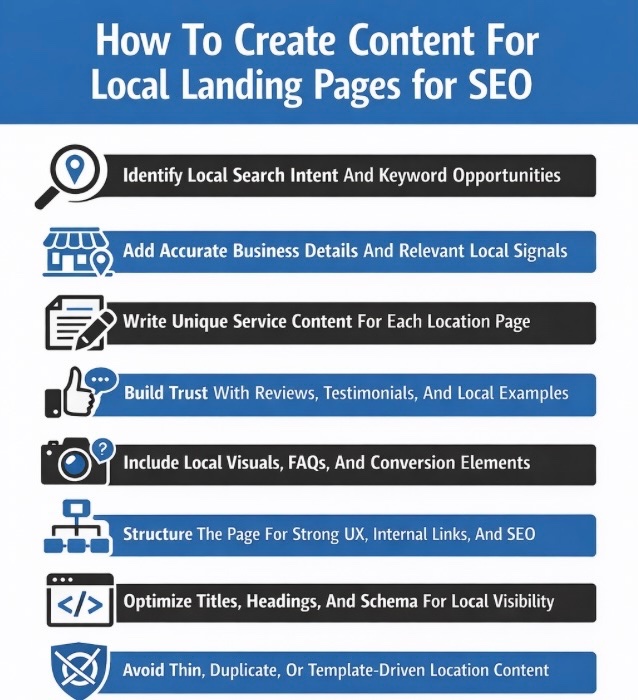
To create effective local SEO landing pages, combine targeted keyword research with unique, location-specific content. Tailor value to each area you serve and ensure all technical SEO elements are optimized to ensure technical SEO for local landing pages.
Follow these steps, from choosing local search terms to optimizing landing pages for local SEO, to build pages that attract organic traffic and convert local customers.
1. Start With Location-Specific Search Intent And Keywords
Effective local SEO starts with comprehensive keyword research to uncover the terms your local audience is using. When creating location pages, target keywords that combine your service with a city name or neighborhood, such as "HVAC repair in Denver" or "bakery in Brooklyn." This ensures you capture users with clear local intent.
Utilize tools like Google Keyword Planner to find relevant local keywords and analyze their search volume. Look for variations in location names, as "Las Vegas" and "Vegas" might yield different search results. Also, explore "Questions" and "Related Terms" features to find long-tail keywords that attract highly targeted traffic.
Analyzing your competitors' websites can reveal valuable local terms they are ranking for. By building a strong list of location-specific keywords, you can create content that is perfectly aligned with what local searchers are looking for, boosting your visibility in search results.
2. Include Accurate Business Details And Local Relevance Signals
Your local landing page must include accurate and consistent business information. This starts with your Name, Address, and Phone number (NAP), which should be prominently displayed and match exactly across all online platforms, including your Google Business Profile.
Beyond the basics, add details that signal local relevance. Mention your business hours, including any special holiday schedules. Highlighting your involvement in local events, sponsorships, or community initiatives demonstrates a genuine connection to the area. For example, share your participation in local festivals or charitable activities.
These elements not only help search engines verify your local presence but also build trust with potential customers. When visitors see that your business is an active part of their community, they are more likely to engage with your brand.
3. Write Unique Service Copy For Each Target Location
One of the most common mistakes in local SEO is using templated content across multiple location pages. To avoid duplicate content penalties and provide real value, you must write unique service copy for each specific area you target. This means going beyond simply swapping out the city name.
Customize the content to reflect the unique needs and characteristics of each location. For example, a lawn care service page for Champaign, IL, could mention common local grass challenges or pest problems specific to that region. This type of content is far more useful and relatable than a generic service description.
Highlight your unique selling points for that particular market. Do you offer services tailored to the local climate or regulations? Mentioning these details shows genuine expertise and helps you stand out from competitors who rely on generic messaging.
4. Add Local Proof Through Reviews, Testimonials, And Area-Specific Examples
Integrating social proof is essential for building trust with local customers. Featuring customer reviews and testimonials from people in the same area makes your claims more believable and relatable. When potential customers see positive feedback from their neighbors, they are more likely to trust your business.
Make your content more relevant by including area-specific examples. Showcase projects you have completed in that city or neighborhood, or highlight how your services have helped local clients. This demonstrates your experience and success within the community.
Here are a few ways to add local proof:
- Display testimonials that mention the city or neighborhood (e.g., "The best service in downtown Austin!").
- Create case studies detailing successful projects for local businesses or residents.
- Mention your community involvement, such as sponsoring a local sports team or participating in a neighborhood event.
5. Use Location-Focused Visuals, FAQs, And Trust Elements
Visual content and trust-building elements are crucial for creating engaging and effective location pages. Instead of using generic stock photos, use high-quality, original images of your physical location, your local team, and your work in that specific area. This visual content humanizes your brand and enhances the user experience.
To further improve the page structure and address common questions, include a location-specific FAQ section. This helps users find answers quickly and positions you as a knowledgeable local resource. Ensure your page has a responsive design so it looks great and functions perfectly on all devices.
Incorporate other trust elements to boost credibility:
- Embed a Google Map with a pin on your business location.
- Add trust badges, industry certifications, or awards.
- Consider adding a 360° virtual tour to provide an immersive experience.
6. Structure The Page For Readability, Internal Links, And Conversions
A well-structured page is vital for both user experience and SEO. Use clear headings (H1, H2, H3) to organize your content logically, making it easy for visitors to scan and find the information they need. Your H1 should contain your primary keyword and location, while subheadings break down different aspects of your local offering.
Incorporate internal links to connect your local landing page with other relevant pages on your site, such as your main service pages or blog posts. This helps search engines understand your site's structure and distributes link equity. Also, craft a compelling meta description that includes your local keywords and encourages clicks from the search results page.
Finally, optimize for conversions with a clear call-to-action (CTA). Since many local searches happen on mobile devices, ensure your page is mobile-friendly and your CTA is easy to find and use. A positive user experience is key to turning visitors into customers.
7. Optimize Key SEO Elements Such As Titles, Headings, And Schema
To maximize your visibility in search engine results, you must optimize key on-page SEO elements. Your title tag is one of the most important ranking factors. It should be under 60 characters and include your primary keyword and location (e.g., "Expert Plumbing Services in Atlanta | Your Brand").
Similarly, your meta descriptions should be engaging, under 160 characters, and feature local keywords to entice users on Google Search to click through. Headings (H1, H2, etc.) should structure your content logically and naturally incorporate your target keywords.
Implementing LocalBusiness schema markup is also crucial. This structured data provides search engines with key information like your address, phone number, and hours of operation, which can help you appear in rich snippets and improve your ranking in local search results.
8. Avoid Duplicate Content And Generic City Page Templates
A significant mistake businesses make is creating multiple location pages by simply copying a template and changing the city name. This practice results in duplicate content, which can harm your search rankings as search engines may filter out these nearly identical pages.
To avoid this pitfall, each service page for a specific location must offer unique content. While the structure can be consistent, the copy itself should be tailored to the local audience. Talk about landmarks, local events, or specific customer needs in that area to make the content genuinely valuable.
Instead of a generic approach, invest the time to research and write authentic, location-specific copy. This not only satisfies search engine algorithms but also resonates more deeply with your local audience, leading to better engagement and higher conversion rates.
What Are the Best Practices For Localized Landing Pages?
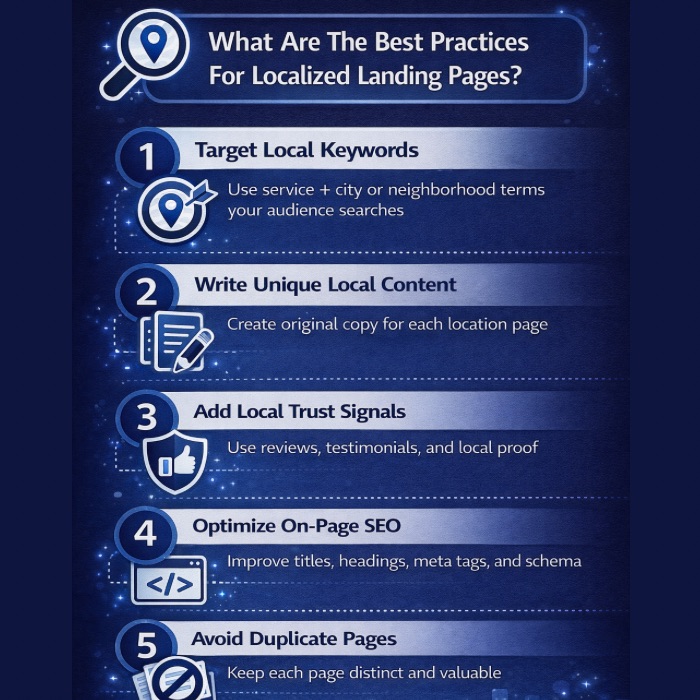
Success with localized landing pages relies on proven best practices. Create unique, locally relevant content for each service area to show commitment to local customers and signal authority to search engines. Target the right keywords, optimize on-page elements, and link to your Google My Business profile to improve local search performance.
Let’s look at the best practices that will help you in avoiding local landing page pitfalls:
1. Target Local Keywords
Targeting the right local keywords is the foundation of any successful local SEO strategy. Your keyword research should focus on identifying the specific phrases that customers in your service areas are using to find businesses like yours.
Use tools like Google Keyword Planner to discover keywords that include your city name or even specific neighborhood names. Don't just focus on high-volume terms; long-tail keywords like "24-hour emergency plumber in downtown Denver" often have higher conversion rates because they reflect a more specific intent.
Here are some tips for finding effective local keywords:
- Analyze competitors to see what keywords they are targeting in your area.
- Include location-based modifiers in your primary service keywords.
- Look for keyword gaps with high search volume and low competition to improve your search rankings.
2. Write Unique Local Content
Creating unique local content for each landing page is non-negotiable for local SEO success. Simply using a template and changing the city name is not enough. Your content must be genuinely tailored to each specific location to provide value to users and avoid duplicate content issues.
Start by incorporating details that are unique to the area. Your keyword research should inform this process, but you can also mention local landmarks, community news, or upcoming local events. For example, a restaurant could mention its proximity to a popular park or theater.
This approach makes your content more engaging and relevant to the local audience. It shows that you understand the community you are serving, which builds trust and encourages conversions. Authentic, location-rooted content is what sets successful local landing pages apart from generic ones.
3. Add Local Trust Signals
Building trust with local customers is crucial for driving conversions. Local trust signals provide the social proof needed to convince potential customers that your business is credible and reliable. Displaying feedback from satisfied local customers is one of the most effective ways to do this.
Incorporate testimonials and customer reviews directly onto your landing page. When visitors see positive comments from people in their own community, it resonates more strongly than generic praise. This social proof can be the deciding factor for a user choosing your business over a competitor.
Here are some ways to add local trust signals:
- Feature detailed testimonials that mention the specific location.
- Showcase your community involvement, such as sponsorships or local partnerships.
- Include trust badges, certifications, and awards to highlight your expertise and professionalism.
4. On-Page SEO
Technical on-page SEO is a critical component of making your local landing pages visible in Google Search. Proper optimization helps search engines understand your content and its relevance to local queries. Start with the title tag, ensuring it includes your primary local keyword and is under 60 characters.
Your meta descriptions should also be optimized with local keywords and a compelling message to encourage clicks from the search results. Within the page itself, use a logical heading structure (H1, H2, etc.) to organize your content and naturally integrate your keywords.
Implementing schema markup is another key step. Use LocalBusiness schema to provide search engines with structured data about your location, including your address, hours, and services. This can help you earn rich snippets and improve your overall visibility.
5. Avoid Duplicate Pages
One of the most detrimental mistakes you can make with location pages is creating duplicate content. This often happens when businesses use a single template for every service page and only switch out the location name. Search engines can easily detect this pattern, which can severely damage your search rankings.
Duplicate or thin content offers a poor user experience and signals to search engines that your pages lack unique value. Each of your location pages should have a substantial amount of original content—ideally, at least 60-70% should be unique.
Instead of relying on templates, invest in crafting distinct narratives for each location. Discuss local projects, customer stories, or area-specific tips. This effort not only helps you avoid penalties but also creates a much more compelling and effective page for your local audience.
How Do You Measure The SEO Performance Of Local Landing Pages?
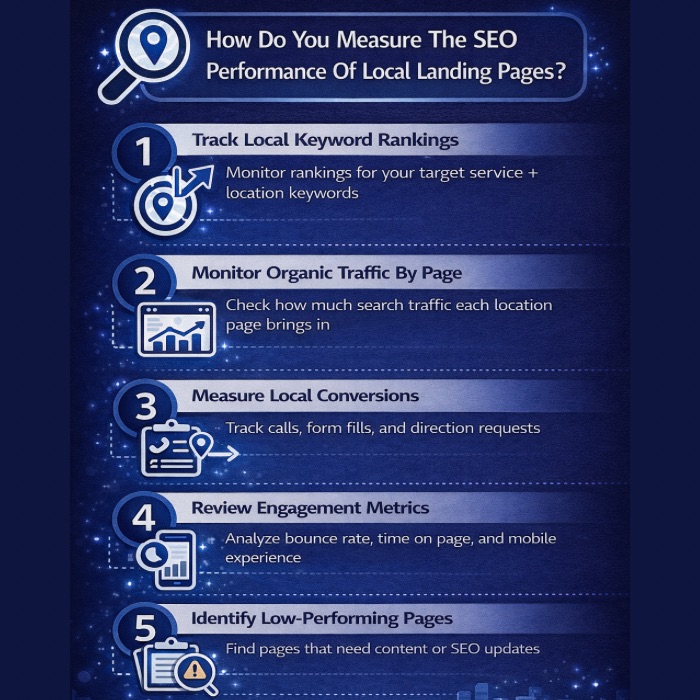
Measuring the SEO performance of your local landing pages is crucial for identifying strengths and areas for improvement. Tracking key metrics helps you assess organic traffic and local conversions. Tools like Google Analytics let you monitor search rankings, traffic sources, and user engagement. Analyzing calls, form fills, and direction requests from Google Maps gives direct insight into conversions. The next sections outline the essential KPIs for a comprehensive review.
1. Track Local Keyword Rankings
Monitoring your search rankings for specific local keywords is a direct way to measure your SEO progress. After conducting keyword research, you should track how your pages perform for those terms in Google Search. An increase in rankings for your target local keywords is a strong indicator that your optimization efforts are effective.
Use SEO tools to track your positions in different geographic locations. This allows you to see if your page for "Miami" is ranking well for users in that city. Fluctuations in search rankings can also alert you to new competitors or changes in search engine algorithms.
While rankings are an important metric, they should be analyzed in conjunction with other data from tools like Google Analytics. A high ranking is most valuable when it also leads to an increase in relevant traffic and conversions.
2. Monitor Organic Traffic By Location Page
Tracking organic traffic to each of your location pages is a fundamental way to measure their performance. Using Google Analytics, you can segment your traffic to see how many users are visiting each specific page from search engine results. This helps you understand which of your location pages are most effective at attracting visitors.
When analyzing this data, look for trends over time. Is traffic to your new location pages growing? Are certain pages underperforming compared to others? This information can help you identify which pages may need content improvements or better optimization.
By setting up custom reports or segments in Google Analytics for each geographic area, you can gain clear insights into how your content is performing in different markets. This allows you to make data-driven decisions to refine your local SEO strategy.
3. Measure Calls, Form Fills, And Direction Requests
While traffic is a good starting point, the ultimate goal of a local landing page is to drive conversions. Measuring actions like phone calls, contact form submissions, and requests for directions provides direct evidence of your page's effectiveness.
Set up conversion tracking to monitor these actions. You can use call tracking software to attribute calls to specific landing pages or set up goal tracking in Google Analytics for form fills. Your Google Business Profile insights will show you how many users requested directions from Google Maps after finding your business.
Analyzing your conversion rate for each page helps you understand which locations are generating the most leads. If a page has high traffic but a low conversion rate, it may indicate a problem with the page's content, call-to-action, or user experience.
4. Review Engagement Signals And Page Experience
Engagement metrics provide valuable insights into the quality of your page experience. A positive user experience is a key ranking factor and directly impacts your ability to convert visitors. Metrics like bounce rate, time on page, and pages per session can tell you how engaging your content is.
A high bounce rate might suggest that your content isn't matching user intent or that the page is difficult to navigate. Since many local searches occur on mobile devices, ensuring your page has a responsive design and loads quickly is essential for a good page experience.
Review these key engagement signals regularly:
- Bounce Rate: A high percentage may indicate that the content is not relevant to the visitor.
- Average Time on Page: Longer visit durations suggest that users find your content valuable.
- Mobile-Friendliness: Use Google's tools to ensure your page works well on all devices.
5. Identify Which Locations Need Content Improvement
Regularly conducting a content audit of your location pages helps you identify underperforming areas and opportunities for improvement. By analyzing data from Google Analytics, you can compare the performance of different pages and pinpoint which ones need attention.
Look for pages with low organic traffic, poor search rankings, or high bounce rates. These are often signs that the local content is not resonating with the target audience or is not sufficiently optimized. Once you identify these pages, you can prioritize them for content updates.
What Are Some Local Landing Page SEO Examples?
Reviewing successful local landing pages from other businesses offers valuable inspiration for your own strategy. These examples demonstrate how to combine unique content, local trust signals, and user-friendly design to excel in local search across service areas. We’ll examine how top brands create location pages optimized for both users and search engines, showcasing best practices like detailed business information and compelling social proof.
1. Roto-Rooter Plumbing – Atlanta Plumbing Services
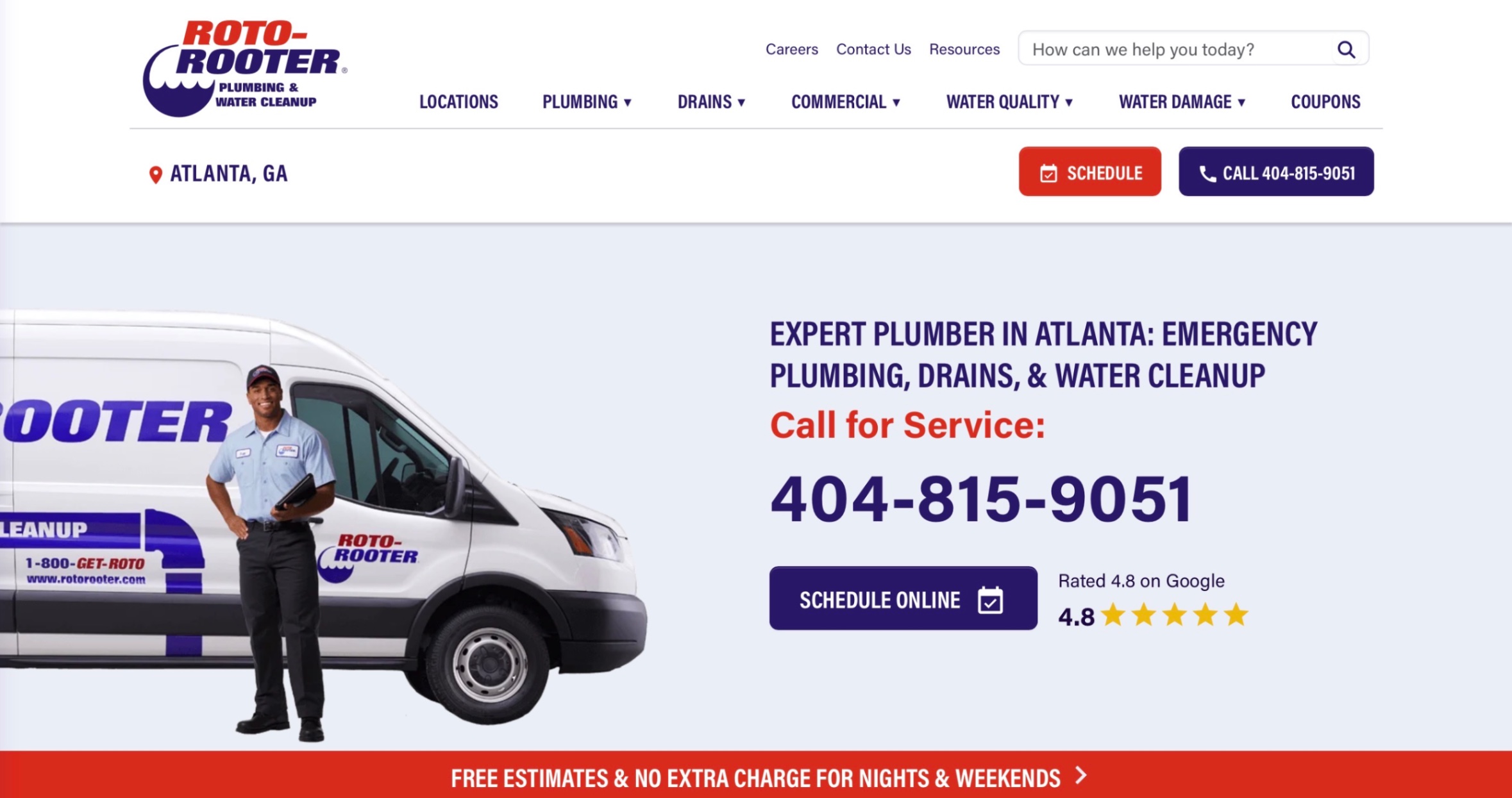
Roto-Rooter's landing page for its Atlanta plumbing services is an excellent example of effective local SEO. The page immediately establishes its local relevance by featuring the city name prominently in the main heading and throughout the content. It includes detailed business information, making it easy for users to find what they need.
The page effectively uses local trust signals, showcasing customer reviews and testimonials from Atlanta-area residents. This social proof helps build credibility and encourages new customers to take action. An embedded Google Maps feature provides easy access to directions, improving the user experience.
By focusing on content that addresses the specific needs of Atlanta homeowners, Roto-Rooter ensures its page ranks well in local search results. The structure is clear, and the calls-to-action are prominent, guiding visitors toward scheduling a service.
2. David’s Bridal – Austin North Location Page

The David's Bridal location page for its Austin North store is a masterclass in providing detailed, location-specific information. The service page clearly lists the store's business hours, address, and contact number, removing any friction for potential visitors. It also highlights the specific services available at this location, such as alterations and stylist consultations.
The page excels at leveraging social proof by featuring a gallery of photos from real weddings in the Austin area. This unique content not only adds a personal touch but also helps future brides envision their own experience. The inclusion of store-specific events and promotions further localizes the content.
Unlike generic location pages, this one feels like a dedicated hub for the Austin North store. It successfully combines essential business details with engaging, localized content to create a powerful tool for attracting and converting local customers.
3. Dick’s Sporting Goods – Tampa Store Page
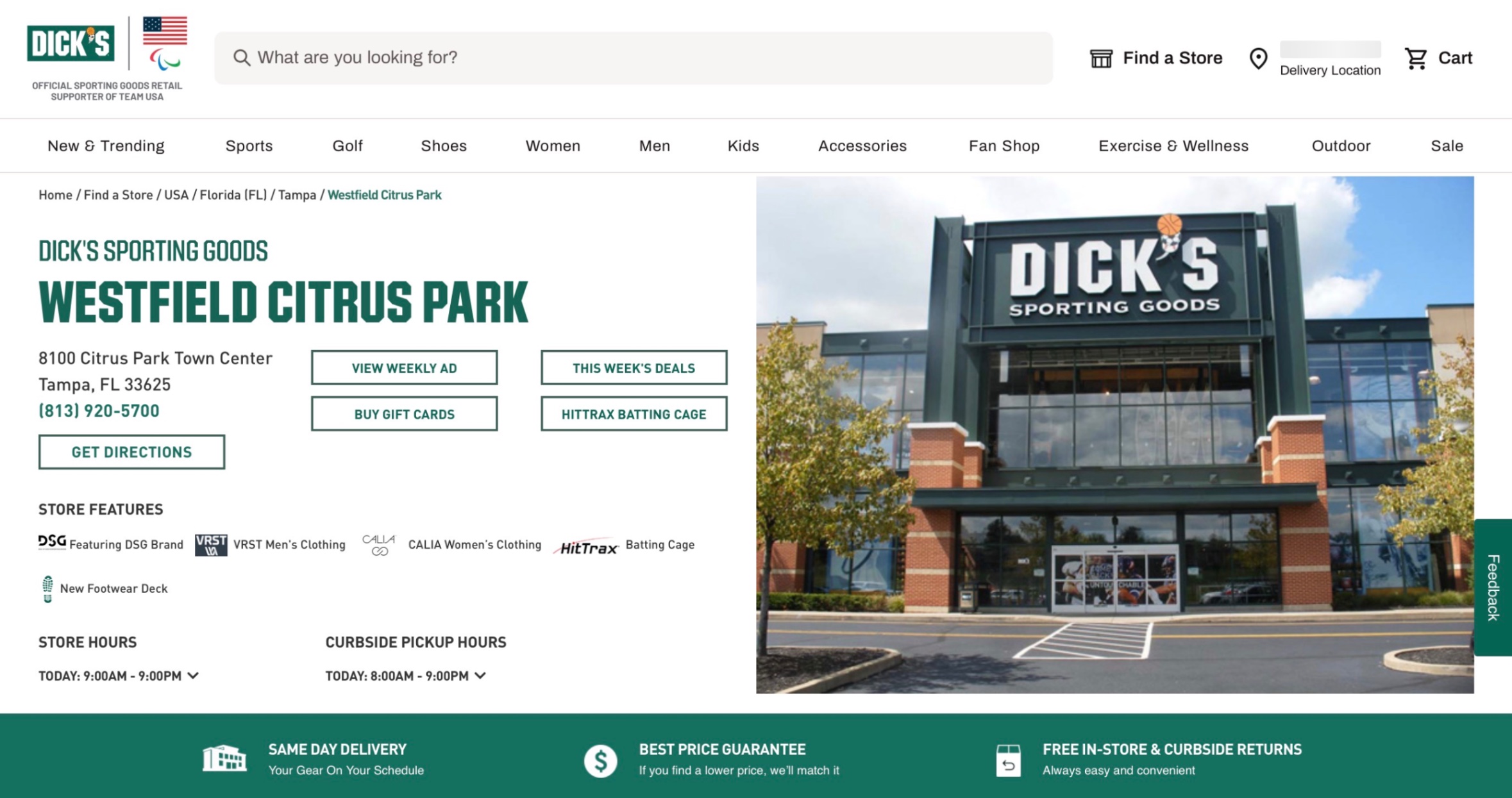
Dick's Sporting Goods' page for its Tampa store effectively establishes a strong local presence. The page provides comprehensive business information, including store hours, address, and available services, all of which align with its Google My Business profile. This consistency is crucial for local SEO.
The page incorporates local reviews, giving potential shoppers confidence in the store's quality and service. It also highlights in-store events and deals specific to the Tampa location, creating a sense of community and encouraging visits. The responsive design ensures a seamless experience for users on any device.
By combining practical information with localized marketing and user-generated content, Dick's Sporting Goods creates a valuable resource for Tampa shoppers. This approach not only drives foot traffic but also strengthens the brand's connection to the local community.
Conclusion
Creating effective local landing pages is essential for enhancing your local SEO efforts and connecting with nearby customers. By focusing on location-specific search intent, generating unique content for each area, and incorporating trust signals such as reviews and testimonials, you can significantly improve your site's relevance and authority in local searches.
Additionally, monitoring the performance of your landing pages through key metrics will allow you to fine-tune your strategy and ensure ongoing success. Embrace these best practices to not only drive traffic but also convert visitors into loyal customers in your community. For personalized insights and strategies, don’t hesitate to reach out for a free consultation!
Frequently Asked Questions
What are the main benefits of local landing pages?
Local landing pages help local businesses rank higher in search engine results for location-specific queries. They provide relevant content that matches user intent for a specific location, leading to increased visibility, more qualified traffic, and higher conversion rates from nearby customers who are ready to buy.
How does localized landing pages drive measurable results?
Localized landing pages improve search visibility, leading to more organic traffic from users in your target areas. By using tools like Google Analytics to track conversions on these location pages, you can directly measure their impact on calls, form fills, and revenue, proving a clear return on investment.
How to write content for location-specific landing pages?
To write effective local content, go beyond generic descriptions. Include area-specific details like local landmarks, community events, and customer testimonials from that location. This makes the content more relevant and trustworthy, helping you connect with the local audience and stand out from competitors.
What are the advantages of landing pages?
Landing pages enhance user experience by providing specific information tailored to visitors' needs, improving conversion rates significantly. They also contribute to better SEO by targeting relevant keywords, increasing organic traffic, and allowing for focused marketing campaigns that boost brand visibility effectively.
What are the essential elements to include when creating content for local SEO landing pages?
Essential elements for local SEO landing pages include relevant keywords, localized content that speaks to the target audience, optimized meta tags, clear calls-to-action, and accurate business information such as NAP (Name, Address, Phone). Incorporating customer reviews can also enhance credibility and engagement.
Is it important to include customer reviews or testimonials on local SEO landing pages?
Yes, including customer reviews or testimonials on local SEO landing pages is crucial. They build trust, enhance credibility, and improve user engagement, which can positively influence conversion rates. Search engines also favor authentic content, making these elements vital for effective local SEO strategies.
Should I include a frequently asked questions (FAQ) section on my local SEO landing pages?
Incorporating a FAQ section on your local SEO landing pages can enhance user experience and engagement. It addresses common queries, improves keyword targeting, and boosts your page's relevance in search results, ultimately supporting better SEO performance for your business.
How can I make my local SEO city landing pages content more relevant to a specific city or neighborhood?
To make your local SEO city landing pages more relevant, focus on incorporating specific geographic keywords, local landmarks, community events, and tailored content that resonates with the target audience. Engaging with local culture and promoting neighborhood features enhances relevance and boosts search visibility.


.svg)


.webp)