.jpg)
Key Highlights
- AirOps is a powerful platform for managing AI-driven content and data workflows, but its complex setup and longer onboarding time can make it less practical for small content teams.
- Scalenut is considered one of the best alternatives to Airops for its comprehensive GEO and SEO capabilities.
- Many alternatives offer better ease of use and specific features for different needs.
- Brand voice control, actionable AI or performance insights, and flexible workflows that support real content execution, not just automation, are critical features to look for in any alternative.
- Top alternatives to AirOps include tools like Scalenut, Jasper, AthenaHQ, etc.
As AI-powered content platforms like AirOps grow in popularity, many teams run into familiar challenges. High setup complexity, workflow-heavy interfaces, and limited out-of-the-box GEO and SEO capabilities can slow teams down rather than speed them up, especially for lean marketing and content teams.
The goal for most brands is simple. They want tools that help them create, optimise, and scale content that actually performs across search engines and AI-driven results, without requiring deep technical expertise or fragmented workflows.
In this blog, we explore the top 10 AirOps alternatives worth considering today. By comparing AirOps features and capabilities with all-in-one GEO platforms to focused AI visibility tools, you will get a clear comparison to help you choose the right solution for your content and growth goals.
AirOps Competitors: How Do They Compare?
Top 10 AirOps Alternatives: How does AirOps compare to other AI GEO/SEO tools?
Finding the best AirOps alternatives isn't about replacing a broken tool; it's about finding one that fits your team's content workflows perfectly. Let's explore:
1. Scalenut – All-in-One Workflow Automation & GEO/SEO Analysis
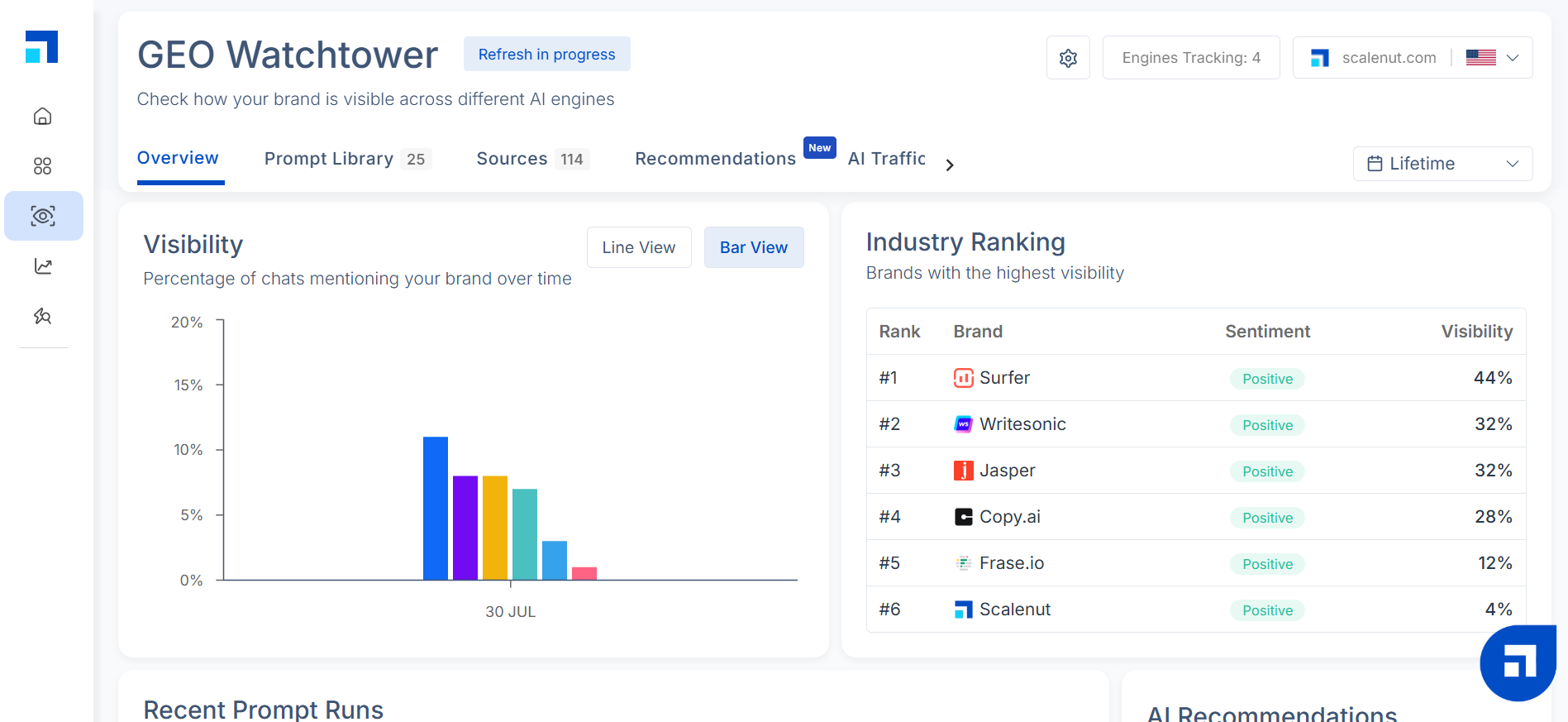
Scalenut is an execution-focused GEO and SEO platform that combines content creation with AI search optimisation. Built for teams that want fast, measurable results, it goes beyond visibility tracking by helping you create and optimise content that AI models are more likely to reference.
What are Scalenut’s key features?
- GEO Watchtower: Track brand mentions across AI engines like Chat GPT, Perplexity, Gemini, etc., and compare visibility with competitors.
- Cruise Mode: Create fully optimised, GEO/SEO-ready blogs in minutes.
- Prompt Context Tracking: Monitor up to 200 prompts to understand where and why your brand appears in AI results.
- Visibility Tracking: Tracks how your brand appears in AI-generated answers over time, showing the prompts and sources driving that visibility.
- Content Optimiser: Provides live GEO and SEO recommendations as you write to improve visibility across AI platforms and search engines.
- Keyword Planner and Clusters: Find high-intent topics and uncover content gaps quickly.
- Content Optimiser: Get real-time GEO/SEO guidance while writing.
- Content Audit: Identify pages that need updates, consolidation, or removal.
- Traffic Analyser: Review traffic trends, top pages, and keyword performance.
- Link Manager: Discover internal linking opportunities instantly.
- Social UpReach: Track Reddit conversations to spot early trends and demand signals.
What are the pros of Scalenut?
• Combines research, clustering, writing, optimisation, and audits into a single GEO/SEO workflow.
• Focuses on execution, helping teams plan, create, and improve content instead of just tracking visibility.
• Speeds up long-form content creation with a pre-built workflow called Cruise Mode.
• Provides real-time optimisation by flagging keyword gaps and on-page improvements while writing.
• Supports GEO and AI-ready content with brand mention and prompt tracking across AI search.
• Easy to use, with a clean interface and guided workflows for writers and marketers.
• Delivers strong value by including execution features often missing from visibility-only tools.
What are the cons of Scalenut?
- Might be more than needed for users who only want simple AI visibility tracking and do not require content creation or optimisation tools.
- Makes it better suited for users seeking a practical AirOps replacement that combines execution, workflows, and measurable content impact in one platform.
What do users say about Scalenut?
- Product Hunt- 5/5
- G2 - 4.7/5
- Capterra- 4.8/5
What is Scalenut's pricing?
- Scalenut plans start at $49 per month, offering a predictable, all-in-one solution for SEO, GEO, content creation, and optimisation. In comparison, AirOps follows a usage-based model, which can increase the AirOps total cost of ownership as teams scale workflows, tasks, and users.
Why Scalenut Is a Better Alternative for AirOps?
Reviews of AirOps highlight its power and flexibility, but also note a steep setup process, learning curve, and usage-based pricing that can escalate quickly. Advanced workflows often require technical expertise and human oversight.
..."The platform can feel quite technical as you go deeper into advanced workflows, especially when working with iterators, logic, and multi-step automations,.... says Shweta G, Marketing Assistant
In contrast, Scalenut is positioned as a more approachable alternative, offering faster time to value with built-in GEO and SEO execution, clearer guidance, and simpler workflows that help teams move from insight to action without heavy technical overhead.
Book a demo to check it out yourself!
What do Our Users say?
"What I like best about Scalenut is how it combines AI writing with built-in SEO tools. The Cruise Mode makes it really easy to go from keyword research to a full article in one smooth process. It saves me time and helps me create content that actually ranks," says Jerry F, Editor in Chief
Users praise Scalenut for its intuitive interface, flexible AI writing capabilities, and strong value for money. It quickly generates well-structured, SEO-ready content, offers extensive templates, and is easy to use, making it a reliable choice for efficient, high-quality content creation.
2. Jasper – AI-Powered Content Creation Platform
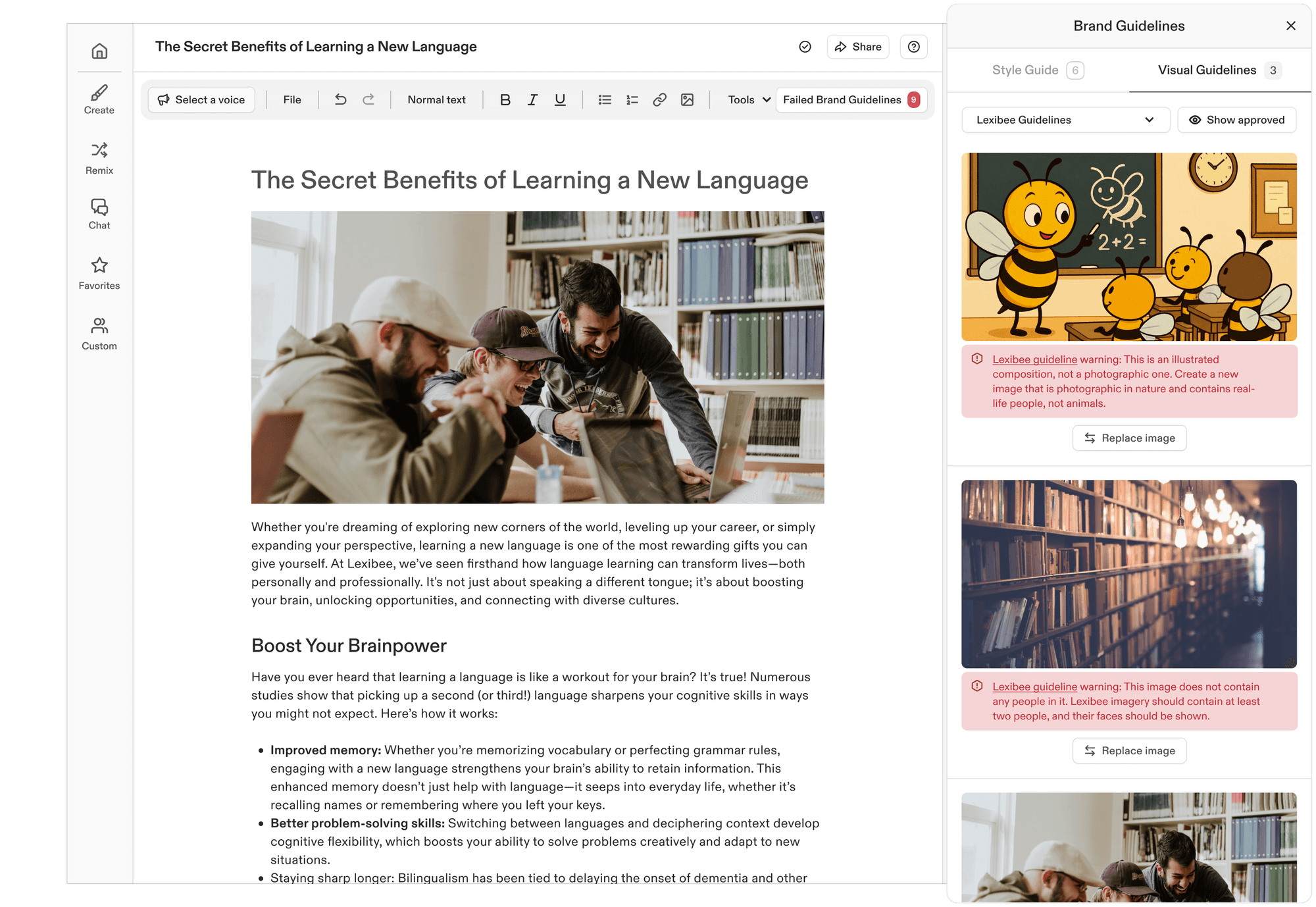
Jasper AI is a long-standing player in the AI writing market and has built a reputation as a reliable, team-focused content platform. It performs well for high-volume content needs like blogs, landing pages, and social posts, with a clear emphasis on speed and brand consistency. Its brand voice controls are useful, though the platform prioritises polished copy generation over deeper SEO or AI search optimisation, which limits its appeal for performance-driven teams.
What are the Key Features of Jasper AI?
- Content Pipelines: Automates the end-to-end content workflow from planning to publishing, helping teams reduce manual effort and improve turnaround time.
- AI Agents: Task-specific AI assistants that support personalisation, research, and optimisation, enabling faster execution of marketing tasks.
- Brand Voice & Jasper IQ: Centralises brand guidelines, tone, and audience context so that generated content aligns with established brand standards.
- Integrations & API Access: Connects with existing tools like Google Sheets and Webflow through integrations and APIs, enabling smoother adoption within existing workflows.
- Trust, Security & Governance: Provides enterprise-grade security and governance controls to support safe and compliant AI usage across teams.
- Jasper Grid: Lets teams visually organise, generate, and manage AI content at scale using structured tables, making it easier to produce consistent, on-brand content across large projects.
- Jasper Canvas : It is a long-form AI writing workspace that lets teams draft, edit, and refine content collaboratively with real-time AI assistance while maintaining brand voice and structure.
What are the Pros of Jasper AI?
- Helps maintain brand voice and messaging across channels by applying centralised brand guidelines to all generated content.
- Automates repetitive content tasks such as drafting, editing, and formatting, allowing teams to focus on strategy and creative direction.
- Offers shared workspaces, structured reviews, and governance controls that support collaboration across marketing, content, and leadership teams.
What are the Cons of Jasper AI?
- The platform’s feature depth and multiple modules introduce a learning curve, especially for users looking for quick, lightweight content generation rather than structured workflows.
- Output quality may vary depending on how well brand context, prompts, and workflows are configured, requiring ongoing human review and refinement.
- Lacks native, deep GEO and SEO performance tracking or keyword intelligence features, often requiring integrations with external SEO tools for complete optimisation workflows.
What are the user reviews of Jasper AI?
- G2: 4.7/5
- Trust Pilot: 3.5/5
How much does Jasper AI cost?
- Jasper's Pro plan starts at $69 per month per seat.
3. AthenaHQ – AI Visibility for Scaling SEO Teams
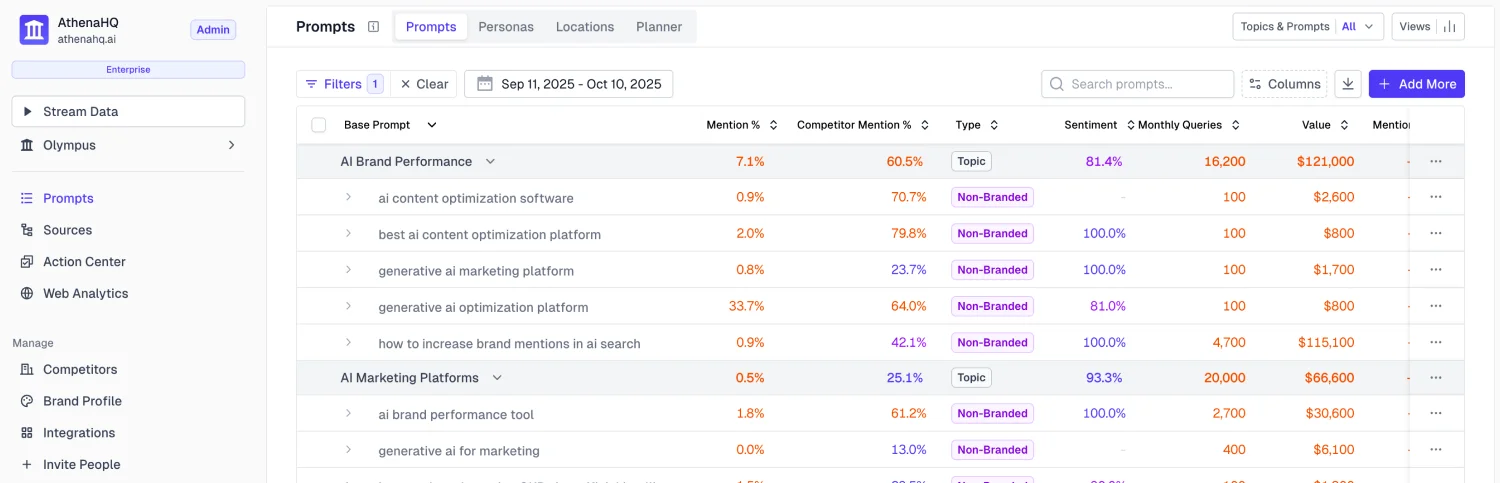
AthenaHQ provides AI visibility monitoring across major platforms such as ChatGPT, Gemini, and Google AI Overviews. It extends beyond basic mention tracking by supporting competitor comparisons and surfacing content gaps. The Action Centre suggests AI-optimised content ideas based on brand context, positioning AthenaHQ as an enterprise-focused visibility platform.
What are the Key Features of AthenaHQ?
- Brand intelligence and AI optimisation: Tracks AI mentions, GEO scores, and recommended actions to improve visibility
- Competitive benchmarking: Compares AI presence and share of voice against key competitors
- Source and sentiment insights: Identifies cited sources and evaluates brand sentiment in AI responses
- Agency reporting workspace: Generates polished, client-ready AI search performance reports
What are the Pros of AthenaHQ?
- Tracks AI mentions and GEO scores while surfacing recommended actions to improve brand visibility across AI-driven search results.
- Surfaces on-page, off-page, and community-based content opportunities
- Monitors AI crawler behaviour via Google Analytics integration
- Shows how AI engines interpret, reuse, and reference content
- Offers agency-friendly workspaces for reporting and pitching
What are the Cons of AthenaHQ?
- Limited depth in AI visibility and competitive intelligence
- Share-of-voice, sentiment, and benchmarking insights lack robustness
- Action Centre feels early-stage and underdeveloped
- Optimisation and outreach features are still evolving
- Credit-based pricing can increase quickly as tracking expands
What are the User Ratings of AthenaHQ?
- G2: 4.8/5
How much does AthenaHQ cost?
- Paid plans start at $295 per month
4. Semrush - Integrated SEO Content Tools
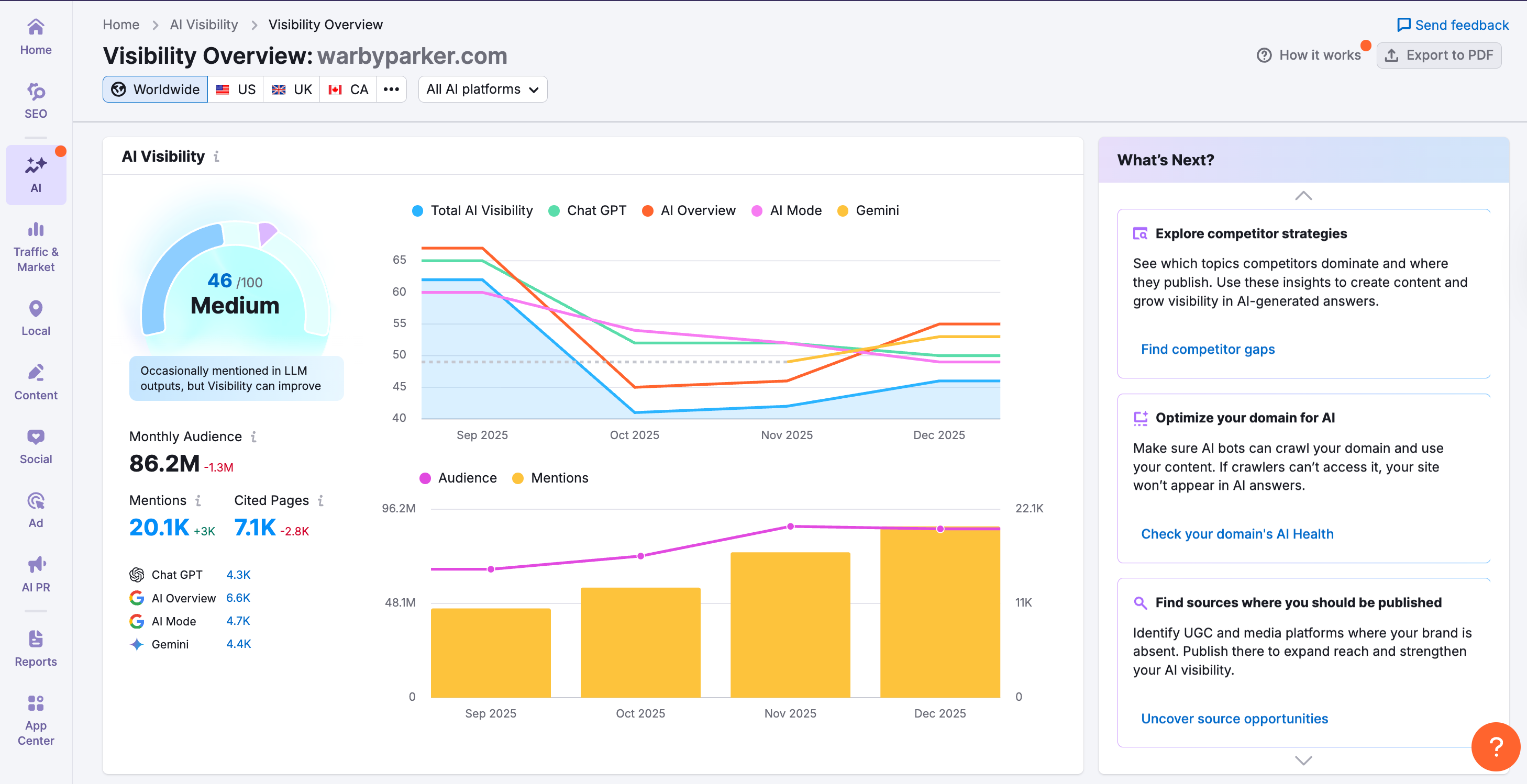
Semrush is an all-in-one SEO and AI visibility platform that helps marketers boost search performance and track how brands appear across both traditional and AI-driven search surfaces.
It combines classic SEO tools with AI visibility metrics like brand mentions in AI answers, competitive benchmarking, and prompt tracking so you can optimize content and measure visibility in search engines and AI models alike.
What are the key features of Semrush?
- AI Visibility & Insights: Tracks brand presence in AI-generated search responses, helping teams understand and adapt to evolving search environments.
- Visibility Tracking: Shows how often your brand and competitors are mentioned across major large language models (LLMs) like ChatGPT, Gemini, and Perplexity.
- Prompt Monitoring: Identifies what users are asking about your business in AI search, helping you respond with optimised content and strategy.
- Competitive Research: Enables comparison of visibility and performance with competitors, revealing gaps and opportunities both in traditional search and AI discovery.
- Content Optimisation: Evaluates content against top-ranking pages and GEO and SEO best practices, helping improve relevance, readability, and search performance.
- Site Audit: Identify technical issues that may block AI search bots from accessing, crawling, or interpreting your content.
What are the pros of Semrush?
- Track both traditional search engine rankings and AI-driven platforms in one interface, saving time and ensuring consistent brand presence.
- Identify what competitors are performing well in both SEO and AI search, helping marketers prioritize opportunities and stay ahead.
- Consolidates multiple tools, SEO, AI monitoring, prompt tracking, and website optimisation into a single workspace, reducing tool-switching.
What are the cons of Semrush?
- The extensive analytics and AI insights can sometimes produce more information than needed, making prioritisation of actions challenging.
- While AI recommendations are useful, they may not always perfectly reflect search trends or user intent, so human judgment is still necessary.
- Advanced features and AI visibility tracking are only available on higher-tier plans, which may be expensive for freelancers or very small businesses.
What are the user reviews of Semrush?
- G2: 4.5/5
- Trustpilot: 2.3/5
How much does Semrush cost?
- Starts at $199 per month
5. Rankability – Comprehensive AI SEO Analyser
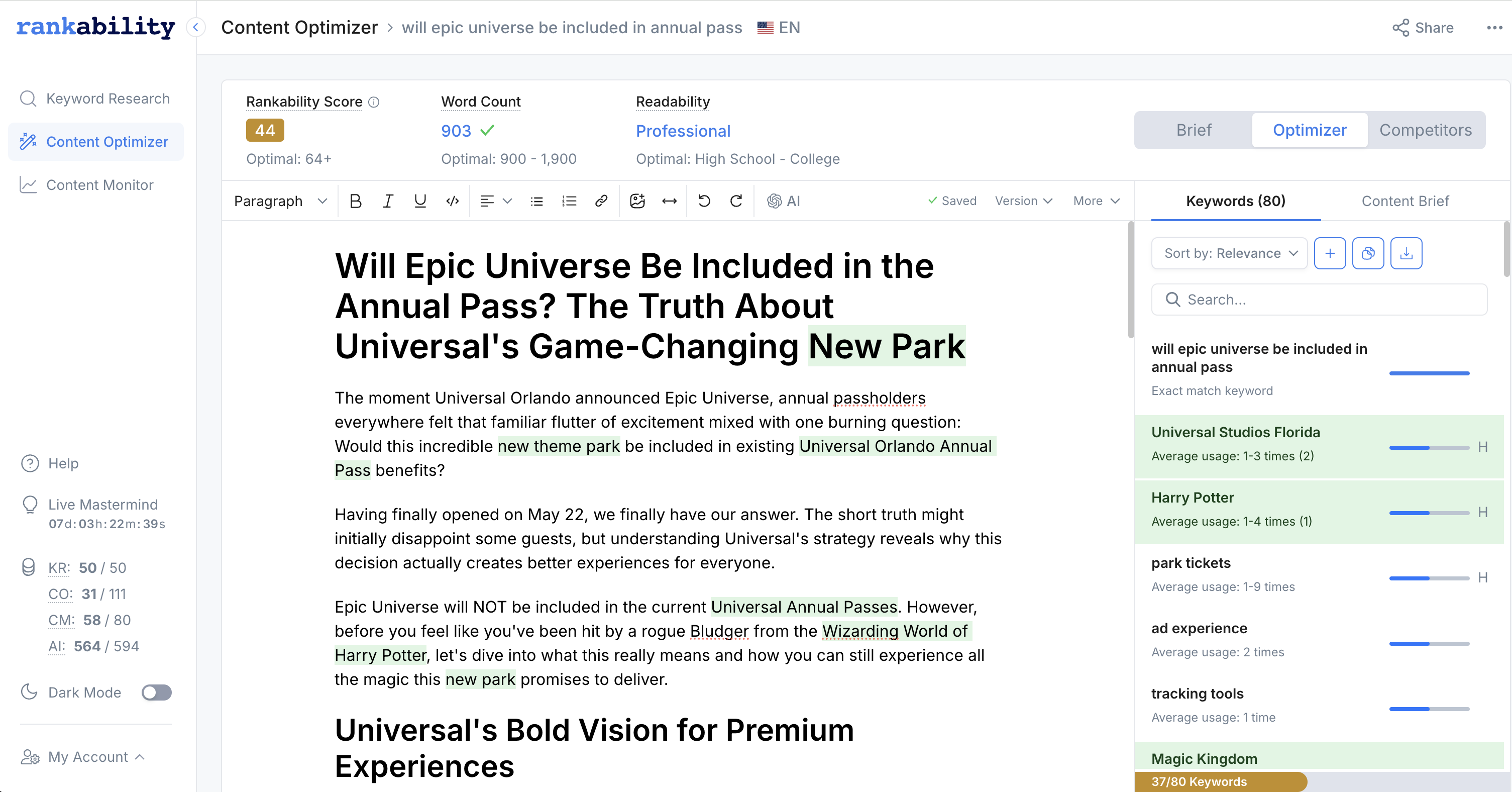
Rankability’s AI Analyser is an AirOps alternative for agencies and content teams who want to combine AI visibility tracking with content operations. It doesn't just show you where your brand appears in search results; it also provides workflows to fix content gaps. This integrated approach is a direct response to what many users seek: tools that connect insights to actions.
What are the Key features of Rankability AI?
- AI keyword research: Evaluates keyword difficulty, search volume, and emerging trends.
- AI content briefs: Creates structured briefs optimised for both search engines and AI answers.
- Content optimiser: Applies NLP and entity analysis to strengthen AI visibility.
- AI answer tracking: Tracks how content performs in AI-generated results beyond traditional SERPs.
- Content monitoring: Identifies content changes and highlights optimisation opportunities.
- Team-ready: Designed to support multi-user access and multi-client workflows.
What are the Pros of Rankability AI?
• Uses high-quality data derived from Google search signals
• Clean, intuitive interface with a low learning curve
• Strong hands-on support, including founder-led mastermind sessions
• Clear, actionable insights through its Rankability Score
What are the cons of Rankability AI?
• Higher entry pricing compared to many alternatives
• Usage caps on lower-tier plans
• Limited integrations, which may require manual processes
What are the User ratings of Rankability AI?
- G2: 5/5
How much does Rankability AI cost?
• Plans start at $124 per month
6. Peec AI -Prompt-Level AI Visibility Analysis
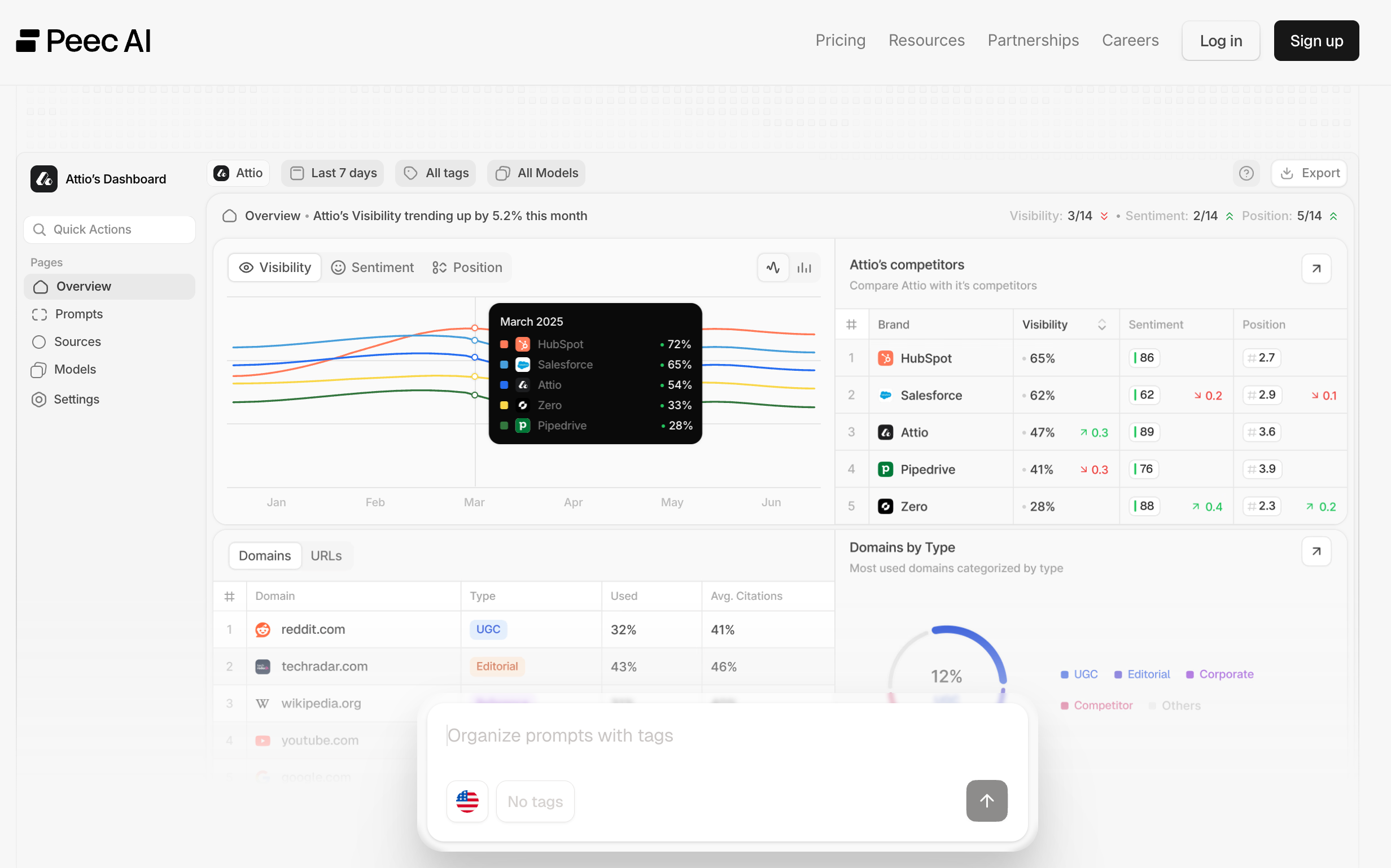
Peec AI uses a prompt-first model to track AI visibility across platforms like ChatGPT, Perplexity, and Google AI Overviews, focusing on how brands appear in real user questions rather than traditional keywords. This approach offers helpful insight into AI interactions, but the platform is largely analytical, with limited tools for content execution or optimisation.
What are the Key features of Peec AI?
• Prompts: Tracks user queries to show if and where your brand appears across AI platforms.
• Visibility: Measures AI share of voice by comparing brand presence against competitors.
• Sentiment: Classifies AI responses as positive, neutral, or negative.
• Positions: Indicates how prominently your brand appears within AI-generated answers.
• Mentions: Highlights which AI models reference your brand and where exposure is strongest.
• Volume: Estimates relative AI prompt demand using a simple one-to-five scale.
• Sources: Shows which websites AI models cite when generating responses.
What are the Pros of Peec AI?
• Easy to use with a clean interface and quick onboarding.
• Broad coverage across major AI search platforms.
• Fresh data from daily prompt runs and live UI scraping.
• Built-in sentiment tracking with no extra cost.
What are the Cons of Peec AI?
• No execution layer, with no optimisation or audit capabilities.
• Lacks workflows or playbooks to turn insights into action.
• Sentiment scores lack deeper context or explanations.
• No clear way to connect AI visibility to traffic or conversions.
• Primarily a monitoring tool rather than a full strategy platform.
What are the User ratings of Peec AI?
• G2:5/5
How much does Peec AI cost?
• Pricing starts at €89 per month
7. SE Visible – AI Search Visibility Tracking Tool by SE Ranking
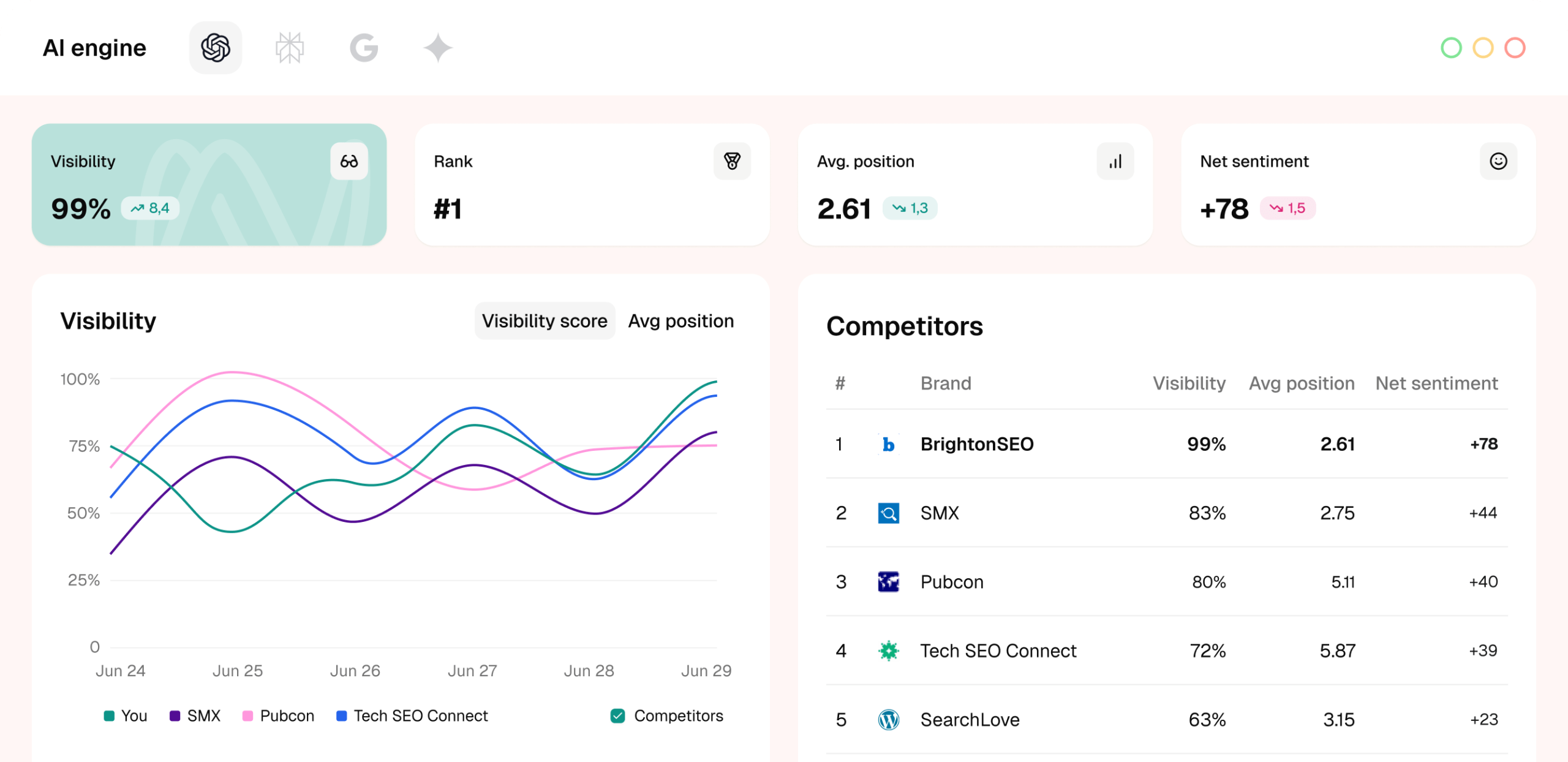
SE Visible expands SE Ranking into AI visibility tracking, covering major AI platforms without extra add-ons. While its straightforward pricing is attractive, the platform is largely focused on monitoring, offering limited direction on how to translate AI visibility insights into concrete optimisation outcomes.
What are the Key features of SE Visible?
• AI visibility overview: Provides a clear snapshot of where and how your brand appears across leading AI platforms.
• Competitor benchmarking: Compares visibility share, average position, and sentiment against competitors.
• Sentiment analysis: Measures brand perception using a Sentiment Score ranging from –100 to +100.
• Prompt management: Uses topic-based suggested prompts or custom queries to keep tracking relevant.
• Source insights: Shows which domains and URLs AI engines cite when mentioning your brand.
What are the Pros of SE Visible?
• Tracks ChatGPT, AI Mode, Perplexity, and Gemini with no additional fees.
• Delivers reliable and accurate AI visibility data.
• Clean dashboards that are easy for teams to adopt quickly.
• Transparent pricing with unlimited user seats.
• Includes sentiment tracking and competitor analysis.
• Provides weekly updates with historical trend data.
What are the Cons of SE Visible?
• CSV export is currently the primary sharing option, with more formats planned.
• Mainly focused on visibility tracking, with deeper SEO actions handled inside SE Ranking.
• One narrow function and not a full all-in-one GEO/SEO platform.
What are the User reviews of SE Visible?
• G2: 4.8/5
How much does SE Visible cost?
• Starting price is $189 per month
Also read about How to Integrate AEO with Traditional SEO Strategies here
8. LLMrefs – AI Citation and Reference Tracking
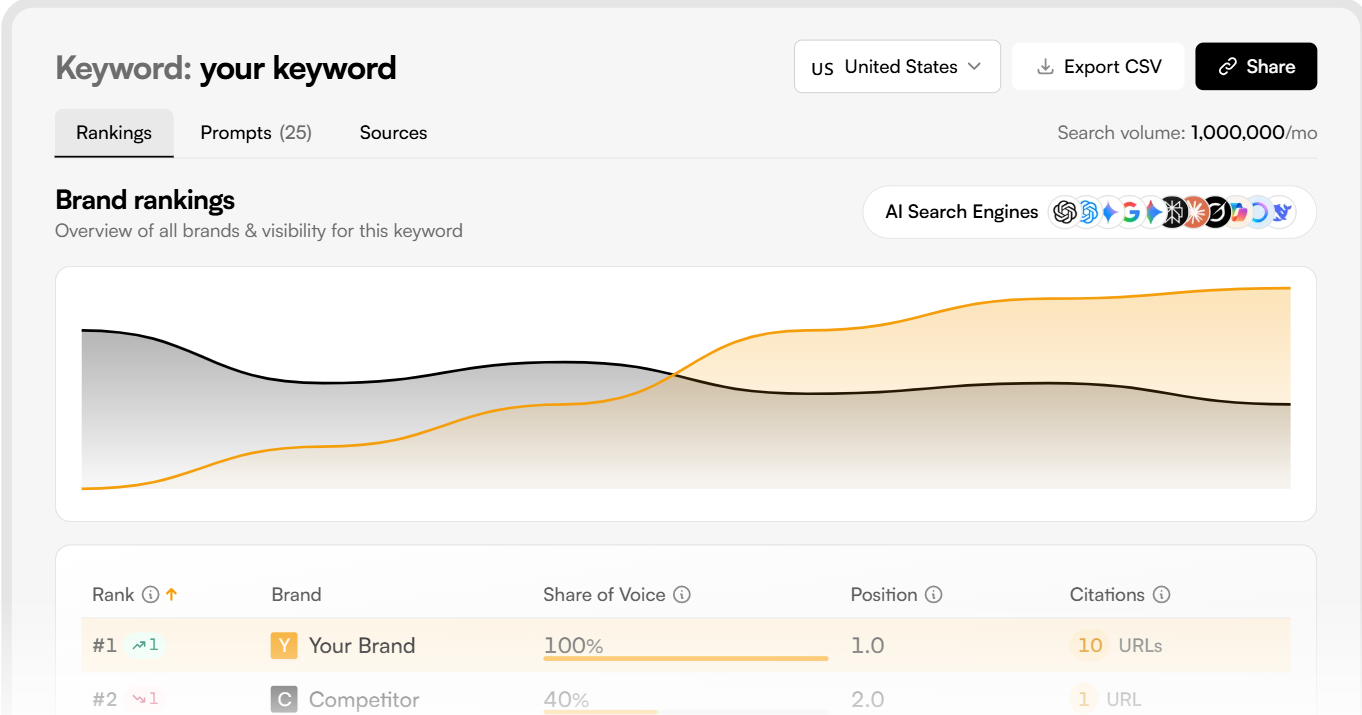
LLMrefsis a cost-effective entry point for teams new to AI visibility tracking, offering simple brand and citation monitoring across major AI platforms without the complexity of full optimisation workflows. Built with agencies in mind, it supports unlimited domains under one subscription, making client management and team collaboration easy.
What are the Key Features of LLMrefs?
• AI search monitoring: Tracks brand visibility across major AI platforms using interface-level crawling.
• Keyword and brand tracking: Monitors keywords, prompts and brand mentions within AI-generated responses.
• Share of voice and positioning: Measures SOV and average placement for competitive comparison.
• Source and citation insights: Highlights cited domains to uncover coverage and content gaps.
What are the Pros of LLMrefs?
• Broad AI coverage across Google AI Overviews, ChatGPT, Gemini, and Perplexity.
• Provides insights through LLMrefs Score, citation analysis, and content gap detection.
• GEO-focused approach aimed at building AI authority, not just rankings.
• Scales well with unlimited projects, seats, and API access.
• Includes utilities like AI crawlability checks and llms.txt generation.
What are the Cons of LLMrefs?
• Keyword-led tracking limits visibility into true prompt-driven AI behaviour.
• Some low-impact features, such as the LLM text generator, offer limited practical value.
• Lacks advanced diagnostics, optimisation guidance, and clear explanations behind competitor citations.
What are the User ratings of LLMrefs?
• Product hunt: 5/5
How much does LLMrefs cost?
• Pricing starts at $79 per month
9. Writesonic GEO Suite – AI Visibility and Content Optimisation
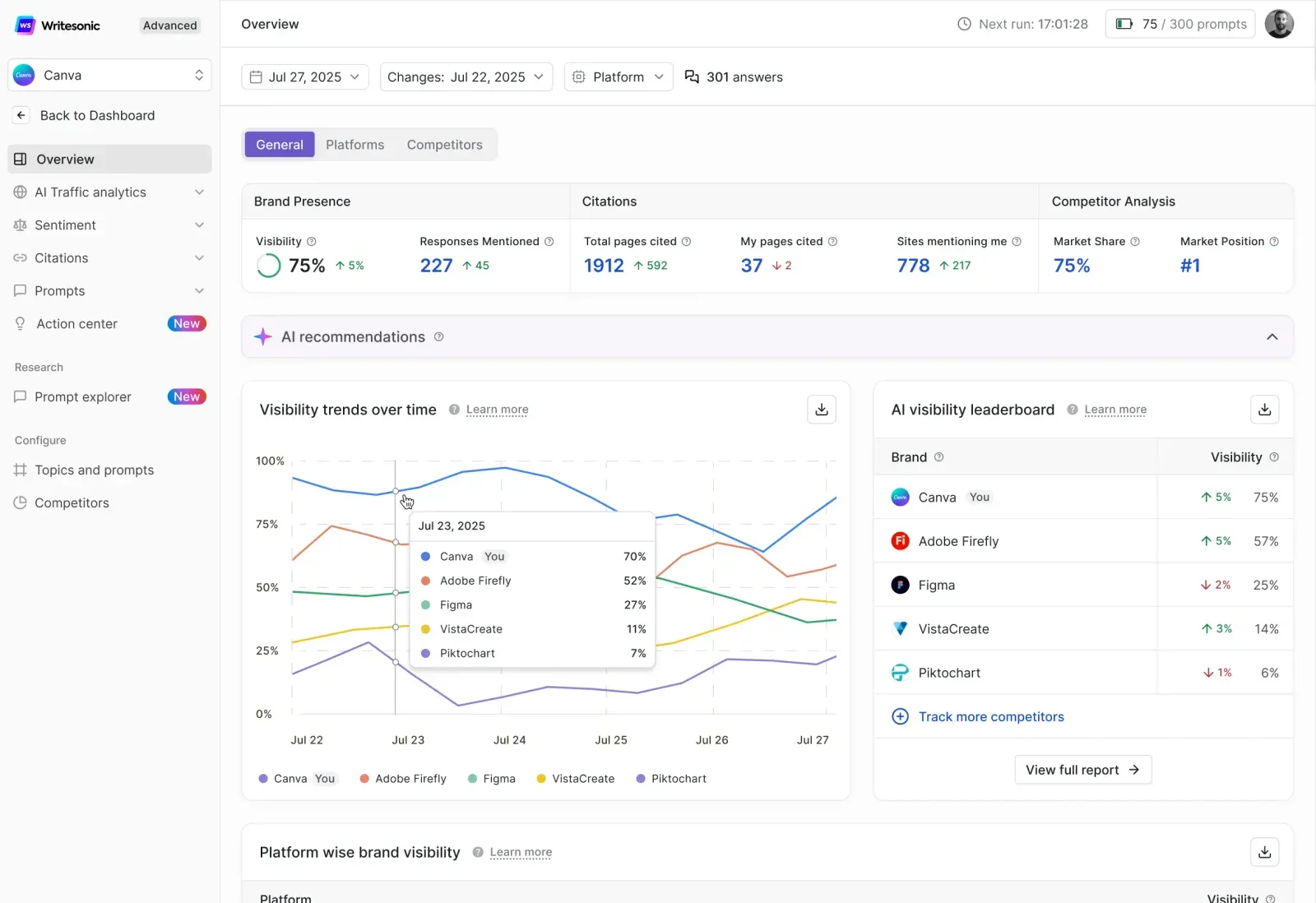
Writesonic GEO Suite connects AI visibility insights directly with content execution. It helps teams move quickly from spotting gaps to publishing optimised content. Its strength lies in hands-on execution rather than deep analytics, making it a better fit for active SEO teams than enterprise reporting use cases.
What are the Key features of Writesonic?
• Real AI crawler tracking: Detects real AI engine visits at the page level.
• Prompt and topic tracking: Shows brand visibility, share of voice, and missing citations.
• Built-in optimisation tools: Improves underperforming pages directly within the platform.
• Citation and sentiment monitoring: Tracks AI references and how brands are represented.
• Competitive AI visibility: Highlights competitor presence and brand gaps.
• Real-time dashboards: Visualise AI activity, trends, and competitor overlap in one view.
• Actionable recommendations: Provides clear guidance to improve AI visibility.
What are the Pros of Writesonic?
• Tracks real AI traffic instead of simulated results.
• Combines AI visibility tracking with content creation and optimisation.
• Scales well for teams of all sizes at a competitive price point.
• Delivers granular insights from prompts down to page-level performance.
• Includes built-in AI writing, SEO, and publishing tools.
What are the Cons of Writesonic?
• Advanced AI monitoring features require onboarding time.
• Credit-based usage model can feel restrictive for some users.
• Feature-rich interface may feel cluttered or overwhelming.
• AI-generated content may need manual accuracy checks.
What are the User ratings of Writesonic?
How much does Writesonic cost?
• GEO plans start at $199 per month and include content and SEO tools.
10. Rankscale AI – Competitive Benchmarking and LLM Visibility Tracking
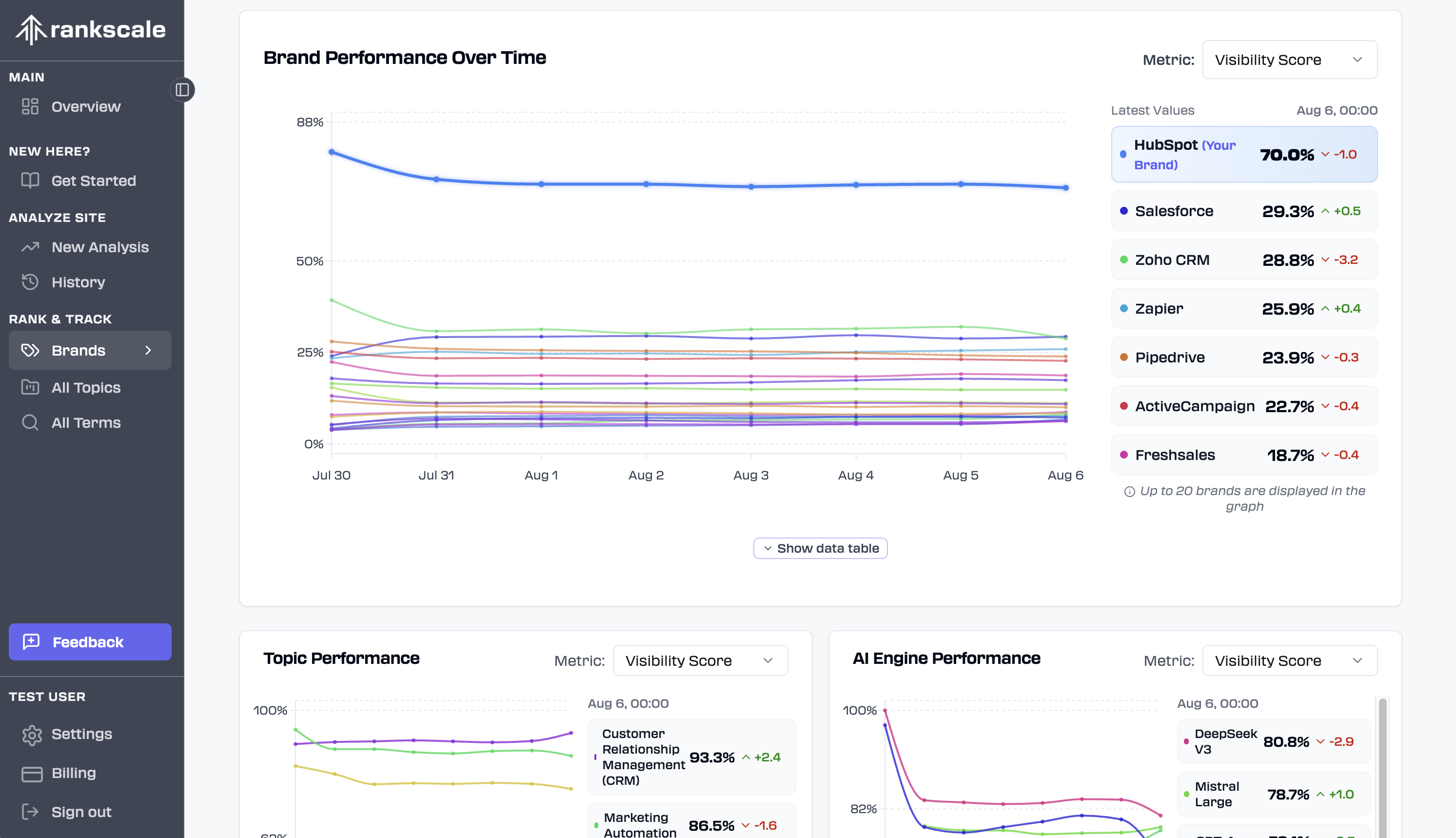
Rankscale AI is heavily focused on competitive analysis across LLMs, giving teams clear visibility into citation share and answer rankings. While many advanced capabilities are locked behind higher tiers, its analytical depth makes it well-suited for teams that prioritise benchmarking over hands-on content execution.
Key features of Rankscale AI?
• AI response tracking: Monitors brand mentions across leading LLMs.
• Competitor benchmarking: Compares visibility, citations, and sentiment against competitors.
• Prompt audits: Reviews brand presence within high-value AI-generated answers.
• Citation analysis: Identifies the sources AI models rely on when generating responses.
• Content quality scoring: Evaluates authority signals, trust, and SEO readiness.
• Sentiment tracking: Measures how AI-generated responses frame your brand.
• LLM testing: Tests prompts across multiple models to check consistency.
What are the Pros of Rankscale AI?
• Detailed prompt-level visibility tracking across AI responses.
• Goes beyond clicks by analysing AI-generated outputs, useful for PR and comms teams.
• Strong competitor benchmarking across prompts, sentiment, and citations.
• Page-level audits that surface optimisation opportunities.
• Well-suited for agencies managing multiple brands or clients.
What are the Cons of Rankscale AI?
• No execution layer, with no built-in content creation or optimisation tools.
• Credit-based pricing can become costly at scale.
• Limited to output-level insights without crawler-level detection.
What are the User ratings of Rankscale AI?
• Rankscale AI currently has no publicly available user reviews or aggregated ratings.
How much does Rankscale AI cost?
• Plans start at $20 per month
What are the Key Features To Evaluate While Choosing AirOps Alternatives?
- AI visibility and SEO coverage: Ability to support both traditional SEO and AI search or GEO needs.
- Actionability: Clear recommendations for what to create, fix, or optimise, not just insights.
- Content execution tools: Built-in content creation, optimisation, or editing workflows.
- Ease of use: Simple setup and intuitive interface without heavy technical overhead.
- Scalability: Supports growing content volumes, teams, or multiple projects.
- Integrations: Works smoothly with CMS, analytics, and existing SEO tools.
- Pricing flexibility: Transparent plans that match team size and usage needs.
Which AirOps Alternative Fits your needs?
If your priority is a reliable, execution-first alternative to AirOps, Scalenut stands out. With consistently strong user ratings and significantly lower starting pricing at just $49/month, it offers SEO, GEO, content creation, and optimisation in one streamlined workflow, making it a more cost-effective and practical choice for scaling teams.
Why Scalenut is the better alternative?
- Execution-first approach: Scalenut focuses on creating, optimising, and publishing content, not just designing workflows.
- All-in-one SEO + GEO platform: Combines keyword research, clustering, content writing, optimisation, and audits in one tool.
- Faster time to results: Pre-built workflows let teams move from insight to live content quickly.
- Lower complexity: Easier to use without technical setup or custom pipeline building.
- Built for marketers, not engineers: Designed for SEO and content teams rather than workflow-heavy ops teams.
- Better value for growing teams: Replaces multiple tools with a single, cost-effective platform.
- Lower cost, higher value: Scalenut offers affordable pricing at just $49/ month, making it easier for growing teams to scale content and GEO efforts without budget risk.
- Execution-first, not just insights: Unlike tools focused only on workflows or monitoring, Scalenut helps users actively improve rankings and AI visibility with clear, actionable guidance.
With a free trial, you can quickly experience how an end-to-end platform like Scalenut transforms your workflow.
Frequently Asked Questions
What are the top pros and cons of using AirOps compared to competitors?
AirOps stands out for powerful, scalable content creation via customizable workflows. However, advanced features come with a steep learning curve and unclear pricing. Some competitors trade deep automation for simpler usability and more transparent plans.
Can AirOps help improve business efficiency with AI content workflows?
Yes. AirOps improves efficiency by automating content workflows through a visual builder that connects AI writing tools and data sources, streamlining production, reducing manual tasks, and freeing teams to focus on higher-impact, strategic work.
Why Look for an AirOps Alternative?
Teams often seek an AirOps alternative because of its steep learning curve, custom pricing, and overall complexity. While AirOps scalability features suit advanced teams, simpler tools with clearer workflows, better integrations, or free plans are often more accessible and practical for smaller or less technical teams.
What alternatives are available if AirOps does not meet my needs?
If AirOps isn’t the right fit, try Scalenut for fast, GEO-focused content. Many content and SEO tools offer free trials, letting you test workflows, knowledge bases, and review features before committing.
Are there any free AirOps alternatives for marketers?
Yes. Tools like Scalenut, often considered among AirOps alternatives AI agents, offer free trials that suit marketers, content creators, and small teams, allowing them to test core features, assess workflow fit, and upgrade confidently before committing to a paid plan.
What are the best AI tools in SEO?
The best AI tools for SEO depend on your strategy. For SEO professionals, top tools integrate keyword research, content creation, and search engine optimisation. Platforms like Scalenut are great for guided content creation and optimisation with GEO optimisation.
Is AirOps a good AI tool for scaling quality content?
AirOps effectively scales quality content through custom AI workflows and human review layers. However, teams prioritising faster execution, built-in GEO/SEO optimisation, and AI-ready content creation may find Scalenut more practical.
Is AirOps a better choice than Copy AI for content generation?
AirOps offers more flexibility and control than Copy AI through workflow automation. That said, neither focuses deeply on SEO execution, whereas Scalenut stands out for its optimisation-first content creation.
What are the main AirOps AI tool features?
AirOps focuses on AI workflow automation, content pipelines, brand guidelines, integrations, and human-in-the-loop reviews. It excels at orchestrating large-scale content operations but relies on custom setup rather than built-in GEO and SEO execution features.
How much does AirOps cost, and what pricing plans does it offer?
AirOps offers multiple pricing tiers, from a free plan to custom-priced options for larger teams. While individuals can try core features at no cost, advanced capabilities such as AI Search Visibility are available only on paid plans.
Why are AI teams switching from Jasper to AirOps?
AI teams switch from Jasper to AirOps when they need more than content writing, seeking custom AI workflows, deeper automation, and control over complex, multi-step content and data pipelines.
What are the core AirOps AI automation features?
AirOps provides custom AI workflows, logic-based automations, integrations with external tools, and scalable pipelines that help teams automate research, content generation, and operational processes efficiently.
What is AirOps, and how does it work for SEO content creation?
AirOps helps SEO teams automate research, content drafting, and enrichment through custom AI workflows. It is flexible and powerful, but requires manual setup and clearly defined logic to execute SEO strategies effectively.
What do real users say about their experience with AirOps?
Real users praise AirOps for flexibility but often cite setup complexity, learning curve, and rising usage costs. In such cases, GEO/SEO platforms like Scalenut stands out for simpler onboarding, lower cost, and execution-first SEO and GEO workflows.


.svg)


.webp)