.jpg)
What Are The 10 Best AI SEO Tools in 2026?
Key Highlights
- The best AI SEO tools in 2026 combine Google search fundamentals with AI answer tracking, so you can improve visibility across classic and AI-driven discovery.
- Strong platforms use machine learning and generative AI to turn search intent and user intent signals into clearer planning decisions for content marketing.
- Look for workflows that create content briefs and content outlines from real SERP patterns, especially when you are competing against established ranking pages.
- Tools that include an AI assistant help reduce repetitive tasks across drafting, optimization, and refresh cycles for busy seo professionals.
- The most valuable stacks deliver actionable insights and actionable recommendations, so you always know what to fix, update, or publish next.
- A quick comparison of 10 options highlights which platforms are best for monitoring only versus those built for execution and collaboration.
- The “how to choose” framework helps small businesses and larger teams match tools to workflow needs, reporting expectations, and digital marketing goals.
AI search is making SEO feel unpredictable. You can have solid rankings, great content, and steady traffic, then open ChatGPT or Google’s AI experiences and realize your brand is barely mentioned. Worse, a competitor with weaker pages shows up repeatedly, and you are left guessing what the AI is pulling from and why you are missing.
That is the new frustration for content marketers in 2026. Traditional dashboards still matter, but they do not explain how AI answers are formed, which sources are being cited, or what content gaps are costing you visibility. If your team is relying on manual checks and scattered tools, it is easy to waste time chasing updates that do not move the needle.
This guide breaks down the best AI SEO tools to try in 2026, with a quick comparison and a practical framework for choosing the right fit. You will see which platforms help with AI visibility tracking, content planning, optimization workflows, and competitive benchmarking, so you can turn AI search signals into focused actions that improve results.
What Are The Main Features To Look For In The Best AI SEO Tools?
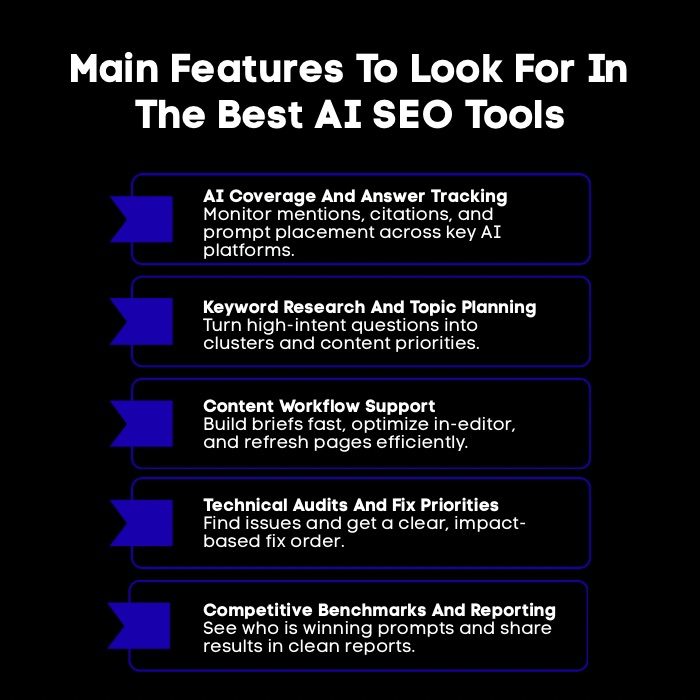
In 2026, “AI SEO” is not just about writing faster. The best platforms help you track how AI answers talk about your brand, turn those insights into smarter content plans, and then make execution easier across your team.
1. AI Platform Coverage And AI Answer Visibility Tracking
Start with coverage. A strong tool should track visibility across the AI experiences your audience actually uses, then show clear signals like brand mentions, citations, and prompt-level presence. Look for trend views too, so you can tell whether visibility is improving or slipping.
2. AI-Assisted Keyword Research And Topic Planning
AI features are only useful if they lead to better decisions. Prioritize tools that help you find high-intent topics, cluster keywords into logical themes, and surface the questions people ask in AI search. Bonus points if the tool helps you map content to stages of the journey, not just top-of-funnel terms.
3. Content Optimization, Briefing, And Writing Workflows
The best tools reduce back-and-forth between research, briefs, drafts, and optimization. Look for workflows that turn SERP insights into a clear outline, guide coverage while you write, and make refreshes simple when rankings or AI citations change.
4. Technical SEO Audits And Prioritized Fix Recommendations
Content cannot carry everything. A good platform should help you catch crawlability, indexing, and on-page technical issues, then prioritize fixes based on impact. The ideal setup is a tool that tells you what to fix first and why, instead of dumping a long site audit list.
5. Competitive Benchmarking, Reporting, And Team Collaboration
AI visibility is competitive by nature, so you want side-by-side comparisons that show who is getting cited and why. Reporting should be easy to share with stakeholders, and collaboration features should support real workflows, such as multiple workspaces, role-based access, and clean exports.
Quick Comparison: 10 Best AI SEO Tools
If you want a fast way to shortlist tools, this table gives you the at-a-glance differences that usually matter most: what each platform is best at, what it is known for, and the typical starting price and rating.
Below is a quick side-by-side view of 10 tools worth considering in 2026.
Tool
Best For
Standout Strength
Pricing From
User Rating
Scalenut
SEO + GEO execution in one place
Visibility metrics plus clear action paths
$30/month
4.7/5
SE Visible
AI answer visibility tracking at scale
Prompt-based AI visibility benchmarking
$189/month
4.7/5
Writesonic (GEO)
Monitoring plus content workflows
Visibility insights tied to creation workflows
$49/month
4.7/5
Frase
Fast research to brief to draft
SERP-driven briefs and optimization editor
$39/month
4.8/5
MarketMuse
Content strategy and topical authority
Inventory-led planning and prioritization
$99/month
4.6/5
Surfer SEO
On-page optimization for writers
Real-time Content Editor with SERP guidance
$49/month
4.8/5
AthenaHQ
GEO visibility and competitive prompts
Prompt-level brand and competitor tracking
Custom
4.9/5
Otterly.AI
Lightweight AI search monitoring
Fast prompt monitoring with citations focus
$29/month
4.9/5
Clearscope
Editorial-friendly content optimization
Simple grading for consistent content quality
$129/month
4.9/5
Semrush AI Visibility Toolkit
AI visibility inside an SEO suite
Prompt tracking plus competitive narrative insights
$99/month
4.5/5
What Are The Top AI SEO Tools Recommended For 2026?
If you want to win in modern search, you need more than rankings. The right AI SEO tools help you track visibility in AI answers, improve content faster, and prioritize the fixes that actually move results.
Below are 10 tools worth considering in 2026, with their standout features, pros, cons, pricing, and user ratings.
1. Scalenut

Scalenut brings SEO execution and GEO tracking into one workflow, so you can plan, write, optimize, and measure performance across traditional search and AI answers. If you want the best AI SEO tools that blend visibility insights with real next steps, Scalenut stands out as a practical, execution-first option and a strong best AI mode SEO tool pick for teams focused on modern discovery.
Scalenut Unique Features
- AI Visibility Score that benchmarks how frequently your brand appears in AI answers versus competitors
- Average Position Tracking to show whether your brand shows up early in responses or further down
- Share Of Voice to estimate how much of the AI answer space your brand captures compared to others
- Visibility Heatmap to break visibility patterns out by platform and spot strong and weak channels quickly
- Brand Visibility Rank that combines multiple signals into a single benchmark across prompts and topics
- Prompt Tracking to show the exact prompts where your brand appears and your relative positioning
- Citation Tracking to highlight which sources AI engines rely on to generate answers
- Competitor Visibility Insights to identify brands that show up most often alongside yours
- Query Fanouts And Sentiment Insights to map follow-up paths and label mentions by tone for faster risk and opportunity spotting
- AI-Led Content Ideas that turn AI-driven questions into content topics worth targeting
- Authority And Backlink Suggestions to strengthen credibility signals that can support citations and visibility
- Action Paths For Execution that convert visibility gaps into clear, prioritized next steps your team can act on
- AI Traffic And Bot Signals to track AI bot visits, most referenced pages, and AI traffic trends, with deeper measurement via Cloudflare integration
Pros
- Execution-first workflows that turn visibility insights into clear next actions
- Prompt and citation tracking that helps explain why competitors get mentioned
- Strong benchmarking with visibility score, average position, and share of voice
- Connects GEO insights directly to content planning and on-page optimization
- Heatmaps and trends that make gaps easy to spot quickly
Cons
- Works best when you track a consistent prompt set and act on recommendations regularly
- Best fit if ChatGPT and Perplexity are priority channels in your monitoring mix
- You may still pair it with a broader suite if you need deep technical audits or large-scale link intelligence
Pricing
- Starter: $30/month (7-day free trial, up to 10 prompts, 1 workspace)
- Plus: $45/month (7-day free trial, up to 25 prompts, 2 workspaces, team access)
- Professional: $100/month (7-day free trial, up to 100 prompts, Perplexity included, unlimited workspaces and team members)
User Rating
- G2 Rating: 4.7/5
2. SE Visible
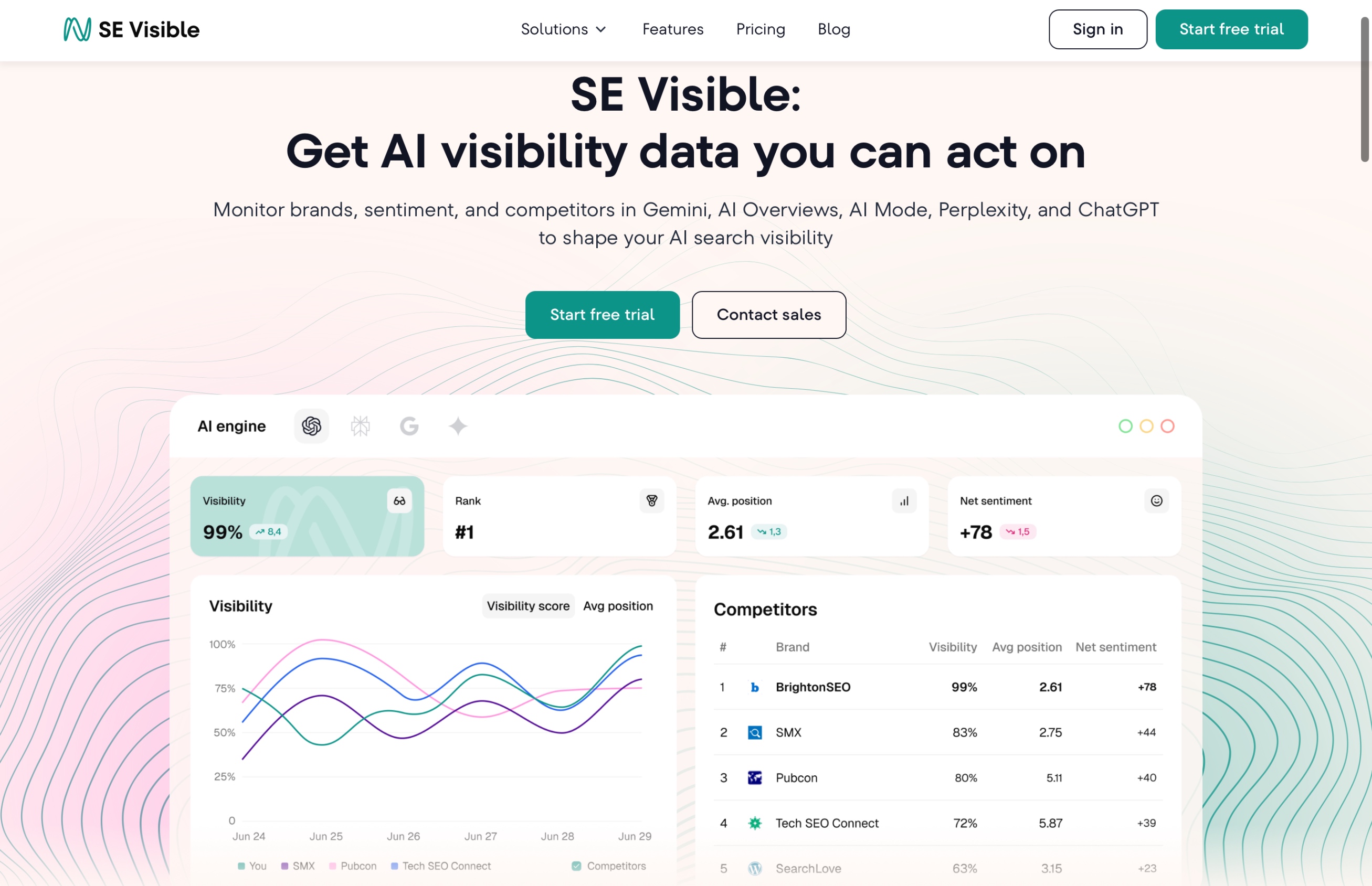
SE Visible is SE Ranking’s AI visibility layer that shows how your brand appears inside AI-generated answers, not just in classic rankings. It is especially helpful if you want tools for search engine optimization that also track mentions, sentiment, and competitor presence across AI platforms.
SE Visible Unique Features
- Tracks brand visibility across multiple AI platforms and regions
- Shows mention share, relative position, and sentiment alongside competitor comparisons
- Highlights cited sources and URLs that AI engines pull into answers
- Works as a standalone visibility product and also fits into SE Ranking workflows via its AI add-on
Pros
- Clear, dashboard-style view of AI answer visibility and competitive benchmarks
- Helpful for teams that want monitoring and reporting without heavy setup
- Strong for multi-brand tracking when you manage several clients or product lines
Cons
- Visibility insights are the main strength, but deeper SEO execution still lives in SE Ranking
- Reporting and exports can feel limiting if you need highly customized dashboards
Pricing
- Core: $189/month (450 prompts, 5 brands)
- Plus: $355/month (1,000 prompts, 10 brands)
- Max: $519/month (1,500 prompts, 15 brands)
- 10-day free trial is typically available
User Rating
- G2 Rating: 4.7/5
Want to see how Scalenut compares to SE Ranking for GEO tracking and hands-on SEO execution? Read our Scalenut vs SE Ranking breakdown.
3. Writesonic (GEO)
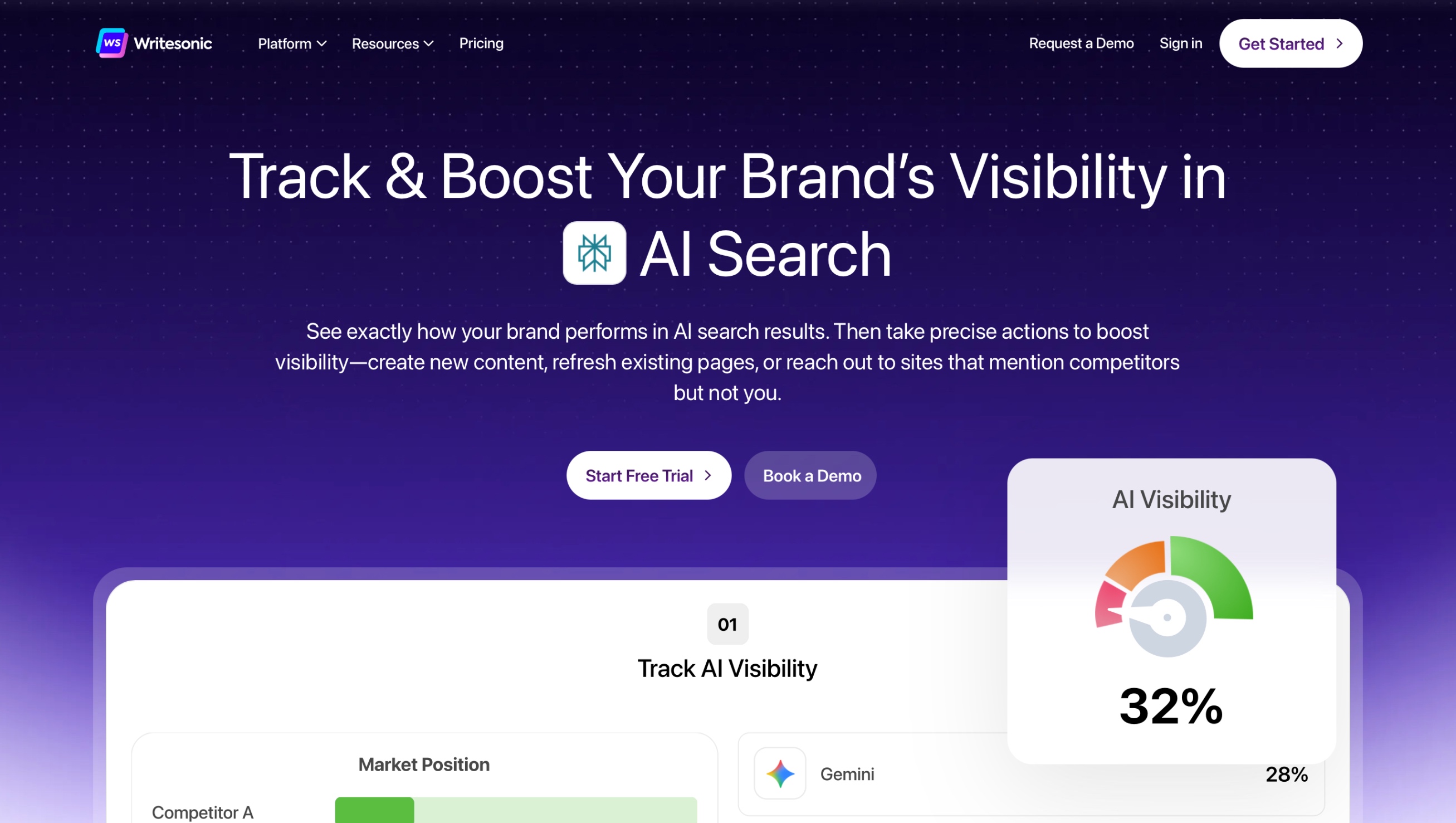
Writesonic’s GEO offering is built to help you understand how your brand shows up inside AI-generated answers, not just in traditional rankings. It combines visibility tracking with practical guidance, so you can identify where competitors are getting cited and what updates may help you earn more AI mentions.
Writesonic (GEO) Unique Features
- Tracks brand visibility across multiple AI answer surfaces, including where and how you are mentioned
- Highlights citation and mention gaps so you can see what sources AI engines rely on for your topic
- Adds next-step recommendations to turn monitoring into improvements, not just reporting
- Connects AI visibility work with content workflows, so you can act on insights faster
Pros
- Useful for teams that want visibility insights plus clear actions to prioritize
- Competitive benchmarking makes it easier to see who is winning key prompts
- Fits well when you want AI visibility tracking alongside content creation workflows
Cons
- GEO coverage and inclusions can vary by plan, so you will want to confirm what is bundled before committing
- Reporting may feel limited if you need highly customized dashboards for stakeholders
Pricing
- Lite: $49/month
- Standard: $99/month
- Professional: $249/month
- Advanced: $499/month
- Enterprise: Custom pricing
User Rating
- G2 Rating: 4.7/5
4. Frase
Frase is built for teams that want a faster path from SERP research to a publish-ready draft, with optimization baked into the writing flow. If you are comparing artificial intelligence SEO tools that blend briefing, writing, and on-page improvements in one place, Frase is a practical, workflow-first pick.
Frase Unique Features
- SERP-based research that auto-pulls headings, topics, and competitor patterns into a brief
- An editor that guides optimization while you write, so you do not have to juggle tabs
- AI visibility tracking features that connect content decisions to modern discovery surfaces
- Integrations that let you work inside common writing and publishing workflows
- API support for teams that want to plug briefs or outputs into internal systems
Pros
- Strong end-to-end workflow from research to optimization
- Helps reduce manual outlining and briefing time
- Works well for lean teams that need speed and structure
- Useful integrations that keep drafting and publishing smoother
- Easy to standardize briefs across multiple writers
Cons
- Plan limits can matter if you publish at high volume
- Some features and tracking depth vary by tier
- Can feel like more than you need if you only want a lightweight editor
- Advanced governance features are typically reserved for higher plans
- Not a full replacement for deep technical SEO platforms
Pricing
- Starter: $39/month (Billed Annually)
- Professional: $103/month (Billed Annually)
- Scale: $239/month (Billed Annually)
- Enterprise: Custom Pricing
User Rating
- G2 Rating: 4.8/5
Curious whether Scalenut or Frase is the better fit for AI visibility tracking and content optimization? Check out our Scalenut vs Frase comparison.
5. MarketMuse
MarketMuse is a strategy-first platform designed to help you build topical authority, prioritize what to update next, and create stronger briefs based on content gaps. It is a great fit when you want content planning depth and clarity, not just more dashboards or generic SEO tracking tools.
MarketMuse Unique Features
- Content inventory insights that highlight gaps, overlaps, and priority opportunities
- Difficulty and authority signals that help you choose battles you can realistically win
- Multiple brief formats that support different content types and intents
- Topic modeling designed to improve coverage and depth, not just keyword placement
- Competitive analysis views that show where your topic coverage is falling short
Pros
- Excellent for building a long-term topical authority roadmap
- Helps you prioritize updates with higher expected impact
- Strong briefs that align writers, editors, and SEO stakeholders
- Works well for large content libraries where planning is the bottleneck
- Useful for reducing guesswork on what to create or refresh next
Cons
- Strategy depth comes with a learning curve for first-time users
- Pricing can feel steep for smaller teams beyond basic needs
- Free tier is limited if you want full inventory-driven planning
- More planning-focused than execution-focused, so you may still need adjacent tools
- Can be overkill if you only optimize a handful of pages per month
Pricing
- Free: $0/month
- Optimize: $99/month
- Research: $249/month
- Strategy: $499/month
User Rating
- G2 Rating: 4.6/5
6. Surfer SEO
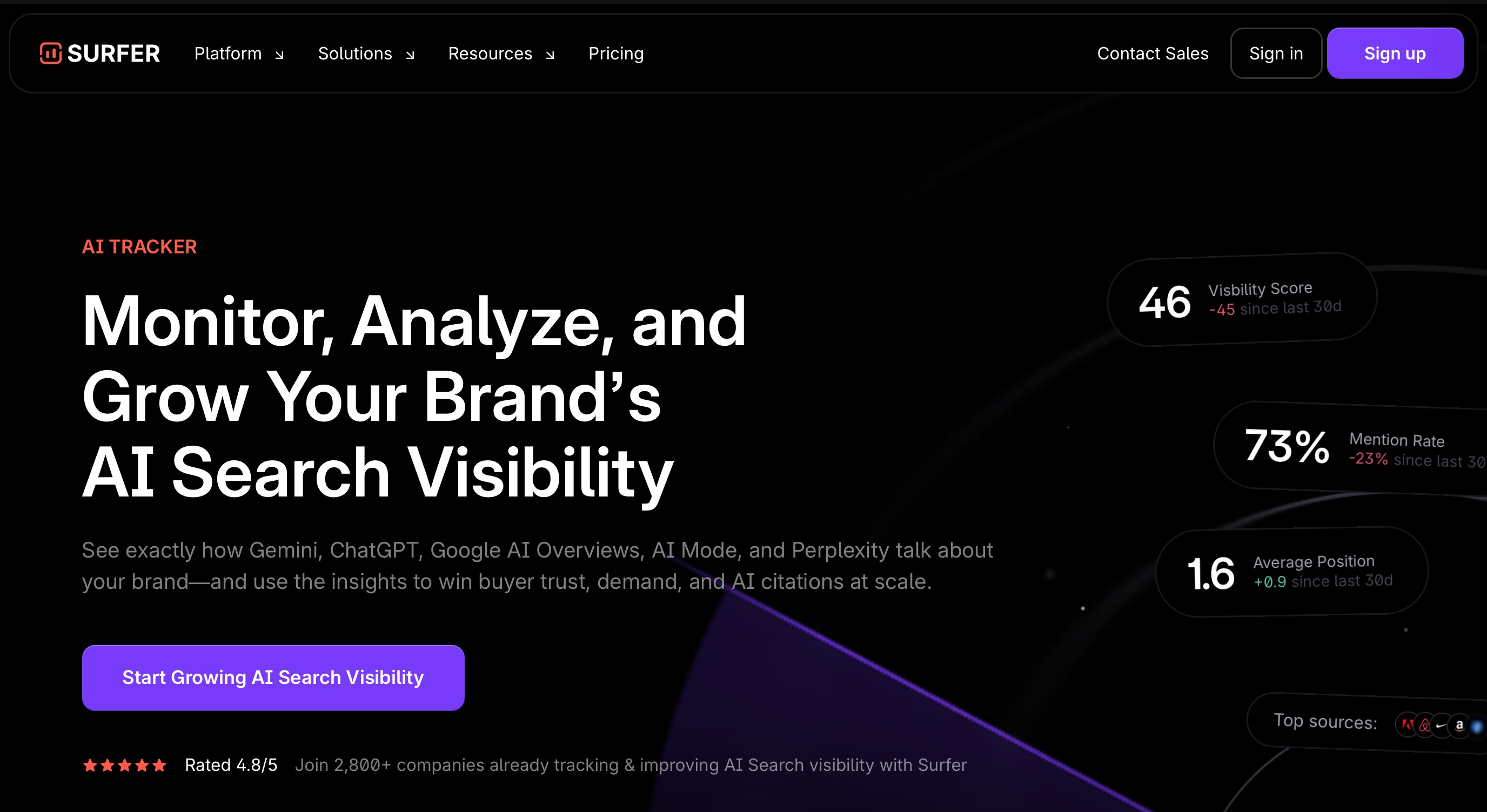
Surfer SEO is a content optimization platform built around a real-time editor that helps you align pages with what is already ranking. It is a strong fit if you want a repeatable writing and on-page workflow, plus modern add-ons that support AI SEO optimization as search continues to evolve.
Surfer SEO Unique Features
- Real-time Content Editor with SERP-based guidance for structure, coverage, and on-page improvements
- SERP Analyzer and competitive comparisons to model what is working in your niche
- Content Audit and refresh workflows to spot pages that need updates and keep them competitive
- Internal linking features to speed up on-page linking improvements at scale
- Topical research and content planning features to build better coverage beyond one page
Pros
- Very workflow-friendly for writers and editors because guidance is right inside the editor
- Easy to standardize optimization across multiple contributors and content pieces
- Strong for on-page execution when you want a practical checklist without heavy setup
- Helpful for keeping older content updated through audits and refresh cues
- Plenty of education and templates to reduce ramp-up time for new team members
Cons
- Pricing can feel high for solo users or smaller teams, especially as usage grows
- Limits can be restrictive if you publish at high volume and need more capacity
- Not a full technical SEO suite, so most teams still pair it with an audit and backlink tool
- Optimization guidance can tempt teams to over-optimize if they chase scores too aggressively
- Some advanced capabilities may depend on specific tiers or add-ons
Pricing
- Discovery: $49/month
- Standard: $99/month
- Pro: $182/month
- Peace Of Mind: $299/month
- Enterprise: From $999/month
User Rating
- G2 Rating: 4.8/5
Wondering if Scalenut or Surfer SEO is better for AI visibility tracking and on-page optimization workflows? Read our Scalenut vs Surfer SEO comparison.
7. AthenaHQ
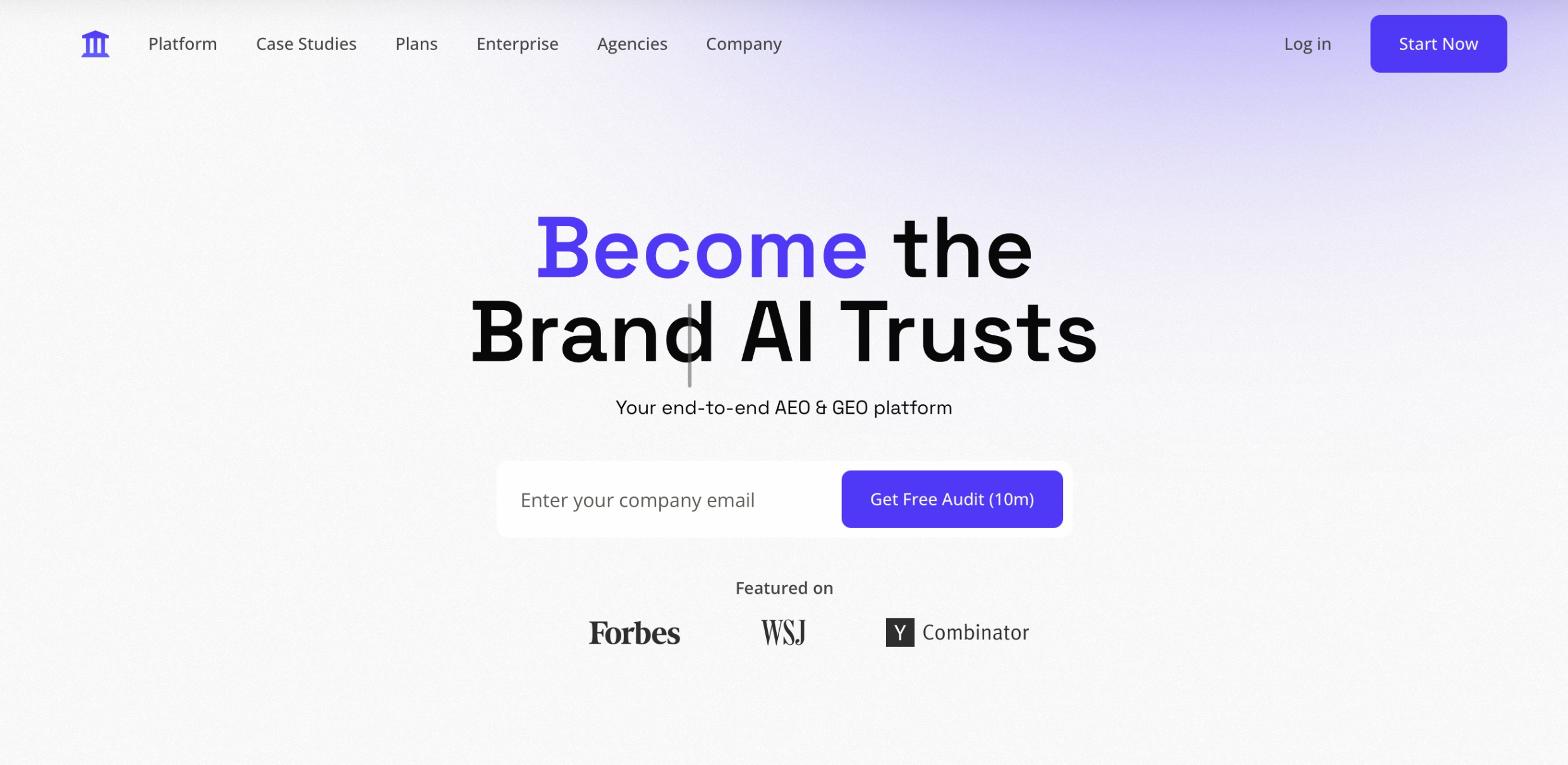
AthenaHQ is a GEO platform focused on monitoring how brands appear across AI answers, with prompt-level insights and recommended actions. It is especially useful for teams evaluating AI search engine optimization tools that prioritize visibility, competitive intelligence, and clear next steps over traditional rank tracking alone.
AthenaHQ Unique Features
- Prompt-level monitoring to see how your brand and competitors show up in real AI answers
- Knowledge gap detection that flags missing, unclear, or outdated information AI may be using
- Competitive insights that help you identify who is winning key non-branded prompts
- Action items designed to guide what to fix, publish, or clarify to improve AI visibility
- Regional or market-level segmentation so teams can spot location-driven differences in AI outputs
Pros
- Built for modern AI visibility workflows, not just traditional SEO reporting
- Strong competitive context, which helps prioritize the prompts that actually matter
- Action-oriented insights make it easier to move from tracking to execution
- Useful for brand, comms, and growth teams who need visibility beyond keyword rankings
- Good fit for cross-functional collaboration when multiple teams influence brand knowledge online
Cons
- Pricing is not always published publicly, which can slow early-stage evaluation
- Setup can take some upfront work if you want clean prompt sets and consistent tracking
- Some users flag occasional data limitations or accuracy edge cases, depending on prompt volume
- Not a replacement for technical SEO, backlink analysis, or full-suite SEO execution
- Best value usually shows up when you have a clear GEO workflow and ownership model internally
Pricing
- Custom pricing (Typically quote-based)
User Rating
- G2 Rating: 4.9/5
8. Otterly.AI
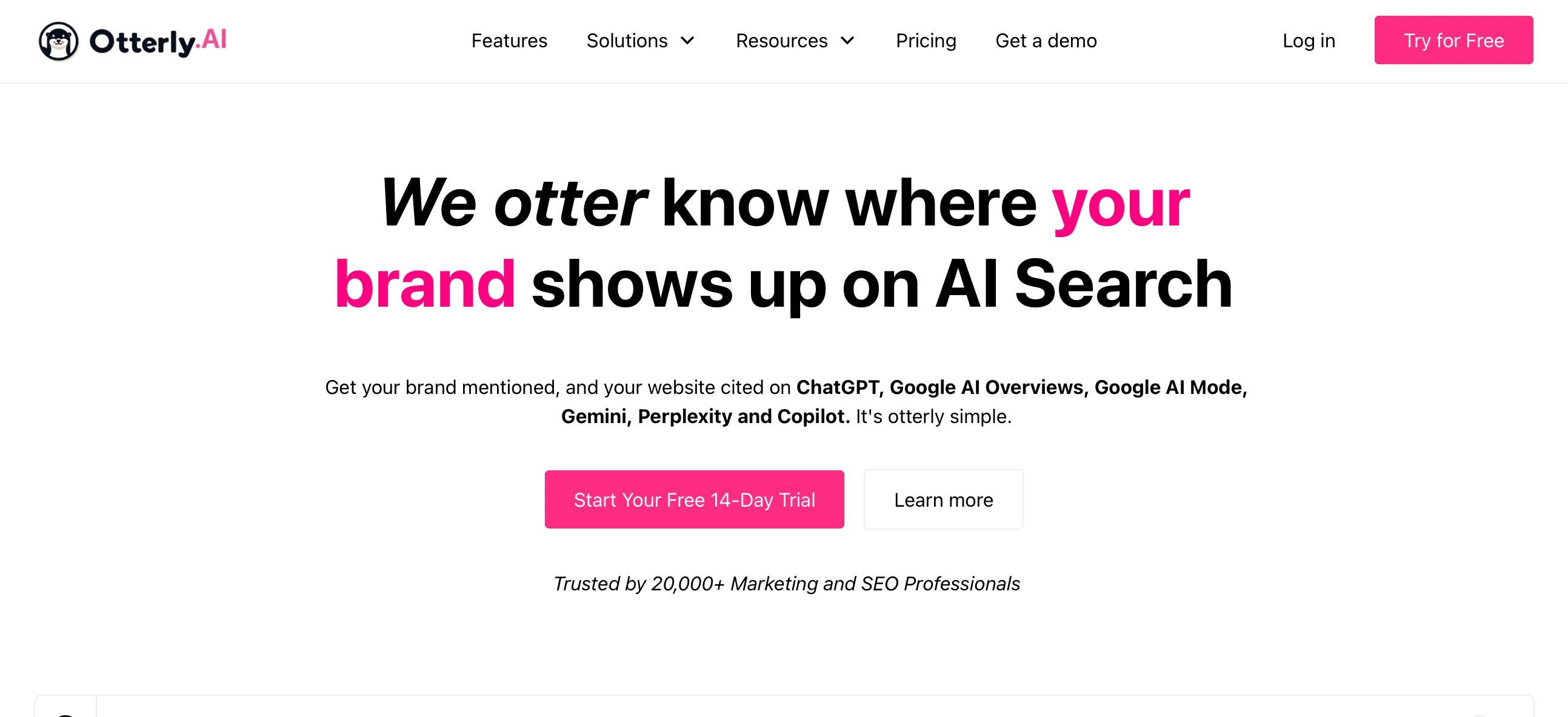
Otterly.AI is a lightweight monitoring tool that helps you track how your brand shows up inside real AI answers. It is great when you want quick, prompt-based visibility checks without committing to a full enterprise stack, which makes it one of the best AI SEO tools for marketers who need fast signal.
Otterly.AI Unique Features
- Prompt library tracking for the exact questions you care about
- Brand mention and citation visibility across multiple AI answer surfaces
- Competitive comparisons so you can see who is showing up instead of you
- Frequent refresh cadence that helps you catch changes early
- Simple dashboards that make it easy to share wins and gaps with stakeholders
Pros
- Quick to set up and easy to understand, even for small teams
- Clear citation and mention insights, not just generic visibility scores
- Competitive context makes prioritization easier
- Great entry point if you are new to AI visibility tracking
- Works well for weekly reporting and lightweight monitoring routines
Cons
- Prompt limits can become a constraint as monitoring grows
- Some AI surfaces may be packaged as add-ons depending on the plan
- Monitoring-first product, so you still need separate tools for execution
- Results quality depends on having clean, well-designed prompt sets
- Advanced reporting may feel limited for enterprise stakeholders
Pricing
- Lite: $29/month
- Standard: $160/month
- Premium: $422 to $489/month
User Rating
- G2 Rating: 4.9/5
Want a clearer view of which platforms fit your workflow best? Explore our guide on which AI monitoring tools can improve your workflow.
9. Clearscope
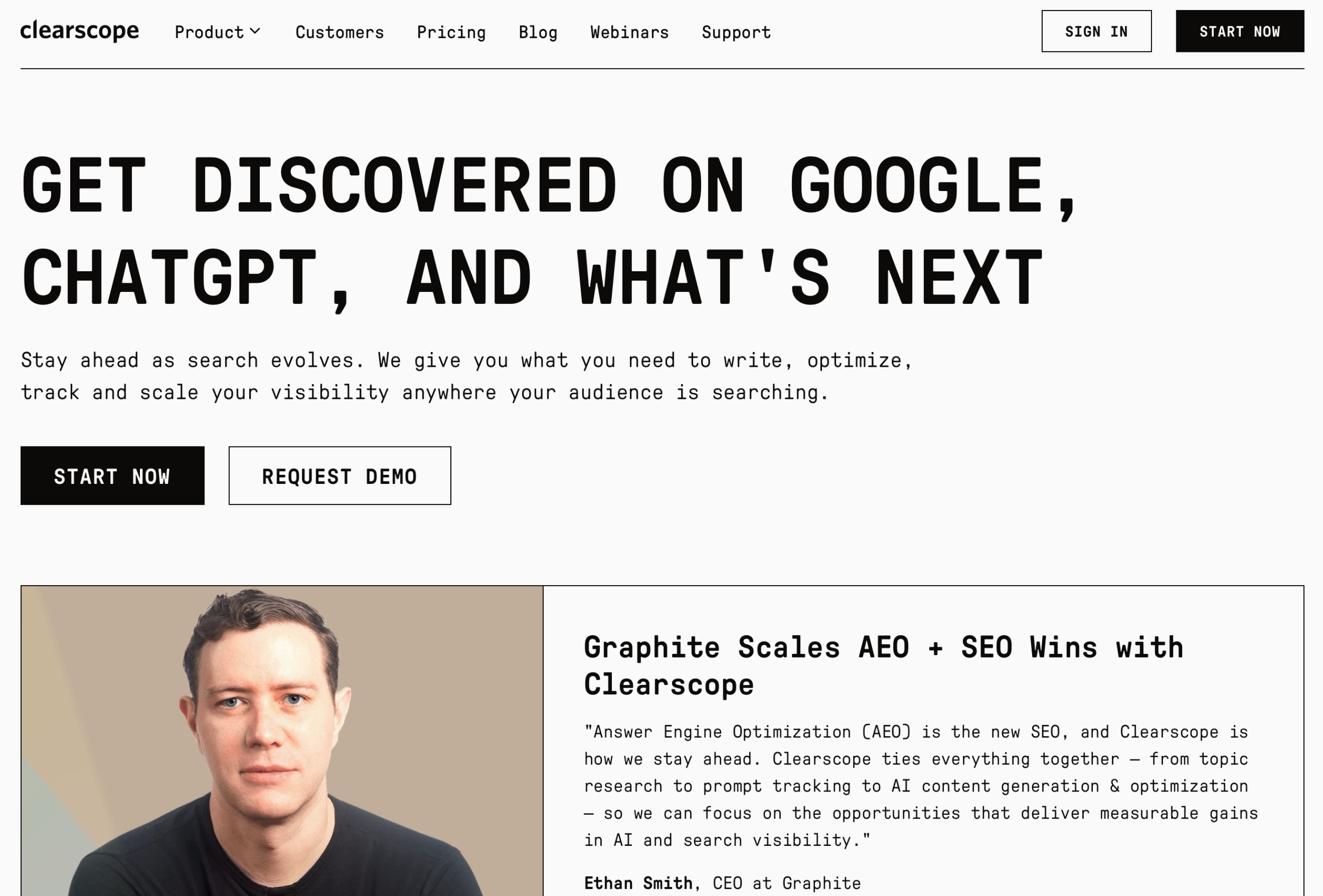
Clearscope is a content optimization tool that helps writers and SEO teams create stronger pages using topic and competitor signals inside a clean editor. If you are evaluating the best AI SEO tools for content optimization, Clearscope is often shortlisted because it keeps optimization simple, editorial-friendly, and consistent.
Clearscope Unique Features
- Real-time content grading that guides coverage and relevance while you write
- Topic discovery to expand your outline beyond obvious keywords
- AI draft support to speed up first drafts with SEO context
- Content inventory features to review and maintain existing pages over time
- Workflow-friendly integrations that support common publishing processes
Pros
- Extremely easy for writers to adopt with minimal training
- Helps maintain consistent quality across teams and freelancers
- Strong for improving topical coverage without overcomplicating the process
- Works well for refresh workflows when you are updating older posts
- Clean UI that keeps the focus on writing, not fiddling with settings
Cons
- Pricing can be a stretch for smaller teams
- Not a full SEO suite, so you will still need technical audits and link tools elsewhere
- Advanced capabilities can depend on higher tiers
- Less suited for teams that want heavy automation or programmatic workflows
- Primarily content-focused, not built for broader SEO operations
Pricing
- Essentials: $129/month
- Business: $399/month
- Enterprise: Custom pricing
User Rating
- G2 Rating: 4.9/5
Deciding between an editorial optimizer and an all-in-one GEO plus SEO platform? Read our Clearscope vs Scalenut comparison.
10. Semrush AI Visibility Toolkit
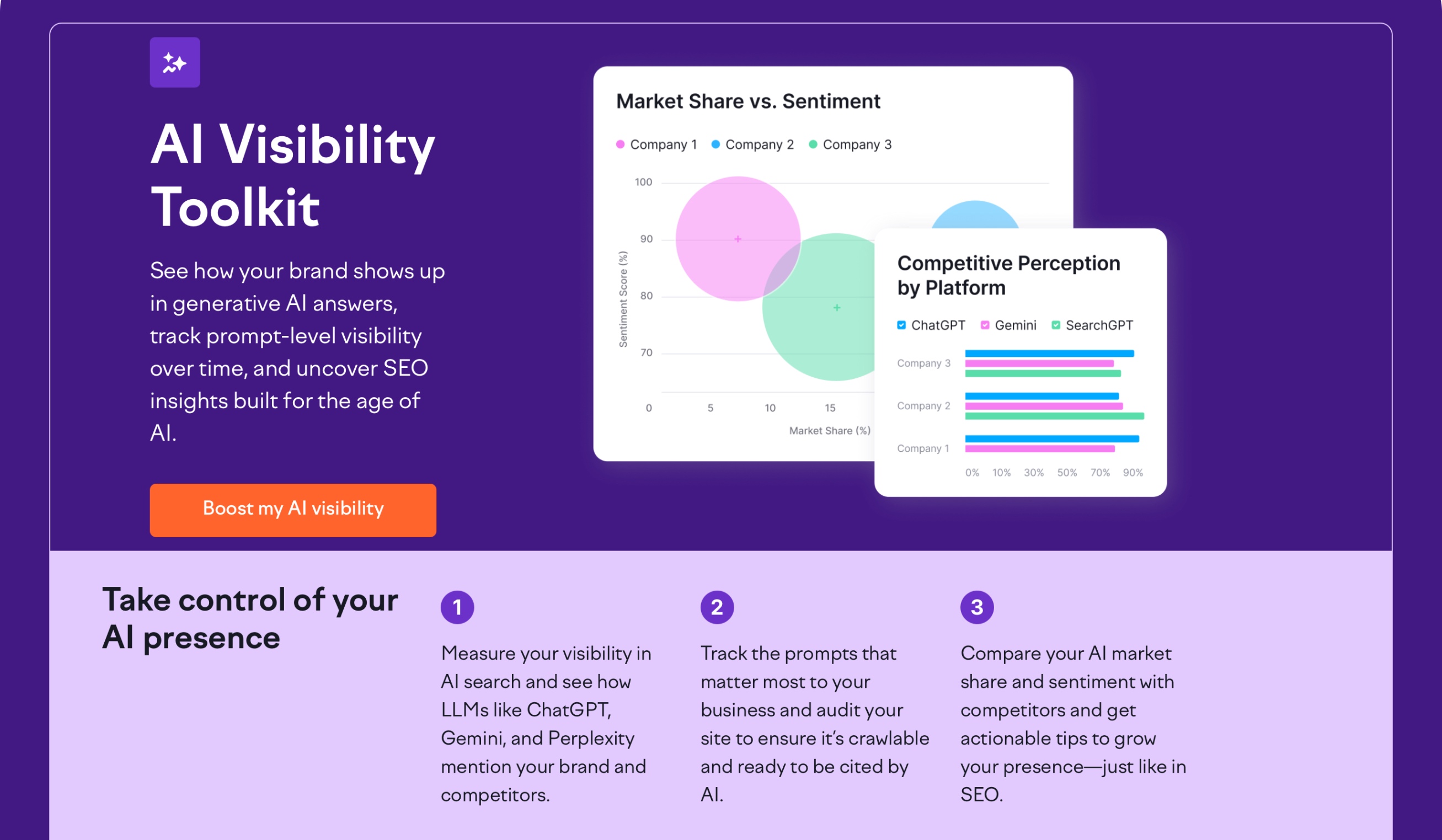
Semrush AI Visibility Toolkit is designed to help you measure how your brand appears across AI-driven search experiences and track visibility changes over time. It is a solid option if you already use Semrush and want AI visibility insights connected to a broader SEO workflow.
Semrush AI Visibility Toolkit Unique Features
- Prompt research to uncover queries where AI visibility matters most
- Prompt tracking to monitor selected prompts over time
- AI analysis reports for competitive and narrative insights
- Brand performance reporting that highlights share of voice and sentiment shifts
- AI-focused checks that support AI-readiness discussions alongside SEO audits
Pros
- Strong competitive framing, so you can benchmark against specific rivals
- Useful if your team already lives in Semrush for daily SEO work
- Reporting is structured enough to support stakeholder updates
- Helps connect AI visibility to topics, prompts, and brand perception
- Good fit when you want one platform for both classic SEO and AI visibility
Cons
- Limits can cap how much prompt tracking you can do at scale
- Can feel like a lot to onboard if you only need one narrow feature
- Best results require a clear workflow for acting on insights, not just monitoring
- Highly customized reporting may still require exports into your own dashboards
- Some teams may want deeper prompt-level controls than the default setup offers
Pricing
- $99/month
User Rating
- G2 Rating: 4.5/5
Not sure if Semrush is the right fit for SEO and AI visibility tracking? Check out our Semrush review to see where it performs best and where it falls short.
How To Choose The Best AI Visibility Tool For Your Team?
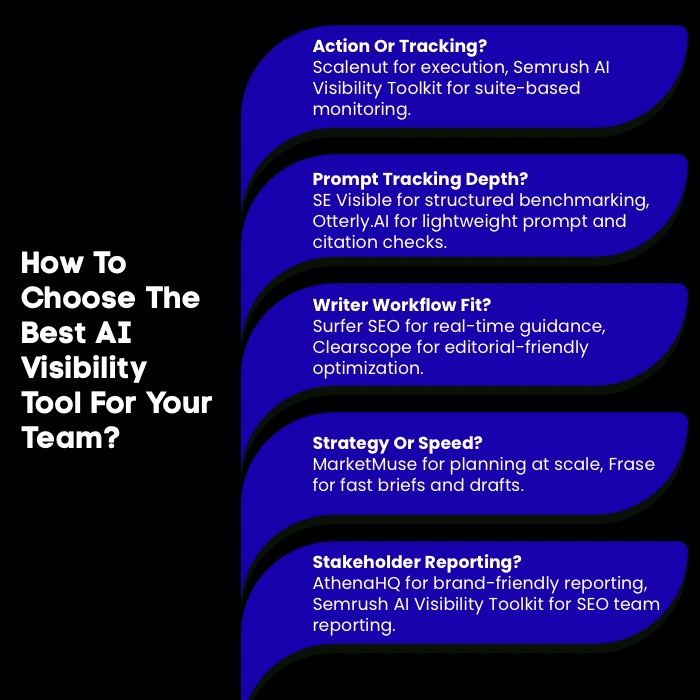
Pick the right AI visibility tool by matching it to how your team actually works, not just the feature checklist. The best choice depends on whether you need monitoring only, execution support, deeper prompt tracking, or reporting built for stakeholders.
Below are the key decision factors to help you choose faster and avoid paying for features you will not use.
1. Do You Need Action Or Just Tracking?
If you want a tool that helps you act on insights, pick Scalenut for its execution-first workflow. If you mainly want AI visibility reporting inside a broader SEO suite you already use, Semrush AI Visibility Toolkit can be a solid fit.
2. How Deep Should Prompt Tracking Go?
For structured prompt monitoring with strong competitive benchmarking, SE Visible is a great choice. If you want a lighter, faster setup for prompt and citation monitoring, Scalenut is usually the quickest way to get useful signal.
3. What’s Your Content Workflow?
If writers need hands-on guidance in a real-time editor, Surfer SEO is a strong fit. If you want a cleaner, more editorial approach focused on consistency and quality, Clearscope often works better.
4. Are You Planning Or Producing?
If you need strategy, prioritization, and topical authority planning across a large content library, MarketMuse is built for that. If your bottleneck is turning SERP research into briefs and drafts faster, Frase is the better match.
5. Need Reporting?
If you need to share insights with brand or comms teams, AthenaHQ fits well with prompt-driven competitive visibility and narrative-focused reporting. If the reporting stays mostly within SEO, Semrush AI Visibility Toolkit tends to integrate more naturally into existing workflows.
Final Thoughts
AI SEO in 2026 is about more than faster writing. The right platform should help you connect SERP analysis to real search results, strengthen search visibility in both classic and AI experiences, and improve SEO performance with fewer blind spots. For most content marketers, that means picking tools that support smart search optimization, not just dashboards.
The best fit depends on how your content teams operate and what you need to reduce manual work. If you want help with content generation, planning new content, and tightening SEO content updates, choose a workflow that makes ongoing SEO tasks easier and supports a clear SEO strategy from ideas to measurable outcomes.
Frequently Asked Questions
What are AI search optimization tools?
AI search optimization tools help you improve visibility across both classic search engines and AI-generated answers. They combine automation with tracking, content guidance, and competitive insights so you can align pages with user questions, earn citations, and measure how AI systems mention your brand.
Which AI SEO tools are considered underrated but effective?
A few underrated picks are Otterly.AI for lightweight AI answer monitoring, Frase for fast briefs and drafting, and Scalenut for blending AI visibility tracking with execution workflows. These tools often outperform bigger suites when you want focused insights and practical next steps.
What are the best AI tools for ecommerce SEO and AI visibility?
For ecommerce, prioritize tools that support category and product page optimization, scalable briefs, and prompt-level visibility tracking. Surfer SEO and Clearscope help improve on-page coverage, while Scalenut and Semrush AI Visibility Toolkit help monitor how products and brands appear in AI answers.
What are the best tools for multi-model AI SEO strategy?
Multi-model strategy works best with tools that track visibility across several AI platforms and let you compare prompt performance over time. SE Visible and Scalenut are strong for multi-platform monitoring, while Semrush AI Visibility Toolkit adds competitive framing inside a broader SEO workflow.
What are the best AI SEO tools for sentiment analysis LLMS?
If sentiment is a priority, choose tools that label AI mentions by tone and track how brand narratives shift by prompt. Scalenut and AthenaHQ are better aligned for this than classic content optimizers, since they focus on AI answer monitoring and competitive context.
How do AI SEO tools compare to traditional SEO tools?
Traditional SEO tools focus on rankings, keywords, backlinks, and technical audits. AI SEO tools add visibility tracking inside AI answers, prompt monitoring, citation insights, and narrative signals. The best stacks use both, because AI visibility and traditional rankings influence each other.
Are there any AI SEO tools specifically designed for B2B SaaS businesses?
Yes. B2B SaaS teams often benefit from tools that track competitor mentions on non-branded prompts and turn gaps into content priorities. Scalenut, AthenaHQ, and SE Visible tend to work well here because they support prompt-level monitoring, benchmarking, and execution-oriented content planning.
What are the key benefits of using AI-powered SEO tools?
AI-powered SEO tools save time on research and optimization while improving decision-making with clearer insights. They help generate briefs, identify content gaps, guide on-page improvements, and track AI answer visibility, so teams can prioritize work that is most likely to drive results.
How can AI SEO tools help improve search rankings faster?
They speed up workflows by reducing manual research, turning SERP patterns into actionable briefs, and guiding optimization as you write. They also help you prioritize updates with the highest impact, which can accelerate gains in rankings and improve visibility across AI-driven search experiences.


.svg)


.webp)