

Frase Review: Is It the Best SEO GEO Tool For Teams in 2026?

Frase Review: Quick Summary
Verdict: A strong research and optimization tool for content teams, but expect to bring your own editorial judgment at every stage.
- G2 rating of 4.8/5 from 305 reviews
- Cuts SERP research time significantly; briefs that take hours manually take minutes inside Frase
- Strongest for research, briefing, and on-page SEO optimization
- AI drafts are a starting point, not a finished product, so expect meaningful editing before publishing
- GEO and AI visibility tracking covers ChatGPT, Perplexity, and other AI platforms across prompts, citations, and competitor share of voice
- GEO scores show where gaps exist but still need human strategy to act on
- Editing and formatting may still need cleanup before content moves to your CMS
- Content monitoring and decay alerts help teams manage existing pages, not just new ones
- Pricing starts at $39/month billed annually; 7-day free trial available
- Best fit for content teams that publish regularly and need a repeatable research-to-optimization workflow
Frase sits at 4.8 out of 5 on G2 from 305 reviews. One of the highest-rated content SEO tools in the market. And while users consistently praise the research and brief-building speed, a recurring limitation shows up once the writing starts. The AI drafts need editing before they are ready, and the optimization scores still need human judgment to act on.
I ran Frase through a real content workflow: research, briefing, drafting, optimization, specifically to see how it holds up for teams chasing AI-driven discovery, not just rankings.
One thing held up immediately: SERP research that used to take two hours took fifteen minutes. That part is not hype. But fast briefs are a solved problem in 2026. The harder question is whether Frase's AI visibility signals actually tell you what to fix, or just show you where the gaps are. Because knowing you are missing from a ChatGPT or Perplexity answer and knowing what to do about it are two different problems. That gap between insight and action is where teams start feeling the ceiling.
Here's what I found.
What is Frase and how does it help with content optimization and AI visibility in 2026?
Frase is an SEO and GEO content platform that helps teams research topics, create briefs, write drafts, optimize content, audit pages, publish content, and track AI visibility. Beyond the traditional content optimization, Frase also includes Frase Agent, SEO plus GEO optimization, AI visibility tracking, site audits, publishing, API/MCP access, and brand voice features.
For content teams, Frase helps in two ways:
- Improve the page before publishing
- Monitor visibility after publishing
It also analyzes top-ranking pages, surfaces topic gaps, and scores content for areas like structure, definitions, takeaways, citations, and readability. For AI visibility, it tracks where a brand appears across AI platforms, which prompts mention it, how competitors compare, and where citation gaps exist.
Frase user review: What are real users saying?
Frase has a strong G2 rating of 4.8/5 from 305 reviews, and users often praise it for content creation, SEO optimization, easy setup, and fast SERP research. The common positive theme is clear: Frase helps users save time when moving from research to content planning.
The limitations are more about workflow and buying experience than basic feature quality. Some users say editing can get messy after moving content from Google Docs, while others raise concerns about pricing, subscription changes, and broken expectations around earlier lifetime access promises.
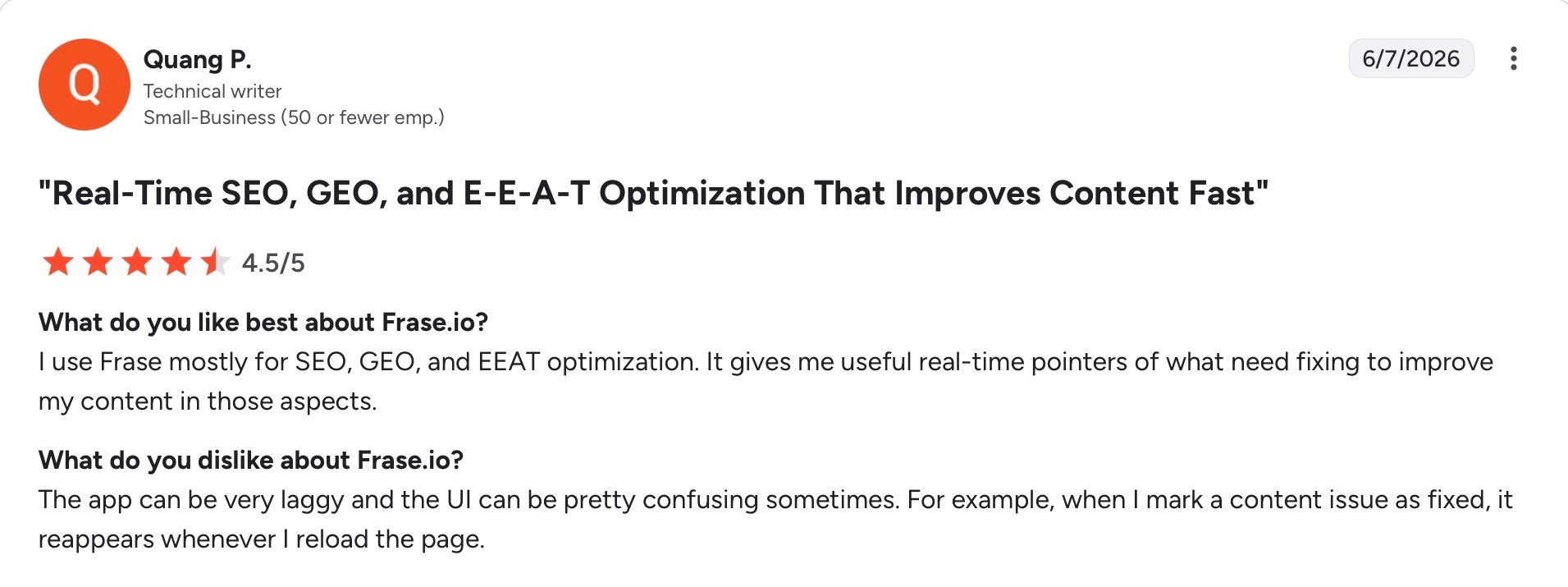
Overall, user feedback matches my experience with Frase. It is useful for research, briefs, and SEO optimization, but teams should still expect manual editing and should check whether the pricing model and workflow fit how they actually create content.
What are the pros of Frase?
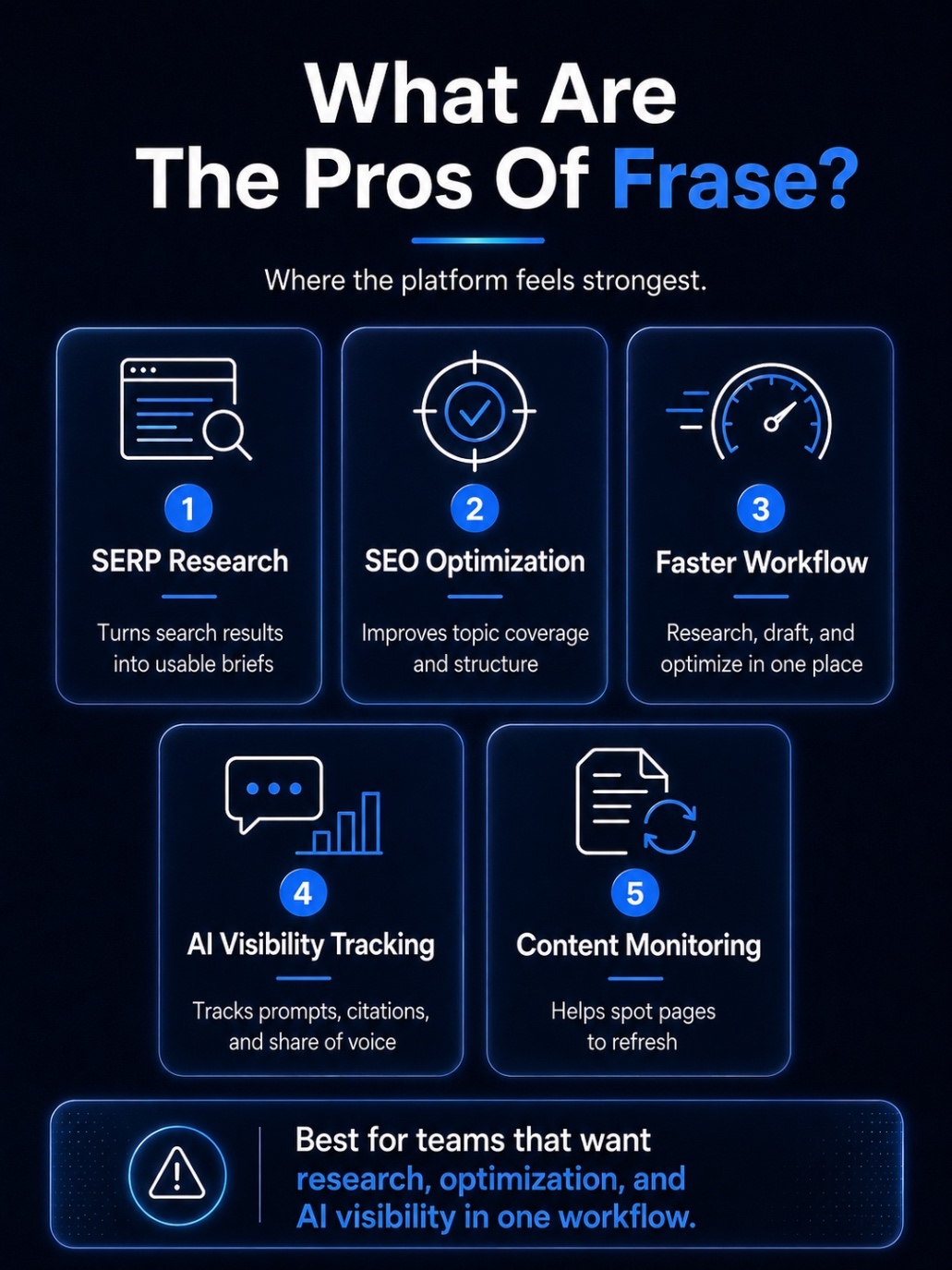
Frase is strongest when you need to move quickly from SERP research to a structured brief, then use optimization guidance to improve the draft before publishing.
Here’s where Frase felt strongest to me.
1. Strong SERP research and brief creation
Frase makes the research stage faster by pulling insights from competing search results and turning them into a usable brief. This is helpful when you need to understand the common subtopics, questions, headings, and coverage patterns around a query before writing.
For writers, this reduces the blank-page problem. You still need to bring your own angle, examples, and product knowledge, but Frase gives you a clear starting point.
2. Useful SEO content optimization
Frase is helpful after the first draft is ready because it shows where the content may be thin, incomplete, or missing important topic coverage. The optimization workflow is useful for improving structure, headings, semantic coverage, and content completeness.
I would not apply every recommendation blindly, but the tool is good for checking whether a draft is aligned with the current SERP and reader intent.
3. Faster research-to-draft workflow
One of Frase’s biggest practical advantages is speed. It brings research, briefs, AI-assisted writing, and optimization into the same workflow, so writers do not have to keep switching between multiple tabs and tools.
This is especially useful for content teams that publish regularly and need a repeatable process for creating SEO-focused articles.
4. AI visibility tracking
Frase’s AI visibility tracking feature helps teams monitor how their brand appears across AI search platforms, prompts, competitors, citations, and share of voice. This makes Frase more relevant for teams that care about both Google rankings and AI search visibility.
5. Helpful content monitoring and refresh support
Frase also helps teams manage existing content through audits, content monitoring, and refresh signals. This is useful when you already have a blog library and need to identify which pages may need updates.
For larger content teams, this matters because content performance is not only about creating new articles. It is also about knowing which existing pages are declining, outdated, or worth refreshing.
What are the cons of Frase?
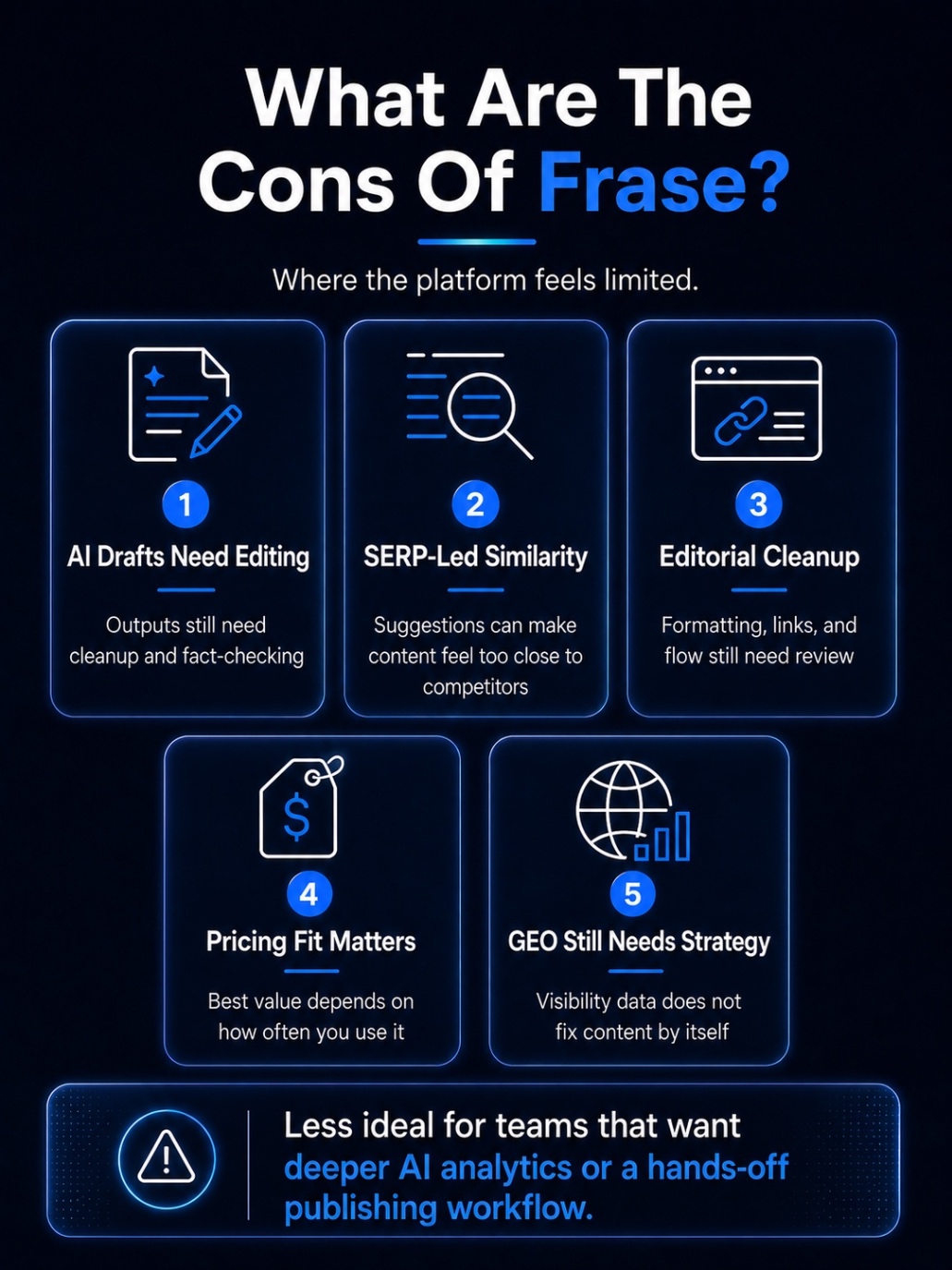
Frase is useful, but it is not a tool I would use without editorial control. The main limitations show up when you move from research and optimization into final content quality, workflow cleanup, and pricing fit.
Here’s where Frase may feel limiting.
1. AI drafts still need strong editing
Frase can speed up drafting, but the AI output is not something I would publish without review.
Writers still need to check accuracy, remove generic sections, add examples, improve flow, and make sure the article actually matches the brand’s point of view.
2. SERP-led suggestions can make content too similar
Frase is useful because it studies competing pages, but that also creates a risk. If you follow the SERP recommendations too closely, the article can start looking like a cleaned-up version of what already ranks.
“The content suggestions can sometimes feel repetitive, and a few keyword recommendations are not always relevant to our niche in accounting.”, says Sophia S on G2. The writer still needs to add original insight, product experience, sharper examples, and a stronger angle.
3. Editing and formatting can create workflow friction
Frase is useful for drafting and optimization inside its editor, but the final content may still need cleanup before publishing. If your team writes in one tool, reviews in another, and publishes through a CMS, you may still need to check headings, spacing, formatting, links, and section flow before the article is ready.
4. Pricing needs to match your actual usage
Frase can be worth the cost if you use it regularly for research, briefs, optimization, audits, and AI visibility tracking. But the value depends on your content volume, number of sites, audit needs, and team workflow.
If you only need occasional AI drafts, Frase may feel more expensive than necessary. If you need deeper AI analytics or more advanced visibility reporting, you may also want to compare it with dedicated AI visibility tools.
If you want to compare the best tool options in 2026, check our list of the 10 best AI visibility tools to help you find the right tool for your team.
5. GEO features still need human interpretation
Frase’s GEO and AI visibility features are useful, but they do not automatically turn content into AI citations. A GEO score, prompt insight, or citation gap can show what may need improvement, but the actual fix still needs strategy.
Teams still need to understand why a page is missing from AI answers, whether the content needs stronger structure, better evidence, clearer positioning, or more trustworthy external signals.
What are the core features of Frase.io?
Frase is an all-in-one SEO GEO tool that includes research, AI-assisted writing, content optimization, content monitoring, publishing support, and AI visibility tracking. Frase is useful for teams that want to move faster from research to draft to optimization, while also checking how their brand and content appear in AI-generated answers. Let’s look at its key SEO and GEO features in detail.
Frase features for SEO workflows
These features are useful when your main goal is to research, write, optimize, refresh, and publish content for organic search.
1. SEO content research and briefing
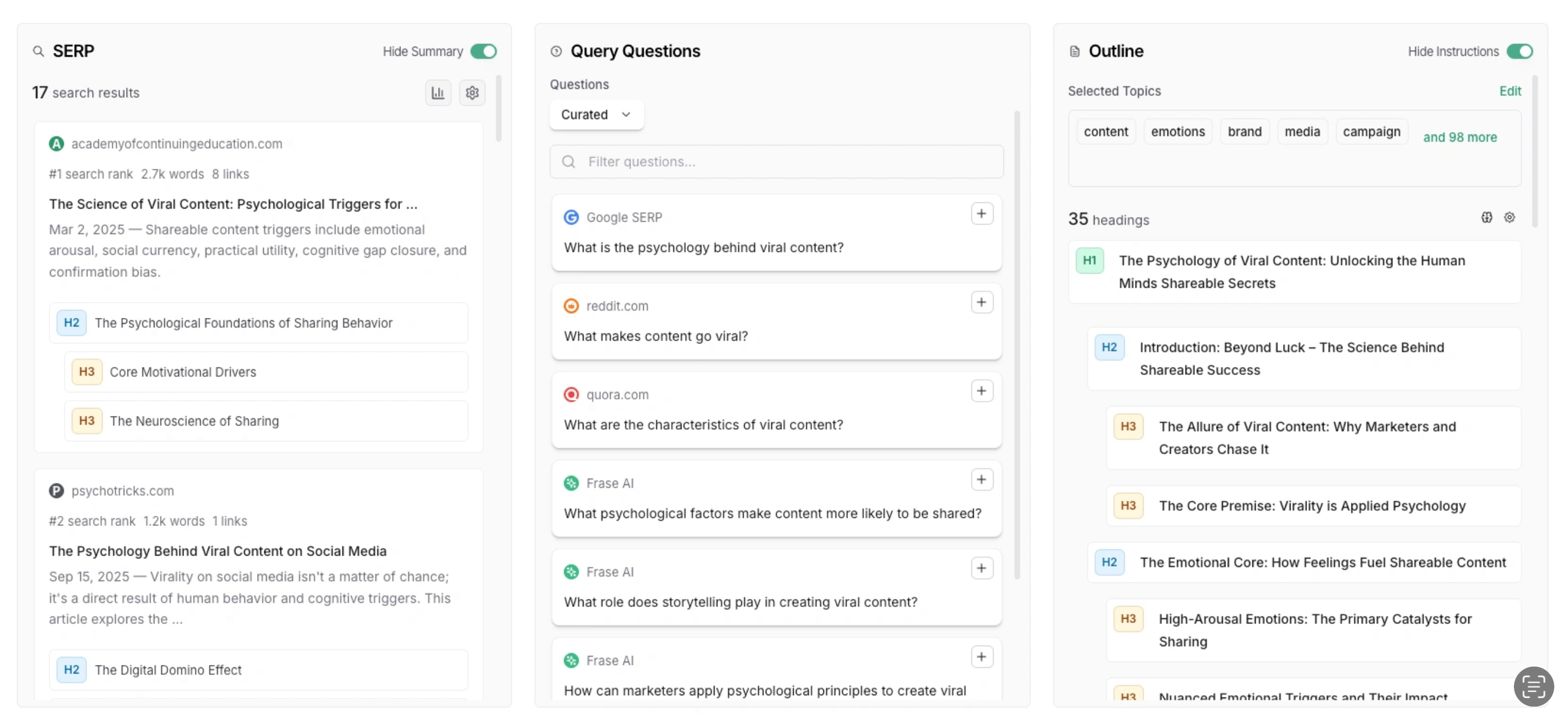
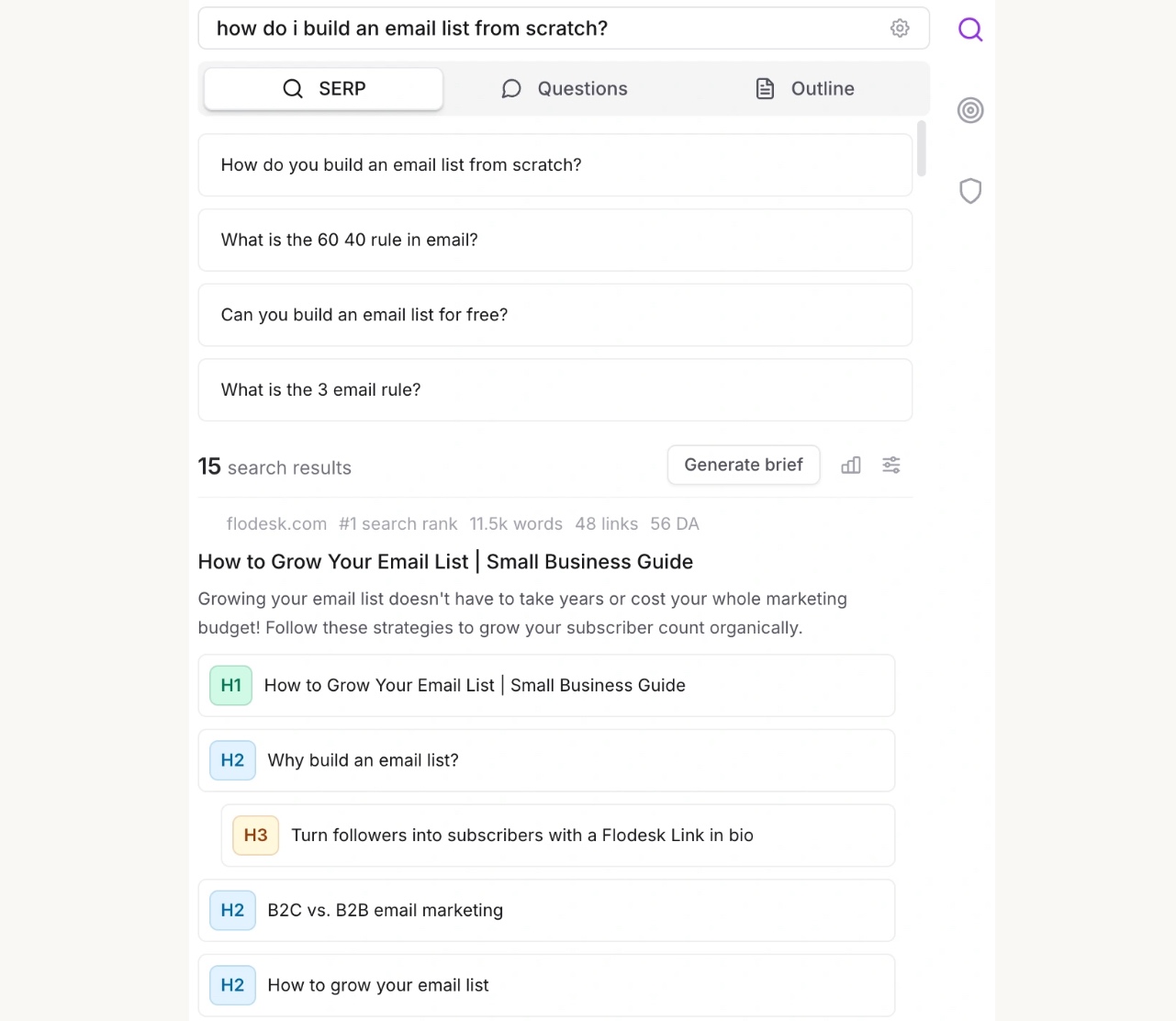
Frase helps writers review top-ranking pages, understand how competitors structure a topic, and identify common subtopics, questions, and content gaps. This reduces the manual work of opening multiple SERP results before building an outline.
Frase can also help identify the search intent behind a topic, surface common questions from the SERP, and turn those insights into a structured brief or outline.
The limitation here is that SERP-led briefs still need judgment. If every recommendation is followed blindly, the article can start sounding too similar to competing pages.
2. AI writing and drafting
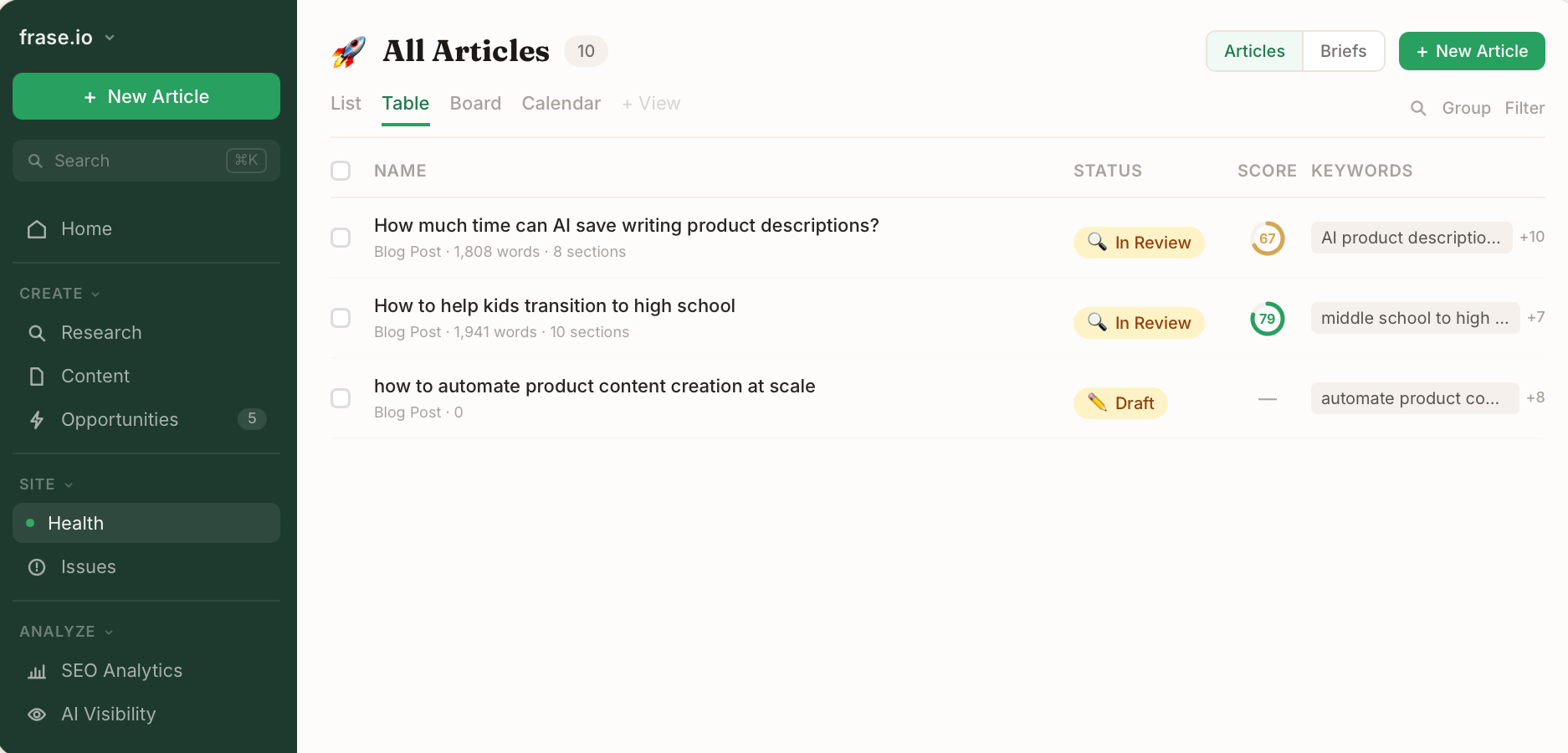
Once your outline is ready, Frase’s writing workflow supports AI-assisted article drafting, section rewrites, expansions, content templates, brand voice guidance, and reference documents. This is helpful when the brief is strong and the writer already knows the angle.
While Frase can speed up first drafts, I would not treat the output as publish-ready. It still needs human editing for accuracy, examples, tone, originality, and factual depth.
3. SEO content optimization
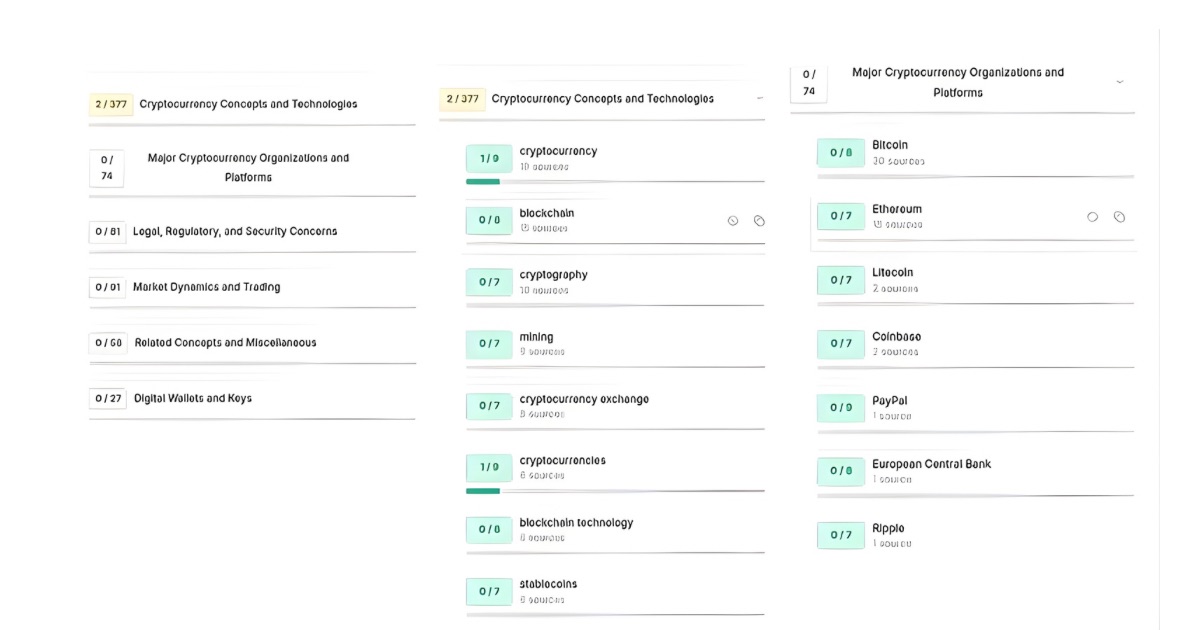
Frase’s optimization layer helps writers improve drafts using topic coverage, structure, and on-page recommendations.
It can help with:
- Topic coverage recommendations
- Keyword and semantic topic suggestions
- Heading and structure improvements
- Content completeness checks
- Internal linking suggestions
- Existing content optimization
What I really liked here is that Frase not only helps you write an article, but also helps you spot thin sections, missing subtopics, or weak coverage before publishing or refreshing a page.
4. Content opportunities and monitoring
Frase supports content opportunity discovery, Google Search Console quick wins, competitor content gaps, decay alerts, site audits, and content monitoring. This is useful for teams managing a larger blog because it helps identify pages that may need attention before performance drops further.
For content marketers, this matters because SEO work is not only about optimizing one article. It is also about choosing the right pages and topics to prioritize.
5. Topic clusters, programmatic SEO, and integrations
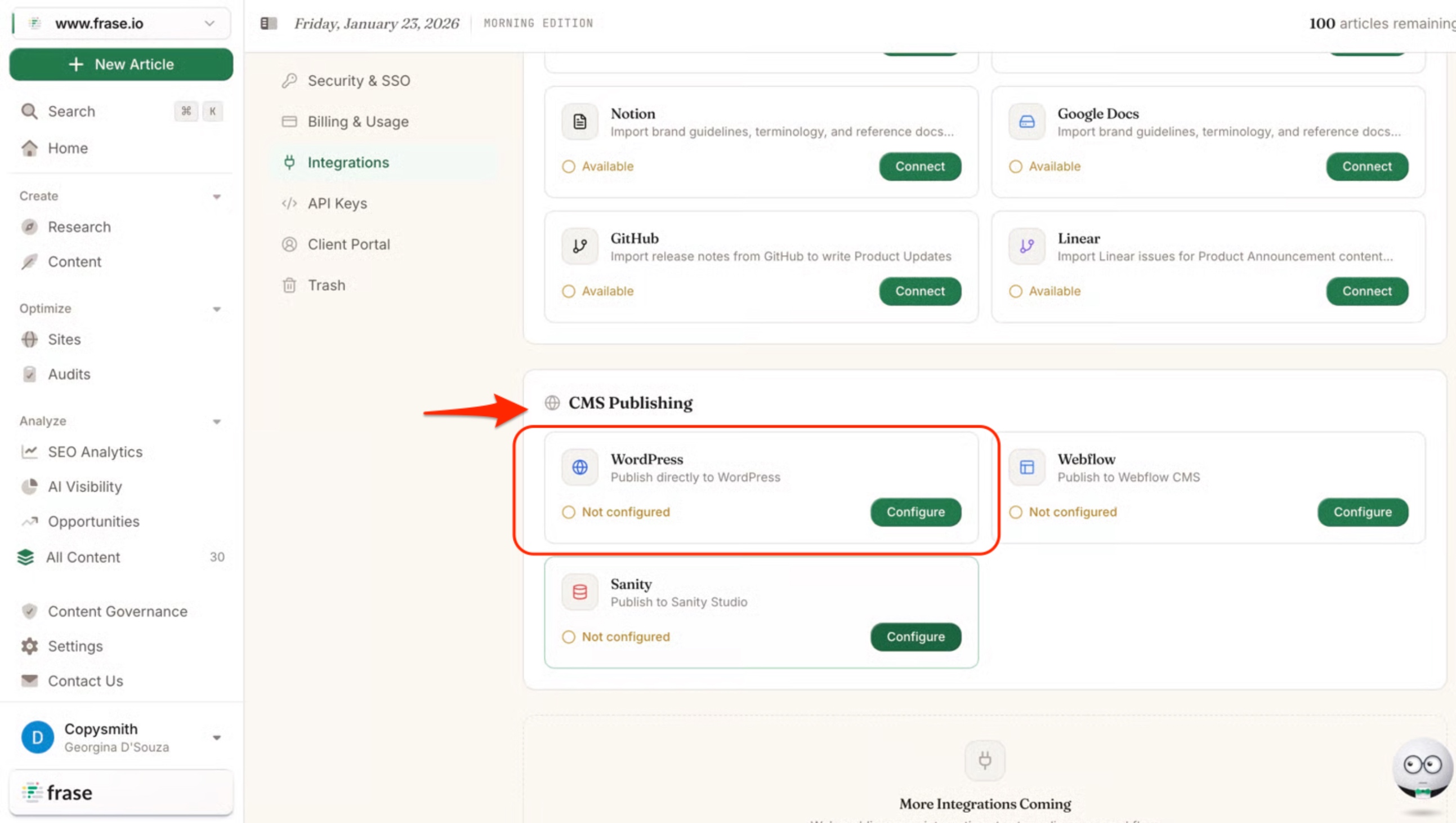
It supports topic clusters, programmatic SEO use cases, batch content workflows, CMS publishing, Google Docs and Notion import/export, Google Search Console connection, automation tools, REST API, and MCP access.
This will matter more for agencies, SaaS teams, and content teams that need repeatable workflows across research, writing, optimization, publishing, and reporting.
Frase features for GEO workflows
These features matter when your goal is not only to rank in Google, but also to improve how your brand and content appear in AI-generated answers.
1. GEO content optimization
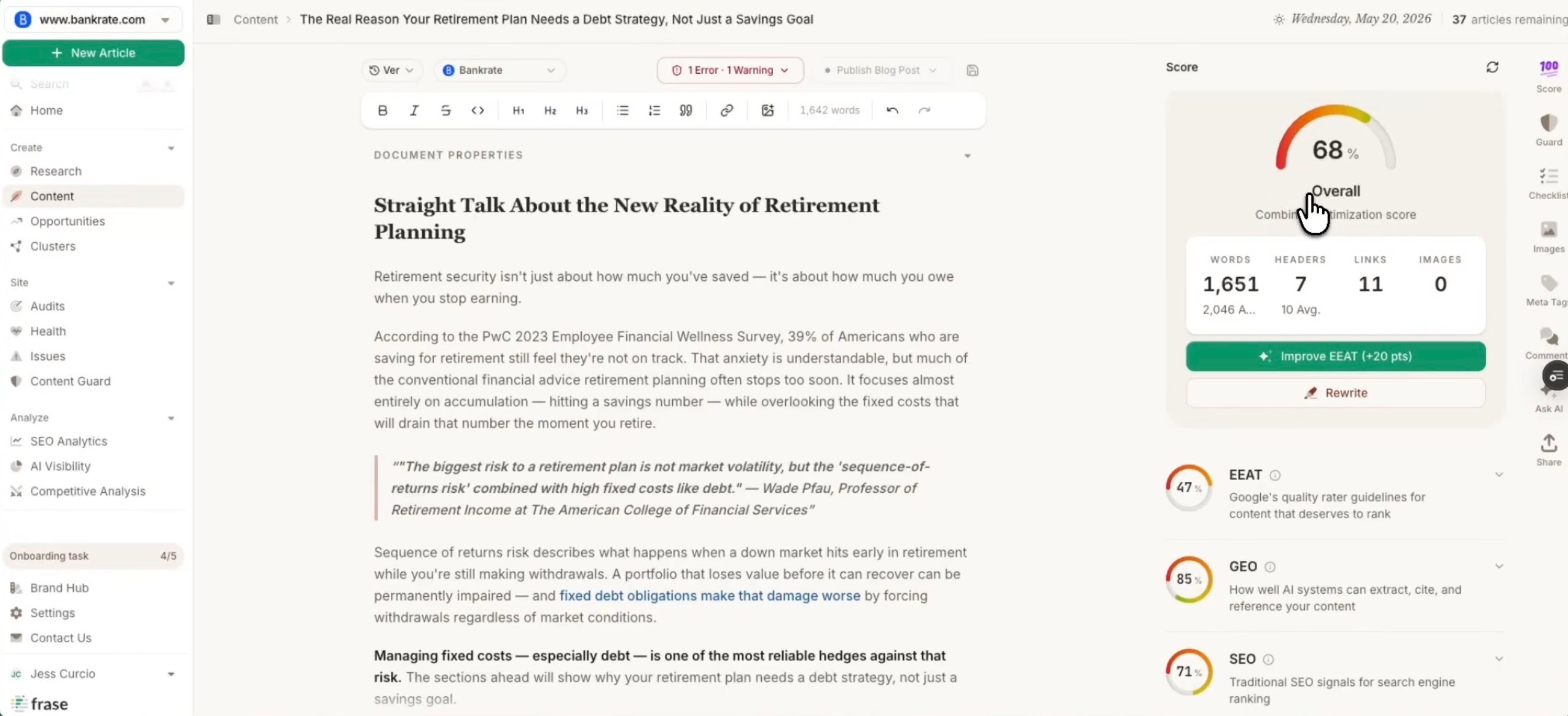
Frase’s GEO workflow focuses on making content clearer, more structured, and more useful for AI answer engines. It looks at areas such as quotability, structure, definitions, takeaways, and citations.
Frase can help with:
- GEO scoring
- Answer-first structure
- Clear definitions
- Extractable takeaways
- Citation-readiness checks
- Topic and entity coverage
This is useful because AI search platforms need content that is easy to understand, extract, and reference. But a GEO score cannot guarantee AI citations. Visibility still depends on platform behavior, retrieval systems, competing sources, and overall brand signals.
Explore our list of the best AI writing tools in 2026 to choose the one that best fits your workflow.
2. AI search tracking and citation visibility
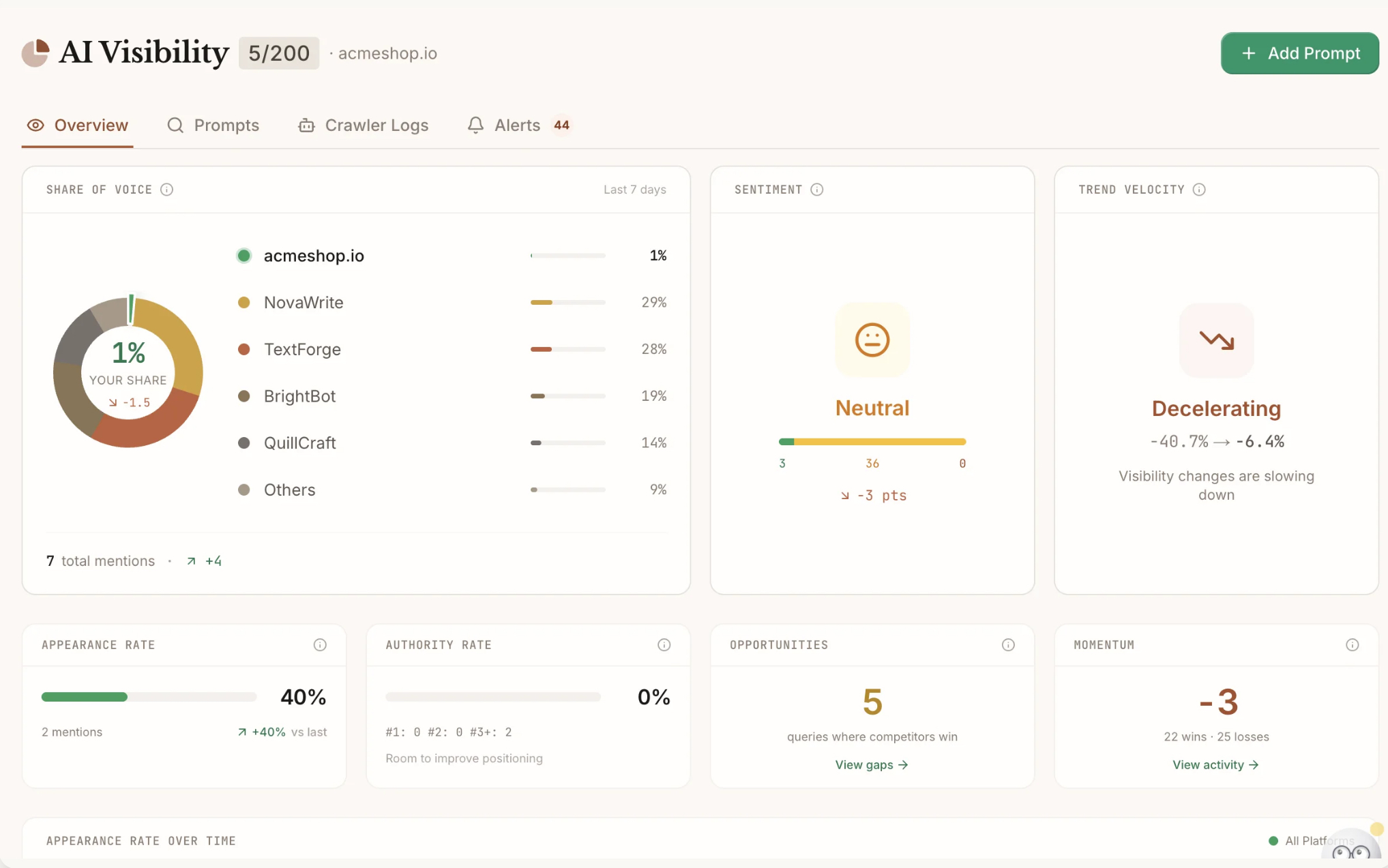
Frase’s AI search tracking helps teams monitor how their brand appears across AI search platforms. This includes prompt tracking, citation visibility, competitor comparison, share of voice, and historical visibility patterns.
Frase can help with:
- Brand visibility tracking
- Prompt tracking
- Citation visibility
- Competitor visibility comparison
- Share of voice tracking
- Visibility changes over time
If competitor visibility is among your priority stack, check out our list of the best GEO tools for competitor analysis in 2026 to compare more options and find the best option for your team.
3. Prompt and competitor visibility tracking
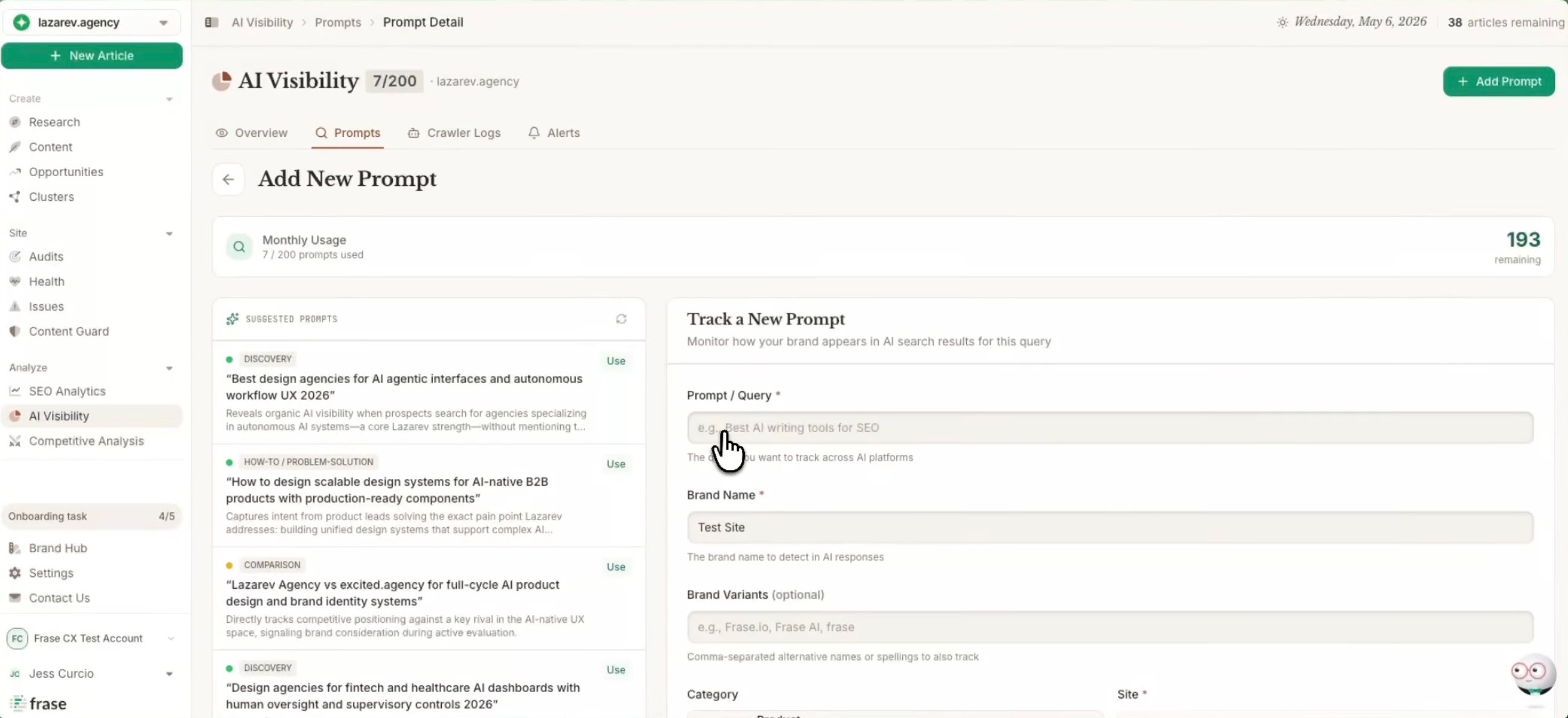
Frase’s AI tracking layer also helps teams understand which prompts mention their brand and where competitors appear instead.
This is useful for GEO workflows because teams need to know more than whether they rank. They need to know which prompts trigger their brand, which prompts exclude them, and how competitors are being represented.
If competitors appear for important comparison or category prompts and your brand does not, that can point to missing content, weak positioning, or a need for stronger third-party signals.
4. Citation gaps and Content Guard
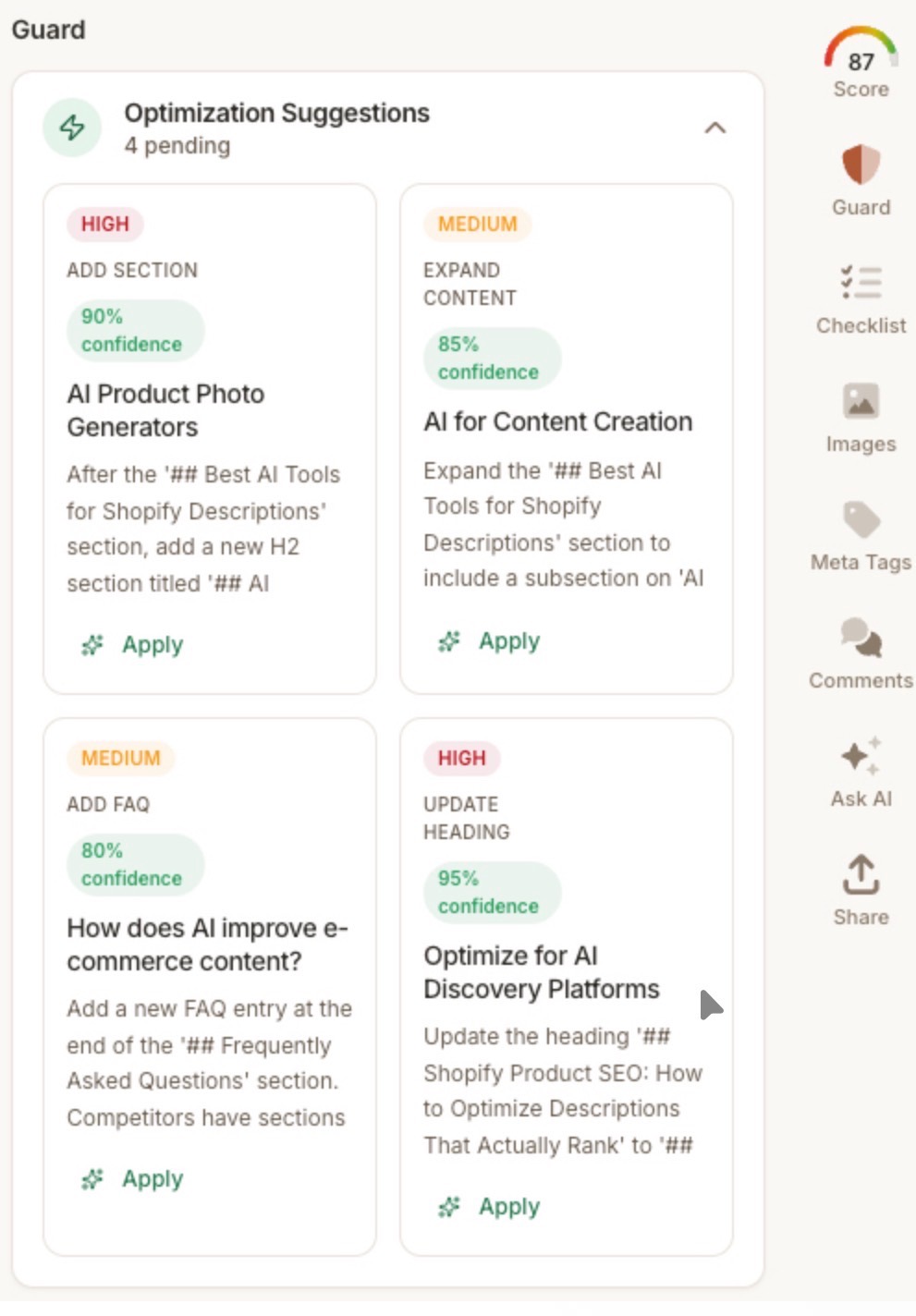
Frase can help teams spot citation gaps and monitor ranking or citation decay over time.
This is useful because AI visibility can shift. A page that gets cited today may lose visibility later if competitors improve their content or AI platforms change the sources they reference.
Frase’s Content Guard supports ongoing monitoring and controlled updates, but I would still review changes before publishing, especially for statistics, pricing, product claims, comparisons, and brand-sensitive content.
5. AI Agent for SEO and GEO execution
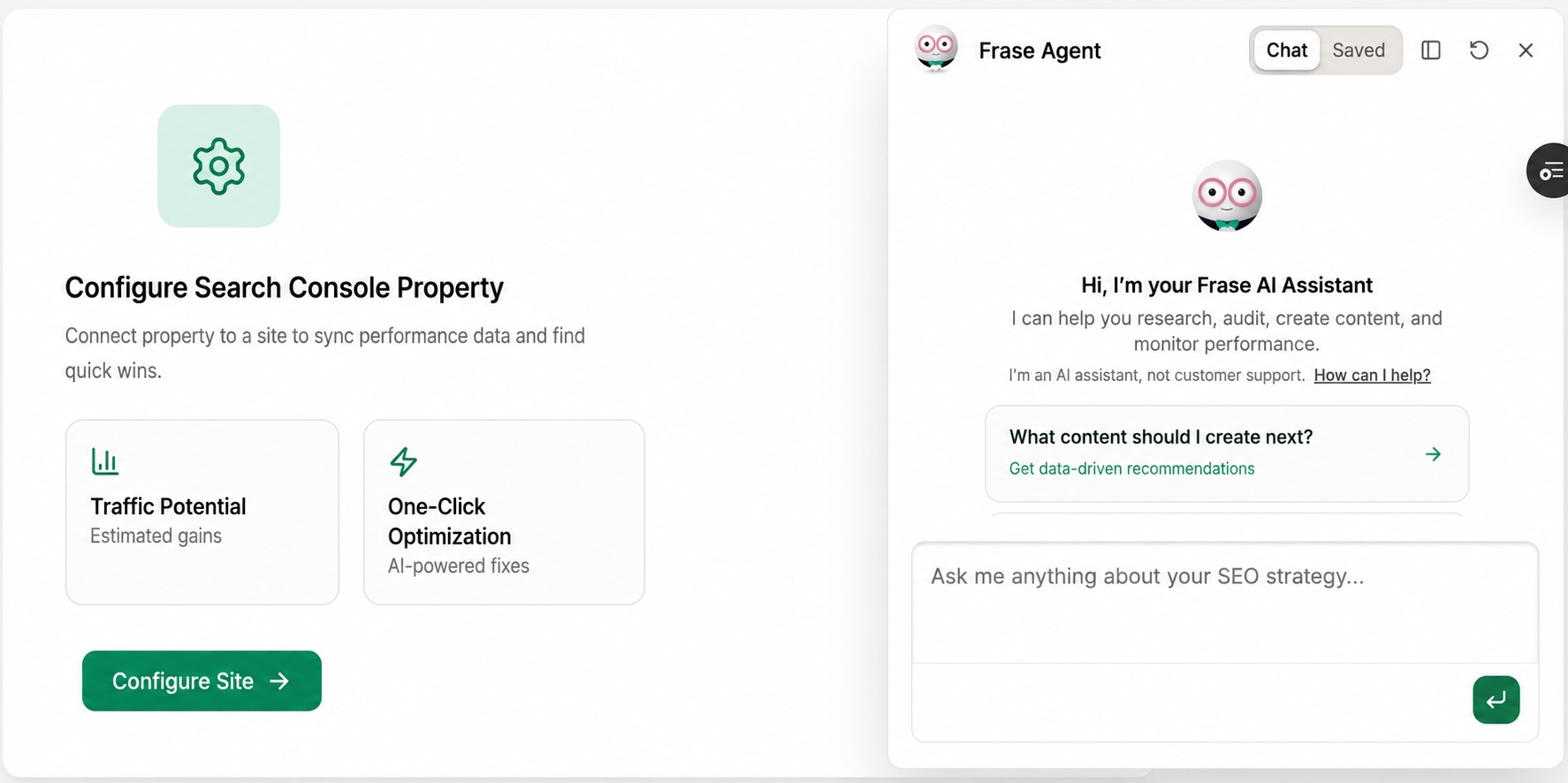
Frase’s AI Agent connects research, writing, optimization, content updates, topic clusters, AI visibility tracking, and workflow automation. For content teams, the benefit is speed and workflow consolidation. The trade-off is that Frase still needs human review, product expertise, and editorial judgment to turn recommendations into strong, differentiated content.
Frase pricing review: Is Frase worth the cost?
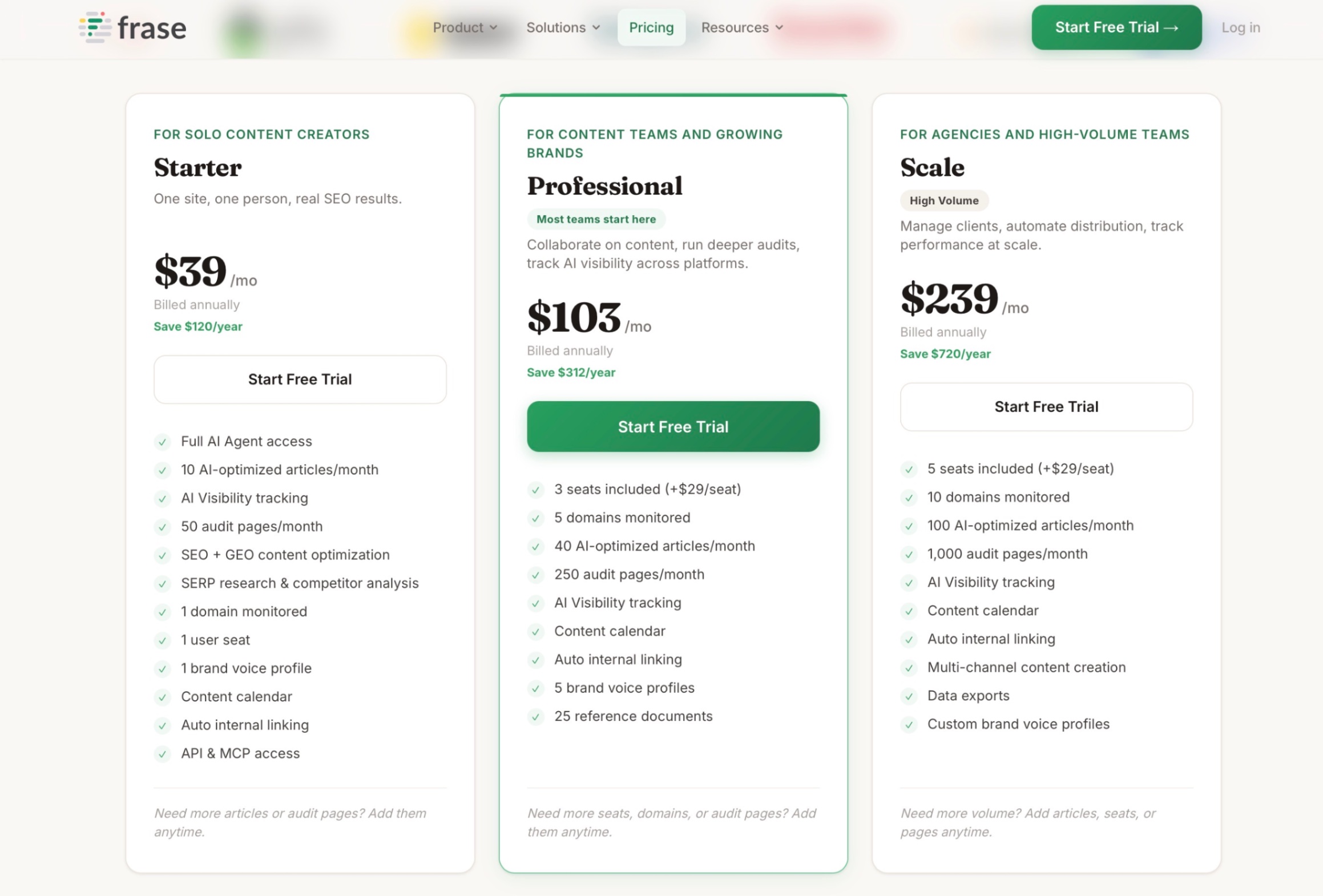
When billed annually, Frase’s Starter plan costs $39/month, Professional costs $103/month, and Scale costs $239/month. Frase also includes a 7-day free trial.
The cleanest way to decide is by your monthly content volume. If you manage one site and create fewer than 10 optimized articles a month, Starter should be enough to test Frase properly. If you work with a team, manage multiple domains, or refresh content regularly, Professional is the more realistic starting point. Scale only makes sense if you run agency-style or high-volume content operations.
Frase pricing is worth the cost if you use it regularly for research, briefs, optimization, audits, and AI visibility tracking. But it may not offer the best value if you need deeper AI analytics or only want a tool for occasional AI drafting.
Who is Frase best for?
Frase works best for teams that will use its research, optimization, monitoring, and AI visibility features regularly, rather than treating it as a basic AI writer.
- Solo SEO writers and content creators: The Starter plan suits one-person workflows producing up to 10 optimized articles per month for a single site.
- In-house content teams: Frase is useful for creating briefs, improving drafts, finding Google Search Console opportunities, and prioritizing existing pages that need refreshing.
- Agencies managing several clients: Higher plans support multiple seats and domains, while programmatic workflows can help produce location pages, comparison pages, and integration guides at scale.
- Teams combining SEO and GEO: Frase fits teams that want content optimization and AI visibility tracking in the same workflow, including prompt monitoring, competitor comparisons, citation gaps, and share of voice.
- Publishers with established content libraries: Site audits, content monitoring, and decay alerts help identify which published pages need updates instead of refreshing content randomly.
When is Frase not the best option?
Frase may be less suitable when your needs fall outside its research-led SEO and GEO workflow or when its plan limits do not match your operating model.
- You only need occasional AI drafts: Frase may be more platform than you need if you are not using its briefs, optimization, audits, monitoring, or visibility tracking.
- You want publish-ready content without human review: Frase can accelerate drafting, but its output still needs fact-checking, editing, original insight, and brand-specific examples before publication.
- You need high tracking volume on an entry plan: Lower plans limit articles, audit pages, domains, seats, AI platforms, and tracked prompts, so heavier workflows require an upgrade.
- You need advanced AI analytics above content execution: Teams focused primarily on wide platform coverage, large prompt sets, and deeper historical reporting may need to compare Frase with dedicated AI visibility platforms.
- You create content that is not search-led: Frase is built around SERP research, SEO optimization, GEO scoring, and content performance. It may be less useful for creative campaigns, general copywriting, or content that does not depend on search demand.
Why Is Scalenut A Better Alternative To Frase?
Frase is a strong choice for speeding up the research to draft to optimize cycle, but it can feel more content-workflow-first than AI-visibility-first. For teams treating GEO as a measurable program, the biggest gap is often the bridge between visibility signals and what to fix next. Scalenut is built more explicitly around that loop, so AI visibility insights are designed to flow into concrete execution steps rather than staying as reporting.
Scalenut also goes beyond on-page content workflows by adding authority and engagement levers that can influence how brands show up in AI answers. Features like Reddit-native monitoring and response support, plus a backlinks marketplace and related add-ons, give teams more ways to build credibility signals and brand presence alongside content optimization. In the next section we’ll break down Scalenut’s core GEO and SEO features so it is clear how those advantages show up in day-to-day workflows.
Want to see how Scalenut performs in real GEO and SEO workflows? Check out this Scalenut review to learn how it can strengthen visibility in both Google search and AI-generated answers.
What Are Scalenut’s Most Important GEO And SEO Features?
Scalenut combines AI visibility tracking (GEO) with hands-on SEO execution in a single platform. Rather than acting like a writing tool that stops at drafts, it is designed to show how a brand appears inside AI-generated answers and then translate those insights into clear actions that improve discoverability and performance.
How Does Scalenut Strengthen GEO And AI Visibility?
Scalenut’s GEO layer is centered on monitoring brand presence across AI-driven experiences such as ChatGPT and Perplexity, then turning that visibility data into decisions teams can execute on.
1. AI Visibility Tracking And Brand Monitoring
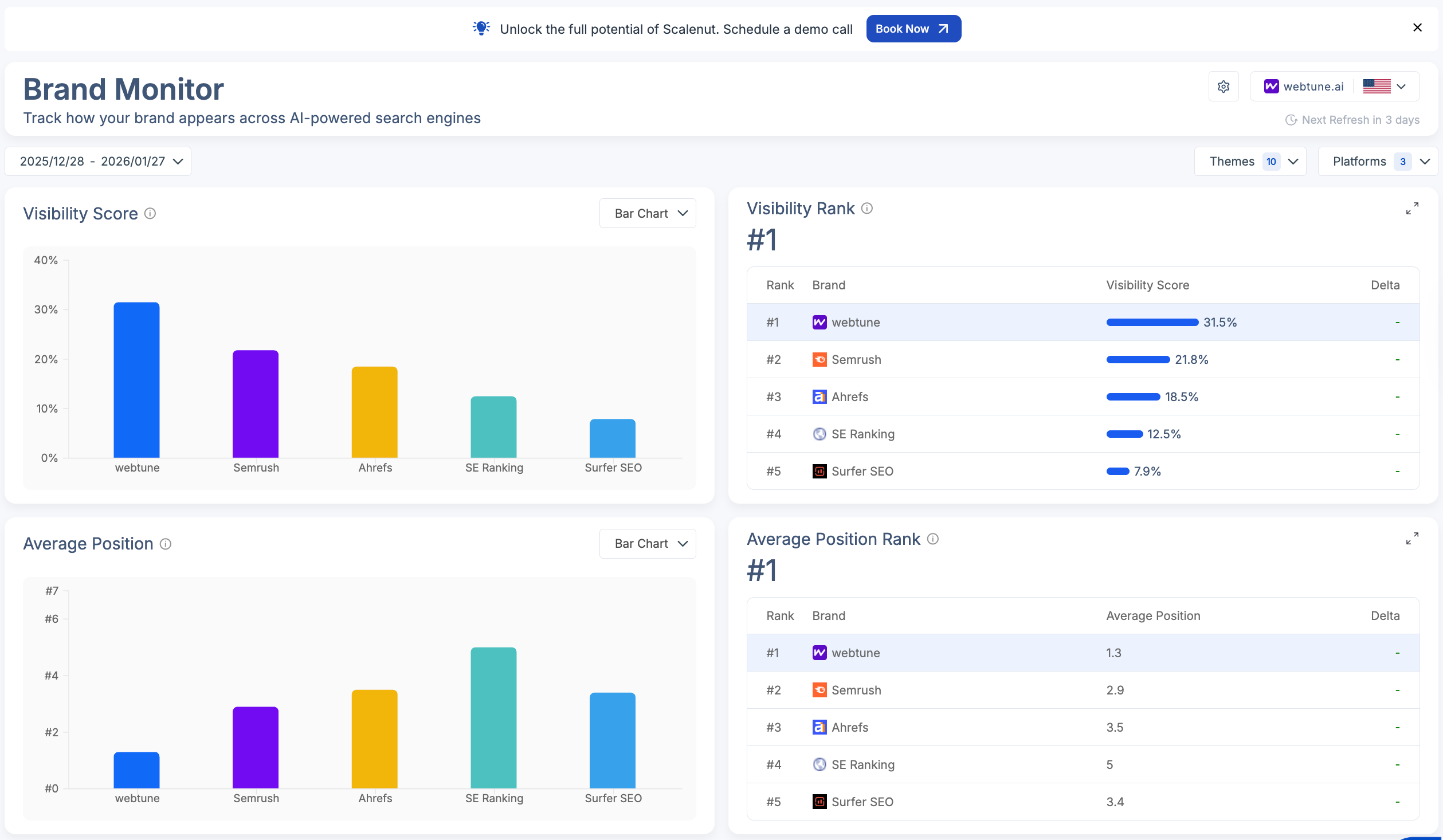
This feature set helps teams measure how often the brand appears in AI answers, how prominent those mentions are, and how visibility compares against competitors across platforms. These metrics also give a fast, brand-level snapshot of visibility strength and consistency.
- Visibility Score summarizes how frequently the brand appears compared to competitors.
- Average Position indicates whether the brand tends to appear early in AI answers or further down.
- Share Of Voice estimates how much of the answer space the brand captures versus others.
- Visibility Heatmap breaks visibility patterns out by platform to highlight strong and weak channels.
- Brand Visibility Rank combines multiple signals into a single benchmark across prompts and topics.
2. Prompt-Level Intelligence And Competitive Insights

Prompt-level reporting highlights where visibility is gained or lost, which prompts trigger mentions, and what sources AI systems rely on to generate answers. This layer makes it easier to connect AI visibility patterns back to real content and authority signals.
- Prompt Tracking shows the specific prompts where the brand appears and the relative positioning.
- Citation Tracking highlights which sources are being used to support AI-generated answers.
- Competitor Visibility Insights identifies brands that show up most often alongside yours.
- Query Fanouts maps how a question expands into related follow-up queries inside AI experiences.
- Sentiment Analysis labels brand mentions by tone so exposure can be prioritized and managed.
3. GEO Recommendations That Lead To Execution
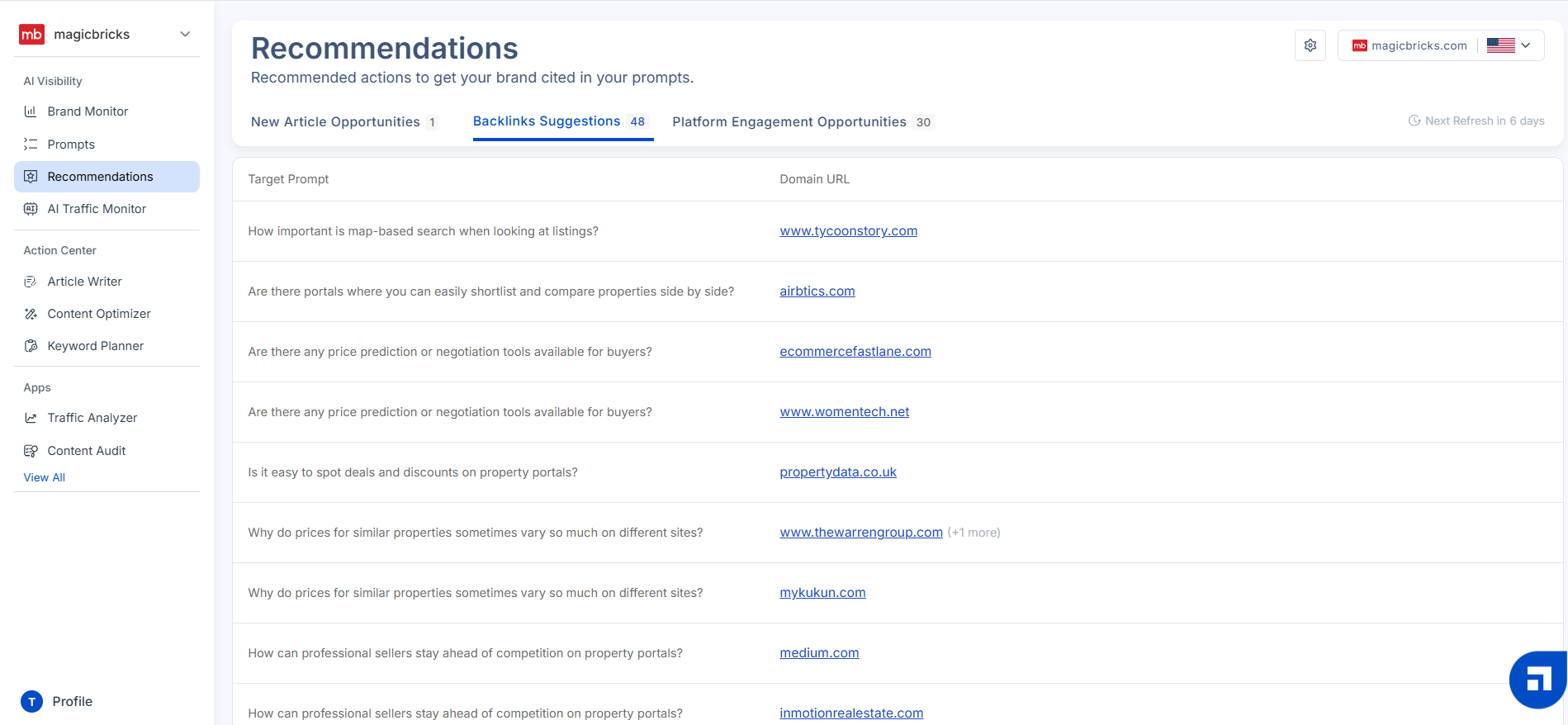
These recommendations are meant to translate visibility gaps into next steps, so teams can prioritize work that improves outcomes instead of collecting dashboards. This is where visibility insights get converted into practical tasks.
- AI-Led Content Ideas turn AI-driven questions into content opportunities worth targeting.
- Authority And Backlink Suggestions highlight credibility signals that can strengthen visibility.
- Platform Engagement Opportunities surface relevant threads and communities where presence can be built.
- Action Paths outline clear next steps so insights move directly into execution.
4. AI Traffic Visibility And LLM Interaction Signals
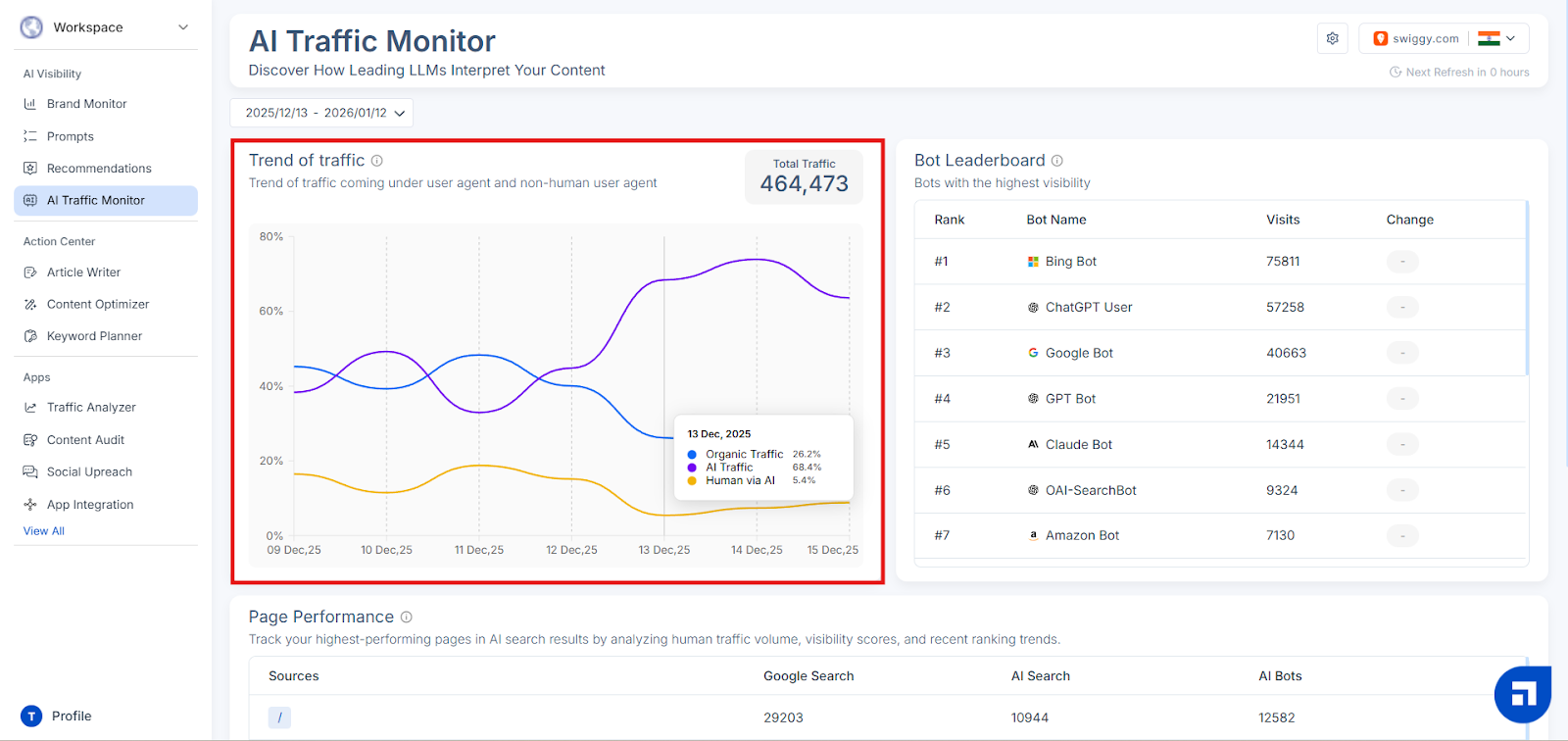
Traffic and interaction signals help teams tie AI visibility to real outcomes by showing how AI agents interact with the site and which pages appear to be relied on. This layer mainly aims to connect “being mentioned” with what is happening on-site.
- AI Bot Tracking identifies visits attributed to AI assistants and AI search experiences.
- Cloudflare Integration adds deeper tracking for sites running on Cloudflare.
- Top AI Sources shows which AI agents interact with the site most frequently.
- Most Referenced Pages highlights pages AI systems appear to use most often.
- AI Traffic Trends shows whether AI-driven visits are rising, flattening, or dropping over time.
Want to stay ahead of what is changing in AI-driven discovery this year? Explore our roundup of top AI monitoring tools that can sharpen your workflow in 2026.
How Does Scalenut Support SEO And Content Execution?
Alongside GEO tracking, Scalenut offers a structured SEO workflow to plan, create, optimize, and scale content with practical, step-by-step guidance.
1. Content Creation And Optimization
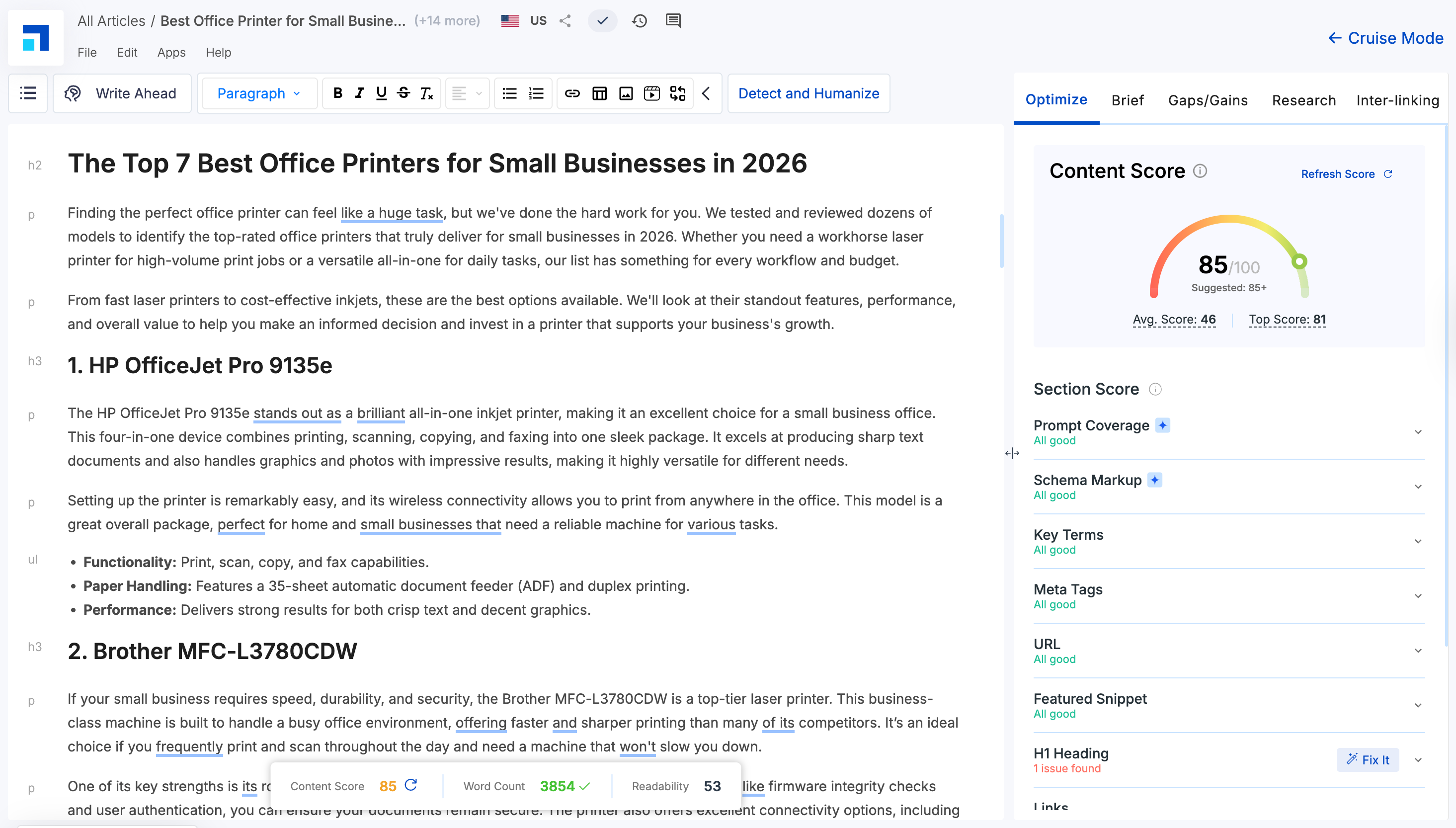
Scalenut’s creation and optimization tools aim to keep execution fast by converting SERP insights into drafts, then guiding improvements for stronger intent match and on-page performance.
- Cruise Mode speeds up outlining and drafting using SERP-informed guidance, with GEO inputs where relevant.
- Content Optimizer highlights on-page changes that can strengthen performance signals.
- AI Humanizer rewrites AI-heavy sections so the copy sounds more natural and reader-friendly.
- Content Scoring evaluates intent alignment, depth, structure, and keyword usage.
2. SEO Research And Planning Tools
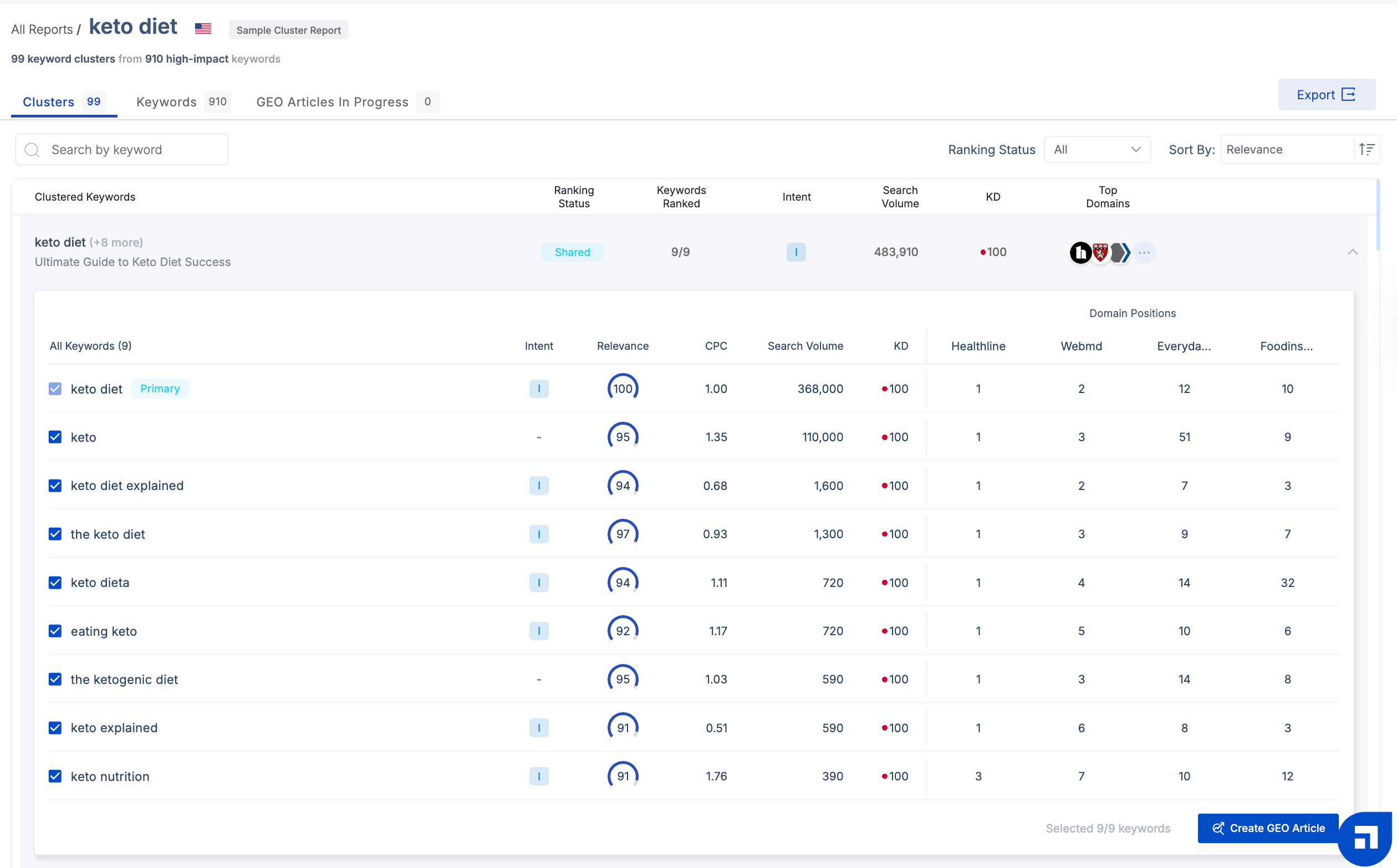
Research and planning tools help teams pick targets, cluster topics by intent, and prioritize updates based on where gains are most likely. These features are built to reduce guesswork and make content decisions more systematic.
- Keyword Planner organizes keywords into intent-based clusters for cleaner planning.
- Competitor Coverage Analysis compares how competing pages structure and cover the topic.
- Traffic Analyzer surfaces top performers and highlights pages with quick-win potential.
- Content Audit flags pages that need refreshes, consolidation, or deeper optimization.
3. Technical SEO And Linking Support
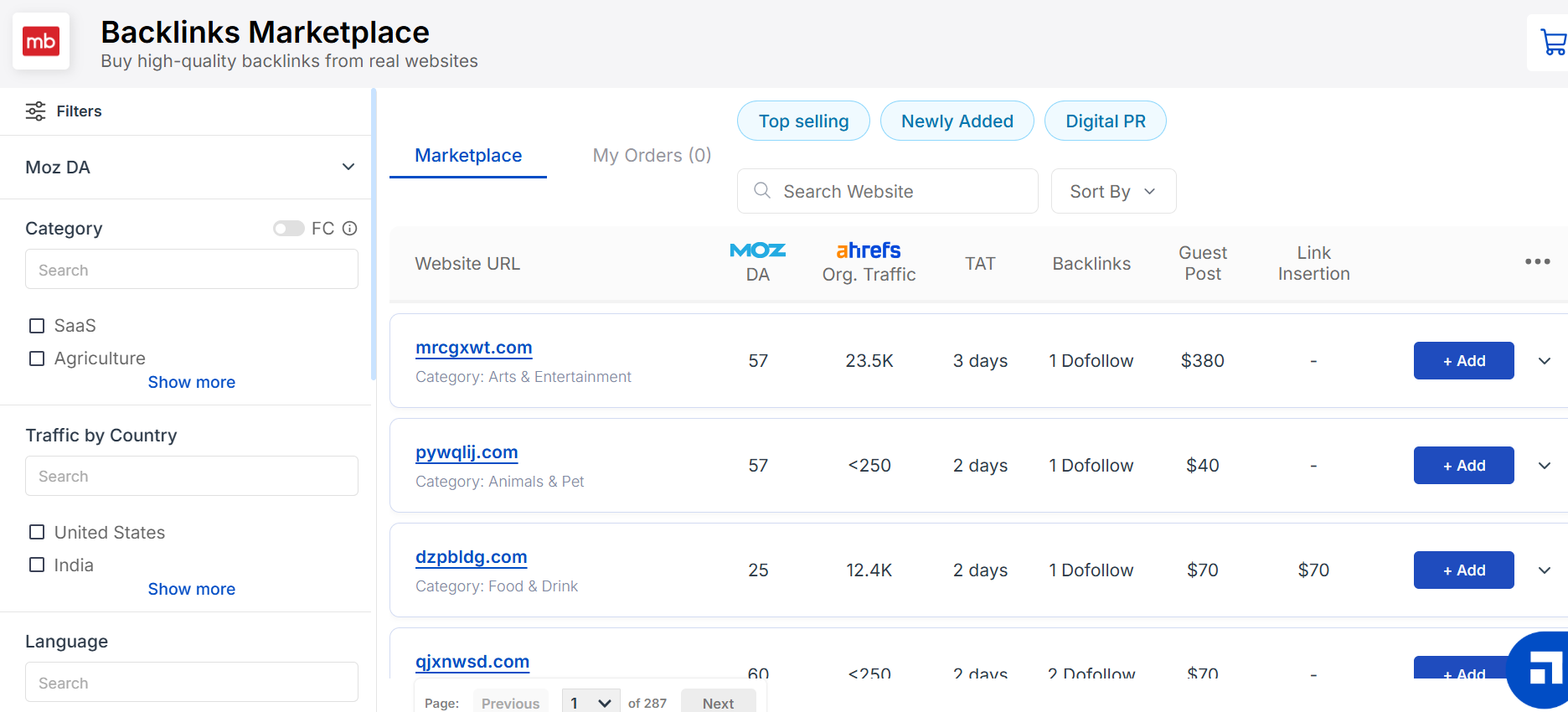
Technical and linking utilities reinforce performance by improving internal structure, metadata quality, and authority signals. These features support fundamentals that improve discoverability and crawl flow.
- Link Manager supports internal linking workflows to strengthen site structure.
- On-Page Pro benchmarks titles and descriptions against what is currently working on the SERP.
- Backlinks Marketplace offers a way to find and secure backlink opportunities through a marketplace model.
For an in-depth comparison read our Scalenut vs Frase comparison guide to understand which tool best fits your team.
Why I Would Choose Scalenut Over Frase?
After using both platforms, Scalenut feels more aligned with how SEO is evolving right now. It treats AI visibility as a primary performance layer, not a secondary metric, and it makes GEO work feel operational. Instead of only helping create and optimize content, it supports an ongoing system where visibility insights, prompt tracking, and content actions stay connected across the full lifecycle.
“I use Scalenut to create and optimize blog posts for our website. I love the SEO scoring features and all the recommendations it gives. I've noticed overall that when I follow them, my articles actually do improve in their rankings.”, says Jake H on G2.
Scalenut also fits better when the goal is to build authority, not just publish. The workflow supports content optimization, but it also pushes teams to strengthen credibility signals and brand presence across the places AI engines learn from and reference. For a strategy that prioritizes share of voice inside AI answers alongside traditional search growth, Scalenut feels like the more complete long-term platform.
Book a Scalenut demo to see how its GEO plus SEO workflow can improve AI visibility and content performance.
Frequently Asked Questions
What is Frase.io?
Frase.io is an SEO and GEO content platform that combines research, writing, optimization, auditing, publishing, and AI visibility tracking. It supports a content strategy by helping teams create optimized pages and monitor their online presence across Google and major AI platforms.
How does Frase compare to other AI writing tools for SEO purposes?
Unlike general AI writers, Frase adds SERP analysis, real-time optimization guidance, GEO scoring, and visibility tracking to the drafting process. This makes it more useful for SEO workflows where topic coverage, structure, and search rankings matter as much as writing speed.
Is Frase worth the price for content teams or agencies?
Frase is worth the price when teams use its research, optimization, audits, and AI tracking regularly. The Starter plan can suit smaller teams with modest publishing needs, while higher plans make more sense when article volume, domains, seats, and monitoring requirements increase.
Are there any effective alternatives to Frase for SEO-driven content creation?
Effective alternatives include Scalenut, Surfer SEO, and MarketMuse. Scalenut is especially relevant when you want keyword planning, competitor analysis, content creation, optimization, internal linking, audits, and AI visibility workflows connected within one platform rather than split across separate tools.
How user-friendly is Frase for beginners in content optimization?
Frase is relatively approachable for beginners because it turns research into structured recommendations instead of presenting only raw SEO data. Its content briefs and editor provide clear direction, although new users still need time to understand scoring, filters, and which suggestions are worth applying.
What real user experiences or reviews are available for Frase in 2026?
G2’s 2026 review summary shows users commonly praise Frase for ease of use, faster research, structured writing, and SEO optimization. Reported concerns include occasionally irrelevant AI output, editing friction, subscription issues, and pricing, so experiences vary depending on workflow and expectations.
Does Frase integrate with other SEO or writing tools?
Frase integrates with WordPress, Google Docs, Google Search Console, and Chrome, and it also provides API and MCP access. These connections help teams move drafts between tools and relate optimization work to performance data from search engine results without rebuilding the workflow manually.
Can Frase help agencies manage multiple content projects efficiently?
Yes. Frase supports multiple seats and monitored domains, with the Scale plan designed for agencies handling several client sites. It can help larger teams separate content libraries, monitor visibility, run audits, and coordinate optimization, although account limits still depend on the selected plan.
What types of content does Frase generate best?
Frase performs best with structured, search-focused content such as blog articles, comparison pages, location pages, integration guides, FAQs, and optimized landing copy. Its templates and programmatic workflows can accelerate content production, but expert review remains necessary for accuracy, differentiation, and brand voice.
Is Frase.io legit?
Yes. Frase is a widely used SEO and GEO platform with a clear product offering and an active user base. Many content marketing teams like its ease of use for research and drafting, though the learning curve can show up when building repeatable workflows and templates.
Frase review: How good is this AI writer?
Frase’s AI writer works best as a structured assistant inside the editor, especially for outlines, rewrites, and expansions. Like most AI writing tools, output quality depends on inputs and editing, but it can speed up the writing process for teams producing consistent AI content.
Which are the best Frase alternatives in 2026?
The top Frase alternatives typically include Scalenut, Clearscope, MarketMuse, and Surfer SEO, depending on whether you need stronger research, tighter optimization, or more GEO execution. The right choice depends on key features, pricing, and how each tool supports your content creation process.
Is Frase still a top choice among SEO professionals, or are other tools now preferred?
Frase remains a solid pick for fast research, briefs, and on-page workflows, but preferences shift based on goals. If AI visibility is the priority, Scalenut can feel more GEO-forward. The best fit depends on search intent, the search results you target, and the SEO insights you need.
How do Frase competitors compare in terms of features and pricing?
Most competitors fall into two camps: research plus optimization tools, and end-to-end platforms that include drafting and tracking. Scalenut typically emphasizes GEO execution and visibility workflows. Compare pricing by usage limits, collaboration needs, and whether scoring supports content generation at scale.
What are the main disadvantages of Frase?
Frase can feel more SERP-led than prompt-led, so teams may need extra work to connect AI visibility signals to specific content updates. AI outputs can also require cleanup for relevance and tone. Following best practices helps maintain quality and reduce rework.


.svg)


.webp)