
.jpg)
Scalenut vs AirOps: Which GEO Tool Should You Choose?

Key Highlights
- AirOps excels with its highly customizable workflow builder, integrating over 40 AI models for advanced content creation and automation.
- Scalenut offers a comprehensive suite of GEO/SEO tools focused on the entire content lifecycle, from keyword research to final optimisation.
- Scalenut provides robust content briefs and optimisation features to improve search visibility on traditional search engines.
- Scalenut offers deep AI Brand Monitoring and Prompt Insights across ChatGPT and Google AI Overviews, with Perplexity available on higher tiers.
- While both platforms enhance content creation, AirOps is geared toward scalable content operations, whereas Scalenut focuses on individual pieces of content performance.
As AI reshapes how people discover brands through search, marketing teams are facing a new kind of visibility problem. Rankings alone no longer tell the full story. Content may perform well on Google yet fail to appear in AI-generated answers, or show up without clear attribution, traffic insight, or direction on what to fix. Many teams are stuck between tools that offer heavy analytics with little execution support, or creation workflows that lack real visibility into AI-driven search performance.
The goal today is not just to publish more content, but to understand where your brand appears across search and AI platforms, why it appears there, and how to improve that visibility with confidence. Teams need clarity, speed, and a way to connect insights directly to action without stitching together multiple tools.
This is where AirOps and Scalenut enter the picture. Both platforms promise to help brands adapt to AI-driven search, but they approach the problem very differently. In this comparison, we break down AirOps vs Scalenut across features, workflows, AI visibility, and execution depth to help you decide which tool fits your goals, team structure, and stage of AI search maturity.
What is Scalenut?
Scalenut is an all-in-one AI-powered platform designed to help brands improve visibility across AI-driven search experiences such as ChatGPT and Perplexity. Rather than focusing solely on traditional rankings, it shows how brands appear, are referenced, and are cited in AI-generated answers.
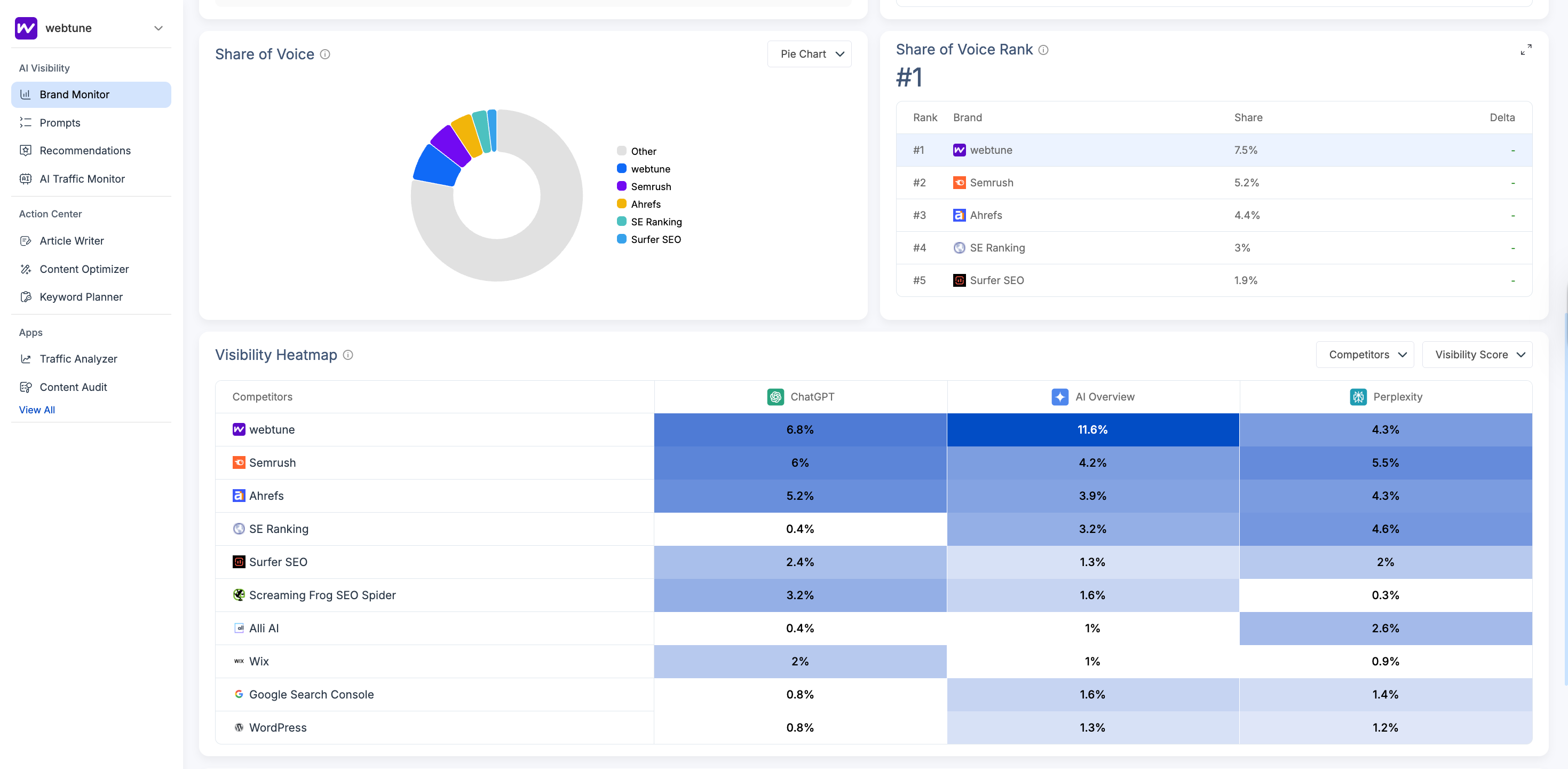
At its core, Scalenut enables teams to track, understand, and strengthen AI visibility. It converts insights into clear, actionable guidance around content creation, backlink opportunities, and platform engagement, helping teams move faster and build a consistent presence in AI search.
For execution, Scalenut brings everything together in one workflow, from AI-assisted content writing and optimisation to on-page improvements, internal linking, and content audits, allowing teams to act without relying on multiple tools.
What Are the Core Features of Scalenut?
Below is a streamlined overview of the core capabilities that make Scalenut a true end-to-end GEO platform.
1. AI Brand Visibility & Monitoring
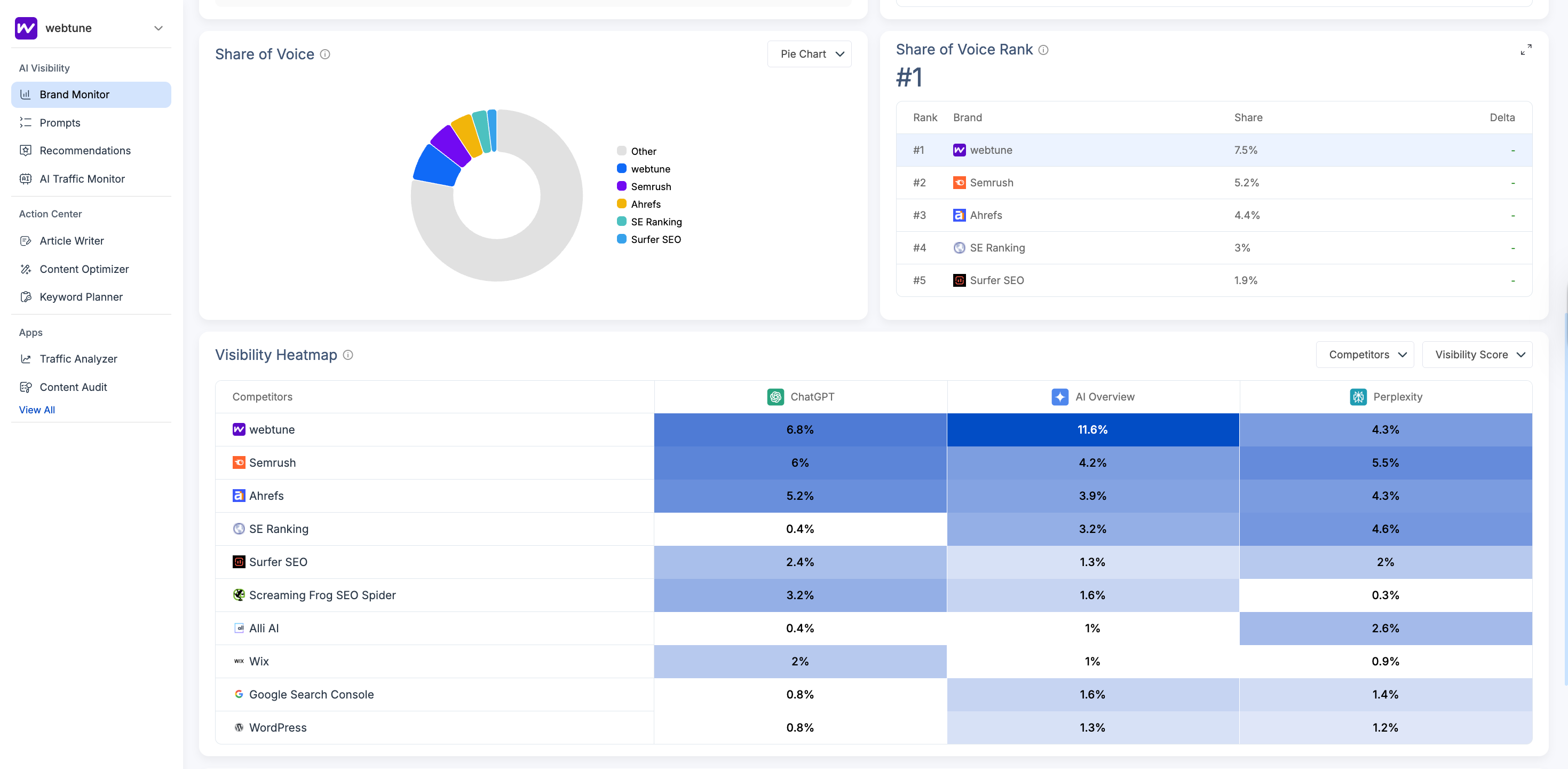
Scalenut’s Brand Monitor helps you understand how your brand appears across AI-powered search engines.
Key capabilities include:
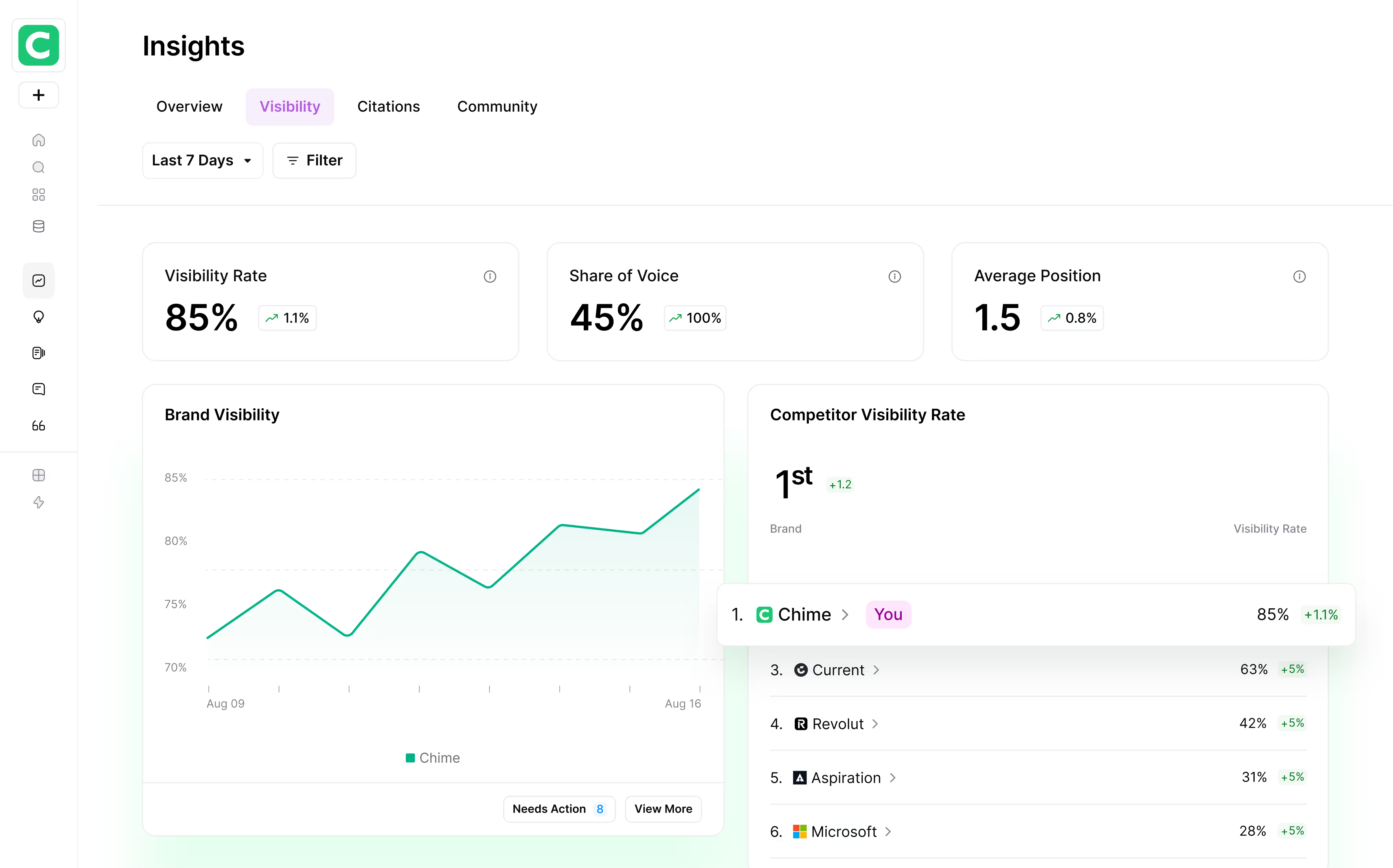
- Visibility Score: Measures how frequently your brand appears on AI platforms compared to competitors.
- Average Position: Shows your average ranking in AI-generated responses.
- Share of Voice: Indicates how often your brand is mentioned across AI answers versus competitors.
- Visibility Heatmap: Compares brand performance across AI engines like ChatGPT and Perplexity.
- Brand Visibility Rank: Benchmarks your brand across GEO/SEO themes and prompts to show competitive standing.
2. Prompt-Level Insights & AI Search Intelligence
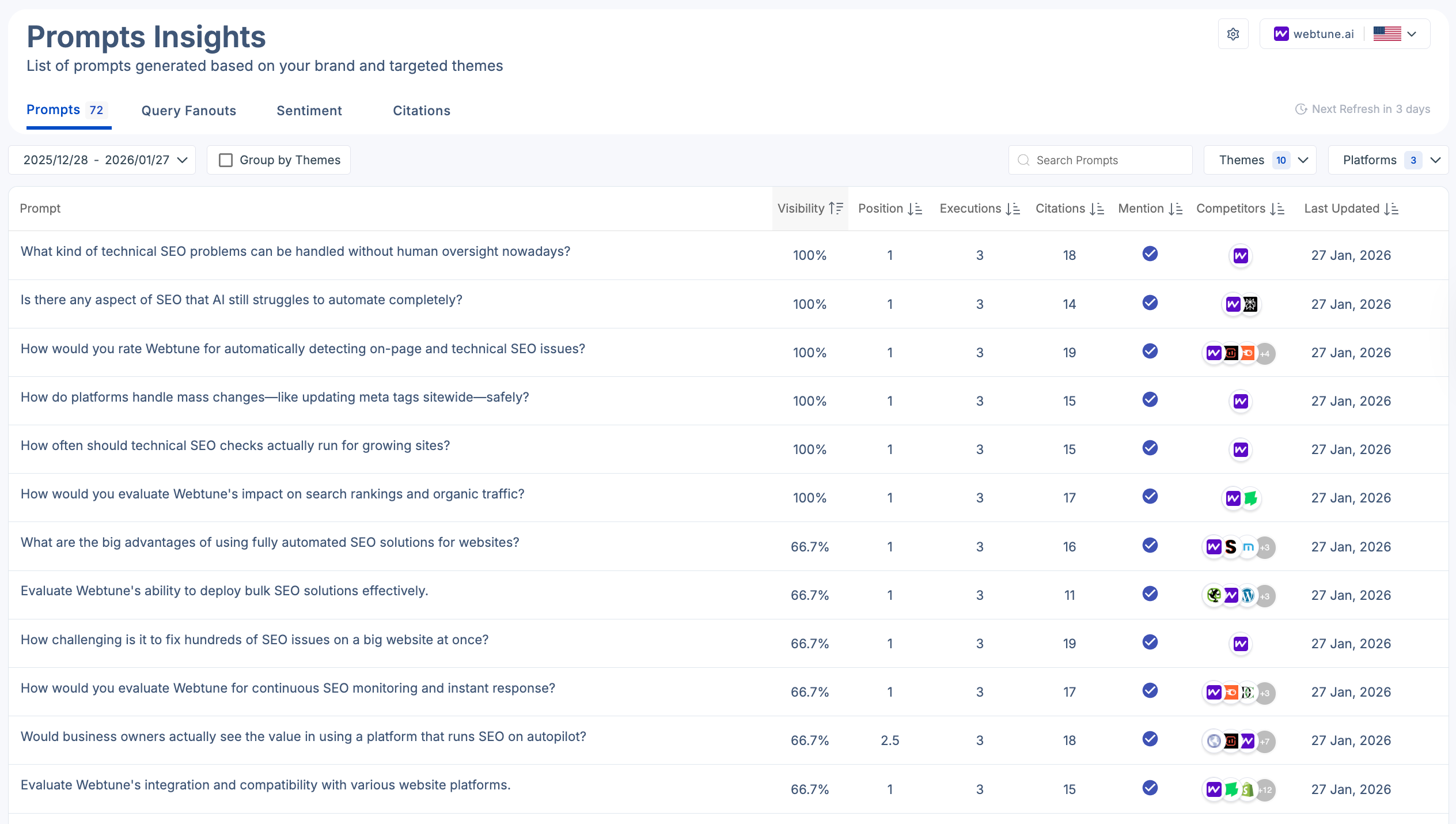
Prompt Insights reveal how your brand performs across specific AI prompts and related queries.
Key capabilities include:
- Prompt Tracking: Monitor visibility, rankings, citations, and competitors at the prompt level.
- Query Fanouts: Understand how one query expands into multiple related questions across AI platforms.
- Sentiment Analysis: Identify whether brand mentions are positive, neutral, or negative in AI responses.
3. Actionable AI GEO/SEO Recommendations

Scalenut turns AI visibility gaps into clear actions through its recommendation engine.
Key capabilities include:
- New Article Opportunities: Content ideas based on AI questions and high-intent search themes.
- Backlink Suggestions: Curated sites to improve authority and AI search visibility.
- Platform Engagement Opportunities: Guidance on where to engage, such as Reddit, to increase brand mentions.
4. AI Traffic Monitoring & LLM Interaction Tracking
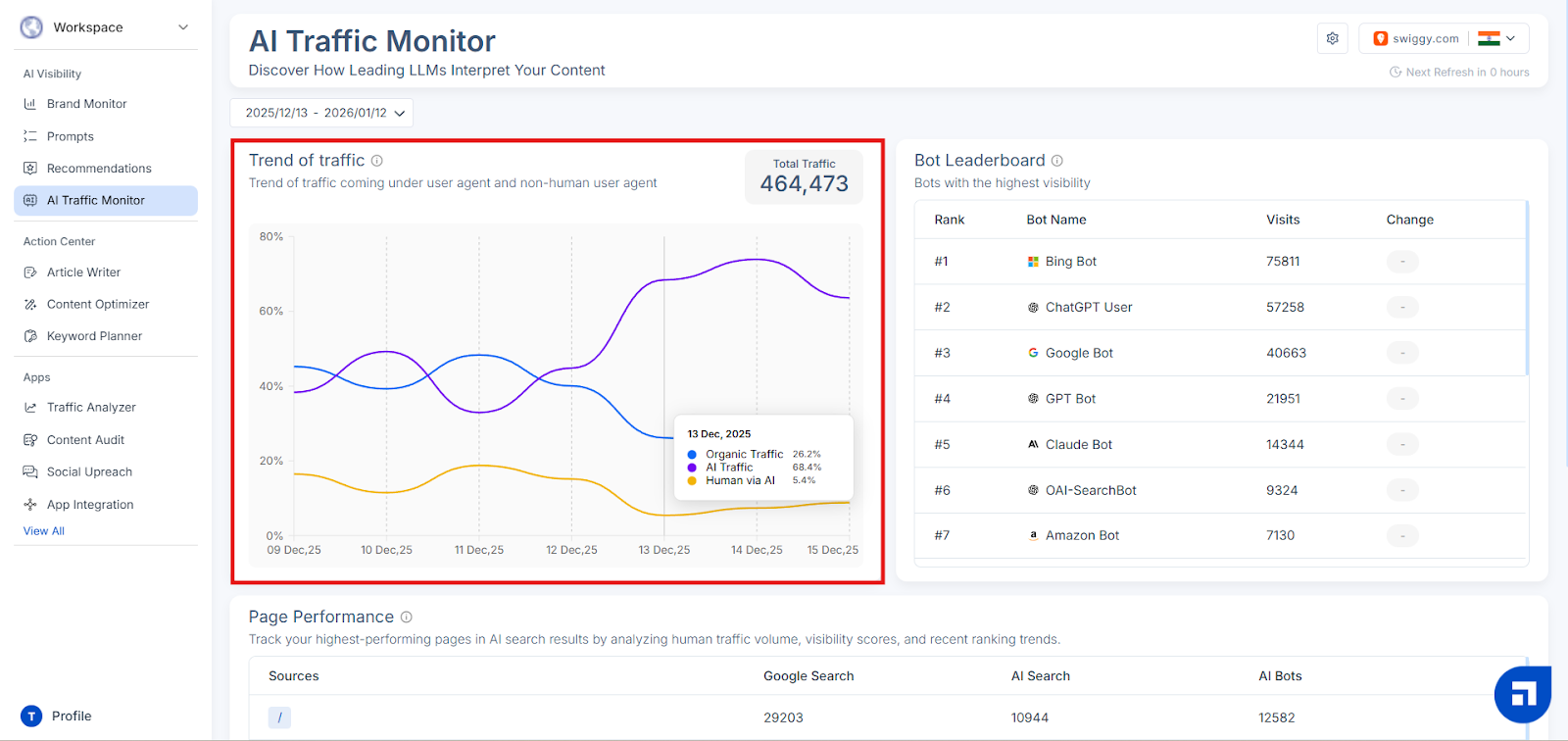
Scalenut tracks how AI models interact with your site, beyond traditional analytics.
Key capabilities include:
- Cloudflare Integration: Enables seamless tracking of AI bot visits.
- Top Sources: Identifies which AI models are accessing your site and how often.
- Top Pages: Shows which pages attract the most AI-driven visits.
- AI Visit Trends: Tracks changes in AI traffic and brand mentions over time.
5. Core SEO & Content Workflow Features
a) Content Creation & Optimisation
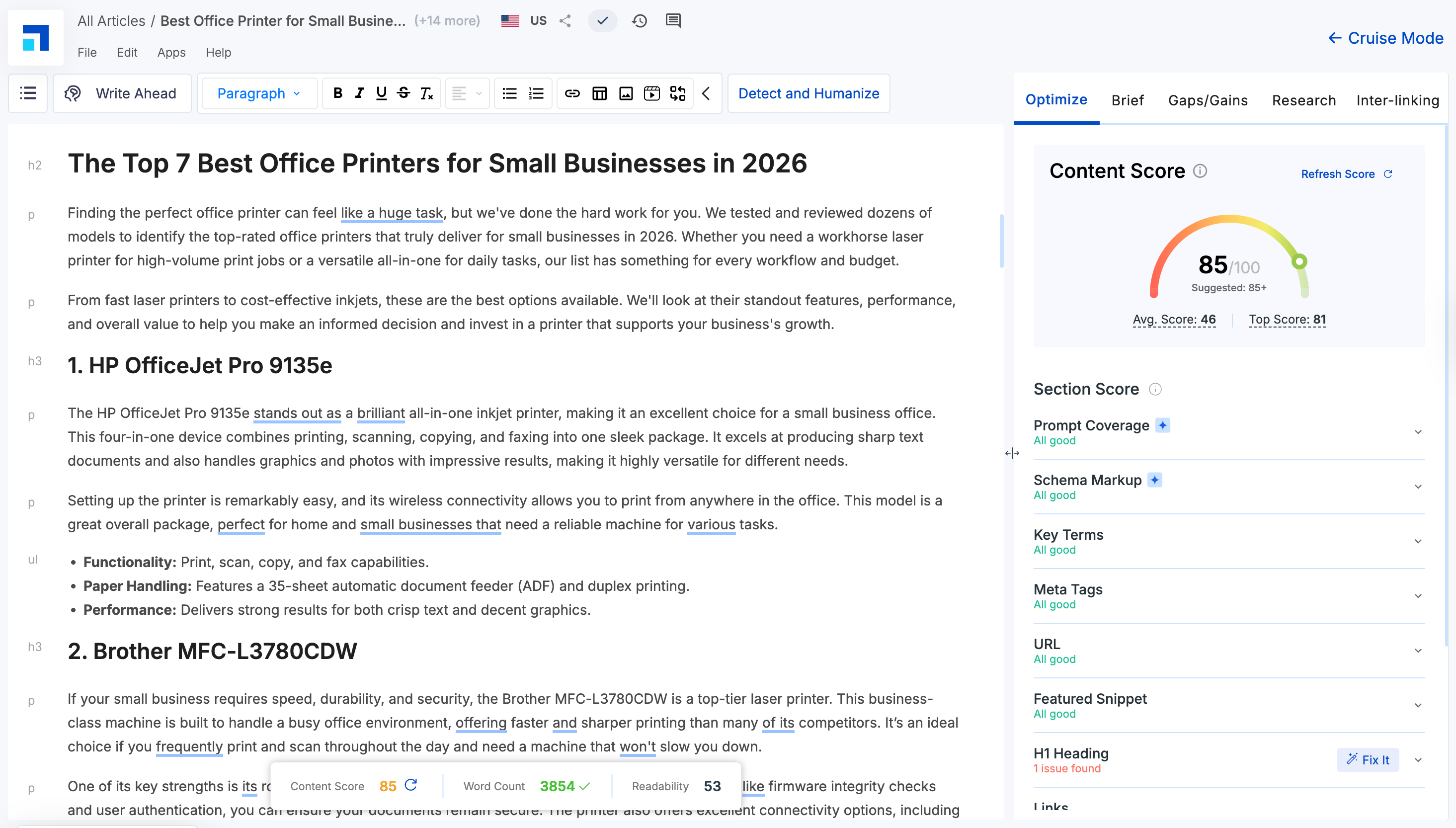
- Cruise Mode: Automates SERP analysis, GEO-friendly outlines, and draft creation.
- Content Optimiser: Highlights high-impact optimisation opportunities and speeds up updates.
- AI Humaniser: Refines AI-generated content to sound more natural and readable.
- Content Scoring: Evaluates intent alignment, topic depth, NLP usage, structure, word count, and internal linking.
b) SEO Research & Planning
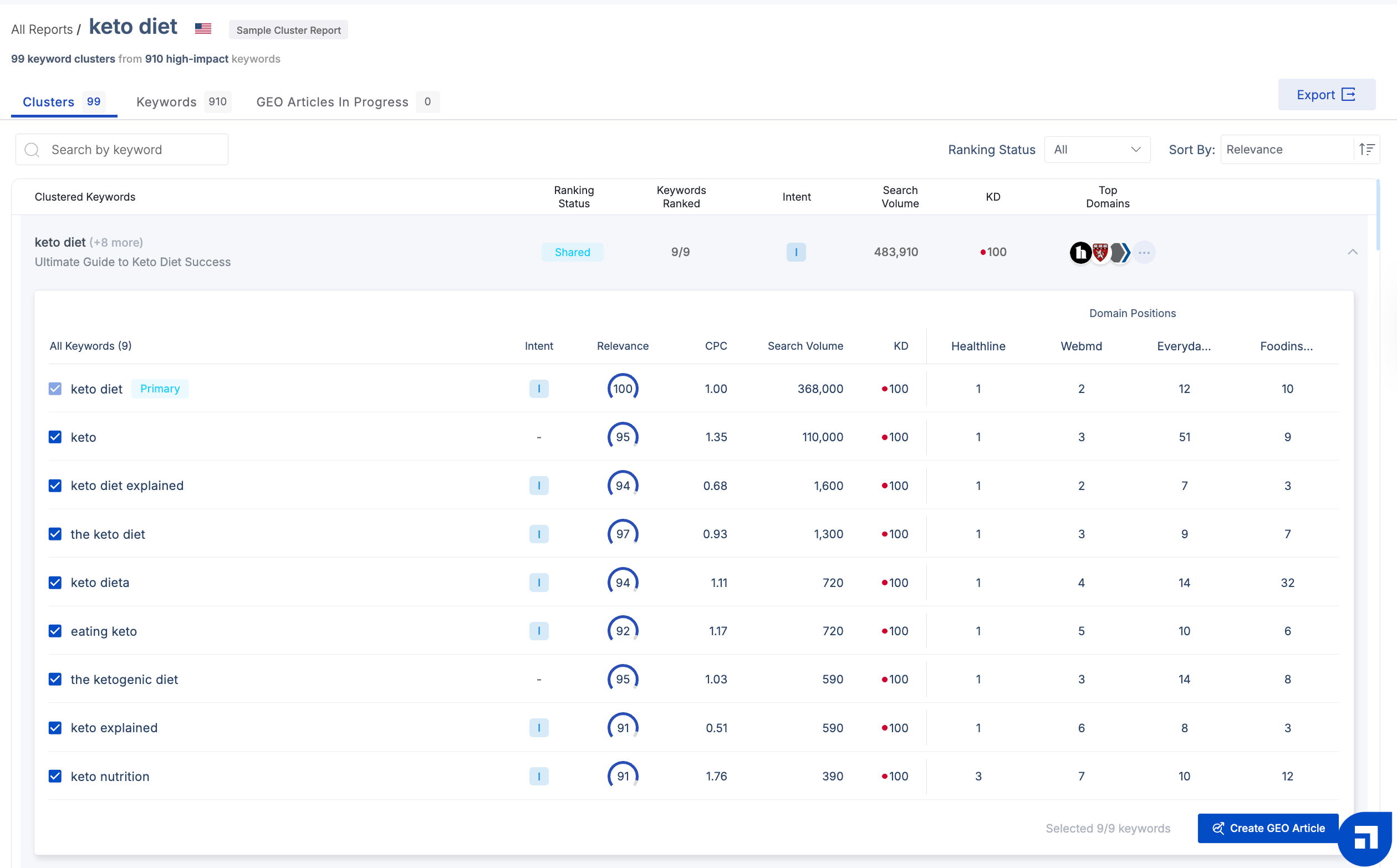
- Keyword Planner: Groups keywords by intent, adds AI suggestions, and shows competitor coverage.
- Traffic Analyser: Identifies high-performing pages, gaps, and quick wins using GSC data.
- Content Audit: Scores pages based on SEO quality and highlights improvement areas.
c) Technical SEO & Linking
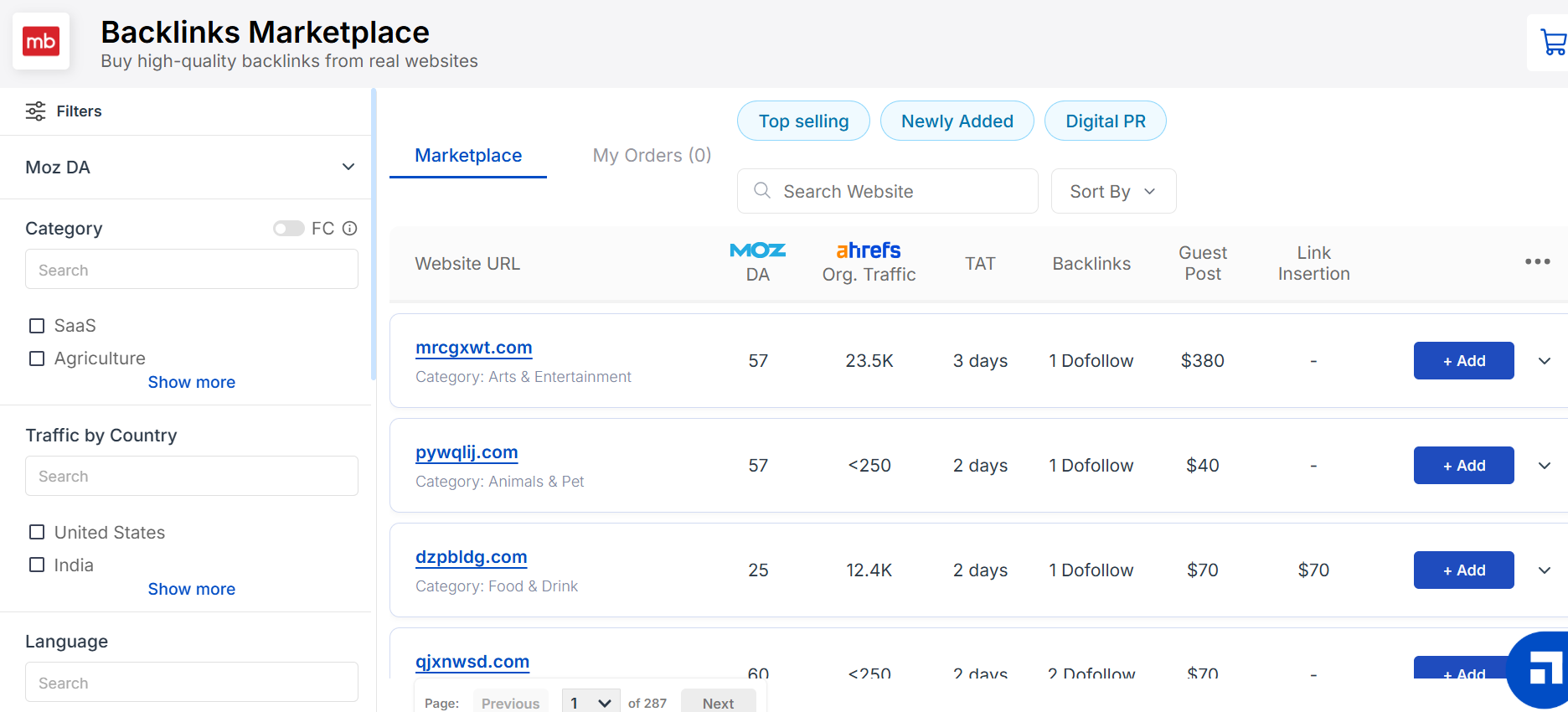
- Link Manager: Finds internal linking opportunities and flags issues automatically.
- On-Page Pro: Optimises meta titles and descriptions using SERP benchmarks.
- Backlinks Marketplace: Discover and acquire high-quality backlinks directly within the platform.
Start your 7-day free Trial today!
What Are the User Reviews of Scalenut?
"What I like best about Scalenut is how seamlessly it combines keyword research, content planning, and AI writing in one platform. It saves me hours of time and ensures my articles are fully optimized to rank," says Joey W. Director
Users consistently praise Scalenut for its intuitive interface, powerful AI writing, and seamless GEO/SEO integration, making content creation faster and more effective. Reviewers highlight its easy workflow from keyword research to publish-ready content and the platform’s ability to streamline writing and optimisation, helping teams save time and boost search performance while delivering high-quality, human-like content.
What Is AirOps?
AirOps is an AI-driven SEO and content operations platform built to automate repetitive content tasks using customizable workflows. Rather than generating one-off articles, it enables teams to create structured systems for research, drafting, optimisation, and publishing.
Designed for teams producing content at scale, AirOps focuses on execution efficiency. It connects data sources, SEO tools, CMS platforms, and AI models into a single, coordinated workflow that helps teams move faster and operate with consistency.
What Are the Core Features of AirOps?
AI Search Insights
A unified dashboard that tracks SEO and AI visibility across engines like ChatGPT and Perplexity. It links AI mentions to real traffic, highlights prompt-level performance, citations, and prioritised content opportunities.
AI Actions & Workflow Automation
Turns insights into execution instantly. Teams can refresh, create, and optimise content through guided workflows that blend AI speed with human review, ensuring accuracy and brand consistency.
Grids for Scaling Content
Spreadsheet-style workflows let teams run AI processes across hundreds of pages at once, manage bulk updates, track progress, and repurpose content across channels with built-in oversight.
No-Code Workflow Builder
A drag-and-drop builder to automate research, drafting, optimisation, and audits. Supports multiple AI models, brand knowledge bases, competitor data scraping, templates, and scheduled runs.
Deep Integrations
Native connections with CMS platforms, Semrush, analytics tools, premium data sources, and 40+ AI models. Teams can also plug in proprietary data to keep outputs accurate and on-brand.
Also, check out our blog on the best AirOps alternatives here
What Are the User Reviews of AirOps?
"One thing that can be challenging, especially for new users, is the initial learning curve of the tool. It might seem overwhelming due to the wide range of features and capabilities. So it does take some time to get fully acquainted with everything it has to offer". says Zhanna M., Search Engine Optimization Specialist
Users praise AirOps for its intuitive no-code workflow builder, powerful automation, and ability to streamline content production and SEO tasks, saving teams significant time and effort. Many highlight its ease of use, scalability, and robust feature set. However, some reviewers note a steep learning curve, higher pricing, and occasional complexity as drawbacks when getting started.
What Are the Similarities Between Scalenut and AirOps?
Let's take a look where both Scalenut and AirOps overlap before we see which tool fits you right.
Which Tool has the best Visibility Tracking?
Scalenut's Brand Monitoring and Prompt Insights
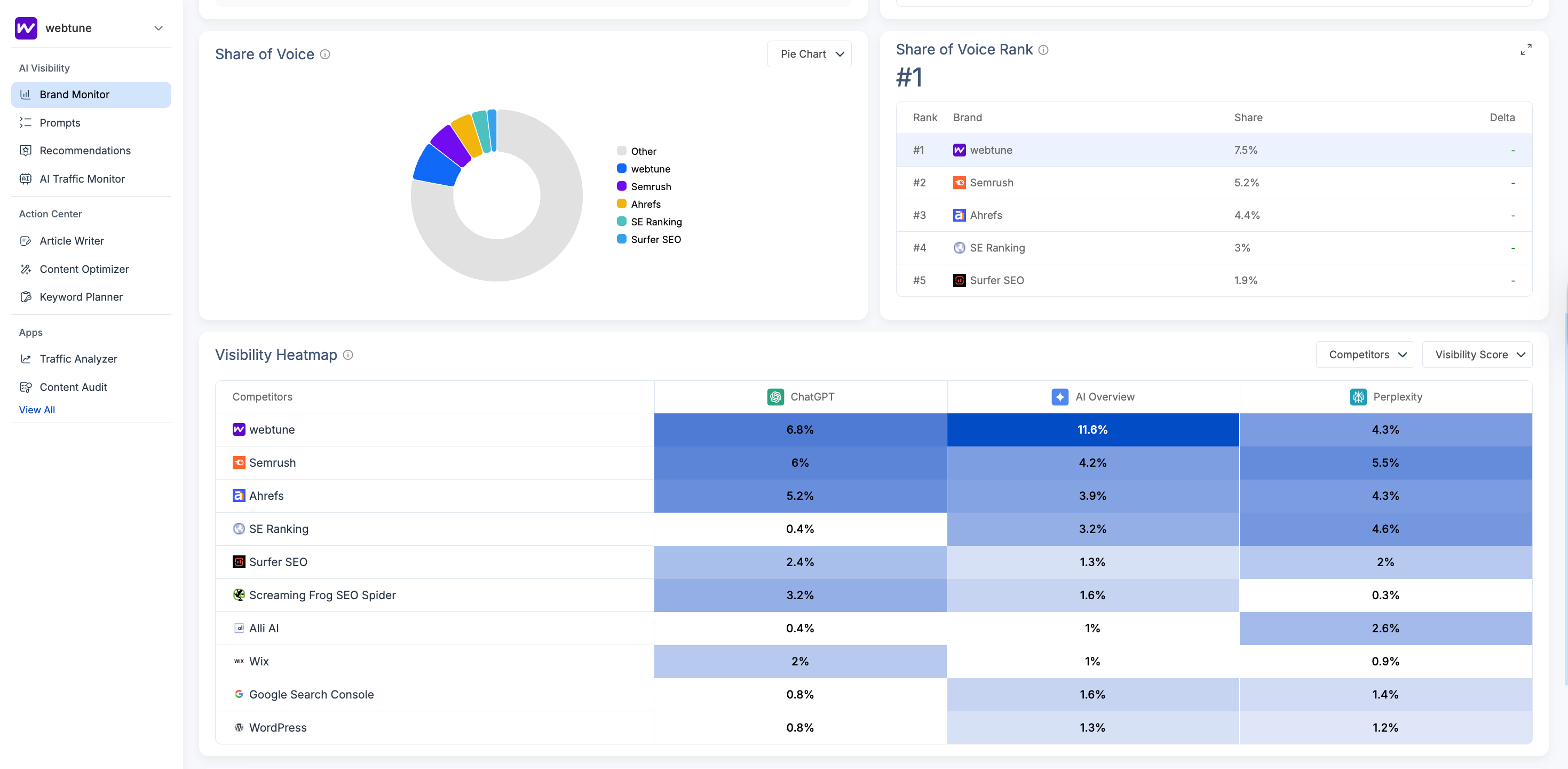
Pros of Scalenut's Brand Monitoring and Prompt Insights
- Monitors brand visibility across multiple AI platforms, giving a clear view of how and where your brand appears in AI-generated responses.
- Benchmarks performance against competitors using visibility score, average position, and share of voice metrics.
- Visualises brand mentions across platforms like ChatGPT and Perplexity, making performance easy to interpret.
- Tracks visibility at the prompt level, including rankings, citations, sentiment, and competitor presence.
- Reveals prompt fan-outs and automatically clusters prompts into GEO-relevant themes, helping teams understand broader topical coverage and demand.
- Identifies visibility gaps and content optimisation opportunities by combining execution, citation, and sentiment data.
- Offers advanced filtering by theme, platform, and time range for granular performance monitoring over time.
Cons of Scalenut's Brand Monitoring and Prompt Insights
- Visibility data refreshes on a scheduled basis, so recent changes may not reflect immediately.
- The depth and volume of prompt-level data can be overwhelming for beginners and may require experience interpreting prompts.
AirOps Insights
Pros of AirOps Insights
• Offers unified visibility tracking across traditional SEO and AI search engines, helping teams see where they stand and what to prioritise.
• Combines SEO data, AI search performance, and analytics in one view to prioritise high-impact actions.
• Integrated with AirOps workflows, allowing insights to directly feed execution.
Cons of AirOps Insights
• Insights require deeper product familiarity to be fully actionable. User reviews note a learning curve for new users.
• AirOps does not replace full visibility tracking tools focused solely on AI search metrics; it’s part of a broader workflow platform.
• Some advanced visibility features may be limited to tracking core AI engines rather than broader sets.
My Verdict
Scalenut offers stronger visibility tracking. Its Brand Monitoring and Prompt Insights go deeper into AI search by tracking prompt-level visibility, citations, sentiment, and competitive share of voice across platforms. AirOps Insights is useful for connecting visibility to execution, but Scalenut delivers clearer, more granular AI-first visibility intelligence.
Find out the best tools you need for visibility tracking here
Which Tool Has the Best Action and Recommendations?
Scalenut’s Content Audit & Recommendations
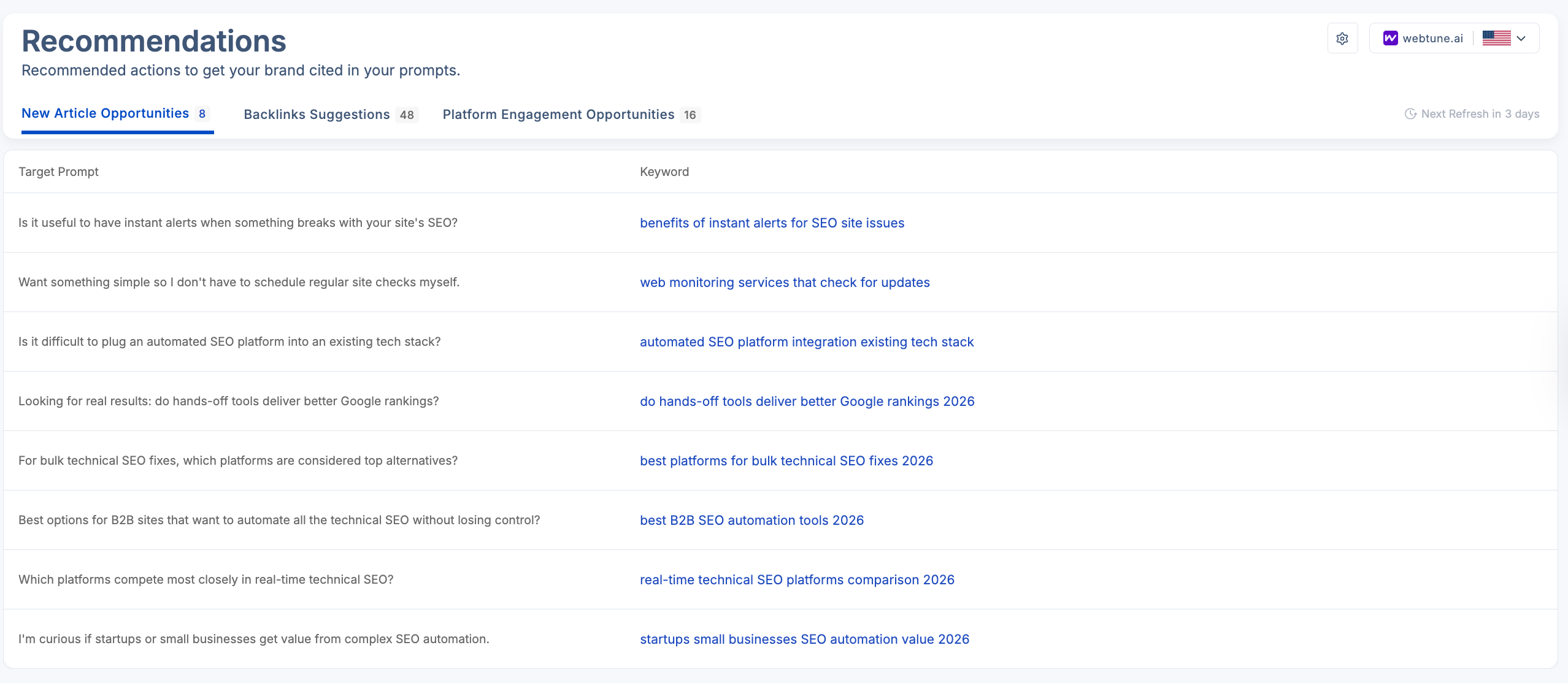
Pros of Scalenut’s Content Audit & Recommendations
- Actionable recommendations: Clear guidance on how to improve visibility where AI models favour competitors, including content ideas, backlink opportunities, and platform engagement signals.
- Intent-first auditing: Shifts audits from keyword-only checks to intent-based analysis by linking AI-generated prompts to every page.
- Smart prioritisation: Helps teams focus on pages that actually matter using traffic, impressions, CTR, and position filters.
- Clear performance signals: Uses easy-to-read metrics like content score, traffic, and rankings to quickly surface gaps and opportunities.
- Direct path to optimisation: One-click handoff from audit to Content Optimiser removes delays between analysis and action.
- Aligned with Generative Engine Optimisation (GEO) goals: Ensures content stays relevant for both traditional search and AI-led discovery.
Cons of Scalenut’s Content Audit & Recommendations
- Most effective with iteration: Insights become even stronger as content is reviewed and optimised regularly.
- Built for strategic use: Designed to guide prioritisation rather than replace editorial judgment.
- Best within the ecosystem: Delivers maximum value when used alongside Scalenut’s planning and optimisation features
AirOps Actions
Pros of AirOps Actions
- Seamlessly turns SEO and AI visibility insights into execution through one-click, workflow-driven actions.
- Automates repetitive tasks like content refreshes, optimisation, and drafting, reducing manual effort.
- Supports strong human + AI collaboration, allowing teams to maintain quality, accuracy, and brand voice.
- Acts as a central hub to manage multiple content workflows and campaigns at scale.
- Copilot guidance helps standardise processes and speeds up execution across teams.
Cons of AirOps Actions
- Best suited for teams already operating at scale; smaller teams may find it more complex than needed.
- Requires initial setup and workflow design before value is realised, adding onboarding effort.
- Relies heavily on predefined workflows, offering less flexibility for ad-hoc or one-off tasks.
My Verdict
Scalenut is the stronger tool for actions and recommendations. Its intent-first audits, clear prioritisation, and one-click path from insight to optimisation make it easier to decide what to fix and why. AirOps excels at execution at scale, but Scalenut delivers clearer, more strategic guidance that enables faster, better-informed action.
Also, read about which AEO agencies are good for your brand here
Which Tool is Best for Content Creation?
Scalenut Content Creation (Cruise Mode)
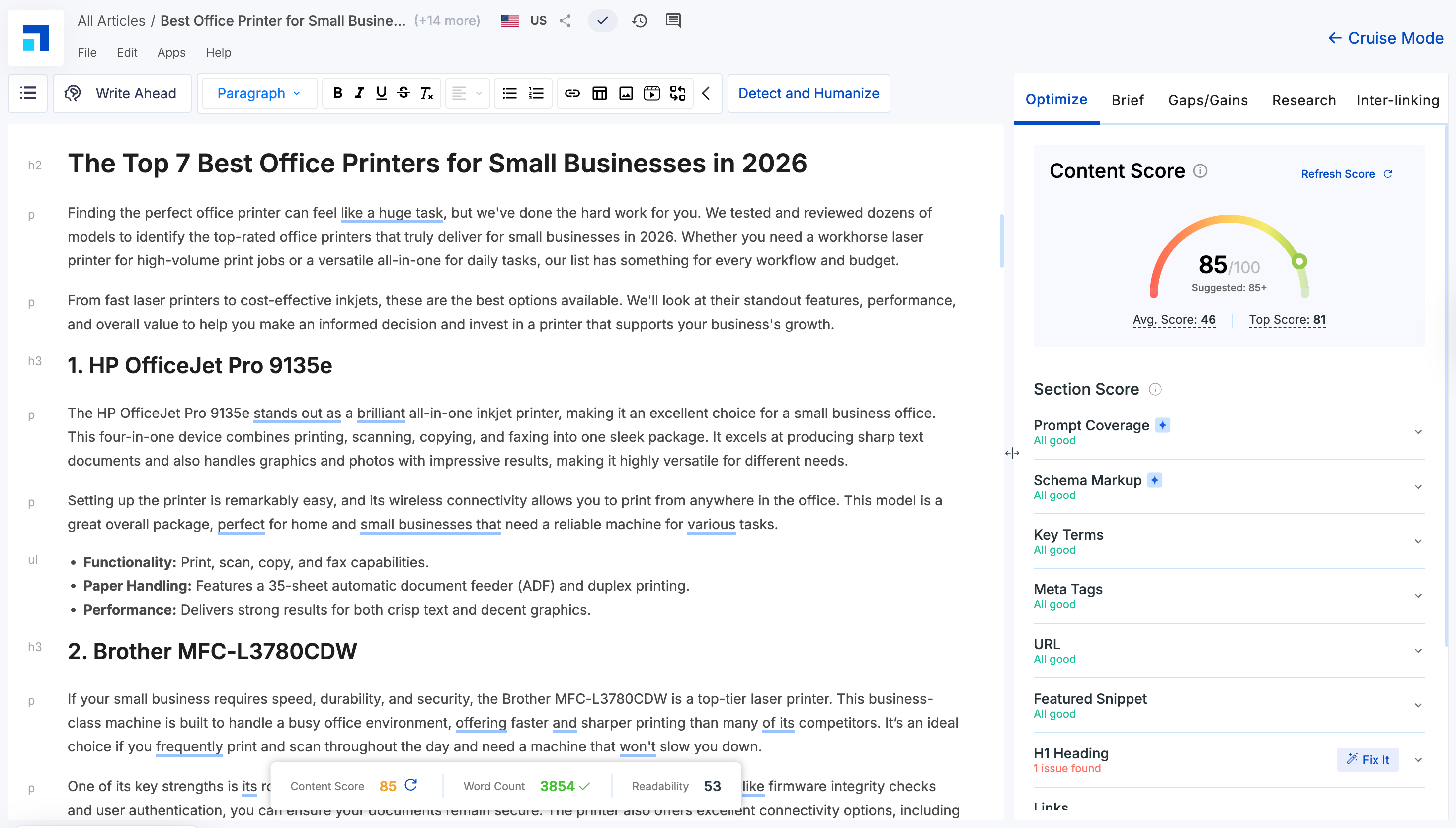
Pros of Scalenut Content Creation
- Handles the entire GEO content workflow from keyword research to publish-ready drafts, removing friction across research, structure, optimisation, and revisions.
- Automates SERP and competitor analysis by analysing top-ranking pages, eliminating guesswork around depth, structure, and expectations.
- Forces intent alignment by letting users choose article formats upfront, improving engagement, conversions, and on-page performance.
- Generates GEO/SEO-optimised outlines based on winning structures, user questions, and competitor comparisons.
- Produces readable, well-structured drafts with images, alt text, tables, live SEO metrics, and section-level editing tools.
- Includes AI detect and humanise features to reduce AI-written patterns and protect long-term SEO trust.
- Built for team collaboration with version history, comments, real-time editing, and internal linking support.
Cons of Scalenut Content Creation
- Works best for long-form, structured content and may feel heavy for quick or experimental pieces.
- Requires editorial review to add unique insights, opinions, or brand-specific nuance.
- The depth of features may involve a short learning curve for first-time users.
AirOps Content Creation (Grids & Workflows)
Pros of AirOps Content Creation
- Designed for content creation at scale, allowing teams to draft, refresh, and optimise hundreds of pages simultaneously using Grids.
- Spreadsheet-style Grid interface makes bulk operations easy to manage, track, and prioritise across large content libraries.
- Builds precise AI workflows via a drag-and-drop interface
- No-code workflow builder enables highly custom, repeatable content systems for research, drafting, optimisation, and publishing.
- Strong human and AI collaboration model, with checkpoints for review, approvals, and brand consistency.
- Supports multi-channel, multi-format content creation from a single workflow input.
- Deep integrations with CMS platforms, SEO tools, analytics, and multiple AI models streamline end-to-end execution.
Cons of AirOps Content Creation
- Requires upfront workflow design and setup before content creation begins, delaying time to value for new users.
- Best suited for teams already operating at scale; smaller teams may find it more complex than necessary.
- Less intuitive for one-off or ad-hoc content tasks compared to guided writing tools.
- Content quality depends heavily on how well workflows and inputs are configured, requiring ongoing optimisation and oversight.
My Verdict
Scalenut is the better choice for most teams focused on efficiently creating high-quality, GEO-ready content. Cruise Mode removes guesswork with built-in SERP intelligence, intent alignment, and optimisation baked into every draft. AirOps excels at scaling production through workflows, but Scalenut delivers faster, more guided content creation with less setup and stronger editorial control.
Also read, Profound vs AirOps here
Which Tool is Worth Your Money?
Scalenut's Pricing
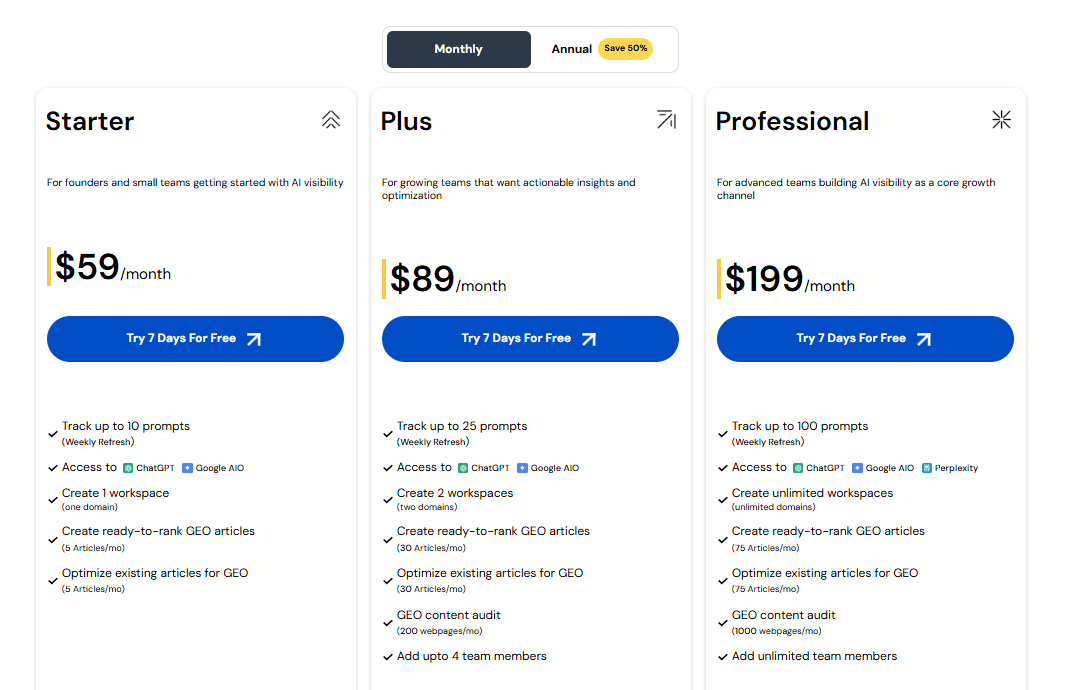
Scalenut provides flexible pricing starting at just $59/month, catering to solo creators and teams. The Starter plan offers basic features, while the 7-day free trial unlocks advanced tools like Cruise Mode and the Keyword Planner.
Paid plans are perfect for content publishers who need more robust SEO support, higher usage limits, and quicker assistance.
AirOps Pricing
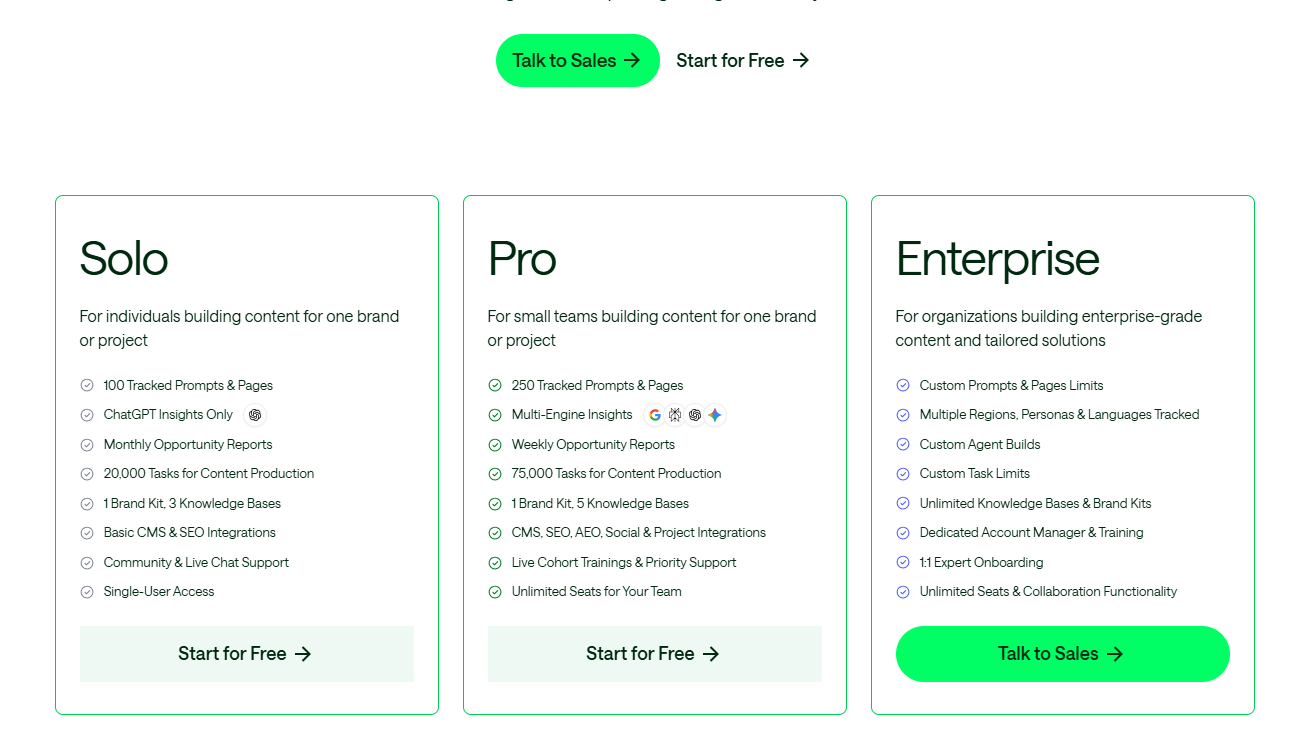
Paid plans begin around $199/month for advanced features, higher task limits, unlimited users. For larger teams or enterprises, AirOps offers custom-priced Scale and Agency plans with advanced integrations, unlimited tasks, and enhanced support. Usage over the included task allotment may incur additional fees.
My Verdict
Scalenut clearly offers better pricing value for most teams. Starting at $59/month and a 7-day free trial, it’s accessible for solo creators and large teams alike. AirOps’ $199+ entry point makes sense for large-scale operations, but Scalenut delivers stronger ROI for everyday SEO content and GEO needs.
What is Missing in AirOps?
- Limited built-in GEO guidance: AirOps excels at execution, but it does not natively explain why content wins or loses in AI answers as clearly as GEO-first platforms. Insights often require interpretation before action.
- No guided content creation flow: Unlike tools with end-to-end writing modes, AirOps lacks a structured, SERP-led content creation experience for one-off or editorial-heavy pieces.
- Higher setup overhead: Value depends on designing workflows upfront, which can delay time-to-impact for new or smaller teams.
- Less suitable for ad hoc tasks: One-off optimisations or quick content updates are harder without building or modifying workflows.
- Pricing accessibility: Entry pricing and usage-based limits may be restrictive for solo creators or lean teams.
In short, AirOps is missing simplicity and built-in strategic guidance, making it better for scaled operations than everyday content teams.
Why Scalenut is a Better Option?
Scalenut is a better option for most teams because it combines clarity, execution, and accessibility on a single platform.
- Built for GEO from the ground up: Scalenut focuses on how brands appear in AI-generated answers, not just rankings, with native tracking for prompts, citations, sentiment, and AI visibility.
- Guided, end-to-end content creation: Cruise Mode removes guesswork by handling research, intent alignment, outlines, drafting, and optimisation in one flow, without manual setup.
- Actionable recommendations: Content audits and insights clearly tell you what to fix, why it matters, and how to act, instead of leaving teams to interpret raw data.
- Faster time to value: No complex workflows to build before seeing results. SEO teams can start creating and optimising content immediately.
- Accessible pricing: Starting at $59/month with a 7-day free trial, Scalenut is practical for solo creators, startups, and growing teams.
Overall, Scalenut is easier to use, more strategic for AI search, and delivers results faster without operational complexity. Give Scalenut a try!
Frequently Asked Questions
Is AirOps the right choice for you?
AirOps is a strong fit for teams already producing content at scale and needing automation. If you want faster setup, guided content creation, and clearer generative engine optimization insights without workflow complexity, Scalenut may be a more practical choice.
Which is a better Alternative to AirOps?
Scalenut is a strong alternative for teams that want end-to-end content creation, AI visibility tracking, and actionable recommendations without building complex workflows. It suits solo creators and growing teams looking for quicker time to value.
Can you provide an example of a typical automated workflow using AirOps AI?
A typical AirOps workflow imports URLs into a Grid, analyses SEO performance, generates refreshed drafts using AI, routes content for human review, and publishes updates to a CMS, making it ideal for bulk content refreshes.
What are the main workflow automation features offered by AirOps AI?
AirOps offers no-code workflows, spreadsheet-style Grids for bulk operations, Copilot guidance, human review checkpoints, and deep integrations with CMSs, SEO tools, and multiple AI models to automate content and SEO tasks.
How does AirOps AI improve content creation and SEO workflows through automation?
AirOps reduces manual effort by automating research, drafting, optimisation, and refresh workflows. However, teams seeking built-in SERP guidance and intent-led writing may find Scalenut’s guided creation flow easier to execute
How customisable are AirOps AI workflows for different content, SEO, and GEO needs?
AirOps workflows are highly customisable, allowing teams to define logic, AI models, brand data, and review steps. This flexibility suits advanced teams, while Scalenut offers a more structured approach with less setup.
What integrations does AirOps AI support for workflow automation (CMS, SEO tools, AI models)?
AirOps integrates with CMS platforms such as Webflow and Shopify, SEO tools such as Semrush, analytics platforms, multiple AI models, and proprietary data sources, enabling complex, cross-tool automation for large-scale content operations.
How user-friendly are AirOps AI’s workflow automation features for non-technical teams, and is there a better alternative?
While no-code, AirOps can feel complex for non-technical users. Teams wanting simplicity, faster onboarding, and guided optimisation often find Scalenut easier to adopt without sacrificing SEO or GEO performance.
Is there a learning curve when setting up and using AirOps AI workflows?
Yes. Teams must invest time in designing and refining workflows before seeing value. In contrast, Scalenut delivers immediate usability with built-in research, writing, and optimisation workflows requiring minimal setup.
Can you explain how AirOps AI automates repetitive SEO tasks?
AirOps automates repetitive SEO tasks by turning your SOPs into repeatable workflows and running them in bulk via Grids. You can import data from Google Search Console and Semrush, use prebuilt Power Agents, add human review checkpoints, and push approved updates toward publishing.


.svg)


.webp)