.jpg)
Key Highlights
- AirOps and Surfer SEO address different needs: AirOps focuses on AI-driven automation at scale, while Surfer SEO specialises in hands-on, SERP-based content optimisation.
- AirOps suits large teams that need workflows and Grids, but it comes with a learning curve and higher, less predictable pricing.
- Surfer SEO offers clearer on-page SEO guidance, audits, and topical planning, but lacks automation and deeper AI reasoning.
- For AI visibility, AirOps connects insights directly to execution, while Surfer provides simpler prompt-level and geographic tracking.
- Pricing and usability favour Surfer SEO for most teams, whereas AirOps is better for enterprises with complex requirements.
- User ratings on G2 reflect strong satisfaction for both tools, with Surfer SEO rated 4.8/5 and AirOps rated 4.6/5.
- Scalenut stands out as an all-in-one alternative, combining SEO data, GEO, AI visibility, and execution in a single, cost-effective platform.
Choosing the right content optimisation tool has become increasingly confusing as SEO blends with AI-driven workflows. Teams struggle to balance ranking requirements, content quality, and production speed, often ending up with tools that either overcomplicate execution or fail to deliver clear optimisation guidance.
For most marketers and content teams, the goal is to create content that ranks well, scales efficiently, and fits naturally into existing workflows. Some prioritise precise on-page SEO improvements, while others focus on building automated systems that accelerate content production without sacrificing quality.
Understanding these different priorities is key to choosing the right platform. In this blog, we compare Surfer SEO and AirOps across features, use cases, pricing, and team fit to help you decide which tool best supports your SEO and content goals.
AirOps vs Surfer: Which Tool Is Better?
As AI-driven SEO workflows evolve, choosing the right platform can directly impact how efficiently teams plan, optimise, and scale content. With that context, let’s compare AirOps and Surfer to see which tool performs better for different use cases.
What is AirOps?
AirOps is an AI-powered platform that helps teams manage SEO and content work using automated, custom workflows. Instead of focusing on one-off content creation, it helps teams standardise research, writing, optimisation, and publishing at scale.
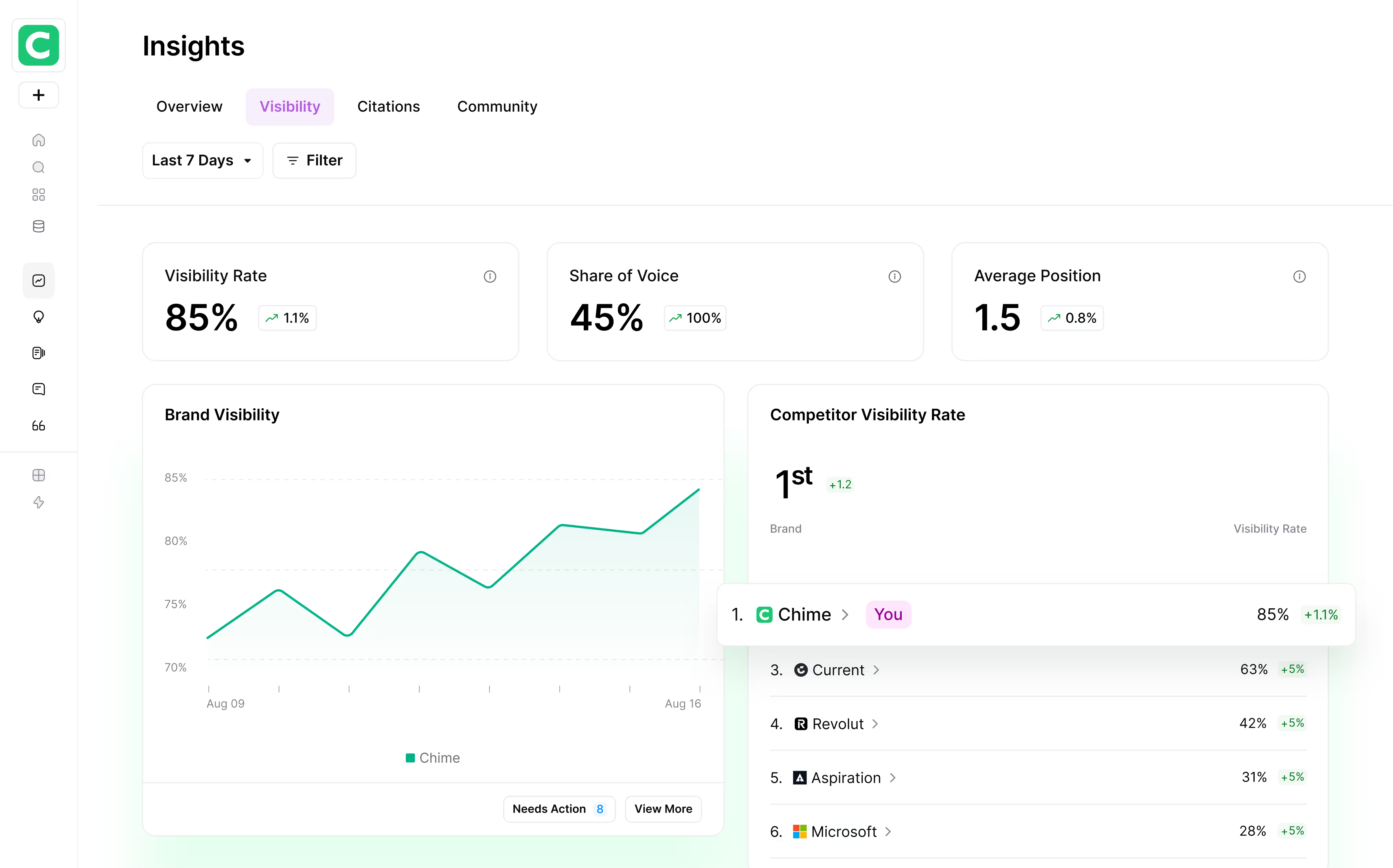
Built for teams producing a lot of content, AirOps brings together data sources, SEO tools, CMS platforms, and AI models into one streamlined system for faster and more consistent execution.
What are the key features of AirOps?
- AI Insights: Automatically updates and optimises content using pre-built workflows, ensuring the output is on par with an AI writer's efficiency.
- Grids for Scale: Lets you run AI workflows across hundreds of pages at once, with tracking and review steps to maintain quality.
- No-Code Workflow Builder: Uses drag-and-drop tools to automate research, writing, and optimisation without coding.
- Deep Integrations: Connects easily with CMS platforms like Webflow, Shopify, and Contentful, as well as SEO tools like Semrush.
- Automated SEO Actions: Trigger repeatable actions for content creation, refreshes, and optimisation at scale.
- Workflow Orchestration: Chain multiple steps like research, writing, optimisation, and publishing into a single automated workflow.
- Content Refresh Automation: Identify outdated content and automatically update it based on predefined rules and data signals.
What are the User Ratings of AirOps?
- G2: 4.6/5
What is Surfer SEO?
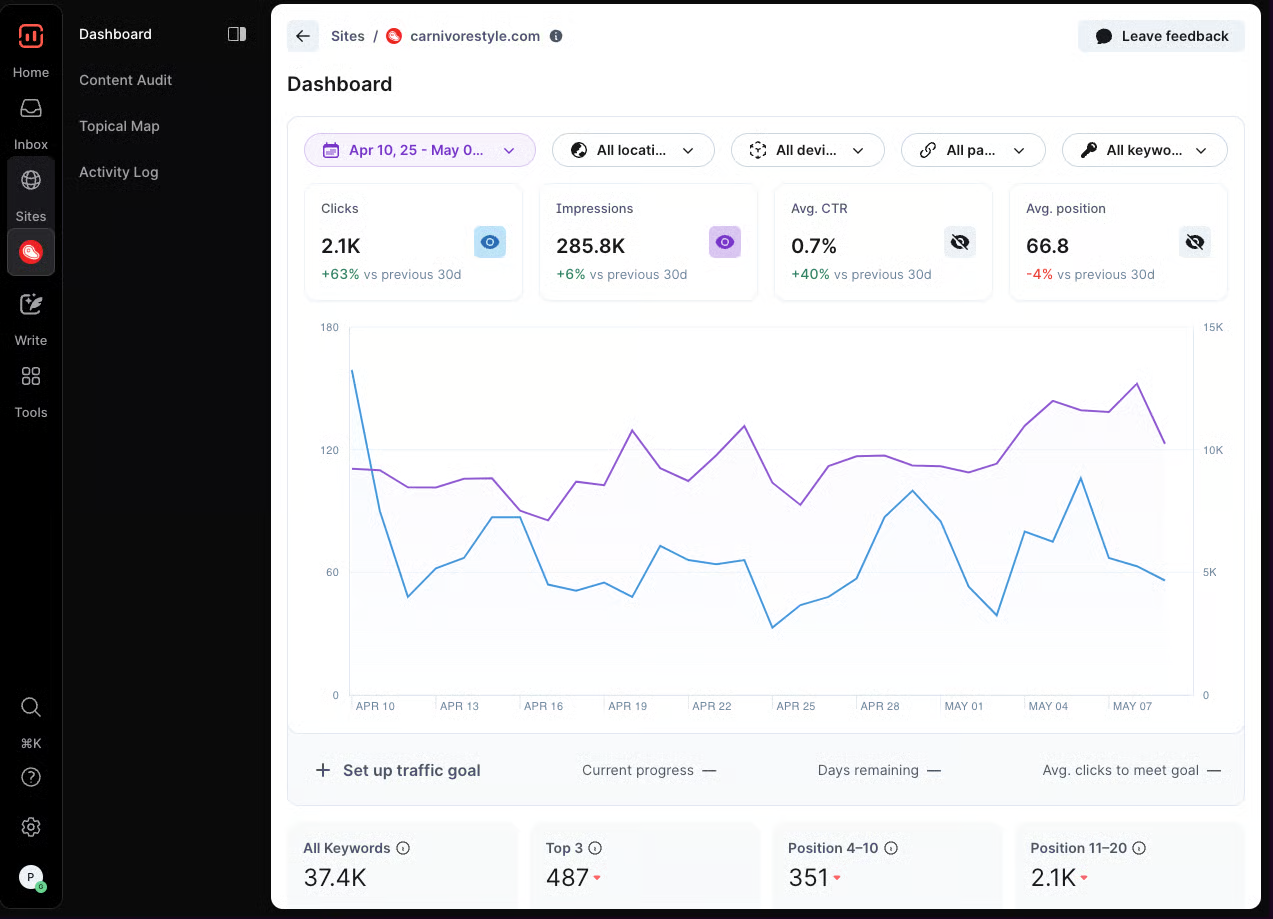
Surfer SEO is a content optimisation tool designed to help teams improve on-page SEO using real search data. It analyses top-ranking pages and gives clear, real-time recommendations on structure, keywords, and content depth, making it easier to create content that aligns with how search engines evaluate results.
What are the key features of Surfer SEO?
- Content Editor: Provides real-time SEO recommendations while you write, including keyword usage, structure, word count, and content depth based on top-ranking pages.
- Content Audit: Analyses existing pages to identify SEO gaps and gives clear suggestions on what to update, expand, or improve to regain or boost rankings.
- Topical Map: Helps plan and organise content around core topics and subtopics, making it easier to build topical authority and avoid keyword cannibalisation. Using a SERP analyzer can provide additional insights into how well your topical organization aligns with competitors.
- Sites (SEO Monitoring): Tracks overall site performance and highlights which pages need attention, so teams know where to focus without manual audits.
- AI Tracker: Monitors how your brand and content appear in AI-driven search results, helping teams understand visibility beyond traditional SERPs.
What are the User Ratings of Surfer SEO?
- G2: 4.8/5
What Are The Main Similarities Between AirOps and Surfer SEO?
Before comparing where AirOps and Surfer SEO differ, it helps to understand where they overlap. Both platforms support modern content teams by improving search visibility and SEO performance while boosting content performance.
They each use data-driven insights to guide content decisions, helping teams create higher-quality content that aligns with search engine expectations, even though they approach the problem in very different ways.
Which tool has the best AI Answer Tracking and AI Visibility Monitoring?
AirOps AI Search Insights
Pros of AirOps AI Search Insights
- Combines SEO, keyword analysis, and AI search visibility into one dashboard, so teams do not need to use multiple tools.
- Shows how your brand appears across both search engines and AI tools like ChatGPT, Gemini, and Perplexity.
- Helps identify gaps where competitors are performing better and highlights high-impact opportunities.
- Suggests which content to update or create next, based on priority.
- Connects insights directly to workflows, making it easy to act without switching tools.
Cons of AirOps AI Search Insights
- Works best for teams producing content at scale; smaller teams may not need this level of detail.
- Does not clearly show GEO-specific brand visibility metrics.
- Lacks insights into how AI visibility changes across regions or localised AI behaviour.
- May feel too execution-focused for teams that only want basic AI visibility tracking.
Also, read our blog on the top AirOps alternatives here
Surfer SEO AI Tracker
Pros of Surfer SEO AI Tracker
- Provides daily updates on how selected prompts perform in AI search results, helping teams track changes consistently over time.
- Allows tracking across different geographical locations, making it easier to see how AI answers vary by region.
- Uses a simple, clean dashboard that focuses on visibility trends rather than overwhelming users with data.
- Tracks performance using prompt-based monitoring, showing how AI engines respond to specific queries related to your content or brand.
- Delivers data-driven insights that highlight visibility patterns and shifts without requiring complex setup or configuration.
- Integrates smoothly with Surfer’s broader SEO ecosystem, making it easy to connect AI visibility with on-page optimisation work.
Cons of Surfer SEO AI Tracker
- Does not deeply explain why AI engines choose certain sources or exclude others.
- Competitive insights are more surface-level than those from enterprise AI visibility platforms.
- Prompt tracking requires manual selection and maintenance, which can become time-consuming as the number of tracked queries grows.
My verdict
AirOps offers stronger AI answer tracking for teams that want to connect AI visibility directly to execution and content workflows, utilising various AI writing tools to enhance productivity. However, for clean, prompt-level monitoring with daily updates and geographic visibility in a simple dashboard, Surfer SEO AI Tracker is the better fit for teams focused purely on AI visibility tracking rather than large-scale automation.
Which Tool Is The best for Content Creation?
AirOps Content Creation
- Performs SERP analysis to gather competitor data, headings, keywords, and sources before content operations creation.
- Uses Grids to generate and manage content across hundreds of pages at once with centralised tracking.
- Performs SERP analysis to gather competitor data, headings, keywords, and sources before content creation.
- Automatically creates content briefs with search intent, key topics, and recommended angles.
- Generates article outlines based on SERP insights and brand-specific rules.
- Suggests relevant sources, entities, and keywords to support accuracy and topical coverage.
- Applies brand guidelines and knowledge bases to ensure brand consistency in tone, terminology, and facts stay consistent.
- Supports manual feedback and human review steps within workflows for quality control.
Cons of AirOps Content Creation
- Initial setup for Grids and workflows takes time to configure properly.
- SEO recommendations are less explicit than tools built purely for on-page optimisation.
- Best suited for teams creating content at scale; may be excessive for small teams.
- Output quality depends heavily on how well brand rules and prompts are defined.
Check out the top 10 AEO Tools you need to boost your stratergy here!
Surfer SEO Content Editor
Pros of Surfer SEO Content Editor
- Analyses top-ranking SERP pages to set clear targets for word count, headings, and keyword usage, helping content marketers optimize their strategies.
- Provides a real-time content score that updates as you write.
- Suggests primary and secondary keywords, entities, and phrases to include.
- Shows recommended heading structure (H1–H4) based on competing pages.
- Flags missing terms and overuse issues to avoid keyword stuffing.
- Supports internal link suggestions during content optimisation.
- Includes a humanizer to improve readability and make AI-generated content sound more natural.
- Works directly inside the editor, making optimisation easy for writers and editors.
Cons of Surfer SEO Content Editor
- Optimisation is heavily SERP-driven, which can sometimes encourage formulaic content.
- Does not deeply assess content quality beyond structure and keyword usage.
- Limited automation for bulk optimisation across multiple pages.
- Focused mainly on Google search, with minimal insight into AI search behaviour.
My verdict
AirOps is better for teams that need to create large volumes of content with consistent structure, sources, and brand rules. It works best for scale and automation. Surfer SEO Content Editor is the better choice for hands-on writers and SEO teams who want clear, real-time guidance to optimise individual articles for search performance.
Which is Better for Optimising SEO content: AirOps or Surfer?
AirOps No-Code Workflow Builder
Pros of AirOps No-Code Workflow Builder
- Automates the entire content process through clear, step-by-step workflows, reducing the burden of repetitive tasks.
- Supports multiple AI models and brand knowledge sources to keep content accurate and aligned with brand guidelines.
- Brand kits help maintain consistent tone, messaging, and factual accuracy across every piece of content.
- Pulls in live web and competitor data to identify trends, gaps, and content opportunities.
- Supports scaling content production with built-in review steps to maintain quality.
Cons of AirOps No-Code Workflow Builder
- Takes time to set up workflows properly, especially at the start.
- Can feel complex for users with basic or occasional content needs.
- Strong focus on automation may be unnecessary for teams producing limited content.
- Works best when brand data and inputs are well organised and up to date.
- May feel overwhelming for users looking for a simple, lightweight tool.
Also, read our blog on the best tools for tracking AI visibility here
Surfer SEO Content Audit & Site-Level Tools
Pros of Surfer SEO Audit Tools
- Audits existing pages for word count, keyword coverage, internal links, and content structure, leveraging a comprehensive suite of tools.
- Uses a content score to clearly show which pages are under-optimised or over-optimised.
- Highlights content gaps and missed topic coverage using the Topical Map.
- Identifies internal linking opportunities to strengthen topical authority.
- Flags pages that need refreshing, consolidation, or expansion.
- Stores all analysed content in one place, making ongoing optimisation easier.
- Topical mapping helps teams visually plan topics and subtopics to build strong topical authority and avoid content gaps or keyword overlap.
Cons of Surfer SEO Audit Tools
- Does not analyse backlinks in depth; requires external SEO tools for off-page insights.
- Limited explanation of how recommendations affect rankings beyond basic guidance.
- No direct automation for fixing issues; changes must be applied manually.
- Focuses mainly on Google search, with minimal AI search visibility insights.
My verdict
For pure content optimization and SEO, Surfer SEO is the better choice. It clearly shows what to fix at the page and site level, from keywords to internal links and content gaps. AirOps is stronger for automation at scale, but its optimization depends on setup, making Surfer easier and more effective for focused SEO improvements.
Which Tool is The Better Fit For Teams and Agencies?
Surfer SEO For Teams and Agencies
Pros of Surfer SEO For Teams and Agencies
- Easy to use for marketing managers and content teams without deep SEO expertise.
- Strong SERP-based optimisation for SEO specialists focused on rankings.
- Helps content managers plan, optimise, and refresh new content consistently at scale.
- Supports team collaboration and agency collaboration on shared projects and repeatable workflows.
- Useful for e-commerce teams optimising category and product pages.
- Scales well for enterprise teams that need site-wide audits and controlled optimisation processes.
Cons of Surfer SEO For Teams and Agencies
- Limited flexibility for highly custom or automated workflows compared to AI-first platforms.
- Less suited for teams focused mainly on AI content automation rather than SEO optimisation.
- Off-page SEO and backlink analysis require external tools.
- Advanced enterprise needs may require combining Surfer with other platforms for full coverage.
Read our guide on how to master AEO/GEO strategies here
AirOps For Teams and Agencies
Pros of AirOps For Marketing Teams and Agencies
- Strong fit for SEO content teams producing content at scale with automated research, briefs, and generation.
- Helps marketing agencies standardise workflows across clients while keeping brand rules separate.
- Supports repeatable, scalable execution through customizable workflows and Grids.
- Built-in review and approval steps help maintain quality and consistency.
- Integrates well with CMS and SEO tools to reduce manual work.
Cons of AirOps For Teams and Agencies
- Requires setup time to design effective workflows for each team or client.
- Can feel complex for small teams or agencies with low content volume.
- SEO optimisation insights are less explicit than dedicated SEO tools.
- The best value is unlocked only when workflows and brand data are well-defined.
My verdict
Surfer SEO is the better fit for teams and agencies that want clear, easy SEO optimisation tools and fast results without complex setup. AirOps works best for agencies and large teams that need automation and scale.
How do AirOps and Surfer Compare in Terms of Pricing andValue For Money?
What is AirOps Pricing?
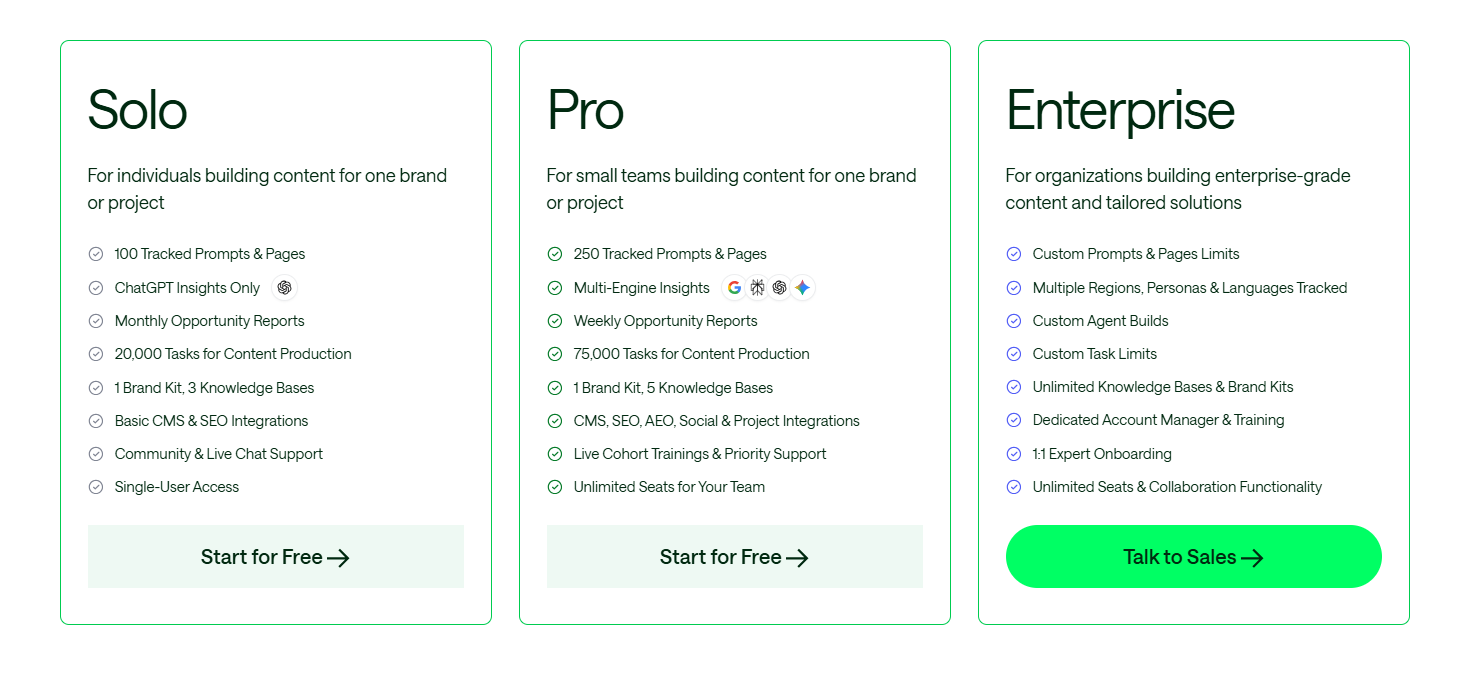
AirOps offers different pricing plans, including a free plan and custom pricing plans for larger teams. The free plan is useful for basic testing by individuals, while advanced features like AI search visibility are available only on paid plans.
What is Surfer SEO Pricing?
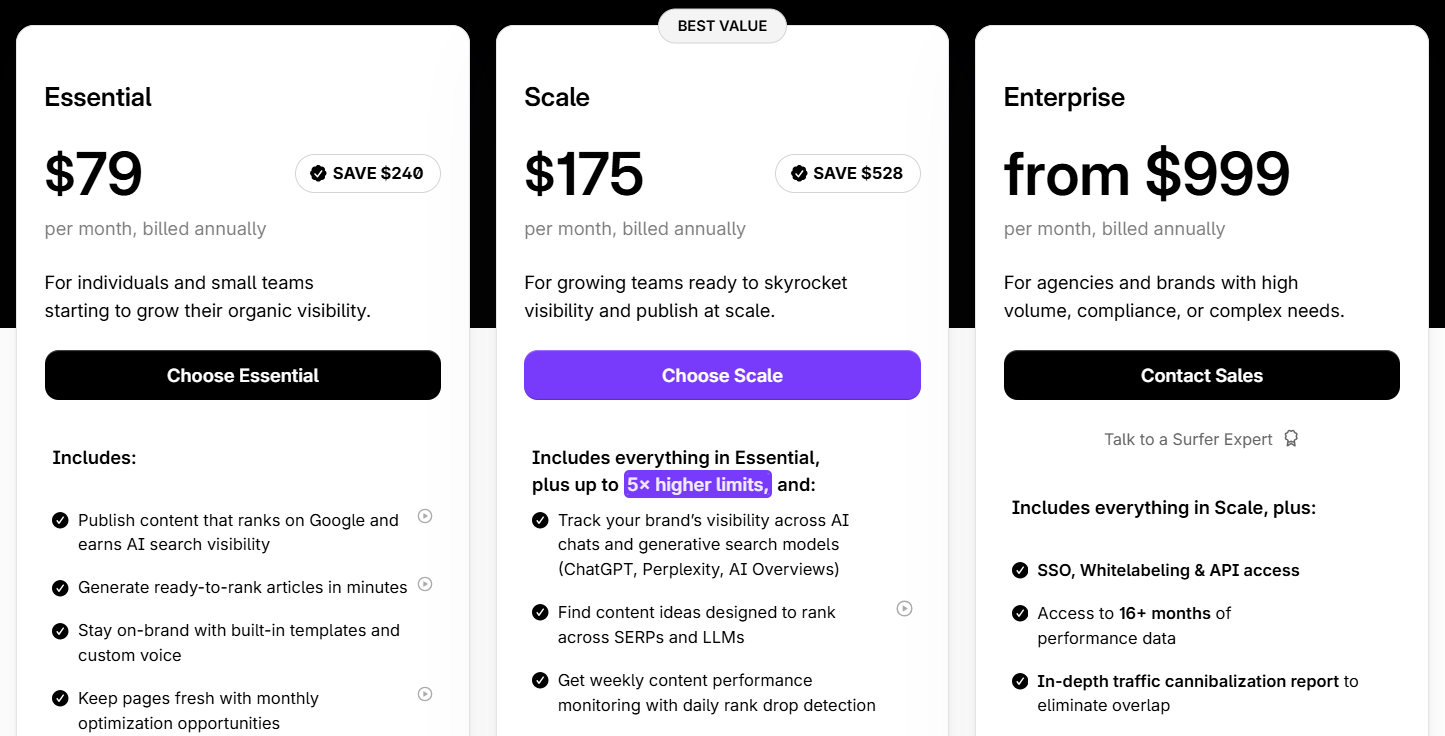
Surfer SEO uses a tiered pricing model starting with the Essential plan at $79 per month when billed annually. This plan is designed for individuals and small teams, including SEO professionals, looking to grow organic visibility, offering core content optimisation, audits, and SEO tools at a predictable price.
My verdict
Surfer SEO offers better value for money for most users seeking effective content strategy. Its pricing is clear, predictable, and includes strong optimisation features at a reasonable cost. AirOps can be powerful, but its advanced features are available only in higher plans, making it better suited for teams with larger budgets and complex needs.
What are the Missing Features in Both AirOps and Surfer SEO?
Missing Features in AirOps
- Clear SEO optimisation guidance: No simple content score, word count targets, or keyword thresholds like traditional SEO tools.
- Beginner-friendly UX: Interface and setup can feel complex for non-technical users.
- Transparent pricing: Advanced features are locked behind higher or custom plans, making costs harder to predict.
- Lightweight usage mode: No simple option for teams that only want monitoring or basic optimisation.
- Explicit GEO metrics: Lacks clear, out-of-the-box geographic AI visibility reporting.
Missing Features in Surfer SEO
- Limited AI search depth: AI Tracker shows visibility, but does not clearly explain why AI engines choose or exclude content.
- No workflow automation: Optimisation actions must be done manually, with no built-in automation for updates or refreshes.
- Minimal AI execution: Lacks AI-driven content pipelines or bulk execution features.
- Limited AI visibility beyond monitoring: No direct connection between AI insights and automated actions
Bottom line
Surfer SEO misses automation and deeper AI reasoning, while AirOps misses clarity, simplicity, and SEO-first optimisation guidance, along with valuable keyword suggestions. Each tool is strong in its lane, but neither fully covers execution and insight end-to-end.
What do Users Say About Their Experience Using AirOps versus Surfer for SEO?
AirOps Reviews
"The price feels high relative to how quickly usage can scale, especially when running larger or more experimental workflows," says Shao C, SEO Specialist
AirOps is praised for its powerful workflows, customizable AI prompts, robust Brand Kit and Knowledge Base, and time-saving features such as Grids and Power Agents, all under human oversight. Users value the free trial and learning resources, but common drawbacks include a steep learning curve, unclear pricing, and higher costs as usage scales up. It is not a plug-and-play tool and requires upfront time to see full value.
Surfer SEO Reviews
"....Content Editor refreshes itself every now and then, which disturbs me when I have Optimized and Partially Optimized keywords turned off,".... says Bartosiewicz D, Content Specialist
While Surfer is easy to use and has a strong, engaging interface, many users point to high pricing and strict credit limits as major drawbacks, especially for freelancers and small teams. UI issues like an unmovable editor panel and disruptive refreshes also affect workflow. These limitations can make long-term use feel restrictive despite the tool’s overall quality.
Is there a better alternative to both AirOps and Surfer SEO?
Yes. Scalenut is often a better alternative for teams that want both SEO optimisation and AI-driven content execution in one place.
Unlike AirOps, Scalenut does not require complex workflow setup, and unlike Surfer SEO, it goes beyond optimisation by supporting content planning, creation, refreshes, and AI visibility tracking together. It offers clearer pricing, faster time-to-value, and simpler workflows, making it a strong choice for teams that want results without heavy setup or tool sprawl.
Scalenut Overview: What is Scalenut?
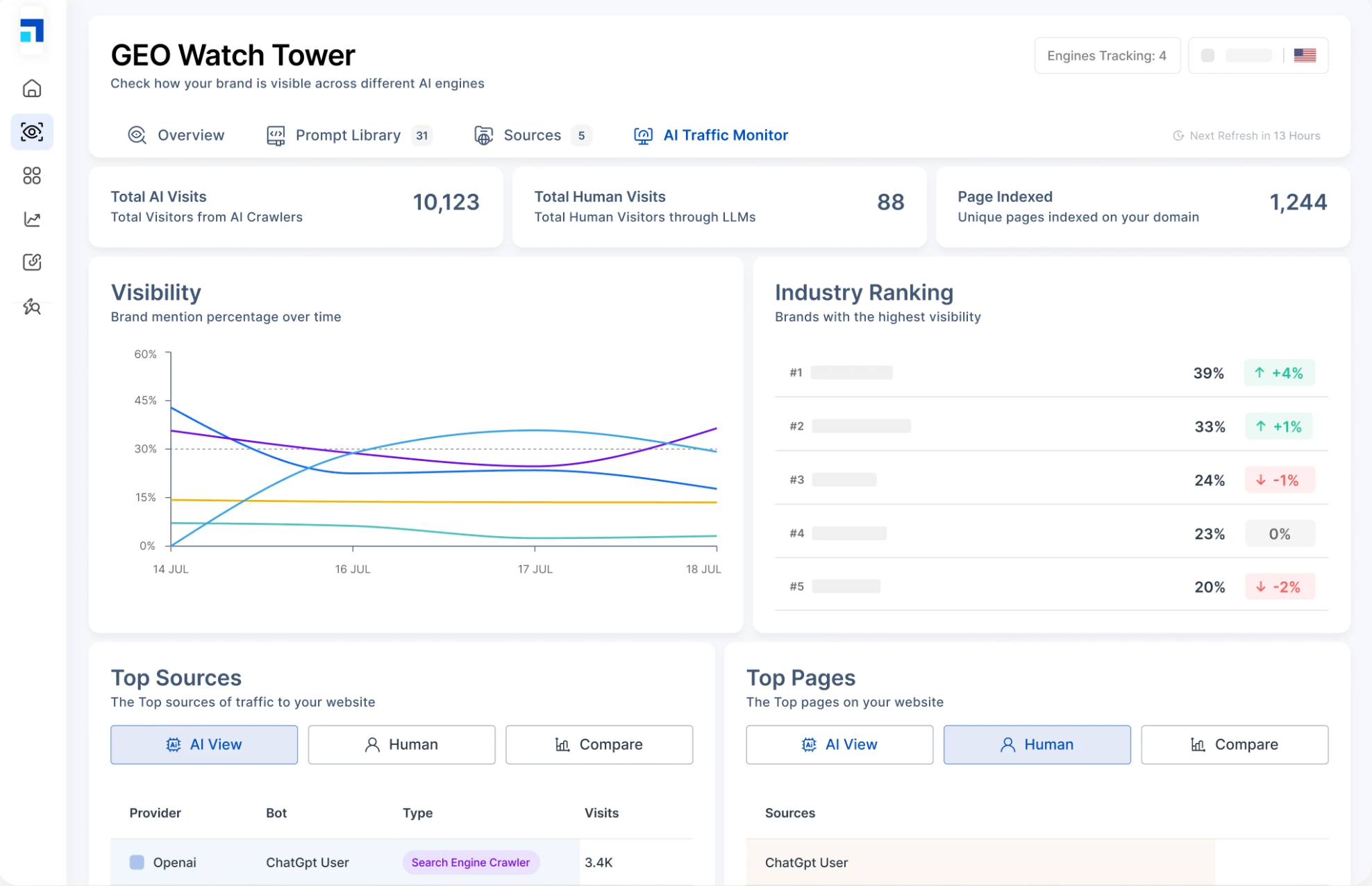
Scalenut is an all-in-one platform designed to streamline SEO optimisation and content creation for teams looking to enhance their digital presence without the complexity often associated with tools like AirOps and Surfer SEO. With its intuitive interface, Scalenut combines various features such as content planning, generation, refreshes, and AI visibility tracking all under a single umbrella.
Unlike AirOps, which may require intricate setups to effectively manage workflows, Scalenut prioritises user-friendliness by offering simple processes that enable teams to hit the ground running.
What are Scalenut’s core features?
- GEO Watchtower: Shows how often AI tools mention your brand compared to competitors.
- Cruise Mode: Creates GEO and SEO optimised blog posts in minutes.
- Prompt Context Tracking: Tracks prompts to show where and why your brand appears in AI tools like ChatGPT and Gemini.
- AI Visibility Tracking: Monitors brand mentions, sources, and trends over time, providing insights for competitor analysis.
- Keyword Planner & Clusters: Finds high-intent topics and content gaps quickly.
- Content Optimiser: Gives live SEO and GEO suggestions while you write.
- Content Audit: Flags pages that need updates, merging, or removal.
- Traffic Analyser: Reviews traffic trends, top pages, and keywords.
- Link Manager: Suggests internal links automatically.
- Social Outreach: Tracks Reddit discussions to spot early trends and demand signals.
What are Scalenut's User Reviews?
- Product Hunt: 5/5
- G2: 4.7/5
- Capterra: 4.8/5
What do the Real Users Say About Scalenut?
"I have been pleased with the results of my use of Scalenut. It has helped my articles rank higher in searches and helped me find the right terms and keywords to create helpful content for my audience. The updates and added features have improved my view of this app, and I will continue to use it to assist me with articles," Sarah G, Owner, Writing and Editing
Reviews praise how it simplifies keyword research, content planning, writing, and optimisation within a single platform.
Many users appreciate the AI-driven guidance, time-saving features, and helpful templates, making it suitable for beginners and experienced marketers alike. Customer support and onboarding resources are also frequently described as responsive and helpful.
Why Should You Choose Scalenut Over Surfer SEO and AirOps?
- All-in-One Content and AI Visibility Platform: Scalenut covers the full content lifecycle, including keyword research, planning, writing, optimisation, audits, and AI visibility tracking in one tool.
- Clear SEO and GEO Guidance: Unlike Surfer SEO’s narrow optimisation focus or AirOps’ complex workflows, Scalenut provides clear, actionable GEO and SEO recommendations.
- Faster Time to Value: Scalenut is easy to set up and use, helping teams see results quickly without a steep learning curve.
- Simple and Predictable Pricing: Pricing is transparent and affordable at only $49 per month.
- Insights That Lead to Action: AI visibility insights are directly connected to content creation and optimisation, not just reporting.
- Built for Lean Teams and Agencies: Works well for small teams and agencies without requiring technical or engineering support.
- Better Overall Value: Combines multiple GEO/SEO and AI tools into a single platform, reducing costs and tool sprawl.
Ready to start scaling your content? Try Scalenut today!
Frequently Asked Questions
Is there a more affordable AI SEO tool with features like AirOps or Surfer?
Yes, Scalenut is a more affordable alternative, with plans starting at just $49 per month and a free trial available. AirOps and Frase also offer free plans to test their content workflows, making them good starting options for teams working within a limited budget.
Which platform is best suited for startups or small businesses?
For startups and small businesses, Scalenut is often the best fit, combining content planning, creation, and optimisation in one affordable tool. AirOps suits mature SEO teams, while Surfer works well for solo creators focused on content quality.
What feedback do users have on their experience using AirOps vs Surfer?
Users find that both platforms have a learning curve. AirOps is praised for its ability to scale content marketing while maintaining brand voice, but it requires a strategic mindset. Surfer users sometimes worry that chasing a high score can hurt content quality, making the SEO optimisation process feel too robotic.
What is the best Surfer SEO alternative for AI-driven SEO workflows and content optimisation?
Scalenut is a strong Surfer SEO alternative because it combines keyword research, content creation, optimisation, audits, and AI visibility tracking in one platform, offering broader AI-driven workflows beyond pure on-page optimisation.
Is Surfer SEO secure and reliable for teams using AI-driven SEO workflows and internal linking optimisation?
Surfer SEO is secure and reliable for SEO optimisation, but it relies heavily on manual execution. Teams needing AI-driven workflows, automated internal linking, and content refresh at scale may require additional tools.
Is AirOps the right tool for AI-driven SEO workflows and LLM-based content structuring?
AirOps is suitable for teams that want automated, AI-driven workflows and structured content systems. However, it has a learning curve and setup overhead, making it less ideal for teams seeking quick, guided SEO optimisation.
What are the best AirOps alternatives if it doesn't meet your SEO content needs?
If AirOps feels complex or costly, tools like Scalenut offer a simpler alternative. Scalenut provides SEO planning, AI content generation, optimisation, audits, and AI visibility tracking without heavy workflow configuration.
What is the main limitation of AirOps for startups and small teams?
The biggest limitation of AirOps for startups is the learning curve and scaling cost. Teams must invest time in workflow setup before seeing value, which can slow down early-stage SEO efforts.
Which AI tools are best for SEO content generation, optimisation, and refresh at scale?
The best AI SEO tools combine writing with optimisation and refresh insights. Scalenut stands out by linking AI content generation, audits, internal linking, and optimisation in one workflow, reducing tool dependency.
What AI-based SEO tools offer a better balance than comparing AirOps vs Surfer SEO alone?
Platforms like Scalenut offer a more balanced approach by combining SEO clarity with AI execution. They avoid Surfer’s manual limits and AirOps’ complexity, delivering faster results with simpler workflows and predictable pricing.
What are the main differences between AirOps and Surfer AI-driven SEO workflows?
AirOps focuses on automated, customizable SEO workflows and integrations, while Surfer centers on on-page content optimisation, real-time scoring, and SERP-based guidelines for writers.
What unique features does AirOps offer that Surfer does not for SEO workflows?
AirOps offers workflow automation, API-first integrations, refresh automation, and scalable execution across large content libraries. Surfer lacks this orchestration depth and is more focused on manual, page-level content optimisation.


.svg)


.webp)