
Otterly AI Review: Quick Takeaways
- Best For AI Visibility Monitoring: Otterly AI is strongest when you want to track prompts, brand mentions, citations, and competitor visibility across AI search engines.
- Core Platforms Covered: Its core tracking includes ChatGPT, Google AI Overviews, Perplexity, and Microsoft Copilot, while Google AI Mode and Gemini are available as add-ons.
- Useful For GEO Beginners: The tool helps teams move from manual AI search checks to a more structured monitoring workflow.
- Strongest Features: AI Prompt Research, AI Search Visibility Monitoring, Citation Tracking, Competitor Benchmarking, GEO Audits, and reporting stand out the most.
- Pricing Starts Low, But Prompts Matter: Lite starts at $25/month annually with 15 prompts, but Standard is more practical for tracking multiple product, category, and competitor queries.
- Main Limitation: Otterly AI is more of a monitoring and diagnostics tool than a full content execution platform.
- Better Alternative For Execution: Scalenut is stronger if you want to connect AI visibility insights with SEO planning, content creation, optimization, refreshes, and AI traffic monitoring.
Otterly AI is no longer just an AI visibility tracker. In 2026, it added Recommendations, Query Fan-Out, Agent Analytics, Claude tracking, and deeper API and MCP workflows.
But that does not automatically make it a full GEO execution platform. The bigger question is how far Otterly takes you after it identifies a visibility gap. I tested its monitoring, audits, recommendations, reporting, and pricing to see what it now does well, where separate content workflows are still needed, and whether the platform is worth paying for.
What Is Otterly AI?
Otterly AI is an AI search monitoring platform that helps teams track and improve how their brand appears across AI search experiences like ChatGPT, Perplexity, Google AI Overviews, Microsoft Copilot, Gemini, Claude, and Google AI Mode.
It tracks brand mentions, citations, competitors, and prompt-level visibility while also providing GEO Audits, prioritized Recommendations, Query Fan-Out, and Agent Analytics to help teams understand why visibility gaps exist and what to improve.
How Does Otterly AI Help With GEO In 2026?
Otterly AI supports GEO by combining AI visibility monitoring with diagnostics and actionable recommendations.
- Tracks AI Search Visibility: Shows where your brand appears across AI-generated answers.
- Monitors Mentions And Citations: Tracks which prompts mention your brand and which websites AI engines cite.
- Compares Competitors: Shows where competing brands are gaining more visibility or citations.
- Supports Prompt Research: Helps uncover relevant buyer questions and queries worth monitoring.
- Provides GEO Recommendations: Turns visibility and competitor data into prioritized actions.
- Runs GEO Audits: Checks crawlability, content readiness, structured data, and Query Fan-Out to identify potential visibility gaps and improve your chances of being cited by AI engines.
- Tracks AI Crawlers: Agent Analytics shows which AI agents are visiting your site and which pages they access.
Want to compare Otterly AI with other AI Overview monitoring tools? Read our full guide on the best AI Overview monitoring tools in 2026 before choosing your stack.
Otterly AI Core Features: Detailed Breakdown
1. AI Prompt Research
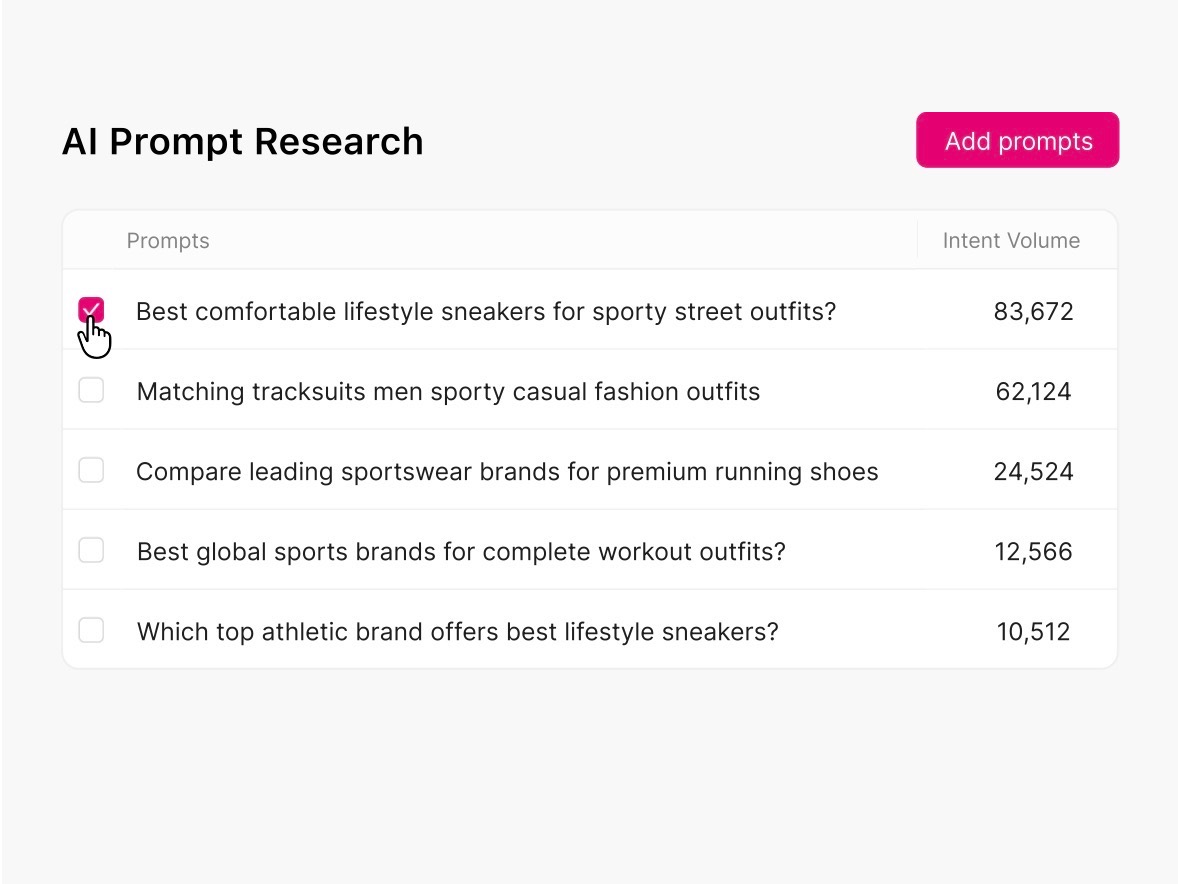
Otterly AI’s AI Prompt Research helps you find relevant prompts to track instead of relying on manual brainstorming. You can generate suggestions using SEO keywords, a URL, or your brand, domain, and industry, then choose the country and language you want to target.
I found it useful for uncovering:
- Buyer-intent questions
- Product and category searches
- Competitor comparisons
- Problem-aware queries
- Topics where your brand should appear
Otterly also supports Query Fan-Out, which shows the related queries, follow-up questions, and intents AI engines may generate from a single prompt. Useful fan-out queries can then be added directly as tracked prompts.
This gives the prompt research workflow more depth, although it should still complement traditional keyword research since AI platforms do not publish complete real-user query data.
My Take:
AI Prompt Research is useful for building a more intentional prompt set, while Query Fan-Out helps uncover additional questions and content gaps you may otherwise miss.
2. AI Search Visibility Monitoring

AI Search Visibility Monitoring is one of Otterly AI’s strongest features. Once your prompts are set up, it tracks how your brand, website, and competitors appear across AI-generated answers on a daily basis.
Otterly currently supports seven AI search engines. Four are included in the standard plans:
- ChatGPT
- Google AI Overviews
- Perplexity
- Microsoft Copilot
Three additional engines are available as paid add-ons:
- Google AI Mode
- Gemini
- Claude
Claude was added as a dedicated tracking engine in June 2026, bringing Otterly’s overall coverage to seven platforms.
The visibility dashboard brings important GEO signals into one place, including brand mentions, website citations, competitor visibility, prompt-level performance, and visibility changes over time.
What I liked most is that it reduces the need for manual AI search checks. You can quickly see where your brand appears, which competitors are gaining visibility, and whether AI engines are mentioning your brand or citing your website.
The main thing to keep in mind is that full seven-engine coverage is not included in the base subscription. Claude, Gemini, and Google AI Mode all require separate add-ons.
My Take:
This remains one of Otterly AI’s strongest features. The seven-engine coverage is useful for broader AI visibility tracking, but the additional cost for three of those engines should factor into your plan choice.
Want to turn prompt insights into stronger LLM-ready content? Read our guide on the best AI SEO agency for prompt-optimized LLM content.
3. Brand Visibility Index And AI Search KPIs
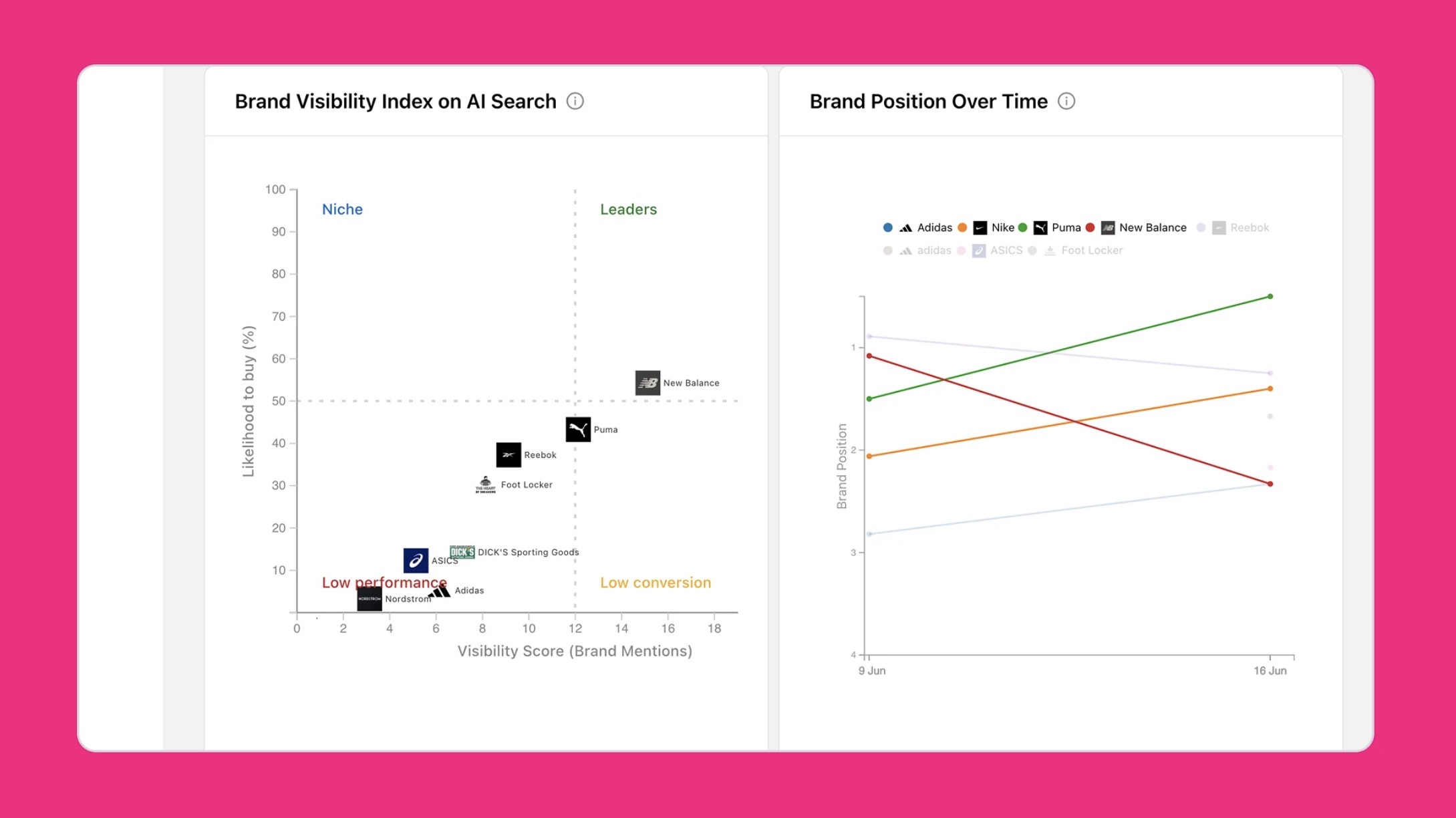
Otterly AI does not stop at showing whether your brand appeared in an AI answer. It also gives you AI-search-specific KPIs that make visibility easier to measure over time.
The main metrics include:
- Brand mentions
- Share of Voice
- Average brand position
- Brand coverage
- Domain citations
- Domain coverage
- Brand Visibility Index
The Brand Visibility Index is especially useful because it gives you a single benchmark for tracking AI visibility. Instead of looking at scattered prompt-level results, you get a clearer view of whether your brand is becoming more or less visible across the prompts you care about.
What worked well for me is that these metrics make the reporting side much easier. If you are trying to explain AI visibility to a client or leadership team, raw prompt screenshots are not enough. You need simple performance indicators that show movement over time.
My Take:
This is a useful layer for teams that need to report on GEO performance. The metrics make Otterly AI feel more structured than manual AI search tracking, especially when you want to compare visibility across prompts, competitors, and time periods.
4. Citation And Domain Tracking
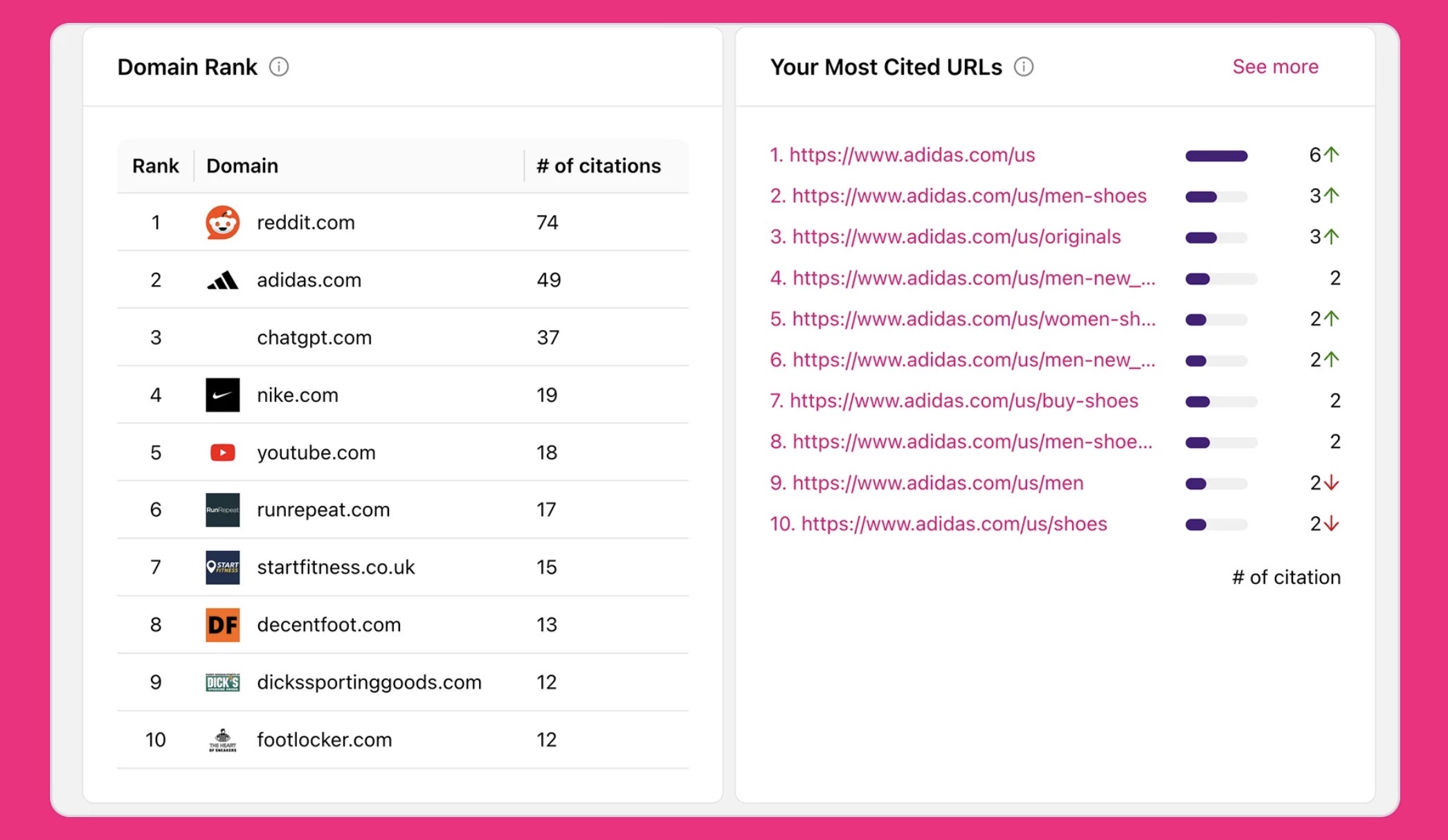
Citation tracking is one of the more important GEO features in Otterly AI. A brand mention is useful, but a website citation is stronger because it shows that an AI engine is using your content as a source.
Otterly AI helps you track:
- Website citations
- Cited URLs
- Domain citations
- Domain coverage
- Link citation analysis
- Domain ranking
This is valuable because AI engines do not always cite your own website, even when they mention your brand. Sometimes they pull information from third-party listicles, review sites, competitor pages, or older sources. Otterly helps you spot where those citations are coming from.
What I liked about this feature is that it makes GEO more actionable. If competitors are getting cited for prompts where your brand is missing, you can start looking at what those pages have that yours does not, whether that is better structure, stronger topical coverage, fresher content, or clearer product positioning.
My Take:
This is one of Otterly AI’s strongest features for content teams. It helps you move beyond “Are we mentioned?” and look at the more important question: “Is our content being trusted enough to be cited?”
5. Competitive Benchmarking And Sentiment Tracking
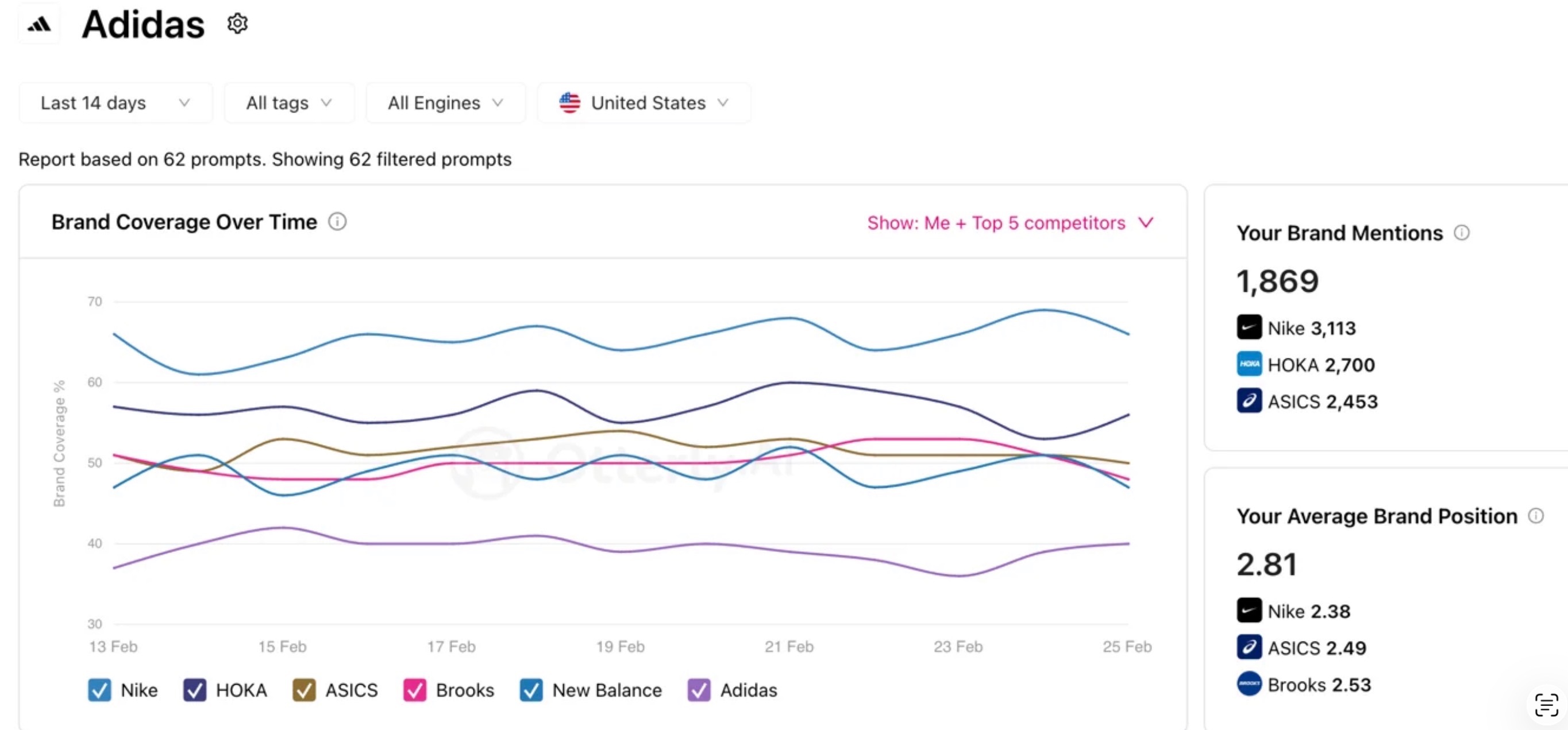
Otterly AI also helps you see how your brand compares against competitors in AI search. This matters because GEO is not just about being mentioned. It is also about who gets cited, who appears more often, and how each brand is framed in the answer.
This feature is useful for tracking:
- Competing brands that appear for your target prompts
- Brand mentions and coverage
- Competitor visibility across tracked prompts
- Domain citations
- Sentiment and context around brand mentions
What I liked here is that it gives the visibility data more meaning. Seeing your brand appear in an AI answer is helpful, but it becomes much more useful when you can compare that against the brands winning the same prompts.
The sentiment layer is also worth paying attention to. If your brand is mentioned with caveats, or if competitors are described as stronger options, that is something your positioning and content may need to address.
My Take:
This feature is useful if you want to understand not just whether your brand is visible, but whether it is being positioned strongly against competitors in AI search.
Want to see which tools handle competitor tracking better? Read our guide on the best GEO tools for competitor analysis before choosing your stack.
6. GEO Audits, Content Audits, And Crawlability Checks

Otterly AI’s GEO Audit helps identify technical and content issues that may affect whether AI engines can access, understand, and cite your pages.
The current audit is divided into three parts:
- Crawlability Checker: Checks server access and robots.txt rules to see which AI bots can crawl a page.
- Content Checker: Reviews static content accessibility, AI readiness, and structured data.
- Query Fan-Out: Shows the related questions and subqueries AI engines may generate from a prompt.
The Crawlability Checker is useful for spotting situations where AI bots may be blocked before reaching your content. The Content Checker then looks at whether important information is accessible without relying too heavily on JavaScript and how clearly the page is structured for AI systems.
Query Fan-Out adds another layer by showing how ChatGPT, Google AI Mode, and Google AI Overviews may expand a prompt into related queries. You can also add useful fan-out queries directly to your monitored prompts.
What I liked is that the audit goes beyond simply showing that your brand is missing. It helps identify possible technical, content, and query-level reasons behind that visibility gap.
My Take:
The GEO Audit is one of Otterly AI’s more practical diagnostic features. It helps connect visibility problems with crawlability, content readiness, and the wider queries AI engines may be using.
7. Reports, Exports, Workspaces, And Integrations

Otterly AI has expanded its reporting and integration features, making it more practical for agencies and teams that need to share or analyze AI visibility data outside the platform.
The reporting layer now includes:
- CSV and JSON data exports
- Downloadable PDF brand and GEO Audit reports
- Workspaces and team access
- Google Looker Studio connector
- Public API
- MCP access
- Claude Skill
Brand Reports can be downloaded as either a document or presentation-style PDF, with the option to add your own logo. For more customized reporting, the Looker Studio connector lets you combine Otterly data with other marketing data and build client-facing dashboards.
The newer Public API is useful for pulling brand visibility, prompt, citation, recommendation, and GEO Audit data into dashboards, BI tools, automations, or your own data stack. API access is available on Standard and higher plans.
Otterly also added an MCP server, allowing compatible AI assistants such as Claude, ChatGPT, and Cursor to query live Otterly data directly. Its Claude Skill provides a similar workflow specifically inside Claude.
My Take:
The reporting side of Otterly AI has become much stronger. PDF reports handle quick sharing, while Looker Studio, API, and MCP access make it more useful for agencies and teams that want AI visibility data integrated into their existing workflows.
8. Otterly AI Recommendations
Recommendations is one of Otterly AI’s biggest 2026 additions because it turns visibility data into specific actions rather than leaving you to interpret the dashboard yourself.
Otterly automatically generates recommendations based on your brand, competitor, citation, and visibility data. Each recommendation includes a suggested action and is prioritized by potential impact.
Recommendations can cover:
- On-page content improvements
- Crawlability and prompt gaps
- Competitor-driven opportunities
- Content partnerships and media mentions
- Reddit, YouTube, and social opportunities
The workflow is simple: recommendations start under Suggested, useful ones can be moved to To-Do, and completed tasks move to Archive. Teams can also add internal notes to coordinate work.
Lite users get up to three recommendations every seven days, while Standard and Premium plans include unlimited recommendations.
My Take:
Recommendations makes Otterly more actionable than it used to be. It still does not execute the content changes for you, but it does a much better job of showing what you should work on next.
9. Agent Analytics
Agent Analytics adds another layer to Otterly AI by showing which AI crawlers and agents are visiting your website and which pages they access.
Instead of relying on browser-based analytics, it analyzes server-side log data to track activity from bots such as GPTBot, OAI-SearchBot, ClaudeBot, and PerplexityBot.
You can connect data through:
- Cloudflare
- WordPress
- Netlify
- Webhooks
- Uploaded server log files
This helps you see which AI engines are crawling your site, which pages attract the most activity, and whether important content is accessible to AI agents. Agent Analytics is included with Standard, Premium, and Enterprise plans.
The limitation is that crawler activity does not automatically equal citations, referral traffic, or conversions, so I would treat this as an observability layer rather than complete AI search attribution.
My Take:
Agent Analytics is a useful addition for connecting technical AI crawler activity with your broader visibility monitoring. It helps you see whether AI systems are actually reaching the content you want them to discover.
What Are the Main Advantages of Otterly AI?

- Useful AI Visibility Insights: Otterly AI gives a clearer view of where your brand appears in AI search, which prompts you are showing up for, and where competitors may be getting more visibility.
- Easy To Set Up: The setup feels fairly straightforward, especially if you already know the brands, competitors, and prompts you want to track.
- Simple And Intuitive Interface: The platform is easy enough to navigate, even if you are new to GEO tracking or AI search monitoring.
- Strong AI Search Monitoring: Otterly AI does a good job of tracking brand mentions, citations, and AI search visibility across important answer engines.
- Helpful For GEO Planning: The insights can help you understand which prompts matter, where your brand is missing, and which areas may need stronger content or optimization.
Where Does Otterly AI Fall Short?
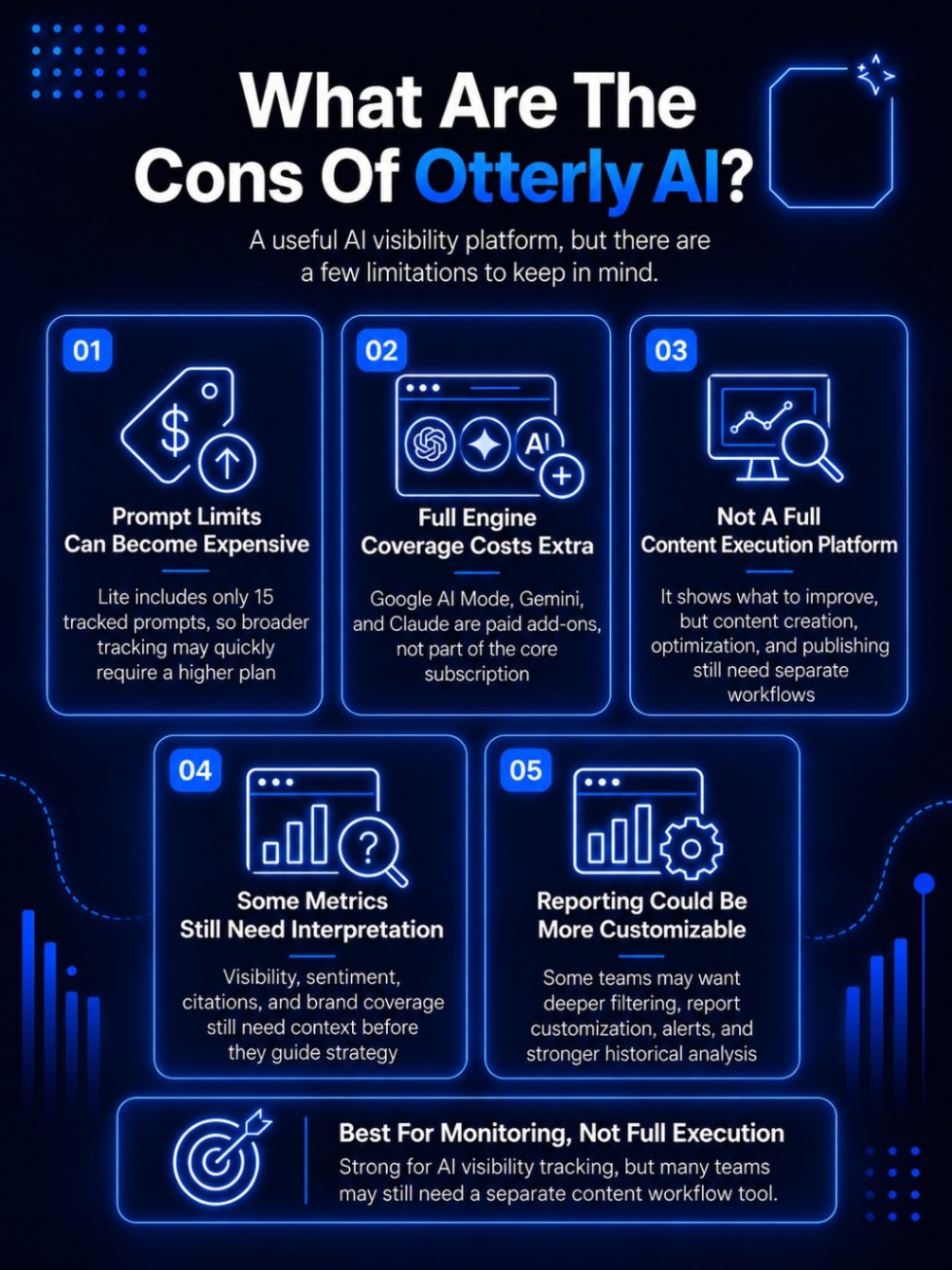
- Prompt Limits Can Become Expensive: Lite includes only 15 tracked prompts, while Standard jumps to 100, so broader tracking can quickly require a higher plan.
- Full Engine Coverage Costs Extra: Google AI Mode, Gemini, and Claude are paid add-ons rather than being included in the core subscription.
- Not A Full Content Execution Platform: Recommendations tell you what to improve, but you still need separate tools or workflows for content creation, optimization, internal linking, and publishing.
- Some Metrics Still Need Interpretation: Visibility, sentiment, citations, and brand coverage are useful, but they still need context before they translate into strategy.
- Reporting Could Be More Customizable: Recent users have asked for more advanced filtering, report customization, alerts, and deeper historical analysis.
Otterly AI Pricing Review: Is It Worth Paying For?
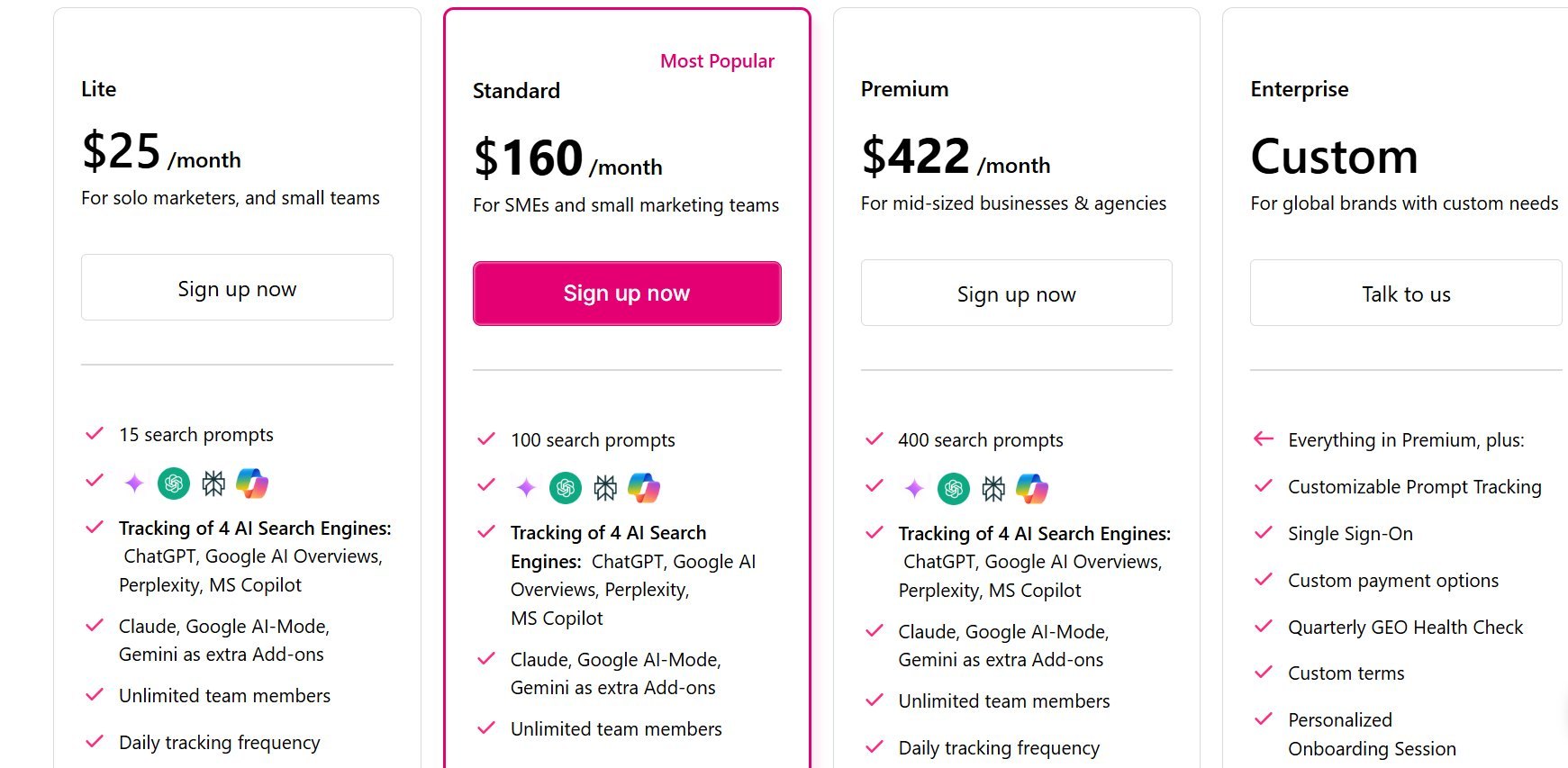
Otterly AI GEO tool offers three annual plans:
- Lite: $25/month for 15 search prompts
- Standard: $160/month for 100 search prompts
- Premium: $422/month for 400 search prompts
- Enterprise: Custom pricing for larger organizations with higher usage and custom requirements
Lite works if you only want to test a small prompt set. But for serious GEO tracking, Standard feels like the more practical starting point because 15 prompts can run out quickly.
Overall, Otterly AI tool pricing makes sense for AI visibility monitoring, but teams that need content planning, writing, optimization, and refresh workflows may still need another SEO or content platform alongside it.
Looking for budget-friendly GEO options? Read our guide on the top GEO tools for small businesses in 2026 before choosing your AI visibility stack.
Otterly AI User Reviews: What Are Real Users Saying?
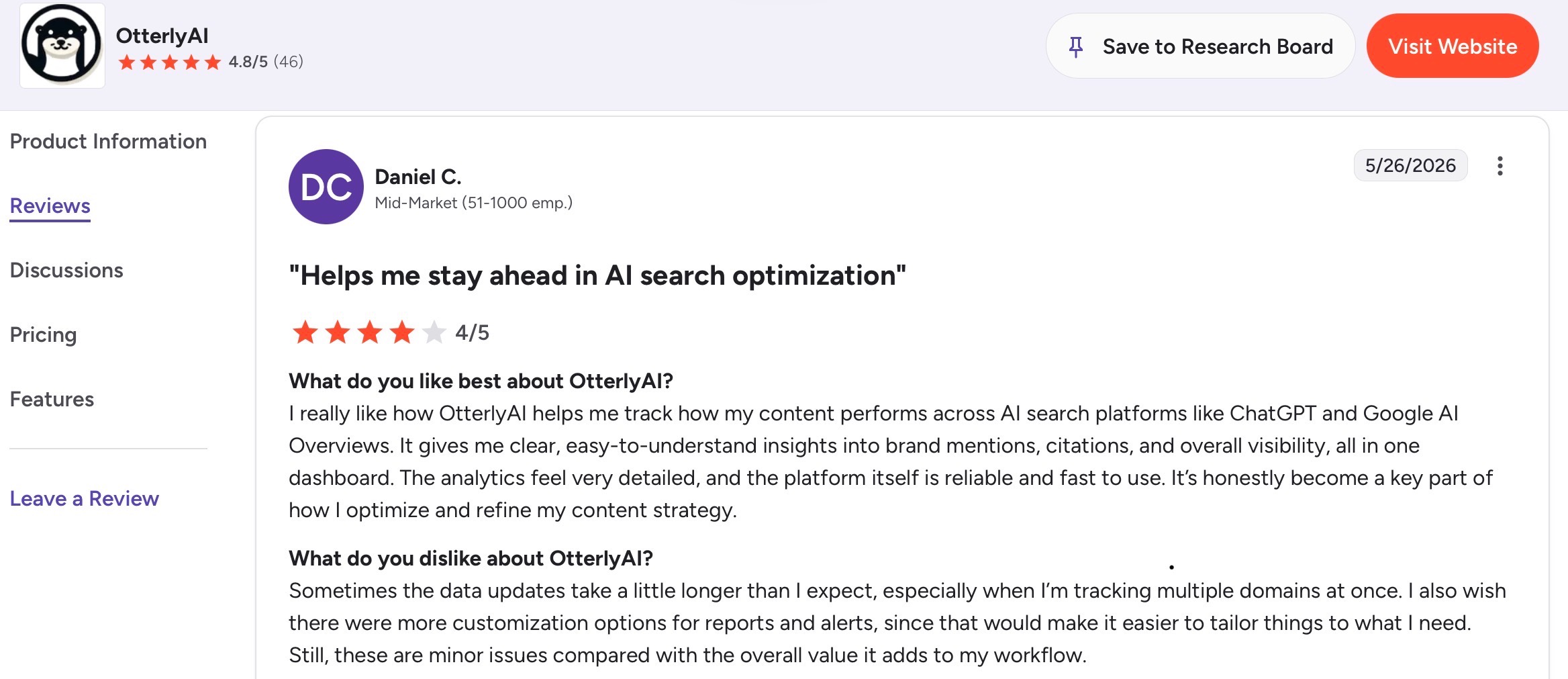
Otterly AI currently holds a 4.7/5 rating on G2 based on 54 reviews. Users frequently praise its intuitive interface, quick setup, competitor tracking, prompt insights, and ability to make AI visibility easier to monitor. Recent reviewers also highlight its actionable insights and growing feature set.
The main concerns are around reporting depth and scalability. Some users want more advanced filtering, customizable reports, deeper historical data, and faster data refreshes. Others point to the jump from Lite to Standard when they need more tracking capacity.
“I’d love to see more advanced filtering and more customizable reporting options,” says AK J. on G2.
Overall, user feedback suggests that Otterly AI gets the core AI visibility monitoring experience right, but teams with more advanced reporting or large-scale tracking needs may find some areas less flexible.
Is Otterly AI the right fit for your team?
Otterly AI is a good fit for teams that want to track and improve AI search visibility through prompt monitoring, citations, competitor benchmarking, GEO Audits, Recommendations, and Agent Analytics.
Who is Otterly AI best for?
- SEO teams building a GEO workflow: Adds AI visibility, citation, and prompt tracking to existing SEO efforts.
- Brands focused on AI visibility: Tracks mentions and citations across major AI search platforms.
- Agencies managing multiple clients: Supports separate workspaces, reporting, and client tracking.
- Teams that want actionable insights: Recommendations turn visibility gaps into prioritized next steps.
- Teams tracking AI crawlers: Agent Analytics shows which AI agents visit your site and which pages they access.
- Companies with an existing content workflow: Works well when content creation and optimization are handled elsewhere.
Who may find Otterly AI limited?
- Teams needing full content execution: It recommends what to improve but does not handle full content creation, optimization, internal linking, and publishing.
- Small teams tracking many prompts: Lite includes only 15 prompts, so costs can rise quickly.
- Teams wanting all engines included: Claude, Gemini, and Google AI Mode cost extra.
- Teams needing advanced features on Lite: API, MCP, Agent Analytics, unlimited workspaces, and unlimited Recommendations start from Standard.
- Teams expecting full AI attribution: Agent Analytics shows crawler activity, not whether that activity led to citations, traffic, or conversions.
What Is The Best Alternative To Otterly AI In 2026?
The best Otterly AI alternative in 2026 is Scalenut if your team wants more than AI visibility monitoring. Otterly AI helps you track prompts, mentions, citations, and competitors. Scalenut is a better fit when you also want to plan, create, optimize, refresh, and monitor content from the same workflow.
When Should You Choose Scalenut Over Otterly AI?
- For SEO and GEO execution in one place: Scalenut is stronger when search visibility tracking needs to connect with planning, writing, optimization, and refresh workflows.
- For content teams that need action, not just data: A better fit when visibility gaps need to turn into briefs, content updates, and optimization tasks.
- For teams managing content at scale: Useful when you need keyword planning, AI content creation, content optimization, internal linking, and audits in one workflow.
- For AI traffic and bot insights: Scalenut adds another layer by helping teams understand how AI bots interact with their website.
- For reducing tool overload: Works better if you do not want one platform for AI visibility and another for SEO content execution.
Here are its key features:
- AI visibility and brand monitoring: Tracks Visibility Score, Share of Voice, Average Position, and competitor performance across AI engines.
- Prompt-level insights: Tracks mentions, citations, sentiment, prompt performance, and Query Fanouts.
- GEO Action Center: Turns visibility insights into content creation, optimization, and improvement workflows.
- AI Traffic Monitor: Tracks AI bot activity, crawl trends, referral traffic, and page performance through Cloudflare.
- GEO content creation and optimization: Supports GEO-ready content creation, optimization, keyword planning, and content refreshes.
Want the deeper breakdown before deciding? Read our full Scalenut review to see where it stands out, where it fits best, and whether it is the right SEO + GEO platform for your team.
Final Verdict: Is Otterly AI Worth It?
Otterly AI is worth considering if your primary need is AI visibility monitoring. Its ai visibility toolkit covers prompt tracking, citations, competitors, Recommendations, Agent Analytics, and a generative engine optimization audit, with strong ease of use for teams getting started with GEO.
Its annual entry price starts at $25/month, and even the Lite tier includes unlimited team members. However, the base price covers four AI engines, while Claude, Gemini, and Google AI Mode cost extra.
If you already handle Google search and content execution elsewhere, Otterly is a solid fit. If you want a broader platform that combines AI visibility with content planning, creation, optimization, internal linking, and publishing, Scalenut offers a more complete SEO + GEO workflow.
Book a free strategy call with Scalenut to see how your team can turn AI visibility gaps into stronger SEO and GEO results.
Frequently Asked Questions
What is the best alternative to Otterly AI in 2026?
Scalenut is a strong Otterly AI alternative for teams that want AI visibility tracking connected with SEO and GEO execution. It combines monitoring with content planning, creation, optimization, internal linking, refresh workflows, and AI traffic insights in one platform.
What are the top Otterly AI competitors in 2026?
Popular Otterly AI competitors include Scalenut, Profound, Peec AI, Scrunch AI, AthenaHQ, and Writesonic. The right option depends on whether you prioritize AI visibility monitoring, enterprise analytics, competitor intelligence, content execution, or a broader SEO and GEO workflow.
Is Otterly AI worth it for AI search visibility monitoring?
Otterly AI is worth considering if your priority is tracking prompts, brand mentions, citations, competitors, and visibility across AI search. Recommendations and Agent Analytics make it more actionable, although teams needing full content execution may still require another platform.
Which AI search engines does Otterly AI track?
Otterly AI supports ChatGPT, Google AI Overviews, Perplexity, Microsoft Copilot, Google AI Mode, Gemini, and Claude. The first four are included in standard plans, while Claude, Gemini, and Google AI Mode are available as paid add-ons.
Does Otterly AI provide recommendations or only monitoring?
Otterly AI now provides prioritized GEO Recommendations based on visibility, competitor, and citation data. These suggestions help teams identify what to improve next and can be organized into a workflow, although Otterly does not perform complete content creation and optimization.
What is Otterly AI Agent Analytics?
Agent Analytics shows which AI crawlers and agents visit your website, which pages they access, and how that activity changes over time. It adds a technical visibility layer that helps teams understand whether AI systems are actually discovering their content.
How does Otterly AI compare with other AI search monitoring tools?
Otterly AI combines prompt tracking, citation monitoring, competitor analysis, GEO Audits, Recommendations, Agent Analytics, reporting, API access, and MCP support. Its focus remains visibility measurement and diagnostics rather than providing a complete SEO content creation and optimization workflow.
What problems does Otterly AI solve for marketers and SEO teams?
Otterly AI reduces the need for manual AI search checks by tracking brand visibility, prompts, citations, competitors, and sources over time. Its GEO Audits and Recommendations also help teams investigate visibility gaps and identify technical or content opportunities.
How does Otterly AI pricing work, and is there a free trial?
Otterly offers Lite plan, Standard, Premium, and custom Enterprise plans. Annual billing starts at $25 per month for 15 prompts. New users currently receive a seven-day free trial with 50 search prompts, and no credit card is required.
How does Otterly AI's pricing compare to similar AI visibility tools?
Otterly AI starts at $25/month annually for 15 prompts, while Scalenut starts at $24/month annually and combines AI visibility tracking with GEO content creation, optimization, keyword clustering, and broader SEO workflows. Otterly becomes more expensive as you add more prompts or paid engines like Claude, Gemini, and Google AI Mode.


.svg)


.webp)