
Quick summary: Scrunch AI vs AirOps
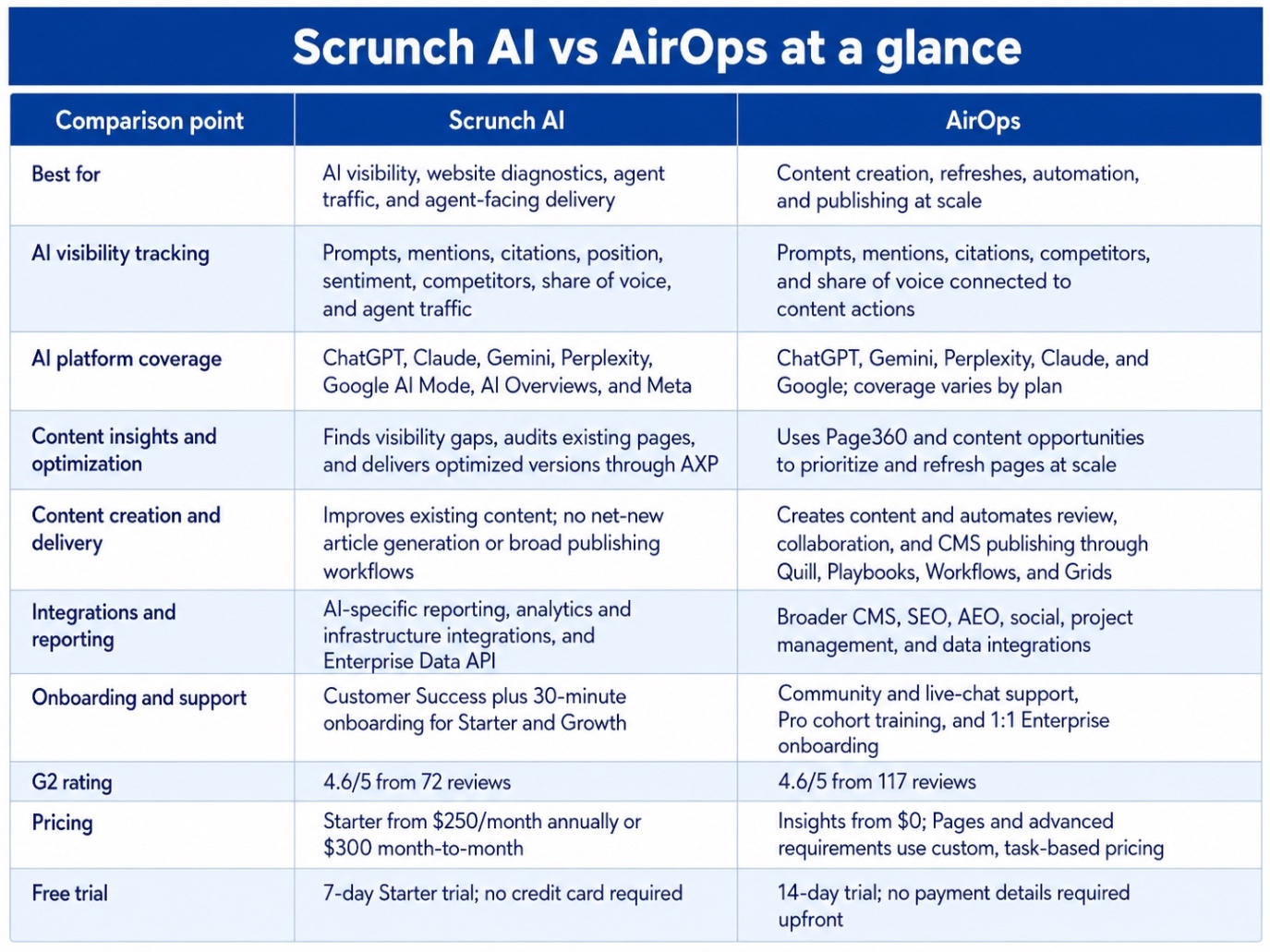
- Best overall fit: Choose Scrunch AI for deeper AI visibility analysis and agent optimization. Choose AirOps for content creation, automation, and publishing at scale.
- Visibility insights: Scrunch provides stronger prompt, citation, sentiment, competitor, and agent-traffic tracking. AirOps connects visibility data more directly to content opportunities through Prompt Discovery and Page360.
- Optimization and agent access: Scrunch leads with page audits and AXP for improving crawler access and delivering agent-ready content. AirOps primarily optimizes the human-facing website.
- Content workflows: AirOps is stronger for content creation, refreshes, workflow automation, human review, and CMS publishing. Scrunch offers narrower, visibility-led optimization.
- Integrations and enterprise use: AirOps provides broader content and marketing integrations. Scrunch is better for AI-specific reporting, governance, and multi-brand monitoring.
- Onboarding and support: Scrunch is easier to adopt. AirOps offers strong training and support, but its advanced workflows involve a steeper learning curve.
- User ratings: Both score 4.6/5 on G2. AirOps has 117 reviews, while Scrunch has 72.
- Pricing: Scrunch starts at $250/month with annual billing. AirOps offers AI search Insights from $0, while advanced Pages and enterprise requirements use custom pricing.
- Where both fall short: Scrunch lacks AirOps’ complete content production capabilities, while AirOps requires more setup and offers less specialized agent optimization. Consider an alternative if you need transparent pricing and one platform covering AI visibility, SEO, content creation, optimization, and publishing.
Scrunch AI and AirOps often appear in the same AEO shortlist, but they are not interchangeable tools. Scrunch specializes in monitoring how brands are mentioned, cited, and accessed by AI agents. AirOps combines visibility data with workflows for creating, optimizing, and publishing content at scale.
Choosing by feature count alone can lead to the wrong investment. This comparison examines AI visibility, agent access, automation, integrations, onboarding, pricing, and actual user feedback to identify where each platform provides more value.
Scrunch AI vs AirOps: What does each platform do?
Scrunch AI and AirOps overlap across AI visibility and content optimization, but they approach the problem differently. Scrunch focuses on improving the agent experience, while AirOps connects search intelligence with scalable content operations.
What is Scrunch AI?
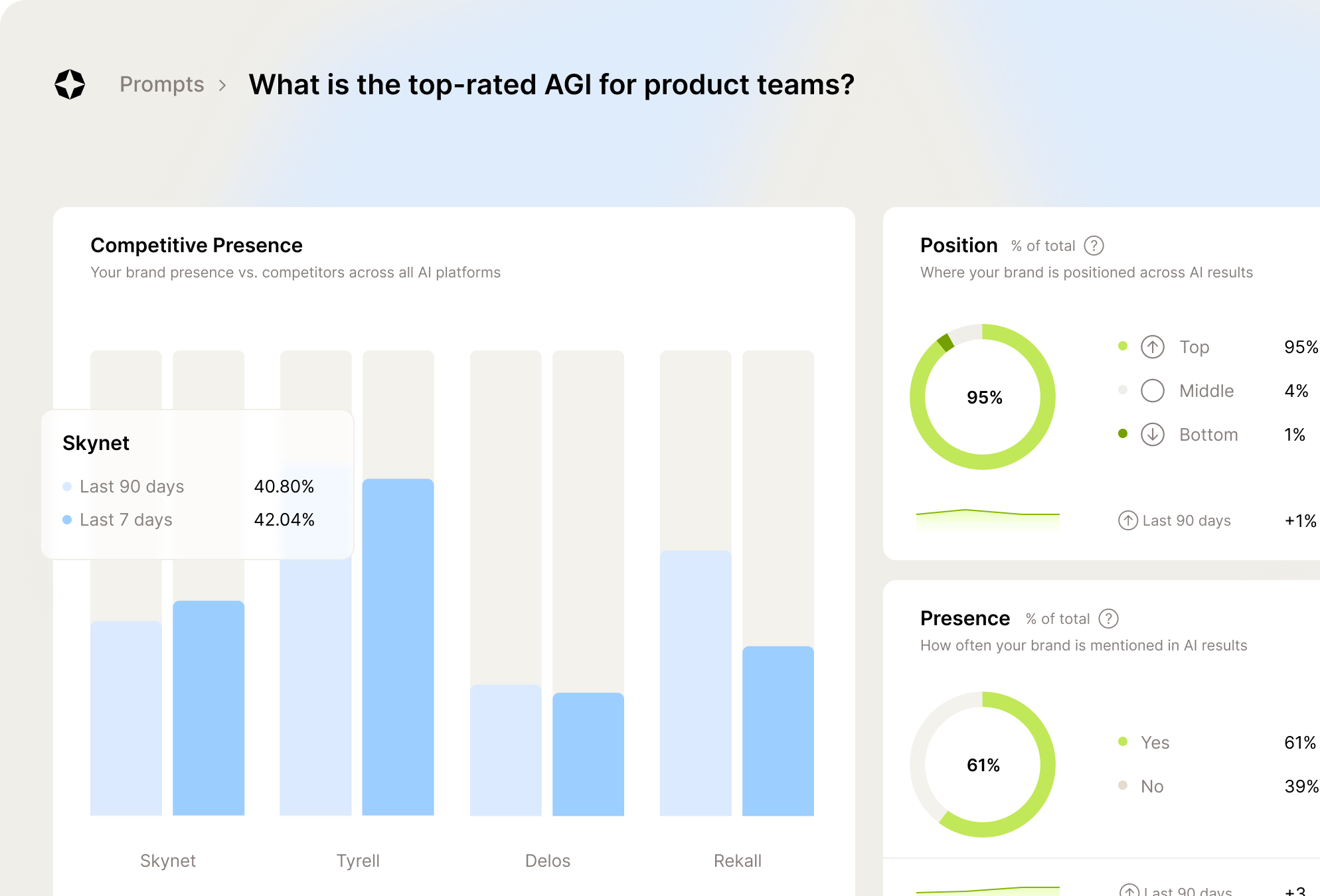
Scrunch AI is an Agent Experience Platform that helps brands understand and improve how AI systems represent, retrieve, and recommend their content. It is built for marketing, generative engine optimization, agency, and enterprise teams that need specialized AI visibility intelligence and greater control over the website experience delivered to AI agents.
What are the standout features of Scrunch AI?
- Monitoring and citation intelligence: Tracks brand performance by prompt, topic, entity, competitor, persona, and location. Teams can review rankings, citations, visibility trends, and the URLs influencing AI-generated answers.
- Signals and Explorer: Signals detects anomalies, competitive shifts, and meaningful changes in brand representation before recommending the next action. Explorer lets teams analyze live AI search data and create customizable, shareable dashboards. Both entered beta in July 2026.
- Agent Traffic and Site Diagnostics: Shows which AI agents visit the website, how they access pages, and where crawl failures occur. Site Diagnostics then prioritizes technical, structural, and content issues based on their likely effect on retrievability and citations.
- Optimizer and Knowledge Studio: Uses website diagnostics and approved internal sources to recommend or generate agent-ready content. Teams can export the changes, send them to their CMS, or deliver them through Scrunch’s agent-facing infrastructure.
- Agent Experience Platform: Creates lightweight, JavaScript-free versions of webpages for AI agents while leaving the human-facing website unchanged. Its Adaptive Optimization option can also deliver approved content improvements and reoptimize them as performance data changes.
- Enterprise controls: Supports multiple brands, websites, regions, and languages alongside role-based access, SOC 2 Type II compliance, and a Data API for custom reporting and workflows.
What is AirOps?
AirOps is a content engineering platform for SEO and content teams that want to turn search insights into repeatable production systems. It combines AI and organic search performance data with governed workflows for creating, refreshing, reviewing, publishing, and measuring content at scale.
What are AirOps’ standout features?
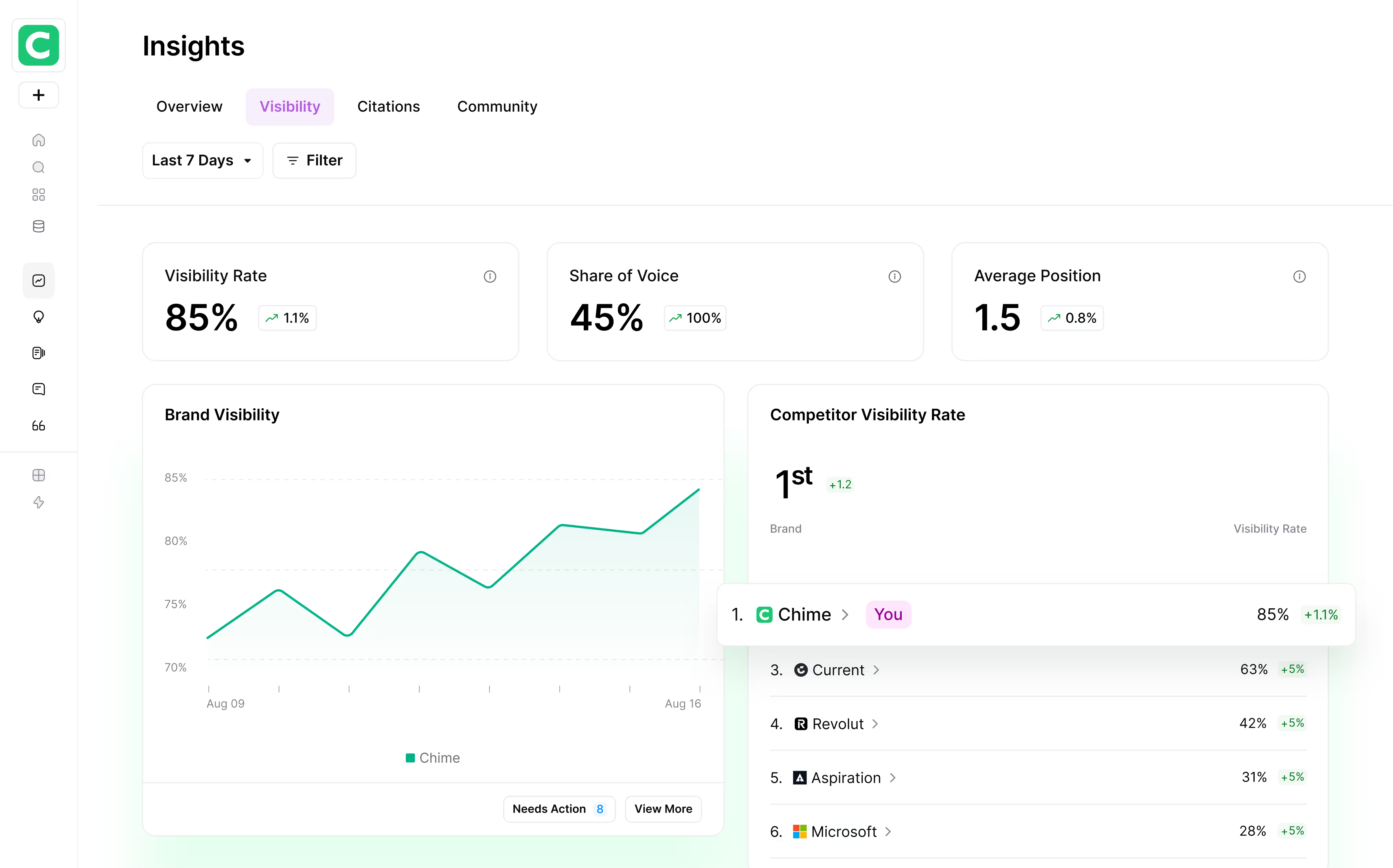
- Insights, Page360, and Prompt Discovery: Page360 combines AI citations, GSC performance, GA4 engagement, and content freshness at the URL level. Prompt Discovery uses multiple intent sources and query fan-outs to uncover questions and content opportunities.
- Quill and Action: Quill is AirOps’ execution engine for running content Playbooks across creation, refresh, optimization, and monitoring. Action lets teams define the performance goal and strategy before AirOps carries out the work using the relevant brand context.
- Workflow Studio, Copilot, and Grids: Teams can build multi-step workflows with conditional logic, code steps, and human review checkpoints. Grids run these workflows across hundreds of pages, while Copilot helps users build or adjust workflows without starting from scratch.
- Brand Kits and Knowledge Bases: Centralizes voice, terminology, audiences, product information, regional guidance, and editorial rules. Knowledge Bases use approved internal sources to ground outputs in company-specific information.
- CMS publishing and integrations: Connects workflows with CMS platforms, SEO tools, project management systems, AI models, and internal data sources. Completed content can move from review to publishing without a separate manual handoff.
- Offsite and Content Publish Tracking: Identifies third-party sources that influence AI visibility and supports offsite content opportunities. Content Publish Tracking connects published updates with subsequent changes in AI visibility and organic performance.
Which tool provides better AI visibility and opportunity insights?
A useful visibility platform should show which prompts, sources, competitors, and topics affect performance, then help teams prioritize the right opportunities.
What Scrunch AI offers
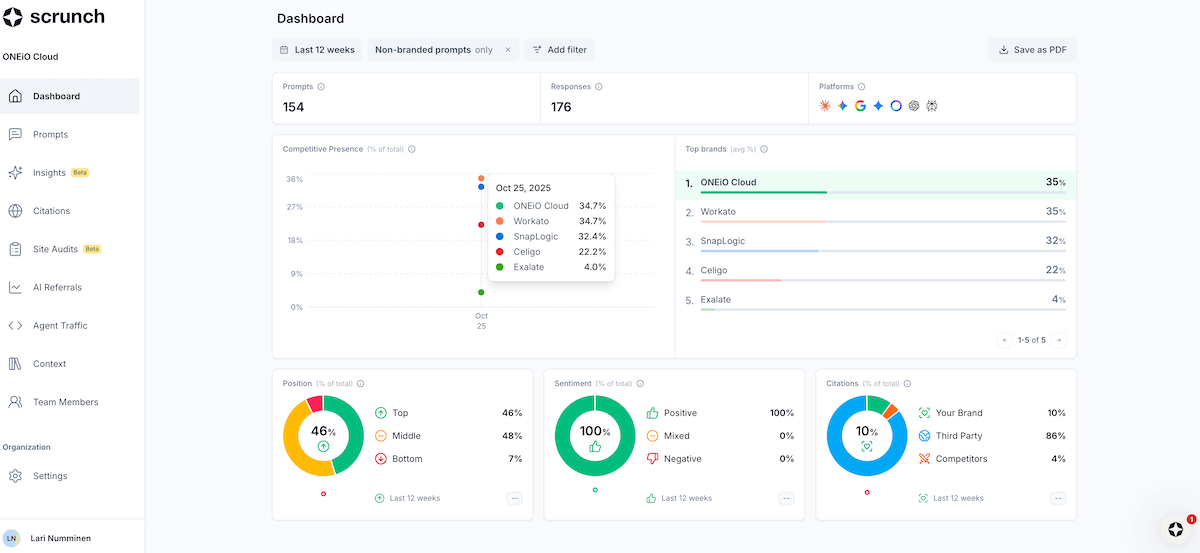
Scrunch tracks brand presence, position, sentiment, citations, competitors, and complete AI responses at the prompt level. Results can be filtered by topic, persona, funnel stage, country, and platform.
AI Search Trends adds estimated topic-level prompt volume, momentum, competitor presence, and relevant prompts to track. Scrunch Core covers four AI platforms, while Enterprise expands coverage to nine.
What AirOps offers
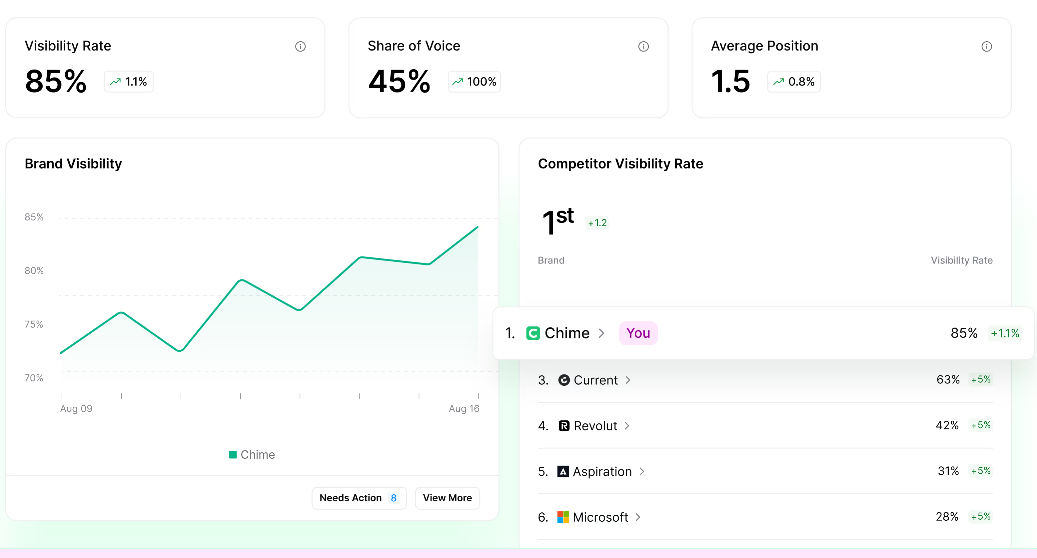
AirOps tracks mentions, citations, sentiment analysis, competitive share of voice, and average position. Prompt Discovery identifies buyer questions, while Query Fan-outs show related searches AI engines may use when generating answers.
Page360 combines AI citations, GSC data, GA4 engagement, and content freshness for each URL. This helps teams identify declining pages, missing citations, and onsite or offsite opportunities worth prioritizing.
Scrunch AI vs AirOps: Which is better for AI visibility and opportunity insights?
Scrunch is stronger for specialized AI visibility intelligence, with deeper segmentation, citation analysis, topic-demand estimates, and broader Enterprise platform coverage.
AirOps is stronger for content opportunity prioritization because Page360 connects AI visibility with organic performance and engagement data.
Which tool is better for content optimization and AI agent access?
Content optimization can improve the main webpage, the version AI agents access, or both. Scrunch and AirOps take different approaches to this problem.
What Scrunch AI offers
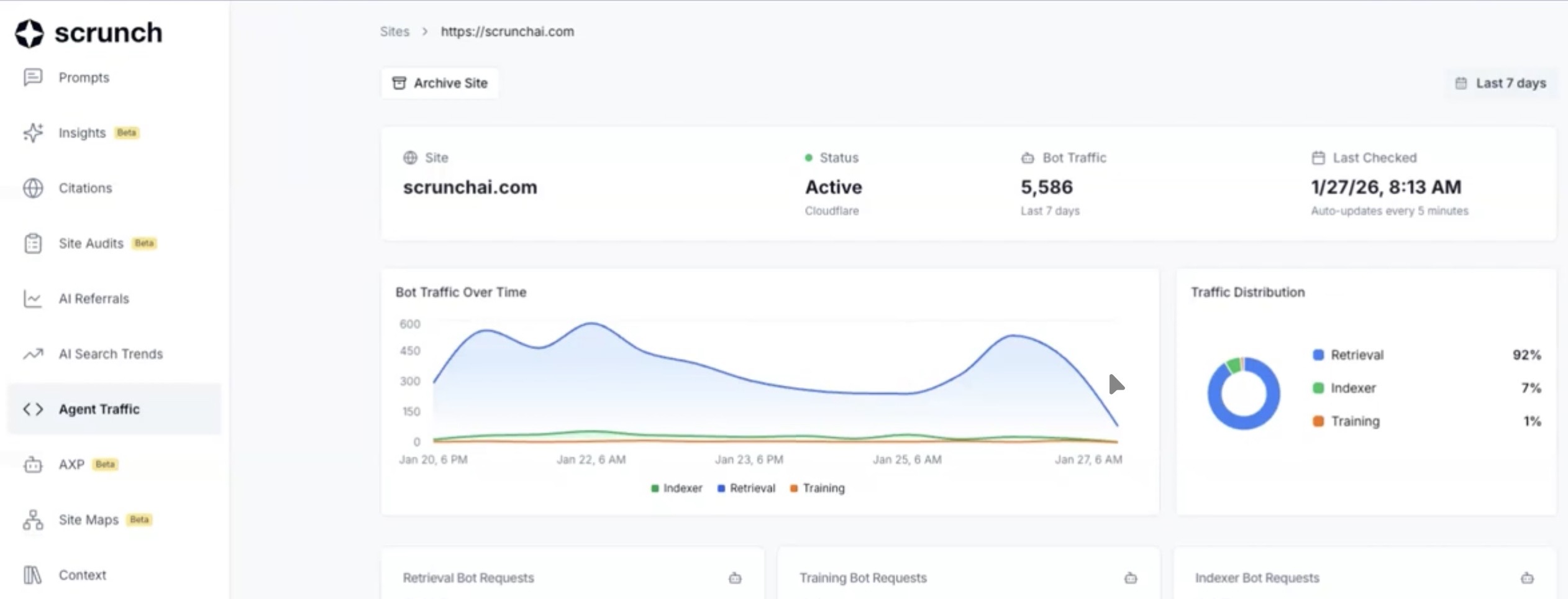
Site Diagnostics identifies technical and editorial barriers affecting AI retrieval, including access controls, JavaScript rendering, weak structure, and missing information. Recommendations are prioritized by their expected effect on retrievability and citations.
Optimizer and Knowledge Studio use these findings and approved brand sources to recommend or create agent-ready content. Scrunch can send updates to the CMS or deliver them through AXP.
AXP creates a separate, lightweight version of the website for AI agents. It removes unnecessary JavaScript and technical clutter while leaving the human-facing website unchanged. Adaptive Optimization can also apply approved improvements and update them as performance data changes.
What AirOps offers
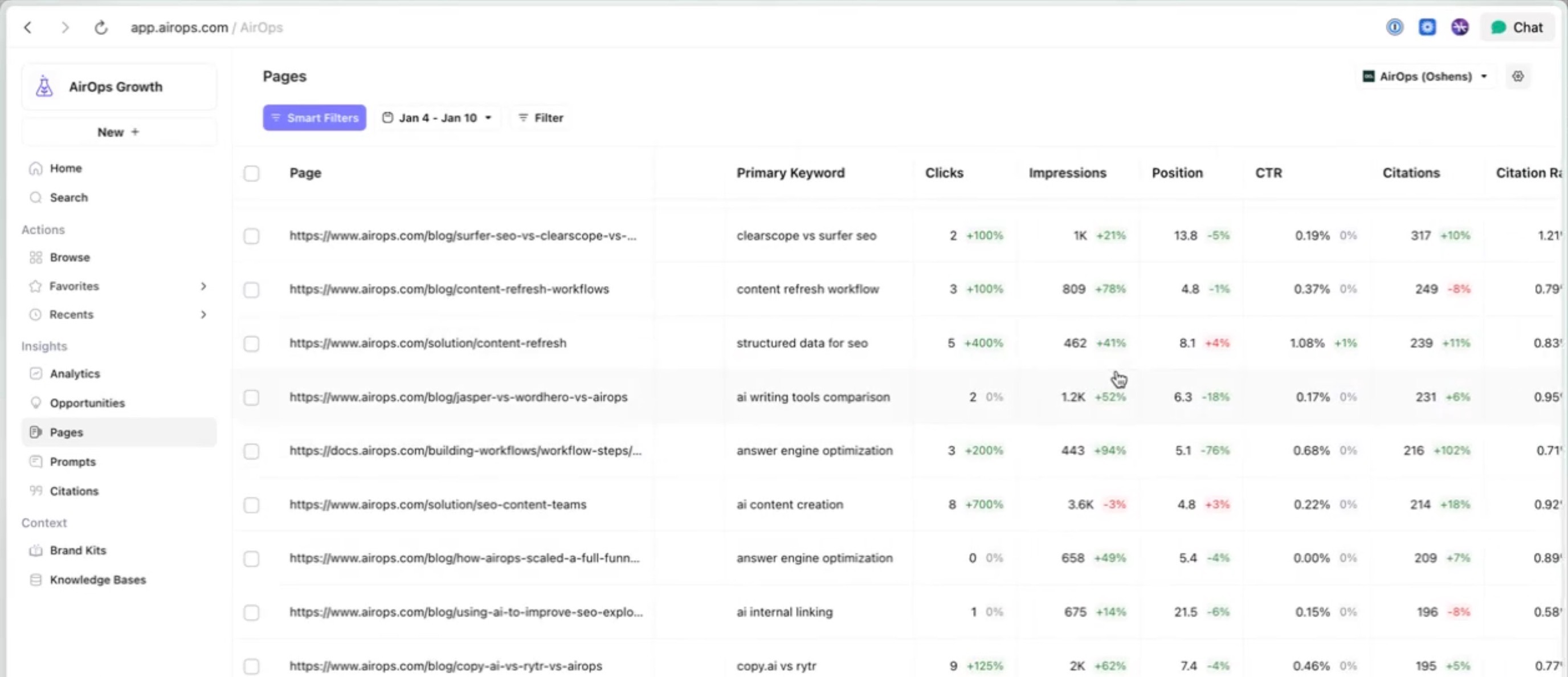
Page360 identifies pages with weak AI citations, declining search performance, or outdated content. AirOps can then refresh or optimize those pages using approved brand information and publish the changes to the main website.
Unlike Scrunch, AirOps does not provide a separate agent-facing delivery layer or dedicated AI crawler monitoring. Its approach is to improve the source page so the same stronger content is available to both people and AI systems.
Scrunch AI vs AirOps: Which is better for content optimization and AI agent access?
Scrunch is stronger for technical AI accessibility and agent-specific delivery. Site Diagnostics and AXP help teams control what AI agents can retrieve without changing the human experience.
AirOps is stronger for optimizing the primary website at scale, especially when AI visibility, SEO performance, and content freshness need to guide the update.
Which tool is better for content creation, workflow automation, and publishing?
Scrunch AI helps teams execute targeted website improvements identified through its AI visibility and site diagnostics. AirOps provides a broader system for creating, reviewing, and publishing content at scale.
What Scrunch AI offers

Scrunch’s Site Diagnostics identifies pages that need restructuring, technical fixes, or new information. Its Optimizer uses these recommendations with approved sources from Knowledge Studio to create accurate, agent-ready content.
Teams can action recommendations through tickets, Markdown exports, CMS pushes, or delivery through Scrunch AXP. Adaptive Optimization can also implement approved changes and reoptimize agent-facing content as performance data changes.
What AirOps offers
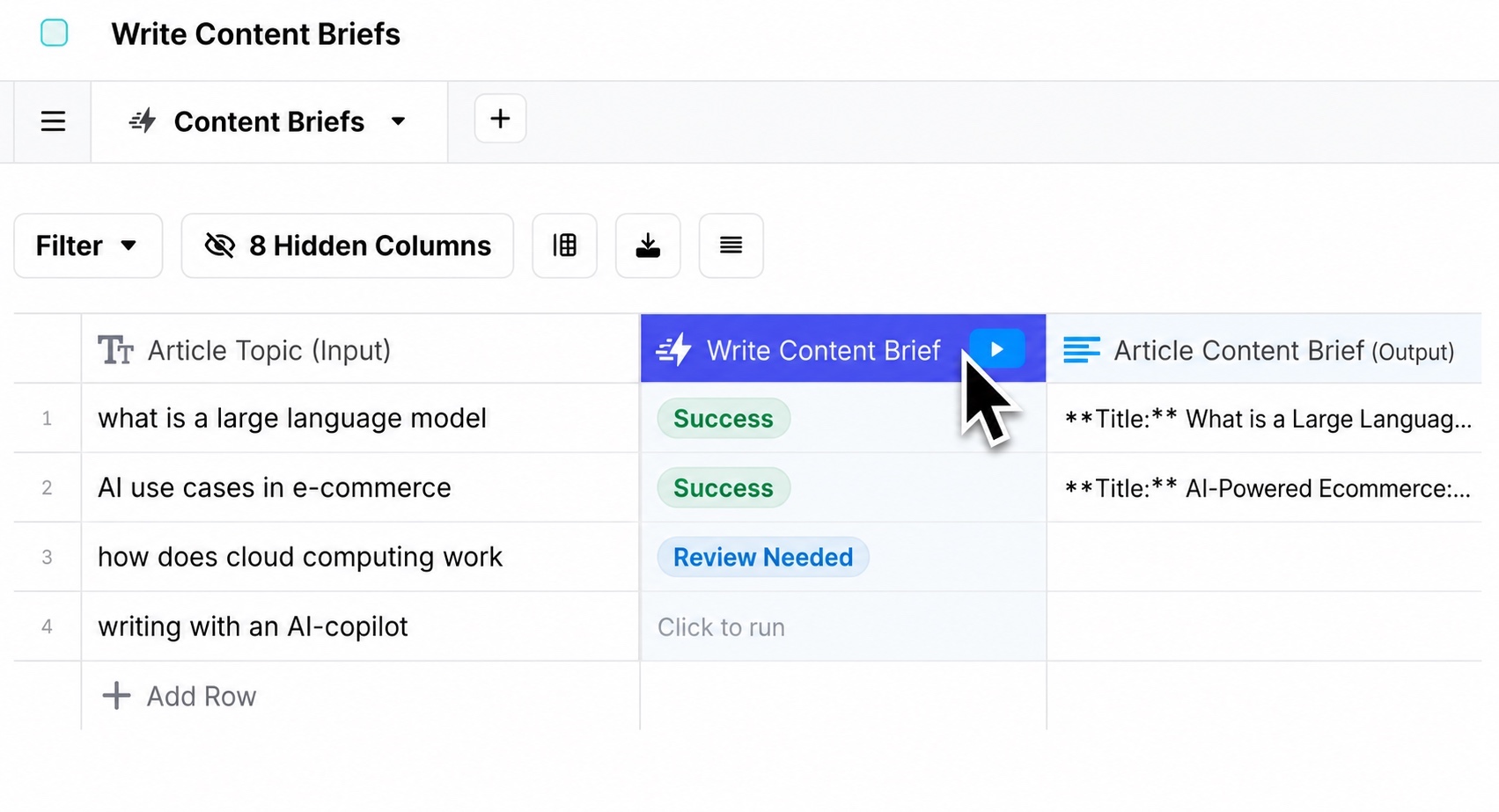
AirOps supports both content creation and refresh workflows. Quill turns visibility signals into recommended actions, while Playbooks handle judgment-heavy tasks such as briefs, rewrites, and content refreshes with approval checkpoints.
For repeatable processes, Workflows support multiple steps, branching logic, research tools, and quality checks. Grids let teams run these workflows across hundreds of pages, review the outputs, and push approved content back to connected CMS platforms.
Scrunch AI vs AirOps: Which is better for content creation, workflow automation, and publishing?
AirOps is the stronger choice for end-to-end content operations. It provides greater depth for producing net-new content, refreshing pages in bulk, managing reviews, and publishing through repeatable workflows.
Scrunch AI is better suited to targeted, agent-ready website improvements driven by AI visibility and site diagnostics. Its execution capabilities are valuable, but more specialized than AirOps’ broader content workflow system.
Which tool offers better integrations, reporting, and enterprise controls?
Both platforms meet core enterprise requirements, but their integrations serve different purposes. Scrunch AI focuses on AI visibility data and agent traffic, while AirOps connects content operations to a broader marketing stack.
What Scrunch AI offers
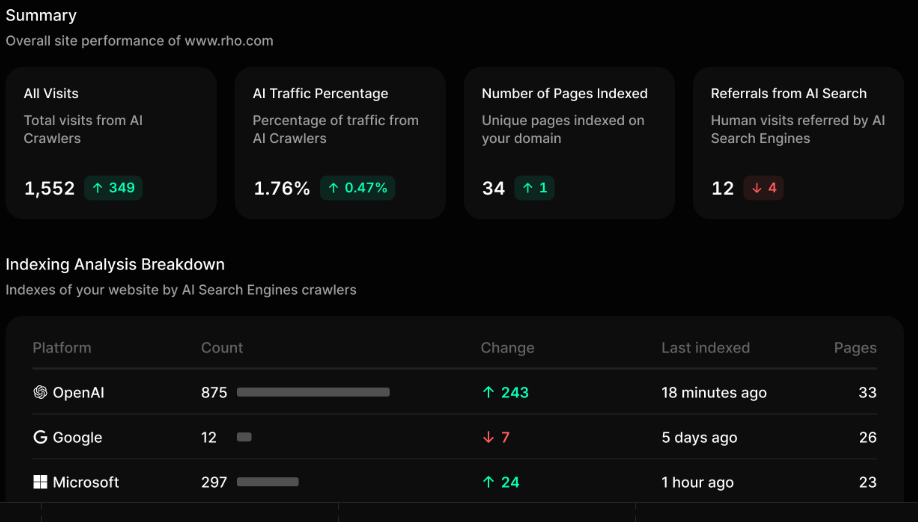
Scrunch connects with Cloudflare Workers, Akamai DataStream 2, Vercel, and WordPress for agent traffic tracking and content delivery. Its Enterprise Data API can feed AI visibility data into internal dashboards and workflows, while Scrunch MCP lets teams access and act on that data through supported AI assistants.
Its reporting covers prompts, citations, competitors, share of voice, and agent traffic. The beta Explorer feature also lets teams create custom visualizations, dashboards, and shareable views. Enterprise controls include SOC 2 Type II compliance, SAML/OIDC SSO, role-based permissions, and multi-brand, multi-domain, multi-region, and multilingual support.
What AirOps offers

AirOps provides broader operational integrations across CMS platforms, SEO tools, data sources, project management systems, communication tools, and data warehouses. Its API also allows teams to export AI visibility data for custom dashboards and automated reporting.
Analytics reports on Google and AI search visibility, while Page360 connects page-level changes to citation and ranking performance. Enterprise plans add SSO, role-based access, SCIM provisioning, workspace-level data isolation, unlimited seats, and the option to use your own model API keys.
Scrunch AI vs AirOps: Which is better for integrations, reporting, and enterprise controls?
AirOps is better for teams that need content workflows connected across their CMS, SEO, collaboration, and data stack. It also offers stronger controls for managing large-scale content production and approvals.
Scrunch AI is the better fit for dedicated AI visibility reporting, custom executive dashboards, and multi-brand or multi-client monitoring. Both are enterprise-ready, so the decision depends on whether reporting or operational integration is the higher priority.
Which AI visibility tool offers better onboarding, team fit, and ongoing support?
Scrunch AI offers a lighter onboarding path for teams focused on AI visibility. AirOps provides more structured implementation support for teams building complete content operations.
What Scrunch AI offers
Starter and Growth plans include a 30-minute onboarding session, Customer Success, and email support. Enterprise customers receive custom onboarding, email and Slack support, strategy reviews, quarterly executive support, and a dedicated go-to-market team.
“Scruch also has a chatbot support feature where an actual HUMAN responds. Usually I get a response within 30 minutes. That level of customer service is critical!” says an actual Scrunch AI user on G2.
Its shorter setup makes Scrunch a natural fit for traditional SEO, content, and marketing teams that primarily need AI brand visibility monitoring and recommendations. It also suits agencies that want self-serve client environments, bulk prompt imports, and multi-client management from one workspace.
What AirOps offers
AirOps provides community and live chat support for individual users, while Pro adds live cohort training and priority support. Enterprise customers receive one-to-one onboarding, a dedicated Account Manager and Solutions Architect, private Slack support, and ongoing training.
However, many G2 users report an initial learning curve with AirOps, though they also praise its helpful customer support. “One thing that can be challenging, especially for new users, is the initial learning curve of the tool. It might seem overwhelming due to the wide range of features and capabilities. So it does take some time to get fully acquainted with everything it has to offer. However the support team is quick, efficient, and always ready to help with any questions or concerns!”, says Zhanna M on G2.
Enterprise onboarding follows a structured implementation process. The first week covers the Brand Kit and company context, followed by configuring Quill and launching the first workflow over the next few weeks. AirOps states that most enterprise teams are operating within four weeks and do not need technical skills to use the platform.
Scrunch AI vs AirOps: Which is better for onboarding, team fit, and ongoing support?
Scrunch AI is better for teams that want to start monitoring AI visibility quickly without configuring complex content workflows. Its included Customer Success and shorter onboarding process also make it more accessible for smaller marketing teams and agencies.
AirOps is better for content and SEO operations teams that want hands-on help implementing repeatable production workflows. Its onboarding takes more involvement, but its Solutions Architect, training, and ongoing support are better suited to complex enterprise content programs.
Which monitoring tool offers better pricing and value for money?
What Scrunch AI offers
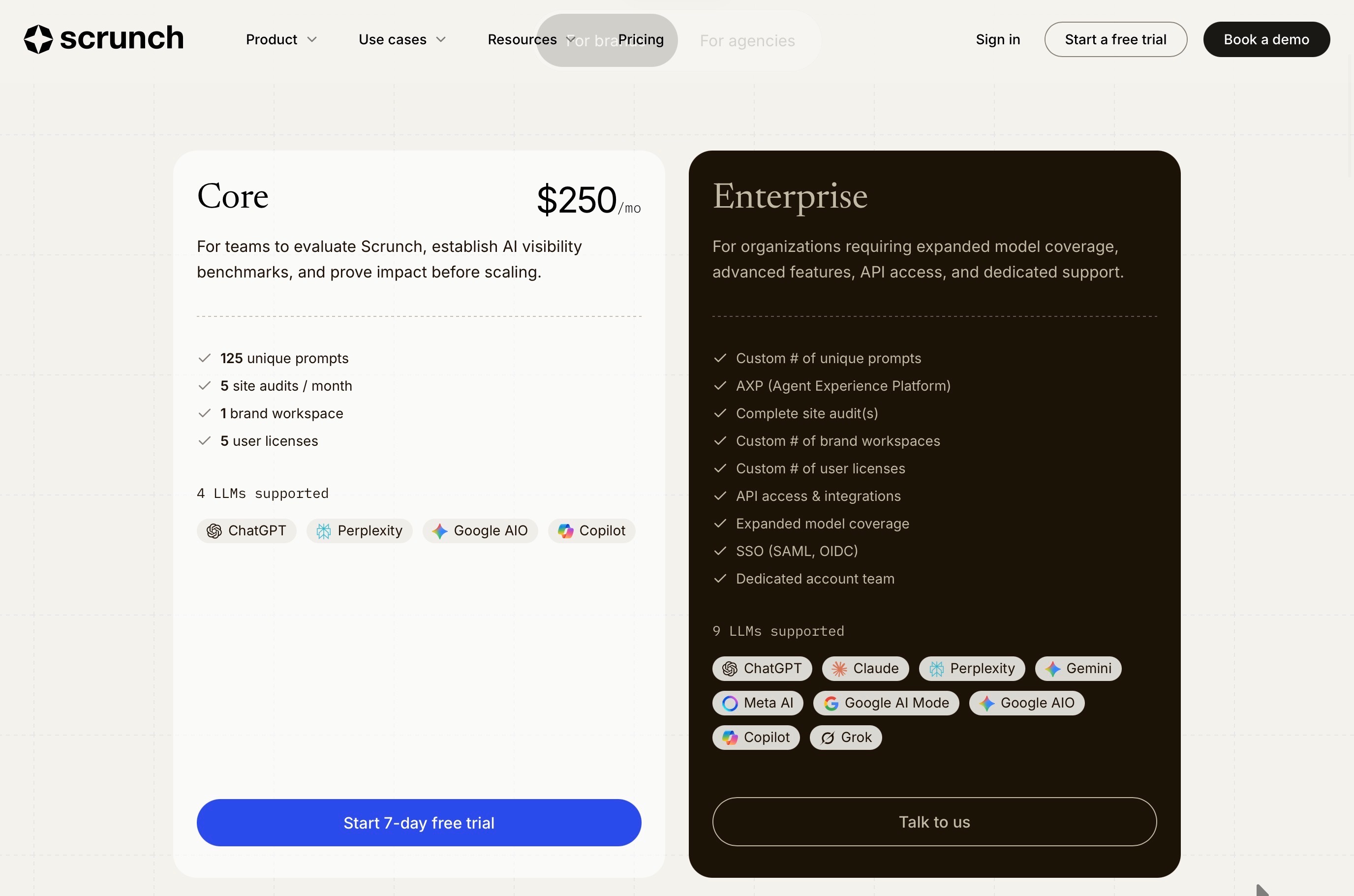
- Core: $250/month. Includes 125 prompts, 4 AI platforms, 5 monthly site audits, 1 brand workspace, and 5 users.
- Agency Core: $500/month. Includes 250 prompts, 3 brand workspaces, 3 pitch workspaces, 5 audits per brand, and unlimited users.
- Enterprise: Custom pricing. Adds 9-platform coverage, AXP, complete site audits, API access, SSO, custom limits, and dedicated support.
- Core and Agency Core include a 7-day free trial.
What AirOps offers
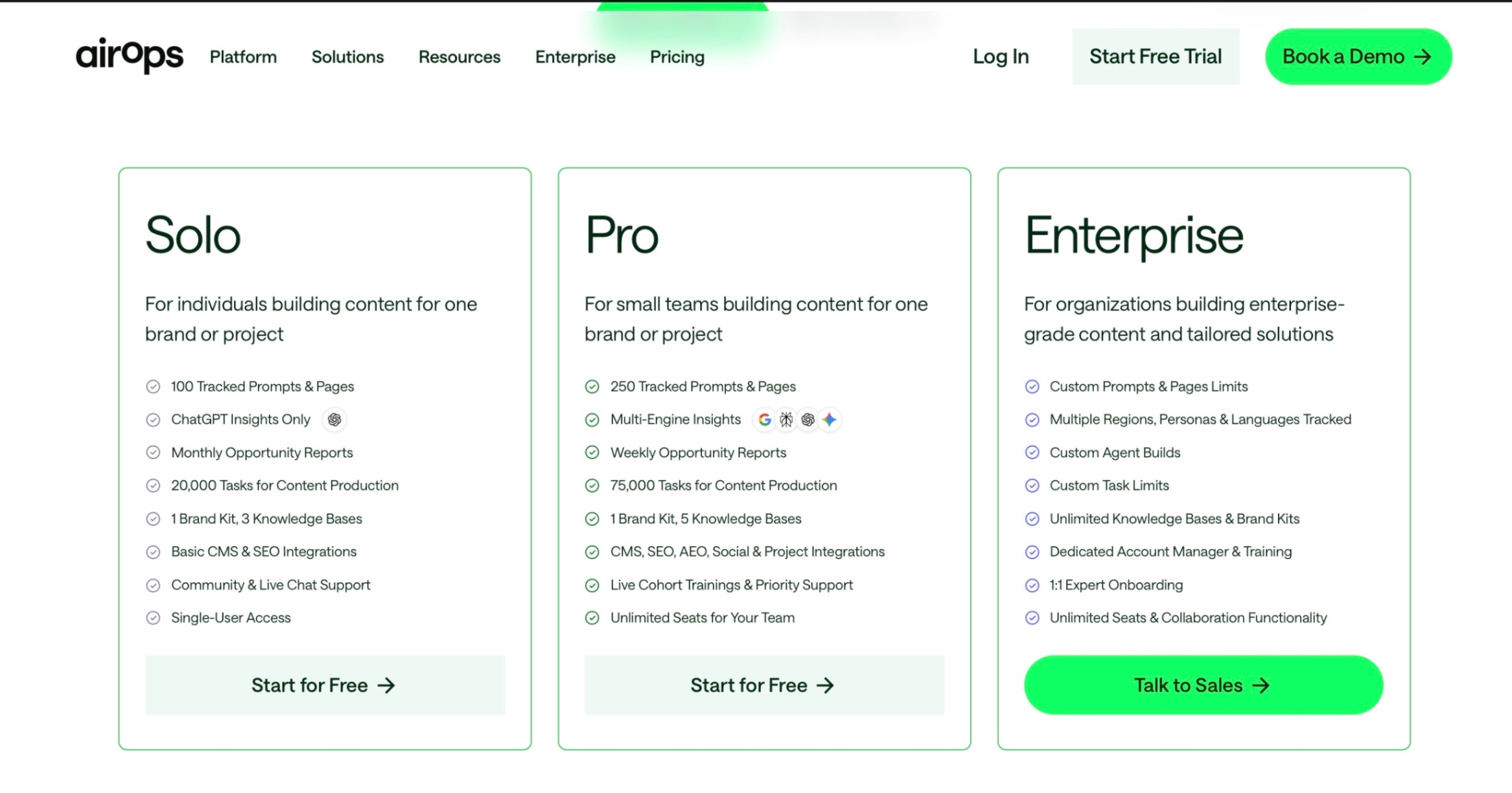
- Solo: Public price not displayed. Includes 100 tracked prompts and pages, ChatGPT insights, 20,000 production tasks, basic integrations, and 1 user.
- Pro: Public price not displayed. Includes 250 tracked prompts and pages, multi- answer engine insights, 75,000 tasks, broader integrations, training, priority support, and unlimited seats.
- Enterprise: Custom pricing. Adds custom limits and agents, unlimited Brand Kits and Knowledge Bases, expert onboarding, dedicated support, and unlimited seats.
- Solo and Pro can be started for free.
Scrunch AI vs AirOps: Which offers better value for money?
AirOps offers better value for content production, integrations, and team access. However, its paid Solo and Pro prices are not publicly displayed, making long-term costs difficult to compare.
Scrunch provides clearer pricing and better value for dedicated AI visibility monitoring, site audits, and multi-client reporting. Enterprise buyers should choose based on whether they prioritize Scrunch’s AXP or AirOps’ content automation.
Where do Scrunch AI and AirOps leave gaps, and what should teams consider next?
Scrunch AI and AirOps both connect visibility insights with action, but they solve different execution problems. Scrunch focuses on how AI agents access and interpret existing pages. AirOps focuses on creating, refreshing, and publishing content through customizable workflows.
Where Scrunch AI becomes limiting
Scrunch audits pages, identifies content gaps, recommends improvements, and serves AI-ready versions through AXP. However, it does not generate net-new articles or offer the broad content production workflows available in AirOps. Its Starter plan also begins at $250 per month with annual billing.
Where AirOps becomes limiting
AirOps supports content production through Quill, Playbooks, Workflows, Grids, Brand Kits, approval steps, and CMS integrations. However, these systems require configuration and testing before they can scale. Usage is task-based, while advanced Pages requirements use custom pricing.
AirOps also focuses on updating and publishing website content instead of providing a separate agent-facing delivery layer comparable to Scrunch’s AXP.
The gap between Scrunch AI and AirOps
These trade-offs leave a gap for SEO teams that need neither a specialist agent-delivery platform nor a highly configurable content automation system. Their priority is often simpler: identify where visibility is being lost, decide what content to create or improve, and execute those changes within one familiar workflow.
Where Scalenut fits into this gap
This is where Scalenut becomes relevant as an alternative. Its AI Visibility suite identifies mentions, citations, sentiment, share of voice, average position, prompt performance, content gaps, and AI traffic.
Teams can then move those findings into Keyword Planner, Article Writer, Content Optimizer, content audits, Auto Optimizer, Link Manager, and CMS integrations. Its distinction is not deeper agent delivery than Scrunch or more customizable automation than AirOps. It is the connection between AI visibility, traditional SEO, content creation, optimization, internal linking, and publishing.
Choose Scrunch AI for specialist AI visibility and agent delivery, AirOps for configurable content operations at scale, and Scalenut when you want visibility insights connected to everyday SEO and content execution.
Ready to move beyond AI visibility tracking and start driving real results? Book a demo with Scalenut today!
Frequently asked questions
Which is better overall, Scrunch AI or AirOps?
Choose Scrunch AI if your priority is detailed AI visibility monitoring, website diagnostics, agent traffic, and agent-ready content delivery. Choose AirOps if you need to turn search insights into repeatable content creation, refresh, review, and publishing workflows across many pages.
Which tool provides better AI visibility tracking?
Scrunch offers more specialist visibility depth, tracking prompts, citations, sentiment, competitors, and agent traffic across ChatGPT, Claude, Gemini, Perplexity, Google AI experiences, and Meta. AirOps covers major engines too and connects the findings to Page360, opportunities, and content actions.
Which tool is better for content creation and automation?
AirOps is stronger for content generation and operations. Quill, Playbooks, Workflows, Grids, Brand Kits, review checkpoints, and CMS integrations support production at scale. Scrunch can optimize existing pages and deliver agent-ready versions, but it does not generate net-new content.
How does Scrunch AI work?
Scrunch collects actual responses from supported AI platforms and analyzes brand presence, position, citations, sentiment, competitors, and share of voice. It also audits website access and content quality, recommends improvements, tracks agent traffic, and delivers optimized pages through AXP.
How does Scrunch’s AXP work, and does it affect SEO?
AXP creates a parallel, AI-ready version of existing website pages and serves it to recognized AI agents. It does not publish new articles, change the human-facing website, or alter traditional search indexing, so Googlebot and Bingbot continue crawling the original pages.
Which tool is better for marketing agencies?
Scrunch is better for agencies selling AI visibility audits, competitive reporting, and agent optimization across brands. AirOps is better for agencies scaling research, briefs, content refreshes, production, and CMS publishing. The choice depends on whether the service is intelligence-led or execution-led.
What are the main limitations of Scrunch AI and AirOps?
Scrunch lacks net-new content generation and AirOps-style production workflows. AirOps requires more configuration, has a steeper learning curve, and uses custom pricing for advanced Pages requirements. Both still require human review and may need traditional SEO tools for broader analysis.
Can Scrunch AI or AirOps replace traditional SEO tools?
No. Scrunch specializes in AI responses, citations, agent traffic, and AI-facing delivery. AirOps adds traditional search data and content execution, but neither replaces every keyword research, backlink analysis, rank tracking, or technical SEO capability provided by a comprehensive SEO platform.
Which tool is better for measuring AI traffic and business impact?
Scrunch tracks AI agent visits and connects with GA4 to measure referral traffic from AI platforms. AirOps combines AI visibility, traditional search, analytics, Page360, and workflow performance, making it easier to connect published content changes with subsequent visibility and traffic movement.
How much do Scrunch AI and AirOps cost?
Scrunch Starter costs $250 per month with annual billing or $300 month-to-month. Growth costs $417 per month with annual billing or $500 month-to-month, while Enterprise is custom-priced. AirOps Insights starts at $0, while Pages and advanced requirements use custom, task-based pricing.
Do Scrunch AI and AirOps offer a free trial?
Yes. Scrunch offers a 7-day Starter trial with no credit card, covering 350 prompts, 3 personas, 5 audits, and 3 users. AirOps advertises a 14-day trial without upfront payment, ending when 14 days pass or its allotted tasks run out.
What are the best alternatives to Scrunch AI and AirOps?
Scalenut is a practical alternative for teams wanting AI visibility tracking alongside SEO planning, content creation, optimization, auditing, internal linking, and publishing. Profound suits enterprises that prioritize real-user prompt demand, daily visibility tracking, agent analytics, and configurable automated workflows.


.svg)


.webp)